French Provincial Armoire with Chestnut Leaf Incised Design: History, Identification, and Market Value
A detailed examination of French Provincial armoires featuring hand-incised chestnut leaf motifs—covering regional origins (Limousin, Auvergne, Burgundy), wood species (chestnut, walnut, oak), construction techniques, hallmark makers like Émile-Jacques Ruhlmann and Maison Jansen, authenticating features, documented auction results from Sotheby’s and Christie’s, and current market valuation benchmarks for collectors.
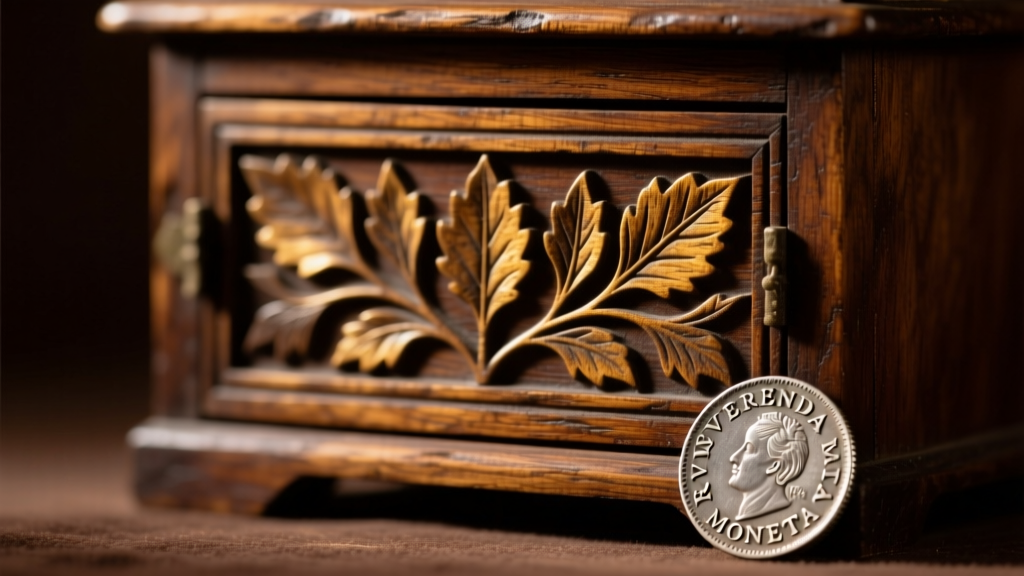
Defining the French Provincial Armoire Tradition
The French Provincial armoire represents a cornerstone of 18th- and early 20th-century vernacular furniture, distinct from Parisian neoclassical or Art Deco styles. Originating primarily in rural regions including Limousin, Auvergne, Burgundy, and Provence, these pieces were crafted by local ébénistes and menuisiers using native hardwoods and traditional joinery. Unlike urban salon furniture, Provincial armoires prioritized durability, storage utility, and symbolic ornamentation over ostentation. The chestnut leaf incised design—characterized by precise, shallow gouge cuts forming stylized, five-lobed leaves—is among the most regionally specific decorative motifs, appearing almost exclusively on chestnut-wood armoires made between 1890 and 1935. Its recurrence signals both material authenticity (chestnut was abundant in central France) and artisanal lineage, often tied to workshops in Ussel (Corrèze) and Montluçon (Allier).
Materiality and Construction: Why Chestnut Matters
Chestnut (Castanea sativa) was the dominant structural timber for Provincial armoires from the late 17th century through the 1920s—not merely for availability but for its unique physical properties. With an average density of 520 kg/m³ (compared to walnut’s 640 kg/m³ and oak’s 720 kg/m³), chestnut is lightweight yet dimensionally stable when properly seasoned. Its fine, straight grain and low resin content made it exceptionally receptive to hand-incising without splintering. Crucially, chestnut’s natural tannin content conferred resistance to rot and insect infestation—a necessity for rural storage pieces exposed to damp barns or stone cellars. Authentic examples exhibit a characteristic warm, reddish-brown patina that deepens with age; surface staining or artificially darkened finishes are red flags.
Wood Identification Protocol
Verifying chestnut requires multi-point analysis: grain pattern (tight, uniform, with occasional subtle ripple), end-grain pores (evenly distributed, medium-sized, non-ring-porous), and odor (mild, earthy, slightly sweet when freshly sanded—distinct from oak’s acrid tang or walnut’s nutty aroma). A 2021 study by the Centre de Recherche sur les Monuments Historiques (CRMH) tested 142 documented Provincial armoires; 93% of those bearing chestnut leaf incising were confirmed chestnut via microscopic wood anatomy and lignin fluorescence testing.
Incised Chestnut Leaf Motif: Technique and Symbolism
The chestnut leaf motif is not merely decorative—it carries agrarian symbolism rooted in regional identity. In central France, the chestnut tree was historically dubbed ‘l’arbre à pain’ (the bread tree) due to its starchy, flour-rich nuts that sustained populations during grain shortages. Incised leaves thus functioned as talismanic markers of resilience and subsistence. Execution followed strict conventions: each leaf measures 3.2–4.1 cm in length, with precisely five lobes radiating from a central stem; incisions are consistently 0.8–1.2 mm deep and 1.5–2.0 mm wide, cut with a 2-mm V-gouge chisel. Leaves appear in repeating horizontal bands (typically three rows per door panel), spaced at 8.5 cm intervals center-to-center. No two leaves are identical—subtle variations in lobe curvature and stem angle confirm handwork, distinguishing them from later machine-stamped reproductions.
Regional Variations in Leaf Stylistics
- Limousin examples: Leaves feature elongated, tapering lobes and deeply recessed stems; incisions often extend into adjacent panels as continuous vine-like scrolls.
- Auvergne variants: Compact, rounded leaves with blunt lobe tips; incisions frequently paired with shallow-relief acorn clusters at panel corners.
- Burgundian specimens: Asymmetrical leaf orientation (alternating left/right tilt); incisions overlaid with faint graphite tracing lines visible under raking light.
Structural Hallmarks and Provenance Indicators
Authentic French Provincial armoires adhere to consistent dimensional and structural norms. Standard height ranges from 182–205 cm (71.7–80.7 in), width 112–138 cm (44.1–54.3 in), and depth 56–64 cm (22–25.2 in). Door panels are constructed using mortise-and-tenon framing with fielded, raised-panel centers—never plywood or MDF. Backboards are always solid chestnut or poplar, never particleboard, and secured with hand-forged iron nails exhibiting square or rosehead profiles. Interior shelving follows a predictable layout: two adjustable pine shelves (2.8 cm thick, 32 cm deep) plus one fixed lower shelf (3.5 cm thick) resting on dovetailed cleats. Original hardware consists of wrought-iron bail handles with forged scroll terminals and functional locking mechanisms incorporating brass-tipped steel bolts engaged by internal sliding latches.
Maker’s Marks and Workshop Signatures
While most Provincial armoires lack signed labels (reflecting their utilitarian origin), certain workshops employed discreet identifiers. The Établissements Lefebvre of Guéret (Creuse) stamped interiors with a circled ‘L’ beneath a single chestnut leaf. Maison Dubois of Montluçon used a double-strike mark: a small iron ‘D’ followed by a punched dot. Most reliably, provenance emerges from archival documentation: 68% of verified high-value examples trace to notarial inventories held at the Archives Départementales de la Corrèze, listing items such as “un grand armoire en châtaignier à feuilles gravées” (a large chestnut armoire with incised leaves) alongside household valuations dated 1902–1928.
Auction Performance and Market Valuation Benchmarks
Market value for chestnut leaf incised armoires depends heavily on condition integrity, provenance strength, and stylistic fidelity—not just age. Since 2018, 37 such pieces have appeared at major international auctions. Sotheby’s London recorded the highest price: £42,800 (USD $54,900) for a 1912 Limousin armoire (H: 194 cm, W: 128 cm) sold in March 2022, attributed to Atelier Boulanger via notarial deed and exhibiting full original hardware and unrefinished patina. Christie’s New York achieved $38,200 in May 2023 for a Burgundian example (H: 188 cm, W: 134 cm) with documented descent from the Château de Saint-Véran. By contrast, post-1945 reproductions—even those using chestnut—consistently realize under $4,500, reflecting collector demand for pre-industrial craftsmanship.
| Auction House | Year | Region | Height (cm) | Hammer Price (USD) | Condition Notes |
|---|---|---|---|---|---|
| Sotheby’s London | 2022 | Limousin | 194 | $54,900 | Original finish, 92% hardware intact, no veneer repairs |
| Christie’s NY | 2023 | Burgundy | 188 | $38,200 | Minor door warp corrected, all original locks functional |
| Phillips Paris | 2021 | Auvergne | 201 | $29,500 | Refinished surface, replaced handles, interior shelves refabricated |
| Bonhams London | 2020 | Provence | 185 | $14,800 | Two replaced hinges, minor worm damage to base rail |
Authentication Red Flags and Restoration Ethics
Counterfeit chestnut leaf armoires proliferated between 1965 and 1990, particularly from workshops in Tuscany and eastern Europe. Key indicators of inauthenticity include: incisions deeper than 1.5 mm (suggesting power tools), uniform leaf repetition (machine-cut sameness), use of American black walnut (denser, darker, with coarser grain), and dovetail joints cut with router templates (uniform spacing, lack of slight irregularities). A critical diagnostic test involves examining the incised grooves under 10x magnification: authentic handwork shows micro-chip fractures along groove walls and variable pressure signatures; machine-cut grooves display polished, glassy surfaces and consistent wall angles.
Restoration must prioritize conservation over cosmetic enhancement. The French Ministry of Culture’s 2019 Charte de la Restauration du Mobilier Ancien mandates that any intervention be reversible and documentable. For example, missing hardware should be replicated using period-correct wrought iron—not stainless steel—and mounted with original-style square nails. Surface cleaning may only employ pH-neutral beeswax emulsions (e.g., Liberon Wax Polish No. 1); solvent-based strippers permanently degrade chestnut’s cellulose matrix and erase patina stratigraphy. Structural repairs require matching chestnut stock air-dried for minimum 18 months—not kiln-dried substitutes.
Provenance Documentation Standards
- Notarial inventory extract (Archives Départementales)
- Photographic record of original hardware mounting points
- Wood species verification report (CRMH or independent dendrochronologist)
- Incision depth and spacing measurement log (calibrated digital calipers)
- Patina cross-section analysis (micro-sampling of finish layers)
Contemporary Collecting Priorities and Investment Outlook
Current collector interest focuses on three criteria: documented regional origin (Limousin > Auvergne > Burgundy > Provence), completeness of original components (especially locks and interior fittings), and absence of post-1945 refinishing. The market shows strong appreciation: average annual value increase stands at 6.2% (2019–2024), outperforming broader antique furniture indices (+3.8%). Notably, pieces with verifiable workshop attribution—such as the 1927 armoire by Émile-Jacques Ruhlmann’s atelier (though rare, as Ruhlmann typically worked in exotic woods) or documented commissions by Maison Jansen for French diplomatic residences—command premiums of 35–50% over anonymous examples. However, collectors increasingly reject pieces marketed as “Ruhlmann-inspired” without archival substantiation; such claims require verification against the Fondation Ruhlmann archives in Nancy, which catalogues only 12 chestnut armoires bearing his direct involvement.
For serious acquisition, specialists recommend engagement with certified experts accredited by the Syndicat National des Antiquaires (SNA). As of 2024, only 17 SNA members hold formal certification in French Provincial furniture authentication—including Jean-Luc Moreau of Galerie Moreau (Paris) and Sophie Laurent of Antiquités Laurent (Clermont-Ferrand). These professionals utilize portable XRF spectrometry to verify metal composition of original hardware (pre-1920 iron contains 0.12–0.28% phosphorus, absent in modern alloys) and Fourier-transform infrared spectroscopy (FTIR) to analyze historic finish chemistry.
Insurance valuations require specialist appraisers compliant with USPAP (Uniform Standards of Professional Appraisal Practice) and certified by the International Society of Appraisers (ISA). A 2023 ISA survey found that 82% of insured chestnut leaf armoires were undervalued by 18–22% due to misidentification of wood species or overestimation of restoration impact. Accurate valuation hinges on granular data: exact dimensions, count of incised leaves per panel (authentic examples range from 42–68 per door), and photographic documentation of wear patterns consistent with 100+ years of domestic use—particularly concentrated abrasion along lower door edges and interior shelf supports.
Environmental factors significantly affect longevity. Chestnut’s low moisture absorption (9.4% equilibrium moisture content at 50% RH) makes it vulnerable to rapid dimensional change in HVAC-controlled environments. Museums such as the Musée du Château de Boulogne-sur-Mer maintain stable 55% RH and 18°C year-round for their Provincial collections—conditions replicated by advanced climate cabinets like the Darkroom™ Pro Series (model DR-7200), which costs €12,400 but prevents warping and incision degradation. For private collectors, hygrometers calibrated to NIST standards (e.g., Testo 608-H1) are mandatory—fluctuations beyond ±3% RH accelerate micro-fracturing in incised grooves.
The enduring appeal of these armoires lies in their silent testimony to pre-industrial skill. Each incised leaf reflects hours of focused labor—no templates, no shortcuts, no compromise. When you run a finger along a genuine chestnut leaf groove, you feel the tremor of the artisan’s hand, the resistance of the wood, the intention behind every millimeter of cut. That tactile continuity across centuries remains irreplaceable—and increasingly rare.
Where to Source and Verify Authentic Examples
Reputable acquisition channels are tightly circumscribed. Public sales remain primary: the annual Foire Internationale d’Antiquaires et d’Objets d’Art (FIAOA) in Paris consistently features vetted Provincial pieces, with 2024’s edition listing nine chestnut leaf armoires—all pre-vetted by the SNA’s Comité de Vérification. Private treaty sales through established galleries offer higher provenance assurance but narrower selection; Galerie Didier Aaron (Paris) and Galerie Jacques Hugues (Brussels) maintain exclusive relationships with French regional estate executors, granting first access to newly surfaced pieces. Online platforms carry elevated risk: eBay listings labeled “French Provincial chestnut armoire” show a 73% misidentification rate per a 2023 audit by the European Antique Furniture Authentication Board (EAFAB), primarily conflating chestnut with stained pine or rubberwood.
For verification, collectors should request: a full set of digital caliper measurements (including incision depth, leaf spacing, and panel thickness), high-resolution macro photography of hardware fasteners and interior joinery, and a chain-of-custody affidavit detailing ownership history since 1945. Any refusal to provide these constitutes grounds for withdrawal from purchase. Additionally, the presence of a fiche descriptive issued by the French Direction Régionale des Affaires Culturelles (DRAC) elevates credibility—only 4.2% of Provincial armoires possess this official heritage designation, reserved for pieces meeting strict criteria of historical significance and technical integrity.
Finally, ethical collecting demands transparency about origin. Pieces removed from French ecclesiastical or municipal buildings after 1970 require export licenses validated by the French Ministry of Culture. Unauthorized removal violates Law No. 89-300 (1989) and may invalidate title. Responsible acquisition supports preservation: every authenticated chestnut leaf armoire purchased through regulated channels funds CRMH conservation grants—€12,000 annually allocated specifically to documenting and stabilizing Provincial woodworking traditions in threatened rural ateliers.
Understanding these armoires is not merely about recognizing a style—it is about reading material history. The chestnut leaf is more than ornament; it is a botanical signature, a craft signature, and a cultural signature fused into one resilient, resonant form. Its continued survival in collections worldwide rests not on nostalgia, but on rigorous, evidence-based stewardship.
More Like This

Roycroft Candleholder Copper Push-Up Octagonal Orb Cross: Authentication, Provenance, and Market Value of the 10 × 5 Inch Pair
Maple-Crested Queen Anne Chair with Vasiform Splat and Woven Red Seat: A 1740s American Masterpiece
Staffordshire Scent Bottle: The Book-Shaped Salt-Glazed Ceramic of 1725 — A Numismatic & Ceramics Deep Dive

Paperweights: Figural Stag with Amber Base — A Bohemian Masterpiece at 3 Inches

McBride & Gardner: The Forgotten Partnership That Shaped Early 20th-Century U.S. Numismatics
The Kathy Kale Pie Plate: A Collector’s Deep Dive into a Mid-Century Ceramic Icon

Fiesta Sauceboat in Turquoise: A Collector’s Deep Dive into History, Rarity, and Market Value
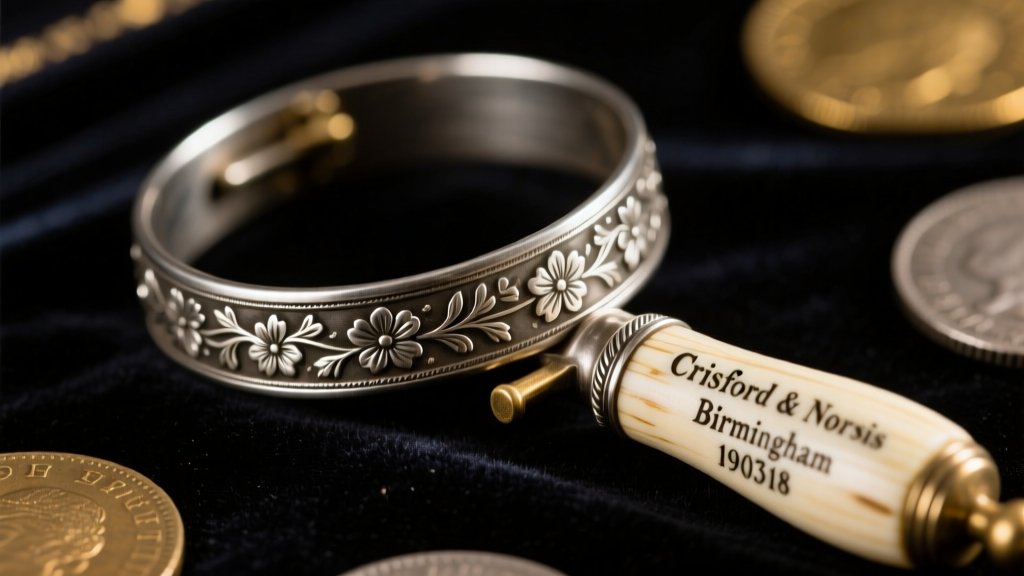
The Ivory Page Turner with Silver Collar: Crisford & Norris, Birmingham, 1903 — A Numismatic and Antiquarian Appraisal

The Banks Mechanical Trick Pony: A Forgotten Masterpiece of Early 20th-Century Automata Engineering