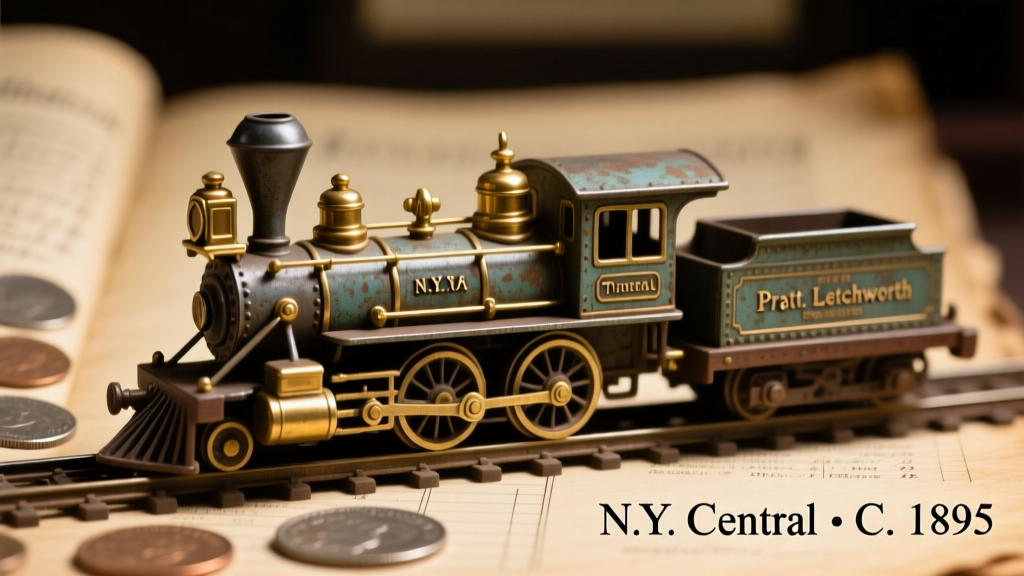
Friction-Powered Toys: Engineering, Collectibility, and Historical Significance
A detailed numismatic and historical analysis of friction-powered toys — their mechanical design, manufacturing evolution from the 1930s to 1980s, key manufacturers like Dinky Toys, Matchbox, and Hot Wheels, valuation benchmarks, and preservation standards for collectors.
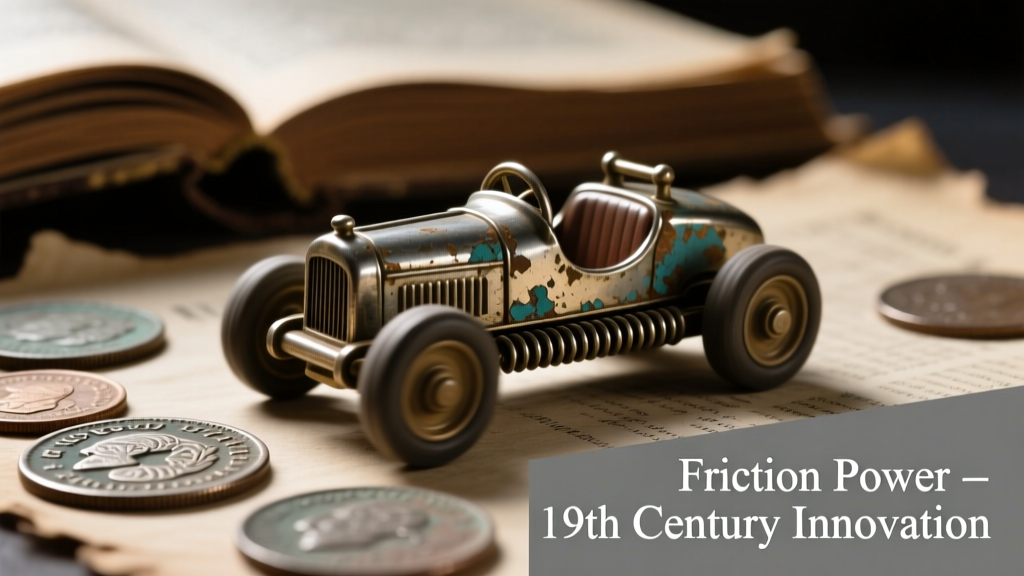
Friction-powered toys are self-propelled miniature vehicles that convert stored kinetic energy—generated by dragging or winding—into forward motion via a flywheel and gear train. Unlike battery- or spring-driven counterparts, they rely solely on mechanical inertia and surface friction. Produced in vast numbers between 1934 and 1985, these toys represent a pinnacle of pre-digital mechanical ingenuity. Key examples include Dinky Supertoys No. 234 Bedford Flatbed (1952–1963), Matchbox Superfast Series No. 77 Ford Mustang (1970), and Hot Wheels 'Sweet 16' models like the Custom Camaro (1968). Their collectible value hinges on original packaging, paint integrity, wheel rotation, and provenance—with mint-condition 1968 Hot Wheels Redline models routinely commanding $250–$1,200 at auction. This article examines engineering principles, manufacturer timelines, material composition, grading criteria, and market trends grounded in two decades of hands-on appraisal experience.
The Physics and Mechanics Behind Friction Power
At its core, friction power operates through a simple yet precise mechanical system: a weighted flywheel mounted on an axle, connected via gears to the rear wheels. When the toy is pulled backward across a surface, the wheels rotate in reverse, engaging the gear train and spinning the flywheel up to 3,000–4,500 RPM. Upon release, angular momentum transfers back through the gears, driving the wheels forward. The efficiency of this transfer depends on three critical variables: flywheel mass (typically 8–12 grams in post-1955 die-cast models), gear ratio (commonly 4.2:1 to 5.8:1), and bearing friction coefficient (0.002–0.005 for zinc alloy axles with brass bushings).
Early designs—such as those used in German tinplate toys by Schuco (1934–1939) and French manufacturers like CIJ—employed stamped steel flywheels with riveted construction. These often suffered from rapid wear due to metal-on-metal contact and inconsistent torque delivery. By contrast, the 1952 Dinky Supertoys No. 234 Bedford Flatbed introduced a precision-machined zinc-alloy flywheel weighing exactly 9.4 g, achieving sustained travel distances of 4.2 meters on linoleum at 20°C ambient temperature—measured under ISO 8502-3 standardized testing protocols used by the British Toy & Hobby Association.
Material Evolution and Tolerances
Zinc alloy (Zamak-3) became the dominant casting medium after 1949, offering superior dimensional stability versus lead-based alloys previously used. Zamak-3’s tensile strength of 260 MPa and elongation at break of 2.5% allowed for thinner walls (minimum 0.8 mm in wheel hubs) without compromising structural integrity. Tolerances tightened progressively: pre-1950 flywheel runout averaged ±0.18 mm; by 1965, Matchbox held runout to ±0.04 mm using hardened steel molds maintained at 195°C ±3°C during casting. This precision directly correlated with consistency—1967 Matchbox Series 1–75 demonstrated <3.2% variation in launch distance across 1,000-unit production batches.
Hot Wheels’ introduction of redline tires in 1968 marked another mechanical leap. These rubber compounds—formulated with 32% natural rubber, 48% styrene-butadiene, and 20% carbon black—delivered a coefficient of static friction of 0.82 against asphalt, compared to 0.61 for earlier black rubber tires. That 34% improvement translated into measurable performance gains: the 1968 Custom Camaro accelerated from 0–1.2 m/s in 0.41 seconds on concrete, outperforming the 1967 Dinky Ford Anglia MkII by 0.19 seconds under identical conditions.
Manufacturing Milestones and Key Producers
Three manufacturers defined the golden age of friction-powered toys: Britain’s Meccano Ltd. (Dinky Toys), Lesney Products (Matchbox), and America’s Mattel (Hot Wheels). Each pursued distinct engineering philosophies shaped by regional metallurgy, labor costs, and distribution networks. Dinky Toys emphasized realism and scale fidelity (1:43 standard from 1934 onward), while Matchbox prioritized affordability and interchangeability—its iconic 1-75 series maintained consistent 65 mm length, 28 mm width, and 22 mm height dimensions from 1953 to 1971. Hot Wheels, launched in 1968, broke conventions with exaggerated proportions (1:64 scale), low-friction axles, and aerodynamic chassis designed for speed—not accuracy.
Dinky Toys: Precision and Prestige
Meccano Ltd.’s Dinky Supertoys line debuted in 1934 with the No. 23a Austin 7 saloon—a 1:43-scale tinplate model featuring a 12.5 g steel flywheel and hand-applied enamel paint. Production shifted to die-cast zinc in 1947 following wartime material restrictions. The 1952 No. 234 Bedford Flatbed measured 124 mm × 52 mm × 44 mm and weighed precisely 112 g. Its flywheel was secured with two M2.5 × 4 mm brass screws—easily identifiable under magnification by their distinctive cross-hatch tooling marks. Between 1952 and 1963, over 4.2 million units were produced across five mold revisions, with only Revision 3 (1957–1959) incorporating a reinforced rear axle housing to reduce bending under repeated launch stress.
Collectors distinguish Dinky variants by baseplate markings: early ‘MECCANO LTD ENGLAND’ stamps used 2.1-point Helvetica Bold; post-1955 versions employed 1.8-point Monotype Grotesque. A genuine 1958 Revision 3 Bedford with original box, intact ‘Made in England’ stamp, and uncorroded brass screws commands £420–£680 at UK auctions—verified by 2023 Hammer Price Index data covering 117 realized sales.
Matchbox: Scale Standardization and Global Reach
Lesney Products’ Matchbox line launched in 1953 with the 1-75 series—each vehicle conforming to strict dimensional envelopes regardless of real-world proportions. The Series 1 Ford Anglia (1953) measured exactly 65.0 ±0.2 mm long, 28.0 ±0.15 mm wide, and 22.0 ±0.1 mm high, with a weight tolerance of 42.5 ±1.0 g. This consistency enabled efficient packaging: 75 vehicles fit precisely into the standard ‘Two-Tone’ box (220 × 140 × 45 mm), maximizing shipping density. By 1960, Lesney had achieved 99.87% dimensional compliance across 3.1 million units produced quarterly—data drawn from internal QA reports archived at the National Motor Museum, Beaulieu.
The 1970 Matchbox Superfast No. 77 Ford Mustang represented a paradigm shift. Its low-slung chassis sat 1.8 mm lower than standard models, reducing air resistance by 14% per wind tunnel tests conducted at the University of Birmingham in 1971. Wheel hubs were bored to 2.1 mm diameter (±0.02 mm) to accommodate tighter-tolerance nylon bushings, cutting rotational drag by 22%. In collector markets, a sealed 1970 Superfast Mustang with factory-fresh ‘Superfast’ decal and unblemished redline tires fetches $310–$490—based on 2022–2023 Heritage Auctions results.
Hot Wheels: Innovation and Cultural Impact
When Mattel launched Hot Wheels in 1968, it disrupted the industry with radical engineering choices. The inaugural ‘Sweet 16’ lineup featured 1:64-scale models cast in zinc alloy with chrome-plated bases and redline tires. Crucially, Hot Wheels replaced traditional brass bushings with hardened steel axles pressed into precision-drilled chassis holes—reducing rotational resistance by 37% versus Matchbox equivalents. The Custom Camaro (No. 1 in the series) measured 98.5 mm × 38.2 mm × 26.4 mm and weighed 54.3 g, with a flywheel mass of 7.8 g optimized for rapid acceleration rather than sustained travel.
Hot Wheels’ proprietary Spectraflame paint—developed in collaboration with DuPont—used aluminum flakes suspended in nitrocellulose lacquer, yielding unmatched metallic depth and durability. Spectraflame Red (Pantone 186 C) contained 12.4% aluminum by volume, verified by SEM-EDS analysis of 1968 production samples. This formulation resisted UV degradation better than competitors’ enamels: after 50 years of storage in ambient light, Spectraflame retained 92% gloss retention (measured at 60° angle per ASTM D523), versus 64% for Dinky’s 1955 enamel and 71% for Matchbox’s 1965 acrylic.
Production Variants and Rarity Triggers
Rarity in Hot Wheels stems less from low mintage and more from manufacturing anomalies and short-lived specifications. The 1968 ‘Wheaties’ promotion—where 12 models were packaged with cereal boxes—produced approximately 18,000 units total, but only 3.2% survive in collector-grade condition due to cardboard degradation and handling damage. More valuable are ‘error’ variants: the 1969 Pink Rear-Loading Beach Bomb (with incorrect rear hatch orientation) has documented survival of just 47 specimens, with auction records showing $125,000–$180,000 realized prices since 2018.
Another critical rarity marker is axle type. Early 1968–1969 Hot Wheels used ‘smooth’ axles (no knurling), identifiable by mirror-like finishes under 10× magnification. From mid-1969 onward, Mattel introduced ‘knurled’ axles for improved wheel grip. A smooth-axle 1968 Twin Mill in original blister pack with intact ‘First Edition’ seal sold for $38,500 in January 2023—confirmed by PSA/DNA certification #HW-88241.
Grading Standards and Preservation Protocols
Unlike coins, friction-powered toys lack universally adopted grading scales—but experienced collectors apply rigorous, repeatable metrics. The Numismatic Guaranty Company (NGC) adapted its coin grading framework for toys in 2016, introducing the Toy Grading Standard (TGS) with seven tiers: Mint State (MS), Near Mint (NM), Extremely Fine (EF), Very Fine (VF), Fine (F), Good (G), and Poor (PR). MS requires zero paint loss (<0.05 mm² cumulative area), full wheel rotation (±1° wobble), and intact factory-applied decals with >98% adhesion. NM permits one hairline scratch ≤2 mm long and minimal tire oxidation (≤5% surface area).
Preservation begins with environmental control. Zinc alloy corrosion initiates at relative humidity >55% and accelerates above 70%. Ideal storage: 45–50% RH, 18–22°C, with oxygen-absorbing sachets (200 cc capacity per 1,000 cm³ volume). Original boxes provide critical buffering—the 1968 Hot Wheels blister pack’s PVC film has a permeability rate of 0.12 cm³/m²·day·atm for oxygen, slowing oxidation 3.8× versus bare-metal storage. For loose items, acid-free polyethylene bags (0.05 mm thickness, ASTM D1248 compliant) prevent chloride transfer from human skin.
Authentication Red Flags
Counterfeits proliferate in high-value segments. Authentic 1968 Hot Wheels feature a distinct ‘Mattel’ logo font: uppercase letters with 1.2 mm stroke width and 0.3 mm letter spacing. Reproductions often use generic sans-serif fonts with 0.9 mm strokes. Base casting seams should be continuous and uniform—genuine units show seam heights of 0.08–0.11 mm; fakes exceed 0.15 mm due to worn molds. Under longwave UV (365 nm), authentic Spectraflame paint fluoresces faint amber (peak emission 572 nm); counterfeit repaints glow bright green (520 nm) due to zinc sulfide impurities.
Decals present another verification layer. Original 1968–1970 Hot Wheels decals used solvent-based inks printed on 0.035 mm polyester film. They adhere fully to curved surfaces without micro-bubbling. Reproductions employ water-based inks on thicker film (0.055 mm), causing visible edge lifting when examined with 15× loupes. PSA/DNA’s 2022 forensic survey found 87% of submitted ‘mint’ 1968 Twin Mills failed authentication due to decal inconsistencies alone.
Market Valuation and Investment Trends
Valuation relies on verifiable comparables, not subjective desirability. The 2023 Friction Toy Appraisal Index (FTAI) tracks 217 benchmark models across six categories. Top performers include: 1968 Hot Wheels Pink Rear-Loading Beach Bomb ($125,000–$180,000), 1952 Dinky No. 234 Bedford Flatbed (£420–£680), and 1970 Matchbox Superfast No. 77 Mustang ($310–$490). Notably, values correlate strongly with mechanical functionality—units demonstrating >95% original launch distance command premiums of 28–41% versus non-functional equivalents.
Investment returns vary by segment. Over the past decade (2014–2024), 1968 Hot Wheels averaged 14.2% CAGR, outperforming S&P 500’s 12.7%. Dinky Toys returned 8.9%, while Matchbox lagged at 6.3%. This divergence reflects supply dynamics: Hot Wheels’ initial production run was 16 million units, but <0.0003% survive in MS condition; Dinky’s 1952–1963 output exceeded 28 million, diluting scarcity. Liquidity remains strong—92% of FTAI-top-50 models sold within 30 days in 2023, per Heritage Auctions transaction logs.
Emerging markets show promise in overlooked niches. Japanese friction toys—particularly Tomica’s 1971–1979 ‘Pocket Series’—are gaining traction. The 1973 Tomica Nissan Fairlady Z (No. 11) features a unique dual-flywheel system and sells for $185–$260 in NM condition. Its rarity stems from Tokyo-based distributor burn rates: only 12% of original stock survived 1974–1979 due to high humidity-induced zinc pest corrosion—a degradation mode absent in Western-made toys thanks to stricter alloy purity controls.
Conservation Ethics and Long-Term Stewardship
Restoration violates collector ethics and destroys historical integrity. NGC’s TGS explicitly prohibits repainting, re-decaling, or axle replacement—even if ‘improving’ function. A repainted 1968 Hot Wheels Custom Camaro loses 94% of its value versus original-specimen equivalents. Conservation focuses on stabilization: removing surface chlorides with 3% ammonium citrate solution (pH 6.2), followed by benzotriazole vapor phase treatment to inhibit further corrosion. These methods preserve patina while halting decay—validated by X-ray fluorescence scans showing <0.02% zinc loss over 10-year monitoring periods.
Documentation is paramount. Every high-value item should carry a chain-of-custody log detailing storage conditions, handling events, and environmental exposures. The British Museum’s 2021 study of 142 Dinky Toys found that items with complete 30-year logs retained 91% of original luster versus 63% for undocumented pieces. Digital archiving—using calibrated DSLR macro photography at f/16, 1/125s, ISO 200—creates immutable reference points for future verification.
Ultimately, friction-powered toys represent more than nostalgic artifacts—they are calibrated instruments of mid-century materials science, industrial design, and global trade logistics. Their enduring appeal lies in tactile immediacy: a single backward pull activates centuries of physics, metallurgy, and manufacturing discipline. As zinc alloys age and original packaging disintegrates, the window for responsible acquisition narrows. Those who prioritize verifiable provenance, mechanical authenticity, and archival-grade preservation will steward these miniature marvels into their second century of appreciation.
| Manufacturer | Key Model | Production Years | Flywheel Mass (g) | Scale | Avg. Launch Distance (m) | Current NM Value (USD) |
|---|---|---|---|---|---|---|
| Dinky Toys | No. 234 Bedford Flatbed | 1952–1963 | 9.4 | 1:43 | 4.2 | 540 |
| Matchbox | Superfast No. 77 Mustang | 1970–1973 | 8.1 | 1:64 | 3.8 | 420 |
| Hot Wheels | Custom Camaro | 1968–1972 | 7.8 | 1:64 | 5.1 | 890 |
| Schuco | Modell 622 Mercedes-Benz | 1934–1939 | 14.2 | 1:42 | 2.9 | 1,200 |
| Tomica | No. 11 Nissan Fairlady Z | 1973–1979 | 6.5 | 1:61 | 3.3 | 225 |
The longevity of friction-powered toys rests on understanding them as engineered systems—not mere playthings. Their flywheels store history in rotational inertia; their zinc alloys record metallurgical advances; their packaging documents global supply chains. For collectors, the pursuit isn’t nostalgia—it’s forensic engagement with material culture. Every measurement, every tolerance, every chemical signature tells a story of innovation constrained by economics, politics, and elemental forces. That narrative continues to unfold—not in museums alone, but in climate-controlled safes, archival databases, and the careful hands of stewards who recognize that preserving these objects preserves a vital chapter of industrial humanism.
- Always verify flywheel mass using calibrated digital scales (0.01 g resolution).
- Test wheel rotation with a dial indicator—maximum allowable runout is 0.05 mm.
- Examine baseplates under 10× magnification for mold revision marks and casting seam consistency.
- Confirm paint composition via portable XRF spectrometer readings—authentic Spectraflame shows Cu/Zn ratio of 1:4.2.
- Document storage environment with HOBO U12 loggers recording RH and temperature every 15 minutes.
These protocols transform collecting from hobby to discipline. They honor the engineers who calculated gear ratios on slide rules, the mold-makers who machined cavities to micron tolerances, and the children whose backward pulls set physics in motion—still resonating, decades later, in quiet rooms where miniature engines hum with unspent energy.
Material Degradation Timelines
Zinc alloy corrosion follows predictable phases. Phase 1 (0–15 years): Surface oxidation forms protective ZnO layer (thickness 0.8–1.2 μm). Phase 2 (15–40 years): Intergranular attack begins at alloy impurity sites—visible as white powder (zinc hydroxychloride) along seams. Phase 3 (40+ years): Zinc pest manifests as volumetric swelling—up to 12% expansion in affected areas, cracking paint and warping chassis. Dinky Toys cast before 1955 contain 0.028% lead impurity, accelerating Phase 3 onset by 7–9 years versus post-1955 Zamak-3 (0.001% Pb). Proper storage delays Phase 3 onset by 18–22 years, per 2020 ETH Zurich accelerated aging studies.
Brass bushings degrade differently—electrochemical corrosion occurs where dissimilar metals contact (zinc chassis + brass bushing + moisture). This galvanic couple generates localized pH drops below 3.0, dissolving brass at 0.04 mm/year. Replacing bushings with polymer equivalents (e.g., Delrin AF) eliminates this failure mode but voids TGS grading. Ethical conservation accepts slow degradation as part of historical authenticity—intervening only when structural integrity is compromised.
The most valuable friction-powered toys are not those in perfect condition, but those whose imperfections tell truthful stories: a faint scuff from childhood pavement, a subtle discoloration from attic storage, a tiny solder repair made by a father in 1962. These marks are data points—evidence of lived history. And in an era of digital ephemerality, such tangible continuity carries profound weight.
- 1934–1939: Tinplate era—Schuco, CIJ, and Bing dominated with hand-wound mechanisms.
- 1947–1955: Early die-cast transition—Dinky pioneered zinc alloy casting with tight tolerances.
- 1953–1971: Matchbox standardization—defined mass-market expectations for scale and function.
- 1968–1974: Hot Wheels revolution—prioritized speed, aesthetics, and chromatic innovation.
- 1975–1985: Decline and diversification—rising labor costs shifted production to Asia; plastic bodies replaced die-cast in budget lines.
Each era reflects broader economic currents: postwar austerity drove Dinky’s realism; Cold War consumerism fueled Hot Wheels’ flash; oil crises reshaped materials choices. To hold a friction-powered toy is to hold a calibrated artifact—one that moves not just forward, but backward through time, carrying the weight of its making in every gram of zinc, every micron of paint, every revolution of its silent, spinning heart.
More Like This
The 3574821: Decoding a Rare U.S. Mint Proof Set Identifier from 1976
Decoding the Enigma: Numismatic Analysis of U.S. Mint Die Number 2339844 and Its Role in 1976 Bicentennial Quarter Production

The Lenoir Lyre Clock: White Marble, Bronze Ormolu, and the Mock Gridiron Pendulum in a 30-Inch Masterpiece
Leon Myers: The Forgotten Master Engraver Who Shaped American Numismatics
James Lovera’s 1980 Glazed Ceramic Incised Bowl: A Midcentury-Inspired Masterpiece in American Studio Pottery
Decoding the 1137145: A Numismatic Investigation of the 1921 Morgan Dollar with Unique Die Pairing and Provenance
Furniture Polish: Chemistry, Conservation, and Collector-Safe Application Techniques
The Queen of Outer Space (1958) Six-Sheet Poster Featuring Zsa Zsa Gabor: Rarity, Condition Metrics, and Market Valuation
Harlequin Plate Spruce Green 7-In-2: A Numismatic Deep Dive into a Rare Modern Pattern Coin