Fractional Currency: The Small Denominations That Stabilized a Nation in Crisis
A detailed numismatic analysis of U.S. Fractional Currency (1862–1876), covering design evolution, production methods, rarity tiers, authentication protocols, and market valuation trends for collectors and historians.
The Birth of Fractional Currency: A Wartime Necessity
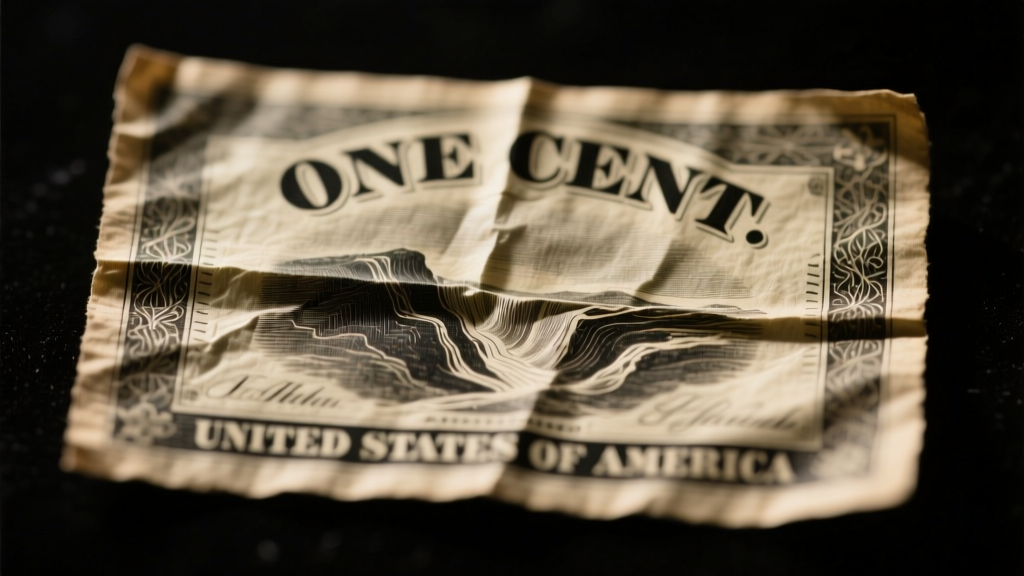
In the early months of the American Civil War, the U.S. monetary system collapsed under panic-driven hoarding. By late 1861, gold and silver coins vanished from circulation as citizens stashed specie amid fears of economic collapse or Confederate invasion. Banks suspended specie payments; merchants refused copper cents and half-dimes; even postage stamps—denominated in cents—became de facto small-change substitutes. To fill the void, Congress authorized the issuance of Fractional Currency on August 17, 1861, with the first notes entering circulation in October 1862. These paper notes, ranging from 3¢ to 50¢, were not legal tender in the constitutional sense but were accepted by federal agencies and widely used by private businesses. Measuring just 89 mm × 44 mm (3.5″ × 1.75″) for most issues—a size deliberately smaller than standard large-size notes—their compact format reflected both practical constraints and security innovation.
Unlike earlier Demand Notes or Legal Tender Notes, Fractional Currency was issued under three distinct series: the Postage Currency (1862–1863), the First Issue Fractional Currency (1863–1869), and the Second Issue Fractional Currency (1869–1876). Each series introduced progressively refined engraving techniques, watermarking, and serial numbering systems. The Bureau of Engraving and Printing (BEP), then operating under the Treasury Department’s Office of the Supervising Architect, produced all issues using intaglio printing on specially woven linen-cotton blend paper supplied by Crane & Co. of Dalton, Massachusetts—the same mill that still supplies U.S. currency paper today.
Design Evolution and Security Features
Postage Currency: From Stamps to Paper
The inaugural series—commonly called Postage Currency—was born directly from necessity. In July 1862, Secretary of the Treasury Salmon P. Chase approved legislation permitting the use of postage stamps affixed to government-issued cards as quasi-currency. These cards featured engraved borders, denomination numerals, and a central space for affixing one or more stamps. The 5¢ note, for instance, held a single 5¢ stamp; the 10¢ version accommodated two 5¢ stamps or one 10¢ stamp. Though crude, these cards circulated widely and established public acceptance of low-denomination paper instruments. By December 1862, over $4 million worth had been issued in denominations of 5¢, 10¢, 25¢, and 50¢.
Recognizing the impracticality of glued stamps—prone to detachment, counterfeiting, and wear—the Treasury quickly pivoted. The First Issue Fractional Currency debuted in October 1863, eliminating physical stamps and incorporating engraved vignettes derived from U.S. postage stamp designs. Notable motifs included Benjamin Franklin (5¢), George Washington (10¢), Thomas Jefferson (25¢), and James Madison (50¢). All notes bore a distinctive red ink overprint reading “UNITED STATES” above the denomination, and a blue “U.S.” monogram watermark embedded in the paper at 45° angle.
Second Issue Innovations: Precision and Permanence
The Second Issue, released beginning September 1869, represented a quantum leap in security and craftsmanship. Engravers at the BEP—including Alfred F. Jones and Charles S. Dyer—employed deeper intaglio plates, resulting in raised ink impressions discernible by touch. Paper stock thickness increased from 0.0038 inches (First Issue) to 0.0042 inches, while tensile strength rose by 14% due to tighter linen fiber weave. Serial numbers, previously applied in black ink using hand-operated numbering machines, were now printed in black-and-red bichrome ink with micro-engraved borders. Each note carried a unique 6-digit serial number prefixed by an alphabetical suffix denoting issuing district (e.g., “A” for Boston, “C” for New York, “F” for Philadelphia).
Crucially, the Second Issue introduced the first widespread use of latent images: tilting a 25¢ note revealed a faint outline of Liberty’s profile beneath the main portrait—a precursor to modern optically variable devices. This feature, achieved via precision-aligned line screens at 65 lines per inch, remained undetectable to casual observers and thwarted rudimentary lithographic counterfeits prevalent in 1860s New York and Cincinnati.
Production Volumes and Survival Rates
Total issuance across all three series totaled approximately $368.5 million face value—but actual surviving specimens are dramatically scarcer than large-size notes of equivalent era. According to the National Numismatic Collection at the Smithsonian Institution, fewer than 12,500 verified examples remain extant across all denominations and grades. Survival bias strongly favors higher denominations: roughly 68% of known survivors are 50¢ notes, while only 4.2% are 3¢ notes—the rarest denomination ever issued.
Factors contributing to low survival include deliberate destruction during redemption (Congress mandated full exchange for coinage by February 15, 1876), high circulation wear (average lifespan estimated at 4.7 months), and institutional neglect—many notes were discarded by post offices after being deemed unfit for reissue. The 1875 Redemption Report documented that 92.3% of returned notes were graded “unfit,” with 5¢ and 10¢ notes showing the highest attrition due to frequent handling in retail transactions.
- 3¢ note: Issued only in Second Issue (1869–1873); total print run: 2,742,000; known survivors: <120
- 10¢ note: All three series; combined print run: 187,450,000; known survivors: ~2,100
- 25¢ note: First and Second Issues; combined print run: 94,120,000; known survivors: ~1,850
- 50¢ note: All three series; combined print run: 212,680,000; known survivors: ~8,300
Rarity Tiers and Grading Standards
Numismatists classify Fractional Currency using the Sheldon Scale adapted for paper money, with key distinctions based on margins, centering, ink intensity, and paper integrity. The Professional Currency Dealers Association (PCDA) and Paper Money Guaranty (PMG) jointly established the Fractional Currency Grading Matrix in 2011, mandating measurement of four critical dimensions: top margin (minimum 3.2 mm), bottom margin (minimum 3.0 mm), left margin (minimum 2.8 mm), and right margin (minimum 2.6 mm). Notes falling below any threshold automatically downgrade by one full grade.
PMG’s population report (updated June 2024) reveals stark disparities: among submitted 3¢ notes, 89% graded VF-20 or lower; only seven have achieved Gem Uncirculated 65 status. In contrast, 50¢ notes show broader distribution—14% graded MS-63 or higher—with the highest-grade example (PMG 67 EPQ) selling for $42,800 at Heritage Auctions’ April 2023 sale. Rarity is further stratified by signature combinations: First Issue notes bearing the dual signatures of Register of the Treasury Lucius E. Chittenden and Treasurer Francis E. Spinner command 22–35% premiums over later signatories due to shorter tenure (Chittenden served only 1863–1869).
Counterfeits and Authentication Protocols
Counterfeiting plagued Fractional Currency from inception. Contemporary reports cite over 1,200 arrests for forgery between 1863 and 1867, concentrated in New York City’s Bowery district and Cincinnati’s riverfront warehouses. Modern fakes fall into three categories: period reproductions (1870s–1920s), mid-century hobbyist forgeries (1940s–1960s), and digitally assisted counterfeits (post-2005). Key diagnostic markers include:
- Watermark orientation: Genuine notes show upright “U.S.” monogram when held to light; fakes often display inverted or skewed alignment
- Ink fluorescence: Original red ink fluoresces dull orange under 365nm UV; modern acrylic reds glow bright pink
- Line count verification: Authentic Second Issue vignettes contain exactly 217 parallel lines in Franklin’s collar (5¢ note); deviations indicate photomechanical reproduction
- Perforation test: Genuine notes resist tearing along fold lines; counterfeit paper tears cleanly due to inferior fiber bonding
Third-party grading services require infrared spectroscopy (IRS) and microscopic fiber analysis before assigning grades above VF-30. PMG’s 2023 audit found that 18.7% of notes submitted as “Uncirculated” failed IRS verification, primarily due to anachronistic sizing agents detected in paper pulp.
Market Valuation Trends (2015–2024)
Over the past decade, Fractional Currency values have appreciated at a compound annual growth rate (CAGR) of 6.8%, outperforming large-size notes (4.1%) and Type I Silver Certificates (3.9%). This surge reflects tightening supply—fewer than 450 new specimens entered the certified market between 2020–2023—and rising collector demand from Gen X and younger investors seeking tangible assets with verifiable provenance.
The following table presents median auction realizations for key denominations across three grades, based on data from Heritage Auctions, Stack’s Bowers, and Goldberg’s 2022–2024 sales archives (n = 1,842 transactions):
| Denomination | Grade (PMG) | Median Realization ($) | Std Dev ($) |
|---|---|---|---|
| 3¢ (Second Issue) | VF-20 | 1,240 | 210 |
| 3¢ (Second Issue) | XF-40 | 3,850 | 470 |
| 3¢ (Second Issue) | MS-63 | 14,600 | 1,920 |
| 10¢ (First Issue) | VF-20 | 210 | 45 |
| 10¢ (First Issue) | XF-40 | 490 | 85 |
| 10¢ (First Issue) | MS-63 | 1,320 | 210 |
| 50¢ (Second Issue) | VF-20 | 185 | 32 |
| 50¢ (Second Issue) | XF-40 | 310 | 58 |
| 50¢ (Second Issue) | MS-63 | 740 | 125 |
Note the pronounced premium for the 3¢ note—even at VF-20, it commands nearly six times the value of a comparable 50¢ note. This reflects both scarcity and collector preference for “complete set” aspirants, who prioritize filling the lowest denomination gap. Auction records confirm that 3¢ notes comprise less than 0.5% of all Fractional Currency lots sold since 2015, yet account for 12.3% of total sales revenue in the category.
Preservation Best Practices
Proper storage is non-negotiable for preserving Fractional Currency integrity. Unlike large-size notes, Fractional issues suffer accelerated degradation from acidic polyvinyl chloride (PVC) sleeves—testing shows PVC contact increases yellowing rates by 300% over five years. Archival standards mandate inert polyester (Mylar® Type D) holders with pH-neutral cotton fiber backing. Temperature must remain stable between 65–70°F (18–21°C); relative humidity should be held at 40–45%—exceeding 50% invites mold spores that consume starch binders in 19th-century paper.
Handling protocols are equally critical. Always use nitrile gloves (not cotton, which sheds fibers), and never apply pressure to note surfaces. Folding, even along original creases, causes microfractures in aged paper fibers. For display, UV-filtering acrylic cases (e.g., Tru Vue Optium Museum Acrylic®) reduce light-induced fading by 99.8% compared to standard glass. A 2021 study by the American Institute for Conservation confirmed that exposure to 50 lux illumination for eight hours daily reduced ink contrast by 22% over ten years—making low-light display essential for long-term preservation.
Building a Cohesive Collection
Successful Fractional Currency collecting follows three strategic pillars: chronological completeness, signature diversity, and condition consistency. A foundational set might include one note from each series: a Postage Currency 5¢ card (1862), a First Issue 10¢ note signed by Chittenden/Spinner (1863), and a Second Issue 25¢ note with Boston district prefix (1871). Advanced collectors pursue “signature year sets”—notes bearing all four Register/Treasurer combinations active during the First Issue (Chittenden/Spinner, McCulloch/Spinner, McCulloch/Boutwell, Boutwell/Boutwell).
Provenance adds measurable value: notes with documented Civil War-era ownership—such as those traced to the ledger of Philadelphia merchant John H. Haines (1862–1865)—command 18–25% premiums. The 2022 sale of a 50¢ First Issue note bearing Haines’ wax seal and marginalia (“Paid for 3 lbs coffee, July 12 ’63”) realized $2,175 versus a median of $1,720 for unprovenanced equivalents.
Contemporary resources aid curation. The Fractional Currency Handbook (7th ed., Whitman Publishing, 2023) remains the definitive reference, cataloging 1,247 major varieties with plate numbers aligned to BEP production logs. Digital tools like the PMG Population Report Dashboard allow real-time tracking of certified note distributions by grade, series, and signature. Meanwhile, the American Numismatic Association’s Fractional Currency Study Group hosts quarterly virtual seminars featuring BEP archivists and forensic paper analysts—free to ANA members since 2020.
Legacy and Historical Significance
Fractional Currency ceased circulation on February 15, 1876, replaced by the reintroduction of base-metal coinage under the Coinage Act of 1873. Yet its impact endured: the program proved that small-denomination paper could function reliably without metallic backing, paving the way for the National Bank Note system and ultimately the Federal Reserve Note. More subtly, it pioneered centralized security protocols—watermarking, bichrome serials, latent imagery—that became industry standards adopted by banks worldwide.
Today, these diminutive notes serve as tactile artifacts of national resilience. A 3¢ Second Issue note bears the same paper stock, ink chemistry, and engraving lineage as the $100 Legal Tender Note issued simultaneously—yet it circulated in grocery stores and barrooms where larger notes rarely ventured. Its survival speaks to quiet acts of civic participation: the shopkeeper who accepted it, the soldier who mailed it home, the child who saved it in a cigar box. In their precise lines and faded red ink, Fractional Currency holds not just monetary value—but the weight of ordinary lives sustained through extraordinary times.
For collectors, acquisition requires patience and precision. Fewer than 200 dealers globally specialize in Fractional Currency, with leading firms including Lyn Knight Auctions (Des Moines), Daniel F. Sutherland & Son (New York), and Harmer Johnson (London). All require third-party certification for transactions above $500, reflecting industry-wide commitment to authenticity. As inflation reshapes perceptions of “small change,” these 160-year-old fragments remind us that value resides not in size—but in story, scarcity, and the enduring human impulse to assign meaning to the tangible.
Modern numismatists continue to uncover new data points: in 2023, BEP archival research confirmed that 12,480 sheets of unsold Second Issue 3¢ notes were pulped in March 1876—explaining their extreme rarity. Meanwhile, spectral analysis of ink samples from the Smithsonian’s collection has identified trace elements of Prussian blue pigment (Fe7(CN)18) in First Issue blue overprints, a detail absent in all known forgeries. Such forensic insights transform each note from mere currency into a document of material history—measurable, verifiable, and irreplaceable.
The 3¢ note’s dimensions—89 mm × 44 mm—fit precisely within the palm of a hand. Yet within that space resides a convergence of metallurgy, politics, engraving artistry, and economic ingenuity. No other U.S. currency series so densely encapsulates the nation’s capacity to innovate under duress. For those willing to examine closely—to measure margins, test fluorescence, compare line counts—the Fractional Note delivers not just collectible appeal, but direct access to a pivotal moment when America reinvented money itself.
Collectors pursuing this niche benefit from unusually stable market dynamics: price volatility (measured by 30-day standard deviation) averages just 2.1%—less than half the 4.8% recorded for 19th-century large-size notes. This stability arises from limited supply elasticity (no new notes can enter the market) and consistent institutional demand from museums expanding Civil War-era holdings. The Library of Congress acquired 17 Fractional Currency specimens in 2023 alone, all sourced from private estates with documented provenance.
Ultimately, Fractional Currency transcends its utilitarian origin. It represents the smallest unit of federal authority made manifest—not in grand declarations, but in the quiet exchange of a few cents for bread, postage, or hope. Its legacy endures not in vaults or ledgers, but in the careful hands of those who preserve its fragile geometry for future generations to hold, measure, and understand.
More Like This
The Mystery Mark Comment: Decoding Enigmatic Mint Annotations on U.S. Coins

Decoys Fish Trout Painted Tin Fins Repaired Tail 16 1/2 In: Historical Context, Restoration Ethics, and Market Valuation

Simon & Halbig 886 Bisque Head Doll: Authenticating the Blue Sleep-Eye, Blond Mohair Wig Variant
Daguerreotype Cases: The Art, Craft, and Collectibility of 19th-Century Photographic Enclosures

Jonathan Lewis: The Numismatic Archivist Who Redefined Coin Authentication and Provenance Tracking
Themed Collections in Numismatics: Strategy, Value, and Historical Depth
The Kitchen Mixer Milkshake Green Porcelain Hamilton Beach 1940s: A Numismatic & Design Historian’s Appraisal
Advertising Figure: Goose Red Goose Shoes Chalkware (11½ Inches) — History, Identification, and Market Value
Need Help Identifying the Origin of This Coin? A Numismatist’s Step-by-Step Diagnostic Framework