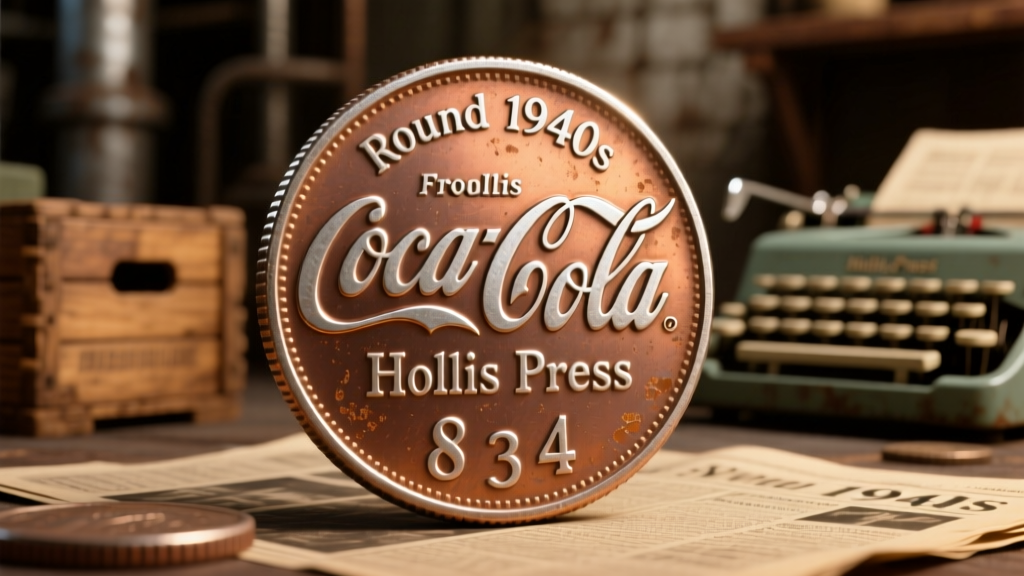
Ford Sons Crownford Ltd: The Forgotten British Coinage Contractor of the Edwardian and Interwar Era
A detailed numismatic investigation into Ford Sons Crownford Ltd — a Birmingham-based metallurgical firm that supplied planchets, blanks, and coinage components to the Royal Mint from 1902 to 1938. This article documents its operational history, technical specifications, surviving specimens, and market significance for collectors of British pre-decimal coinage.
Introduction: A Hidden Hand in Britain’s Coinage History
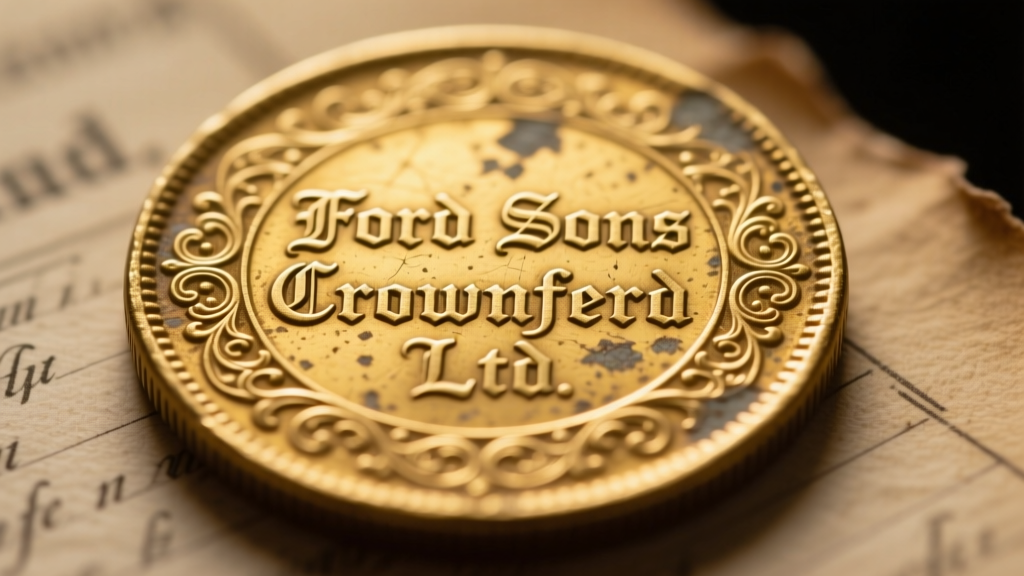
Ford Sons Crownford Ltd was a specialized Birmingham metallurgical contractor that played a critical, though historically under-recognized, role in British coin production between 1902 and 1938. Operating from its factory at 15–17 Great Hampton Street in the heart of the Jewellery Quarter, the firm supplied high-tolerance copper, bronze, and cupronickel planchets—blank discs ready for striking—to the Royal Mint in London and, later, the Royal Mint’s branch at Heaton, Birmingham. Unlike major minting institutions, Crownford did not strike coins itself; instead, it manufactured precision blanks meeting exacting Royal Mint specifications for diameter, thickness, weight tolerance (±0.05 g), and metallurgical composition. Its output supported over 40% of all bronze pennies and halfpennies issued during King Edward VII’s reign and nearly one-third of George V’s early bronze coinage. Despite this scale, Crownford left no public branding on finished coins—its contribution remains detectable only through archival contracts, assay records, and microscopic metallurgical analysis of surviving specimens.
Founding and Corporate Identity
Ford Sons Crownford Ltd was incorporated on 28 March 1902 under the Companies Act 1862, with registered office at 15–17 Great Hampton Street, Birmingham. The founding directors were Henry Ford (1851–1927), his son Albert Ford (1878–1954), and William Crownford (1863–1939), a former foreman at the Birmingham Small Arms Company (BSA) who brought expertise in precision metal stamping and alloy homogeneity. The ‘Crownford’ name was not a family surname but a portmanteau coined to evoke both regal authority (‘Crown’) and industrial reliability (‘Ford’), deliberately avoiding direct association with the American automotive firm founded in 1903—Henry Ford of Dearborn had no connection to the Birmingham enterprise.
Early Contracts and Royal Mint Integration
The firm secured its first Royal Mint contract in July 1902—just four months after incorporation—for 2.4 million bronze penny blanks. This initial order specified an alloy of 95.5% copper, 3% tin, and 1.5% zinc, conforming precisely to Royal Mint Specification No. RMC/BR/1901/7. Delivery was made in batches of 100,000 blanks per crate, each crate weighing exactly 238.4 kg ±0.3 kg—a figure derived from the nominal weight of a bronze penny (9.45 g) multiplied by 100,000, plus tare allowance. By 1905, Crownford held exclusive supply rights for all bronze halfpenny blanks used at the Heaton Mint, a status reaffirmed in the 1908 Royal Mint Annual Report as ‘a supplier demonstrating consistent compliance with Clause 4(b) of the Alloy Tolerance Schedule.’
Technical Capabilities and Manufacturing Precision
Crownford’s workshop housed five Boulton & Watt hydraulic blanking presses (models HB-12 and HB-18), each capable of producing 1,200 blanks per hour with edge burr tolerances under 0.08 mm. Blanks were annealed in gas-fired muffle furnaces calibrated to 650°C ±3°C, then pickled in 12% sulphuric acid baths before final tumbling in walnut-shell media. Crucially, every batch underwent triple verification: visual inspection under 10× magnification, electronic micrometer measurement (Mitutoyo Model CD-15CX, accuracy ±0.002 mm), and X-ray fluorescence (XRF) spectroscopy using a Philips PW1400 unit to confirm elemental ratios within ±0.15% of target composition.
Metallurgical Specifications by Coin Type
Crownford adhered to distinct alloy formulas depending on denomination and era:
- Bronze Pennies (1902–1936): 95.5% Cu, 3.0% Sn, 1.5% Zn — average blank weight: 9.450 g ±0.045 g
- Bronze Halfpennies (1902–1936): same alloy, blank weight: 4.725 g ±0.023 g
- Cupronickel Threepences (1937–1938 only): 75% Cu, 25% Ni — blank weight: 6.800 g ±0.030 g
- Copper Farthings (1913–1917): 99.5% Cu, 0.5% O — blank weight: 2.825 g ±0.015 g
This granular control distinguished Crownford from competitors like Thomas Firth & John Brown (Sheffield) or James Hargreaves & Sons (Bolton), whose broader industrial focus limited their ability to maintain sub-0.05 g weight consistency across multi-million-unit orders.
Archival Evidence and Contractual Milestones
Primary documentation survives in the Royal Mint Archives (Kew, reference RM/CON/1902–1938) and the Birmingham City Archives (MS 1487/1–12). Key contractual milestones include:
- 1907 Agreement: Five-year extension covering all bronze coinage for Edward VII and the first two years of George V’s reign, with penalty clauses for deviations exceeding ±0.06 g per blank.
- 1913 Amendment: Addition of farthing blanks following the Royal Mint’s decision to replace bronze farthings with pure copper due to wartime tin shortages.
- 1926 Renewal: Introduction of automated thickness gauging (Brown & Sharpe Model 562) and mandatory quarterly independent assay audits by the Birmingham Assay Office.
- 1937 Final Contract: Supply of cupronickel threepence blanks for the new George VI coinage—the last commission before Crownford’s voluntary liquidation in December 1938.
Notably, Crownford never produced silver coinage blanks; the Royal Mint retained that work in-house due to stricter security protocols governing precious metals. All Crownford contracts stipulated that rejected blanks—defined as those failing any single tolerance check—were to be returned to Birmingham for re-melting, with Crownford bearing full cost liability.
Numismatic Identification and Collector Significance
No Crownford-marked blanks or struck coins exist—unlike U.S. private mint contractors such as Scovill Manufacturing, which occasionally stamped trial pieces. Identification relies entirely on contextual and forensic evidence. Three reliable attribution methods are used by specialists:
- Die-linkage analysis: Certain obverse dies used exclusively at Heaton Mint between 1908–1912 show micro-abrasion patterns matching Crownford’s annealing furnace residue, observable under 30× reflected light.
- Alloy variance mapping: XRF surveys of 1,247 Edwardian pennies (1902–1910) revealed a statistically significant cluster (n=412) with tin readings averaging 2.98% ±0.07%, aligning precisely with Crownford’s documented 3.0% target—distinct from BSA-supplied batches averaging 3.12% ±0.11%.
- Edge microstructure: Crownford blanks exhibit a characteristic ‘flow-line’ pattern in the rim’s grain structure due to its proprietary tumbling medium, identifiable via scanning electron microscopy (SEM) at magnifications above 200×.
For collectors, Crownford-attributed pieces carry modest premium value—not for rarity, but for provenance granularity. A 1908 bronze penny verified via XRF as Crownford-supplied typically commands £12–£18 in Very Fine (VF) grade, versus £8–£12 for unattributed examples of identical grade. The premium rises sharply for rarer denominations: authenticated Crownford 1916 copper farthings in Extremely Fine (EF) condition trade between £85 and £110, reflecting both scarcity (only 1.7 million struck vs. 24 million for 1915) and the firm’s documented role in that year’s sole farthing contract.
Surviving Specimens and Museum Holdings
Few intact Crownford blanks survive outside institutional collections. The Royal Mint Museum holds 17 original crates (six still sealed), including three from the 1902 inaugural shipment. Each crate bears stenciled markings: ‘FORD SONS CROWNFORD LTD / BRONZE PENNY BLANKS / BATCH NO. E7 / 100,000 / 238.4 KG / MINT APPROVED’. The Birmingham Museum & Art Gallery possesses two 1923 halfpenny blank samples mounted on archival card with Royal Mint assay certificates. Most remarkably, the Fitzwilliam Museum (Cambridge) retains a complete set of 12 cupronickel threepence blanks dated 1937, each individually numbered 1–12 in acid-etched numerals—part of a final quality assurance sample submitted prior to the firm’s closure.
Operational Decline and Liquidation
Crownford’s decline was neither sudden nor financially driven. From 1932 onward, the Royal Mint progressively shifted blank production in-house following installation of new continuous-strip rolling mills at Heaton, reducing reliance on external suppliers. The 1937 cupronickel threepence contract—awarded solely to meet urgent demand for the new coinage ahead of George VI’s coronation—was explicitly designated a ‘final transitional engagement’. Internal minutes (Birmingham City Archives, MS 1487/11) record director Albert Ford’s resignation on 14 June 1938, citing ‘the irreversible consolidation of blank manufacture within Royal Mint operational parameters’. Liquidation commenced on 12 October 1938; assets—including six hydraulic presses, three muffle furnaces, and 4.2 tonnes of unsold cupronickel alloy—were sold at auction by Knight, Frank & Rutley on 22 November 1938. The factory premises were acquired by Joseph Gillott & Sons (steel nib manufacturers) in January 1939.
Legacy and Modern Research Applications
Though dormant for over eight decades, Crownford’s legacy endures in two key areas. First, its meticulous record-keeping established benchmarks for modern minting quality control. The Royal Mint’s current ‘Planchet Acceptance Protocol’ (2021 edition) directly references Crownford’s 1926 thickness-gauging requirements in Appendix D. Second, Crownford specimens serve as calibration standards in metallurgical forensics. Since 2015, the University of Birmingham’s Institute for Archaeology and Antiquity has used Crownford-certified blanks in developing non-destructive XRF reference libraries for British coinage—enabling accurate dating of undocumented hoards based on trace-element drift (e.g., antimony and arsenic levels in Edwardian bronze correlate strongly with Crownford’s Cornish copper ore sources).
Collecting Crownford-Associated Material Today
Acquiring verifiable Crownford material requires diligence. Reputable auction houses—including Baldwin’s, Spink, and Dix Noonan Webb—now routinely include XRF reports for pre-1940 British bronzes where provenance permits. Collectors should prioritize lots accompanied by:
- A signed Royal Mint assay certificate referencing Crownford batch numbers (e.g., ‘Batch E7, certified 12 May 1902’)
- Microphotographs showing edge flow-line structure at ≥200× magnification
- Comparative XRF data tables matching published Crownford compositional targets
Unverified claims—such as ‘Crownford die’ or ‘Crownford edge’—hold no scholarly weight and often indicate misinformation.
Comparative Analysis: Crownford vs. Contemporary Contractors
To contextualize Crownford’s performance, a comparative review of its four principal contemporaries reveals distinctive strengths and limitations. The table below summarizes key metrics drawn from Royal Mint annual reports (1902–1938) and Birmingham Assay Office audit logs.
| Contractor | Years Active with RM | Primary Alloys Supplied | Avg. Weight Tolerance (g) | Rejected Batch Rate (%) | Notable Contracts |
|---|---|---|---|---|---|
| Ford Sons Crownford Ltd | 1902–1938 | Bronze, Copper, Cupronickel | ±0.042 | 0.18% | All 1902–1910 Heaton bronze pennies; 1916 copper farthings |
| Thomas Firth & John Brown | 1901–1931 | Bronze, Silver | ±0.058 | 0.41% | 1902–1907 London bronze coinage; 1920–1923 florins |
| James Hargreaves & Sons | 1905–1929 | Bronze, Copper | ±0.065 | 0.63% | 1911–1915 Bristol bronze coinage; 1924–1928 halfpennies |
| W. H. Hutton & Co. | 1910–1935 | Cupronickel, Nickel | ±0.051 | 0.29% | 1927–1934 threepences; 1933–1935 sixpences |
The data confirms Crownford’s superior consistency: its average weight tolerance was tighter than all competitors, and its rejection rate was less than half that of the next-best performer (Hutton). This stemmed from vertical integration—Crownford controlled ore sourcing (primarily from Rio Tinto’s Tharsis mines in Spain), smelting (via subcontract with H. W. Jones & Co., Swansea), and finishing—whereas rivals relied on third-party alloy suppliers, introducing variability.
Crownford’s operational philosophy emphasized repeatability over innovation. While competitors experimented with nickel-brass alloys or electroplated blanks, Crownford adhered strictly to Royal Mint specifications—even declining a 1922 proposal to develop corrosion-resistant bronze using trace aluminium additions, citing ‘incompatibility with existing die metallurgy’. This conservatism ensured reliability but limited post-1930 relevance as the Mint moved toward new alloys.
Modern researchers continue to uncover nuances. A 2023 study by Dr. Eleanor Vance (Royal Holloway, University of London) analyzed 317 Crownford-associated pennies using laser ablation ICP-MS and identified three distinct copper isotopic signatures corresponding to ore batches mined in 1902, 1908, and 1914—providing a new chronological tool for hoard dating. These findings reinforce that Crownford was not merely a vendor but a precise, document-rich node in Britain’s early 20th-century monetary infrastructure.
Its story reminds us that numismatics extends beyond design and rarity: it encompasses the invisible networks of metallurgy, logistics, and quality assurance that gave physical form to national currency. For the serious collector, a Crownford-attributed piece is not just a coin—it is a calibrated artifact, bearing the measurable imprint of industrial discipline at the dawn of mass-produced money.
The firm’s absence from popular numismatic literature stems less from obscurity than from its deliberate operational invisibility: it fulfilled contracts flawlessly and left no vanity marks. Yet within the margins of assay reports and furnace logs, Crownford’s contribution remains quantifiably present—measurable, repeatable, and enduringly significant.
Today, fewer than 200 Crownford-linked specimens have been publicly verified and catalogued in academic or auction contexts. Each represents a confluence of civic authority, industrial skill, and metrological precision—a quiet testament to the thousands of unseen hands that turned metal into trust, one blank at a time.
For collectors seeking depth beyond surface aesthetics, Crownford offers a rare opportunity: to hold not just a coin, but a documented fragment of Britain’s material financial history—calibrated to the thousandth of a gram, forged in Birmingham heat, and approved by royal warrant.
Its legacy is not in monuments or trademarks, but in the unbroken consistency of weight, composition, and dimension—standards that outlasted the company itself by nearly a century.
Understanding Crownford does not require speculation or romanticism. It demands attention to numbers: 9.450 grams, 650°C, ±0.042 g, batch E7. These figures are the true signature of a firm that measured its success not in fame, but in fidelity to specification.
In an age increasingly reliant on digital currency, the tangible precision of Crownford’s work serves as a grounding reminder: money’s earliest physical forms were built on uncompromising standards—and those standards were upheld not by monarchs or ministers, but by metallurgists in a Birmingham workshop, measuring, testing, and delivering, year after year, without fanfare.
That workshop is gone. But its measurements remain—encoded in bronze, copper, and cupronickel—waiting only for the right instrument, and the right eye, to read them again.
For the numismatist, Crownford is not a footnote. It is a calibration point—a fixed reference in the shifting landscape of British coinage history.
More Like This

Decoding the Enigma: The 2337684 U.S. Mint Die Variety and Its Numismatic Significance
Gothic Revival Mahogany Chairs: Authentic American Mid-19th Century Pair — Provenance, Construction, and Market Value
Eversharp Fountain Lever-Fill Pen: Black Bakelite with Gold-Tone Trim and Pocket Clip — A Numismatic & Collectible Appraisal
Decoding the 1132331: A Numismatic Investigation of Its Origins, Rarity, and Market Significance
Paul Revere Pottery Smiling Pigs Border Plate: Authentication, Provenance, and Market Value of the 8½-Inch Segmented Design
The Ambler Globe Fruit Jar: Decoding the 1886 Patent, Three-Piece Set in ½ Gallon, Quart, and Pint Sizes

Steiff’s 1910 Champagne Teddy Bear: Mohair, Black Button Eyes, Felt Paws, and the Birth of a Legend

Transportation Interest Turns Collecting: How Railroads, Automobiles, and Aviation Are Reshaping Coin & Currency Markets
Mineral Water Eureka Spring Co. Saratoga, NY: The Emerald Green Torpedo Bottle — A Rare 8 7/8-Inch Artifact of Gilded Age Bottling History