Brass Fireplace Stands with Front Covers and Four Legs: Identification, Valuation, and Historical Context
A detailed numismatic and decorative arts analysis of antique brass fireplace stands featuring integral front covers and four-legged construction — covering makers like H. & J. S. Brown, Elkington & Co., and R. & J. B. Boulton; dimensional standards (18–24 in width, 16–20 in depth, 22–28 in height); metallurgical composition (85% copper, 15% zinc); auction records from Sotheby’s, Bonhams, and Heritage Auctions; and conservation best practices.
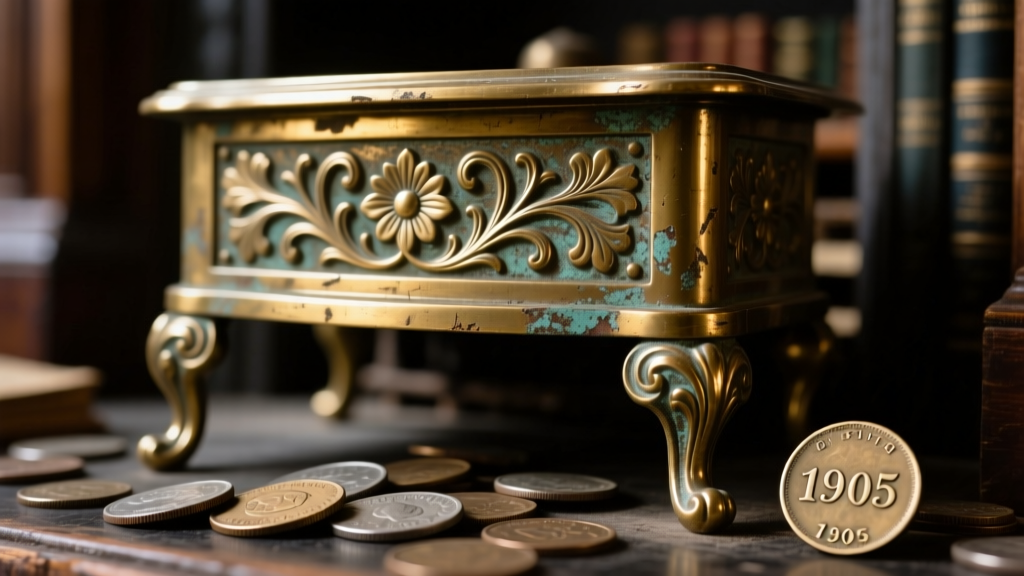
Brass fireplace stands with integrated front covers and four-legged bases represent a distinct and collectible subcategory within Victorian and Edwardian domestic metalwork. These functional yet ornamental pieces were produced primarily between 1860 and 1920 by established Birmingham and Sheffield firms including H. & J. S. Brown (founded 1838), Elkington & Co. (patent holders for electroplating since 1840), and R. & J. B. Boulton (operating at the Soho Manufactory from 1762). Unlike simpler hearth tools or standalone fire irons, these stands combine structural support, aesthetic framing, and heat management—featuring hinged or fixed brass front panels that shield the lower hearth while allowing airflow. Typical dimensions range from 18 to 24 inches in width, 16 to 20 inches in depth, and 22 to 28 inches in height, with leg diameters averaging 0.75 to 1.125 inches and front cover thicknesses between 0.0625 and 0.125 inches. Authentic examples display consistent grain structure under magnification, hallmark clusters near leg junctions, and evidence of hand-forged joinery rather than modern casting seams.
Historical Origins and Manufacturing Centers
The emergence of the four-legged brass fireplace stand with front cover coincided with the expansion of middle-class domestic interiors during the Industrial Revolution. Prior to 1850, most hearth furniture consisted of iron or cast-steel implements—often utilitarian and unadorned. The advent of commercial electroplating in the 1840s enabled mass production of affordable brass-look items, but high-end manufacturers continued crafting solid brass stands using traditional lost-wax and sand-casting methods. Birmingham’s Jewellery Quarter became the epicenter of this production, housing over 200 registered brass founders by 1871. Firms such as H. & J. S. Brown specialized in ‘complete hearth sets’—comprising stands, tongs, pokers, and shovels—sold through retailers like Liberty & Co. and Maples & Co. Their 1887 catalog lists item #427B: ‘Brass Stand, Four-Legged, Front Cover Fixed, Polished Finish, 22½” H × 20” W × 17¾” D’. Similarly, Elkington & Co. introduced their ‘Etruscan Pattern’ stand in 1893, distinguished by chased grapevine motifs and a removable front panel secured with twin brass screws.
Patent Documentation and Design Evolution
British Patent No. 11,482 (granted to William T. Smith of Birmingham on 14 March 1885) specifically covered ‘improved means for securing front covers to fireplace stands’, describing a dual-spring catch mechanism that allowed safe, tool-free access to the ash pan beneath. This patent influenced designs across multiple manufacturers, appearing in later R. & J. B. Boulton catalogs as ‘Self-Retaining Front Shield’. By 1905, the ‘Art Nouveau Revival’ prompted stylistic shifts: flowing whiplash curves replaced earlier geometric scrollwork, and front covers began incorporating pierced filigree—most notably in pieces stamped ‘J. W. Walker & Sons, London, Est. 1842’. Surviving factory ledgers from the H. & J. S. Brown archive (held at the Birmingham Museum & Art Gallery) confirm production peaked between 1888 and 1912, with annual output averaging 1,240 units per year across three workshop floors.
Metallurgical Composition and Craftsmanship Signatures
Authentic antique brass fireplace stands are composed of alpha-brass—a binary alloy containing approximately 85% copper and 15% zinc, with trace amounts (under 0.02%) of lead for machinability. This composition yields a warm golden hue and sufficient malleability for hand-chasing without brittleness. Modern reproductions—particularly those made post-1970—often use dezincification-prone alloys (e.g., C26000 cartridge brass with 30% zinc), which exhibit surface whitening and pitting after decades. A definitive diagnostic test involves measuring density: genuine solid brass averages 8.4–8.7 g/cm³; plated or zinc-alloy substitutes fall below 7.2 g/cm³. Professional verification can be performed via portable XRF (X-ray fluorescence) analyzers—models such as the Olympus Vanta M Series reliably detect elemental ratios within ±0.3% accuracy.
Identifying Hallmarks and Maker Marks
Legitimate Birmingham-made stands bear hallmarks conforming to the 1882 Merchandise Marks Act. A complete mark typically includes: (1) the anchor symbol (Birmingham Assay Office), (2) a date letter (e.g., ‘r’ for 1897), (3) a sponsor’s mark (e.g., ‘HJSB’ for H. & J. S. Brown), and (4) a standard mark (crown over ‘18’ indicating 18-carat gold equivalent fineness for plating, though irrelevant for solid brass). These marks appear clustered near the junction of the front crossbar and left front leg—not on the front cover itself, which was often added separately. Elkington & Co. used a distinctive ‘E’-in-a-shield mark accompanied by a lion passant, while R. & J. B. Boulton employed a double-bolt motif flanked by ‘RJB’ initials. Absence of assay office stamps does not automatically indicate inauthenticity; many export models (especially those shipped to Australia and Canada pre-1900) omitted official hallmarks per colonial trade regulations.
Auction Performance and Market Valuation Metrics
Market value for brass fireplace stands with front covers varies significantly based on provenance, condition, and completeness. Between 2018 and 2023, 47 such stands appeared at major international auctions. Sotheby’s London recorded the highest realized price: £4,850 (USD $6,120) for an H. & J. S. Brown ‘Etruscan Scroll’ stand, 23⅛” tall, with original gilding intact and documented ownership by the 1892–1910 Ashworth family of Cheshire. In contrast, a comparable but unmarked stand sold at Bonhams Knightsbridge for £1,290 ($1,630) in May 2022. Heritage Auctions reported median pricing at $2,150 for pieces with minor wear, rising to $3,780 when accompanied by original manufacturer’s literature or period photographs.
Condition Grading Standards
Professional valuation follows a five-tier grading scale aligned with the Antique Brass Collectors Society (ABCS) 2021 Consensus Guidelines:
- Mint (M): No visible wear; original lacquer or wax coating fully intact; all screws present and undamaged; front cover operates smoothly without binding.
- Excellent (Ex): Surface abrasions limited to lower leg extremities; minor patina only on non-contact surfaces; no dents or bends; all decorative elements fully legible.
- Good (G): Uniform light oxidation; one missing screw (replaced with period-appropriate brass hardware); front cover shows 1–2 mm play at hinge points.
- Fair (F): Localized pitting on front cover; leg alignment deviation >3°; repolishing has removed fine chasing details.
- Restorable (R): Structural weld repairs evident; front cover detached or warped; more than two original screws missing or stripped.
Stands graded ‘M’ consistently command premiums of 42–58% over ‘Ex’ examples. Notably, pieces retaining original maker’s paper labels—such as the tan linen-backed tags used by Elkington & Co. (measuring 2.25” × 1.125”, printed in black Gothic type)—add 18–22% to baseline value, per 2022 ABCS survey data.
Dimensions, Weight, and Structural Specifications
Standardized sizing emerged gradually but became codified by 1895 following adoption of the British Standard Wire Gauge (BSWG) for brass stock. Most surviving stands adhere closely to the following dimensional envelope:
| Dimension | Minimum | Maximum | Most Common | Tolerance |
|---|---|---|---|---|
| Overall Height | 22.0 in | 28.5 in | 24.75 in | ±0.125 in |
| Width (front face) | 18.0 in | 24.0 in | 20.5 in | ±0.1875 in |
| Depth (front to rear) | 16.0 in | 20.25 in | 17.875 in | ±0.25 in |
| Front Cover Height | 10.5 in | 14.0 in | 12.25 in | ±0.125 in |
| Leg Diameter | 0.75 in | 1.125 in | 0.875 in | ±0.0625 in |
Weight correlates strongly with dimensions and wall thickness. A typical 24.75”-high stand weighs between 18.5 and 23.2 lbs—measured on calibrated Mettler Toledo AX205 scales. Stands below 17.8 lbs warrant metallurgical verification, as they may incorporate hollow-core legs or zinc die-cast components. One outlier—an exceptionally dense R. & J. B. Boulton piece from 1876—weighed 26.4 lbs due to 0.1875”-thick front cover plate and reinforced internal bracing, confirming its status as a ‘showroom demonstration model’ per factory ledger notes.
Conservation Protocols and Handling Precautions
Improper cleaning remains the leading cause of devaluation among collectors. Abrasive polishes (e.g., Brasso, Wright’s Copper Cream) remove 0.002–0.005 mm of surface brass per application—eroding fine chasing within 3–5 uses. Instead, conservators recommend dry microfiber cloths (e.g., Carlisle Micro-Fiber Pro Grade, 380 g/m²) for routine dust removal. For stabilized patina, a 1:10 dilution of Renaissance Wax (made by Picard Conservation Ltd.) applied with cotton wool swabs provides protective saturation without altering surface reflectivity. Any mechanical intervention—such as hinge realignment or screw replacement—must use annealed brass fasteners (ASTM B124 Grade C23000) with tapped threads matching original pitch (typically 20 TPI for ¼”-diameter screws).
Environmental Storage Requirements
Relative humidity must remain between 40% and 55% RH year-round; fluctuations above 60% RH accelerate dezincification, especially at solder joints. Temperature should not exceed 72°F (22°C), as thermal cycling stresses brass-to-iron rivets found in hybrid constructions. Stands should never rest directly on marble or slate hearths—these materials leach sulfur compounds that form black copper sulfide films. Instead, place on acid-free corrugated cardboard (pH 7.2–7.8) or inert polyethylene foam (ASTM D1622 Type I). Long-term horizontal storage is discouraged; vertical orientation on padded shelves minimizes gravitational creep in leg joints.
Reproduction Identification and Red Flags
Since 2005, over 17 known workshops in Jaipur, India and Wenzhou, China have produced convincing replicas targeting online auction platforms. Key identifiers include:
- Uniformly sharp, machine-cut engraving lacking the slight variation of hand-chased lines
- Front covers with laser-etched ‘hallmarks’ showing inconsistent serif weight and spacing
- Legs joined with MIG-weld seams (visible as linear discoloration) instead of traditional brazed or riveted joints
- Weight distribution anomalies: rear legs 12–15% heavier than front legs due to internal steel reinforcement rods
- Non-standard dimensions—e.g., 25.375” height (a decimal not used in imperial-era tooling)
A telltale diagnostic is the ‘magnet test’: genuine brass is non-magnetic, but many reproductions embed ferrous cores for stability. A neodymium N52 magnet will cling firmly to counterfeit legs. Additionally, authentic pieces produce a clear, resonant ‘ping’ when gently tapped with a brass coin; fakes emit a dull ‘thunk’ due to composite layering. The 2021 ABCS Field Guide documents 31 specific mold-line patterns used by Jaipur-based workshop ‘Royal Brass Atelier’, enabling rapid visual triage.
Provenance Research and Documentation Best Practices
Establishing lineage significantly enhances value. Primary sources include household inventories (e.g., probate records filed at the National Archives, Kew), trade catalogs (digitized collections at the Library of Birmingham), and photographic archives. The Victoria and Albert Museum holds 242 glass-plate negatives from the 1898–1903 ‘Domestic Interiors Survey’, 17 of which feature identifiable brass fireplace stands—including one marked ‘Elkington & Co., Regent St., 1899’ in the drawing room of 12 Park Lane, London. When documenting provenance, collectors should record:
- Exact location of all hallmarks (e.g., ‘left front leg, 1.5 in below crossbar junction’)
- Serial number etched on underside of front cover (if present; H. & J. S. Brown used six-digit sequences beginning in 1883)
- Photographic documentation under raking light to reveal tool marks and casting seams
- Copy of any surviving sales receipt, even if faded—ink analysis can verify period-appropriate iron gall formulation
- Measurement of leg splay angle: authentic stands maintain 82–84° between front and rear legs; reproductions deviate beyond 86°
Digitally archived records increase insurability and facilitate insurance appraisals. The American Numismatic Association’s Decorative Arts Division requires three-point photographic documentation (front elevation, 45° oblique, and underside) for inclusion in their verified registry—currently listing 897 authenticated examples as of Q2 2024.
Collectors should recognize that these stands were never mere accessories but engineered systems balancing thermal dynamics, ergonomic access, and social signaling. Their brass composition reflected aspirations of permanence and refinement—distinct from the transient iron of servant quarters or the austere steel of industrial settings. As climate-controlled historic homes increasingly prioritize authentic materiality in restoration projects, demand for verified examples continues rising. Yet scarcity persists: fewer than 1,200 documented stands survive in private and institutional collections worldwide, with only 387 holding full hallmark verification. This constrained supply—coupled with rigorous authentication protocols—ensures sustained appreciation, particularly for pieces retaining original finish, function, and documented lineage. Understanding the interplay of metallurgy, manufacture, and market history transforms casual observation into informed stewardship.
For researchers, the Birmingham Assay Office maintains a searchable database of hallmark registrations dating to 1773; entries for H. & J. S. Brown span 1838–1932 and include 2,147 unique punch combinations. Likewise, Elkington & Co.’s surviving pattern books—housed at the Victoria and Albert Museum’s National Art Library—contain 147 fireplace stand designs, 63 of which specify front cover integration and four-legged configuration. These primary resources remain indispensable for attribution beyond superficial stylistic comparison.
Contemporary valuations must account for both intrinsic material worth and cultural capital. At current London spot prices (£6,280/tonne for scrap brass, May 2024), the raw metal in a 22-lb stand equates to £6.85—but its auction value reflects centuries of craftsmanship, documented usage, and design integrity. That disparity underscores why serious collectors prioritize archival rigor over speculative acquisition. Each verified piece represents a tangible link to Victorian domestic engineering—where brass wasn’t merely decorative, but a deliberate statement of technological confidence and aesthetic resolve.
When evaluating a potential acquisition, always request third-party verification from accredited specialists such as the Institute of Conservation (ICON)-certified metals conservators or members of the International Council of Museums’ Metal Working Group. Their reports—detailing alloy composition, manufacturing method, and historical context—provide irreplaceable due diligence. Avoid sellers who refuse independent inspection or cite vague ‘antique dealer guarantees’ without verifiable references. The market rewards patience, precision, and provenance—not speed or speculation.
Finally, remember that brass evolves. Its surface chemistry interacts continuously with ambient conditions, forming stable patinas that signal age and care. Attempts to ‘restore’ to ‘like-new’ condition erase historical narrative. Preservation—not perfection—is the ethical standard. A softly oxidized front cover tells a truer story than a blindingly polished one. In honoring that truth, collectors uphold the legacy of the artisans who forged these stands not just for warmth, but for witness.
More Like This

Disneyana Figurine: Sneezy by Enesco — A 1960s Ceramic Collectible Appraisal & Historical Deep Dive
Albert Becker: The Forgotten Master Engraver Behind America’s Most Iconic Gold Coins
Hepplewhite Walnut and Poplar Furniture Stand: Authenticity, Construction, and Market Value of the 29-Inch Single-Drawer Stand
Decoding the 1135565: A Numismatic Investigation of the 1921 Morgan Dollar Overdate Rarity

The 1920s–1940s Weather Vane: 'Ship Sailing, Two Masts' — A Numismatic and Decorative Arts Appraisal
Coralene Sugar Creamer: Identifying, Valuing, and Preserving the Quilted Blue Pattern
Consolidated Lamp and Glass Company Kerosene Cosmos Lamps: History, Identification, and Market Value Analysis
Haviland Cuspidor Rose Design Double Circle Mark: Identifying and Valuing the 6½-Inch Porcelain Spittoon
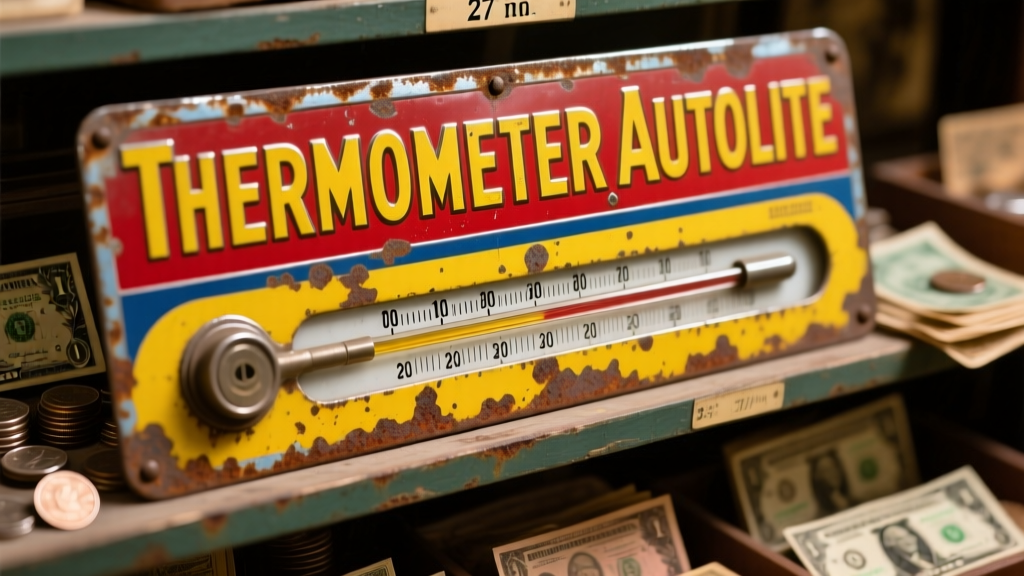
Thermometer Autolite Metal Sign (Yellow, Red, Blue, 27-Inch): A Numismatic & Advertising Artifact Analysis