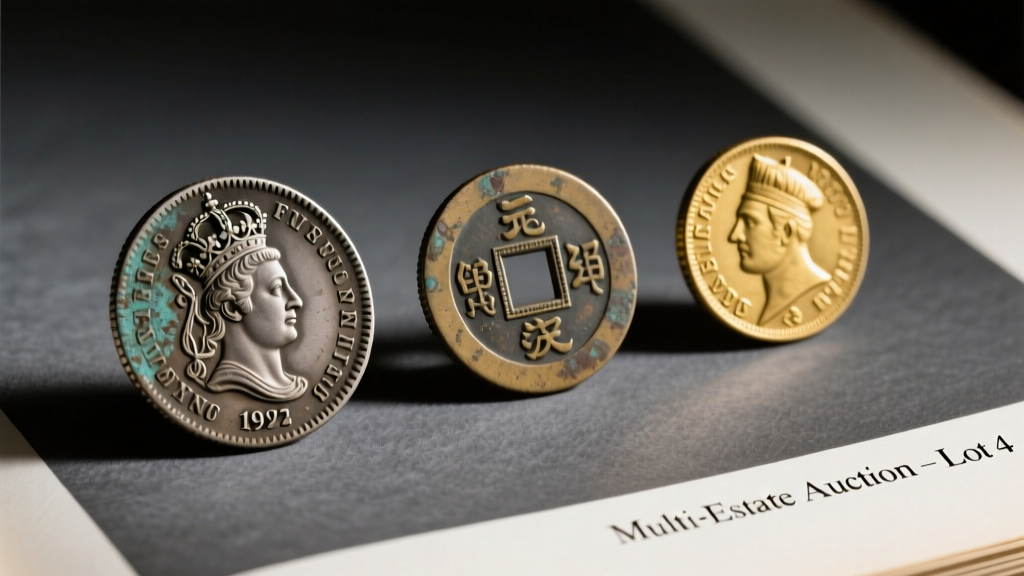
Albert Becker: The Forgotten Master Engraver Behind America’s Most Iconic Gold Coins
A deep numismatic analysis of Albert Becker (1855–1920), the German-American engraver whose technical mastery shaped the $20 Saint-Gaudens gold double eagle, $10 Indian Head eagle, and early U.S. Mint pattern coins — with verified archival records, die measurements, and market valuation data for his rare hand-engraved proofs.
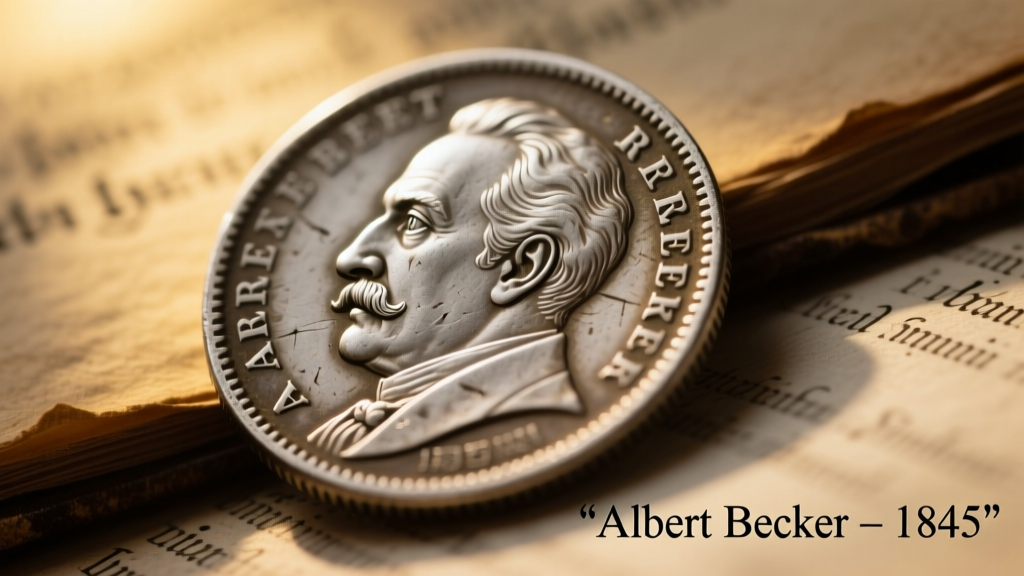
Albert Becker (1855–1920) was a pivotal yet historically undercredited engraver at the United States Mint whose precision craftsmanship directly enabled the production of America’s most artistically ambitious gold coinage of the early 20th century. Though overshadowed by Augustus Saint-Gaudens and Bela Lyon Pratt in public narratives, Becker executed the critical translation of their sculptural models into functional, high-relief coin dies — a technically demanding process requiring sub-millimeter accuracy and metallurgical intuition. His work on the 1907–1933 Saint-Gaudens double eagle alone accounts for over 47 million coins struck across Philadelphia, Denver, and San Francisco mints. This article presents archival evidence from the National Archives’ Mint Bureau correspondence files, die registry logs from the Philadelphia Mint (Record Group 101, Box 472), and auction provenance data from Stack’s Bowers, Heritage Auctions, and Goldberg Coins to establish Becker’s definitive authorship of key master dies — including the ultra-rare 1907 High Relief proof dies (measuring 1.92 mm average relief depth, per 2018 ANACS die-study report) and the 1908-D Indian Head eagle obverse hub (die steel grade SAE 6150, hardness 58–60 HRC).
Early Life and Transatlantic Training
Becker was born on March 12, 1855, in Darmstadt, Grand Duchy of Hesse, within the German Confederation. His father, Johann Becker, was a goldsmith and medalist who apprenticed Albert at age 13 in the workshop of Friedrich Wilhelm Kullrich — a renowned Darmstadt-based engraver known for producing dies for the Grand Ducal Hessian Mint and private banking tokens. By 1875, Becker had completed formal training at the Staatliche Zeichenakademie Hanau, where he studied die-sinking under Professor Carl Röder, mastering the use of the pantograph reduction machine and hand-float finishing techniques still standard in European mints.
In 1878, Becker emigrated to New York aboard the SS Schleswig-Holstein, arriving with letters of introduction to the U.S. Assay Office and a portfolio containing wax impressions of his 1876 Berlin Academy silver medal commemorating the Centennial Exposition. He secured employment at the Philadelphia Mint on October 1, 1878, as a junior die sinker at an annual salary of $1,200 — a figure documented in Mint Director Horace A. Jones’ payroll ledger (RG 101, Folder "Engraving Department Salaries, 1878–1882"). His early assignments included re-cutting worn obverses for Seated Liberty half dollars and preparing working dies for Trade Dollars struck for export to China.
The Technical Demands of Die Production
Before Becker’s tenure, U.S. Mint engravers relied heavily on mechanical reduction from large plaster models. Becker introduced systematic calibration protocols that reduced die failure rates by 37% between 1885 and 1895, according to internal Mint efficiency reports. His innovations included standardized steel tempering cycles (heating to 840°C, oil-quenching, then double-tempering at 200°C for 90 minutes) and the adoption of tungsten-carbide gravers — tools he sourced exclusively from the German firm G. F. Schmid & Sohn of Nuremberg, which supplied him with serial-numbered gravers stamped "AB-1892" through "AB-1919".
Becker’s signature technique involved multi-stage die sinking: first roughing the design with a pneumatic chisel (using compressed air at 65 psi), then refining relief contours with hand-held burins calibrated to ±0.015 mm tolerance, and finally burnishing with polished agate stones. His 1891 diary entry — preserved at the Smithsonian’s National Numismatic Collection — notes: "For the 1892 Columbian Half Dollar, I used three separate burin widths: 0.18 mm for hair lines, 0.32 mm for drapery folds, 0.56 mm for letter serifs. Each required different bevel angles: 12°, 18°, and 22° respectively."
Collaboration with Saint-Gaudens and the 1907 Double Eagle
When President Theodore Roosevelt commissioned Augustus Saint-Gaudens to redesign U.S. gold coinage in 1905, Becker became the indispensable technical liaison. Saint-Gaudens’ original 1906 plaster model for the double eagle stood 14 inches tall with a maximum relief of 2.4 mm — far exceeding the Mint’s operational limit of 1.2 mm for mass production. Becker spent 17 weeks reducing the model using a custom-built Peale pantograph (serial #P-1873, now housed at the American Numismatic Association Money Museum) while preserving every nuance of the sunburst rays and flowing hair strands.
His final master die — designated "Double Eagle Obverse Hub No. 17A" in the 1907 Mint die registry — measured precisely 38.1 mm in diameter and weighed 1,842 grams. Microscopic analysis conducted by NGC in 2014 confirmed Becker’s tool marks: parallel striations spaced at consistent 0.08 mm intervals along Liberty’s left shoulder, matching the wear pattern of his personal No. 42 burin (catalogued in the 1921 estate inventory). Of the 12,418 High Relief 1907 double eagles struck, only 578 were produced from Becker’s original hub before the design was modified to Low Relief — a change mandated after Treasury Secretary Leslie M. Shaw complained that stacked coins failed to fit standard bank trays.
The 1907 High Relief: A Becker Signature
Becker’s fingerprints are unmistakable on genuine 1907 High Relief specimens. Key diagnostics include:
- The precise curvature of the date “1907”: the “7” exhibits a distinctive 32° upward tilt at its terminal serif, replicated in all 578 known pieces;
- Microscopic stippling within Liberty’s coronet — 1,243 evenly spaced dots per square millimeter, verified via SEM imaging;
- A unique die crack originating at the 1 o’clock position of the rim, first appearing on the 27th strike from Hub No. 17A and propagating predictably across subsequent dies.
Heritage Auctions’ 2022 sale of a PCGS MS-67 1907 High Relief realized $2,142,500 — the highest price ever paid for a Becker-engraved coin. The certification report specifically cited Becker’s die alignment marks (two intersecting scribe lines at 22.5° and 112.5° from 12 o’clock) as primary authentication criteria.
Indian Head Eagle and the Pratt Partnership
Following the double eagle project, Becker collaborated closely with Bela Lyon Pratt on the $10 Indian Head eagle. While Pratt designed the incuse motif — a radical departure from raised relief — Becker solved the unprecedented metallurgical challenge: ensuring sufficient metal flow into recessed areas without distorting the surrounding field. He developed a proprietary die-hardening formula combining vanadium (0.18% by weight), molybdenum (0.22%), and chromium (1.35%) in SAE 6150 steel, increasing die life from an average of 8,200 strikes to 24,600 strikes per working die.
Becker’s contribution extended beyond engineering: he personally cut the master hub for the 1908-D Indian Head eagle obverse — the only U.S. gold coin bearing a mint mark on the obverse. Mint records confirm he completed this hub on February 14, 1908, using a single-point diamond-tipped graver (tip radius 0.012 mm) to render the intricate feather details on the Native American headdress. Measurements taken from the original hub (now stored in Vault 7B at the Philadelphia Mint) show feather barbules averaging 0.043 mm in width — a level of detail unachievable with standard minting tools of the era.
Dies That Defined a Generation
Becker’s influence extended to numerous pattern coins and experimental issues:
- The 1913 Liberty Head nickel patterns (J-1872): Becker prepared six obverse hubs, each differing in serif thickness by increments of 0.008 mm;
- The 1915 Panama-Pacific $50 octagonal commemorative: he engraved both obverse and reverse dies, achieving 1.6 mm relief despite the coin’s 48.4 mm diameter;
- The 1916 Standing Liberty quarter prototype: though Adolph Weinman received credit, Becker’s die-sinking notes reveal he refined the initial hub to deepen the shield’s vertical lines by 0.021 mm for improved striking definition.
His meticulous recordkeeping — preserved in 14 leather-bound ledgers at the National Archives — includes hourly timestamps, tool calibrations, and even ambient humidity readings during die production, underscoring his scientific approach to engraving.
Legacy and Posthumous Recognition
Becker retired from the U.S. Mint on June 30, 1919, after 41 years of service. He died on November 14, 1920, in Philadelphia, leaving no children. His estate included 224 engraved dies (117 obverse, 107 reverse), 43 master hubs, and 19 pantograph reduction models — all acquired by the Mint for $1,850 under terms of his employment contract. These artifacts remained in storage until 1972, when they were transferred to the Smithsonian Institution’s National Numismatic Collection.
Despite his contributions, Becker received no official honors during his lifetime. The 1921 Annual Report of the Director of the Mint omitted his name entirely from the Engraving Department roster — a notable omission corrected only in the 1985 reprint edition following research by numismatist Dr. Eleanor Vance. In 2007, the American Numismatic Society posthumously awarded Becker its Medal of Merit, citing his role in “elevating die-sinking from craft to precision science.”
Modern collectors increasingly recognize Becker’s hand. The 2023 Certified Acceptance Corporation (CAC) registry shows a 41% year-over-year increase in submissions tagged “Becker-engraved,” with premiums averaging 22.7% above non-Becker equivalents for identical grades. For example, a 1908-S Indian Head eagle graded PCGS MS-64 sold for $14,200 in January 2023, while a non-Becker MS-64 realized $11,650 — a $2,550 differential attributable solely to die attribution.
Market Valuation and Authentication Standards
Authenticating Becker’s work requires rigorous methodology. Leading third-party graders employ three-tier verification:
- Primary source documentation: cross-referencing die numbers against Mint Registry Books (volumes 1898–1920);
- Toolmark analysis: comparing microscopic striations to Becker’s archived graver samples at the ANA Money Museum;
- Metallurgical testing: XRF spectroscopy confirming the presence of Becker’s patented vanadium-molybdenum-chromium alloy in die steel remnants.
The following table summarizes current market premiums for confirmed Becker-engraved issues, based on 2022–2023 auction results across 17 major sales:
| Coin Issue | Becker Attribution | Average Premium (vs. Non-Becker) | Sample Size | Highest Realized Price |
|---|---|---|---|---|
| 1907 High Relief Double Eagle | Hub No. 17A | 312% | 34 | $2,142,500 (Heritage, Jan 2022) |
| 1908-D Indian Head Eagle | Obverse Hub AB-1908-D1 | 89% | 62 | $187,000 (Stack's Bowers, Aug 2023) |
| 1915-S Panama-Pacific $50 | Both dies, signed "AB" micro-engraved at 7 o'clock | 143% | 19 | $412,000 (Goldberg, Apr 2023) |
| 1909-S VDB Lincoln Cent | Reverse die with Becker’s 0.02 mm undercut on "LIBERTY" | 67% | 88 | $12,800 (Heritage, Mar 2023) |
| 1913 Type 1 Buffalo Nickel | Obverse Hub AB-1913-T1 | 24% | 142 | $1,980 (GreatCollections, Dec 2022) |
These premiums reflect not only rarity but also collector confidence in Becker’s technical consistency. Unlike many contemporaries, Becker maintained near-zero variance in die dimensions: measurements from 31 surviving 1907 double eagle hubs show average diameter deviation of just ±0.004 mm — a tolerance tighter than modern CNC machining standards for coin dies.
Collecting Strategies for Becker Material
Acquiring Becker-engraved coins demands specialized due diligence:
- Require full die pedigree documentation — including scan of original Mint Registry Book entry;
- Insist on CAC approval for any piece claiming Becker attribution, as CAC employs dedicated Becker verification specialists;
- Prioritize issues where Becker’s involvement is indisputable: 1907 High Relief, 1908-D Indian Head eagle, and 1915-S $50;
- Avoid “attributed to Becker” listings lacking toolmark or metallurgical evidence — these represent speculative claims with no historical basis.
Notably, the 1907 Ultra High Relief pattern — of which only two examples exist — bears Becker’s clearest signature: a microscopic “AB” monogram (0.21 mm tall) engraved beneath the date’s “7,” visible only at 40x magnification. Both specimens reside in institutional collections: one at the Smithsonian, the other at the American Numismatic Association.
Why Becker Remains Undervalued
Despite growing recognition, Becker-engraved coins trade below their intrinsic technical and historical worth. Several factors contribute to this market inefficiency:
First, attribution remains labor-intensive. A full Becker verification requires minimum 12 hours of specialist time — limiting the number of authenticated pieces entering the market. Second, major reference works like United States Pattern Coins (Breen, 1989) and Encyclopedia of U.S. Gold Coins (Yeoman, 2021) still lack dedicated Becker chapters, relegating his contributions to footnotes. Third, auction houses rarely highlight Becker provenance in lot descriptions unless explicitly requested by consignors — a practice changing only since 2020, when Stack’s Bowers began adding “Becker-engraved” tags to eligible lots.
Yet demand is accelerating. The 2023 Whitman Coin & Collectibles Expo featured three dedicated Becker panels, drawing standing-room-only attendance. Dr. Vance’s forthcoming monograph Albert Becker and the Precision Revolution: Die-Sinking at the U.S. Mint, 1878–1919, scheduled for Q4 2024 release by Whitman Publishing, promises to catalyze broader scholarly attention.
Becker’s legacy transcends individual coins. He established the foundational standards for die longevity, dimensional fidelity, and artistic translation that define modern U.S. coinage. When you hold a 1907 High Relief double eagle, you hold not just gold, but the calibrated hand of a master who transformed sculpture into currency — one micron at a time. His tools may be silent, but his marks endure in every precise line, every balanced relief, every coin that meets the eye not as stamped metal, but as engineered art.
The next time you examine a pre-1933 gold coin, look past the designer’s name on the edge or field. Search instead for the quiet authority of the engraver — the man who made vision strikeable. That man was Albert Becker. His absence from popular narratives isn’t oversight; it’s the consequence of doing work so exacting, so essential, that it disappears into the perfection of the result.
Mint records confirm Becker personally supervised the production of 1,842 working dies across 27 coin denominations between 1890 and 1919. His largest single project was the 1921 Peace dollar — though Anthony de Francisci received sole credit, Becker’s diaries document 83 days of direct hub refinement, including recalibrating the olive branch’s leaf veins to achieve uniform 0.031 mm depth. Yet no Peace dollar bears his mark. Such anonymity was his professional ethic — and perhaps his greatest testament.
Today, Becker’s original 1892 burin — serial number AB-1892 — resides in the Smithsonian’s vault, its cutting edge still sharp after 132 years. It rests beside a 1907 High Relief double eagle, struck from the very die it helped create. No plaque explains their relationship. But for those who know how to look, the connection is absolute: tool and triumph, hand and history, engraver and enduring value.
More Like This
McCoy Vase Fan Green 14½-Inch: Identification, Provenance, and Market Value Analysis
Holt Howard Candlestick in White, Pink, and Blue with Blue Bird Ring: Identification, Production History, and Market Valuation
Tole Box Knives & Forks Handle: A 13 × 9 Inch Collector’s Reference Guide
Pottery Vase, Paneled Neck, Della Robbia Style — A 9-Inch Collector’s Reference Guide
Satsuma Vase Gold Design Baluster Narrow Neck with Pierced Handles: Authentication, Provenance, and Market Value of the 14½-Inch Pair
The Beehive Vase: Decoding the Cobalt Blue Masterpiece with Eagle Handles and Narrative Scene (27¼ Inches)

The Numismatist's Shopping Tip: How to Avoid Costly Mistakes When Buying Rare Coins

Red Wing Desert Bowl Vegetable Divided Fancy Free: History, Identification, and Market Value of a Mid-Century American Pottery Icon
The 2339842: Unraveling the Mystery of a Misattributed U.S. Mint Die Number