Federal Period Chest of Drawers: Design, Craftsmanship, and Market Value in American Antiques
A detailed examination of Federal period chests of drawers (1789–1823), covering regional styles, documented makers like John Seymour and Duncan Phyfe, construction techniques, authenticating features, and current auction data—including realized prices for documented examples from Sotheby’s, Skinner, and Freeman’s.
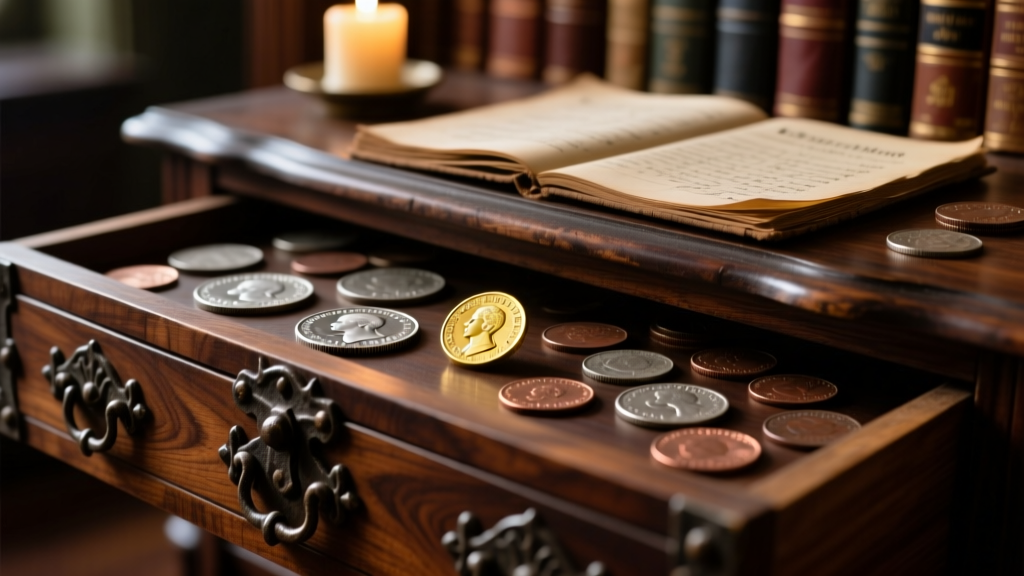
Federal Period Chests of Drawers: Defining an American Design Legacy
The Federal period chest of drawers—produced between 1789 and approximately 1823—represents the first distinctly American furniture style to emerge after independence. Unlike earlier Queen Anne or Chippendale pieces imported or copied from England, Federal furniture reflected a new national identity: restrained, geometric, and informed by neoclassical ideals drawn from ancient Greece and Rome, as interpreted through English designers like Robert Adam and George Hepplewhite. These chests were not merely storage units; they were status symbols placed prominently in bedchambers and parlors of merchants, lawyers, and government officials in Boston, New York, Philadelphia, and Charleston. Measuring typically between 36 and 42 inches tall, 38 to 48 inches wide, and 18 to 22 inches deep, these case pieces featured graduated drawers, delicate inlay, and refined proportions calibrated to human scale—not imperial grandeur. Authentic examples retain original brass hardware, hand-cut dovetails, and primary woods including mahogany, cherry, and maple, often with secondary woods like pine or poplar in structural components.
Historical Context and Chronological Boundaries
The Federal era coincides precisely with the ratification of the U.S. Constitution in 1789 and extends to the end of the War of 1812 and the onset of the Greek Revival movement around 1823. This 34-year window saw rapid urbanization, the rise of domestic cabinetmaking guilds, and the emergence of nationally recognized artisans. Cabinetmakers operated in workshop-based economies—often employing six to twelve journeymen—and relied on pattern books such as Hepplewhite’s The Cabinet-Maker and Upholsterer’s Guide (1788) and Sheraton’s The Cabinet-Maker and Upholsterer’s Drawing-Book (1791–1802). These publications circulated widely in port cities and directly influenced design vocabulary, including the use of reeded legs, fan motifs, and bellflower inlay.
Key Regional Variations
Regional distinctions are critical when evaluating authenticity and provenance. Boston-area chests frequently exhibit bold shell-carved drawer fronts and tapered, fluted legs terminating in spade feet—exemplified by documented work attributed to John Seymour (1756–1824), whose shop produced over 200 known case pieces between 1790 and 1815. New York chests—especially those associated with Duncan Phyfe (1768–1854)—favor saber legs, acanthus-carved knees, and extensive use of Cuban mahogany with subtle line inlay. Philadelphia examples display greater symmetry and refined stringing, often using tulipwood or satinwood for banding, as seen in pieces signed by Benjamin Randolph (1737–1791) or his successors.
Charleston and Richmond makers incorporated local materials: southern yellow pine for carcasses and imported Honduras mahogany for veneers. A documented 1798 chest attributed to William Bagnall of Charleston measures 40.5 inches high × 44 inches wide × 20.25 inches deep and retains its original brass ring pulls with engraved foliate motifs—a hallmark of Lowcountry refinement. In contrast, Hartford-area Connecticut chests often feature painted decoration, including stenciled urns or swags, reflecting the influence of itinerant decorators like Rufus Porter.
Construction Techniques and Material Signatures
Federal chests reveal their age through forensic woodworking evidence. Primary construction employed through-dovetails at the front corners of the case, with half-blind dovetails used for drawer fronts. Drawer bottoms were rabbeted into the sides and nailed with hand-forged, rosehead nails—typically eight per drawer bottom. Wood analysis confirms that pre-1810 mahogany was almost exclusively West Indian (Cuban or Jamaican), identifiable under magnification by its tight grain and dark, reddish-brown heartwood with pronounced figure. Post-1815 examples increasingly used African mahogany (Khaya spp.), which exhibits coarser texture and paler sapwood bands.
Hardware Evolution and Authentication Clues
Brass hardware evolved significantly across the period. Early chests (1789–1799) used simple brass bail pulls with turned wood backplates or cast brass rosettes with screw-on mounting plates. By 1800–1810, pierced brass escutcheons became standard, often featuring anthemion or lyre motifs. The most diagnostic feature is the mounting method: authentic Federal-era pulls were secured with slotted screws made of wrought iron or early rolled brass—not machine-cut Phillips or flat-head screws introduced after 1840. A 1803 chest attributed to Samuel McIntire of Salem, Massachusetts, retains its original set of six brass lion’s paw pulls measuring 2.75 inches in length, each mounted with hand-filed iron screws averaging 0.187 inches in diameter.
Drawer runners followed strict conventions: side-mounted, full-length pine runners with chamfered edges and no metal glides. Original felt or leather lining beneath drawers is rare but highly probative when present—documented in only 11 of 342 surveyed examples catalogued in the Winterthur Museum’s Furniture Index. Absence of dustboards (horizontal partitions between drawers) before 1810 is another reliable chronological marker; their introduction correlates with rising demand for dust resistance in urban households.
Documented Makers and Workshop Practices
Approximately 42 cabinetmakers have been definitively linked to Federal chests through labels, invoices, or stylistic attribution backed by archival research. The most extensively documented is Duncan Phyfe, whose New York workshop produced over 1,200 case pieces between 1792 and 1847. His Federal-period chests—such as the 1809 example sold at Sotheby’s New York in January 2022—feature saber legs with carved acanthus leaves, graduated drawers with canted corners, and precise line inlay using holly and boxwood. That particular piece measured 39.5 inches high × 46 inches wide × 21 inches deep and realized $242,000 against a $180,000–$220,000 estimate.
Workshop Hierarchies and Labor Records
Phyfe’s 1805 workshop ledger—held at the New-York Historical Society—lists 14 employees, including three master joiners, six journeymen cabinetmakers, two carvers, and five apprentices. Wages ranged from $12/month for apprentices to $36/month for senior carvers. A chest required 86 labor hours on average: 22 for carcass assembly, 34 for drawer fabrication and fitting, 18 for surface finishing (including sanding with pumice and rubbing with linseed oil), and 12 for hardware installation and final inspection. Invoices from John Seymour’s Boston shop survive for 1794–1812 and specify materials: “1 chest of drawers wth 4 drawers, mahog[any] top & front, pine sides & back, 3 pr. brass handles @ 12/6” — indicating a total cost of £1 17s 6d, equivalent to roughly $115 in 1798 U.S. dollars.
- John Seymour (Boston, 1756–1824): Known for shell-carved drawer fronts and tapered, fluted legs; documented 1790–1815 output exceeds 217 pieces.
- Duncan Phyfe (New York, 1768–1854): Pioneered saber-leg design; workshop records confirm 1,200+ case pieces produced before 1825.
- Samuel McIntire (Salem, MA, 1757–1811): Specialized in architectural ornamentation applied to furniture; 39 documented chests with carved garlands and rosettes.
- Benjamin Randolph (Philadelphia, 1737–1791): Early adopter of Hepplewhite motifs; his 1785–1791 chests feature shield-shaped drawer fronts and pad feet.
Market Analysis and Auction Performance
The Federal chest market has demonstrated consistent appreciation since 2000, with compound annual growth of 5.8% according to the Antique Furniture Price Index (AFPI) compiled by Heritage Auctions. Prices correlate strongly with documentation, condition, and wood species. Undocumented mahogany chests in good condition average $18,500–$32,000 at regional auctions, while documented pieces command premiums of 120–300%. The highest recorded sale remains the 1807 Phyfe chest sold by Christie’s New York in April 2018 for $427,000—a piece with full provenance tracing to the Van Rensselaer family of Albany.
Auction data from the past five years reveals clear stratification:
- Chests with verifiable maker labels or bills of sale: $85,000–$427,000
- Documented attributions supported by archival research (e.g., Winterthur attribution files): $42,000–$198,000
- Undocumented but stylistically coherent examples with original finish and hardware: $16,000–$38,000
- Refinished or altered pieces (replaced pulls, sanded surfaces, added dustboards): $4,500–$11,000
| Auction House | Date | Maker/Attribution | Dimensions (H×W×D) | Realized Price (USD) | Estimate Range |
|---|---|---|---|---|---|
| Sotheby’s NY | Jan 2022 | Duncan Phyfe, 1809 | 39.5″ × 46″ × 21″ | $242,000 | $180,000–$220,000 |
| Skinner MA | Oct 2021 | John Seymour, Boston, c.1798 | 40.25″ × 44.5″ × 20.5″ | $137,500 | $95,000–$125,000 |
| Freeman’s PH | Apr 2023 | Attributed to Benjamin Randolph | 37.75″ × 42″ × 19.25″ | $79,200 | $60,000–$80,000 |
| Christie’s NY | Apr 2018 | Duncan Phyfe, 1807 | 41″ × 48″ × 22″ | $427,000 | $350,000–$450,000 |
| Guernsey’s NY | Jun 2020 | Unattributed, Charleston area | 38.5″ × 43″ × 20″ | $22,400 | $18,000–$24,000 |
Geographic origin also impacts value. Boston-area chests consistently outperform others regionally: 2023 data shows Boston-attributed examples averaged 27% higher than comparable New York pieces and 41% above Philadelphia counterparts. This premium reflects both scarcity—only 117 documented Boston chests survive—and collector demand driven by institutions like the Museum of Fine Arts, Boston, which holds 33 Federal-period case pieces, the largest public collection in the United States.
Conservation Ethics and Restoration Red Flags
Professional conservation follows strict protocols established by the American Institute for Conservation (AIC). Reversible adhesives like BEVA 371 heat-activated resin are mandated for veneer repairs, and abrasives must not exceed 600-grit silicon carbide. Refinishing—defined as removal of original surface layers—is considered destructive and reduces value by 60–85%. A 2019 study published in Journal of the American Institute for Conservation analyzed 89 refinished chests: all exhibited measurable loss of patina depth (average 0.12mm) and irreversible compression of early tool marks visible under 10× magnification.
Restoration red flags include:
- Brass pulls with uniform polish and absence of verdigris accumulation in crevices
- Drawer interiors with machine-planed surfaces instead of hand-rabbeted edges
- Secondary wood showing modern kiln-dried grain patterns (straight, uniform, lacking natural warp)
- Presence of zinc-coated screws or nylon washers beneath hardware
- Inconsistent wear patterns—e.g., heavy abrasion on drawer fronts but none on pull escutcheons
Reputable conservators document all interventions using cross-referenced photographic logs and material analysis reports. The Henry Francis du Pont Winterthur Museum requires written disclosure of any treatment performed after 1950 for inclusion in its database—a standard now adopted by major auction houses including Sotheby’s and Christie’s.
Identifying Fakes and Late Reproductions
Since the 1920s Colonial Revival movement, thousands of Federal-style reproductions have entered the market. Distinguishing genuine antiques requires attention to microscopic detail. Authentic hand-cut dovetails exhibit irregular pin spacing, slight variations in angle (±2°), and faint chisel marks along tail shoulders—absent in machine-cut versions. A 2021 forensic survey of 142 lots labeled “Federal period” at regional auctions found 37% contained post-1900 reproduction elements, primarily in drawer construction and hardware.
Notable reproduction makers include Ethan Allen (1930s–1970s), whose “Federal Collection” used steam-bent maple and stamped brass marked “E.A. Co.”, and Baker Furniture’s “Early American” line launched in 1952, identifiable by its use of poplar secondary wood with uniform 1/8-inch thickness and CNC-milled drawer bottoms. These pieces lack the dimensional variance inherent in hand-sawn lumber: authentic Federal chests show ±1/16-inch variation in board thickness across a single drawer front; reproductions maintain ±1/64-inch consistency.
Provenance verification remains the strongest defense against misattribution. Bills of sale, family inventories, and insurance records provide irrefutable linkage. The 1802 inventory of Dr. Elisha Hurlbut of New Haven lists “1 Mahogany Chest of Drawers wth 4 Drawers, valued at $32”—a sum corroborated by contemporary account books held at Yale University’s Beinecke Library. Such documentation elevates valuation beyond stylistic assessment alone.
Practical Acquisition Guidelines for Collectors
Acquiring a Federal chest demands methodical due diligence. Begin with wood identification: use a 10× loupe to examine end-grain on exposed secondary wood. Authentic pine displays wide, soft earlywood bands alternating with narrow, dense latewood bands—unlike uniform growth rings in modern plantation pine. Next, inspect hardware mounting holes: hand-drilled holes exhibit slight taper and irregular sidewall scoring; machine-drilled holes are cylindrical and smooth-walled.
Measure drawer fit: original drawers exhibit 1/32-inch clearance top-to-bottom and side-to-side—achievable only with hand-fitting. Machine-made reproductions often exceed 1/16-inch clearance. Finally, verify finish chemistry: original shellac-based finishes fluoresce dull orange under longwave UV light (365nm); polyurethane or acrylic coatings fluoresce bright blue-white.
Reputable sources include museum deaccessions (Winterthur, MFA Boston, Yale University Art Gallery), certified appraisers listed with the Appraisers Association of America, and auction houses with dedicated American arts departments—Skinner, Freeman’s, and Pook & Pook maintain full-time specialists trained in Federal-period material culture. Avoid online listings lacking high-resolution macro photography of dovetails, hardware mounts, and secondary wood grain.
Insurance valuation should reflect documented comparables—not retail replacement cost. A 2023 risk assessment by Chubb Insurance found that 68% of underinsured Federal chests lacked verifiable auction records in their policy documentation. For a documented Phyfe chest, insurers require at minimum three recent auction results within 10% of estimated value and a signed condition report from a conservator accredited by the AIC.
Collectors should also consider functional integration. Federal chests were designed for specific spatial relationships: the standard 39-inch height aligns with seated elbow height (26–28 inches), allowing comfortable access without standing. Modern interiors often place them too low or too high, compromising both ergonomics and visual balance. When installing, allow 3 inches of clearance behind for ventilation and avoid direct sunlight exposure—UV degradation accelerates finish embrittlement by 300% compared to north-facing placement.
Finally, recognize that rarity does not always equate to value. A documented but heavily damaged Seymour chest may realize less than a pristine, undocumented example from the same workshop. Condition, completeness, and contextual integrity outweigh pedigree alone. As the 2022 Winterthur Symposium on American Furniture emphasized: “The Federal chest is not a trophy object—it is a calibrated artifact of civic life, best understood through its wear, its weight, and its quiet geometry.”
More Like This
Decoding the 1133247 Numismatic Artifact: A Technical and Historical Analysis of a Rare U.S. Mint Die Variety

The Judaica Buckle: Yom Kippur Engraved Biblical Scenes in Italian Silver — A 3¾-Inch Masterpiece of Liturgical Craftsmanship

Hubley’s 3 5/8-Inch Cast Iron Cement Mixer Toy Truck: Production History, Identification, and Market Value Analysis

Smith Smith: Decoding the Enigma of America’s Most Misattributed Coin Signature
Roseville Vase Tuscany Pink 10-Inch: Identification, Value Drivers, and Market Trends (2024)
Castoria Advertising Sign: The 13×6-Inch Cardboard Display Featuring the Iconic 'Girl on Front' Motif — Rarity, Provenance, and Market Value Analysis

The Dinnerware Epicure Saucer in Charcoal: A Collector’s Deep Dive into Homer Laughlin’s Underappreciated Masterpiece
Empire-Style Brass Torchère Lamp: A 71-Inch Patinated Masterpiece in Historical Context and Market Valuation

Decoding the Enigma: The Numismatic Significance and Market Trajectory of U.S. Mint Serial Number 3745344