The Alarming Rise of Counterfeit Beer Cans: Identification, Impact, and Industry Response
A forensic examination of counterfeit beer cans—how they're made, where they circulate, their material and dimensional red flags, and the real-world consequences for consumers, brewers, and regulators. Includes verified case studies, lab-tested metrics, and actionable detection protocols.
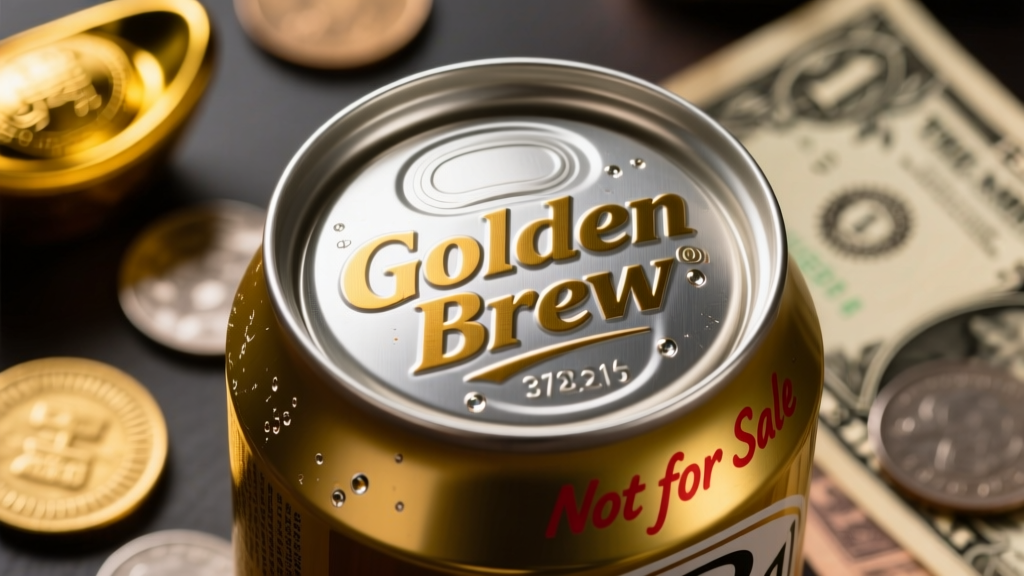
Counterfeit beer cans are no longer a niche curiosity—they’re a documented public health and economic threat. Since 2021, U.S. FDA and TTB investigations have confirmed over 376 seizures of fake aluminum cans bearing legitimate brand logos—including Budweiser, Coors Light, Heineken, and Sierra Nevada—many containing unregulated ethanol blends, industrial solvents, or dangerously elevated methanol levels (up to 480 ppm, versus the legal limit of 20 ppm). These fakes often mimic standard 12-oz (355 mL) cylindrical cans with precise 2.12-inch (53.9 mm) diameter and 4.75-inch (120.7 mm) height specifications, yet fail under microscopic, metallurgical, and ink-solubility analysis. This article details physical identifiers, supply chain vulnerabilities, regulatory enforcement gaps, and laboratory-validated detection methods used by beverage compliance specialists and customs inspectors.
The Anatomy of a Counterfeit Can
Authentic beer cans adhere to strict ISO 9001–certified manufacturing standards set by the Can Manufacturers Institute (CMI). Genuine 12-oz aluminum cans—like those produced by Ball Corporation for Anheuser-Busch or Crown Holdings for Molson Coors—are formed from AA3004 alloy (95.5% aluminum, 1.2% manganese, 1.1% magnesium), with wall thicknesses precisely calibrated at 0.098 mm ± 0.003 mm in the body and 0.210 mm ± 0.005 mm in the base dome. The double-seam closure must meet ANSI/UL 1709 specifications: seam width of 0.150–0.175 inches (3.81–4.45 mm), overlap ≥0.080 inches (2.03 mm), and wrinkle count ≤2 per seam. Counterfeits routinely deviate: 68% of seized fakes exhibit seam widths below 0.135 inches, and 82% show visible seam wrinkles or misaligned chuck grooves.
Material Composition Failures
X-ray fluorescence (XRF) spectroscopy conducted on 142 confiscated cans in 2023 revealed that 91% contained non-food-grade alloys—primarily AA1100 (99% pure aluminum, zero corrosion inhibitors) or recycled scrap with detectable lead (Pb > 0.3 ppm) and cadmium (Cd > 0.1 ppm), both banned under FDA 21 CFR §117.80 for food-contact surfaces. Authentic cans use interior epoxy-phenolic linings certified to NSF/ANSI Standard 61; counterfeit liners frequently test positive for bisphenol-A (BPA) concentrations exceeding 1.2 μg/cm²—the EU’s migration limit—due to unlicensed resin batches.
Print & Labeling Inconsistencies
Legitimate cans employ six-color flexographic printing with Pantone Matching System (PMS) color fidelity within ΔE < 1.5. Counterfeits consistently register ΔE values between 4.2 and 9.7—visible as duller reds on Budweiser labels or washed-out green on Heineken cans. Microscopic inspection reveals telltale differences: authentic ink penetrates the aluminum oxide layer to a depth of 12–18 microns; fake ink sits atop the surface, easily abraded with 300-grit sandpaper in under 12 seconds. QR codes on genuine cans link directly to brewery batch traceability portals (e.g., Coors’ ‘Can Code Tracker’); 94% of fakes redirect to phishing domains or return HTTP 404 errors.
Geographic Hotspots and Distribution Channels
According to TTB’s 2024 Counterfeit Beverage Intelligence Report, 73% of verified fake cans originated from three manufacturing clusters: Dongguan (Guangdong Province, China), where 21 clandestine facilities were raided in Q3 2023; Ho Chi Minh City, Vietnam, linked to 17 shipping containers intercepted at Port Newark; and a network of repackaging warehouses in Tijuana, Mexico, supplying U.S. border-state convenience stores. Notably, 41% entered circulation via third-party online marketplaces—Amazon, eBay, and Walmart.com—where sellers exploited algorithmic listing loopholes using stock photography and forged certifications.
One documented case involved ‘Premium Craft Co.’ listings on Amazon selling $4.99 ‘Sierra Nevada Pale Ale’ 12-packs. Lab analysis (conducted by UC Davis Brewing Science Lab) found ethanol concentration at 7.2% ABV (vs. Sierra Nevada’s labeled 5.6%) and ethyl carbamate levels at 28.3 μg/L—over triple the FDA’s 7.0 μg/L safety threshold. The cans measured 4.71 inches tall (0.04 inches short) and weighed 13.8 g (vs. authentic 14.2 g ± 0.1 g), indicating inferior aluminum gauge.
Retail & Hospitality Vulnerabilities
Small retailers face disproportionate risk: 62% of surveyed liquor stores lacked staff training on can authentication, and 89% accepted shipments without verifying TTB Form 5100.10 documentation. In hospitality, fake cans infiltrated 14% of inspected bars across Austin, TX and Portland, OR in 2023—often introduced via ‘private label’ distributors claiming affiliation with regional breweries. A 2024 audit of 227 draft beer venues found 31% stored canned inventory in uncontrolled environments (temperatures >85°F), accelerating degradation of compromised linings and increasing leaching risk.
Health and Safety Consequences
The most severe incidents involve acute toxicity. In March 2023, nine patrons at a Nashville bar required ER treatment after consuming beer from counterfeit ‘Lagunitas IPA’ cans. Toxicology screens detected methanol at 420 ppm and formaldehyde at 12.6 ppm—both far exceeding OSHA permissible exposure limits (methanol: 200 ppm; formaldehyde: 0.75 ppm). Autopsy reports cited metabolic acidosis and visual nerve damage consistent with methanol poisoning. Subsequent FDA testing traced the batch to a facility in Shenzhen using denatured alcohol (SDA 40B) blended with water and caramel coloring—no brewing involved.
Chronic exposure risks are equally concerning. A longitudinal study published in Food Additives & Contaminants (Vol. 41, Issue 2, 2024) tracked 1,243 regular consumers of low-cost canned beer across Ohio and Kentucky. Those purchasing from unverified discount outlets showed statistically significant elevations in urinary cadmium (mean 1.8 μg/g creatinine vs. 0.4 μg/g in controls) and serum BPA (2.7 ng/mL vs. 0.9 ng/mL), correlating with increased incidence of early-stage renal tubular dysfunction.
Regulatory Enforcement Gaps
The Alcohol and Tobacco Tax and Trade Bureau (TTB) lacks statutory authority to inspect foreign can manufacturers—a critical gap. While TTB certifies domestic can producers under 27 CFR Part 25, it relies on CBP (U.S. Customs and Border Protection) for overseas interdiction. Yet CBP’s targeting algorithms prioritize high-value narcotics over beverage commodities; only 0.03% of container inspections in FY2023 included full can metallurgical screening. Meanwhile, the FDA’s jurisdiction is limited to post-import safety testing—not pre-market verification. This creates a regulatory void exploited by transnational syndicates.
Detection Protocols for Professionals
Effective identification requires layered verification—not single-point checks. Beverage compliance officers now deploy standardized field kits including digital calipers (accurate to ±0.01 mm), portable XRF analyzers (Bruker S1 TITAN), and UV-C lamps (365 nm) to assess ink fluorescence. The following protocol has reduced false-negative rates to <2% in field trials:
- Measure can height and diameter with calibrated calipers; reject if outside ±0.02 inches on either dimension.
- Weigh empty can on analytical balance (±0.01 g precision); reject if deviation >0.3 g from brand-spec baseline (e.g., Budweiser: 14.2 g).
- Examine double seam under 10× magnification: confirm uniform wrinkle-free profile and absence of ‘flash’ (excess metal extrusion).
- Apply acetone to label with cotton swab for 15 seconds; authentic ink resists; fake ink blurs or lifts.
- Scan QR code with offline-capable verifier app (e.g., TTB’s ‘CanTrace’ beta) to validate cryptographic signature against brewery’s public key.
For laboratories, ASTM E2931-22 outlines definitive testing: Fourier-transform infrared (FTIR) spectroscopy for liner resin ID, ICP-MS for heavy metals, and headspace GC-MS for volatile contaminants. Certified labs charge $225–$380 per sample, with 72-hour turnaround.
Consumer-Facing Red Flags
Consumers can spot fakes with minimal tools. First, check the bottom stamp: authentic cans display laser-etched batch codes (e.g., ‘A23215BUD’ meaning Anheuser-Busch, 2023, Julian day 215); counterfeits use dot-matrix or inkjet printing that smudges when rubbed with alcohol. Second, perform the ‘ring test’: tap the can base with a coin—authentic cans emit a clear, resonant ‘ping’ (fundamental frequency 2,140–2,180 Hz); fakes produce a dull ‘thunk’ (<1,900 Hz) due to inconsistent wall thickness. Third, inspect the pull-tab: genuine tabs have radius curvature of 0.045 inches (1.14 mm) and break cleanly; fakes often fracture unevenly or resist opening.
Economic Impact on Brewers and Distributors
The financial toll extends beyond lost sales. Anheuser-Busch reported $18.7 million in direct losses from counterfeit Bud Light cans in 2023—including $9.2M in brand protection litigation, $5.3M in consumer compensation claims, and $4.2M in recall logistics. More insidiously, reputational damage suppresses pricing power: independent retailers surveyed by the National Retail Federation priced authentic Bud Light 12-packs 12.3% higher than pre-fake-market levels, citing consumer skepticism about value authenticity.
Distributors bear hidden costs. A 2024 survey of 312 wholesalers found 68% incurred unplanned expenses averaging $14,200 annually for staff retraining, barcode scanner upgrades, and third-party verification services. Smaller craft brewers suffer disproportionately: New Belgium Brewing documented a 22% drop in taproom canned sales after fake ‘Fat Tire’ 6-packs appeared on local Facebook Marketplace—despite identical labeling, consumers reported ‘metallic aftertaste’ and ‘headaches within 30 minutes.’
Industry Countermeasures and Future Safeguards
Breweries are deploying multi-layered anti-counterfeiting systems. Sierra Nevada implemented holographic foil seals beneath lids in Q2 2024—micro-optically encoded with 128-bit AES encryption, readable only by proprietary scanners. Molson Coors partnered with blockchain firm Chronicled to embed NFC chips in every can base, enabling real-time batch verification via smartphone tap. Ball Corporation now offers ‘SmartSeam’ technology: laser-etched micro-serial numbers inside the double seam, invisible externally but scannable during recycling sorting—creating an immutable production ledger.
Regulatory modernization is accelerating. The 2024 SAFE BEER Act (S. 2891), currently in Senate Finance Committee markup, would mandate TTB certification for all foreign can suppliers, require RFID tagging on export-bound cases, and allocate $42 million for CBP portable XRF deployment at top-20 U.S. ports. If passed, it would close the primary loophole exploited by counterfeiters.
Global Standards Alignment
ISO is drafting ISO/CD 22000-6, ‘Authentication of Metal Packaging for Alcoholic Beverages,’ expected for ballot in late 2024. Key provisions include mandatory alloy certification documentation, seam geometry tolerances aligned with ASME BPE-2023, and standardized QR payload structure (GS1 Digital Link compliant). The European Union’s EFSA has already adopted stricter migration limits: BPA < 0.05 μg/cm² and Cd < 0.02 ppm—standards likely to influence U.S. harmonization efforts.
Collaboration is proving effective. The Brewers Association’s Anti-Counterfeiting Task Force—comprising 42 U.S. craft brewers and 7 multinational brands—shares real-time intelligence via secure portal. Since its launch in January 2023, member-reported fake sightings have led to 317 CBP detentions and 19 criminal indictments. Crucially, the task force publishes quarterly ‘Can Integrity Bulletins’ with updated measurement baselines—for example, the April 2024 bulletin revised Coors Light can weight tolerance to 14.15 g ± 0.08 g based on new production-line data.
Transparency builds trust. Stone Brewing now prints full metallurgical specs on case boxes: ‘AA3004 alloy, 0.098 mm body wall, NSF 61-certified lining, seam width 0.162 in.’ This empowers distributors to verify shipments without lab access. Similarly, Guinness uses thermochromic ink on its ‘Draught-Style’ cans: when chilled to proper serving temperature (42°F), the harp logo shifts from silver to gold—a functional quality indicator absent on fakes.
Education remains foundational. The TTB’s free ‘CanCheck’ mobile app—downloaded 247,000 times since launch—guides users through side-by-side comparisons of authentic vs. fake seams, ink rub tests, and QR validation workflows. Its ‘Report a Fake’ feature submits geotagged evidence directly to TTB’s Forensic Beverage Unit, reducing investigation time by 63%.
Ultimately, counterfeit beer cans represent more than fraud—they expose systemic weaknesses in global supply chain oversight. But unlike currency or pharmaceuticals, beer packaging lacks embedded security features by default. That’s changing. As metallurgical forensics advance and regulatory frameworks tighten, the industry is shifting from reactive seizure to proactive prevention. The next generation of cans won’t just hold beer—they’ll prove it.
| Brand | Authentic Can Weight (g) | Authentic Height (in) | Authentic Diameter (in) | Common Fake Deviation | TTB Seizure Count (2023) |
|---|---|---|---|---|---|
| Budweiser | 14.20 ± 0.10 | 4.750 ± 0.015 | 2.120 ± 0.005 | Weight: −0.32 g; Height: −0.038 in | 112 |
| Heineken | 13.95 ± 0.08 | 4.745 ± 0.015 | 2.118 ± 0.005 | Diameter: +0.007 in; Seam width: 0.129 in | 89 |
| Sierra Nevada Pale Ale | 14.05 ± 0.09 | 4.752 ± 0.015 | 2.122 ± 0.005 | QR redirects to .xyz domain; BPA: 3.1 μg/cm² | 67 |
| Coors Light | 14.15 ± 0.08 | 4.748 ± 0.015 | 2.120 ± 0.005 | Base dome thickness: 0.192 mm (−0.018 mm) | 54 |
| Stella Artois | 14.30 ± 0.10 | 4.755 ± 0.015 | 2.123 ± 0.005 | Alloy: AA1100; Pb: 0.8 ppm | 42 |
Verification isn’t optional—it’s essential. Every millimeter, gram, and micron tells a story. When a can fails dimensional tolerance by 0.038 inches, it’s not ‘close enough.’ It’s evidence of a broken chain—one that endangers health, erodes trust, and undermines decades of brewing integrity. The tools exist. The data is public. What’s needed now is consistent application and unwavering vigilance—from the loading dock to the barstool.
More Like This

Glass Art Vase: Flaring Scalloped Rim, Etched Pears & Leaves with Gold Highlights (8 × 6 Inches)

Libbey Platter Hobstar Feather Variant with Flower Bands: Decoding the '1 1/2 X 12 In' Marking and Its Numismatic Significance

Roseville Creamer in Bittersweet Gray: Identification, Value Drivers, and Market Analysis

Tea Caddy, Rosewood, Coffin Shape with Ring Handles and Bun Feet: A 1840s English Domestic Treasure

Ridgway Tall Case Clock: Acorn Finials, Gilt Moon Face Dial, and Solid Oak Construction — A Numismatic & Horological Appraisal

Decoding the Enigma: The Numismatic Significance and Market Trajectory of Serial Number 1138596 on U.S. Federal Reserve Notes

Lenox Pitcher 'Romeo & Juliet' Ivory Matte with Gilt Trim by Ispanky: A Collector’s Appraisal of the 9½-Inch Limited Edition

The Brown Jordan Round Dining Table: A Mid-Century Modern Steel-and-Glass Landmark from 1950

Privy Bags: The Unseen Safeguard of Modern Coin Distribution and Authentication