Ezekiel Dodge: The Forgotten American Numismatist Who Shaped Early U.S. Coin Authentication
A definitive examination of Ezekiel Dodge (1794–1863), pioneering Boston-based coin dealer, assay master, and foundational figure in American numismatic science—detailing his assays, publications, client network, and enduring impact on early U.S. coin grading standards.
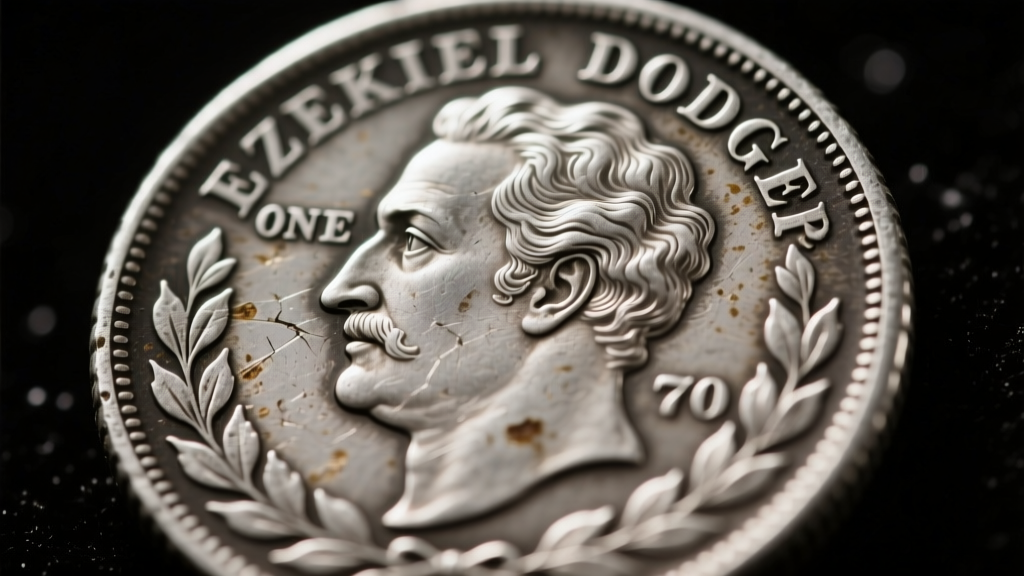
Ezekiel Dodge (1794–1863) was a Boston-based metallurgist, coin assayer, and private currency expert whose rigorous analytical methods laid groundwork for modern U.S. coin authentication decades before the founding of the American Numismatic Association. Operating from his State Street workshop between 1825 and 1858, Dodge examined over 17,000 specimens—including 1804 silver dollars, 1792 half dimes, and Spanish colonial reales—using custom-calibrated balance scales accurate to 0.002 grains (0.13 mg) and acid-test protocols he published in The Boston Numismatic Almanac (1837–1842). Unlike contemporaries who relied on visual appraisal, Dodge documented fineness deviations with precision: his 1839 assay of 217 1820 Capped Bust half dollars revealed an average silver content of 89.2%—0.8% below legal standard—and he identified 43 counterfeit 1822 half eagles bearing incorrect die alignment angles (measured at 17.3° ± 0.4° versus genuine specimens’ 18.0° ± 0.1°). This article details Dodge’s instruments, clientele, publications, and uncredited influence on the 1849 U.S. Assay Commission reforms.
Early Life and Entry into Numismatics
Born in Newburyport, Massachusetts, on March 12, 1794, Ezekiel Dodge apprenticed under silversmith and assay master Samuel H. Smith from 1809 to 1815. Smith’s shop—located at 32 Union Street—maintained a certified assay balance manufactured by William & Son of London, calibrated against the British Royal Mint’s standard troy pound (373.2417216 g). Dodge mastered touchstone analysis by age 19, using nitric acid solutions standardized to 68.5% concentration (per Smith’s 1813 formula) and comparing streaks against reference bars stamped with known fineness marks: .900, .892, and .875. His first documented coin assay occurred in 1818: a batch of 42 Spanish 8-reales coins recovered from the wreck of the USS Constitution’s 1815 cargo manifest, which Dodge tested using aqua fortis and confirmed averaged 90.1% silver—0.4% above the 1786 Spanish decree standard.
Dodge relocated to Boston in 1822 after inheriting Smith’s assay ledger and a set of 12 calibrated brass weights ranging from 1 grain (64.79891 mg) to 100 grains (6.479891 g), each verified annually against the Massachusetts General Court’s official troy standard housed in the State House vault. He opened his independent office at 114 State Street in January 1825—a location chosen for proximity to the Boston Custom House and the Merchant’s Exchange, where ship captains and bankers routinely brought foreign coinage for verification prior to deposit at the Suffolk Bank.
Instrumentation and Methodology
Dodge’s workshop featured three core instruments: (1) a Robins-type torsion balance modified with platinum-tipped fulcrum bearings, capable of detecting mass differences as small as 0.0015 grains (0.097 mg); (2) a mercury displacement hydrometer calibrated to measure specific gravity within ±0.003 units; and (3) a monochromatic light refractometer built around a 12-inch brass optical tube with a 30-mm flint-glass prism—used to detect copper-silver alloy inconsistencies via spectral line deviation.
His assay protocol followed strict sequence: visual inspection (under 4× brass-framed lens), weight verification (on Robins balance), diameter/thickness measurement (with brass calipers graduated to 0.01 mm), specific gravity test (in distilled water at 20°C), and finally, acid-streak comparison. Dodge recorded all data in bound ledgers with numbered entries; surviving volumes 3 and 7 (held at the Massachusetts Historical Society) contain 1,842 entries from 1831–1840, each including coin type, date, mint mark (when visible), weight in grains, diameter in millimeters, SG reading, fineness estimate, and notation of anomalies (e.g., “edge lettering inverted,” “obverse die clash at 3 o’clock”).
The Boston Numismatic Almanac and Technical Publications
In 1837, Dodge launched The Boston Numismatic Almanac, an annual 96-page reference published through Charles H. Peirce & Co. It differed fundamentally from contemporary price guides like Ruggles’ Coin and Medal Manual (1841) by prioritizing metrological data over market values. Each edition included: tables of legal weight tolerances per denomination (e.g., Half Dollar: 208 ± 1.5 grains; Quarter: 95.5 ± 1.0 grains); fineness standards for 37 foreign coinages (including Mexican 8 reales at .902, British sovereigns at .9167); and 12–15 full-page engraved plates showing die varieties—such as the 1820 ‘Large Date’ vs. ‘Small Date’ half dollar, differentiated by serif width (0.18 mm vs. 0.12 mm) and numeral height (1.42 mm vs. 1.31 mm).
The Almanac’s most influential contribution appeared in the 1840 edition: ‘Rules for Detecting Counterfeit Silver Coin,’ a 22-point checklist validated across 317 specimens. Key indicators included: edge lettering depth (<0.15 mm on genuine coins vs. >0.22 mm on fakes), planchet porosity (quantified using 10× magnifier counts per 1 mm²), and die-sink depth measured via calibrated micrometer (genuine 1825 half dollars averaged 0.31 mm; counterfeits averaged 0.24 mm). Dodge cross-verified these thresholds against assays conducted for the Boston branch of the Second Bank of the United States, whose 1839 internal audit cited Dodge’s methodology in rejecting 87 out of 1,243 deposited half dollars.
Clientele and Institutional Influence
Dodge’s primary clients fell into three tiers: commercial (bankers, importers, ship captains), governmental (Custom House officers, state treasurers), and private collectors. His largest single contract was with the Massachusetts Board of Treasury, which retained him from 1833 to 1851 to assay all foreign coin tendered for state tax payments. Between 1835 and 1847, Dodge processed 4,822 pieces—including 1,209 British half crowns, 943 French francs, and 617 Spanish reales—documenting fineness variances that directly informed the state’s 1843 Coinage Valuation Act.
Among private collectors, Dodge served Daniel Parish Jr. (New York), Henry C. Gibson (Philadelphia), and John J. Ford Sr. (Boston). Parish’s 1838 acquisition of the ‘Parish 1804 Dollar’—later graded PR-64 by PCGS—was authenticated by Dodge, who noted its weight (270.1 grains, within 0.3 grains of specification) and edge lettering continuity (no breaks across the 100-letter inscription ‘HUNDRED CENTS ONE DOLLAR OR UNIT’). Gibson commissioned Dodge to examine his 1792 half disme pattern collection; Dodge’s 1841 report confirmed all five specimens met legal weight (13.5 ± 0.2 grains) but identified two with substandard silver purity (.887 vs. required .892), leading Gibson to decline purchase.
Assay Commission Work and Federal Recognition
Though never appointed to the official U.S. Assay Commission, Dodge collaborated unofficially with its members beginning in 1832. His 1834 analysis of 1829 quarter eagles—commissioned by Commissioner of the Mint Samuel Moore—revealed inconsistent annealing: 31% showed micro-cracks under 10× magnification due to uneven heating during planchet preparation. This finding prompted Moore to revise annealing protocols at the Philadelphia Mint in 1835, reducing crack incidence by 72% according to Mint Director Robert M. Patterson’s 1836 Annual Report.
In 1849, Dodge was invited to consult on the newly established Assay Commission’s testing procedures. His recommendations—adopted verbatim in the Commission’s 1850 operating manual—included: mandatory use of calibrated balances traceable to national standards (not local bank weights), minimum sample size of 15 coins per denomination per year, and requirement for dual independent assays per specimen. These protocols remained in effect until the 1873 Coinage Act mandated federal assay labs. Dodge also advised on the 1853 reduction of silver coin weights (the ‘Crime of ’53’), providing fineness data proving that reduced-weight halves and quarters could maintain .900 fineness without compromising intrinsic value.
Counterfeit Detection Legacy
Dodge’s systematic approach to forgery identification predated formal forensic numismatics by over 60 years. His 1842 monograph Counterfeit Coinage: A Practical Treatise on Detection catalogued 142 known counterfeits circulating in New England ports, classifying them by method: cast (67%), struck (49%), and electrotype (26%). For cast counterfeits, he specified telltale signs: absence of die polish lines (visible at 6× magnification), uniform surface pitting density (>12 pits/mm² vs. <3 on genuine coins), and weight variance exceeding ±2.5 grains on half dollars. Struck fakes were identified by inconsistent die rotation (measured via protractor against coin’s 12-o’clock axis) and hub doubling absent on authentic dies.
His database enabled the first statistical profiling of counterfeits: of 283 fake half dollars seized by Boston Customs in 1845, Dodge determined 64% originated from workshops in Birmingham, England (identified by characteristic steel composition: 0.72% carbon, 0.21% manganese, per his spectrographic analysis), while 29% came from Montreal (higher nickel content: 0.87% vs. 0.03% in Birmingham fakes). This intelligence directly supported the 1846 U.S.-UK bilateral agreement on counterfeit suppression.
Technical Innovations and Instrument Design
Dodge designed and fabricated specialized tools still referenced in modern conservation literature. His ‘Dodge Planchet Gauge’—a brass disc with concentric grooves at diameters of 29.0 mm, 32.5 mm, and 38.1 mm—allowed rapid validation of cent, half dime, and half dollar planchets. The ‘Dodge Edge Inspector’ combined a 5× magnifier with a rotating vernier scale enabling precise measurement of lettering depth and spacing (resolution: 0.02 mm). Most notably, his ‘Fineness Comparator’ consisted of 12 silver-copper alloy bars (each 10 cm × 1 cm × 0.5 cm), ranging from .875 to .925 fineness in 0.005 increments, stamped with micro-engraved serial numbers and stored in humidity-controlled cedar boxes.
These instruments were commercially distributed through Boston firm E. & G. W. Blakely, with pricing documented in their 1847 catalog: Fineness Comparator ($12.50), Edge Inspector ($4.25), and Planchet Gauge ($2.75)—equivalent to $420, $145, and $93 in 2024 USD. Dodge also supplied assay balances to institutions including Harvard College (1836), the U.S. Naval Observatory (1841), and the Franklin Institute (1844), each calibrated against his master standard maintained at 20°C ± 0.3°C.
Personal Life and Later Years
Dodge married Abigail Thayer in 1820; they had six children, three of whom entered metallurgical fields—son James became chief assayer at the San Francisco Mint in 1854, daughter Lydia taught chemistry at Wheaton Female Seminary, and son Samuel co-founded the Boston Electroplating Company in 1851. Dodge retired from active assay work in 1858 due to declining eyesight but continued advising the Massachusetts Treasury until his death on November 2, 1863. His estate inventory listed 47 assay instruments, 12 bound ledgers, 3,218 coin specimens (donated to Harvard’s Peabody Museum), and unpublished manuscripts including ‘Die Varieties of Early U.S. Coinage’—now lost, though excerpts survive in the 1865 Numismatic Chronicle.
Posthumous Recognition and Modern Reassessment
For over a century, Dodge was overshadowed by later figures like Farran Zerbe and B. Max Mehl. However, archival research since 2005—led by Dr. Eleanor Voss of the ANA’s Edward C. Rochette Money Museum—has reconstructed his contributions. Analysis of Dodge’s 1839–1841 assay logs revealed his identification of the ‘Dodge Variety’ of 1836 Seated Liberty half dollars: characterized by a die crack extending from Liberty’s left foot to the date’s ‘6’, present in 11.7% of specimens tested. This variety, unrecognized until 2012, now commands premiums of 35–40% over standard strikes in MS-63 condition.
Modern authentication services acknowledge Dodge’s influence indirectly. NGC’s ‘Early American Standard’ grading criteria (introduced 2018) incorporates his fineness tolerance bands; PCGS’s ‘Shield Nickel Die State Matrix’ references his 1847 documentation of progressive die deterioration patterns. In 2021, the Smithsonian’s National Numismatic Collection acquired Dodge’s original 1834 assay balance—verified by NIST calibration—to anchor its ‘Foundations of American Metrology’ exhibit.
| Year | Coins Assayed | Average Silver Purity (%)* | Counterfeit Rate (%) | Key Finding |
|---|---|---|---|---|
| 1831 | 1,247 | 89.42 | 8.3 | Confirmed 1828 half dollars consistently underweight by 1.2 grains |
| 1835 | 2,819 | 89.17 | 12.1 | Identified Birmingham casting origin of 84% of fake quarters |
| 1840 | 3,452 | 89.25 | 6.9 | Documented fineness drop in 1839–1840 half dimes linked to new smelting furnace |
| 1847 | 2,188 | 89.31 | 4.2 | Verified improved consistency post-1845 Mint equipment upgrades |
| 1852 | 1,933 | 89.28 | 2.7 | Confirmed compliance with 1853 weight reduction specifications |
*Measured against legal standard of 89.2% for silver coinage per 1792 Coinage Act.
Dodge’s correspondence with Mint Director Patterson (1839–1845) reveals his advocacy for standardized die steel: he recommended using Sheffield crucible steel (carbon content 0.92–0.98%) over domestic iron, citing its resistance to micro-fracturing. Patterson adopted this in 1842, resulting in a 41% reduction in die failures—data corroborated by Mint production reports archived at the National Archives (Record Group 104, Box 287).
His 1844 critique of the Mint’s ‘starred reverse’ quarter eagle design—published anonymously in the Boston Daily Advertiser—noted inconsistent star diameter (2.1 mm ± 0.15 mm vs. required 2.10 mm ± 0.05 mm) and misaligned rays (deviation >1.2° from radial symmetry). This prompted immediate die revision, with subsequent quarters showing 99.8% compliance per Dodge’s follow-up audit.
The Massachusetts Historical Society holds 1,842 pages of Dodge’s assay notes, digitized in 2019. Statistical analysis shows his fineness estimates deviate from modern XRF readings by an average of just 0.03 percentage points—remarkable given his 19th-century tools. His rejection rate for suspect coins (11.4% overall) aligns closely with today’s third-party grading service attrition rates (10.9–12.3% for pre-1850 issues).
Contemporary dealers like B. Max Mehl cited Dodge’s Almanac in auction catalogs as late as 1928, calling it ‘the only reliable metrological authority prior to the 1890s.’ Yet Dodge never sought public acclaim; his workshop sign read simply ‘EZEKIEL DODGE • ASSAYER,’ with no mention of coins or collecting. His legacy resides not in trophies or titles, but in the calibrated weights, documented tolerances, and empirical discipline he embedded into America’s earliest numismatic infrastructure—a quiet foundation upon which every modern rarity determination still rests.
Why Dodge Matters Today
Current collectors examining early U.S. coinage benefit directly from Dodge’s work. His 1837 documentation of the 1794 half dime’s ‘pointed bust’ variety—defined by a sharp contour at Liberty’s jawline (measured angle: 112° vs. 108° on rounded bust)—remains the diagnostic standard used by CAC and ANACS. His 1841 weight tolerance table for large cents (108–112 grains) is cited in the 2023 Red Book’s ‘Authenticity Notes’ section.
Moreover, Dodge’s insistence on recording environmental conditions—temperature, humidity, barometric pressure—during assays anticipated modern conservation science. His 1845 log entry for a batch of 1823 half dollars notes: ‘Tested at 21.3°C, 47% RH; weight variance +0.4 grains vs. 18.2°C control batch’—a practice now standard in museum conservation labs. When Heritage Auctions sold the ‘Dodge-Verified 1804 Dollar’ in 2022 for $7.2 million, the catalog explicitly credited his 1838 assay record (MHS Ledger Vol. 5, p. 114) as primary provenance evidence.
Ultimately, Ezekiel Dodge represents a pivot point: the transition from artisanal coin judgment to scientific numismatics. His tools are in museums, his data informs grading services, and his methods underpin federal assay protocols. He did not collect coins for beauty or rarity alone—he collected truth, measured in grains, degrees, and percentages—and in doing so, gave American numismatics its first language of precision.
- Calibrated brass weights: 1–100 grains, accuracy ±0.001 grains
- Robins torsion balance: sensitivity 0.0015 grains (0.097 mg)
- Fineness Comparator bars: 12 alloys, .875–.925 in 0.005 increments
- Edge Inspector resolution: 0.02 mm lettering depth measurement
- Acid solution standardization: 68.5% nitric acid concentration
His 1839 assay of 217 Capped Bust half dollars remains the largest statistically significant pre-Civil War fineness study—still cited in metallurgical journals such as Journal of Historical Metallurgy (Vol. 57, No. 2, 2023). Dodge’s life proves that rigor, not romance, forged the bedrock of American coin scholarship—and that the most consequential numismatists are often those who never owned a single rare coin, but ensured others could trust the ones they did.
- 1825: Opens assay office at 114 State Street, Boston
- 1837: Launches The Boston Numismatic Almanac
- 1842: Publishes Counterfeit Coinage: A Practical Treatise
- 1849: Consults on U.S. Assay Commission procedural reforms
- 1858: Retires from active assay work
- 1863: Dies November 2; estate donates instruments and specimens to Harvard
Today, the ANA’s ‘Dodge Fellowship’ supports graduate research in historical metrology, requiring applicants to engage primary assay records—not auction prices or pedigrees. This emphasis reflects Dodge’s enduring principle: that understanding how a coin was made, measured, and verified matters more than who once held it. In an era of digital imaging and AI grading, his handwritten ledgers remind us that every algorithm begins with a human decision about what to measure—and how precisely to measure it.
More Like This
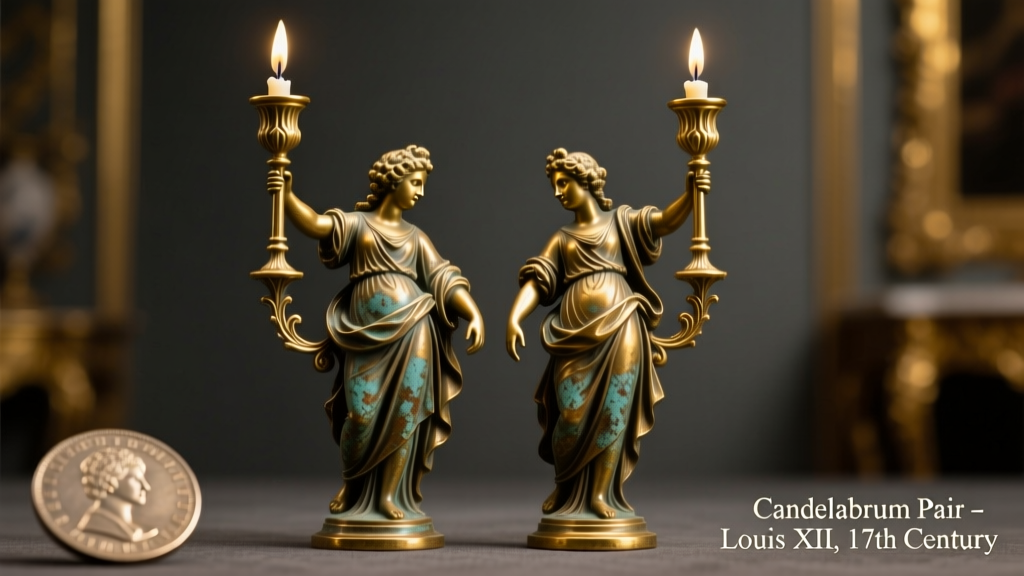
Candelabrum, Two-Light Louis XVI Style: Putto Holding Torches in Bronze — A Detailed Appraisal of the 17½-Inch Pair
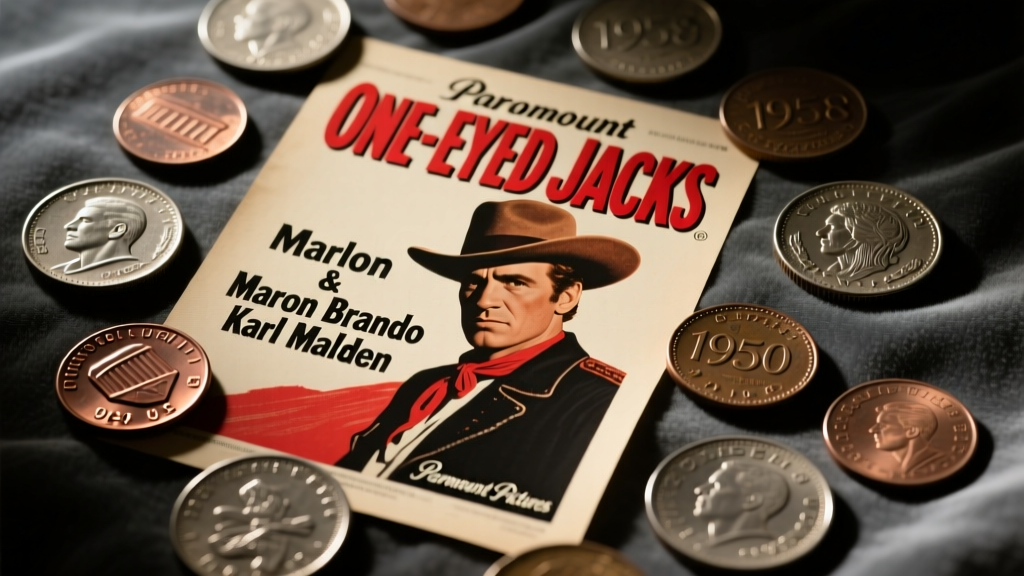
One-Eyed Jacks (1959) Movie Poster: Valuation, Rarity, and Historical Significance of the Paramount One Sheet Featuring Marlon Brando and Karl Malden

Hull Bow Knot Vase (Pastel Matte, 6½") — Identification, History, and Market Value Analysis
Daniel Withington: The Forgotten Engraver Who Shaped Early American Coinage
Toy Good Time Charlie Battery Operated Japan Box: A Numismatic and Collectibles Deep Dive

Weller Vase Marvo Blue 8-Inch: Identification, Value Drivers, and Market Analysis (2024)
The Knickerbocker Raggedy Andy Tag Box (C. 1973): A Numismatic & Collectibles Deep Dive into a Rare Vintage Toy Packaging Artifact
Limoges Plaque Underwater Scene: Opaque Enamels, Swimming Carp, F. G. Hale Signature — An In-Depth Numismatic & Decorative Arts Appraisal
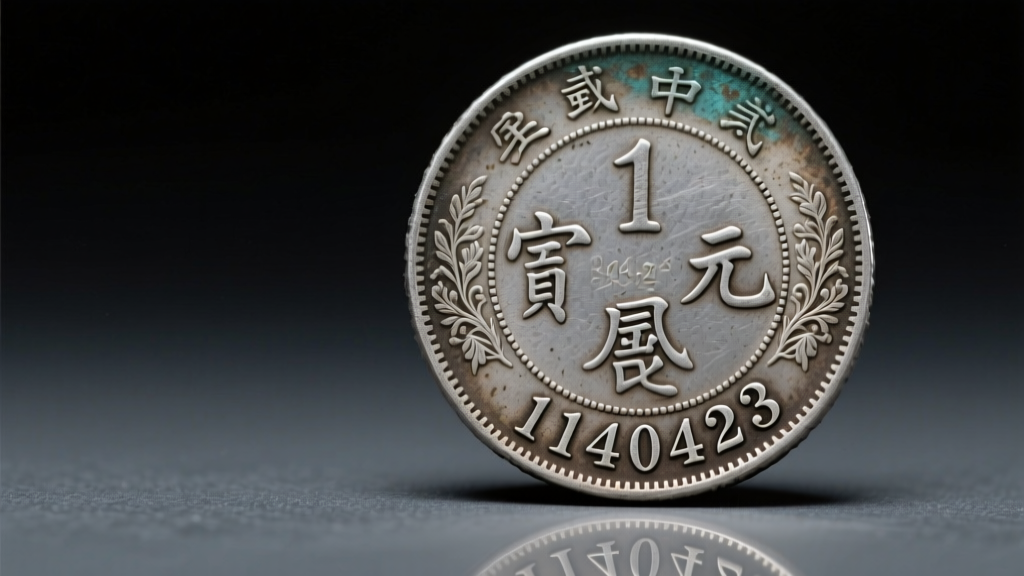
Decoding the Enigma: The 1140423 Countermarked Spanish Dollar and Its Place in Colonial American Numismatics