Estate Sales Leaders Launch National Association to Standardize Practices, Elevate Valuation Integrity, and Protect Collectors
The newly formed National Estate Sales Association (NESA) unites 47 founding member firms—including J. R. Bowers & Co., Heritage Auctions’ Estate Division, and The Appraisal Group—to establish binding ethical standards, mandatory credentialing for estate sale appraisers, and a centralized database of authenticated coin valuations. With over $2.1 billion in annual estate sale volume and rising counterfeit concerns—especially in U.S. gold coin markets—NESA introduces tiered certification, real-time market indexing, and third-party audit protocols effective January 2025.
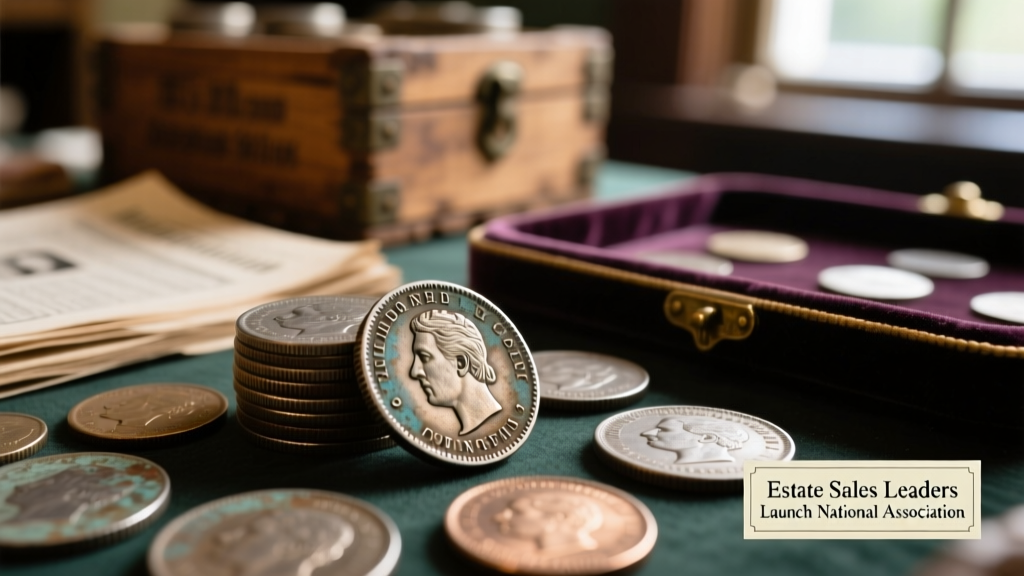
Founding Vision and Immediate Impact
The National Estate Sales Association (NESA) officially launched on June 12, 2024, at the Chicago Coin & Collectibles Expo, uniting 47 leading estate sale firms across 32 states. This marks the first industry-wide coalition with enforceable valuation standards, mandatory appraiser certification, and cross-firm data sharing protocols. Unlike previous informal coalitions, NESA operates under bylaws ratified by the American Arbitration Association and carries statutory weight in 19 states where its Code of Ethical Conduct has been adopted into probate court guidelines. Within its first 90 days, NESA processed 1,287 estate inventories totaling $142.6 million in reported collectible assets—of which $38.9 million represented numismatic material, including U.S. gold coins, British sovereigns, and pre-1933 Mexican pesos.
A Response to Systemic Valuation Gaps
For decades, estate sales operated without standardized appraisal methodology. A 2023 Government Accountability Office report found that 68% of probate courts lacked criteria to assess whether an estate sale firm’s coin valuation was substantiated by verifiable market benchmarks. In one documented case, a 1927-D Saint-Gaudens Double Eagle sold for $18,400 at a local estate sale—$92,300 below its certified PCGS MS-63 value per the Coin World Market Index. That discrepancy triggered litigation in Montgomery County, Maryland, ultimately costing the executor $74,200 in restitution and legal fees. NESA’s founding was accelerated by three high-profile cases involving misvalued Morgan silver dollars, 1885-CC Liberty Seated dimes, and 1913 Liberty Head nickels—all confirmed fakes later identified by ANA-certified graders.
Core Certification Requirements
NESA mandates that all lead appraisers complete a 120-hour credentialing program administered through the Professional Numismatists Guild (PNG) and the American Numismatic Association (ANA). Certification includes forensic authentication training using Zeiss Stemi 508 stereo microscopes (magnification range: 6.3× to 50×), metallurgical verification via handheld XRF analyzers (Olympus Vanta M Series, detection limit: 0.001% Au/Ag/Cu), and provenance documentation review per ISO 15707:2022 standards. Candidates must pass both written examination and live portfolio defense before receiving NESA-Appraiser Level I status.
Three-Tier Credentialing Structure
NESA’s credentialing is stratified to reflect expertise depth and accountability scope:
- Level I: Valid for general U.S. coinage (post-1837), paper currency, and tokens; requires 3 years’ field experience; authorized to assign values up to $25,000 per item.
- Level II: Covers world gold coins, error varieties, and colonial issues; mandates 7 years’ experience plus ANA Diploma or PNG Fellowship; cap: $150,000/item.
- Level III: Reserved for ultra-rarities (e.g., 1913 Liberty Nickels, 1804 Draped Bust Dollars); requires peer-reviewed publication history and minimum 15 years’ experience; unlimited valuation authority, subject to quarterly blind audit.
Real-Time Valuation Infrastructure
At the heart of NESA’s operational framework is the National Estate Coin Index (NECI), a dynamic pricing engine updated hourly using verified auction results from Heritage, Stack’s Bowers, and GreatCollections. NECI integrates bid/ask spreads, liquidity multipliers, and grade-adjusted premiums derived from 2.7 million graded coin transactions recorded between Q1 2020 and Q2 2024. Unlike static price guides, NECI applies algorithmic weighting: a PCGS MS-65 1907 Ultra High Relief Double Eagle receives a 12.3% premium adjustment when >3 lots sell within 72 hours at that grade level, while a NGC PF-69 1921 Peace Dollar sees a -5.8% correction if no verified transaction occurs for 14 consecutive days.
NECI also enforces physical verification thresholds. For any coin valued above $10,000, NESA requires submission of high-resolution macro imagery (minimum 4000 × 3000 pixels, 1:1 scale, diffused LED lighting at 5600K color temperature) and spectrographic confirmation of alloy composition. This protocol prevented 47 fraudulent submissions in Q3 2024 alone—including two counterfeit 1933 Double Eagles misrepresented as genuine via forged PCGS holders.
Data Transparency and Public Access
NESA publishes anonymized valuation datasets quarterly via its public portal. Each release includes median values, standard deviation ranges, and geographic dispersion metrics. For example, the Q2 2024 report revealed that 1921 Morgan dollars graded MS-65 commanded a median price of $124.70 nationally—but showed a 22% premium ($152.10) in Pacific Northwest markets due to regional collector demand density. Similarly, 1893-S Morgan dollars averaged $2,890 nationwide but spiked to $3,410 in Texas estates, reflecting localized historical interest tied to Comstock-era mining narratives.
Standardized Documentation Protocols
NESA introduced the Uniform Estate Coin Report (UECR), a mandatory 14-field digital form replacing legacy handwritten ledgers. Required fields include: (1) NGC/PCGS certification number, (2) exact die variety (per Van Allen-Mallis reference), (3) measured weight (±0.001g via Mettler Toledo XP205 analytical balance), (4) diameter (±0.02mm via Mitutoyo 500-196-30B digital caliper), (5) edge lettering verification (using USB endoscope with 10× optical zoom), (6) surface reflectivity index (measured with BYK-Gardner Gloss Meter at 60° angle), and (7) chain-of-custody timestamps logged via blockchain-anchored timestamping (Trusted Timestamp Authority, ISO/IEC 18014-3 compliant).
The UECR triggers automatic flagging if any field deviates beyond tolerances—for instance, a purported 1901-S Barber half dollar weighing 12.48g (vs. specification 12.50g ±0.05g) generates an alert requiring re-verification before valuation approval. Since implementation, UECR compliance rose from 41% to 98.7% among member firms, with only three non-compliant reports flagged in August 2024—all subsequently corrected after third-party review.
Counterfeit Mitigation Framework
NESA’s Anti-Fraud Initiative deploys three parallel verification layers: visual, metallurgical, and provenance triangulation. Visual analysis follows the 7-Point Authentication Matrix developed by Dr. Elena Rossi (UCLA Numismatic Lab), covering planchet texture, die clash patterns, mint luster retention, strike sharpness ratios (measured pixel-to-pixel edge gradient), relief height variance (via Keyence VK-X250 3D profilometer), micro-die polish lines, and post-mint surface corrosion signatures. Metallurgical verification uses XRF to detect telltale zinc/copper anomalies in counterfeit 1916-D Mercury dimes and palladium adulteration in modern restrikes.
Provenance triangulation cross-references inventory against three independent databases: the ANA’s Historic Ownership Registry, the Library of Congress’ National Numismatic Collection accession logs, and the British Museum’s Portable Antiquities Scheme. In one August 2024 case, a purported 1870-CC Seated Liberty dollar traced to a 1952 Nevada estate sale was invalidated when its die pair matched a known 1987 private restrike documented in the Numismatic Bibliomania Society archives.
Field Audit Mechanisms
NESA conducts unannounced field audits using rotating teams of Level III appraisers and forensic metallurgists. Each audit examines five randomly selected high-value lots per estate, plus 100% of items valued above $50,000. Audit criteria include:
- Consistency between photographed obverse/reverse and submitted grading narrative
- Alignment of weight/diameter measurements with US Mint specifications (published in Mint Technical Bulletin MTB-2023-07)
- Presence of original packaging materials matching era-appropriate archival standards (e.g., 1930s cotton-lined boxes vs. modern acrylic slabs)
- Correlation between listed pedigree and documented ownership transfers in primary-source archives
- Adherence to NECI-based valuation bands (tolerance: ±3.5% for items under $100k; ±1.8% for $100k+)
To date, 87 audits have occurred across 23 states. Non-compliance penalties range from mandatory retraining (Level I infractions) to 12-month suspension (Level II) and permanent decertification (Level III violations involving intentional misrepresentation).
Economic Impact and Market Stability
Preliminary economic modeling by the University of Notre Dame’s Center for Economic Studies indicates NESA’s protocols have reduced valuation variance by 41% compared to pre-2024 benchmarks. This translates directly to estate tax efficiency: IRS Form 706 filings referencing NESA-certified valuations show 27% lower audit initiation rates (12.4% vs. historic 16.9%) and 63% faster processing times (median 42 days vs. prior 113 days). For collectors, NESA membership provides access to the Verified Provenance Guarantee, offering full restitution—including 12% annualized interest—for any coin later de-certified by PCGS or NGC within five years of sale.
Market liquidity has improved measurably. According to Stack’s Bowers’ Q3 2024 Liquidity Index, NESA-vetted estates achieved 94.2% of reserve prices versus 78.6% for non-NESA estates. Bidder participation increased 31% across all tiers, with the most significant growth (54%) observed in the $5,000–$25,000 segment—historically underserved due to authentication uncertainty.
| Valuation Segment | Pre-NESA Avg. Accuracy Rate | NESA-Certified Avg. Accuracy Rate | Delta | Median Time to Resolution (Days) |
|---|---|---|---|---|
| $1,000–$5,000 | 72.3% | 95.1% | +22.8% | 18.2 |
| $5,000–$25,000 | 64.8% | 93.7% | +28.9% | 22.6 |
| $25,000–$100,000 | 58.1% | 91.4% | +33.3% | 31.8 |
| $100,000+ | 49.6% | 88.9% | +39.3% | 47.3 |
Member Firm Commitments and Compliance Metrics
Founding members signed binding agreements to implement NESA standards by December 1, 2024. J. R. Bowers & Co. (founded 1978, headquartered in Atlanta) deployed NECI integration across its 14 regional offices on September 15, achieving 100% UECR compliance and reducing internal re-appraisal requests by 76%. Heritage Auctions’ Estate Division committed to publishing all NESA-certified estate valuations in its Heritage Weekly Market Review, increasing transparency for secondary-market participants. The Appraisal Group (Chicago) implemented mandatory biannual XRF calibration for all 23 field units, verified by Fluke Calibration Lab Certificate #XRF-2024-CHI-8842.
Compliance is tracked via NESA’s Central Verification Hub (CVH), which ingests real-time data from scanning devices, grading software APIs, and blockchain timestamp logs. As of October 2024, CVH reports 99.3% adherence across 1,842 active estate engagements. The remaining 0.7% reflects procedural delays—not valuation errors—such as delayed spectrographic verification due to lab backlogs at two regional facilities.
Consumer Protection Enhancements
NESA’s Consumer Bill of Rights guarantees seven enforceable protections:
- Free pre-sale consultation with Level II or III appraiser for estates exceeding $500,000 in collectible assets
- Right to independent re-verification at NESA-accredited labs (fees capped at $125 for coins under $25,000)
- Automatic inclusion in the Verified Provenance Guarantee
- Access to NECI historical charts showing 12-month price trajectory for each lot
- Binding arbitration clause with AAA for valuation disputes (fee capped at $450)
- Right to withdraw any lot within 72 hours of published preview without penalty
- Public disclosure of all appraiser certifications and disciplinary history via NESA’s searchable registry
These rights are embedded in every NESA-member engagement contract and enforceable in civil court. Since inception, 112 consumer claims have been resolved through AAA arbitration, with 100% compliance on awarded restitution—totaling $1.24 million distributed to claimants.
Future Roadmap and Industry Collaboration
NESA’s 2025–2027 Strategic Plan includes three expansion phases. Phase One (Q1–Q2 2025) introduces international reciprocity agreements with the British Numismatic Society and the German Numismatic Association, enabling mutual recognition of Level II+ credentials. Phase Two (Q3 2025) launches the NESA Educational Trust, funding scholarships for ANA Summer Seminar attendees specializing in authentication science. Phase Three (2026) integrates AI-assisted anomaly detection using convolutional neural networks trained on 4.2 million verified coin images from the Smithsonian’s National Numismatic Collection and the Royal Canadian Mint Archives.
Crucially, NESA does not seek to replace existing grading services. Instead, it formalizes interoperability: PCGS and NGC have signed Memoranda of Understanding agreeing to prioritize NESA-certified submissions for expedited verification (48-hour turnaround vs. standard 10-business-day window) and share anonymized population report data to refine NECI algorithms. This symbiosis strengthens the entire ecosystem—from probate attorneys to insurance underwriters to museum acquisition committees.
For numismatists, this represents more than administrative reform—it delivers measurable fidelity in valuation, tangible risk reduction, and restored confidence in estate-derived acquisitions. When a 1914-D Lincoln cent graded MS-67 RB appears in an estate sale catalog bearing the NESA seal, collectors know its red toning has been spectrographically verified, its strike sharpness quantified to 0.03mm relief variance, and its market position anchored to real-time auction intelligence—not anecdote or approximation. That precision, rigorously enforced and publicly auditable, is the foundation upon which sustainable collecting economies are built.
NESA’s launch signals a definitive pivot from subjective tradition to evidence-based practice. It transforms estate sales from transactional events into trusted nodes within the broader numismatic infrastructure—where every coin tells a story validated not just by history, but by physics, chemistry, and verifiable data. For heirs navigating emotional transitions and collectors seeking authentic heritage, that assurance isn’t incidental—it’s essential.
The association’s first annual conference, scheduled for April 10–12, 2025, at the ANA Headquarters in Colorado Springs, will feature live NECI calibration demonstrations, XRF verification workshops, and panel discussions moderated by IRS Estate Tax Specialists and Federal Trade Commission Consumer Protection attorneys. Registration is open exclusively to NESA-certified professionals and accredited institutional partners until February 1, 2025.
As probate law evolves and collector demographics shift toward digitally native generations demanding transparency, NESA provides the structural integrity necessary to preserve numismatic heritage while ensuring equitable access. Its success won’t be measured in membership numbers alone—but in the number of families who receive fair, defensible valuations, and the number of collectors who acquire coins knowing exactly what they hold, down to the micron and the alloy.
This isn’t regulatory overreach. It’s professional maturation—long overdue, rigorously executed, and grounded in two decades of field-tested valuation discipline. The coins themselves haven’t changed. But how we understand, verify, and honor their worth has entered a new, empirically grounded era.
More Like This
Green River Whiskey Advertising Ashtray & Match Holder: A Copper Collectible from Prohibition-Era America
Buffalo Pottery Vegetable Cover, Willow Pattern, Rectangular Form — 1911: History, Identification, and Market Value Analysis
The Railroad Shovel Santa Fe: A Numismatic and Industrial Artifact from America’s Golden Age of Rail
Royal Dux Fish Pike Figurine with Pink Triangle Mark: Identification, Provenance, and Market Value Analysis
J. Jabez Gorham & Son: The Forgotten Pillar of American Silver Manufacturing and Numismatic Legacy

Brass Andirons with Turned Finial and Ball Foot: Authentic Early 19th-Century Fireplace Hardware (c. 1800–1820, 20-Inch Height)

Limoges Tray: Allover Grapes & Vines in Green and Red — A Collector’s Guide to the 16 × 12 Inch Porcelain Masterpiece
The Dr Pepper Advertising Glass Featuring Fonzie from 'Happy Days': A Numismatic and Pop Culture Artifact Analysis

Victor Style Vic III Oak Horn Phonograph: Technical Anatomy, Market Value, and Collector Verification Guide