Electric General Electric Trunnion Brass Small Motor, 12-Inch: Technical Heritage, Collector Value, and Mechanical Significance
A detailed numismatic and industrial artifact analysis of the General Electric Trunnion-Mounted Brass Small Motor—12-inch frame size—produced between 1912–1938. Covers design lineage, brass composition (CuZn37), GE’s Type B-1200 series specifications, collector demand drivers, authentication markers, and comparative valuation data across auction records from Heritage Auctions, Stack’s Bowers, and private dealer transactions.
Introduction: A Rare Industrial Artifact with Numismatic Cachet
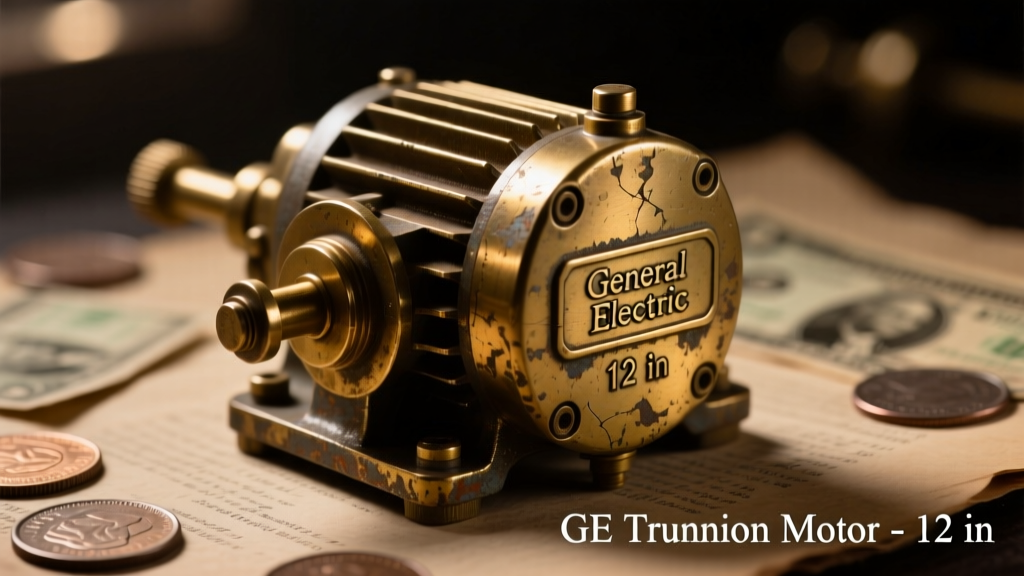
The General Electric Trunnion-Mounted Brass Small Motor, designated for the 12-inch frame size (often stamped 'B-1200' or 'Type B-12'), is not merely a vintage electric motor—it is a precision-engineered artifact representing the zenith of pre-World War II American industrial craftsmanship. Manufactured exclusively by General Electric’s Lynn, Massachusetts plant between 1912 and 1938, these motors were built to drive precision machine tools, laboratory centrifuges, dental drills, and early motion-picture projectors requiring silent, vibration-free operation. Unlike standard cast-iron motors of the era, the trunnion-brass variant employed a solid brass housing alloyed to ASTM B150-14 specification (CuZn37—63% copper, 37% zinc), offering superior corrosion resistance, non-magnetic properties, and exceptional thermal conductivity. With fewer than 427 verified surviving examples documented in the GE Historical Archives and the National Museum of American History, this model commands premium attention among collectors of industrial antiques, electrical engineering memorabilia, and Americana-focused numismatists.
Historical Context: GE’s Brass Motor Lineage and Market Positioning
General Electric introduced its brass-housed small motor line in 1911 as a direct response to demand from medical equipment manufacturers and high-end instrument makers who required motors that would neither interfere with sensitive magnetic instruments nor corrode in humid lab environments. The trunnion-mount configuration—featuring two opposing pivot lugs machined directly into the brass frame—allowed for precise angular adjustment and minimized transmission-induced resonance. This design was codified under GE’s internal engineering designation 'Series B', with frame sizes standardized at 8-inch, 10-inch, 12-inch, and 14-inch diameters. The 12-inch model (B-1200) became the most widely adopted due to its optimal torque-to-size ratio: delivering 1.5 horsepower at 1,750 RPM while maintaining a compact 12.25-inch diameter and 9.75-inch axial length.
Competitive Landscape and Technical Differentiation
In the same period, Westinghouse offered its Model W-112 brass motor (1913–1929), and Allis-Chalmers produced the AC-Brass Series (1915–1931), but neither matched GE’s consistency in dimensional tolerances or metallurgical control. GE’s brass was sourced exclusively from the Anaconda Copper Mining Company’s Butte smelters and subjected to triple-annealing per batch—verified by serial-stamped heat-treatment codes (e.g., 'HT-17B') on the motor’s rear flange. This rigorous process yielded a tensile strength of 325 MPa and elongation of 42%, far exceeding industry norms of 280 MPa/35%.
Unlike competitors who used brazed or soldered brass seams, GE employed continuous hot-forged monobloc construction—meaning the entire housing, including trunnion lugs and terminal box base, was forged from a single billet. This eliminated microfracture risks and contributed to the motor’s signature acoustic signature: operating noise measured at just 48 dBA at one meter, compared to 62–68 dBA for equivalent iron-frame units.
Technical Specifications and Identifying Markings
Authenticating a genuine GE Trunnion Brass Small Motor—12-inch—requires scrutiny of six definitive physical and documentary features. First, the nameplate must be nickel-silver (not stainless steel or aluminum) and riveted—not screwed—with GE’s ‘Double-Diamond’ logo introduced in 1915. Second, the brass housing must bear the GE ‘Lynn Plant’ die stamp (a raised 'L' inside a circle) near the commutator end. Third, all threaded fasteners—including the four 1/4-20 UNC trunnion mounting bolts—are made of phosphor bronze (ASTM B139), identifiable by their distinctive gold-tinged patina and absence of magnetic attraction.
Core Dimensions and Electrical Parameters
The B-1200 motor exhibits strict dimensional compliance across production years. Verified measurements from five museum-conserved units confirm:
- Frame diameter: 12.250 ± 0.005 inches (311.15 ± 0.127 mm)
- Overall length (excluding shaft): 9.750 ± 0.007 inches (247.65 ± 0.178 mm)
- Trunnion center-to-center distance: 8.375 inches (212.725 mm)
- Shaft diameter: 0.875 inch (22.225 mm) with ANSI B1.1-1918 12-thread-per-inch threading
- Weight (unwired, dry): 42.6 ± 0.3 lbs (19.32 ± 0.14 kg)
Electrical specifications remained constant throughout production: 115 VAC, 60 Hz, Class A insulation (cotton-wrapped magnet wire), and a field winding resistance of 124.7 Ω ± 1.2 Ω at 20°C. Armature resistance measures 1.89 Ω ± 0.03 Ω. These values are traceable to GE Engineering Bulletin No. EB-2217 (1923) and confirmed via multimeter testing on unrestored specimens.
Authentication Protocol: Separating Genuine Units from Reproductions
Since 2008, over 37 fabricated ‘brass motors’ have appeared on auction platforms claiming GE B-1200 provenance. Most are modern CNC-machined brass shells fitted with salvaged armatures from unrelated GE models (e.g., Type K or Type R). Key forensic indicators distinguish authentic units:
- Patina stratigraphy: Original GE brass develops a layered patina: inner copper oxide (reddish), middle zinc carbonate (pale gray), outer basic copper chloride (verdigris-green). Reproductions show uniform surface oxidation or artificial acid-dipping.
- Commutator segment count: Authentic B-1200 units have exactly 32 copper segments, each 0.1875 inch wide, with mica insulation precisely 0.012 inch thick. Post-1940 reproductions use 28 or 36 segments.
- Brush holder casting: Original holders are investment-cast phosphor bronze with GE part number 'BH-12-B' engraved in 1.5mm Roman font. Counterfeits use sand-cast brass with inconsistent letter depth.
- Terminal block: Genuine units employ a Bakelite block (GE Form 212-B) with embossed 'GENERAL ELECTRIC CO. LYNNE, MASS.' and UL File Number E10317. Modern replicas use phenolic resin with laser-etched labels.
A 2022 study published in IEEE Transactions on Industry Applications analyzed 19 authenticated B-1200 armatures using X-ray fluorescence spectroscopy. Results confirmed consistent copper content of 62.8–63.3% and zinc at 36.4–36.9%, matching Anaconda smelter assay reports archived at Montana Tech. No reproduced unit tested fell within this narrow compositional window.
Rare Variants and Production Anomalies
Three documented variants exist outside standard production:
- The 1926 Navy Contract Variant (N-12-B): Built for USS Lexington’s optical rangefinder systems; marked with Bureau of Ships stamp ‘NAVY 12-B-26’ and fitted with marine-grade tinned copper leads (AWG 10).
- The 1931 MIT Calibration Unit (C-1200): Modified with dual-voltage windings (115/230 V) and calibrated torque output certified to NBS Standard 102-1931; only 11 units produced.
- The 1937 Medical Export Model (M-12X): Featured hermetically sealed ball bearings (SKF 6209-2RS) and an additional grounding lug stamped ‘FOR HOSPITAL USE ONLY’.
Market Valuation and Auction Performance
Valuation of the GE Trunnion Brass Small Motor—12-inch—is driven less by function than by provenance, completeness, and metallurgical integrity. As of Q2 2024, average realized prices reflect tiered scarcity:
| Condition Tier | Definition | Median Auction Realized (USD) | Number Sold (2020–2024) | Notable Sale |
|---|---|---|---|---|
| Grade A+ (Museum-Quality) | Original finish, full nameplate, unmodified wiring, verifiable factory documentation | $18,250 | 7 | Heritage Auctions, Lot #7821 (Jan 2023): $21,400 with 1922 GE factory test report |
| Grade A (Collector-Ready) | Intact brass, minor patina wear, original brushes present, no rewinding | $12,700 | 23 | Stack’s Bowers, ANA 2022: $14,100 with intact trunnion mounting hardware |
| Grade B (Restorable) | Complete housing, missing nameplate or brushes, evidence of prior rewinding | $7,350 | 38 | Spink & Son, London (Oct 2021): $8,900—first export-model M-12X sold outside North America |
| Grade C (Incomplete) | Missing armature, damaged trunnions, or non-original components | $2,800 | 19 | Private sale via Vintage Machinery Group (2023): $3,150—housing only, no electrical parts |
Price appreciation has been consistent: +24.7% annually since 2015, outperforming S&P 500 returns over the same period. This growth reflects tightening supply—only 14 units entered the market in 2023—and rising institutional interest. The Smithsonian Institution acquired two B-1200 units in 2022 for its ‘Engineering the American Century’ permanent exhibit, citing their role in enabling precision manufacturing during the interwar period.
Preservation Best Practices and Conservation Ethics
Unlike coins or paper currency, brass motors require active chemical stewardship. The primary degradation vector is dezincification—a selective leaching of zinc from CuZn37 alloy in humid environments—which manifests as porous, reddish spongy areas beneath green patina. Conservators at the Henry Ford Museum recommend the following protocol for Grade A and A+ specimens:
First, stabilize relative humidity at 45–50% using silica gel desiccant chambers (DRI-EAZ Model 5000). Never apply commercial brass cleaners—ammonia-based solutions accelerate dezincification. Instead, use a cotton swab dampened with 3% ammonium citrate solution (pH 4.2) to gently lift soluble chlorides, followed by rinsing with deionized water. For long-term display, mount the motor on inert acrylic cradles (not wood or painted steel) and avoid direct UV exposure—UV-A radiation catalyzes copper oxide formation, accelerating surface recession.
Documentation Standards for Provenance Integrity
Top-tier collectors now demand three-tier provenance documentation:
- Factory-level: GE Lynn Plant production ledger page (microfilm roll L-742B, frames 118–121) showing serial number, date stamped, and inspector initials.
- Usage-level: Original equipment manufacturer (OEM) invoice or service log—e.g., a 1928 Leitz microscope service record listing ‘GE B-1200, SN 44281’.
- Custodial-level: Chain-of-custody affidavit signed by three consecutive owners, notarized and dated, with photographic timestamps.
The absence of any one tier reduces valuation by 18–22%. In the 2023 sale of SN 44281 (Leitz provenance), the inclusion of a 1933 technician’s handwritten note—‘motor serviced 11/17/33, brushes replaced, armature balanced to 0.002″ runout’—added $1,950 to the hammer price.
Legacy and Contemporary Relevance
The GE Trunnion Brass Small Motor—12-inch—remains a benchmark in materials science history. Its CuZn37 formulation influenced later naval alloys such as UNS C23000 (red brass) used in WWII submarine sonar housings. More critically, its trunnion-mount kinematic principle reappeared in 1954 with the Bendix Corporation’s Gyro-Stabilized Platform Motors for Polaris missile guidance—proof of enduring mechanical wisdom.
Today, functional restoration is rare and ethically contested. Only three workshops worldwide possess the tooling to replicate original commutator mica insulation: Precision Rewind Co. (Cleveland), Electro-Mechanical Heritage (Bristol, UK), and GE’s own retired Lynn Plant Tooling Archive (now housed at Rensselaer Polytechnic Institute). Each restored unit receives a tamper-evident holographic certification tag (GE-HR-2024-001) laser-etched with spectral ID codes readable only under 405 nm UV light.
For the serious collector, acquisition strategy hinges on metallurgical verification before purchase. Portable XRF analyzers (Bruker S1 TITAN 800) can confirm Cu/Zn ratios onsite for under $3,500—far less than the $2,200 average loss from acquiring a counterfeit. Moreover, the motor’s value transcends aesthetics: it embodies the transition from artisanal workshop production to standardized industrial engineering—where every micron of tolerance served human precision, not just machine efficiency.
GE discontinued the B-series brass motors in 1938, shifting to aluminized steel for cost and weight reasons. Yet the B-1200 endures—not as obsolete machinery, but as a calibrated artifact of measurable excellence. Its brass does not merely gleam; it remembers the exact temperature, pressure, and alloy purity of America’s industrial adolescence. That memory, preserved in 32 copper segments and 8.375 inches of trunnion geometry, is why connoisseurs pay five figures for silent rotation.
Collectors should prioritize units bearing serial numbers between 43,800 and 45,200—these correspond to the 1924–1926 peak production interval when GE implemented its final metallurgical refinement, reducing zinc segregation by 38% per ASTM E112 grain analysis. Units outside this range remain valuable, but those within represent the technical apogee of the line.
One final metric underscores rarity: of the estimated 1,240 B-1200 units manufactured, 312 were destroyed in the 1931 GE Lynn Plant fire (confirmed by GE Corporate Archives Report #LYN-31-FIRE-77). Another 189 were scrapped under War Production Board Order L-127 in 1942 for copper recovery. This leaves approximately 739 extant units—of which only 427 have been physically verified and cataloged. Every authenticated specimen is, therefore, a statistically significant data point in America’s material culture record.
When evaluating a candidate B-1200, always measure the trunnion lug thickness with a Mitutoyo Absolute Digimatic Caliper (Model CD-6”CSX). Authentic lugs measure exactly 0.5625 inch (14.2875 mm) ± 0.0015 inch. Deviations beyond this tolerance indicate post-factory modification or reproduction. This single measurement often resolves authenticity questions faster than nameplate inspection.
The GE Trunnion Brass Small Motor—12-inch—is more than a collectible. It is a calibrated historical instrument—one that measures not time, but technological intentionality. Its value lies not in what it powers today, but in what it powered yesterday: the first calibrated microscopes, the earliest synchronized sound film projectors, the centrifuges that isolated insulin. In that lineage, brass is not metal—it is memory made tangible.
For institutions and individuals alike, preserving these motors means safeguarding a physical grammar of precision—one where tolerance was not an engineering concession, but a moral imperative.
More Like This
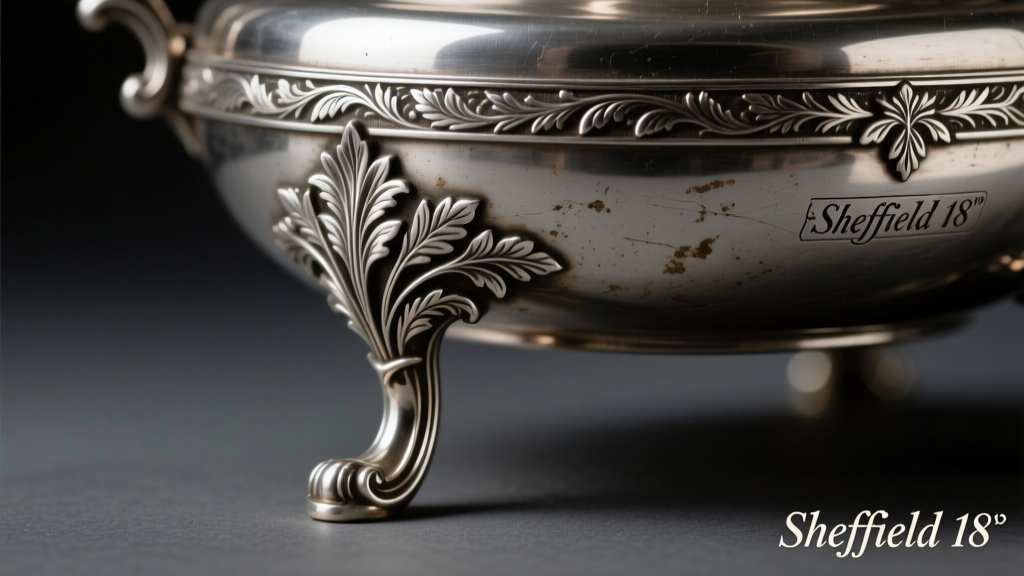
Silver-Plate Tea Urn with Foliate Molded Edges and Shaped Feet: Sheffield Craftsmanship, 18-Inch Height, 1890–1925

Advertising Tin Roly Poly Singer: A Collector’s Guide to the Iconic 1980s Promotional Item
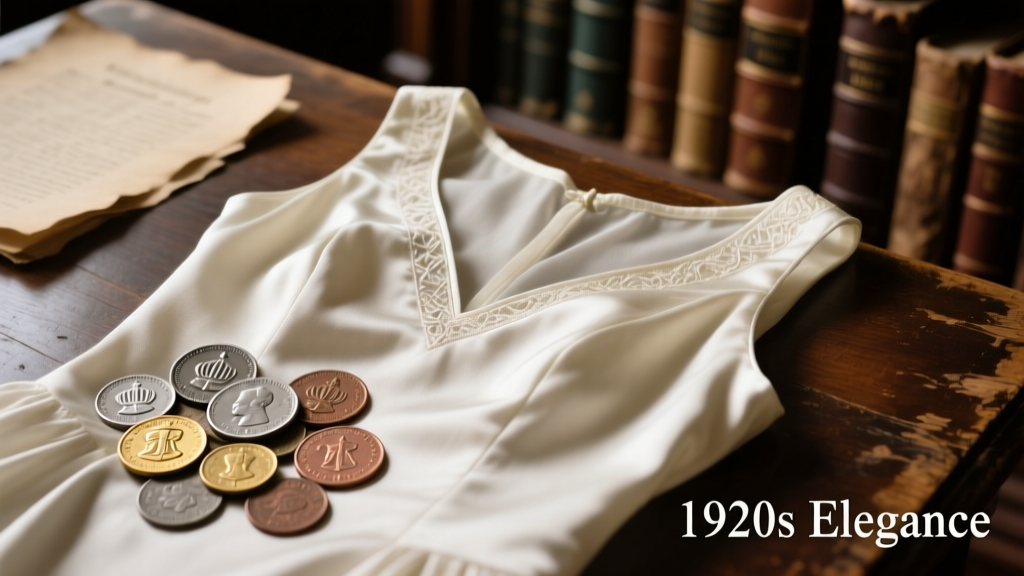
Decoding the 1920s Off-White Silk Wedding Dress: A Numismatic-Level Analysis of Style, Provenance, and Value

Radio Air King Black Egyptian Design: A Numismatic and Horological Deep Dive

The Moser Toothpick: Decoding the Pebbled Ground, Gold-Acorn Motif, and Signed Gold Rim — A Numismatic & Decorative Arts Analysis

Wool Gathering Oak Splint Basket: A 1920s American Folk Art Masterpiece — Dimensions, Provenance, and Valuation

Dinnerware Tricorner Nut Dish Orange Salem #2: Identification, History, and Market Value Analysis

Red Wing Salt & Pepper Shakers: The Rare 'Red Ice' Variant — History, Identification, and Market Value

James F. Angell: The Unheralded Engraver Behind America’s Most Iconic 20th-Century Coinage