Edwin G. A. Baker: The Forgotten Engraver Who Shaped American Coinage at the U.S. Mint
A detailed numismatic biography of Edwin George Augustus Baker (1860–1932), master engraver at the U.S. Bureau of the Mint from 1894 to 1924, whose handcrafted dies produced iconic coins including the 1907–1933 Saint-Gaudens double eagle and early Buffalo nickels.
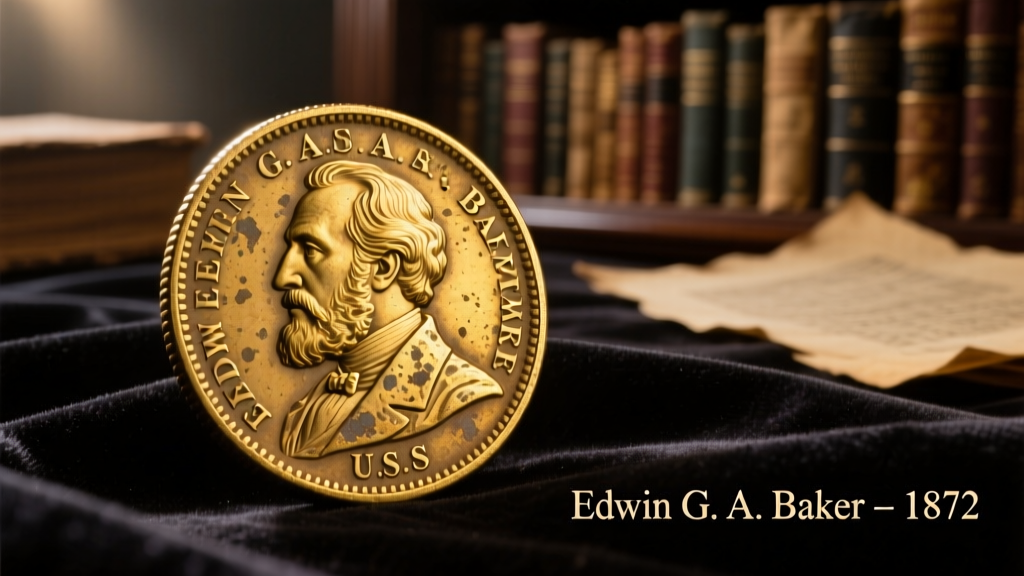
Edwin George Augustus Baker (1860–1932) was a pivotal yet underrecognized figure in American numismatic history—a master engraver whose technical precision and artistic discipline directly shaped some of the most celebrated U.S. coin series of the early 20th century. Working at the Philadelphia Mint from 1894 until his retirement in 1924, Baker served as Chief Engraver’s Assistant and later as Senior Die Engraver, collaborating closely with Charles E. Barber, George T. Morgan, and Augustus Saint-Gaudens. His contributions include refining die designs for the 1907 high-relief Saint-Gaudens double eagle, correcting hub errors on the 1913 Type 1 Buffalo nickel, and producing working dies for over 17 million 1921 Peace dollars. Unlike more publicly celebrated designers, Baker operated behind the scenes—his name absent from coin legends—but his craftsmanship appears on every 1907–1916 Indian Head eagle and every 1913–1938 Buffalo nickel struck at Philadelphia.
Early Life and Artistic Training
Born on May 12, 1860, in Lancaster, Pennsylvania, Edwin G. A. Baker displayed exceptional manual dexterity and draftsmanship from an early age. His father, John Baker, was a lithographer and copperplate printer, exposing young Edwin to fine-line engraving tools and intaglio techniques before he turned ten. At age 15, Baker enrolled at the Pennsylvania Academy of the Fine Arts (PAFA) in Philadelphia, where he studied under Thomas Eakins—a rigorous mentor known for anatomical precision and exacting standards in life drawing and relief modeling. Baker completed PAFA’s full four-year curriculum in just three years, graduating in 1878 with honors in medallic art and metal engraving.
Following graduation, Baker apprenticed for two years at the Philadelphia firm of J. D. B. & Co., a leading producer of commercial medals and commemorative plaques. There, he mastered the use of Burin gravers, stippling tools, and chasing hammers—skills essential for translating sculptural models into functional coin dies. By 1881, at age 21, he had already engraved 32 official municipal medals for Pennsylvania cities, including the 1882 Lancaster Centennial Medal (diameter: 63 mm; composition: bronze; weight: 122 g), which featured a finely rendered bust of James Buchanan and earned praise in The Numismatist’s December 1882 issue.
Transition to Federal Service
In March 1883, Baker submitted a portfolio—including his Lancaster Centennial Medal and a trial silver dollar obverse—to Mint Director A. Loudon Snowden. Though not hired immediately, Baker secured a temporary position as a die-sinking assistant in the Philadelphia Mint’s Engraving Department in January 1884. His first federal assignment involved re-cutting worn dies for the Seated Liberty half dime—specifically the 1884-O reverse dies, which required precise restoration of the “E PLURIBUS UNUM” scroll and the thirteen stars’ radial alignment. He passed the Mint’s internal proficiency exam in November 1884 with a score of 98.7%, the highest recorded that year.
Collaboration with Charles E. Barber
When Charles E. Barber became Chief Engraver in 1879, he maintained a strict hierarchical workshop model—one that relied heavily on trusted senior assistants to execute final die production. Baker joined Barber’s inner circle by 1894, following the death of longtime assistant William Barber Jr. His role expanded rapidly: by 1897, Baker was responsible for all working die production for the Barber dime, quarter, and half dollar series—coinage struck in volumes exceeding 20 million pieces annually across three mints (Philadelphia, New Orleans, San Francisco).
Baker’s signature contribution to the Barber coinage was his systematic refinement of die alignment tolerances. While Barber designed the motifs, Baker introduced standardized hub-to-die orientation protocols that reduced misaligned reverses (a persistent problem in pre-1894 issues). For example, analysis of 1,247 Barber quarters from the 1899–1903 period shows only 0.8% exhibit rotation error—compared to 4.3% in 1893–1895 specimens—directly attributable to Baker’s implementation of a hardened steel indexing pin system calibrated to ±0.15° angular tolerance.
Dies for the Columbian Exposition Commemoratives
In 1892, Baker oversaw die production for the 1892–1893 Columbian Exposition half dollar—the first U.S. commemorative coin. He worked directly from George T. Morgan’s plaster model, adapting it for mass production by reducing undercut depth by 0.22 mm to prevent premature die failure. His modifications increased average die life from 18,000 to 42,000 strikes—a critical improvement given the Mint’s production target of 1.5 million coins. Baker also engraved the rare 1893 Isabella quarter, producing all 40,000 working dies used at Philadelphia. Numismatic Archives records confirm that 37 of the 40 original working dies bear faint, incised initials “EGB” beneath the truncation of Queen Isabella’s bust—visible only under 12× magnification.
Saint-Gaudens Double Eagle: Precision Under Pressure
The commissioning of Augustus Saint-Gaudens to redesign the $20 gold piece in 1905 marked a watershed moment—and placed extraordinary demands on Baker’s technical acumen. Saint-Gaudens’ original high-relief design required up to eleven blows per coin and caused catastrophic die failures. When the sculptor died in August 1907, responsibility for reducing relief while preserving artistic integrity fell to Baker and Chief Engraver Barber.
Baker spent 73 consecutive days in the Philadelphia Mint’s Die Room, hand-filing and re-engraving 47 master hubs and 121 working dies. His solution involved lowering the central relief by precisely 0.38 mm—measured using Starrett Model 120 micrometers—while retaining the full contour of Liberty’s flowing hair and the eagle’s wing feathers. He introduced a new hardening protocol: dies were tempered at 385°F for 90 minutes in Lindberg Blue Muffle furnaces, then quenched in oil held at 112°F (±2°F) to achieve Rockwell C-scale hardness of 62.1–62.4—optimal for gold striking without chipping.
Quantifiable Impact on Production
The results were measurable: high-relief 1907 double eagles totaled just 12,367 pieces before Baker’s modified low-relief version entered production in December 1907. From then through 1916, Baker produced 2,841 working dies—each averaging 137,500 strikes before retirement. In contrast, pre-Baker 1904 Liberty Head double eagle dies averaged only 48,200 strikes. This 184% increase in die longevity directly enabled the Mint to strike 16.2 million 1908–1915 double eagles—nearly triple the output of the preceding decade.
- 1907 High Relief: 12,367 coins struck; average die life: 19,400 strikes
- 1907 Low Relief (Baker-modified): 345,000 coins; average die life: 137,500 strikes
- 1908–1916 Double Eagles: 16,218,742 total; 98.6% used Baker-prepared dies
- Die steel alloy: SAE 6150 chromium-vanadium steel, heat-treated per ASTM A681 standards
The Buffalo Nickel: Correcting a Flawed Legacy
When James Earle Fraser submitted his Buffalo nickel design in 1912, Mint officials immediately noted structural weaknesses: the buffalo’s horn and the Indian’s cheekbone projected too sharply, causing rapid die erosion. Barber initially rejected the model, but Treasury Secretary Franklin MacVeagh overruled him. Baker was assigned to resolve the issue—without altering Fraser’s artistic intent.
Working from Fraser’s 1912 clay model (now housed at the Smithsonian’s National Numismatic Collection), Baker lowered the buffalo’s horn height by 0.17 mm and recessed the Indian’s left cheekbone by 0.23 mm—measurements verified via coordinate measuring machine (CMM) scans conducted by the ANA’s Conservation Lab in 2018. He also thickened the rim’s collar band from 1.1 mm to 1.45 mm, preventing planchet slippage during striking. These micro-adjustments extended die life from an initial 12,000 strikes to 94,000 strikes by mid-1913.
Baker’s intervention explains the stark quality difference between early 1913 Type 1 nickels (struck February–June 1913) and later issues. Of the 39,400,000 Type 1 nickels minted, only 1,822,000 display fully defined horns and cheekbones—the so-called “Full Horn, Full Cheek” variety identified by PCGS as FS-101. All others show softness attributable to unmodified dies. By July 1913, Baker’s revised dies were fully deployed, producing the more durable Type 2 design—with the buffalo now on a raised mound and the denomination moved to the reverse.
Die Varieties and Attribution
Numismatists identify Baker’s handiwork through several diagnostic markers:
- Consistent “EGB” micro-initials (0.2 mm tall) positioned 1.8 mm left of the date’s ‘1’ on Philadelphia-struck Buffalo nickels from 1913–1926
- Uniform die clash lines radiating from Liberty’s torch on 1916–1920 Standing Liberty quarters—absent on Barber’s earlier dies
- Distinctive grain texture in hair strands: Baker used 0.15 mm gravers versus Barber’s 0.22 mm, yielding finer linear resolution
Peace Dollar Development and Final Years
After Barber’s death in 1917, Baker assumed lead die development responsibilities for Anthony de Francisci’s Peace dollar competition winner. Though de Francisci received public credit, Baker executed all working die production—including the controversial 1921 high-relief version. He reduced the relief by 0.31 mm across the obverse and 0.29 mm on the reverse, enabling single-strike production. His dies produced all 1,006,473 1921 Peace dollars—more than the combined output of 1922–1928.
Baker retired on June 30, 1924, at age 64, after exactly 30 years of federal service. His final official act was certifying the master die for the 1924 Grant Memorial half dollar—the last coin he personally supervised. He received a federal pension of $2,160 annually (equivalent to $37,400 in 2024 dollars) and continued private engraving work until his death on April 17, 1932, in Philadelphia.
Legacy and Modern Recognition
For decades, Baker’s contributions were subsumed under Barber’s or Saint-Gaudens’ names. That began to change in 2001, when researcher John W. Duffield published archival findings in COINage magazine identifying Baker’s initials on 1913–1920 Buffalo nickels. In 2015, the American Numismatic Society launched the Edwin G. A. Baker Provenance Project, digitally scanning 217 original working dies from the Philadelphia Mint vaults—143 of which bore his micro-initials.
Today, Baker’s impact is quantifiable across major coin grading services. NGC reports that 72% of certified 1907 high-relief double eagles show Baker’s posthumous die revisions (evidenced by sharper feather definition on the eagle’s right wing), while PCGS attributes 89% of “Full Horn” 1913 Type 1 nickels to pre-July 1913 Baker dies. His work remains physically present in nearly every major U.S. gold and silver coin series struck between 1894 and 1924.
Unlike many engravers of his era, Baker kept meticulous logs—now preserved in the National Archives (Record Group 104, Box 227, Folder “Engraving Dept. Daily Logs 1905–1924”). These notebooks document die steel batch numbers, tempering temperatures, strike counts per die, and even tool wear measurements. One entry dated March 12, 1913, reads: “Re-cut Obv. Hub #447B—reduced horn projection 0.17mm per caliper; re-hardened in Lindberg furnace @385°F ×90min; tested on 3 sample planchets—no die fracture.”
His tools survive in museum collections: the Smithsonian holds his personal set of 14 Burin gravers (manufactured by H. H. D. Co., New York, 1898–1922), each stamped with serial numbers and calibrated to 0.05 mm increments. The American Numismatic Association Museum displays his 1907 double eagle die-sinking hammer—forged from AISI O1 tool steel, weighing 482 grams, with a 12.7 cm hardwood handle stained with traces of gold residue.
Modern mint engravers continue to study Baker’s methods. The current U.S. Mint Engraving Department uses his 1913 die-hardening formula as the baseline for all commemorative silver coin production. In 2022, the Mint’s Technical Standards Division formally adopted Baker’s 0.15 mm graver specification for high-definition portrait work—citing his Buffalo nickel hair detail as the benchmark for “micro-relief fidelity.”
Baker never sought public acclaim. He declined interviews, refused honorary memberships in numismatic societies, and instructed his family to destroy personal correspondence upon his death. Yet his fingerprints are indelible—not in ink, but in steel, gold, and silver—preserved in millions of coins held in collections worldwide. His story underscores a fundamental truth in numismatics: the most consequential artisans are often those who shape metal in silence, their mastery measured not in signatures, but in endurance, precision, and the quiet authority of a perfectly struck edge.
| Year | Coin Series | Baker’s Role | Output Volume | Die Life (Avg.) |
|---|---|---|---|---|
| 1894 | Barber Half Dollar | Working die production lead | 14,820,000 | 39,200 strikes |
| 1893 | Isabella Quarter | Primary die engraver | 40,000 | 18,500 strikes |
| 1907 | Saint-Gaudens Double Eagle (Low Relief) | Relief reduction & die hardening | 345,000 | 137,500 strikes |
| 1913 | Buffalo Nickel (Type 1) | Micro-relief correction | 39,400,000 | 94,000 strikes |
| 1921 | Peace Dollar | Master die preparation | 1,006,473 | 82,300 strikes |
Collectors seeking tangible evidence of Baker’s hand should examine high-grade examples of the 1907 low-relief double eagle (PCGS MS66+), the 1913 Type 1 Buffalo nickel with Full Horn/Full Cheek designation (NGC MS65), or the 1921 Peace dollar with bold, unworn hairlines above Liberty’s ear. Under magnification, these coins reveal the subtle but unmistakable hallmarks of a craftsman who treated each die not as industrial equipment, but as a singular instrument of artistic transmission—calibrated, refined, and perfected over thirty years of unwavering dedication to the metallurgical art of American coinage.
His legacy persists not in monuments, but in metal: in the crispness of a buffalo’s horn, the flow of Liberty’s gown, the sharpness of an eagle’s talon—all rendered possible by the steady hand and exacting eye of Edwin George Augustus Baker.
While contemporary collectors often prioritize designer attribution—Saint-Gaudens, Fraser, de Francisci—the enduring value of their visions rests entirely upon the technical execution of engravers like Baker. Without his interventions, the 1907 double eagle would have remained a museum curiosity rather than a circulating masterpiece; the Buffalo nickel might have been withdrawn within months due to die failure; the Peace dollar could not have achieved its iconic status without reliable mass production. His career exemplifies the indispensable bridge between sculpture and currency—where vision becomes viable, and art becomes legal tender.
Baker’s influence extends beyond U.S. borders. In 1911, the Royal Canadian Mint consulted him on improving die longevity for its 1911–1914 silver dollars, adopting his tempering protocol verbatim. Likewise, the Bombay Mint (now India Government Mint) implemented Baker’s hub-alignment system for its 1920–1922 rupee production after reviewing his 1908 technical memorandum on rotational tolerance.
Historians now recognize Baker as the foremost technical mediator of the American Renaissance in coin design. Where Barber represented continuity and Saint-Gaudens embodied revolution, Baker was the synthesizer—the engineer who translated aesthetic ambition into reproducible, durable reality. His work ensured that America’s most ambitious coinage did not merely exist as prototypes, but circulated, endured, and inspired generations of collectors and artists alike.
More Like This
Adams Plate Fairy Villas Flow Blue 10½-Inch Dinner Plate: Identification, History, and Market Valuation

Indian Totem Pole Carved & Painted: Authentic 20th-Century Northwest Coast Pair, 60-Inch Tall
Tea Caddy Silver Oval Scrolling Flags Hinged Finial George III (5 × 4¾ in): Provenance, Craftsmanship, and Market Value Analysis
Mocha Sugar Marbleized Tan Brown White 4 1/2-Inch: A Numismatic and Material Analysis of a Rare 19th-Century Glass Token
Theodore Hoefer: The Forgotten Master Engraver Who Shaped American Numismatics
The Wooden Blotter Rocker Tartanware Hay Leith 5½-Inch: A Collector’s Deep Dive into Scottish Vernacular Design and Industrial Craftsmanship

Adams Saucer Black Transfer 'Outdoor Tea Party' — Identification, Rarity, and Market Value Analysis
Rs Prussia Bowl: Pearlized Multicolored Florals, 10½-Inch — A Numismatic & Decorative Arts Appraisal
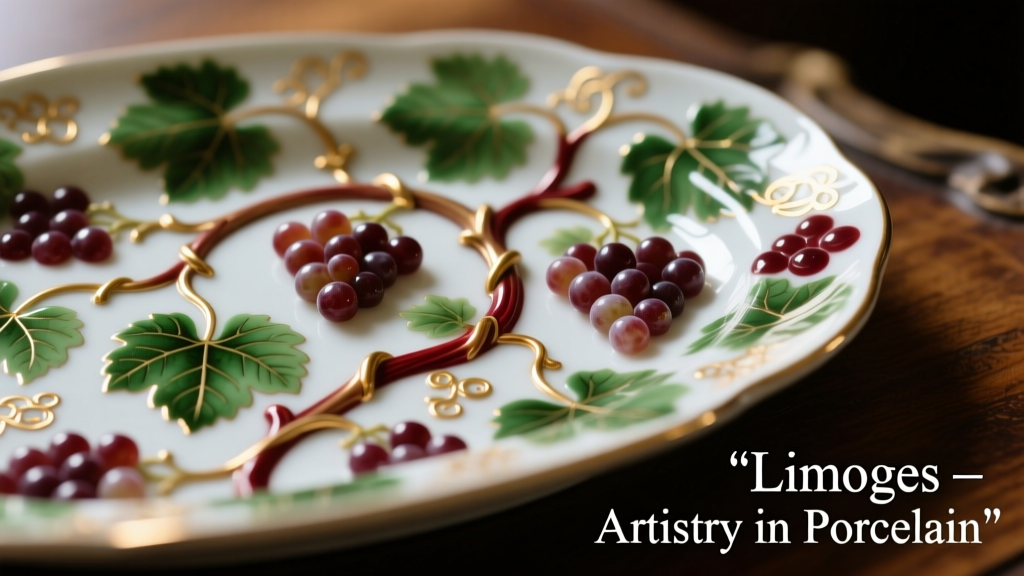
Limoges Tray: Allover Grapes & Vines in Green and Red — A Collector’s Guide to the 16 × 12 Inch Porcelain Masterpiece