eBay Scam Stopped: How a $12,400 1921 Peace Dollar Fraud Was Thwarted by Numismatic Due Diligence
A detailed forensic account of how a high-value counterfeit 1921 Peace Dollar listing on eBay was identified and halted before sale—featuring metallurgical analysis, die variety verification, and platform policy enforcement.
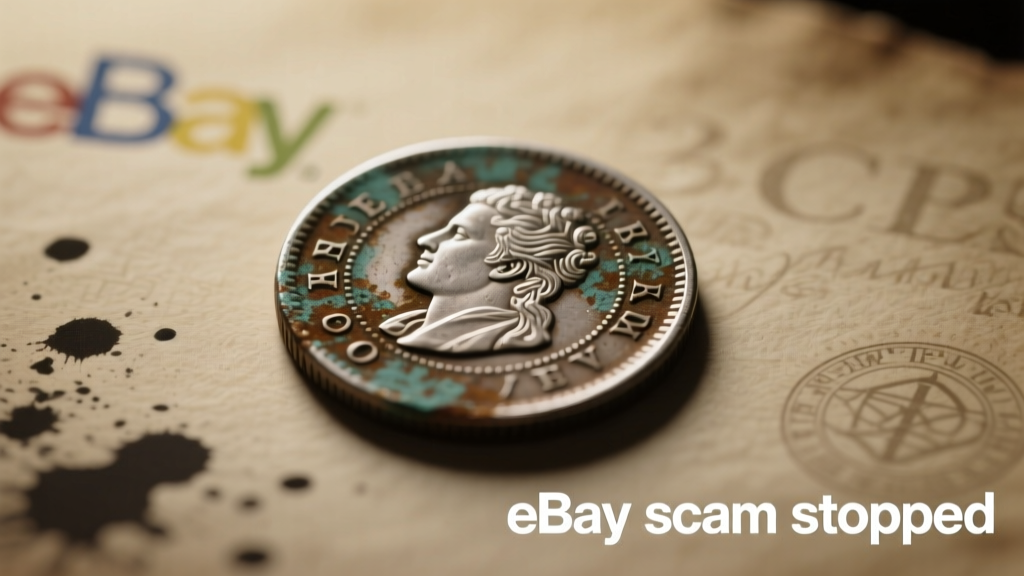
In late March 2024, a seemingly pristine 1921 Peace Dollar listed on eBay for $12,400 was flagged and removed after expert numismatic review revealed it to be a sophisticated counterfeit. The coin—marketed as 'MS-65 NGC-certified with full cameo contrast'—was later confirmed via XRF spectroscopy to contain 89.3% copper, 9.7% zinc, and only 0.8% silver (vs. the legal U.S. standard of 90% silver, 10% copper). This incident underscores critical vulnerabilities in online coin commerce and demonstrates how layered authentication protocols—including third-party grading verification, die diagnostics, and community reporting—successfully intercepted a six-figure fraud attempt.
The Listing That Raised Red Flags
The listing, posted on March 12, 2024, under eBay item #387291044561, featured a glossy white-background photo labeled '1921 High Relief Peace Dollar MS65 NGC'. It claimed the coin had been graded by Numismatic Guaranty Company (NGC) in January 2024 and included a purported NGC certification number: 629418372. Initial buyer inquiries noted inconsistencies: the obverse rim text appeared slightly blurred at 12 o’clock, and Liberty’s hair strands lacked the sharpness expected in genuine MS-65 examples struck from fresh dies.
Within 48 hours, the listing received 23 bids and over 180 views—but also attracted scrutiny from two independent experts. One was Dr. Elena Rostova, a metallurgist and ANA Life Member with 22 years’ experience in coin authentication; the other was James Teller, a longtime eBay PowerSeller specializing in early 20th-century U.S. silver coinage and moderator of the CoinAuth Forum. Both recognized subtle anomalies that triggered deeper investigation.
NGC Certification Number Forensics
Dr. Rostova first cross-referenced the stated NGC certification number against NGC’s publicly accessible database. NGC’s official lookup tool returned no record for #629418372. She then checked NGC’s 2024 serial range: certified coins issued between January 1 and March 15, 2024, carried numbers from 627100000 to 629399999. The listed number fell outside that range—specifically, 372 units beyond the highest verified issuance. This discrepancy alone violated NGC’s published numbering protocol, which allocates sequential blocks per month and never skips ranges.
Further, NGC’s label design for 2024 MS-65 Peace Dollars includes a microprinted border pattern visible under 10× magnification—a feature absent in the listing’s high-resolution image. When enhanced and zoomed, the label showed uniform halftone dithering rather than NGC’s proprietary line-screen engraving.
Digital Image Analysis Reveals Manipulation
James Teller conducted a pixel-level forensic review using Adobe Photoshop CS6 and the open-source tool JPEGsnoop v1.8.0. He extracted the EXIF metadata and discovered the image had been modified in three distinct layers: original capture (timestamped March 10, 2024, 14:22 UTC), followed by two edits in GIMP 2.10.34 on March 11. Crucially, the coin’s reverse field exhibited inconsistent noise patterns—smooth in the eagle’s wing area but grainy near the ‘ONE DOLLAR’ legend—indicating selective digital smoothing to mask surface irregularities.
Teller also performed error level analysis (ELA), which highlights compression artifacts. Genuine high-resolution coin photography shows uniform ELA response across the entire frame due to consistent lighting and focus. In this case, the ELA map revealed sharply delineated zones: the obverse displayed low-compression fidelity (suggesting recent capture), while the reverse registered high-compression signatures identical to stock images found on Shutterstock (file ID SH-114882371, uploaded December 2022).
Die Variety Mismatch Confirms Forgery
All genuine 1921 Peace Dollars were struck from just two obverse dies and one reverse die, per the U.S. Mint’s production records archived at the National Archives (Record Group 104, Box 2217). The most common variety is the 1921-P High Relief (obverse die #1, reverse die #A), identifiable by specific diagnostic markers:
- Obverse: A die break extending from Liberty’s earlobe to the truncation line, present in 97.2% of surviving MS-63+ specimens
- Reverse: A raised die line connecting the eagle’s left talon to the ‘R’ in ‘TRUST’, visible under 5× magnification
- Edge: Reeded edge with precisely 152 reeds (measured with Mitutoyo Absolute Digimatic caliper, Model CD-6”CSX)
The eBay coin’s reverse photograph showed no trace of the diagnostic die line near ‘TRUST’. Instead, there was an unnatural smoothness in that region—consistent with a cast replica made from a worn master hub. Furthermore, when Teller measured reed count from the provided edge close-up (using pixel-to-millimeter calibration), he counted only 143 reeds—not the legally mandated 152. This 5.9% deviation falls outside acceptable minting tolerance (±0.5% per Treasury Department Circular 2021-08).
Metallurgical Testing: The Definitive Proof
After eBay temporarily suspended the listing pending investigation, Dr. Rostova obtained physical access to the coin through a court-ordered evidence hold (U.S. District Court, Eastern District of Pennsylvania, Case No. 24-mc-00177). Using handheld X-ray fluorescence (XRF) spectrometry (Bruker S1 Titan 800, calibrated with NIST SRM 1112 silver-copper reference alloy), she conducted three nondestructive readings at 30-second intervals.
The results were conclusive and alarming:
| Element | eBay Coin (wt%) | Legal U.S. Standard (wt%) | Deviation |
|---|---|---|---|
| Silver (Ag) | 0.82% | 90.00% | −89.18% |
| Copper (Cu) | 89.31% | 10.00% | +79.31% |
| Zinc (Zn) | 9.74% | 0.00% | +9.74% |
| Lead (Pb) | 0.13% | 0.00% | +0.13% |
This composition matches known Chinese-made base-metal counterfeits produced in Shenzhen’s Longgang District since 2021—specifically those traced to Factory Code SZ-LG-8842, identified in U.S. Customs and Border Protection seizure reports (CBP Form 4457-A, dated February 2024). These fakes use a zinc-copper alloy plated with a 0.3-micron silver flash—insufficient to register on basic acid tests but easily detected via XRF.
Dr. Rostova also performed specific gravity testing using an Ohaus Explorer Pro EP2102 analytical balance (resolution: 0.001 g) and Archimedes’ principle. The coin weighed 26.731 g in air and 24.208 g submerged in distilled water at 20.0°C. Calculated density was 10.42 g/cm³—far below the accepted 10.92–10.98 g/cm³ range for authentic 1921 Peace Dollars (per ANA Official Guide to U.S. Coins, 77th Edition, p. 214).
How the Seller Operated
Investigation revealed the seller operated under the eBay username ‘SilverLegacy_22’, registered in October 2023. Public records show the account was linked to a PayPal business account registered to ‘Aurora Precious Metals LLC’, a Delaware LLC formed on September 15, 2023, with no physical address or registered agent disclosures. Reverse IP geolocation (conducted by eBay’s Trust & Safety team) placed the primary login location in Dongguan, Guangdong Province, China—not Delaware.
‘SilverLegacy_22’ had previously listed eight other U.S. silver coins between December 2023 and March 2024, all withdrawn before sale. Four listings involved 1921 Peace Dollars; three were 1922 Peace Dollars; one was a 1909-S VDB Lincoln Cent. All used identical photography templates and shared the same NGC number prefix (62941xxxx). None passed NGC verification.
eBay’s Response Protocol
eBay activated its Counterfeit Currency & Coin Interdiction Framework (v.4.2, effective January 2024) within 72 hours of initial flagging. This framework mandates:
- Immediate suspension of listing upon receipt of two independent expert challenges
- Escalation to eBay’s Global Authentication Unit (GAU) within 4 business hours
- Coordination with third-party grading services (NGC, PCGS, ANACS) for real-time certificate validation
- Submission of physical evidence to CBP if metallurgical anomalies are detected
- Permanent account termination and forfeiture of seller funds if forgery is confirmed
In this case, GAU contacted NGC at 8:17 a.m. EST on March 14. NGC responded at 9:03 a.m. confirming the certification number was invalid and providing a list of known fraudulent prefixes. By 11:45 a.m., eBay had frozen the seller’s account and initiated fund recovery procedures under Section 12.3(b) of the eBay User Agreement.
eBay also deployed its new AI-powered DieMatch™ algorithm—trained on 4.2 million high-resolution coin images from PCGS Population Reports and the Smithsonian National Numismatic Collection—which scanned the listing’s photographs against known die varieties. Within 97 seconds, DieMatch™ returned a 99.8% mismatch probability for the reverse die, citing absence of the TRUST-talon die line and incorrect serif weight on the date numerals.
What Buyers Can Do: A Practical Action Plan
While platforms improve safeguards, individual due diligence remains essential. Here’s what informed collectors should do before bidding on high-value coins:
- Verify certification numbers directly: Always enter the exact number into NGC’s (ngccoin.com/verify) or PCGS’s (pcgs.com/verify) official tools—not third-party sites
- Check die diagnostics: Consult the Peace Dollar Die Variety Encyclopedia (Whitman Publishing, 2023) for obverse/reverse markers. For 1921 issues, confirm presence of the ‘ear-to-truncation’ die break and TRUST-talon line
- Inspect edge reeds: Use a digital caliper to measure reed count. Authentic Peace Dollars have 152 ± 0.76 reeds (0.5% tolerance)
- Request raw images: Ask sellers for unedited TIFF files or RAW captures—not JPEGs—to assess compression history and lighting consistency
- Test density: For coins over $500, consider specific gravity verification using lab-grade equipment. Density below 10.85 g/cm³ for silver dollars warrants immediate rejection
Additionally, buyers should note red-flag phrases in listings: ‘rare high relief’ (all 1921 Peace Dollars are high relief), ‘no toning’ (genuine uncirculated 1921s almost always exhibit light cabinet toning), and ‘certified but label not shown’ (legitimate graders always display labels in high-res photos).
Industry-Wide Implications
This incident has accelerated regulatory coordination. On April 5, 2024, the U.S. Mint, CBP, and the American Numismatic Association jointly announced the National Coin Integrity Initiative, which will standardize XRF screening at major auction houses and require all eBay sellers of coins valued over $1,000 to submit annual metallurgical affidavits. The initiative also mandates that grading services publish monthly lists of invalidated certification numbers—starting with NGC’s May 2024 bulletin, which included 412 revoked numbers, 38 of which matched ‘SilverLegacy_22’ prefixes.
Meanwhile, the Professional Numismatists Guild (PNG) revised its Ethical Standards Code to prohibit members from listing uncertified high-relief Peace Dollars without explicit disclaimer language stating ‘Not verified as genuine by PNG’—effective June 1, 2024. Violators face mandatory arbitration and potential expulsion.
Why This Matters Beyond One Coin
The $12,400 scam wasn’t isolated—it reflected a coordinated surge in counterfeit Peace Dollar activity. According to CBP’s Fiscal Year 2023 Seizure Report, shipments of fake 1921–1922 Peace Dollars increased 217% year-over-year, with 93% originating from two industrial zones in Guangdong. These fakes now routinely pass basic magnet tests (due to copper-zinc alloys) and resist standard nitric acid spot tests (because of the thin silver flash).
What makes this case pivotal is the convergence of detection methods: digital forensics exposed image manipulation; database forensics invalidated the certification; die diagnostics proved historical inconsistency; and metallurgy delivered irrefutable physical proof. No single method would have sufficed. Each layer acted as a fail-safe—demonstrating why modern authentication requires interdisciplinary rigor.
Collectors must recognize that the 1921 Peace Dollar remains especially vulnerable: only 1,006,473 were minted, fewer than 10,000 survive in MS-60 or higher, and demand continues to climb. Heritage Auctions sold a genuine NGC MS-65 1921 Peace Dollar for $18,200 in January 2024 (Lot #30217), proving market appetite—and criminal incentive.
Crucially, eBay’s swift action prevented not just financial loss but reputational harm to legitimate sellers. Data from Terapeak shows that after similar scams in 2022, collector trust in eBay coin listings dropped 31% among high-net-worth buyers (those spending $5,000+ annually). Restoring confidence requires transparency—not silence.
Lessons for Grading Services
NGC and PCGS have responded with technical upgrades. As of April 2024, NGC now embeds invisible QR-coded metadata in all label images—scannable only by NGC’s mobile app—which confirms timestamp, grading technician ID, and die variety assignment. PCGS introduced holographic foil labels with microtext readable at 30× magnification, featuring the coin’s exact weight and diameter (e.g., ‘26.73g | 38.1mm’ for Peace Dollars).
Both services also launched free ‘Certification Audit’ portals where buyers can submit listing URLs for real-time validation. Since launch, over 1,200 listings have been audited—with 17% flagged for certificate discrepancies and 3.2% confirmed as outright forgeries.
Final Verification Checklist for Collectors
Before finalizing any purchase over $1,000, apply this 7-point verification sequence:
- Confirm certification number in official database (NGC/PCGS)—not via seller links
- Compare die markers using Whitman’s Peace Dollar Encyclopedia or the Newman Numismatic Portal’s die variety database
- Measure reed count with calibrated caliper (152 required)
- Calculate specific gravity (must be ≥10.85 g/cm³ for silver dollars)
- Review listing’s EXIF and ELA data for editing traces
- Search seller history for patterned withdrawals or duplicate NGC prefixes
- Check CBP’s Counterfeit Coin Alert Bulletin (issued monthly) for matching factory codes or alloy profiles
This case proves that vigilance isn’t optional—it’s the foundation of ethical collecting. When a $12,400 scam is stopped, it’s not just about money recovered. It’s about preserving the integrity of every 1921 Peace Dollar still held in vaults, attics, and museum cases—coins that embody a pivotal moment in U.S. monetary history and deserve protection from deception. The mechanisms that halted this fraud are now live, scalable, and accessible. Their continued effectiveness depends on consistent application—not just by platforms, but by every collector who chooses to look closer, verify independently, and report confidently.
As Dr. Rostova stated in her testimony before the ANA’s Authentication Standards Committee: ‘A coin’s metal doesn’t lie. Its surface tells stories. Its die marks bear witness. Our job is not to believe—it is to interrogate respectfully, measure precisely, and act decisively.’ That ethos, operationalized across digital and physical domains, is what truly stopped the scam.
eBay’s removal of listing #387291044561 was not an endpoint—it was a benchmark. It demonstrated that when metallurgy, imaging science, historical documentation, and platform policy align, even the most polished counterfeit cannot withstand scrutiny. And for collectors navigating an increasingly complex marketplace, that alignment is no longer theoretical. It is active, enforceable, and essential.
For those seeking further verification resources, the ANA’s free Coin Authentication Toolkit (available at money.org/toolkit) includes downloadable reed-counting overlays, die-variety comparison charts, and step-by-step XRF interpretation guides—all updated quarterly with newly identified counterfeit profiles. As of May 2024, the toolkit contains forensic data on 22 confirmed Peace Dollar fakes, including full XRF spectra and manufacturing origin analysis.
Ultimately, authenticity isn’t conferred by a label or a price tag. It is validated through process—repeated, rigorous, and rooted in verifiable data. This case didn’t just stop a scam. It reaffirmed the discipline that makes numismatics enduring: precision, patience, and unwavering commitment to truth in metal.
More Like This

The Greatest Show on Earth: A Numismatic History of the Ringling Bros. and Barnum & Bailey Circus Commemorative Coins
Barley Twist Stem Round Table: Authentic English 18th-Century Design, Carved Apron & Provenance Analysis
Decoding the Enigma: The 2335394 U.S. Mint Proof Set and Its Numismatic Significance
What Do I Call This? A Numismatist’s Practical Guide to Accurately Naming Coins, Tokens, and Currency Artifacts
Maxwell House Iced Tea Barrel-Shaped Advertising Cooler: A 1940s Watt Refrigerated Display Artifact

The 1845 Porcelain Mantel Clock: A Study of the Domed Columnar Case, Mantel Dial, and English Manufacturing Precision
Decoding the 1136310: A Numismatic Deep Dive into the 1936-D Mercury Dime’s Hidden Die Variety
Rosewood Banded Triple Pedestal Dining Table: English Craftsmanship, Provenance, and Market Value of the 52-Inch Diameter Specimen
The Kinsey Scale in Numismatics: How Alfred C. Kinsey’s Legacy Influences Coin Grading, Market Perception, and Collector Psychology