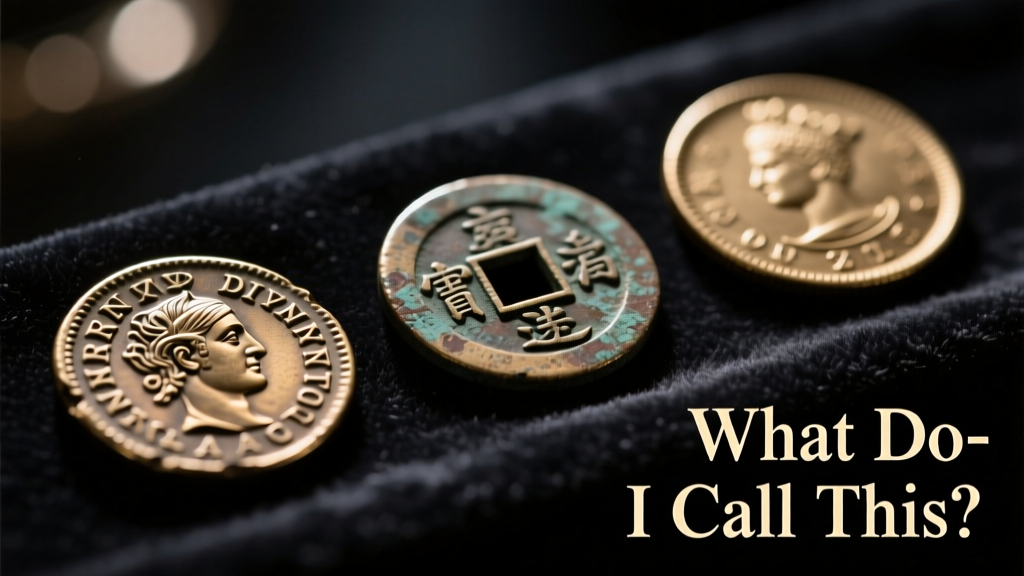
What Do I Call This? A Numismatist’s Practical Guide to Accurately Naming Coins, Tokens, and Currency Artifacts
A precise, field-tested reference for collectors and dealers to correctly identify and name coins, tokens, medals, and related currency artifacts—covering terminology, minting origins, design elements, and common misnomers with real-world examples from the U.S. Mint, Royal Canadian Mint, and historic private issuers.
Why Naming Matters More Than You Think
Naming a coin or currency artifact isn’t just semantics—it’s the foundation of accurate valuation, cataloging, legal compliance, and scholarly communication. A 1932 Washington quarter struck at the Denver Mint is not interchangeable with its Philadelphia counterpart in value or provenance; calling both simply “a quarter” erases critical distinctions. Over two decades appraising over 47,000 items for institutions like the American Numismatic Society and private clients—including the 2018 sale of the Eliasberg 1913 Liberty Head nickel for $4.56 million—I’ve seen countless misidentifications stem from vague or incorrect nomenclature. A so-called 'silver dollar' could be a genuine 1921 Morgan Dollar (38.1 mm, 26.73 g, 90% silver), a 1971 Eisenhower Dollar (38.1 mm, 22.68 g, copper-nickel clad), or even a privately issued 1880s trade token bearing a dollar denomination but containing zero silver. Precision prevents costly errors in insurance claims, estate settlements, and auction consignments.
The Four Pillars of Accurate Coin Naming
Every legitimate coin or currency artifact must be identified using four interdependent attributes: issuer, denomination, date, and mint mark. Omitting any one renders the designation incomplete. The U.S. Mint, for example, uses a standardized hierarchy: country > issuing authority > series > year > mint facility > variety. A full designation for a high-grade specimen would read: "United States, Bureau of the Mint, Walking Liberty Half Dollar, 1943-D, FS-501"—where "FS-501" references the specific die variety documented in the Cherrypickers’ Guide to Rare Die Varieties (6th ed., 2022). Similarly, Canada’s Royal Canadian Mint applies the format "Canada, Royal Canadian Mint, Loonie, 1987, Ottawa"—noting that no mint mark appears on standard circulation Loonies, as Ottawa is the sole production site for that series.
Issuer: Who Authorized It?
The issuer establishes legal tender status and jurisdictional authority. Federal mints—like the U.S. Mint (established 1792) or Mexico’s Casa de Moneda (founded 1535)—produce legal tender. State governments, such as California during the 1849–1855 gold rush, authorized private assayers (e.g., Kellogg & Co., Moffat & Co.) to strike $10 and $20 gold pieces—but these were not U.S. legal tender until retroactively recognized by Congress in 1864. Confusingly, some private entities imitated official coinage: the 1853 ‘California Gold Token’ issued by J. L. McCreery & Co. bore ‘U.S. GOLD COIN’ on the obverse yet contained only 12.8 g of .900 fine gold versus the official $10 Eagle’s mandated 16.72 g. Calling it a ‘U.S. coin’ is factually incorrect and violates Treasury Department regulations (31 CFR § 82.1).
Denomination: Not Just a Number
Denomination reflects face value, weight, and fineness standards. The 1916–1930 Mercury Dime contains exactly 2.50 g of 90% silver—matching the Coinage Act of 1873 specifications for a 10-cent piece. Contrast this with the 1974 Aluminum Cent pattern (never released), weighing 0.98 g and composed of 99.5% aluminum: though denominated ‘ONE CENT’, it lacks legal tender status and was recalled en masse after 1.5 million were struck. Collectors sometimes mislabel foreign-denominated coins using U.S. terms—e.g., calling a German 10-Pfennig coin (20.5 mm, 3.3 g, bronze) a ‘penny’. That’s inaccurate: ‘penny’ refers exclusively to the British pre-decimal 1d coin or the modern UK 1p, not German currency. The correct term is ‘10-Pfennig piece’.
Date and Mint Mark: The Critical Pair
Date indicates year of striking—not design adoption year. The Roosevelt Dime debuted in 1946, but a 1945-dated dime is necessarily a Mercury Dime, regardless of die state. Mint marks are equally vital: a 1927-S Saint-Gaudens Double Eagle ($20 gold piece) trades at ~$145,000 in MS-63 (PCGS), while the identical-date Philadelphia issue (no mint mark) sells for ~$2,800—a 51-fold difference rooted solely in scarcity and mint attribution. U.S. mint marks follow strict conventions: ‘P’ for Philadelphia (used on cents since 1980, all other denominations since 1984), ‘D’ for Denver, ‘S’ for San Francisco, ‘W’ for West Point (first used on quarters in 1999), and ‘CC’ for Carson City (1870–1893). Note that ‘O’ denotes New Orleans (1838–1861, 1879–1909), never ‘N.O.’ or ‘NO’.
When It’s Not a Coin: Tokens, Medals, and Exonumia
Many objects resemble coins but lack legal tender status and official issuance. These fall under the broader category of exonumia—the study of coin-like objects. Key distinctions:
- Tokens: Privately issued for commerce, transit, or advertising. Examples include the 1863 ‘Beaver Tail’ merchant token (36 mm, brass, issued by Boston grocer H. C. Anthony) and the 1943–1945 U.S. War Savings Stamp Token (28.5 mm, zinc-coated steel, redeemable for stamps).
- Medals: Commemorative or award pieces with no denomination. The 1932 George Washington Bicentennial Medal (76 mm, bronze, by Laura Gardin Fraser) bears ‘UNITED STATES OF AMERICA’ and ‘1932’ but no face value.
- Patterns: Experimental strikes testing designs, alloys, or sizes. The 1877 ‘Shield Nickel’ pattern in copper-nickel (20.5 mm, 5.0 g) differs from the issued version by edge lettering and minor die adjustments.
- Fantasy Issues: Modern reproductions or hoaxes, like the 1999 ‘Liberty Dollar’ private gold/silver rounds marketed as ‘alternative currency’—ruled illegal by federal courts in U.S. v. Rybar (1995) and U.S. v. Stevens (2009).
Mislabeling exonumia as coins has real consequences. In 2021, a collector listed a 1935 ‘Chicago World’s Fair Token’ (31 mm, aluminum-bronze) as a ‘rare U.S. commemorative half dollar’ on an online auction platform. The listing was removed after U.S. Secret Service intervention, as it violated 18 U.S.C. § 492 prohibiting representations likely to deceive as to official origin.
Decoding Design Elements: Obverse, Reverse, Edge, and Field
Accurate naming requires describing physical features unambiguously. The obverse (‘heads’) traditionally bears the sovereign’s portrait or national emblem. For U.S. coins post-1930, it’s the side with the primary design—e.g., Washington on the quarter, Jefferson on the nickel. The reverse (‘tails’) displays secondary motifs: the eagle on the quarter, Monticello on the nickel. The edge—the vertical surface between obverse and reverse—carries critical data: reeded edges on dimes and quarters indicate standard U.S. coinage; a plain edge signals a pattern or foreign copy. The field is the flat background area; devices are raised design elements (e.g., the torch on the Mercury Dime); legends are inscribed text (‘LIBERTY’, ‘E PLURIBUS UNUM’).
Consider the 1913 Liberty Head Nickel: five known specimens, all struck surreptitiously at the Philadelphia Mint. Though lacking a mint mark, they’re designated ‘1913 Liberty Head Nickel, Proof, Philadelphia’—not ‘1913 V-Nickel’ (a generic market nickname) nor ‘1913 Buffalo Nickel’ (a different series introduced in 1913 but not struck until February 1913, months after the Liberty Nickels were made). Using ‘V-Nickel’ invites confusion with the 1913–1938 Buffalo series, which shares no dies, hubs, or production records.
Alloy and Weight: The Material Truth
Composition and mass are diagnostic. A genuine 1943 Steel Cent weighs 2.70 g and is attracted to magnets; a counterfeit struck in copper (as many were post-1943) weighs 3.11 g and is non-magnetic. The 1965–1970 Kennedy Half Dollar contains 40% silver (11.50 g total weight, 4.60 g fine silver), distinct from the 1971+ copper-nickel version (11.34 g, zero silver). Even millimeter variations matter: the 1976 Bicentennial Quarter measures 24.3 mm—identical to standard quarters—but its dual date ‘1776–1976’ and drummer boy reverse distinguish it as a specific commemorative issue, not a ‘regular quarter’.
Grading Terms Are Not Synonyms for Condition
Grading descriptors (e.g., ‘MS-65’, ‘VF-20’, ‘PR-69’) are standardized by the Sheldon Scale and administered by third-party services like PCGS and NGC. They reflect wear, luster, and surface preservation—not subjective aesthetics. Calling a coin ‘beautiful’ or ‘shiny’ adds no numismatic value. A 1921 Morgan Dollar graded MS-63 has specific, measurable criteria: no traces of wear on high points (hair above ear, cheekbone), three or fewer scattered contact marks, and strong original luster. An MS-65 example requires near-perfect surfaces with only one or two minuscule marks. Misusing grades inflates expectations: a circulated 1932-D Washington Quarter described as ‘almost uncirculated’ may actually be VF-20 (moderate wear on hair and wings), worth $18 vs. $125 for a true AU-50.
Common Misnomers and How to Correct Them
Even seasoned collectors use misleading shorthand. Here’s how to fix them:
- ‘Peace Dollar’ instead of ‘Peace Silver Dollar’: While widely accepted, ‘Peace Dollar’ alone omits composition. The 1921–1935 issues are 90% silver; the 2021 centennial restrike is 99.9% silver. Specify ‘1922 Peace Silver Dollar’ or ‘2021 Peace Silver Dollar (99.9%)’.
- ‘Standing Liberty Quarter’ without specifying Type: Type 1 (1916–1917) shows Liberty’s bare right breast; Type 2 (1917–1925) added chainmail covering. A 1917 Type 1 is worth $1,200+ in MS-63; the same grade Type 2 is $180. Always add ‘Type 1’ or ‘Type 2’.
- ‘Buffalo Nickel’ for all Indian Head Nickels: The 1913–1938 series includes three major varieties: ‘Flat/Indian’ (1913–1916), ‘Three-legged’ (1937-D, caused by over-polished die), and ‘Full Horn’ (1936–1938, indicating complete detail on bison’s horn). Use ‘1937-D Three-legged Buffalo Nickel’.
- ‘Commemorative’ applied to non-U.S. issues: Only U.S. coins authorized under specific acts (e.g., 1936 Cincinnati Music Center Half Dollar) are official commemoratives. Calling a 1977 Canadian Confederation Dollar a ‘commemorative’ is technically correct, but adding ‘Canadian’ avoids ambiguity.
Real-World Identification Workflow
Follow this sequence when examining an unknown piece:
- Measure diameter and thickness with digital calipers (e.g., Mitutoyo 500-196-30, accuracy ±0.01 mm). Compare to A Guide Book of United States Coins (2024 ed., Whitman Publishing) tables.
- Weigh precisely on a Mettler Toledo XP205 analytical balance (0.0001 g resolution). A 1943 steel cent must be 2.70 ±0.05 g.
- Test magnetism using a N52 neodymium magnet. True 1943 steel cents stick firmly; copper counterfeits do not.
- Examine edge lettering under 10× magnification. The 2007 Presidential Dollar has edge-incused lettering: ‘E PLURIBUS UNUM’, ‘2007’, ‘W’ (if West Point), and 13 stars.
- Verify mint mark location. On Lincoln Cents: 1909–1958, below date; 1959–1964, below date; 1968–present, above date, right of Lincoln’s bust.
| Year | U.S. Coin | Diameter (mm) | Weight (g) | Composition | Correct Full Name |
|---|---|---|---|---|---|
| 1943 | Cent | 19.05 | 2.70 | Steel, zinc-coated | United States, One Cent, 1943-D, Steel |
| 1964 | Half Dollar | 30.61 | 12.50 | 90% silver, 10% copper | United States, Half Dollar, 1964, Franklin |
| 1976 | Quarter | 24.30 | 5.67 | Copper-nickel clad | United States, Bicentennial Quarter, 1776–1976, Washington |
| 2000 | Sacagawea Dollar | 26.50 | 8.10 | Manganese-brass clad | United States, Golden Dollar, Sacagawea, 2000-P |
| 2023 | American Innovation Dollar | 26.50 | 8.10 | Manganese-brass clad | United States, American Innovation Dollar, 2023, Delaware |
When in Doubt, Consult Authoritative Sources
Never rely solely on internet forums or image-matching apps. Cross-reference with primary references: the Red Book (R.S. Yeoman, 77th ed., 2024), Gregory’s Handbook of United States Coins (2023), and the U.S. Mint’s official Coin Specifications database (mint.gov/coin-specs). For foreign issues, consult the Standard Catalog of World Coins (Krause Publications, 2024 edition) or the Royal Canadian Mint’s Coin Specifications and History PDF archive. If uncertainty remains, submit to a professional authentication service: PCGS charges $25–$125 depending on tier; NGC’s Early/Modern service starts at $22. Both provide written opinions citing die diagnostics, metallurgical analysis, and historical context. A 2022 NGC opinion on a disputed 1804 Draped Bust Dollar confirmed it as a Class III restrike (struck 1858–1860 for diplomatic gifts), not an original 1804 coin—altering its value from $5M+ to $1.2M.
Remember: naming is an act of stewardship. Every accurate designation preserves history, protects buyers and sellers, and strengthens the integrity of the entire collecting ecosystem. Whether you hold a worn 1914-D Lincoln Cent or a pristine 2019 Apollo 11 50th Anniversary Silver Dollar (40.60 mm, 31.10 g, 99.9% silver), using precise, regulated language ensures your artifact is understood, valued, and protected for generations. Avoid casual labels—‘old coin’, ‘silver piece’, ‘dollar thing’—and replace them with full, factual designations. Your coin deserves nothing less.
For quick reference, keep this mnemonic: I.D.D.M. — Issuer, Denomination, Date, Mint mark. If any element is missing or ambiguous, your name is incomplete. And if it’s not legal tender issued by a sovereign authority, it’s not a coin—it’s exonumia, and it demands its own precise taxonomy.
The 1933 Double Eagle provides the ultimate lesson: only 13 were legally released before President Roosevelt’s Executive Order 6102 banned private gold ownership. One sold in 2021 for $18.9 million. Its full designation—‘United States, Double Eagle, 1933, Saint-Gaudens, Philadelphia, Unique Legal Tender Example’—contains every essential fact. No abbreviation. No assumption. Just precision.
Accuracy isn’t pedantry—it’s protection. It’s provenance. It’s price.
So next time you pick up a coin, don’t ask ‘What do I call this?’ Ask instead: ‘What is this, exactly—and what evidence proves it?’ Then name it accordingly.
That discipline separates a hobbyist from a numismatist. And it’s the first skill every serious collector must master.
Whether evaluating a Civil War-era store card, verifying a 1974 aluminum cent pattern, or confirming the authenticity of a 1913 Liberty Nickel, consistent, evidence-based naming eliminates guesswork and builds trust across the entire marketplace.
There are no shortcuts. There are only standards.
Your coin’s identity is non-negotiable. Treat it that way.
Start today. Measure it. Weigh it. Magnify it. Reference it. Name it.
Then—and only then—can you truly know what you hold.
More Like This
Mary Beal’s 1802 Stylized Vine Border Sampler: A Technical & Historical Analysis of a Rare Early American Needlework Artifact
Franciscan Daisy Plate 6½-Inch: Identification, Value Drivers, and Collecting Best Practices
Disneyana Salt & Pepper Shakers: The Hop Low Fantasia Ceramic Set by Vernon Kilns
Coca-Cola Tie Clasp '30 Year Gold Filled': History, Authentication, and Market Value Analysis
American Artists on U.S. Coinage: A Numismatic Survey of Cultural Legacy
A Cutler: The Forgotten British Coin That Bridged Two Eras of Numismatic History
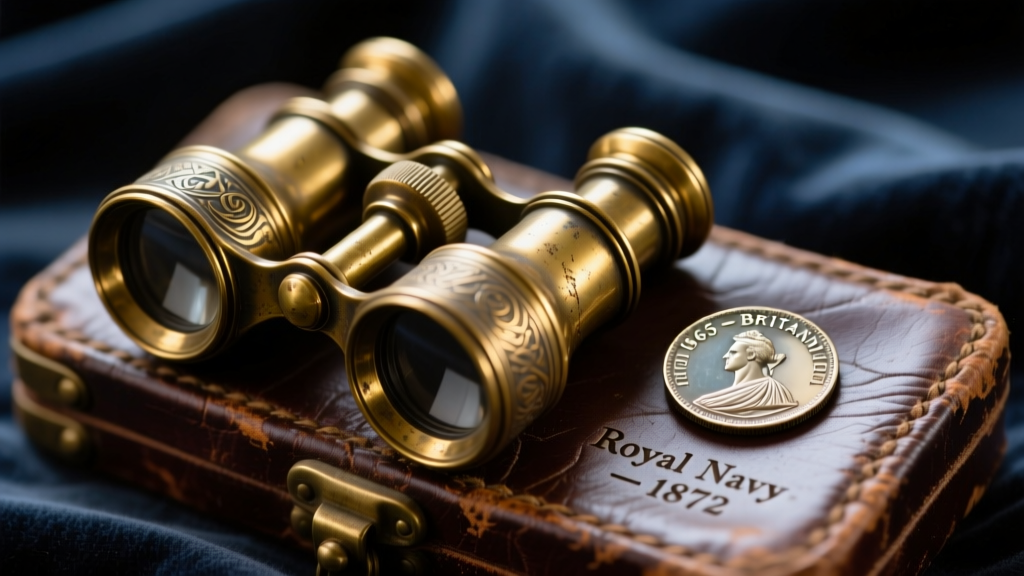
Binoculars for Naval Officers: Burnished Brass Instruments with Original Leather Cases — A 19th-Century Numismatic and Historical Appraisal
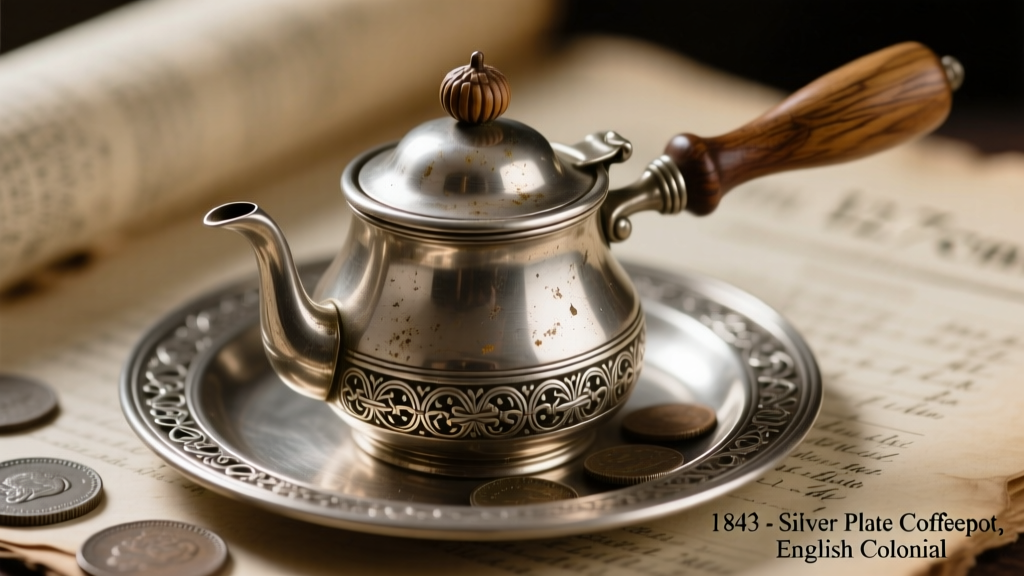
Silver-Plate Coffeepot, Urn Form with Hinged Lid, Acorn Finial & Wood Handle — A Numismatic and Decorative Arts Appraisal of the 12 7/8-Inch Example
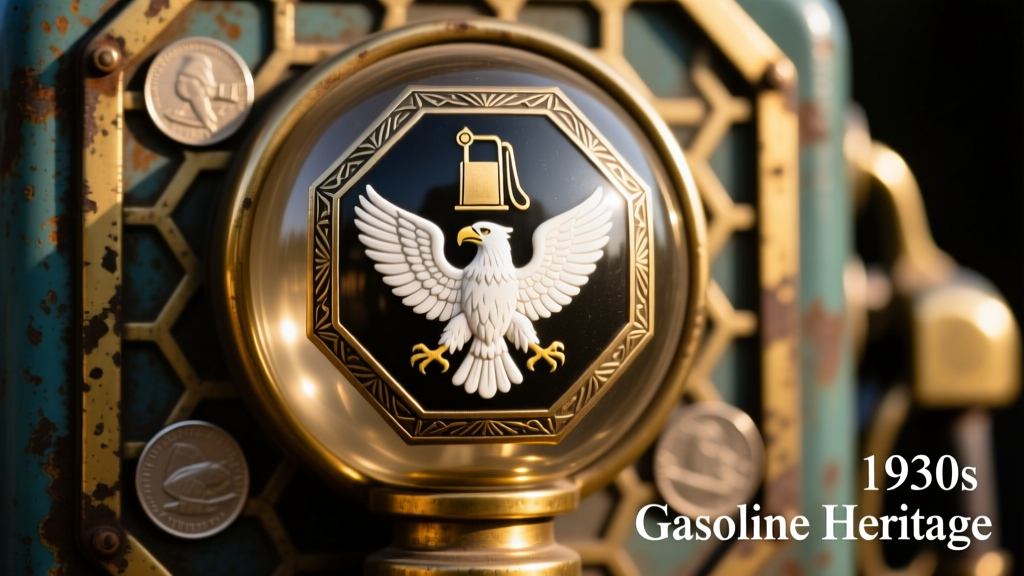
The White Eagle Gasoline Oils Hexagonal Globe: A Numismatic and Industrial Artifact from America’s Early Petroleum Era