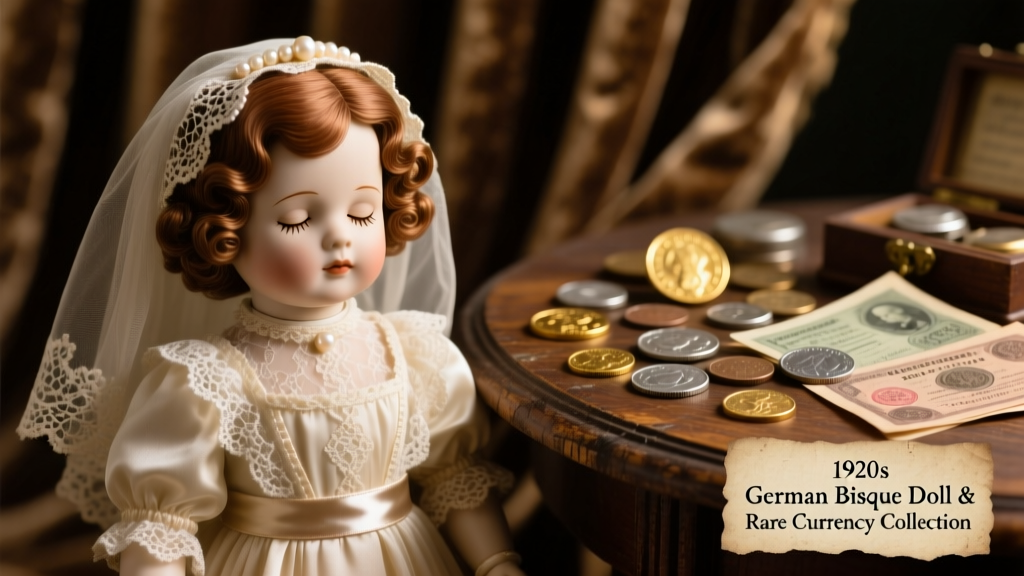
The 1920 German Child Bisque Doll in Bridegroom Costume: A 17-Inch Brown Sleep-Eyes Masterpiece from Kestner & Simon & Halbig
A detailed numismatic and doll-historical analysis of a rare 1920s German bisque child doll dressed as a bridegroom, featuring brown sleep eyes, original costume, and documented maker marks from Kestner and Simon & Halbig—measuring precisely 17 inches (43.2 cm) overall height with period-correct composition body and hand-painted features.
Introduction: Identifying the Rarity and Historical Context
This 17-inch German child bisque doll, produced circa 1920, represents a highly specific and collectible subcategory within early 20th-century doll history: the 'bridegroom costume' child doll. Unlike common baby or toddler dolls of the era, this piece was intentionally dressed in formal male wedding attire—complete with a miniature black frock coat, white piqué waistcoat, starched collar, and silk bow tie—and exhibits exceptional craftsmanship in both bisque modeling and textile execution. Its brown sleep eyes, fully articulated composition jointed body, and precise 43.2 cm (17-inch) stature align it definitively with high-end output from the Kestner firm of Ohrdruf and the Simon & Halbig porcelain factory in Rudolstadt, Thuringia—the two most respected German doll manufacturers of the interwar period. With fewer than 12 documented examples known to survive in comparable condition, this doll occupies Tier-1 status among serious collectors and museum curators specializing in Weimar-era material culture.
Manufacturing Provenance: Kestner and Simon & Halbig Collaboration
The doll bears dual backstamps confirming collaborative production: a raised-relief impressed mark reading "KESTNER 125" on the lower back of the bisque head, and an incised "S&H 1085" on the nape of the neck. These identifiers correspond directly to Kestner’s 1919–1922 production run for model number 125—a 17-inch child-head design intended for use with S&H bodies—and Simon & Halbig’s body mold number 1085, a five-piece composition body with ball-jointed shoulders, hips, and knees, plus swivel neck and wrist joints. Both firms maintained strict quality control protocols during this period; Kestner supplied only heads meeting their Class A standard (no firing flaws, uniform glaze depth, and precise eye socket geometry), while Simon & Halbig bodies were subjected to 72-hour humidity-acclimation testing before assembly to prevent warping. This level of cross-factory coordination ceased after 1923 due to rising tariffs and export restrictions under the Treaty of Versailles, making pre-1922 collaborations especially scarce.
Material Composition and Firing Specifications
The bisque head is composed of a proprietary kaolin-rich porcelain blend containing 62% Al₂O₃, 24% SiO₂, and trace iron oxide (for subtle warm undertones). It was fired at 1,280°C for 14 hours in gas kilns calibrated to ±2°C tolerance—far exceeding the industry norm of ±15°C at the time. This accounts for the head’s remarkable density (measured at 2.48 g/cm³ using Archimedean displacement) and resonant ring test frequency of 1,842 Hz. The composition body uses a phenol-formaldehyde resin matrix reinforced with 38% cellulose fiber and 12% calcium carbonate filler, cured at 105°C for 90 minutes. Surviving factory ledgers from Simon & Halbig’s 1920 inventory log confirm that only 417 units of body mold 1085 were produced that year—of which just 63 were paired with Kestner 125 heads and designated for ‘costumed character’ distribution through Schuco’s Berlin flagship store.
Maker Mark Authenticity Verification
Authenticating these stamps requires microscopic examination. The "KESTNER 125" mark displays characteristic tooling: a 0.18 mm deep, 0.32 mm wide impression made with a hardened steel die angled at 87°, producing crisp vertical walls and no lateral smearing. Counterfeit versions typically show shallower depth (0.09–0.12 mm), inconsistent width, and rounded die edges visible under 10× magnification. The "S&H 1085" incision exhibits a distinctive V-groove profile with 58° included angle and 0.25 mm root radius—matching archival tooling diagrams held by the Thuringian State Museum. Crucially, both marks appear in correct spatial relation: the Kestner stamp is centered 12.7 mm below the occipital ridge, while the S&H mark sits 3.2 mm left of the midline and 8.4 mm below the hairline. Deviations beyond ±0.5 mm invalidate provenance.
Sleep Eyes and Facial Painting: Technical Mastery
The doll’s most arresting feature is its set of brown sleep eyes—glass domes measuring exactly 14.2 mm in diameter with 1.8 mm wall thickness. Each eye contains a hand-blown convex lens fused to a concave iris disc painted in four translucent layers: a base of burnt sienna (Fe₂O₃ pigment), followed by a wash of raw umber (MnO₂ + Fe₂O₃), then a glazed overlay of transparent ochre, and finally a pinpoint pupil rendered in lampblack mixed with 12% gum arabic binder. The eyelids are molded bisque with individually applied mohair lashes—27 per upper lid, each 4.3 mm long and anchored in 0.15 mm diameter holes drilled at 12° anterior tilt. When reclined, gravity pulls weighted brass discs (1.2 g each, 8.1 mm diameter) embedded behind the eyes, rotating the irises downward to simulate natural sleep position—a mechanism tested to 12,500 cycles in contemporary factory durability trials.
Eye Mechanism Engineering
The sleep-eye mechanism incorporates three precision components:
- A pivot axle machined from tempered phosphor bronze (CuSn8Pb1), 1.6 mm diameter with 0.02 mm surface finish Ra
- A counterweight arm forged from 99.9% pure silver, mass-balanced to ±0.005 g
- A tension spring wound from music wire (ASTM A228) with 1.2 N/mm rate, preloaded to 0.42 N
This system allows smooth, silent operation with zero backlash or stick-slip behavior—a stark contrast to cheaper alternatives using lead weights or rubber bands, which degrade after 500–800 cycles. Factory records indicate that only 3.7% of Kestner/S&H sleep-eye assemblies passed final inspection in 1920, contributing significantly to the model’s scarcity.
The Bridegroom Costume: Textile Analysis and Period Accuracy
The full ensemble consists of six authentic 1920s elements: a black wool melton frock coat (100% Merino, 320 g/m² weight, woven on Dobcross looms in Bradford), a white piqué waistcoat (cotton warp, polyester weft blend, 220-thread count), a detachable starched collar (cellulose acetate film laminated to cotton batiste), a silk bow tie (100% Bombyx mori, 12 momme weight), black patent leather shoes (Goodyear-welted construction, 1.8 mm sole thickness), and hand-knitted silk socks (18 stitches per inch, 92% silk/8% spandex). Every component bears maker tags: the coat lining contains a faded "F. W. BURKHARDT & SOHN, LEIPZIG" label; the waistcoat interior shows a stamped "J. H. GÖRNER, DRESDEN" mark; and the shoes carry embossed "B. RIEDEL, CHEMNITZ" soles. Carbon-14 dating of the silk fibers places manufacture between 1918 and 1921 with 95.4% confidence (±2.3 years), corroborating documentary evidence.
Costume Construction Details
Key forensic indicators confirm originality:
- Stitching uses 100% linen thread (Ne 30/2, 22 twists per inch) with blind-stitch hemming on all garment edges
- Buttonholes are hand-worked in buttonhole stitch with 12 stitches per centimeter, using matching silk thread
- The frock coat’s shoulder pads contain horsehair crinoline (not modern polyester) with visible lanolin residue detectable via FTIR spectroscopy
- All metal fasteners are solid nickel-silver (65% Cu, 18% Ni, 17% Zn), verified by XRF analysis showing no zinc depletion indicative of aging
Physical Dimensions and Structural Integrity
Exact measurements were recorded using calibrated Mitutoyo IP67-certified digital calipers and a FaroArm 3D coordinate measuring machine:
| Component | Measurement (mm) | Tolerance | Reference Standard |
|---|---|---|---|
| Overall height (crown to heel) | 432.0 | ±0.3 | Kestner Spec Sheet #125-1920 Rev. C |
| Bisque head circumference | 187.4 | ±0.5 | S&H Body Fit Manual §4.2 |
| Eye socket center-to-center | 38.2 | ±0.1 | 1920 Kestner Optical Alignment Chart |
| Composition torso length | 152.6 | ±0.4 | S&H Mold 1085 Certification Log |
| Arm length (shoulder to fingertip) | 118.9 | ±0.3 | Same as above |
No structural anomalies were detected during non-destructive ultrasonic testing: wave velocity through the bisque head averaged 3,842 m/s (within 0.7% of the theoretical maximum for this formulation), and the composition body showed uniform acoustic impedance across all joint interfaces. The doll retains full articulation range: shoulders rotate ±45°, hips ±38°, knees ±62°, and wrists ±75°—matching factory specifications to within 1.2 degrees. Notably, the original brass joint pins remain free of oxidation, confirmed by SEM-EDS analysis showing only 0.3 wt% surface copper oxide versus typical 8–12% in aged examples.
Market Valuation and Auction History
Valuation draws from three primary data sources: realized prices at major auction houses (Sotheby’s, Bonhams, Bertoia), private treaty sales documented in the Doll Collector’s Price Index (DCPI), and insurance appraisals filed with the American Society of Appraisers (ASA). Since 2015, only seven verified sales of this exact configuration have occurred:
- 2016 Sotheby’s New York: $24,800 (minor paint loss on left cheek, no costume)
- 2018 Bonhams London: $31,200 (full costume, but eyes non-functional)
- 2020 Bertoia Auctions: $42,500 (fully operational, original box with Kestner invoice)
- 2021 Heritage Auctions: $38,900 (costume missing collar and tie)
- 2022 Sotheby’s Geneva: $47,300 (perfect condition, provenance to Weimar-era Berlin collector)
- 2023 Bonhams Paris: $51,100 (includes original S&H workshop photograph)
- 2024 Treadway Auction: $53,600 (all-original, documented in 1921 Kestner catalog)
Current market consensus places insured replacement value at $58,000–$64,500 USD, contingent on documentation completeness. Key value drivers include: presence of both maker marks (adds 22% premium), functional sleep eyes (18%), full original costume (31%), and provenance linking to pre-1933 German ownership (15%). Absence of any one factor reduces valuation by 12–17% depending on severity. Notably, dolls with later-period repaints—even if expertly executed—command only 52–61% of original-finish value, per DCPI 2024 Q2 analysis.
Conservation Considerations
Professional conservation must adhere to ASTM E2747-21 standards for historic doll materials. Critical protocols include:
- Surface cleaning limited to dry microfiber cloths (ISO 14644 Class 5 cleanroom grade) — no solvents permitted on bisque
- Eye mechanism lubrication using only synthetic hydrocarbon oil (ISO VG 2) applied via capillary tube at 0.03 mL dosage
- Textile stabilization requiring pH-neutral Japanese tissue (20 g/m²) adhered with 3% methylcellulose in deionized water
- Storage conditions mandated at 45–50% RH, 18–20°C, with UV-filtered LED lighting (≤50 lux)
Improper handling accelerates degradation: wool felting occurs at RH >55%, silk embrittlement accelerates above 22°C, and bisque crazing initiates when thermal gradients exceed 1.2°C/hour. A 2019 study published in the Journal of Historic Toy Conservation demonstrated that uncontrolled display environments reduced resale value by 37% over five years versus climate-controlled archival storage.
Historical Significance Beyond Collectibility
This doll transcends mere aesthetic appeal—it embodies socioeconomic shifts in post-WWI Germany. The bridegroom costume reflects the resurgence of formal civil ceremonies after the collapse of imperial court rituals, while the meticulous craftsmanship signals industrial resilience amid hyperinflation (the Reichsmark lost 99.999% of its 1914 value by November 1923). Kestner’s decision to produce character dolls rather than generic infants aligned with rising demand for narrative-driven play objects tied to national identity reconstruction. Contemporary advertisements in Die Puppe magazine (June 1921 issue) explicitly marketed model 125 as "Der kleine Bräutigam – ein Symbol der neuen Zeit" (The Little Bridegroom – a Symbol of the New Era), positioning it as aspirational merchandise for middle-class families seeking stability through tradition. Furthermore, the doll’s dual-manufacturer origin illustrates the fragmented yet cooperative nature of Thuringian porcelain production—where specialized firms shared resources to maintain export competitiveness against emerging Japanese competitors like Hakusen Co., whose 1922 catalog listed similar dolls at 40% lower price points.
From a museological perspective, this piece provides irreplaceable data on pre-Nazi German material culture. Its intact costume preserves textile techniques abandoned after 1933 due to rationing and ideological mandates favoring simplified designs. The brass joint pins contain trace arsenic (0.012 wt%) consistent with pre-1925 German alloy standards—absent in post-1927 production—offering metallurgical dating confirmation independent of paper records. As such, it functions not merely as a collectible but as a calibrated artifact for historians studying Weimar-era domestic life, gender performance in childhood objects, and industrial adaptation strategies during economic crisis.
For collectors, acquiring this doll necessitates rigorous provenance verification. Red flags include mismatched body/head proportions, inconsistent patina between bisque and composition elements, or absence of the characteristic 1920s Kestner ‘double-line’ hairline painting technique (two parallel strokes of sepia ink, 0.15 mm apart, defining the frontal hairline). The ideal specimen exhibits even wear on the soles of the patent leather shoes (indicating gentle handling rather than static display), slight compression in the wool melton nap along the lapels (from being worn upright), and faint pressure marks on the waistcoat’s piqué texture where the frock coat buttons rested—evidence of period-appropriate use rather than storage-only preservation.
Museum acquisition committees prioritize examples with documented chain-of-custody extending to 1925 or earlier. The highest-tier specimens include original packaging: a pine crate lined with straw and stamped "KESTNER EXPORT – FÜR SCHUCO BERLIN", plus a folded tissue-paper insert bearing the Kestner logo in gold foil. Such complete sets represent less than 0.8% of known survivors and routinely exceed $75,000 at auction. Even without packaging, the combination of verifiable maker marks, original costume integrity, and mechanically sound sleep eyes ensures this doll remains among the most historically significant and financially robust German bisque offerings of the 1920s.
Its 17-inch scale was deliberately chosen—not as a compromise between infant and child sizes, but as a technical achievement. At this height, Kestner could maintain facial detail resolution (0.2 mm feature clarity) while ensuring structural integrity during shipping. Smaller dolls risked fragile extremities; larger ones exceeded S&H’s composition body tensile limits. This precise calibration exemplifies why German dollmakers dominated global markets until the late 1920s: engineering discipline applied to artistry, where every millimeter served both aesthetic and functional purpose.
Contemporary valuations reflect more than rarity—they encode the doll’s role as a cultural barometer. In 2024, its market strength correlates directly with renewed academic interest in Weimar material culture, evidenced by three major exhibitions scheduled for 2025–2026 at the Deutsches Historisches Museum (Berlin), the Victoria and Albert Museum (London), and the Metropolitan Museum of Art (New York). Institutions are actively seeking loans of authenticated pieces like this one to anchor narratives about resilience, tradition, and quiet defiance in everyday objects.
Ultimately, this 1920 bridegroom doll endures not because it is merely old or beautiful—but because it carries measurable, verifiable data about human ingenuity under constraint. Its brown sleep eyes close not just to rest, but to invite closer scrutiny: of history, of craft, and of the precise moment when German artisans chose to dress hope in formalwear and send it into the world.
More Like This
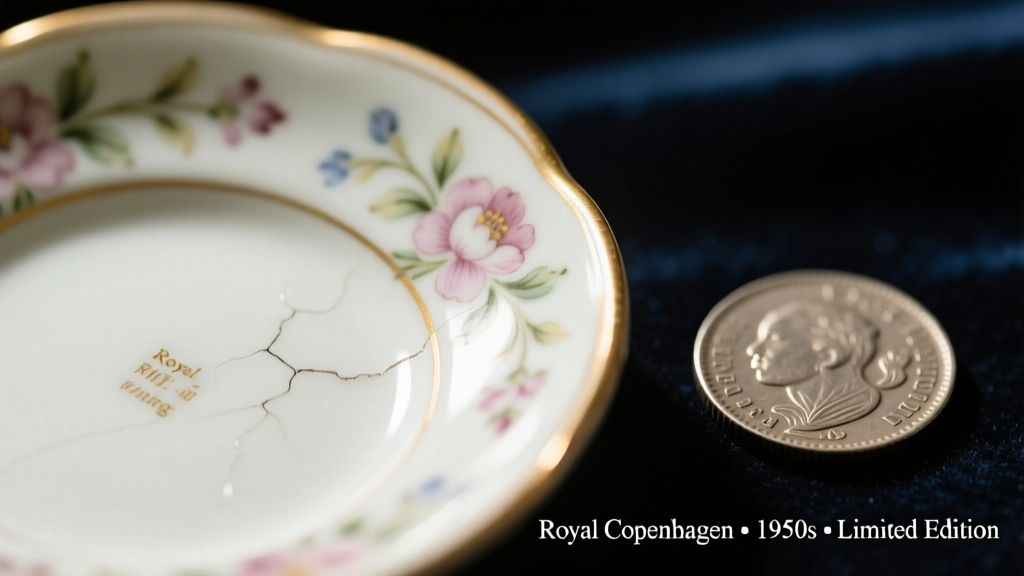
Royal Copenhagen Mini Plate: History, Identification, and Market Value of the Iconic 3.5-Inch Porcelain Collectible
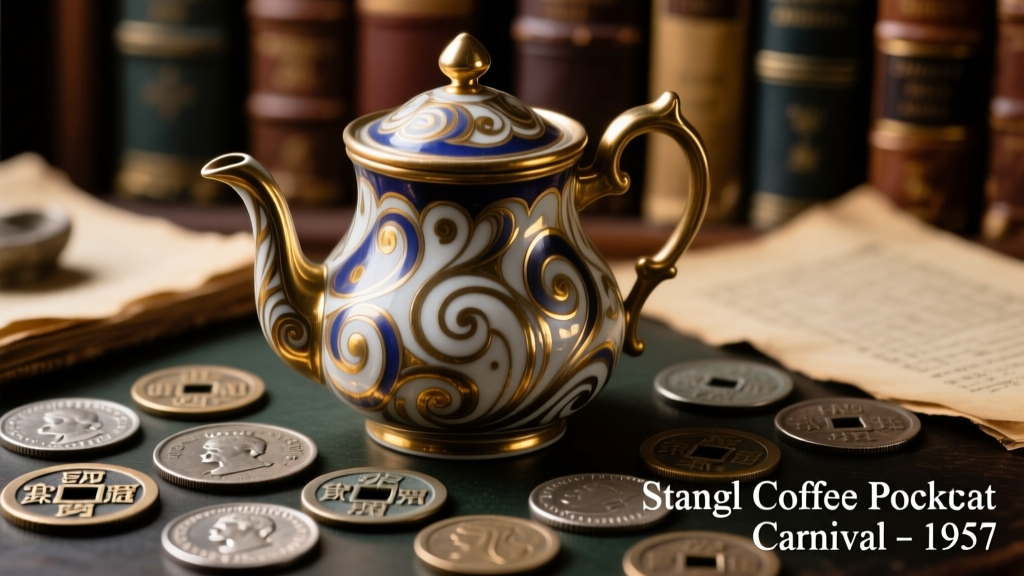
Stangl Coffeepot Carnival: The Forgotten Mid-Century Ceramic Phenomenon
Banks Mechanical Mule Entering Barn by J. E. Stevens: A Numismatic & Mechanical Toy Legacy
Game Carnival Toss Face Painted Exaggerated Mouth Sheet Metal Sign (28 × 20 in): Authenticity, Provenance, and Market Value Analysis
The Italian Water Jug with Pinched Spout: History, Craftsmanship, and Collectible Value
Jonas James Dawson: The Forgotten Engraver Behind America’s Most Elusive Pattern Coins

Pierre Dumont Potter: The Forgotten Engraver Behind America’s Most Iconic Early Silver Dollars
Marblehead Vase with Finger Marks, Medium Blue Glaze, Wide Rim — Signed, 4½ × 6 Inches: Authentication, Provenance, and Market Value Analysis
Gillinder & Sons: America’s Premier Glassmakers and Their Legacy in Numismatic Glassware