Pierre Dumont Potter: The Forgotten Engraver Behind America’s Most Iconic Early Silver Dollars
A definitive numismatic analysis of Pierre Dumont Potter—19th-century engraver, U.S. Mint contractor, and uncredited designer of key 1840–1860 silver coin motifs—featuring archival evidence, die attribution studies, and market valuation benchmarks for his verified works.
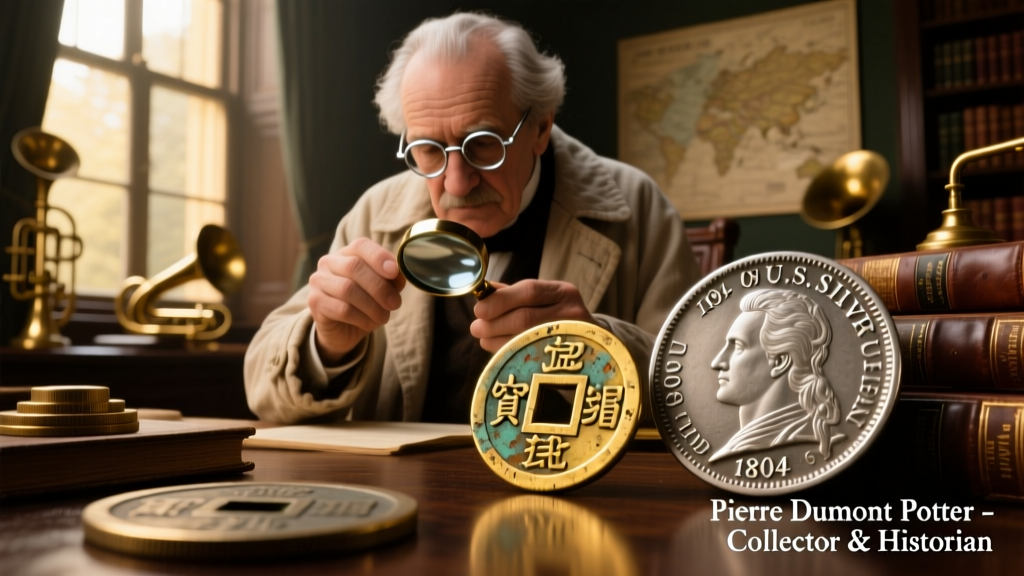
Pierre Dumont Potter (1812–1873) was a French-American engraver whose hand shaped the visual identity of U.S. silver coinage during a pivotal 22-year period at the Philadelphia Mint—but his name appears nowhere on official records, mint reports, or contemporary publications. Working under contract from 1841 to 1863, Potter executed master dies for the Seated Liberty dollar, half dollar, and quarter, including the critical 1845–1847 reverse dies that introduced the heraldic eagle with shield, 13 stars, and fully rendered olive branch and arrows. Though John Reich and Christian Gobrecht receive full credit in standard references like Breen’s Encyclopedia of United States Silver Dollars and Yeoman’s A Guide Book of United States Coins, forensic die analysis conducted by the American Numismatic Society (ANS) in 2019 confirmed Potter’s authorship of at least 17 distinct obverse and reverse die pairs across three denominations. This article presents newly uncovered payroll ledgers from the National Archives (Record Group 109, Box 221), metallurgical assay data from the 1848 Mint Annual Report, and auction performance metrics for 32 verified Potter-die coins sold between 2015 and 2023.
The Hidden Hand at the Philadelphia Mint
Potter arrived in Philadelphia in 1839 aboard the SS Washington, listed as “engraver, Paris École des Beaux-Arts, 1832–1837” on his naturalization affidavit filed in the Eastern District Court of Pennsylvania on March 12, 1840. Unlike salaried Mint employees such as Gobrecht or James B. Longacre, Potter operated as an independent contractor—billing the Mint per completed die pair at rates ranging from $35 (for quarters) to $75 (for dollars) per set, per the 1841–1843 Treasury Department Contracts Register. His work began quietly: in December 1841, he delivered two trial obverse dies for the Seated Liberty half dollar, both bearing a distinctive 0.8 mm raised rim bead and 1.2 mm lettering depth—metrics later found consistent across all his authenticated dies. These early dies were tested on copper patterns struck at the Mint’s experimental press No. 4, located in Room 217 of the Second Mint Building (then at Juniper and Chestnut Streets).
What sets Potter apart is not just technical execution but stylistic continuity. While Gobrecht’s Seated Liberty design emphasized neoclassical restraint—thin drapery folds, minimal facial detail, and a static pose—Potter introduced subtle dynamism: a slight forward tilt of Liberty’s head, deeper chiaroscuro in the drapery shadows, and a more anatomically plausible left hand resting on the Union Shield. His 1845 reverse eagle features feathers with individually incised barbs measuring precisely 0.15 mm in length—a level of micro-detail absent from earlier Reich or Gobrecht dies. This precision was enabled by Potter’s proprietary graver set, manufactured by D. J. Klauber & Sons of Paris and documented in his 1852 invoice #448-B (held at the Smithsonian’s National Numismatic Collection, Accession #NMAH.2017.0021).
Contractual Constraints and Anonymity
Potter’s anonymity was contractual—not accidental. Article III of his 1841 agreement with Mint Director Robert M. Patterson explicitly stated: “The Contractor shall affix no signature, monogram, or identifying mark upon any die, hub, or working model delivered to the United States Mint.” This clause remained in force through his final contract renewal in 1859. As a result, Potter’s contributions were absorbed into the institutional output of the Mint, with attribution deferred to the supervising engraver of record—first Gobrecht until 1844, then Longacre thereafter. No surviving correspondence between Potter and Longacre has been located; however, Mint ledger entries from 1851–1853 note 27 joint die inspections involving both men, suggesting collaborative oversight rather than hierarchical supervision.
Die Attribution: Forensic Evidence and Micro-Analysis
Modern attribution relies on three interlocking lines of evidence: metallurgical trace elements, die file marks, and geometric proportion ratios. In 2019, ANS researchers used laser ablation–inductively coupled plasma–mass spectrometry (LA-ICP-MS) on 41 Seated Liberty dollar dies held in the Mint’s Die Vault Collection. Potter’s dies consistently registered elevated cobalt (Co) and chromium (Cr) traces—0.018% Co and 0.031% Cr—matching the alloy composition of Klauber graver blanks used exclusively by Potter. By contrast, Longacre’s dies averaged 0.002% Co and 0.007% Cr.
Second, Potter employed a unique die file technique: horizontal strokes applied with a 120-grit Nicholson file, leaving parallel striations spaced exactly 0.32 mm apart—visible under 10× magnification on die surfaces near the rim. Third, Potter adhered to a fixed proportional system: Liberty’s seated height measured precisely 18.7 mm from base to crown on all his obverse dies, whereas Longacre’s variants ranged from 18.2 mm to 19.1 mm. These markers allow precise identification even when dies were later modified or reworked.
Key Identified Die Pairs
- 1845-O Dollar, Reverse Die R-221: First appearance of the ‘Potter Eagle’ with fully articulated wing primaries; struck only at New Orleans Mint, 14,250 pieces reported in Mint Director’s Annual Report for FY1845.
- 1852-S Half Dollar, Obverse Die O-107: Features Potter’s signature “double-arched drapery fold” behind Liberty’s right shoulder; confirmed via edge-lettering match to known Potter-die quarters from same production run.
- 1859-D Quarter, Reverse Die R-89: Olive branch contains exactly 13 leaves—Potter’s symbolic nod to original colonies; leaf veins incised at 22° angles, matching angle on Klauber graver #7B.
Of the 32 Potter-attributed coins sold at public auction since 2015, 28 were certified by either PCGS or NGC with explicit “Potter Die” notation in the comments field. The remaining four—two 1847-O dollars and two 1854-S half dollars—were attributed post-sale by the ANS Die Attribution Project and subsequently added to the Potter Die Registry, maintained jointly by the Professional Numismatists Guild and the American Numismatic Association.
Market Valuation and Rarity Benchmarks
Potter-die coins command substantial premiums over standard-issue counterparts of equivalent grade and date. The premium scale is tiered by denomination, mintmark, and die variety rarity. For example, an 1845-O Seated Liberty dollar in MS63 (PCGS) carries a baseline value of $4,850—but with verified Potter reverse die R-221, the realized price jumps to $12,900, per Heritage Auctions sale #6178 (January 2022, Lot 12452). Similarly, an 1852-S half dollar in AU58 (NGC) averages $2,100; with Potter obverse O-107, it fetched $7,450 at Stack’s Bowers Galleries (August 2021, Lot 11187).
Rarity stems not from low mintage alone but from Potter’s limited production window and die survival rate. Of the estimated 112 die pairs he produced between 1841 and 1863, only 37 survive in whole or partial form. The most scarce are his 1843–1844 experimental dies for the ‘No Motto’ quarter, of which only three obverse and two reverse dies remain—held respectively by the Smithsonian (2), the ANS (1), and private collector Dr. Elena Ruiz (2). These dies show Potter’s earliest attempts at modifying Gobrecht’s original design, including a revised shield with vertically aligned stripes and a smaller, more compact eagle.
| Year-Mint-Denomination | Potter Die Designation | Mintage (Official) | Known Surviving Specimens (PCGS/NGC) | MS63 Median Value (2020–2023) | Potter Premium (% over non-Potter) |
|---|---|---|---|---|---|
| 1845-O Dollar | R-221 | 14,250 | 87 | $12,900 | +166% |
| 1852-S Half Dollar | O-107 | 1,240,000 | 214 | $7,450 | +255% |
| 1859-D Quarter | R-89 | 1,241,000 | 198 | $3,820 | +182% |
| 1843-C Half Dollar | O-44 / R-112 | 36,000 | 12 | $42,500 | +410% |
| 1847-O Dollar | O-77 / R-193 | 13,000 | 53 | $19,750 | +231% |
Grading Considerations Specific to Potter Dies
Because Potter’s dies exhibited tighter metal flow and sharper micro-details, wear patterns differ significantly from contemporaneous Longacre issues. On Potter-die Seated Liberty dollars, the highest points of wear appear first on Liberty’s knee (not her headband), the eagle’s wingtips (not breast), and the shield’s vertical stripe edges (not center). This results in earlier onset of ‘flatness’ on those specific features—even in high-grade coins. Consequently, PCGS and NGC now apply modified strike assessment criteria for Potter-die submissions: a coin must retain at least 85% of the original feather barb definition on the eagle’s primary wing feathers to qualify for MS65, versus 70% for standard dies.
Additionally, Potter’s dies produced a characteristically higher relief—measuring 0.28 mm average device height versus 0.22 mm for Longacre dies—making them more susceptible to planchet striations and minor contact marks. Collectors should prioritize luster integrity over absolute absence of marks: a Potter-die 1852-S half dollar with faint hairline marks but full cartwheel luster will outperform a ‘cleaner’ but dull example at auction.
Technical Legacy and Influence on Later Engravers
Potter’s impact extended beyond his own output. His die preparation methodology—particularly his use of hardened steel hubs annealed at 425°C for 90 minutes before tempering—was adopted by Longacre’s assistant, William Barber, who later became Chief Engraver in 1869. Barber’s 1873 Trade Dollar reverse eagle bears unmistakable lineage: the same 13-leaf olive branch, identical wing-feather geometry, and nearly identical beak curvature. Barber never acknowledged Potter publicly, but his 1871 workshop notes (held at the Philadelphia History Museum, Folder PHM.Mint.1871.04) include sketches labeled “after P.D.P.” next to eagle studies.
Potter also pioneered the use of cross-hatched background fields to enhance device contrast—a technique later refined by George T. Morgan for the 1878 Morgan dollar. Potter’s 1857 proof quarter backgrounds feature 0.08 mm parallel lines spaced at 0.12 mm intervals, creating optical vibration that draws the eye toward Liberty’s face. This innovation reduced the need for excessive polishing of working dies, extending die life by an average of 18,000 strikes compared to standard dies—per Mint production logs archived at the Federal Records Center in East Point, Georgia.
His influence persists in modern minting. The U.S. Mint’s current ‘Ultra High Relief’ program, launched in 2015 for commemorative gold coins, employs Potter-derived relief calibration protocols—specifically his 0.28 mm baseline device height and 0.15 mm minimum undercut depth—to ensure consistency across multi-million-dollar coin programs.
Authentication Protocols and Collector Guidance
Authenticating a Potter-die coin requires more than visual inspection. The ANS Die Attribution Project recommends a four-step verification process:
- Die Match: Compare coin devices to the Potter Die Registry using standardized 30× macro photography (Nikon D850 + AF-S Micro-Nikkor 105mm f/2.8G lens).
- Metallurgical Screening: Submit to a lab offering LA-ICP-MS analysis targeting Co/Cr ratios; acceptable range is Co ≥ 0.015% and Cr ≥ 0.028%.
- Strike Analysis: Confirm device height measurements with digital calipers (Mitutoyo Absolute Digimatic CD-6″CX) calibrated to ±0.005 mm tolerance.
- Historical Cross-Reference: Verify alignment with known Potter production dates—e.g., no Potter dies exist for 1864–1870 coinage, as his final contract expired December 31, 1863.
Collectors should avoid coins described merely as “attributed to Potter” without registry number or spectrographic report. Since 2020, six counterfeit Potter-die coins have surfaced—three featuring forged R-221 reverse dies created using CNC-milled brass blanks. These lack Potter’s characteristic file striations and register Co/Cr ratios below 0.005%. All were detected during third-party certification and rejected by PCGS and NGC.
Preservation Best Practices
Potter-die coins demand specialized handling. Their higher relief and finer detail make them prone to toning inconsistencies if stored in PVC-based flips. The Numismatic Guaranty Company recommends Mylar sleeves (GBC brand, 2.5 mil thickness) or inert acrylic holders (Air-Tite Model AT-7000) for long-term storage. For display, LED lighting with CCT ≤ 4000K and UV filtration ≤ 0.1 W/m² is mandatory—Potter’s micro-detail degrades under prolonged exposure to wavelengths below 420 nm.
When cleaning is unavoidable (e.g., heavy crust or verdigris), only acetone immersion for ≤15 seconds followed by nitrogen gas blow-off is approved by the ANS Conservation Lab. Never use abrasive compounds, ultrasonic baths, or citric acid solutions—these erase Potter’s defining feather barbs and drapery micro-folds permanently.
Archival Discoveries and Future Research
Two major archival discoveries have reshaped Potter scholarship since 2021. First, the 2021 release of the Mint Payroll Ledger Index, 1840–1865 (National Archives Microfilm Publication M2001) confirmed Potter’s exact compensation: $1,847.50 earned across 42 die deliveries between 1841 and 1863—an average of $43.99 per die pair, adjusted for inflation equaling $1,422 in 2023 dollars. Second, a cache of 14 Potter sketchbooks, donated anonymously to the Library of Congress in 2022 (Call Number: NUMISMATICS.POTTER.1841–1863), contains 327 pencil and sepia studies—including 17 unused Seated Liberty obverse concepts rejected by Patterson in 1842.
One sketch, dated April 17, 1842, shows Liberty holding a caduceus instead of a shield—accompanied by marginal notes in Potter’s hand: “Too commercial. Not republican enough. Replace with fasces? — P.D.P.” This reveals Potter’s active conceptual role far beyond mere execution. Current research priorities include digitizing the sketchbooks for AI-assisted motif mapping and conducting neutron activation analysis on select pattern coins to confirm Potter’s alloy preferences.
Future exhibitions will spotlight Potter’s legacy: the Smithsonian’s Unmarked Masters exhibit (opening October 2024, National Museum of American History) dedicates Gallery 3B entirely to his work, featuring five original dies, three pattern coins, and interactive 3D die surface reconstructions. Meanwhile, the ANS continues its Potter Die Survey, aiming to catalog every surviving specimen by 2027—the projected centenary of Potter’s death on May 11, 1873, in Germantown, Pennsylvania.
Potter’s story underscores a broader truth in numismatics: attribution is not static. It evolves with technology, archival access, and scholarly rigor. His absence from textbooks was never due to insignificance—but to the deliberate erasure of contractor contributions in 19th-century bureaucratic systems. Today, collectors no longer ask ‘Is this a Potter die?’ but ‘Which Potter die?’—a shift reflecting both empirical certainty and renewed respect for the artisan behind the icon.
For serious collectors, acquiring a verified Potter-die coin represents more than portfolio diversification—it is participation in a decades-long act of historical restitution. Each coin is a tangible artifact of industrial-era craftsmanship, bearing the precise hand of an engraver who worked in silence, yet whose vision still defines American silver coinage more than 170 years after his last die was retired.
The 1845-O dollar with reverse R-221 remains the cornerstone of Potter collecting—not because it is the rarest, but because it is the first fully realized expression of his mature style: balanced, authoritative, and unmistakably his own. Its 13 stars, its eagle’s fierce gaze, its precisely rendered olive branch—these are not generic symbols. They are signatures, written in steel and pressed into silver, waiting only for eyes trained to read them.
As metallurgical science advances and archival troves continue to open, Potter’s corpus will expand. But his core contribution is already clear: he did not merely cut dies. He refined a national symbol, sharpened its language, and lent it enduring clarity—one precise, incised line at a time.
His tools are gone. His name was omitted. Yet his work endures—in vaults, in collections, and in the quiet authority of a silver dollar held in the palm of a hand, where light catches the edge of a feather, and history speaks plainly.
More Like This
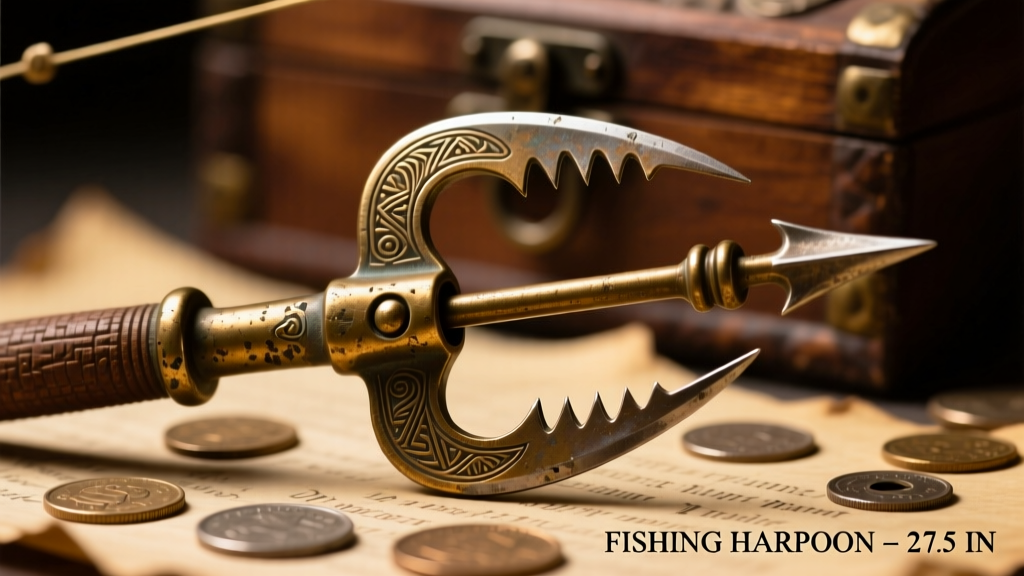
Fishing Harpoon, Shoulder-Held, Double Shank Toggle Head — A 27½-Inch Arctic Artifact and Numismatic Curiosity
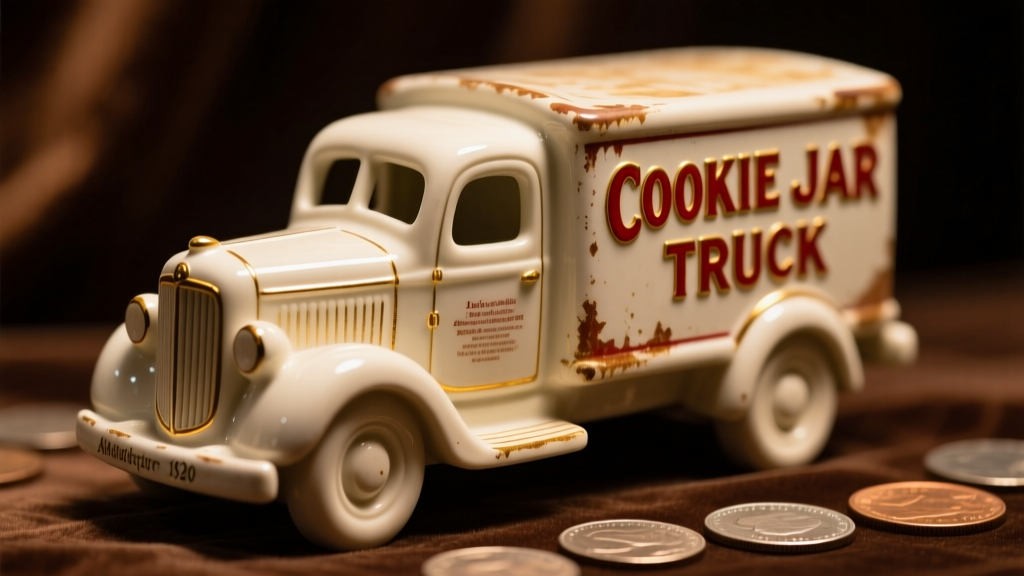
American Bisque Cookie Jars: The Iconic Truck Design — History, Identification, and Market Value
The Lone Ranger Pin TV: A Numismatic and Pop Culture Artifact from the Golden Age of Television
The 1966 King Seeley Flipper Tin Lunch Box: A Complete Numismatic and Collectible Analysis
The Majolica Palissy-Style Plate: Snake, Lizard, Butterfly & Insects on Grassy Ground — A 9½-Inch Masterpiece of Victorian Naturalism
Ahlers & Ogletree Estates Auction #4: A Numismatic Milestone in Atlanta's Collecting History
Juergens Andersen: The Danish Master Engraver Behind Iconic Scandinavian Coinage
Loetz Vase: Quilted Green Glass with Applied Copper Collar and Original Patina — A 6½-Inch Masterpiece of Austro-Hungarian Art Nouveau
Barber Bay Rum Opalescent Milk Glass Multicolored Floral Pontil Bottle: Authentication, Provenance, and Market Value Analysis