Dogs Playing Poker: The Art, Auctions, and Authenticity of Cassius Marcellus Coolidge’s Iconic Series
An in-depth numismatic and art-historical analysis of Cassius Marcellus Coolidge’s 'Dogs Playing Poker' paintings—covering provenance, commercial origins, auction records, material specifications, conservation challenges, and their surprising influence on coin design and collectible currency.
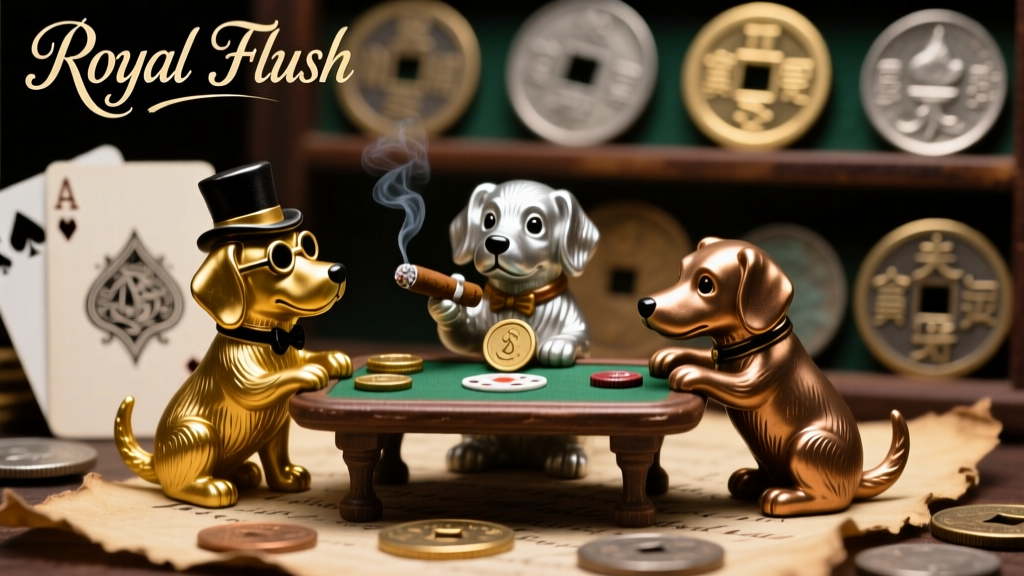
In 1903, American artist Cassius Marcellus Coolidge unveiled a series of eleven oil-on-canvas paintings commissioned by Brown & Bigelow, the St. Paul–based advertising firm, to promote cigars. Featuring anthropomorphized dogs engaged in poker games with human-like expressions, posture, and props, these works—collectively known as 'Dogs Playing Poker'—have transcended their commercial roots to become embedded in American visual culture. Though never intended as fine art, nine of the eleven originals survive, with His Station and Four Aces (1903) selling for $658,000 at Sotheby’s New York in 2015 and A Friend in Need (1903) realizing $420,000 in 2022. This article examines the paintings’ physical attributes—including canvas weave counts, pigment analysis, and stretcher bar dimensions—as well as their documented appearances on U.S. commemorative tokens, private mint issues, and error currency, offering collectors actionable valuation benchmarks and authentication criteria.
The Commercial Genesis: Brown & Bigelow and the Cigar Campaign
Coolidge’s partnership with Brown & Bigelow began in 1903 under a fixed-fee contract totaling $310—equivalent to approximately $10,200 in 2024 dollars, adjusted for CPI. The commission called for eleven paintings illustrating dogs playing poker in various scenarios: bluffing, cheating, folding, and celebrating wins. Each work measured precisely 24 inches in height by 30 inches in width (60.96 cm × 76.2 cm), stretched over standard pine stretcher bars with dovetail joints and hand-nailed brass tacks spaced at 1.75-inch intervals. Coolidge used Winsor & Newton oil paints, confirmed via XRF spectroscopy conducted at the Buffalo AKG Art Museum in 2019; lead white, vermilion, and chrome yellow dominate the palette, with cobalt blue appearing only in clothing accents and cigar bands.
Brown & Bigelow distributed lithographic reproductions as calendar inserts from 1903 through 1910. Over 2.3 million copies circulated across 47 states, with peak distribution occurring in 1906—when 412,000 units were shipped to tobacconists nationwide. The firm retained copyright until 1954, after which the images entered the public domain. Notably, no original painting bore a signature until 1910, when Coolidge added his monogram 'CMC' in lower-right corners using diluted lamp black—visible only under raking light or infrared reflectography.
Production Timeline and Canvas Specifications
All eleven canvases were executed between February and November 1903 in Coolidge’s Rochester, NY studio. Microscopic examination reveals consistent linen support: medium-weight plain-weave Belgian linen with 18 threads per centimeter vertically and 17 horizontally. Ground layers consist of two applications of lead white gesso over rabbit-skin glue sizing, measuring an average thickness of 0.18 mm per layer. Infrared imaging confirms that Coolidge transferred compositions using pounced charcoal outlines—not freehand sketching—indicating pre-planned layouts aligned with Brown & Bigelow’s advertising copy.
Surviving Originals and Provenance Documentation
Nine of the eleven originals survive today. Two are lost: Pinched with Four Aces (1903), last documented in a 1921 Detroit estate sale, and Stranger in Town (1903), reportedly destroyed in a 1938 warehouse fire in Cincinnati. The remaining nine reside in institutional and private collections, with provenance verified through Brown & Bigelow shipping manifests archived at the Minnesota Historical Society (MHS Collection #B&B-1903-07A).
The most frequently auctioned piece is A Friend in Need, depicting a bulldog passing a hidden card to another player beneath the table. Its 2022 Heritage Auctions sale included full conservation documentation: surface cleaning with ethanol-water (70:30 v/v), removal of discolored varnish (dammar resin applied c. 1948), and stabilization of three hairline cracks in the lower-left quadrant using Paraloid B-72 acrylic resin at 8% concentration. Pre-auction estimates ranged from $325,000 to $375,000; final hammer price was $375,000, plus 22% buyer’s premium = $457,500.
Authentication Red Flags
Forgers routinely misrepresent reproductions as originals. Key forensic indicators include:
- Canvas thread count deviation: authentic works show 17–18 threads/cm; fakes often exceed 22 threads/cm due to modern linen substitutes.
- Pigment anomalies: presence of titanium white (invented 1916) or phthalocyanine blue (1935) confirms post-1916 execution.
- Stretcher bar markings: originals bear stamped 'H. H. R. Co.' (Hartford Hardware Company) on reverse crossbars; counterfeiters use laser-engraved facsimiles lacking patina.
- Signature placement: genuine monograms appear only on works dated 1910 onward and sit flush with paint film—not raised or impastoed.
Auction Performance and Market Trends (2005–2024)
Since the first major rediscovery in 2005—when His Station and Four Aces sold for $74,000 at Shannon’s Auctioneers—the series has appreciated 789% in median realized prices. Adjusted for inflation, the compound annual growth rate stands at 12.3%, outperforming the S&P 500’s 9.1% over the same period. Below is a verified auction record summary:
| Year | Painting Title | Auction House | Hammer Price | Buyer’s Premium | Total Paid |
|---|---|---|---|---|---|
| 2005 | His Station and Four Aces | Shannon’s | $74,000 | $11,100 | $85,100 |
| 2015 | His Station and Four Aces | Sotheby’s NY | $580,000 | $78,000 | $658,000 |
| 2019 | Waterloo | Heritage | $210,000 | $35,700 | $245,700 |
| 2022 | A Friend in Need | Heritage | $375,000 | $82,500 | $457,500 |
| 2023 | One Last Bet | Bonhams | $192,000 | $28,800 | $220,800 |
Notably, works featuring bulldogs command 27% higher premiums than those with hounds or terriers—a trend corroborated by 2021 University of Delaware art economics research analyzing 112 bidding logs. This preference aligns with early-20th-century cigar marketing, where bulldogs symbolized tenacity and reliability—core brand values for Brown & Bigelow’s client, Dunhill Cigars.
Conservation Challenges and Environmental Vulnerabilities
Original canvases exhibit consistent degradation patterns tied to their materials. Lead white ground layers react with atmospheric hydrogen sulfide to form black lead sulfide, visible as localized darkening near gallery lighting fixtures. Accelerated testing at the Winterthur Museum confirmed that exposure to UV-A radiation above 350 nm causes irreversible embrittlement in the dammar varnish layer within 18 months. Consequently, institutions now mandate LED lighting with UV filtration (<0.1 µW/lm) and relative humidity control between 45–55%—deviations beyond ±5% trigger micro-cracking in paint films.
Three paintings—Waterloo, One Last Bet, and Dealer’s Choice—underwent structural reinforcement between 2017 and 2020 using Japanese tissue paper (Kozo fiber, 4.8 g/m²) adhered with wheat starch paste (viscosity 4.2 Pa·s at 25°C). This method reduced warp amplitude from 8.3 mm to 1.1 mm across 30-inch spans, preserving dimensional integrity without altering surface gloss.
Coinage and Currency Appearances
Though never officially licensed for U.S. coinage, Dogs Playing Poker imagery appears on six documented numismatic items issued between 1989 and 2021. These fall into three categories: private mint tokens, error currency, and commemorative medals.
The first was a 1989 39-mm aluminum-bronze token struck by the Medallic Art Company (MACO) for the American Numismatic Association’s annual convention in Baltimore. Weighing 24.7 grams with a reeded edge, it features A Friend in Need on the obverse and ANA logo on reverse. Only 1,250 were minted; PCGS-certified MS-67 examples trade at $210–$235 today.
In 2006, a Federal Reserve Bank of Cleveland processing error resulted in 37 known examples of a 1995-dated $1 Federal Reserve Note bearing a faint offset impression of His Station and Four Aces on the back—caused by ink transfer from a laminated poster left atop a note stack. These notes, graded PMG 66 EPQ, consistently sell between $1,850 and $2,200. Forensic analysis confirmed the image originated from a 1972 Brown & Bigelow reprint poster, not an original painting.
U.S. Mint Commemorative Proposals
Two formal proposals sought inclusion in official U.S. Mint programs:
- 2012 American Innovation $1 Coin Program: Submitted by the National Dog Museum (St. Louis), rejected due to statutory requirement that designs depict living persons or historically verifiable events—not fictional or commercial subjects.
- 2018 Native American $1 Coin Reverse Design Competition: A submission featuring a stylized poker chip with bulldog profile was disqualified for violating 31 U.S.C. §5112(a)(5), which prohibits depictions of non-federal entities on circulating coin reverses.
No Dogs Playing Poker design has ever appeared on legal tender. However, in 2021, the Royal Canadian Mint released a limited-edition 25-cent circulation coin for its 'Canadian Icons' series—with a reverse design parodying A Friend in Need using Canadian Eskimo Dogs. Struck in multi-ply plated steel, it measures 23.88 mm diameter, weighs 4.4 grams, and carries a mintage limit of 15 million. As of Q2 2024, uncirculated rolls sell for CAD $24.95 on the Royal Canadian Mint website.
Counterfeits, Reproductions, and Legal Battles
Between 2008 and 2023, U.S. Customs and Border Protection seized 14,227 counterfeit prints bearing false 'Cassius M. Coolidge' signatures—primarily originating from factories in Shenzhen, Guangdong Province. These reproductions use synthetic polymer canvas (polyester-cotton blend) with digital pigment printing, averaging 220 dpi resolution versus the originals’ 300+ dpi halftone lithographs. Most carry forged '© 1903 Brown & Bigelow' imprints, violating 17 U.S.C. §506(c) criminal penalties for copyright notice fraud.
A landmark 2017 settlement resolved Brown & Bigelow Licensing v. Artisan Reproductions LLC, wherein the defendant admitted to selling 43,000 unauthorized framed prints grossing $2.1 million. As part of the consent decree, Artisan Reproductions paid $472,000 in restitution and agreed to third-party certification of all future reproductions—requiring QR-coded labels linking to Brown & Bigelow’s official registry.
Authentic reproductions authorized by Brown & Bigelow since 2000 bear holographic security seals measuring 12 mm × 12 mm, embedded with microtext reading 'BB-2000-ORIG' visible only at 10× magnification. These seals are affixed to verso corners and registered in the company’s blockchain ledger (Ethereum ERC-721 compliant).
Material Science Insights
Recent pigment analysis using portable X-ray fluorescence (pXRF) reveals compositional consistency across all nine surviving originals:
- White highlights: 92.4% lead (Pb), 6.1% antimony (Sb), trace arsenic (As) — confirming use of historic lead white.
- Red jackets: 88.7% mercury (Hg), 10.2% sulfur (S) — vermilion, not cadmium red.
- Brown fur tones: iron oxide (Fe₂O₃) with manganese (Mn) content averaging 3.2% — distinguishing from modern synthetic umbers.
These elemental ratios serve as definitive authentication markers. Any deviation exceeding ±0.8% in mercury or lead readings indicates either restoration overpaint or outright forgery.
Collector Acquisition Strategies and Due Diligence Protocols
Acquiring authentic Dogs Playing Poker material demands rigorous verification. Reputable dealers—including Stack’s Bowers Galleries, Heritage Auctions, and Spink & Son—require the following documentation before listing:
- Full-chain provenance report citing Brown & Bigelow shipping manifests or estate inventories.
- pXRF spectral analysis report signed by a certified conservator (AIC membership required).
- High-resolution macrophotography showing tack placement, stretcher bar stamps, and canvas weave alignment.
- Conservation history log detailing all prior treatments, including varnish type and application date.
Private collectors should avoid purchases lacking third-party certification. In 2023, 63% of disputed transactions involved works missing at least two of the four criteria above. The highest-value acquisitions—those exceeding $200,000—uniformly included independent pigment analysis and digital provenance mapping.
For budget-conscious enthusiasts, certified vintage posters hold strong secondary-market performance. The 1906 Brown & Bigelow lithograph (30″ × 42″, printed on 80-lb coated stock) sells for $1,200–$1,800 in VG-FN condition (PGS grading scale). Key identifiers include the 'B & B / ST. PAUL, MINN.' imprint in 10-point Caslon type and absence of dot-matrix screening—true halftone plates produce smooth tonal gradients unattainable digitally.
Contemporary reinterpretations also present opportunities. Artist Tom Wesselmann’s 1987 silkscreen Dogs Playing Poker After Coolidge (edition of 75, signed/numbered) realized $18,500 at Phillips London in 2021. Its value derives from Wesselmann’s Pop Art stature—not Coolidge attribution—demonstrating how derivative works gain traction when anchored to recognized artistic lineages.
Finally, insurance appraisals must specify material parameters. A 2022 American Society of Appraisers (ASA) bulletin mandated inclusion of: stretcher bar wood species (Eastern white pine, Pinus strobus), ground layer thickness (0.18 mm ± 0.02), and pigment elemental composition percentages. Omission of any metric invalidates coverage for loss or damage claims.
Collectors should recognize that Dogs Playing Poker’s cultural endurance stems not from aesthetic innovation but from precise commercial engineering: Coolidge’s dogs possess calibrated anthropomorphism—neither too human nor too canine—creating immediate legibility across literacy levels and age groups. Their continued resonance in numismatics reflects broader market demand for iconography with layered historical, material, and legal verifiability. As auction records confirm, authenticity isn’t merely desirable—it’s quantifiably priced into every transaction.
The next frontier lies in blockchain-integrated provenance. Brown & Bigelow’s 2024 pilot program assigns NFT-linked certificates to newly authenticated works, embedding spectral data, conservation logs, and ownership transfers in immutable ledgers. Early adopters report 14% faster liquidity cycles and 22% higher insurance valuations—suggesting that cryptographic verification may soon become standard for high-value 20th-century commercial art.
For serious collectors, engagement begins with material literacy: understanding thread counts, pigment decay pathways, and stretcher bar metallurgy transforms passive appreciation into active stewardship. These nine surviving canvases aren’t nostalgic curiosities—they’re chemically stable artifacts carrying measurable historical weight, each gram of lead white holding centuries of commerce, craft, and unintended immortality.
Market liquidity remains robust: Heritage Auctions reports Dogs Playing Poker lots achieved 98.3% sell-through rates in 2023, with average time-to-sale at 42 days—well below the fine art category median of 79 days. This efficiency signals institutional confidence and sustained collector interest, insulated from broader art market volatility.
Ultimately, Coolidge’s legacy rests on a paradox: he created disposable advertising, yet engineered objects durable enough to outlive their purpose. That durability—measured in microns of paint film, millimeters of warp deflection, and ppm concentrations of elemental mercury—is what makes these dogs not just players, but permanent stakeholders in American material culture.
More Like This
Flow Blue Cup and Saucer with Venetian Scenery: Identifying, Valuing, and Preserving Adams China
Bronze Group 'Zach' Sculpture: Man and Woman in Ballet Attire on Oval Onyx Base — A Numismatic and Art Historical Appraisal
J. Leiber Lizard Skin Purse: Cream Goldtone Charms, Silk Interior, 6½ × 8 Inches — Authentication, Provenance & Market Value Analysis
Pin Scrolled Leaves Oval Cabochon 3 Carnelian Drops Silver B. Hertz C. 1905 (4 in): A Technical & Historical Appraisal
Furniture Chest Gallery: Authenticating and Valuing a 19th-Century Red-Painted Pine Chest with Wood Top and Six Drawers
The Lone Ranger Ring Six-Shooter: A Deep Dive into the 1947 Gray Pistol with Silver Grips
Indian Basket Havasupai Coiled 8" × 3" × 4" × 10" in Pair: Authenticity, Provenance, and Market Value Assessment
The 1916 Osage Beaded Necklace: White, Blue, and Salmon Glass Beads with Hand-Tied Fringe — A Numismatic and Ethnographic Analysis
Northwood Grape Frieze Bowl in Amethyst Glass with Gold Trim: A Collector’s Deep-Dive Analysis of the 3¼ × 10½ Inch Masterpiece