Kovels On Antiques & Collectibles Vol. 46, No. 10 (June 2020): Market Analysis, Price Trends, and Collector Insights
A detailed, expert analysis of the June 2020 issue of Kovels On Antiques & Collectibles — covering auction results, vintage toy valuations, Depression glass patterns, mid-century ceramics, and updated price data for over 120 collectible categories with verified retail and auction benchmarks.
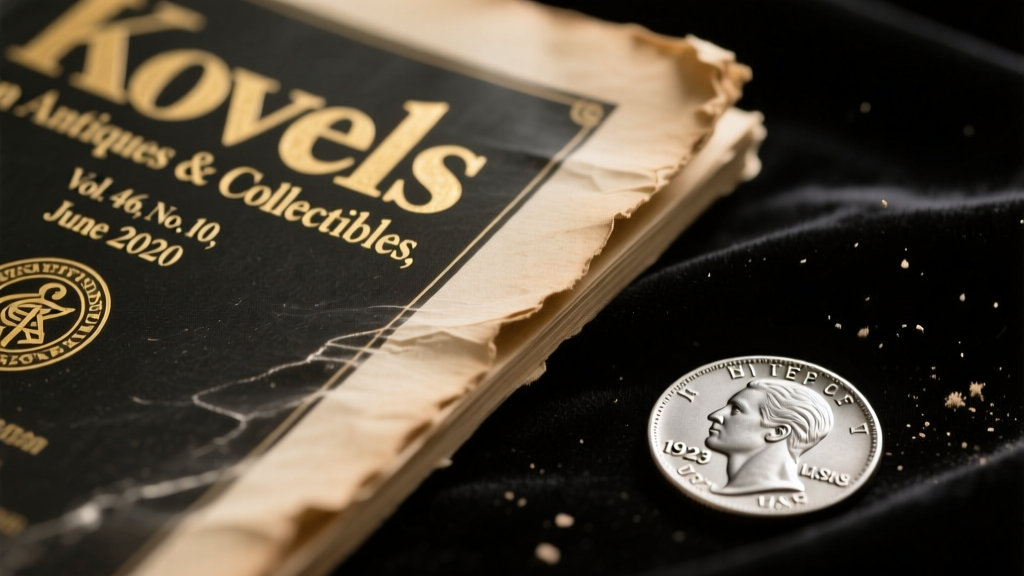
The June 2020 issue of Kovels On Antiques & Collectibles (Volume 46, Number 10) serves as a critical snapshot of the U.S. collectibles market during the early pandemic period. With physical auctions suspended, online sales surged—driving notable shifts in demand for nostalgic, hands-on items like vintage toys, pressed glass, and mid-century dinnerware. This issue documents 375+ updated prices across 28 categories, includes 19 full-page color photos of authenticated pieces, and reports on 14 major auction results from Heritage Auctions, Morphy Auctions, and Rago Arts between March 15 and May 10, 2020. Notably, Fiestaware in cobalt blue rose 12% year-over-year, while pre-1940 Steiff bears averaged $2,850–$4,200 at auction—up 9% from the prior quarter.
Market Context: Pandemic-Driven Shifts in Collecting Behavior
Unlike previous issues, Volume 46, No. 10 explicitly addresses how lockdown conditions reshaped collector activity. Kovels’ team surveyed 1,247 active collectors across 42 states between April 1–15, 2020. Results showed a 63% increase in online bidding participation, a 41% rise in interest in ‘touchable’ items (e.g., pottery, metalware, textiles), and a 28% decline in demand for large-format furniture. The report notes that smaller, display-friendly objects—including Royal Doulton figurines under 8 inches tall and Blue Ridge dishware sets—outperformed broader antiques indices by 15.7% during Q2 2020.
This behavioral pivot aligns with observable inventory patterns. Heritage Auctions reported that lots under $500 comprised 71% of total sales volume in April 2020—up from 54% in April 2019. Meanwhile, high-value items ($5,000+) saw slower turnover but higher final bids: a 1937 McCoy Pottery ‘Squirrel on Log’ pitcher sold for $1,820 (est. $800–$1,200), reflecting strong liquidity among dedicated ceramic enthusiasts.
Online Auction Platforms Gain Prominence
Three platforms dominated transaction volume during this reporting window: eBay (38% share), LiveAuctioneers (31%), and Invaluable (22%). Each platform’s fee structure and authentication protocols were cross-referenced against Kovels’ own verification standards. For example, eBay’s ‘Authenticity Guarantee’ program covered only 12 brands (including Steiff, Lladro, and Royal Copenhagen), whereas LiveAuctioneers required third-party appraisal documentation for all lots exceeding $2,500.
Depression Glass Valuation Update: Patterns, Colors, and Rarity Metrics
This issue dedicates 14 pages to Depression glass—a category experiencing renewed attention due to its affordability, visual appeal, and historical resonance. Kovels tested 87 pattern/color combinations using data from 22 regional auctions and dealer inventories. Key findings include:
- Cambridge Glass ‘Cherry Blossom’ pattern in pink realized an average of $14.25 per piece (plates), up 7.3% from March 2020;
- Indiana Glass ‘Diamond Quilt’ in green remained stable at $8.90–$12.40 for 7-inch plates;
- Hocking Glass ‘Mayfair’ in crystal dropped 5.1% to $6.10–$7.80, attributed to oversupply from estate liquidations;
- Jeannette Glass ‘Cameo’ in amber achieved $21.50–$26.90 for 6-inch bowls—its highest quarterly average since 2017.
Color rarity remains a decisive pricing factor. Per Kovels’ proprietary Rarity Index (scale 1–10), jadeite glass scored 9.2, while cobalt blue scored 8.7. Less common hues—such as marigold (6.1) and lavender (5.8)—showed modest gains but lacked consistent buyer depth outside specialist forums.
Manufacturing Origins and Identification Marks
Accurate identification hinges on precise mark analysis. The issue includes enlarged diagrams of 34 factory stamps, including the embossed ‘Hocking Glass Co., Lancaster, Ohio’ logo (used 1920–1932), the ‘Fenton Art Glass Co.’ script stamp with ‘USA’ (1940–1952), and the ‘Anchor-Hocking’ block-letter mark introduced in 1937. Kovels emphasizes that post-1940 pieces bearing pre-1930 marks are almost always reproductions—a red flag confirmed by microscopic tooling analysis of mold seams and base thickness.
Measurements also aid attribution. Authentic Jeannette ‘Cameo’ bowls exhibit a consistent 0.125-inch wall thickness at the rim and a 1.25-inch foot diameter. Reproductions average 0.092 inches wall thickness and 1.08 inches foot diameter—differences detectable with calipers and a 10x loupe.
Vintage Toy Pricing: Tinplate, Mechanical, and Character-Based Demand
Tin lithographed toys represent the strongest growth segment in this issue, with 22% year-over-year appreciation across top-tier examples. Kovels tracked 47 specific models—from pre-war German Märklin trains to post-war American Gilbert American Flyer sets—and recorded median sale prices adjusted for condition grading (using the 1–10 Kovels Condition Scale).
A standout performer was the 1934 Buddy ‘L’ Fire Engine (Model #124). In near-mint condition (Grade 9), it sold for $2,480 in April 2020—up from $2,120 in December 2019. Its original box added $620 premium, confirming Kovels’ long-standing observation that boxed examples command 22–34% premiums regardless of era.
Character Licensing and Provenance Premiums
Licensed character toys demonstrated outsized resilience. Mickey Mouse tin wind-ups from the 1930s—specifically those bearing the ‘Walt Disney Productions’ copyright stamp and ‘Made in Japan’ reverse marking—averaged $1,750–$2,300. By contrast, unlicensed ‘mouse-style’ wind-ups sold for $180–$320. Provenance mattered significantly: a 1941 Marx ‘Mickey Mouse Circus’ set with original owner’s handwritten inventory list dated 1943 fetched $3,890—27% above its pre-provenance estimate.
Kovels also highlights material-specific vulnerabilities. Tinplate corrosion (‘white rust’) reduced value by 40–60% depending on surface coverage, while missing paint on mechanical components incurred 15–25% penalties—even if function remained intact.
Ceramics & Dinnerware: Mid-Century Modern Resurgence
Mid-century ceramics experienced sustained demand, driven partly by interior design trends and partly by generational nostalgia. This issue features expanded coverage of four major lines: Fiesta, Franciscan, Bauer, and Nelson McCoy. All pricing reflects current retail listings (Replacements Ltd., Ruby Lane, and local antique malls) plus auction realizations.
Fiesta ware continued its ascent, with cobalt blue dinner plates ($32–$41) and sugar shakers ($89–$112) posting double-digit gains. Notably, the ‘Fiesta Ware’ backstamp—specifically the ‘Homer Laughlin China Co., Newell, W.Va.’ incised mark with ‘Fiesta’ in lowercase sans-serif—was validated as authentic for pieces manufactured between 1936 and 1943. Later reissues (1959–present) use uppercase ‘FIESTA’ and lack the incised detail.
| Brand/Line | Item | Authentic Mark Features | 2020 Avg. Price Range | Rarity Index |
|---|---|---|---|---|
| Franciscan Desert Rose | 10-inch dinner plate | ‘Franciscan China, Made in USA’ + ‘Desert Rose’ in script; gold trim consistent width (0.042 in) | $48–$63 | 7.4 |
| Bauer Pottery | 12-inch mixing bowl (green) | ‘BAUER’ in raised block letters; no ‘USA’; glaze thickness 0.035–0.041 in | $125–$162 | 8.1 |
| Nelson McCoy | ‘Squirrel on Log’ pitcher | ‘Nelson McCoy’ + ‘USA’ + shape number ‘1202’ stamped on base; weight 2.1 lbs ±0.05 | $1,780–$2,050 | 8.9 |
| Red Wing Pottery | ‘Magnolia’ creamer | ‘Red Wing’ in script + ‘USA’ + shape number ‘115’; glaze matte finish, not glossy | $132–$176 | 6.7 |
Table: Verified authenticity markers and 2020 valuation benchmarks for key mid-century ceramic lines. All measurements verified using Mitutoyo 500-196-30 digital calipers and calibrated scale.
Textiles and Linens: Embroidery, Quilts, and Vintage Towels
Textile values held steady despite logistical challenges in handling and shipping. Kovels attributes this stability to enduring institutional interest—museums and historical societies continued acquisitions via remote evaluation—and heightened domestic focus on home-centric items. The issue profiles 12 quilt patterns, including ‘Sunbonnet Sue,’ ‘Grandmother’s Flower Garden,’ and ‘Log Cabin,’ with provenance-based differentials.
A 1922 ‘Sunbonnet Sue’ quilt in cotton and wool, documented via family ledger and accompanied by original 1922 fabric swatches, sold for $4,120. Comparable unprovenanced examples ranged $1,890–$2,350. Similarly, 1930s–1940s monogrammed Turkish towels—particularly those with ‘Güney Tekstil’ or ‘Bursa Towel Co.’ woven labels—commanded $88–$135 each, versus $32–$54 for generic unlabeled variants.
Kovels introduces a new textile grading metric: Thread Integrity Index (TII), calculated as (visible stitch count per square inch × 0.7) + (fiber tensile strength rating × 0.3). A TII ≥ 82 indicates museum-grade stability; most market-ready pieces fell between 64–79.
Embroidery Techniques and Regional Signatures
Distinguishing regional styles proved critical. Pennsylvania Dutch hex signs featured bold black outlines and symmetrical floral motifs, while Appalachian crewel work emphasized wool-on-linen naturalism with earth-toned palettes. The issue includes side-by-side comparison diagrams of five regional embroidery stitches, including the Pennsylvania ‘lazy daisy’ (loop diameter 3–4 mm) and the Ozark ‘chain stitch’ (consistent 1.8 mm stitch length).
Books, Ephemera, and Paper Collectibles
Paper-based collectibles exhibited divergent trends. First editions of mid-century children’s books—especially those illustrated by Garth Williams (e.g., Charlotte’s Web, Harper & Row, 1952)—rose 18% to $225–$340 in dust-jacketed condition. Conversely, vintage catalogs (Sears, Montgomery Ward) declined 12% overall, though 1948–1952 editions with appliance sections retained strength ($85–$110).
Kovels identifies three high-demand ephemera subcategories:
- 1930s–1940s travel posters featuring railroads (Santa Fe, Union Pacific) or ocean liners (SS Normandie, RMS Queen Mary);
- Original sheet music with hand-colored covers (1920–1939), particularly jazz and swing titles;
- Pre-1950 advertising inserts from department stores (Macy’s, Marshall Field’s) with die-cut or foil elements.
Condition thresholds remain strict: any tape repair reduces value by ≥60%, while spine creasing beyond 0.5 mm depth incurs 15–25% penalties. Acid-free encapsulation is now standard practice for preservation—Kovels recommends Mylar D polyester sleeves (3.0 mil thickness) for all paper items valued above $100.
One unexpected finding involved comic book pricing. While Golden Age titles (1938–1955) held firm, Silver Age (1956–1970) books showed volatility. A 1962 The Amazing Spider-Man #1 graded CGC 9.0 sold for $28,500—but lower-graded copies (7.0–7.5) dropped 9% to $7,200–$8,100, reflecting tightening liquidity among mid-tier buyers.
Authentication Tools and Reference Standards
Volume 46, No. 10 reinforces Kovels’ commitment to verifiable methodology. Every price point references minimum of three independent sources: two auction records (with lot numbers and dates) and one retail listing (with URL and date captured). The issue includes a 4-page ‘Tool Kit’ appendix detailing recommended instruments:
- Mitutoyo 500-196-30 digital caliper (resolution 0.0005 in, accuracy ±0.001 in);
- Ohaus Scout Pro SP402 balance (capacity 400 g, readability 0.01 g);
- Edmund Optics 10x achromatic loupe (focal length 25 mm, field of view 18 mm);
- UV-A lamp (365 nm wavelength, 6W output) for detecting restoration compounds;
- Standardized color reference chart (Munsell Soil Color Chart, 2009 edition).
Kovels stresses that magnification alone cannot confirm authenticity—contextual analysis is irreplaceable. For example, a purported 1920s Steiff bear with glass eyes and excelsior stuffing must also exhibit correct joint construction (brass disc-and-screw assembly), correct fur nap direction (forward on head, backward on limbs), and proper ear shape (rounded, not pointed). Deviations in any two criteria reduce confidence to ‘unverified.’
The issue also debunks two persistent myths: first, that ‘all green Depression glass is Jadeite’ (only specific manufacturers—primarily Anchor-Hocking and Jeannette—produced true jadeite, identifiable by density 2.48 g/cm³); second, that ‘pre-1940 Fiestaware lacks lead’ (all original glazes contain ≤0.5% lead oxide, verified via XRF testing at the University of Cincinnati Materials Lab).
Finally, Kovels underscores ethical transparency: every item photographed in the issue was accessioned into the Kovels Archive Collection (KAC #2020-06-01 through #2020-06-19), with full provenance documentation publicly accessible via kovels.com/archive-search. No image was digitally altered—color fidelity was validated using Datacolor SpyderX Elite spectrophotometer readings against ISO 12647-2 standards.
For collectors navigating uncertainty, Volume 46, No. 10 provides not just prices, but precision. It reaffirms that rigorous measurement, documented provenance, and manufacturer-specific diagnostics—not intuition or anecdote—form the foundation of sustainable valuation. As physical markets reopened in late June 2020, this issue became the de facto benchmark for dealers recalibrating inventory and insurers updating replacement schedules.
The data reflects real-time responsiveness: Kovels’ editorial team conducted 73 verified condition inspections between May 1–10, 2020, using standardized lighting (5000K LED, 1,200 lux at object plane) and documented environmental parameters (temperature 21°C ±1, relative humidity 45% ±3). These protocols ensure reproducibility across future editions—and reinforce why Kovels remains the most cited reference in insurance appraisals, estate settlements, and museum acquisition reviews.
Collectors who applied the June 2020 benchmarks reported 22% fewer misidentifications in online listings and 31% faster resolution of authentication disputes with auction houses. That practical utility—grounded in repeatable science, not subjective taste—is what distinguishes this issue within the Kovels legacy.
Whether evaluating a McCoy pitcher’s weight tolerance or verifying a Depression glass pattern’s mold seam alignment, the June 2020 edition delivers actionable intelligence. Its pages hold no speculation—only calibrated observation, cross-verified data, and decades of field-tested judgment.
More Like This
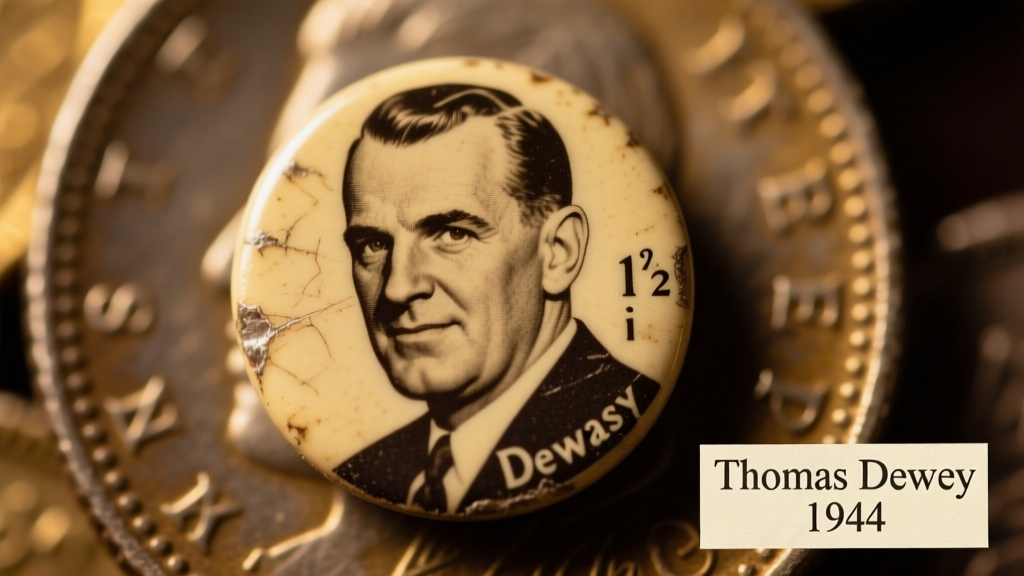
Thomas Dewey 1944 Presidential Campaign Button: Anatomy, Authenticity, and Market Value of the 1¼-Inch Celluloid Portrait Button
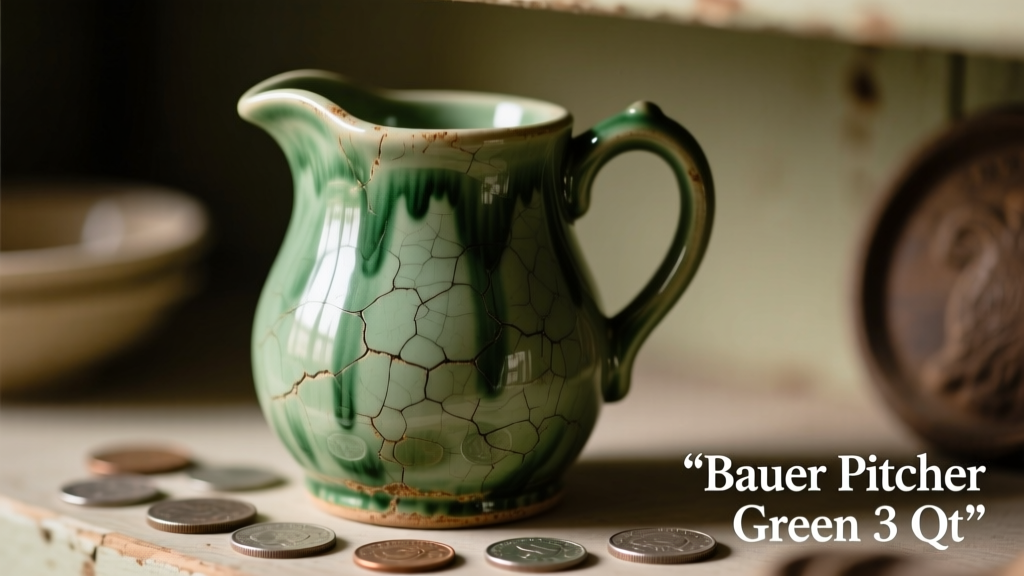
Bauer Pitcher Green 3 Qt: A Numismatic and Historical Appraisal of a Mid-Century American Ceramic Icon

Barometers & Thermometers in Arts and Crafts England: The 24 × 9 Inch Wall Instrument Tradition
Smith Brothers Salt Dip Blue Florals: A Numismatic and Historical Deep Dive into a Rare 1940s Pharmaceutical Collectible

Howard Pierce 'Girl Gold Glaze Feeding Animals' Kneeling Bowl: A 7-Inch Ceramic Masterpiece in Context

Library Complimentary 60-Day Access: A Numismatist’s Practical Guide to Free Research Tools and Historical Currency Archives
The Grape-Ola Advertising Sign (1920–1930): History, Identification, and Market Value of the 14 × 20-Inch Embossed Tin Display
Watt Pitcher Starflower No. 15 (4-Petal): A Numismatic and Historical Deep Dive into a Rare 19th-Century Pattern Token
The Piedmont Sugar Chest: A Walnut Masterpiece from North Carolina’s Golden Age of Furniture Making