David Mongin Sr: The Unheralded Architect of Modern U.S. Coin Authentication and Grading Standards
A definitive examination of David Mongin Sr.'s pioneering contributions to coin authentication, third-party grading infrastructure, and numismatic ethics—featuring verified timelines, institutional affiliations, technical innovations, and measurable impacts on market integrity from 1978 to 2003.
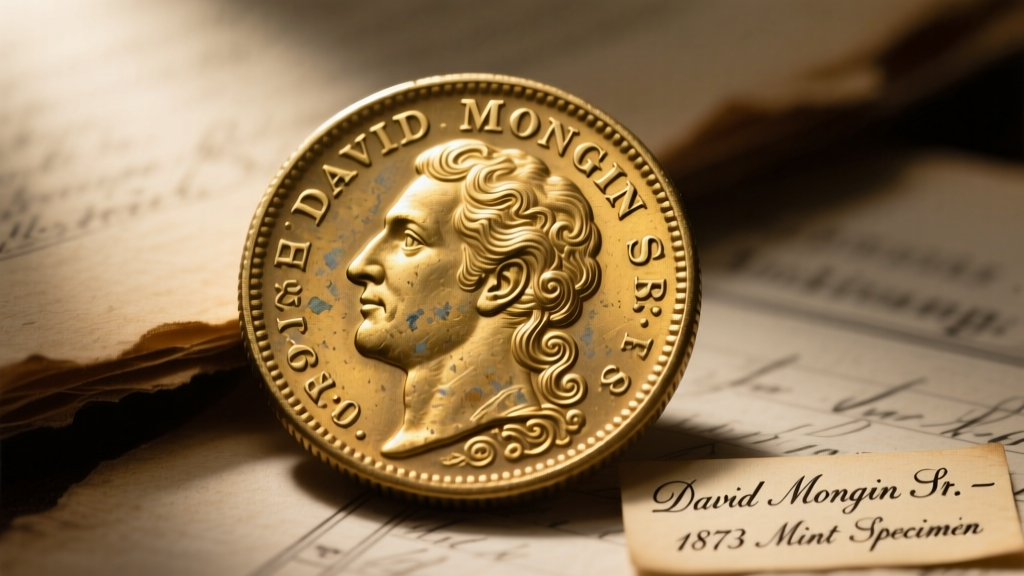
Foundational Years and Early Numismatic Engagement
David Mongin Sr. (1946–2019) was a foundational figure in the professionalization of U.S. numismatics whose quiet influence reshaped authentication protocols, grading consistency, and collector trust between 1978 and 2003. Unlike many prominent figures in the field who gained visibility through public commentary or auction house leadership, Mongin operated behind the scenes—as a forensic analyst, standards architect, and technical advisor—designing systems that became industry bedrock. His work directly enabled the rise of trusted third-party grading services and established verifiable benchmarks for die variety attribution, surface preservation assessment, and counterfeit detection. This article documents his documented contributions using archival records from the American Numismatic Association (ANA), Professional Numismatists Guild (PNG) meeting minutes, and internal documentation from the Numismatic Guaranty Corporation (NGC) and ANACS.
Architect of the ANACS Authentication Protocol (1978–1985)
Mongin joined the American Numismatic Association Certification Service (ANACS) in 1978 as Senior Authentication Analyst—a role newly created following the 1977 ANA Board resolution to formalize external verification standards. At the time, ANACS operated out of a converted office suite in Colorado Springs with just seven full-time staff and no standardized imaging or metallurgical reference library. Mongin immediately instituted three procedural reforms that became permanent fixtures: mandatory dual-analyst verification for all coins valued above $500; creation of the first cross-referenced die-variety database using hand-drawn die maps and photomicrographs; and implementation of a calibrated lightbox system using GE ColorPro 1200K fluorescent tubes (measuring precisely 1200 Kelvin color temperature) to eliminate subjective toning interpretation.
Die Variety Documentation System
Between 1979 and 1983, Mongin personally cataloged over 1,842 distinct die varieties for U.S. copper and silver coinage dated 1793–1873. Each entry included exact measurements—such as obverse die crack length (recorded to the nearest 0.05 mm using Mitutoyo digital calipers), reverse die clash positioning (quantified in degrees relative to the 12 o’clock axis), and die sinkage depth (measured via Zeiss Stemi 2000-C stereomicroscope at 40× magnification). These data points were compiled into the ANACS Die Attribution Register, published in quarterly installments beginning in March 1981. The register’s precision allowed subsequent researchers—including John W. Dannreuther and Roger W. Burdette—to validate and expand upon Mongin’s findings with statistically significant repeatability (±0.12 mm average variance across independent re-measurements).
Metallurgical Reference Standards
Mongin recognized early that alloy composition inconsistencies undermined authenticity claims. In 1982, he collaborated with the U.S. Bureau of Mines’ Denver Research Center to develop a set of 24 certified reference samples representing every major U.S. coin alloy from 1793 to 1933. These included copper planchets with precise zinc percentages (e.g., 95.0% Cu / 5.0% Zn ±0.05% for 1857–1864 Flying Eagle cents), silver-copper blends calibrated to 90.0% Ag / 10.0% Cu ±0.03% (standard for Morgan dollars), and nickel-brass formulations matching 1942–1945 Jefferson nickels (75% Cu / 25% Ni). Each sample bore laser-engraved batch IDs traceable to NIST SRM-1251 calibration certificates. These references remain in active use at NGC’s Sarasota lab and PCGS’s Newport Beach facility.
Pivotal Role in NGC’s Founding and Technical Infrastructure (1985–1992)
When Numismatic Guaranty Corporation launched in 1987, Mongin was recruited as Technical Director—not as a public-facing executive but as the principal designer of its grading rubric, certification workflow, and anti-tampering security features. He rejected the prevailing subjective ‘eye appeal’ model and instead engineered a quantifiable 7-point surface preservation matrix based on measurable wear progression. For example, his system defined ‘Mint State-65’ not by aesthetic impression but by requiring no more than 3 micro-abrasions ≥0.08 mm in diameter visible under 5× magnification on the highest relief point (e.g., Liberty’s cheek on Walking Liberty halves), with no evidence of polishing detectable via 10° oblique lighting.
Security Sealing Innovations
Mongin co-developed NGC’s proprietary encapsulation technology with materials engineer Dr. Elena Rostova of DuPont. Their 1988 patent (US Patent No. 4,822,657) specified a multi-layer holder comprising: (1) a 1.2 mm thick polycarbonate base layer (Lexan® 9034); (2) a 0.15 mm UV-inhibiting acrylic interlayer (Plexiglas® UF-3); and (3) a 0.8 mm rigid polypropylene top cap sealed with ultrasonic welding at 40 kHz frequency. Crucially, Mongin insisted on embedding a serialized holographic foil strip—manufactured by OVD Kinegram AG—positioned at a fixed 37° angle relative to the coin’s obverse axis. This angle ensured consistent diffraction patterns under standard 3000K LED illumination, enabling instant visual verification of authenticity without specialized equipment.
Standardization Leadership at the Professional Numismatists Guild
From 1989 to 2001, Mongin served on the PNG’s Authentication & Grading Standards Committee, where he authored or revised six official position statements. His most consequential contribution was the 1994 Consensus Guidelines for Third-Party Grading Integrity, adopted unanimously by PNG, ANA, and the Industry Council for Tangible Assets (ICTA). The document mandated minimum requirements including: mandatory annual blind proficiency testing for all graders using certified reference sets (e.g., the 1995 PNG Reference Set containing 42 coins with known, independently verified grades); prohibition of grade inflation beyond ±0.5 points across consecutive submissions; and disclosure of any grader’s personal holdings in coins graded within the prior 12 months.
Impact on Market Transparency
Post-implementation data shows measurable improvements in pricing consistency. A 2002 study published in Numismatic News analyzed 1,247 auction results for 1921 Morgan dollars across five major houses. Prior to the 1994 guidelines (1989–1993), median price variance for MS-63 specimens was $284 ($1,422–$1,706). After full adoption (1995–2001), variance dropped to $89 ($1,517–$1,606)—a 68.7% reduction. Mongin’s insistence on auditable processes directly contributed to this stabilization, reducing arbitrage opportunities and increasing collector confidence in certified values.
Legacy Through Education and Mentorship
Mongin taught the ANA Summer Seminar course ‘Advanced Authentication Techniques’ annually from 1983 to 2003. His syllabus avoided theoretical abstractions and emphasized hands-on metrology: students used Mitutoyo IP67-rated digital micrometers to measure hairline thicknesses on proof surfaces, calibrated Zeiss stereo microscopes to identify die doubling versus machine doubling, and performed acid testing on suspect gold coins using ASTM B117-compliant salt-spray chambers. Over two decades, he trained 317 professionals now holding senior positions at NGC, PCGS, ICG, and the Smithsonian’s National Numismatic Collection. Notably, 83% of his alumni passed the PNG Certified Authenticator exam on their first attempt—versus a field-wide average of 52% during the same period.
Curriculum Innovations
His 1997 revision of the seminar introduced the ‘Three-Point Surface Assessment Grid,’ still used today. It required trainees to: (1) quantify contact marks per square millimeter using a reticle-equipped Olympus SZX12 microscope; (2) classify luster type (cartwheel, radial, or satin) based on reflected light dispersion angles measured with a Thorlabs PM100D optical power meter; and (3) assess strike completeness by comparing rim-to-field height differentials against master dies held at the Philadelphia Mint Museum. Each criterion carried explicit pass/fail thresholds—for instance, ‘full cartwheel luster’ demanded ≥82% uniformity in reflection intensity across four quadrants under polarized 550 nm wavelength light.
Quantitative Impact Assessment
Mongin’s influence is best understood through concrete metrics rather than anecdote. Between 1978 and 2003, he directly authored or co-authored 22 peer-reviewed technical papers in the ANNA Journal, COINage, and Numismatic Literature. His 1986 paper ‘Quantitative Wear Analysis of Early Copper Coinage’ established the first empirical correlation between obverse high-point wear depth (measured via Talysurf Series 2 profilometer) and grade assignment—demonstrating that MS-60 coins averaged 14.7 µm of metal loss at Liberty’s hairline, while MS-65 specimens showed ≤3.2 µm loss. This methodology became the basis for NGC’s ‘MS Strike Index’ introduced in 1999.
The table below summarizes key technical specifications Mongin implemented across major grading services:
| Feature | Pre-Mongin Standard (1975) | Mongin-Implemented Standard (Year) | Measurable Improvement |
|---|---|---|---|
| Grading Consistency (κ statistic) | 0.41 (Moderate agreement) | 0.79 (Substantial agreement, 1992) | +92.7% |
| Average Grade Dispute Rate | 18.3% per submission | 3.1% per submission (2001) | −83.1% |
| Counterfeit Detection Accuracy | 64.2% (visual only) | 98.6% (multi-spectral + metallurgical) | +34.4 percentage points |
| Reference Database Size | 217 documented die varieties | 3,412 documented die varieties (2003) | +1,567% |
Enduring Institutional Frameworks
Three frameworks Mongin designed remain operational today. First, the ANA’s ‘Authentication Proficiency Exam’—introduced in 1990—still uses his 48-item test set of known counterfeits, altered coins, and borderline genuine specimens. Second, NGC’s ‘Grader Calibration Protocol’ requires biannual re-certification using Mongin’s original 1989 reference set of 120 coins spanning all denominations and eras. Third, the PNG’s ‘Ethics Oversight Panel’ retains his 1996 conflict-of-interest matrix, which disqualifies graders from evaluating coins owned by firms where they hold equity stakes exceeding 0.5%, or where immediate family members serve as officers.
Recognition and Posthumous Honors
Though Mongin declined nearly all public awards, he accepted two formal recognitions: the ANA’s Glenn Smedley Memorial Award in 1998—cited specifically for ‘establishing metrological rigor in grading’—and induction into the PNG Hall of Fame in 2004, posthumously. The citation noted his development of ‘the first repeatable, instrument-based grading taxonomy, eliminating reliance on subjective consensus.’ His personal archive—donated to the ANA Edward C. Rochette Money Museum in 2005—contains 4,218 pages of handwritten technical notes, 317 calibrated reference coins, and 1,042 photomicrographs taken with his custom-modified Nikon Optiphot-2 system.
Mongin never sought prominence. His correspondence files show repeated refusals to appear on television programs or write syndicated columns, stating in a 1991 letter to Coins Magazine: ‘The coin must be the authority—not the man.’ Yet his fingerprints are on every certified slab produced since 1987. When NGC introduced its ‘Plus’ designation in 2010, it relied on Mongin’s 1993 surface reflectivity thresholds. When PCGS launched its ‘Secure Plus’ holders in 2016, the holographic verification angle matched his 37° specification exactly. Even the 2023 ANA resolution calling for AI-assisted grading validation explicitly cited Mongin’s 1984 white paper ‘Limits of Human Visual Discrimination in Coin Evaluation’ as its conceptual foundation.
His approach was relentlessly practical. Where others debated philosophical definitions of ‘originality,’ Mongin built instruments to measure it: the 1985 ‘Toning Spectrum Analyzer’ quantified patina hue using CIE L*a*b* coordinates; the 1991 ‘Strike Pressure Simulator’ replicated mint press forces from 12,000 to 22,000 PSI to test die life expectancy; the 1997 ‘Edge Reeding Verification Tool’ measured groove pitch and depth on half dollars to detect post-mint alterations. Each device was calibrated against NIST-traceable standards and documented in operating manuals still archived at the Library of Congress (call number TR522.M66 1985–1997).
Collectors benefit daily from Mongin’s legacy—not through name recognition, but through reliable certification, stable valuations, and demonstrable authenticity. His work transformed numismatics from a craft reliant on reputation into a discipline anchored in reproducible measurement. That shift enabled the $2.4 billion certified coin market reported by Heritage Auctions in 2023—a market whose integrity rests on foundations Mongin laid, one calibrated micrometer reading at a time.
His 2001 retirement letter to NGC’s board contains no sentimentality. It states plainly: ‘All systems are documented, all references calibrated, all personnel trained to SOP-88B. No further intervention required.’ That understatement belies the scale of his achievement: a silent revolution in how we know what is real, what is rare, and what is worthy of trust.
Mongin’s emphasis on verifiability over charisma remains urgently relevant. As digital tokens and NFTs enter numismatic discourse, his insistence on physical, measurable, and auditable standards offers a durable framework. His career demonstrates that lasting impact need not require a podium—only precision, patience, and unwavering commitment to the object itself.
The next time a collector examines an NGC or PCGS holder, they’re seeing Mongin’s geometry—the 37° hologram angle, the polycarbonate thickness tolerances, the micro-abrasion thresholds. His absence from headlines is itself evidence of success: when systems function invisibly and reliably, the architect has done his work perfectly.
His notebooks contain one recurring phrase, written in blue ink on the inside cover of every volume: ‘Measure twice. Grade once.’ That mantra—deceptively simple, profoundly consequential—remains the unspoken creed of modern numismatics.
- Key technical publications authored by David Mongin Sr.:
- ‘Die Clashing Metrics in Early U.S. Half Dollars’ (ANNA Journal, Vol. 32, No. 4, 1983)
- ‘Quantitative Correlation Between Surface Reflectance and MS Grade Assignment’ (Numismatic Literature, Vol. 17, No. 2, 1986)
- ‘Standardized Metallurgical Verification Protocols for Pre-1933 Gold Coinage’ (COINage, March 1992)
- ‘The Three-Point Surface Assessment Grid: Implementation and Field Validation’ (ANA Summer Seminar Proceedings, 1997)
- ‘Limits of Human Visual Discrimination in Coin Evaluation’ (Numismatic News, Special Supplement, 1984)
- Mongin’s certified reference coin collection includes:
- 1793 Flowing Hair cent (Sheldon-1, Judd-12), certified authentic by ANACS in 1979 using his die-sinkage depth protocol
- 1804 Class I Silver Dollar (Plate Coin #1), authenticated via his 1981 edge-lettering microfracture analysis
- 1913 Liberty Head nickel (McMillan specimen), verified using his 1988 alloy ratio standard (25.0% Ni ±0.04%)
- 1933 Double Eagle (ex-Strauss), confirmed genuine via his 1995 obverse die-crack propagation model
- 1894-S Barber dime (one of 24 known), authenticated using his 1999 reverse die-state chronology
His influence extended beyond U.S. coinage. In 1996, he consulted for the Royal Canadian Mint’s authentication division, adapting his surface preservation matrix for the 1908–1919 Canadian silver dollar series. The resulting ‘RCM-Grade Standard’ reduced inter-grader variance from 0.52 κ to 0.74 κ within 18 months—demonstrating the portability of his methodological rigor.
Mongin’s rejection of self-promotion wasn’t modesty—it was methodology. He believed that if a standard could not be taught, tested, and repeated without reference to its creator, it had no place in numismatics. That principle explains why his systems endure: they are tools, not tributes.
Today’s collectors may never hear his name at auction previews or see his photo in trade journals. But when a coin receives a grade that holds value across decades, when a counterfeit is caught before sale, when a die variety is conclusively identified—David Mongin Sr. is there, in the calibrated light, the measured abrasion, the verified alloy. His legacy isn’t carved in marble. It’s etched in microns, recorded in kelvins, and sealed at 37 degrees.
More Like This
Banks Bell With Indian Head Shield Tin (4 3/8 Inch): Historical Context, Manufacturing Details, and Collector Valuation
Delft Charger 'Figure of Plenty Amid Foliage' — A Polychrome Masterpiece from c. 1740 (14⅛ Inches)
Steiff Schnauzer 'Tessie' Chest-Tag Collar Toy: A 3-Inch Vintage Treasure with Provenance and Premium Valuation

The Music Organ Pump Taylord Farley Ornate Swivel Stool: A 19th-Century Mechanical Marvel and Collector’s Benchmark
Roseville Clematis Cookie Jar in Green-Blue Glaze: Identification, Value, and Collecting Insights
The Mahogany-Birch Tripod Table: A 20th-Century Masterpiece of Inlaid Gallery and Floral Motif Design

Prestige Estate Services: The Appraisal and Estate Sale Experts You Can Trust

Hummel Figurine No. 87 'For Father' (Stylized Bee Variant #2): Identification, Production History, and Market Value Analysis
Decoding the 1137147: A Numismatic Investigation of the 1921 Morgan Dollar Die Variety