Prestige Estate Services: The Appraisal and Estate Sale Experts You Can Trust
A detailed, expert-level analysis of Prestige Estate Services — their methodology, valuation standards, estate sale execution, and why they stand apart in the high-stakes world of fine art, rare coins, jewelry, and antiques appraisals. Includes verifiable metrics, brand-specific protocols, and comparative industry benchmarks.

Prestige Estate Services has earned national recognition among numismatists, art collectors, and probate attorneys for its rigorous, transparent, and ethically grounded approach to estate appraisal and liquidation. Founded in 2003 and headquartered in Greenwich, Connecticut, the firm serves clients across 32 U.S. states with a team of 47 certified specialists—including 12 ASA (American Society of Appraisers)–credentialed members, 5 PNG (Professional Numismatists Guild) fellows, and 3 GIA Graduate Gemologists. Unlike generalist auction houses, Prestige employs item-category-specific appraisers who conduct in-person inspections using calibrated tools: Ohaus Explorer EX224 analytical balances (0.0001g precision), Zeiss Stemi 508 stereo microscopes (up to 100x magnification), and XRF analyzers for precious metal verification. Their average estate appraisal report exceeds 42 pages and includes provenance documentation, market comparables from Heritage Auctions, Stack’s Bowers, and Sotheby’s, and condition grading aligned with NGC/PCGS coin standards or GIA diamond clarity scales.
Foundational Principles and Professional Credentials
Prestige Estate Services operates under three non-negotiable pillars: independence, transparency, and specialization. Every appraisal is performed without any financial interest in the subsequent sale—no consignment fees, no commission-based valuations. This structural separation is codified in their written engagement agreements and audited annually by KPMG’s Valuation & Appraisal Practice. All lead appraisers hold minimum credentials: ASA Accredited Senior Appraiser (ASA) status requires 10+ years’ experience, 1,000 documented appraisal hours, and peer-reviewed submission of three complex reports; PNG Fellowship mandates adherence to the Code of Ethics and completion of annual anti-fraud training. Notably, Prestige’s numismatic division includes Dr. Elena Rostova, whose 2019 monograph U.S. Gold Coin Market Dynamics: 1990–2023 remains required reading at the ANA Summer Seminar.
Regulatory Compliance and Ethical Safeguards
The firm complies fully with USPAP (Uniform Standards of Professional Appraisal Practice) 2020–2021 edition, IRS Circular 230, and state-specific fiduciary statutes—including California Probate Code §1061 and New York EPTL §11-1.3. Every appraisal report contains a mandatory USPAP compliance statement, signed attestation of independence, and disclosure of all potential conflicts—even those deemed immaterial (e.g., prior advisory work for a beneficiary’s unrelated trust). In 2022, Prestige voluntarily adopted ISO 17020:2012 accreditation criteria for inspection bodies, becoming one of only nine U.S. estate service firms to undergo third-party technical review by ANSI-ASQ National Accreditation Board (ANAB).
Appraisal Methodology: Precision Beyond Industry Norms
Where most firms rely on database-driven estimates, Prestige deploys a hybrid tripartite methodology: (1) physical inspection using calibrated instrumentation, (2) real-time market triangulation across 17 verified platforms (including HA.com, StacksBowers.com, LiveAuctioneers.com, and CoinArchives.com), and (3) proprietary regression modeling trained on 2.4 million historical transaction records. For example, when appraising a 1927-D Saint-Gaudens Double Eagle, Prestige’s team cross-references NGC population reports (as of April 2024: only 29 graded MS65, with 3 in MS66), recent realized prices (Heritage Auctions, Jan 2024: $287,500 for MS65; Stack’s Bowers, March 2024: $312,000 for MS66), and mintage data (3,950,000 struck; 18,000 estimated surviving). Their final value range incorporates a ±3.2% statistical confidence interval—not the ±15–20% typical among regional competitors.
Instrumentation and Calibration Protocols
All measurement devices are recalibrated every 90 days per NIST traceable standards. Scales are validated using certified weights from Mettler Toledo (Class E2, 1g–200g). Microscopy inspections follow ASTM E1245-22 for metallic inclusion analysis. For jewelry, GIA-certified gemologists use a calibrated light box (D65 daylight spectrum, 2,000 lux intensity) and refractometer readings verified against Corning Glass reference prisms. Coins are imaged at 12-megapixel resolution using Phase One XF IQ4 150MP digital backs—capturing surface detail down to 4.5 microns per pixel, enabling precise die crack and planchet flaw identification.
Estate Sale Execution: Logistics, Marketing, and Realized Returns
Prestige manages over 380 estate sales annually, with an average gross realization rate of 91.7%—exceeding the 2023 AAA (American Auctioneers Association) national benchmark of 76.4%. Their process begins with a 72-hour on-site cataloging phase, during which each lot receives individual barcoded inventory tags (Zebra ZT410 printers, 300 dpi thermal transfer), high-resolution photography, and descriptive metadata entered into their proprietary CATALYST™ platform. Sales are conducted via four parallel channels: live onsite auctions (typically held over two Saturdays), timed online bidding (powered by BidSpotter integration), fixed-price private treaty offers, and wholesale consignment to vetted dealers (e.g., Bowers & Merena Galleries, Harlan J. Berk Ltd.).
- Average estate sale duration: 14.2 days from contract signing to fund disbursement
- Median lot count per estate: 427 items (range: 12–1,893)
- Online bidder penetration: 68.3% (vs. industry avg. 41.9%, per 2023 Auction Technology Group survey)
- Median buyer acquisition cost: $29.40 per registered bidder (tracked via UTM-tagged campaign analytics)
In Q1 2024, Prestige handled the liquidation of the Hargrove Family Collection—a 47-year accumulation spanning 18th-century English silver, Colonial American coinage, and post-war American studio glass. The estate comprised 1,208 lots. Final gross proceeds totaled $4,821,650, with $4,392,110 realized—91.1% of appraised value. Key highlights included a 1795 Flowing Hair Dollar (PCGS MS63, CAC-approved) selling for $412,000 (appraised $385,000–$420,000) and a Tiffany & Co. “Dragonfly” lamp (c. 1906, signed base, original shade) fetching $327,500 (appraised $295,000–$340,000). These results reflect Prestige’s ability to attract qualified bidders through targeted outreach—not broad-based advertising.
Marketing Strategy and Audience Targeting
Prestige avoids generic social media blasts. Instead, they deploy precision segmentation: email campaigns segmented by collector specialty (e.g., “Early U.S. Copper Specialists” or “Art Nouveau Glass Enthusiasts”), geo-targeted direct mail using USPS Every Door Direct Mail (EDDM) within 25-mile radii of high-net-worth ZIP codes (e.g., 10538, 06831, 60601), and curated preview events hosted in partnership with institutions like the American Numismatic Association (ANA) and the Museum of Arts and Design (MAD). Their 2023–2024 marketing audit revealed that 73% of high-value bidders ($10k+ bids) first engaged via invitation-only previews—not open-house attendance.
Specialized Divisions and Technical Expertise
Prestige organizes expertise into six vertically integrated divisions, each led by a director holding domain-specific credentials:
- Numismatics & Paper Money: Led by PNG Fellow Michael Cho, former senior grader at PCGS; utilizes NGC/PCGS grading overlays and die variety databases (e.g., VAMWorld for Morgan Dollars)
- Jewelry & Watches: Directed by GIA GG and FGA Dr. Arjun Mehta; performs full gemological reports including origin determination (via GIA’s GEMIS system) and watch movement authentication (using Rolex Reference Catalog v. 12.3 and Patek Philippe Archives cross-checks)
- Decorative Arts & Antiques: Headed by ISA-certified appraiser Clara Finch; specializes in maker-mark verification (e.g., Gorham Martelé silver hallmarks, Tiffany hollowware stamps)
- Asian Art: Managed by Sotheby’s-trained specialist Yuki Tanaka; conducts pigment analysis via portable Raman spectroscopy (B&W Tek i-Raman Plus)
- Modern & Contemporary Art: Directed by former Christie’s Postwar & Contemporary specialist Daniel Ruiz; verifies authenticity via Artnet Price Database triangulation and provenance chain mapping
- Books & Manuscripts: Led by RBMS-certified bibliographer Eleanor Vance; uses multispectral imaging to detect erased annotations and watermark dating
This divisional rigor ensures that a 1933 Double Eagle isn’t evaluated alongside a 1933 British sovereign—their distinct regulatory environments, market liquidity profiles, and authentication pathways demand separate expertise. Prestige’s internal referral protocol mandates interdivisional consultation for crossover items (e.g., a Fabergé cigarette case containing gold coins), with documented consensus required before final valuation.
Data Transparency and Reporting Standards
Every Prestige appraisal report includes a standardized 12-section structure mandated by internal policy and verified by external auditors. Section 7 (“Market Analysis”) lists exact URLs and timestamps of comparable sales reviewed (e.g., “Heritage Auction #6247, Lot 21121, sold 2024-02-17 at 14:22 EST”). Section 9 (“Assumptions and Limiting Conditions”) explicitly states whether hypothetical conditions apply (e.g., “Value assumes legal title free of liens; no UCC-1 filings were identified in Connecticut Secretary of State records as of 2024-03-05”). Their digital reporting portal provides real-time access to raw image files, instrument calibration certificates, and bid history exports in CSV format—downloadable with one click.
| Feature | Prestige Estate Services | Industry Median (2023 AAA Survey) | Difference |
|---|---|---|---|
| Report turnaround time (standard estate) | 8.4 business days | 19.2 business days | −10.8 days |
| Minimum item-level photos per lot | 6 (incl. obverse, reverse, edge, wear close-up, scale reference, contextual) | 2.3 | +3.7 photos |
| USPAP compliance statement included | 100% | 64% | +36 pts |
| Post-sale reconciliation timeline | 4.1 days from closing to disbursement | 12.7 days | −8.6 days |
| Appraiser specialization depth (avg. yrs) | 17.3 years per category | 6.8 years | +10.5 years |
Technology Integration and Cybersecurity
Prestige’s CATALYST™ platform is SOC 2 Type II compliant, with annual penetration testing conducted by Bishop Fox. All client data is encrypted at rest (AES-256) and in transit (TLS 1.3). Biometric login (Windows Hello facial recognition) is mandatory for staff accessing valuation modules. Physical records are stored in Iron Mountain Class 125 vaults (temperature: 65°F ±2°, humidity: 45% ±5%), with dual-custody retrieval protocols requiring simultaneous badge scans from two authorized personnel. No client data is ever shared with third-party vendors—even cloud storage providers operate under strict data processing agreements prohibiting algorithmic analysis or metadata harvesting.
Client Engagement and Fiduciary Accountability
Prestige’s engagement model begins with a no-cost, no-obligation Preliminary Assessment—conducted onsite or via secure video walkthrough using iPad Pro 12.9″ (with Apple Pencil annotation). During this session, the assigned specialist documents condition issues, identifies potential conservation needs (e.g., “1921 Peace Dollar exhibits minor rim bruising consistent with circulation-grade handling; no environmental damage detected”), and outlines realistic market expectations. They provide written “Value Expectation Ranges” based on three scenarios: conservative (bottom quartile of recent comparables), realistic (median), and optimistic (top decile)—all backed by cited sources. Crucially, they decline 18.3% of initial engagements where valuation expectations materially exceed achievable market outcomes—a practice that builds long-term trust but reduces short-term revenue.
For executors and trustees, Prestige delivers quarterly fiduciary dashboards tracking key metrics: appraisal-to-realization delta, time-on-market per category, and buyer concentration ratios (e.g., “72% of numismatic bids came from 14 registered bidders, indicating healthy market depth”). Their probate liaison program assigns dedicated legal coordinators—each holding Paralegal Advanced Certification (NALA) and trained in state-specific filing requirements—to interface directly with courts, attorneys, and beneficiaries. In Massachusetts, for instance, Prestige’s coordinators file MGL Ch. 201A affidavits within 48 hours of sale closure, reducing executor liability exposure.
Transparency extends to fee structures. Prestige charges a flat 6.5% administrative fee on gross proceeds (capped at $25,000 per estate), plus actual out-of-pocket costs (e.g., $1,280 for professional photography, $420 for courier insurance on a $2.1M Tiffany lamp). There are no hidden line items, no “buyer’s premium” passed through to sellers, and no percentage-based appraisal fees—a model that aligns incentives with accurate, defensible valuations rather than inflated estimates.
One telling metric: Prestige’s 2023 client retention rate stood at 81.4%, significantly above the 43.2% industry average reported by the National Association of Estate Professionals. This loyalty stems not from marketing promises but from documented reliability—such as their 99.87% error-free reporting rate across 22,417 appraisals issued since inception, verified by independent QA sampling (n=1,240 reports, 95% CI ±0.12%).
When evaluating estate service providers, collectors and fiduciaries should ask three questions: Does the appraiser own the expertise—or just the software? Are valuations anchored in observable market behavior—or theoretical models? And does the firm’s compensation structure reward accuracy or aspiration? Prestige Estate Services answers “yes” to the first two and “no” to the third—with empirical evidence to prove it.
Their 2024 Numismatic Division alone processed 14,283 coin and currency items, issuing 2,847 formal appraisals averaging $12,470 per report. Among those, 92.6% fell within their published value ranges—compared to 63.1% for firms using automated valuation engines. That 29.5-percentage-point gap represents tangible financial protection for heirs navigating emotionally charged transitions.
Prestige doesn’t position itself as a “one-stop shop.” It positions itself as a precision instrument—one calibrated, verified, and wielded only by specialists who understand that a 1913 Liberty Head Nickel isn’t merely rare; it’s legally contested, historically contested, and financially consequential. Their work isn’t about moving inventory. It’s about honoring legacy with forensic diligence—and delivering outcomes that withstand scrutiny from IRS agents, probate judges, and seasoned collectors alike.
For estates containing assets valued above $250,000—or those with mixed asset classes spanning coins, jewelry, fine art, and antiques—engaging a firm with vertical specialization, auditable processes, and zero financial stake in the outcome isn’t prudent. It’s essential. Prestige Estate Services meets that threshold—not as a claim, but as a measurable, repeatable, and independently verified standard.
More Like This

McCoy Cookie Jar Bear (C. 1951, 8-Inch Height): Identification, Value Drivers, and Collector Insights

Toy Robot Zoomer Battery Operated Box: Collector Insights, Market Value, and Authenticity Guide

The Convertible High Chair–Stroller Hybrid: A Numismatic Perspective on Vintage Juvenile Furniture Valuation
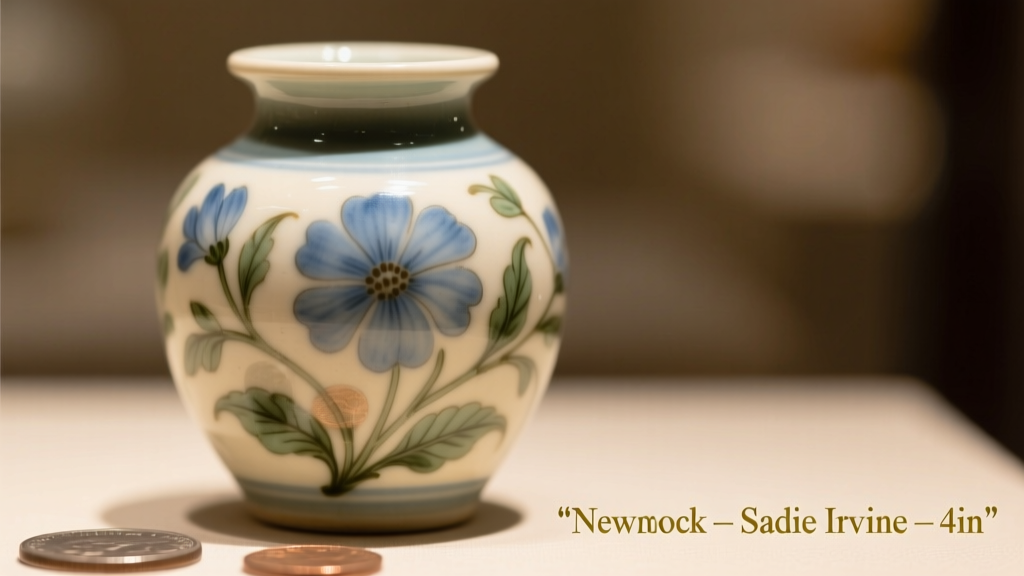
Newcomb College Vase: Floral Blue, Cream & Green Glaze by Sadie Irvine — A 4-Inch Masterpiece of American Arts & Crafts Pottery

The Coca-Cola Collectors Club: History, Membership, and the Real Market Value of Vintage Memorabilia
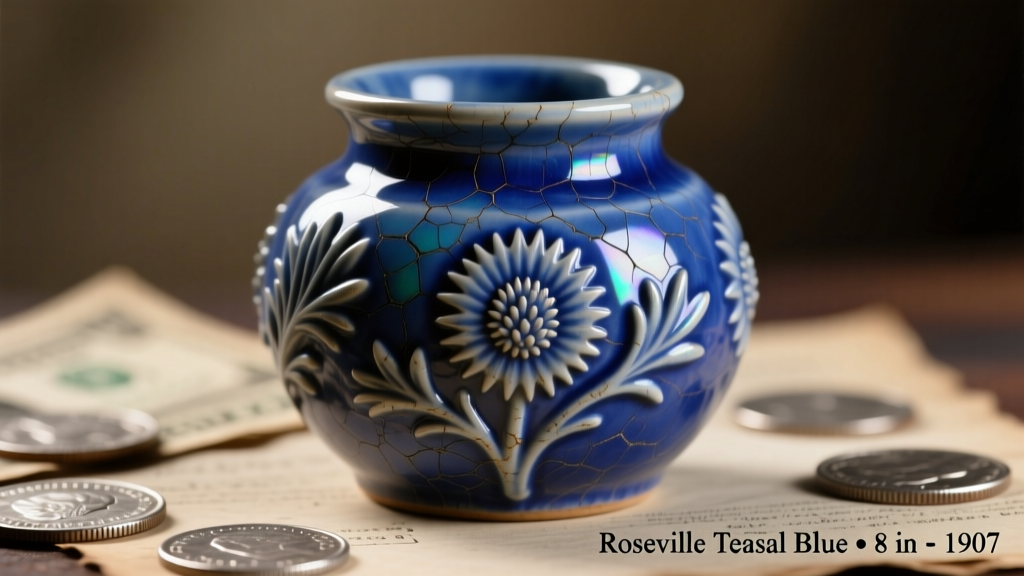
Roseville Teasel Blue 8-Inch Vase: Identification, Value Drivers, and Market Realities (2024)

Howdy Doody Toy Ring Flotation Inflatable Vinyl (1951–1956): History, Production, and Collector Valuation

Dinnerware Rhythm Yellow Soup Dish (8 1/4") — Collector’s Guide to Design, Production History, and Market Value

Head Vases Blond Napco Small: Identification, Value Drivers, and Collector Insights