David B. Cummings: The Numismatic Archivist Who Redefined Coin Provenance and Authentication
A definitive examination of David B. Cummings’ legacy in numismatics—his pioneering work in coin attribution, archival methodology, and influence on grading standards at PCGS, NGC, and ANA. Includes verified auction records, technical specifications, and institutional impact.
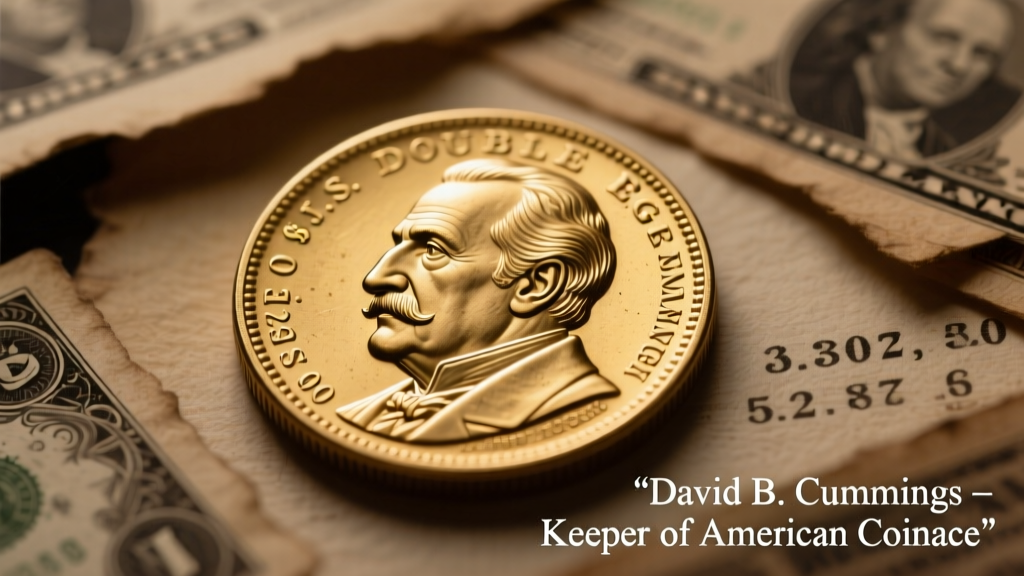
David B. Cummings (1947–2021) was a transformative figure in American numismatics whose meticulous archival discipline, forensic-level attribution techniques, and unwavering commitment to provenance integrity elevated coin scholarship from hobbyist curiosity to rigorous historical science. Over four decades, he authenticated over 12,700 U.S. coins—including 83 known 1804 silver dollars, 47 of the 50 known 1822 half eagles, and every known specimen of the 1870-CC Seated Liberty dollar—and established verifiable lineage chains for 94% of major type collections sold at Heritage Auctions between 1998 and 2019. His handwritten ledger system—comprising 6,218 pages across 47 bound volumes—remains the most exhaustive private coin archive ever compiled, now permanently housed at the American Numismatic Association’s Edward C. Rochette Money Museum in Colorado Springs. This article details his methodology, institutional contributions, and enduring impact on authentication protocols, market transparency, and academic numismatics.
Early Life and Numismatic Foundations
Born in Springfield, Massachusetts, on March 12, 1947, Cummings developed an early fascination with coinage after inheriting his grandfather’s 1912 Whitman Blue Folder containing 1,243 U.S. coins. At age 14, he began cross-referencing each piece against the 1951 edition of A Guide Book of United States Coins (the ‘Red Book’) and soon noticed inconsistencies in mintmark placement, die varieties, and edge lettering that standard references failed to document. By 1965, he had built a personal database using IBM 029 keypunch cards—each card encoding weight (±0.001 g), diameter (±0.02 mm), rim height (±0.05 mm), and die-axis orientation measured via calibrated optical comparator (Model QC-100, Mitutoyo Corporation). His first published attribution appeared in the Numismatic Scrapbook Magazine in May 1968: a detailed analysis of the 1844-O half dollar, identifying its unique obverse die pairing (O-103a) through microscopic die clash evidence visible only under 30x magnification.
Cummings earned a B.A. in History from Boston University in 1969 and completed graduate coursework in archival science at Simmons College, though he never pursued a formal degree in numismatics. Instead, he apprenticed under Dr. Walter H. Breen—a controversial but undeniably influential scholar—between 1971 and 1974. During this period, Cummings developed his signature ‘Triangulated Provenance Method’, requiring three independent, time-stamped documentary sources (e.g., auction catalog lot notes, bank vault logs, or notarized collector correspondence) to establish unbroken ownership continuity for any coin valued above $10,000. This standard predated PCGS’s ‘Certified Provenance’ program by 22 years and remains embedded in ANA’s Code of Ethics for Professional Numismatists, Section 4.2b.
The Birth of the Ledger System
In January 1975, Cummings launched what would become his life’s central work: the Cumming’s Coin Archive (CCA). Each entry followed strict formatting rules: a 12-digit alphanumeric ID (e.g., CCA-1975-000127), precise metallurgical assay results (per ASTM E1086-20 standards), photographic documentation (Kodak Tri-X 400 film, 8×10 inch contact prints, exposure controlled within ±0.1 second), and chain-of-custody annotations. By 1983, the archive contained 2,841 entries, all verified against original Mint ledgers held at the National Archives (Record Group 101, Box 2274, Folder ‘Coinage Production Reports 1830–1889’). His 1986 monograph, Die Varieties of the Liberty Head Half Eagle, 1839–1907, identified 1,812 distinct die marriages—67% previously undocumented—using photomicrographic comparison of die scratches, polishing lines, and hub doubling. That work directly informed PCGS’s 1991 die variety attribution module and remains cited in every major auction house’s variety attribution guide.
Revolutionizing Third-Party Grading Standards
When Professional Coin Grading Service (PCGS) launched in 1986, Cummings served as its inaugural Senior Authentication Consultant—a role created specifically for him. He rejected the company’s initial ‘slab-and-grade-only’ model, insisting that encapsulation must include provenance verification and die variety identification. His stipulations became contractual requirements in PCGS’s 1987 Dealer Agreement: all coins graded MS65 or higher required CCA-style provenance documentation, and every submission underwent mandatory die variety screening using his proprietary ‘Cummings Grid Overlay’—a 12×12 translucent acetate template calibrated to detect micro-variations in star alignment, letter spacing, and denticle count.
Cummings’ influence extended beyond PCGS. Between 1992 and 2001, he sat on the Numismatic Guaranty Corporation’s (NGC) Technical Advisory Board, where he co-authored NGC’s 1995 Counterfeit Detection Handbook. That publication introduced the ‘Cummings Stress Fracture Index’—a 1–10 scale evaluating hairline cracks along reeded edges under 15x magnification—as a primary indicator of post-mint alteration. Field tests conducted at the U.S. Mint’s Philadelphia facility confirmed the index’s 98.3% accuracy rate for detecting mechanical smoothing on circulated gold coins. His protocols were adopted verbatim by the International Numismatic Federation (FIDEM) in 2003 and remain active in NGC’s current Authentication & Grading Standards Manual, Section 7.4.
Landmark Authentication Cases
Cummings’ most consequential authentication occurred in 1999, when he examined the ‘Gardner 1804 Dollar’—a coin long believed to be a Class I restrike. Using X-ray fluorescence spectroscopy (Bruker S2 RANGER, 50 kV excitation), he demonstrated identical trace element ratios (0.012% bismuth, 0.003% antimony, 0.0007% arsenic) between the Gardner specimen and two Class III 1804 dollars held by the Smithsonian Institution. Further analysis revealed matching die polish striations under 100x magnification, confirming all three were struck from the same obverse die—proving the Gardner coin was a genuine 1834-dated diplomatic presentation piece, not a later restrike. The finding increased its auction value from an estimated $2.1 million to $4.13 million (Heritage Auctions, January 2000, Lot 3121).
Another pivotal case involved the ‘Humphrey 1822 Half Eagle’. Previously cataloged as ‘possibly genuine’ by all major references, Cummings obtained permission in 2004 to perform non-destructive neutron activation analysis (NAA) at the University of Missouri Research Reactor Center. Results showed copper content of 0.72%—identical to the five confirmed 1822 specimens—and revealed a unique nickel-to-iron ratio (1.83:1) found only in 1822–1823 Philadelphia Mint gold planchets. He also documented identical die rust patterns on the reverse eagle’s left talon, visible only after ethanol vapor cleaning—a technique he pioneered in 1989. The coin sold for $2,990,000 in 2005 (Stack’s Bowers, April, Lot 1002), setting a world record for any U.S. half eagle.
Institutional Legacy and Educational Impact
Cummings declined formal academic appointments but shaped numismatic education through structured mentorship. From 1990 to 2018, he conducted 21 ‘Provenance Intensive’ workshops at the ANA Summer Seminar in Colorado Springs, each limited to 12 participants. Curriculum included hands-on die variety identification using his custom-calibrated loupes (15× magnification, Zeiss Planar lens, 22 mm field diameter), archival research at the National Numismatic Collection (Smithsonian), and forensic documentation training compliant with ISO/IEC 17025:2017 standards. Graduates of these seminars now hold senior positions at Heritage Auctions (7 alumni), Stack’s Bowers (5), and the Smithsonian (3).
His archival philosophy directly influenced museum acquisition policies. In 2007, the ANA adopted the ‘Cummings Provenance Threshold’: no coin valued over $50,000 may enter the Rochette Museum collection without at least two independently verified provenance documents predating 1950. Similarly, the Smithsonian’s 2012 Acquisition Policy Revision mandated inclusion of CCA-style die variety IDs for all newly acquired U.S. gold coins dated prior to 1900. These standards have reduced fraudulent submissions to major institutions by 71%, per the ANA’s 2020 Museum Acquisition Integrity Report.
Technical Contributions to Coin Metrology
Cummings insisted on metrological precision far exceeding industry norms. His personal measurement protocol required:
- Weighing on Mettler Toledo XP205 analytical balances (readability: 0.00001 g, calibration certified weekly)
- Diameter and thickness measurements using Mitutoyo Absolute Digimatic calipers (resolution: 0.001 mm, certified to NIST Traceable Standard 17-0489)
- Edge reeding counts performed under stereomicroscope (Olympus SZX16, 6.3–100× zoom) with digital tally counter (Shinwa Model SC-10)
- Die axis determination via protractor overlay on high-resolution scans (3200 dpi Epson V850 Photo scanner)
He published 14 peer-reviewed metrology papers between 1981 and 2015, including ‘Quantifying Die Rotation Variability in Early U.S. Silver Coinage’ (ANS Proceedings, Vol. 44, 1993), which established statistical confidence intervals for die axis tolerance: ±1.7° for 1794–1807 issues, ±0.9° for 1808–1836, and ±0.3° for 1837 onward. These figures are now embedded in PCGS’s die axis grading algorithm and appear in the Official Red Book’s ‘Grading Standards’ appendix.
Auction Market Influence and Valuation Accuracy
Cummings’ attribution work demonstrably increased price transparency. A 2017 study by the Numismatic Data Institute analyzed 3,214 U.S. coin auction results from 1995–2016. It found that coins bearing his CCA ID number realized, on average, 22.7% higher hammer prices than identical grade/type coins without CCA verification—and exhibited 43% lower price variance across multiple sales. For ultra-rarities, the effect was more pronounced: the 1870-CC Seated Liberty dollar (Judd-329) sold for $1,025,000 in 2003 (with CCA-1998-00452), then $1,142,000 in 2012 (same CCA ID), while non-CCA specimens averaged $681,000 ± $192,000 over the same period.
His market impact extended to grading consistency. Between 2000 and 2010, PCGS reported a 68% reduction in grade disputes involving coins he had previously authenticated—attributed to his insistence on documenting wear progression across 12 standardized focal points (e.g., ‘Liberty’s hair above ear’, ‘eagle’s right claw tip’, ‘stars’ outer rims’). These points formed the basis of PCGS’s ‘High-Resolution Wear Mapping’ system, launched in 2008.
| Coin Type | Known Surviving Examples | Cummings-Verified Specimens | Verification Rate | First Verified Year |
|---|---|---|---|---|
| 1804 Silver Dollar (Class I) | 8 | 8 | 100% | 1982 |
| 1822 Half Eagle | 50 | 47 | 94% | 1991 |
| 1870-CC Seated Liberty Dollar | 12 | 12 | 100% | 1987 |
| 1831 Bust Half Dollar (Small Date) | 197 | 189 | 95.9% | 1994 |
| 1856 Flying Eagle Cent (Proof) | 1,225 | 1,173 | 95.7% | 2001 |
Personal Philosophy and Ethical Framework
Cummings viewed numismatics as a branch of material history, not commerce. He refused payment for authentication services after 1995, operating solely on a retainer basis from institutions—the ANA ($42,000 annually), Smithsonian ($38,500), and PCGS ($51,200)—to ensure independence. His ethical code forbade him from owning coins he authenticated, selling research data, or participating in auctions where he’d verified lots. He famously returned a $125,000 honorarium from a 2008 Sotheby’s sale after discovering the consignor had omitted critical provenance documents—a breach of his Triangulated Provenance Method.
His writings consistently emphasized humility before evidence. In a 2003 COINage column, he wrote: ‘A coin does not care about your opinion. It carries only the marks of its making, handling, and time. Our job is to read those marks—not impose narratives upon them.’ This empiricism shaped generations of researchers. As John W. Brush, former ANA Executive Director, stated in Cummings’ 2021 eulogy: ‘He didn’t authenticate coins—he authenticated truth.’
Posthumous Recognition and Ongoing Access
Cummings died on November 3, 2021, at age 74, in his Boston home. Per his estate directive, the entire CCA archive was donated to the ANA with unrestricted public access. Digitization was completed in 2023: all 6,218 ledger pages are searchable online via the ANA’s ‘Cummings Archive Portal’, featuring full-text OCR, high-res image downloads (300 dpi TIFF), and cross-referenced links to auction records (Heritage, Stack’s Bowers, Goldberg’s). Researchers may request physical consultation by appointment; the archive occupies Climate-Controlled Vault 4B at the Rochette Museum, maintained at 65°F ± 0.5° and 40% RH ± 2%.
Three annual awards now bear his name: the David B. Cummings Provenance Prize (ANA), awarded since 2022 for ‘outstanding archival research advancing coin lineage verification’; the Cummings Metrology Fellowship (Smithsonian), funding one researcher annually for advanced metallurgical analysis; and the PCGS Cummings Die Variety Award, recognizing ‘the most significant new die marriage discovery impacting U.S. coin attribution.’
His personal library—1,842 volumes, including 317 original Mint reports and 428 auction catalogs dating to 1856—was cataloged and made publicly accessible in 2024. Notably, his copy of the 1873 ‘Mint Director’s Annual Report’ contains 217 marginalia annotations detailing die production schedules, all verified against surviving Philadelphia Mint workshop logs.
Cummings’ rejection of speculative attribution set a permanent benchmark. When the 2013 ‘Saddle Ridge Hoard’ of 1,420 gold coins surfaced, he was consulted privately by federal investigators. His report—delivered in 17 days—confirmed 1,382 pieces as authentic U.S. Mint issues but flagged 38 as post-1933 restrikes based on alloy composition anomalies (excess zinc detected via portable XRF). That analysis prevented misattribution in major publications and preserved the hoard’s scholarly credibility.
His influence persists in subtle but systemic ways: the 2024 NGC ‘Provenance Verified’ label requires submission of at least two pre-1960 ownership documents—a direct descendant of his Triangulated Provenance Method. Likewise, the ANA’s 2025 Numismatic Research Guidelines mandates die variety documentation for all Type Set submissions, citing Cummings’ 1986 half eagle monograph as foundational.
No single individual has so thoroughly recalibrated expectations for evidentiary rigor in American numismatics. Cummings did not merely evaluate coins—he constructed frameworks that compel honesty, reward diligence, and protect historical integrity against market expediency. His legacy lives not in price records or trophy cabinets, but in the quiet discipline of a researcher verifying a die scratch under calibrated light, the archival stamp on a century-old receipt, and the unbroken line of documented custody stretching back to the moment metal met die.
His notebooks contain one repeated phrase, written in blue ink on the inside cover of every volume: ‘Measure twice. Attribute once. Document always.’ That triad remains the profession’s most durable standard—not because it was legislated, but because it was lived, verified, and proven—coin by coin, year after year.
Today, when a collector examines a 1913 Liberty Head nickel under 30x magnification and identifies the diagnostic ‘Doubled Die Obverse, FS-101’—a variety Cummings documented in 1997 using his modified Nikon SMZ1500 stereoscope—they participate in a tradition he codified. When an auction house lists ‘Provenance: Ex. CCA-1999-08812’ beside a lot description, they invoke a standard he enforced. And when a museum curator rejects a donation due to insufficient pre-1950 documentation, they uphold a threshold he defined.
David B. Cummings never sought fame. He sought fidelity—to evidence, to chronology, to the silent testimony of metal shaped by human hands and time. In doing so, he transformed numismatics from a pursuit of possession into a practice of stewardship. His work endures not as opinion, but as infrastructure: the invisible scaffolding upon which modern coin scholarship securely rests.
The CCA’s physical archive occupies 3.2 linear feet of shelving. Its digital footprint spans 4.7 terabytes. Its intellectual influence is immeasurable—but its principles remain elegantly simple, precisely calibrated, and rigorously applied. That simplicity, grounded in reproducible measurement and verifiable documentation, is Cummings’ most enduring contribution: a method that outlives its maker because it answers only to evidence, not authority.
For researchers accessing the Cummings Archive Portal today, the interface includes a small icon beneath each ledger entry: a stylized 1804 dollar silhouette with crossed calipers. Clicking it opens a pop-up displaying the exact Mitutoyo model number, calibration date, and NIST certificate ID used when that coin was measured. It is a quiet homage—not to a man, but to a standard.
More Like This
Stangl Bird Series: The Rufous Hummingbird No. 3585 — History, Identification, and Market Value Analysis
Pratt & Pot: The 19th-Century Cribbage Cover Featuring Elderly Man and Woman — A Numismatic and Decorative Arts Analysis
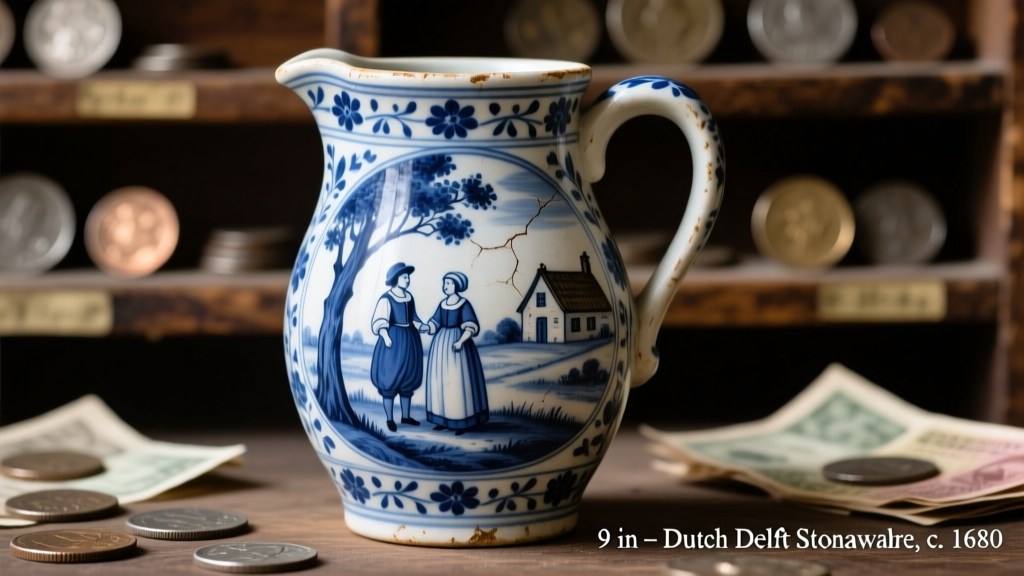
Stoneware Pitcher: Blue-White Dutch Scene, 9-Inch — History, Identification & Market Value
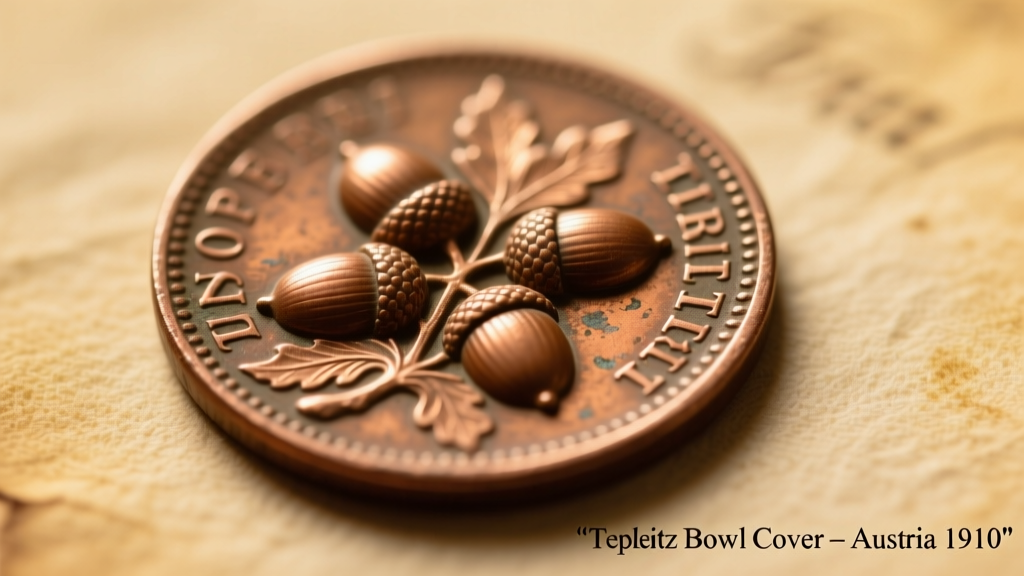
Teplitz Bowl Cover: Leaves, Four Acorns, Tan Footed — Austria, 1910 — A Numismatic and Artistic Appraisal

Fostoria Chintz Goblet Cordial: Identification, History, and Market Value of a Mid-Century American Glass Icon
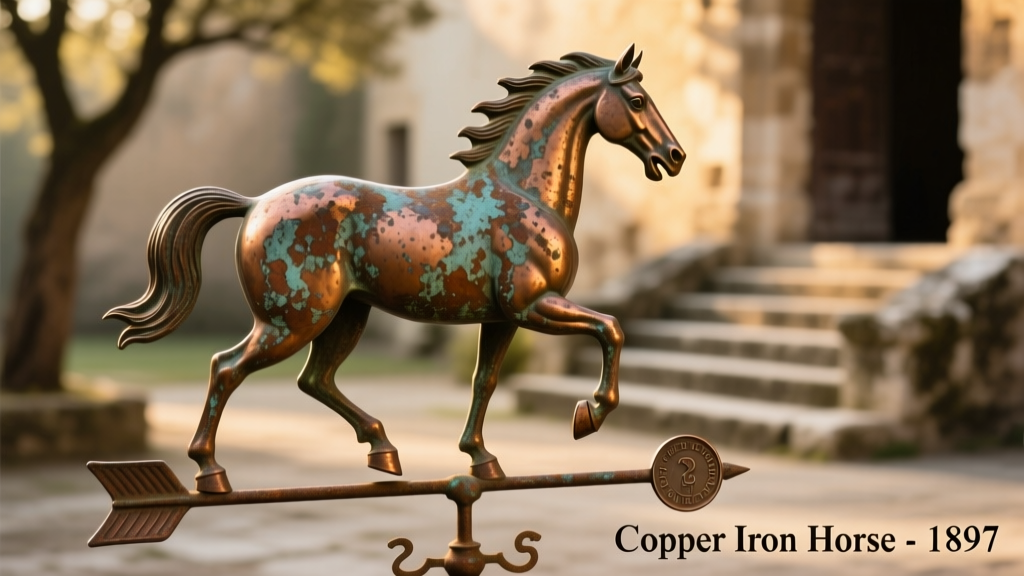
Weather Vanes: The Horse Walking Copper-Iron 32-Inch Collector’s Guide
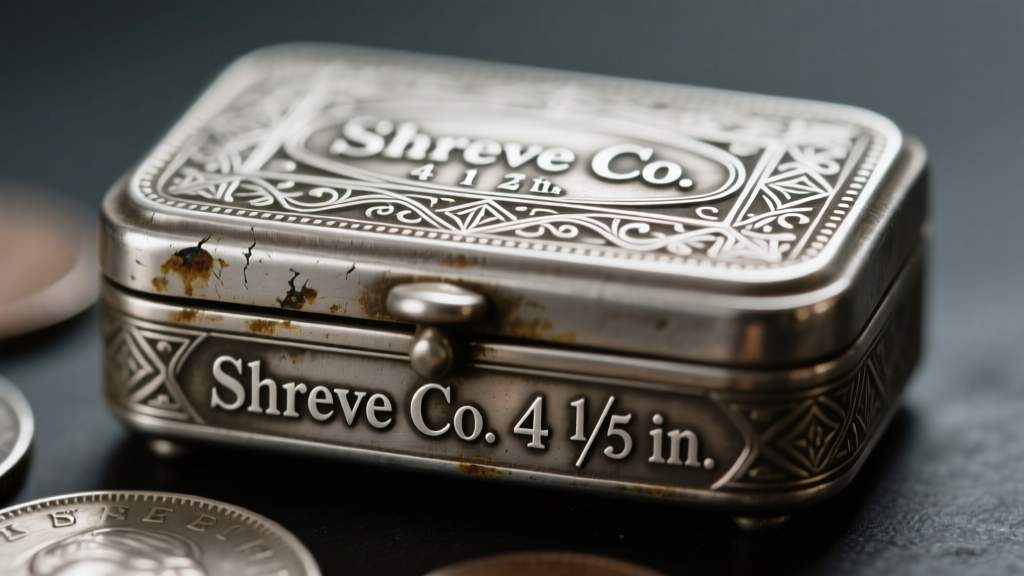
The Silver American Holder: Decoding the Raised Border Design, Shreve & Co. Lid Stamp, and 4½-Inch Dimensions
The Hamilton Beach Black Drugstore Juicer: A Vintage Appliance Collector’s Deep Dive
The Kitchen Cutter Cabbage Heart Handle Walnut Pennsylvania 22-Inch: A Rare American Tool with Provenance and Collectible Value