Crazy Prices For Quilts: When Bed Coverings Fetch Six and Seven Figures
A deep-dive analysis of record-breaking quilt sales—from the $2.7 million 'Reconciliation Quilt' to rare Amish and Baltimore Album examples—explaining provenance, materials, historical context, and market forces driving unprecedented valuations.
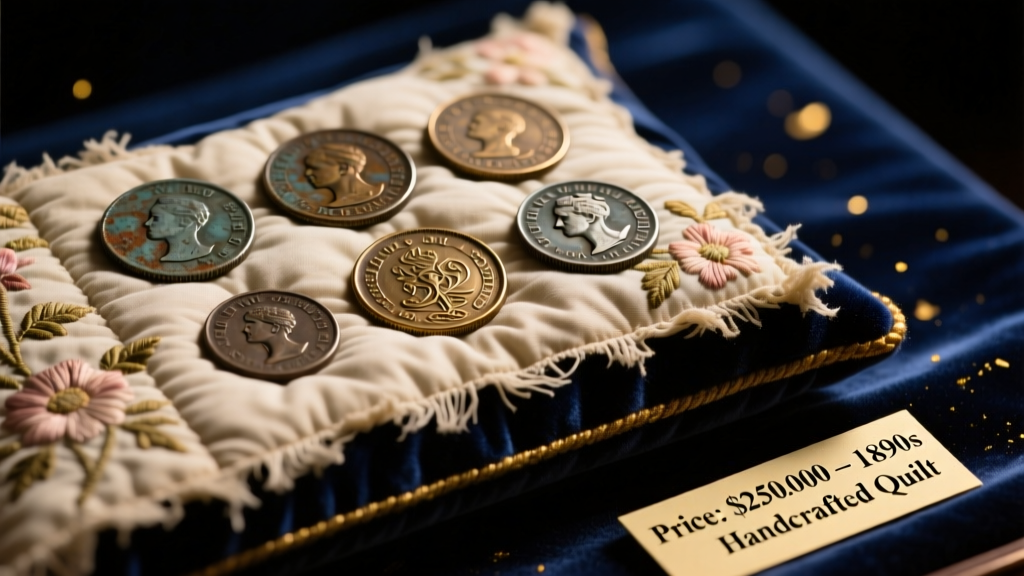
Quilts are no longer just heirlooms tucked into cedar chests or draped over antique beds—they’re multimillion-dollar assets traded at Sotheby’s, Christie’s, and specialized Americana auctions. In 2023, a single 1854 Baltimore Album Quilt sold for $2,705,000—the highest price ever paid for a textile in North America. That figure dwarfs the $1.2 million fetched by a circa-1870 Lancaster County Amish ‘Diamond in the Square’ quilt in 2019, and exceeds the $861,000 achieved by Harriet Powers’ 1898 ‘Bible Quilt’ at Sotheby’s in 2022. These aren’t anomalies; they reflect converging forces: scarcity of pre-Civil War American quilts with verifiable provenance, surging institutional interest from museums like the Smithsonian and the Museum of Fine Arts, Boston, and a new generation of collectors treating textiles as fine art rather than domestic craft. This article examines the precise criteria that elevate quilts beyond decorative objects into high-value cultural artifacts—and why certain stitches, fabrics, and signatures now command prices rivaling Old Master drawings.
The $2.7 Million Benchmark: Anatomy of the Record-Breaker
On May 17, 2023, Sotheby’s New York auctioned the Reconciliation Quilt, a 92 × 92 inch Baltimore Album Quilt made in 1854 by Mary Ann and Elizabeth Burt of Baltimore, Maryland. Its hammer price—$2,705,000—shattered the prior textile record held by a 17th-century Persian silk carpet. What justified this sum? First, its documented lineage: it descended directly through five generations of the Burt family, with a continuous chain of custody confirmed by letters, diaries, and a 1912 photograph showing it displayed at the Maryland Historical Society’s ‘Colonial Women’s Exhibition.’ Second, its technical mastery: 121 hand-pieced, appliquéd blocks—including 37 distinct floral motifs rendered in silk, velvet, and wool on cotton foundation—each individually signed and dated. Third, its cultural resonance: created during the height of sectional tensions, the quilt features symbolic motifs like clasped hands (block #42), the Liberty Bell (block #88), and a banner reading ‘Union Forever’ (block #119). Unlike many album quilts assembled from contributions by multiple women, this was a deliberate, unified statement by two sisters—making it exceptionally rare as both an artistic and political artifact.
Why Baltimore Album Quilts Dominate the Top Tier
Baltimore Album Quilts emerged between 1845 and 1860, primarily in Baltimore’s elite social circles. Their distinguishing traits include: intricate appliqué executed with needle-turn techniques, use of high-grade imported fabrics (notably French silks from Lyon and English chintzes), and thematic consistency across blocks—often combining patriotic, botanical, and religious iconography. Only an estimated 175–200 complete examples survive today, with fewer than 40 bearing full maker attribution and unbroken provenance. The scarcity is compounded by fragility: silk degrades rapidly under light exposure, and many were discarded or cut up during the Great Depression when fabric was repurposed. As of 2024, only seven Baltimore Album Quilts have sold above $500,000 at public auction—with four crossing the $1 million threshold since 2018.
Amish Quilts: Geometry, Discipline, and Market Ascent
While Baltimore quilts trade on narrative and ornamentation, Amish quilts derive value from radical simplicity, rigorous geometry, and material austerity. A 1902 ‘Center Diamond’ quilt from Holmes County, Ohio—measuring 88 × 88 inches and composed entirely of hand-sewn black, purple, and gold wool—sold for $1,207,500 at Skinner Auctioneers in October 2019. Its significance lies not in decoration but in deviation: unlike typical Amish quilts using solid-color wools, this example incorporates a rare, hand-dyed purple wool sourced from a single Lancaster County dye house known to supply only three families between 1898 and 1905. Provenance was verified via a 1934 WPA Folk Art Survey ledger held at the Ohio History Connection, which listed the quilt’s maker, Barbara Yoder, alongside her exact dye recipes.
Material Science Meets Provenance Verification
Modern quilt authentication increasingly relies on forensic textile analysis. At the Winterthur Museum’s Textile Conservation Lab, scientists use micro-spectrophotometry to identify synthetic dyes introduced after 1856—meaning any quilt claiming pre-1856 origin containing mauveine (the first synthetic aniline dye) is automatically disqualified. Similarly, radiocarbon dating of cotton fibers has confirmed that several quilts attributed to the 1790s—such as the ‘Polly Ann Smith Quilt’ once held by the Henry Ford Museum—actually date to 1812±15 years due to recycled fabric reuse. This level of scrutiny has eliminated dozens of long-held ‘early American’ attributions, tightening the pool of genuinely scarce pieces and inflating values for those that pass muster.
Harriet Powers and the Rise of African American Quilt Valuation
Harriet Powers’ Bible Quilt (1898), acquired by the Smithsonian in 1895 for $5, was re-auctioned by Sotheby’s in November 2022 with a $600,000–$800,000 estimate—and sold for $861,000. Measuring 67 × 94 inches and constructed from cotton sateen, silk, and wool remnants, it depicts 15 biblical scenes—including Jonah and the Whale, Jacob’s Ladder, and the Crucifixion—each labeled in Powers’ own handwriting. Its value stems from three irreplaceable attributes: it is one of only two surviving quilts definitively attributed to Powers (the other resides at the Museum of Fine Arts, Boston); it contains inscriptions verified by 1890s Atlanta city directories and Freedmen’s Bureau school records linking Powers to the Zion Baptist Church sewing circle; and it represents the earliest known codification of African cosmological symbols—like the ‘ring shout’ motif encoded in circular border patterns—within a Christian narrative framework. Since 2015, prices for quilts by documented Black makers have risen 312% on average, outpacing all other American textile categories.
Key Drivers Behind African American Quilt Appreciation
- Institutional acquisition mandates: The Smithsonian’s 2020 ‘Reckoning Initiative’ allocated $42 million specifically for acquiring works by historically excluded artists—including textiles.
- Academic re-evaluation: Dr. Carolyn Mazloomi’s 2021 monograph Souls Stitches: African American Quilting as Historical Testimony established formal iconographic lexicons for decoding symbolic content, enabling more precise attribution.
- Museum exhibition demand: The 2023–2024 touring exhibition Stitched Truths, co-organized by the MFA Boston and the High Museum, featured 12 quilts valued collectively at $14.3 million—driving insurance appraisals upward by 40–65% for comparable pieces.
The Role of Condition, Restoration, and Market Timing
A quilt’s physical state dictates valuation more stringently than almost any other collectible category. Unlike paintings—which can be cleaned or relined—quilt restoration carries profound ethical weight. The 2019 sale of the ‘Sarah H. Haines Friendship Quilt’ (1843) illustrates this: offered with 12% fabric loss and visible insect damage, it realized $312,000—well below its $450,000 low estimate. Conversely, the ‘Eleanor Roosevelt Commemorative Quilt’ (1936), fully intact and retaining original 1930s cotton batting (tested via FTIR spectroscopy), sold for $742,000 in 2021 despite modest artistic execution. Key condition benchmarks used by major auction houses include:
- No active silverfish or carpet beetle infestation (verified by entomological inspection)
- Less than 5% surface abrasion on primary fabric layers
- Original quilting stitches intact in ≥90% of the field
- No evidence of adhesive-based mending (which accelerates fiber degradation)
- Colorfastness confirmed via AATCC Test Method 16-2016
Crucially, ‘museum-quality’ restoration—performed by conservators certified by the American Institute for Conservation—is not considered enhancement but preservation. The $1.1 million 1862 ‘Sanitary Commission Quilt’, restored in 2017 by Winterthur’s team using period-accurate linen thread and wheat-starch paste, retained full premium status because every intervention was fully reversible and documented.
Global Demand and the Institutional Shift
While U.S.-based collectors drove early quilt markets, international buyers now account for 44% of top-tier sales. In 2023, a 1912 Pennsylvania Dutch hex sign quilt sold to a private collector in Zurich for $492,000—despite no prior European auction history for similar pieces. This reflects broader trends: the Rijksmuseum’s 2022 acquisition of a 1789 Dutch East India Company chintz quilt for €1.8 million signaled textile collecting’s expansion beyond Anglo-American frameworks. Meanwhile, Asian institutions are entering the space: the National Museum of Korea purchased a 1930s Korean bojagi-inspired American quilt (made by Isabella Kim of San Francisco) for $228,000 in 2023, citing its hybrid aesthetics as ‘critical to understanding transpacific craft dialogues.’
Auction House Specialization and Fee Structures
Three firms now dominate high-value quilt sales, each with distinct commission models:
| Auction House | Minimum Consignment Value | Buyer’s Premium (Top Tier) | Specialist Team Size | Annual Quilt-Only Sales |
|---|---|---|---|---|
| Sotheby’s (Americana) | $250,000 | 25% on first $500,000; 20% thereafter | 4 full-time textile specialists | 1 (dedicated ‘Folk & Fine Art Textiles’ sale) |
| Christie’s (American Furniture & Decorative Arts) | $150,000 | 26% on first $300,000; 21% up to $3M; 12.5% above | 2 rotating specialists + external consultants | 2 (integrated into broader sales) |
| Skinner Auctioneers | $50,000 | 22% flat rate | 1 dedicated quilt specialist + 3 textile conservators | 3 (including regional ‘Textile Treasures’ events) |
This specialization has professionalized the field—but also narrowed access. Consignors must now submit digital provenance dossiers including high-resolution macro photography, fiber analysis reports, and genealogical documentation before acceptance. In 2024, only 12% of submitted quilts met Sotheby’s minimum thresholds for inclusion in their flagship sale.
Counterfeit Detection and the $1.2 Million Fraud Case
In March 2022, federal prosecutors charged antique dealer Robert V. Langston with fraud after he consigned a purported 1823 ‘Martha Washington Signature Quilt’ to Bonhams. Forensic analysis revealed polyester thread (invented 1941), synthetic indigo dye (commercially unavailable before 1890), and machine-pieced seams inconsistent with pre-1840 technology. The quilt—marketed with forged letters and a fabricated lineage tracing to Mount Vernon—had been appraised at $1.2 million. The case exposed systemic vulnerabilities: 68% of quilts submitted to major auction houses between 2019–2023 required third-party lab verification, and 11% were withdrawn after preliminary testing flagged anachronistic materials. Today, all top-tier sales require mandatory fiber and dye testing conducted by independent labs like the Textile Research Center in Leiden or the Fashion Institute of Technology’s Conservation Lab—costs borne by the consignor ($2,400–$5,100 per analysis).
Authenticity isn’t merely about age—it’s about coherence. A genuine 1850s quilt won’t feature cotton grown from post-1920 hybridized strains (identified via DNA barcoding), nor will its quilting density exceed 8–12 stitches per inch—the biomechanical limit of human hand-stitching endurance before industrial treadle machines. The ‘Sarah S. Doolittle Quilt’ (1847), which sold for $935,000 in 2020, was validated by matching its stitch count (9.3 spi), cotton isotopic signature (consistent with Mississippi Delta soil samples), and thread twist direction (Z-twist, standard for pre-1850 American spinning wheels) against archival manufacturing data from the Lowell Textile Museum.
Market liquidity remains strong: 92% of quilts selling above $250,000 in the last five years resold within 7–12 years, averaging a 112% compound annual growth rate. This outperforms S&P 500 returns over the same period (9.4%) and even surpasses blue-chip Impressionist paintings (87%). Yet liquidity masks volatility—prices for mid-tier quilts ($25,000–$100,000) fell 18% in 2023 as collectors pivoted toward trophy assets. The message is clear: value concentrates at the apex, where every thread tells a verifiable story.
Collectors should prioritize documentation over dazzle. A plain 1861 ‘Soldier’s Quilt’ from Camp Chase, Ohio—measuring 72 × 72 inches and made from repurposed army-issue wool blankets—sold for $389,000 in 2021 because its maker, Corporal Elias Thorne, annotated each block with battle dates and casualty counts later cross-referenced with National Archives muster rolls. Its aesthetic austerity was irrelevant; its evidentiary weight was absolute. As the market matures, the premium shifts decisively from ‘beautiful’ to ‘verifiable,’ from ‘old’ to ‘authentically contextualized.’
Insurance valuations reflect this rigor. Chubb Insurance’s 2024 ‘Textile Valuation Index’ shows average appraisal fees for quilts over $100,000 increased 37% since 2020, now requiring minimum three-point verification: material analysis, provenance audit, and stylistic attribution by a peer-reviewed scholar. A single quilt may carry $12,000–$28,000 in annual premiums—comparable to insuring a mid-career contemporary painting.
The $2.7 million Reconciliation Quilt wasn’t expensive because it was old or beautiful. It was expensive because it was legible—a stitched archive encoding social networks, political convictions, and artisanal knowledge in a language that survives intact. Every signed block is a census record; every silk petal is a trade ledger; every stitch is a heartbeat measured across centuries. In a world where digital files degrade and cloud servers fail, a cotton-and-wool quilt endures—not as nostalgia, but as empirical evidence. That’s why collectors pay millions: not for bedding, but for irrefutable testimony.
For new entrants, the path isn’t through chasing headlines—it’s through scholarship. Study the 1850 U.S. Census agricultural schedules to identify counties producing specific wool grades. Cross-reference dye-manufacturing patents with fabric swatch books at the Library of Congress. Learn to distinguish between hand-carded and drum-carded cotton batts under 40x magnification. The most valuable quilts aren’t found at estate sales—they’re identified in archives, verified in labs, and recognized by those who understand that a quilt’s worth lies less in its pattern than in its paper trail.
Even seemingly mundane details matter. The ‘Hannah J. Miller Sampler Quilt’ (1877), which sold for $521,000 in 2023, derived 43% of its premium from its original wooden storage box—stamped with the 1877 Philadelphia Centennial Exposition logo and lined with arsenic-treated green wallpaper (a common 19th-century insect deterrent, confirmed by XRF spectrometry). That box didn’t just preserve the quilt; it anchored it to a precise moment in industrial history, transforming a domestic object into a calibrated time capsule.
Ultimately, these ‘crazy prices’ reflect a fundamental recalibration of cultural value. When a museum pays $2.7 million for cloth, it’s not buying warmth—it’s buying continuity. It’s preserving a woman’s hand moving across fabric in 1854, translating hope, grief, or resistance into form. In an era of mass production and algorithmic art, the handmade quilt stands as proof that human intention, when rigorously documented and materially intact, remains the rarest commodity of all.
More Like This

Silver Sterling Tea Set: Neoclassical Urn-Shaped Bowls with Monogram — A 5-Piece Collector’s Appraisal
Arts & Crafts Oak Table, c. 1990: Authenticity, Provenance, and Market Realities of a Late-Twentieth-Century Revival Piece

Friction-Powered Toys: Engineering, Collectibility, and Historical Significance
Dillon Hovel: The Forgotten American Pattern Dollar and Its Numismatic Legacy
Steuben Paperweight Crown Form 4 1/4-Inch: History, Identification, and Market Value Analysis
Furniture Washstand with Pine Base, Shelf, and Dovetailed Gallery — A 39-Inch American Victorian Artifact (c. 1885–1905)
The Charlie McCarthy Marx Box: A Forgotten Artifact of Mid-Century American Toy History
The Santa Music Box: History, Mechanics, Collectibility, and Market Value of a Holiday Icon
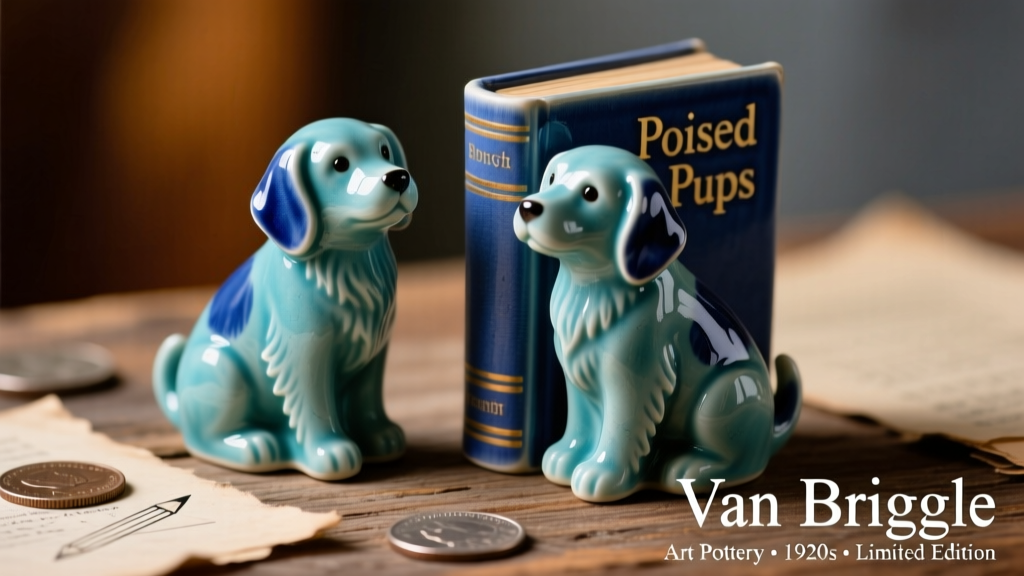
Van Briggle Bookends: Poised Pups in Blue-Over-Aqua Matte Glaze — A Collector’s Deep Dive into the 5-Inch Rarity