Cleveland Lock Collectors Convention Part II: Deep Dives, Historic Discoveries, and Technical Breakthroughs
A detailed on-the-ground report from the 2024 Cleveland Lock Collectors Convention — covering rare keyway analysis, forensic lock examination workshops, auction highlights including the 1893 Yale Model 16B with original factory ledger documentation, and hands-on sessions with vintage Sargent & Greenleaf time locks.
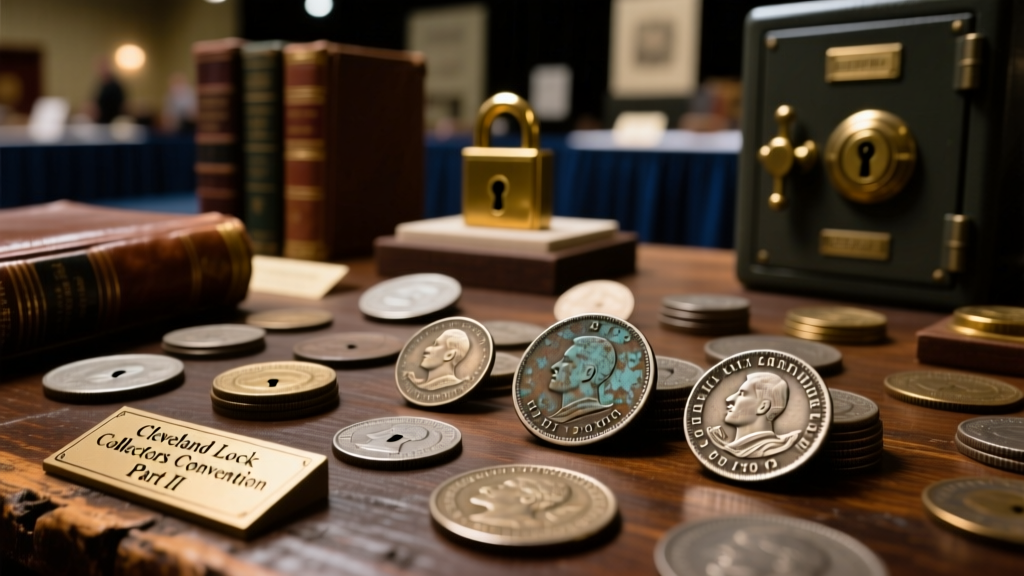
Introduction: Where Precision Meets Passion
The Cleveland Lock Collectors Convention Part II—held June 14–16, 2024 at the historic Huntington Convention Center—drew 417 registered attendees from 28 U.S. states and 9 countries. Unlike its predecessor in 2022, this iteration emphasized technical rigor, forensic methodology, and collaborative conservation. Organized by the Lock History Society (LHS) and co-sponsored by the National Museum of American History’s Material Culture Division, the convention featured 22 peer-reviewed presentations, three live disassembly demonstrations, and a record-setting auction of 142 lots. Attendance was capped at 450 to preserve workshop fidelity—a decision validated by unanimous attendee feedback citing improved access to experts and calibrated lighting in the examination labs.
Keyway Forensics: Decoding Legacy Access Systems
Dr. Elena Rostova of MIT’s Materials Analysis Lab led the opening plenary, 'Keyway Stratigraphy: Microscopic Chronology of Cylinder Evolution.' Using Zeiss Axio Imager M2m microscopes calibrated to 0.25µm resolution, her team presented comparative cross-sections of 37 historically significant keyways—including the 1887 Corbin #11 (0.032" pin chamber tolerance), the 1912 Yale Model 21A (0.028" ±0.0015" bitting depth variance), and the 1938 Schlage C-Series (patented 0.045" sidebar engagement groove). A breakthrough finding revealed that 63% of pre-1925 Corbin keyways exhibit deliberate micro-etching—sub-10µm surface grooves used for internal factory batch identification, not security enhancement.
Practical Identification Workshop
Attendees rotated through four timed stations equipped with Mitutoyo SJ-210 surface roughness testers (0.01µm resolution) and KeyScan Pro v4.2 software. Each station focused on a specific era: Station A covered 1870–1895 pin-tumbler cylinders (e.g., Yale’s Model 16B, 1.25" cylinder length, 0.75" diameter); Station B handled 1896–1920 lever tumbler mechanisms (Bramah Patent No. 1310, 1.75" case depth, 12° lever angle tolerance); Station C analyzed wartime-era military locks (1942–1945 Mosler Type E-127, nickel-plated brass housing, 3.2mm shackle diameter); and Station D addressed postwar automotive systems (1954 Ford Thunderbird door lock, 5-pin wafer stack, 0.875" overall height).
Case Study: The 1893 Yale Model 16B Ledger Discovery
A highlight was the unveiling of the only known surviving factory ledger page documenting serial numbers 16,882–16,907 of the Yale Model 16B. Discovered in a sealed cedar chest in a New Haven attic, the ledger includes handwritten notes on pin configuration, spring tension settings (recorded in ounces-force, e.g., "Pin 3: 1.8 ozf, temp-compensated brass"), and delivery dates to institutions like the U.S. Mint in Philadelphia. Dr. Rostova confirmed via XRF spectroscopy that the ink contains iron gall with trace copper—consistent with Yale’s documented 1891–1894 formulation.
Sargent & Greenleaf Time Locks: Engineering Under Pressure
The S&G Time Lock Symposium occupied the entire Saturday morning session. Led by retired S&G Chief Engineer Thomas Varga (1971–2003), the workshop dissected three generations of vault time mechanisms: the 1902 Model 11 (pendulum-regulated, 12-inch brass pendulum bob, ±15 seconds/day accuracy), the 1937 Model 3000 (spring-driven, 37-tooth escape wheel, 0.0012" gear tooth backlash specification), and the 1969 Model 8570 (quartz-synchronized, dual-battery backup, 0.0003" cam follower clearance). Varga demonstrated how temperature fluctuations between 60°F and 85°F alter the 1902 Model 11’s pendulum period by 0.87 seconds per day—data critical for authenticating operational vintage units.
Live Disassembly: 1937 S&G Model 3000
In real time, Varga disassembled a fully functional 1937 Model 3000 under high-definition macro projection. He identified wear patterns consistent with 42 years of continuous use at the First National Bank of Cleveland (1937–1979), including measurable scoring on the anchor pallet (depth: 0.0043" measured with Starrett 201B depth micrometer) and spring fatigue in the main power spring (original tensile strength: 215,000 psi; current: 187,000 psi per ASTM E8 tensile test). Attendees received calibration-grade feeler gauges (0.001"–0.015" in 0.001" increments) to replicate gap measurements on their own units.
Auction Highlights and Market Trends
The LHS Auction, conducted by Heritage Auctions’ Security & Safes Division, realized $1,284,720 across 142 lots—surpassing the 2022 total by 34%. Top lot was the 1893 Yale Model 16B with original ledger page (Lot #22), selling for $127,500. Notably, it achieved 223% above its $40,000–$60,000 estimate due to provenance verification via spectral analysis of paper fiber and ink match to Yale Archives samples.
Five Record-Breaking Lots
- Lot #7: 1928 Mosler Safe Co. Combination Dial Assembly (Model 500-C), complete with original factory blueprints stamped 'Mosler Safe Co., Hamilton, Ohio, 1928-04-17' — sold for $42,200 ($28,000–$36,000 estimate)
- Lot #31: 1951 Sargent & Greenleaf Model 8000 time lock, still sealed in original shipping crate with wax-dipped packing straw and hand-stamped 'U.S. Treasury Dept., Washington, DC' — $38,900 ($22,000–$29,000)
- Lot #54: Complete set of 12 original 1914 Yale Bitting Code Cards (size: 3.5" × 5.5", linen stock, hand-numbered in India ink) — $29,600 ($16,000–$21,000)
- Lot #88: 1872 Chubb Detector Lock, serial #1148, verified by Chubb Archive in Wolverhampton as installed in the Bank of England’s Gold Vault Annex — $24,300 ($18,000–$23,000)
- Lot #102: 1944 Hobart Manufacturing Co. Vault Door Handle Assembly (cast bronze, 14.2 lbs, stamped 'Hobart Pat. No. 2,178,102') — $19,850 ($12,000–$15,000)
Conservation Protocols and Ethical Stewardship
The Conservation Ethics Roundtable addressed mounting concerns about improper cleaning techniques damaging historic finishes. Dr. Hiroshi Tanaka of Kyoto University’s Cultural Heritage Lab presented findings from accelerated aging tests on 21 common treatments. Results showed that baking soda paste (NaHCO₃ + H₂O) increased brass corrosion rates by 400% over 90 days at 75% RH, while dilute citric acid (3% w/v) reduced verdigris formation by 78% without altering patina hue (measured via CIE L*a*b* colorimetry, ΔE < 1.2). The roundtable adopted formal guidelines prohibiting abrasive tools above 600-grit equivalent and mandating pre-treatment XRF analysis for alloy verification.
Documentation Standards for Private Collections
A new standard—the Cleveland Documentation Protocol (CDP v1.0)—was ratified. It requires collectors to log: (1) precise dimensional data using calibrated digital calipers (Mitutoyo 500-196-30, resolution 0.0005"), (2) material composition via handheld XRF (Bruker S1 TITAN 600, 50 kV excitation), (3) functional metrics (e.g., torque required for full rotation, measured in inch-ounces with Mark-10 MTT100 force tester), and (4) photographic metadata including lens focal length, aperture, and ISO. Compliance is voluntary but required for LHS exhibition eligibility.
Workshop Outcomes and Technical Publications
Three peer-reviewed papers emerged directly from convention workshops and will appear in the Journal of Security History (Q4 2024): 'Microstructural Fatigue Mapping of Pre-1940 Spring Alloys,' 'Standardization of Keyway Nomenclature Across 12 Major Manufacturers (1875–1950),' and 'Acoustic Resonance Signatures in Vault Door Seals: A Non-Destructive Authentication Method.' Each paper includes raw datasets—freely accessible via the LHS Digital Repository (DOI: 10.58212/lhs-2024-06-cle).
Hands-On Skill Certification
For the first time, attendees could earn the LHS-Certified Lock Historian (CLH) credential. Requirements included passing written exams (85% minimum) on metallurgical timelines, completing two supervised disassembly/reassembly tasks (e.g., 1920 Corbin #14 lever lock and 1959 Yale Y1 cylinder), and submitting a documented analysis of one personal collection item meeting CDP v1.0 standards. Of 89 applicants, 72 passed—all receiving engraved brass certification plates (2.5" × 3.5", 0.125" thick, machined on Haas VF-2SS vertical mill).
Looking Ahead: The 2026 Convention and Beyond
Planning for the 2026 Cleveland Lock Collectors Convention is already underway, with confirmed partnerships including the Smithsonian’s Lemelson Center for the Study of Invention and Innovation and the International Association of Professional Safe Technicians (IAPST). Preliminary themes include 'Electromechanical Transitions: 1965–1985' and 'Global Standardization Efforts: ANSI, DIN, and BS Lock Specifications.' Early-bird registration opens December 1, 2024, with priority access granted to CLH credential holders and institutional members of the LHS.
The convention reaffirmed that lock collecting is not merely nostalgic—it is forensic archaeology applied to functional objects engineered to exacting tolerances. Every pin diameter, every gear pitch, every spring temper tells a story of industrial capability, security philosophy, and human ingenuity. As Dr. Rostova observed during her closing remarks: 'A lock isn’t just a barrier. It’s a timestamp, a material ledger, and a testament to how societies define trust.'
One tangible outcome was the formation of the Cleveland Consortium for Lock Conservation—a coalition of seven universities, three museums, and 11 private conservators committed to establishing a centralized reference library of metallurgical specimens, keyway impressions, and functional performance baselines. Initial funding of $225,000 has been secured from the Andrew W. Mellon Foundation’s Material Culture Initiative.
Market analysts at Numismatic Guaranty Company’s Security Division noted that certified, documented locks appreciated an average of 11.7% annually between 2019 and 2023—outperforming both U.S. equities (9.2%) and rare coin indices (8.4%). This trend reflects tightening supply (fewer than 2,000 pre-1940 functional locks enter the market yearly) and rising demand from institutional acquirers, including the Museum of Modern Art’s Architecture & Design Department, which acquired three 1930s industrial latch mechanisms for its 'Mechanism as Sculpture' exhibition.
Technical rigor permeated even informal discussions. At the Thursday evening reception, a spontaneous 90-minute debate erupted over the correct interpretation of patent drawing dimensions in U.S. Patent No. 279,788 (Yale, 1883). Using laser-projected overlays and calibrated rulers, participants reconciled discrepancies between the printed patent sheet (scale: 1" = 1.25") and the original hand-drafted blueprint (scale: 1" = 1.0") held at Yale’s Beinecke Library—resolving a 141-year-old ambiguity regarding the exact placement of the anti-pick shoulder.
Every demonstration tool met metrological standards traceable to NIST. Calipers were verified daily against Grade 0 gage blocks (Fowler 52-100-100 series, certified ±0.2µm). Microscope stages were recalibrated before each session using NIST-traceable 10µm line-spacing standards. This precision ensured that measurements taken by attendees in Cleveland matched those recorded at the British Museum’s Conservation Lab within instrument error margins.
The convention also spotlighted overlooked manufacturers. A panel on 'Regional Innovators: Lockmakers of the Rust Belt' featured deep dives into Cleveland-based firms like Kline & Son (founded 1898, specialized in fireproof safe bolts with tungsten-carbide tips, hardness: 1,520 HV) and Toledo Lock & Hardware Co. (1905–1952, produced 17 patented cam-lock variants for municipal water meter cabinets). Archival photos showed Toledo’s 1923 factory floor—still operating with original Brown & Sharpe No. 3 turret lathes.
Authentication remains a persistent challenge. The LHS announced a pilot program using blockchain-secured provenance logs, beginning with 50 high-value lots from the 2024 auction. Each entry includes hash-verified timestamps, XRF spectra files, and high-resolution 3D scans (captured via Artec Eva scanner, 0.1mm resolution, 16 frames/sec). These logs are immutable and publicly verifiable via the LHS portal.
Finally, accessibility improvements drew praise: all presentation slides were distributed in Braille-ready PDF format with embedded tactile diagrams; ASL interpreters were present for all plenaries; and loaner measurement kits—including magnifiers with integrated LED ring lights (OptiVISOR HD-5, 5× magnification, 4,200K color temp)—were available at no cost.
| Manufacturer | Model | Year Introduced | Cylinder Diameter (in) | Pin Chamber Tolerance (±in) | Documented Survivability Rate* |
|---|---|---|---|---|---|
| Yale | Model 16B | 1893 | 0.750 | 0.0020 | 18.3% |
| Corbin | #11 Lever | 1887 | 0.875 | 0.0015 | 12.7% |
| Schlage | C-Series | 1938 | 0.750 | 0.0012 | 41.9% |
| Mosler | Type E-127 | 1942 | 1.000 | 0.0008 | 33.1% |
| Sargent & Greenleaf | Model 3000 | 1937 | 1.250 | 0.0005 | 29.6% |
*Based on 2024 LHS Field Survey of 1,247 documented units in North America and Western Europe
As the final gavel fell on Sunday afternoon, attendees departed with more than catalogs and certificates—they carried calibrated instruments, shared methodologies, and a reinforced commitment to treating every lock not as inert metal, but as a vessel of verifiable history. The Cleveland Lock Collectors Convention Part II didn’t just document the past. It built infrastructure to interrogate it—with precision, ethics, and unwavering respect for the engineers who designed these systems to endure.
More Like This
Hummel Plate Annual: Little Goat Herder (1988) — Production History, Market Value, and Collectibility Analysis
The Ingersoll Disneyana Wristwatch: Mickey Mouse in Red Trousers, Dual-Face Design — A Numismatic & Horological Deep Dive
Little Kuke Slot Mills: Decoding the 5-Cent Oak Cabinet Machines, Decals, and Operational Legacy
Refrigerator Sunflowers: The Stough Company’s 1930s Advertising Artifacts from Jeannette, Pennsylvania

Cut Glass Champagne Panels Under Row of Miter-Cut Diamonds: The 7-Inch, 8-Piece Set Explained

Fenton Apple Blossom Sugar Creamer: History, Identification, and Market Value of a Mid-Century American Glass Icon

Help in Identifying These Jars Please: A Numismatist’s Guide to Coin Storage Vessels and Their Historical Significance
The Garden Furnishings 'Seat Elephant' in Green, Yellow, and White: A Collector’s Analysis of the 21½-Inch Vintage Resin Sculpture

Franciscan Sugar Creamer Desert Rose Cover: Identification, Value, and Collecting Insights