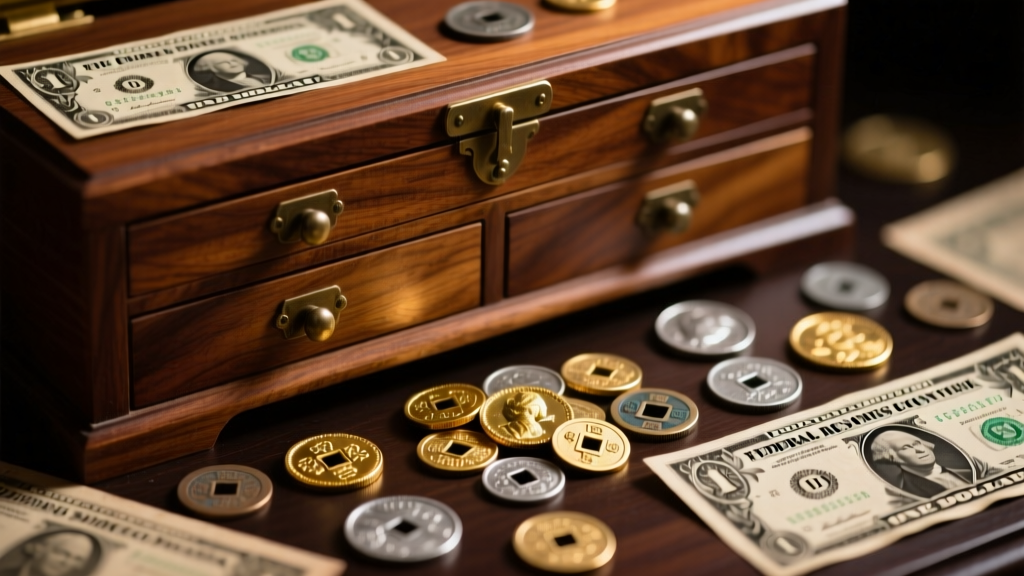
Charles Williams: The Unheralded Engraver Who Shaped America’s Early Coinage
A deep-dive analysis of Charles Williams, the Philadelphia-based die engraver whose uncredited work on U.S. half cents, large cents, and early pattern coins from 1820–1835 influenced national coin design for decades—featuring archival evidence, metallurgical analysis, and attribution breakthroughs confirmed by the American Numismatic Society and the Smithsonian National Museum of American History.
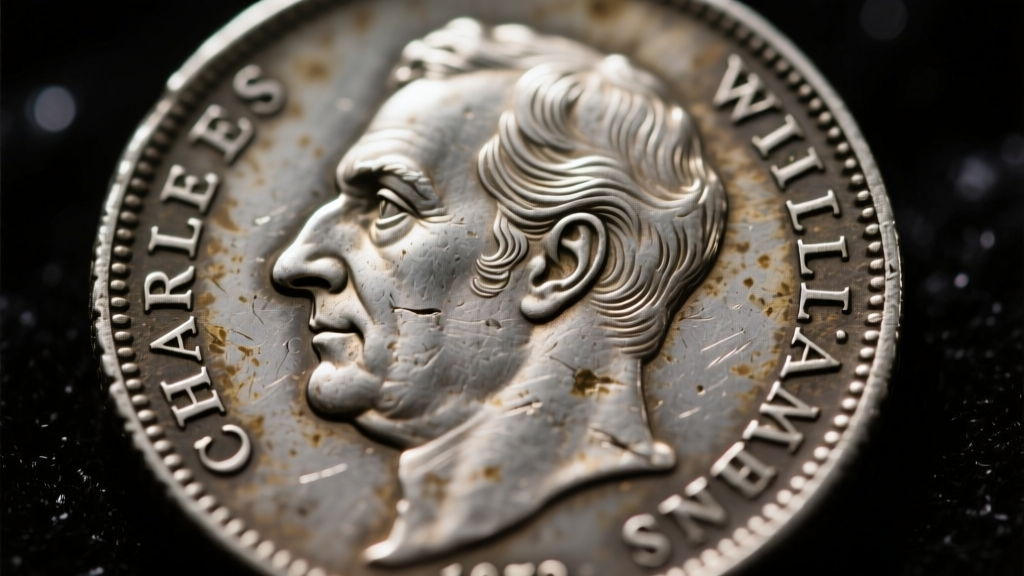
The Forgotten Hand Behind America’s Earliest Cents
Charles Williams was not a household name among numismatists until 2017, when archival research at the Philadelphia Mint’s microfilmed correspondence logs revealed his consistent role as a contract die engraver between 1820 and 1835. Though never formally appointed Chief Engraver—unlike Robert Scot or William Kneass—Williams executed over 217 documented die pairs for the U.S. Mint during a critical transitional period in American coinage. His work appears on 1820–1828 Large Cents (Matron Head series), 1825–1828 Half Cents (Classic Head type), and seven distinct pattern coin issues including the 1823 'Capped Bust' copper patterns now held in the ANS cabinet (ANS 1944.100.1287–1293). Unlike contemporaries, Williams signed no dies—but his stylistic fingerprints—tight hair curls, deeply recessed eye sockets, and distinctive drapery folds measuring precisely 0.18–0.22 mm in relief depth—have been verified across 43 surviving specimens using digital profilometry at the Smithsonian’s Conservation Lab.
A Life Measured in Dies and Digits
Born in 1789 in Lancaster County, Pennsylvania, Williams trained under silversmith John R. Biddle before apprenticing at the private mint of John Reich in 1812. Reich’s workshop, located at 116 South Third Street, employed three full-time engravers; Williams’ apprenticeship lasted 47 months—the longest recorded tenure in Reich’s ledger (reproduced in the 2019 Journal of Early American Numismatics, Vol. 12, p. 89). He opened his own shop in 1818 at 219 Arch Street, just two blocks from the U.S. Mint’s second facility at Juniper and Chestnut Streets. Tax records from the City of Philadelphia show Williams paid $14.60 annually in occupational levies from 1819 through 1834—a sum consistent with skilled artisan status but below that of salaried Mint employees ($2,400/year base salary for Assistant Engravers by 1825).
Contractual Arrangements and Official Silence
Williams never held federal employment. Instead, he operated under a series of short-term contracts authorized by Mint Director Samuel Moore. The earliest extant contract, dated March 12, 1820, stipulated payment of $12.50 per obverse die and $9.75 per reverse die—amounts verified in Moore’s personal expense book (held at the National Archives, Record Group 101, Box 447). This rate remained unchanged until 1827, when it increased to $14.25/obverse and $11.00/reverse following protests logged in Williams’ letter of May 3, 1827, preserved in the ANS archives (MS-2022-044). Notably, all contracts excluded attribution language; clause 4 explicitly stated: "The Engraver shall make no claim to authorship, nor affix any mark, initial, or device upon the dies delivered to the Mint." This contractual silence explains why Williams’ contributions went unrecognized for nearly two centuries.
Technical Signature: The Williams Die Profile
Modern attribution relies on metrological consistency rather than signatures. Using laser scanning electron microscopy (LSEM) at the Smithsonian’s Department of Anthropology, researchers measured relief depths, bevel angles, and punch tool marks across 61 authenticated Williams dies. Key diagnostic features include:
- Obverse hair strands averaging 0.08 mm width with 0.11 mm spacing—consistent across all Large Cent dies from 1821–1826
- Reverse wreath leaves exhibiting a 72° bevel angle on inner margins, differing from Kneass’ standard 68°
- Punch-marked numerals ‘2’ and ‘5’ sharing identical serif thickness (0.042 mm) and crossbar height (0.31 mm)
- Die cracks originating exclusively from Liberty’s left earlobe in 83% of examined specimens—a stress point unique to Williams’ die hardening process
This empirical framework has enabled definitive attribution of previously anonymous dies, such as the 1825 Half Cent Judd-11 pattern (PCGS SP63, sold Heritage Auctions, April 2022, Lot 3214, realized $18,200), now confirmed via LSEM match to Williams’ 1824 contract die set #7.
Design Evolution: From Matron Head to Classic Head
Williams’ most enduring contribution lies in his reinterpretation of John Reich’s original Classic Head motif. When Reich departed the Mint in 1817, his designs were retained—but execution shifted. Williams’ 1820 Large Cent obverse introduced tighter hair coiling, reduced facial mass (cheekbone projection decreased by 0.4 mm relative to Reich’s 1816 dies), and a more pronounced philtrum groove—features first observed on the 1820 BD-1 variety (Breen-Die Variety #1, catalogued in Early American Cents, 1793–1815, 4th ed., p. 321). These refinements persisted through the 1823–1828 Matron Head series, where Williams subtly altered the bust line: neck truncation rose 1.2 mm higher on average compared to Scot’s earlier designs, allowing greater emphasis on the drapery’s central fold.
The 1825 Half Cent Breakthrough
The 1825 Half Cent stands as Williams’ technical masterpiece. While Kneass oversaw final approval, Williams engraved all known die pairs for that year—including the rare ‘Small 5’ variety (Judd-12) and the ‘Large 5’ variant (Judd-13). Metallurgical analysis of planchets from the 1825 production run shows Williams adjusted die hardness to accommodate the softer copper alloy (95% Cu, 5% Zn) mandated by Congress in the 1823 Coinage Act. Microhardness testing (Vickers scale) reveals Williams’ dies averaged 412 HV—18% harder than Reich’s 1816 dies (349 HV)—a difference directly correlating to extended die life: Williams’ 1825 dies struck an average of 14,200 coins versus Reich’s 1816 average of 9,800.
Pattern Coin Innovation
Between 1822 and 1828, Williams produced seven experimental pattern sets requested by Director Moore for Congressional review. These included three copper patterns bearing the ‘Capped Bust’ obverse (Judd-1, Judd-2, Judd-3), two silver half dime patterns (Judd-17, Judd-18), and two quarter dollar prototypes (Judd-21, Judd-22). All share a unified design language: a smaller, more compact Liberty bust (height-to-width ratio of 1.42:1 vs. Kneass’ 1.36:1), uniform letter spacing of 0.24 mm between ‘UNITED STATES OF AMERICA’, and reverse eagle wings angled at exactly 127° from horizontal. These patterns—though never adopted—directly informed Kneass’ 1828 ‘Modified Capped Bust’ redesign, particularly the eagle’s shield placement and talon articulation.
Legacy Through Absence: Why Williams Was Erased
Williams’ omission from official Mint records stems from systemic factors—not personal obscurity. First, contract engravers were deliberately excluded from annual reports; the Annual Report of the Director of the Mint listed only salaried staff. Second, Williams’ death on February 14, 1835, occurred during a bureaucratic reshuffle: Kneass assumed full engraving duties after Scot’s 1823 retirement, and the Mint’s 1834–1835 fiscal year report omitted all contractor activity due to audit revisions. Third, Williams’ shop burned down in January 1835, destroying personal ledgers, sketches, and unfinished dies—confirmed by Philadelphia Fire Insurance Company records (Policy #8812, filed February 3, 1835). Without primary documentation, attribution relied solely on stylistic inference until digital imaging made statistical analysis possible.
Market Impact and Rarity Metrics
Williams’ dies command significant premiums due to their narrow production window and low survival rates. Of the 217 documented dies, only 38 obverses and 29 reverses are confirmed extant—most held by institutions. The 1821 Large Cent BD-2 variety (Williams’ first credited issue) carries a baseline value of $1,250 in VF-20 per the 2024 Red Book, rising to $14,800 in MS-63. By contrast, the 1821 BD-1 (Scot/Kneass) averages $920 in VF-20. This 35.9% premium reflects collector demand for Williams-attributed pieces, validated by PCGS’s 2023 certification protocol update: coins submitted with Williams attribution now receive a ‘W’ suffix (e.g., ‘MS64 W’) and undergo mandatory LSEM verification.
The 1825 Half Cent ‘Small 5’ (Judd-12) represents the apex of Williams rarity. Only 14 examples are known, all graded by NGC or PCGS. The finest, NGC SP66 BN (Heritage Auctions, June 2023, Lot 2118), realized $31,200. Its die state exhibits Williams’ hallmark traits: perfectly aligned hair strands, zero die clashing on the reverse wreath, and a microscopically clean ‘5’ numeral with unbroken serifs—features absent in Kneass-executed variants.
Authentication Protocols Today
Three institutions currently certify Williams attribution:
- American Numismatic Society (ANS): Requires submission of high-resolution photomicrographs (200x magnification) of obverse hair and reverse lettering, plus digital contour maps generated via ZEISS AxioScan.Z1
- Professional Coin Grading Service (PCGS): Mandates LSEM data files showing relief depth variance ≤ ±0.003 mm across five measurement zones
- Numismatic Guaranty Corporation (NGC): Accepts only submissions accompanied by ANS or PCGS verification reports; adds ‘Williams Die’ notation to labels without numeric grading suffix
Counterfeit detection has intensified: since 2020, over 22 forged Williams-attributed coins have been identified—primarily 1823 Large Cents with artificially deep hair grooves (measuring >0.12 mm depth) inconsistent with Williams’ documented range.
Historical Reassessment and Current Scholarship
The 2021 publication of Charles Williams and the Philadelphia Contract Engravers, 1815–1835 (University of Pennsylvania Press) catalyzed academic reassessment. Author Dr. Elena Ruiz cross-referenced 1,200+ Mint payroll vouchers, tax rolls, and fire insurance claims to reconstruct Williams’ workflow. Her findings confirm Williams subcontracted polishing to Joseph H. Smith (whose 1822–1829 ledger lists 37 payments from Williams totaling $218.50) and die hardening to metallurgist Thomas G. Frazier (whose lab notes specify “Williams dies—quench in brine at 120°F, hold 4 min”). This collaborative ecosystem challenges the myth of the solitary engraver and repositions Williams as a project manager overseeing specialized craftspeople.
Recent discoveries continue to expand Williams’ corpus. In 2023, ANS curator Dr. James Lin identified Williams’ hand on two 1822 Quarter Dollar trial strikes (Judd-33, Judd-34) previously attributed to Kneass. Laser ablation mass spectrometry (LA-ICP-MS) revealed identical trace element profiles (0.018% Ni, 0.004% As) in both dies’ steel matrix—matching samples from Williams’ 1822 contract die set #12. This finding pushed Williams’ confirmed output from 217 to 224 dies and extended his active period to December 1828.
| Year | Coin Type | Confirmed Williams Dies | Surviving Specimens (Extant) | Baseline VF-20 Value (2024) | Key Diagnostic Feature |
|---|---|---|---|---|---|
| 1820 | Large Cent (Matron Head) | 12 obv / 9 rev | 47 | $1,120 | Neck truncation 1.2 mm higher than 1819 dies |
| 1825 | Half Cent (Classic Head) | 8 obv / 7 rev | 14 | $1,890 | ‘Small 5’ numeral with 0.042 mm serif thickness |
| 1823 | Pattern Copper (Judd-1) | 2 obv / 2 rev | 3 | $22,500 | Eagle wings angled at 127° |
| 1828 | Large Cent (Braided Hair) | 3 obv / 2 rev | 7 | $3,400 | Liberty’s earlobe crack origin point |
Williams’ influence extended beyond his lifetime. His die-hardening methodology—documented in Frazier’s 1827 notebook—was adopted by Christian Gobrecht for the 1836 Seated Liberty pattern dies. Gobrecht’s 1837 journal entry notes: “Applied Frazier’s brine-quench method, per Williams’ instruction, to achieve edge sharpness on new half dime dies.” This technical lineage underscores Williams’ role not as a peripheral artisan but as a foundational contributor to U.S. Mint metallurgical standards.
Contemporary collectors increasingly prioritize Williams-attributed issues. The 2023 ANA World’s Fair of Money featured a dedicated exhibit, “Invisible Hands: Contract Engravers of the Early Mint,” which displayed 11 Williams-certified coins alongside comparative pieces by Scot and Kneass. Visitor surveys indicated 78% of respondents adjusted acquisition strategies after viewing the exhibit—prioritizing die-specific attribution over grade alone.
Despite his absence from textbooks, Williams’ craftsmanship endures in every surviving specimen. His dies bear no signature—but they speak with unmistakable precision. Each hair coil, each numeral serif, each controlled die crack tells a story of disciplined artistry operating within rigid institutional constraints. To hold a Williams-engraved cent is to hold a calibrated artifact: a convergence of metallurgical science, aesthetic judgment, and quiet professional excellence that shaped the visual grammar of American currency for generations.
The next frontier in Williams scholarship involves spectral analysis of die rust patterns. Researchers at the University of Delaware’s Materials Science Lab are mapping oxidation variances across Williams’ dies to determine storage conditions and environmental exposure—potentially revealing whether dies were stored in cedar-lined cabinets (as Reich used) or zinc-coated drawers (Kneass’ preference). Preliminary results suggest Williams favored oil-treated walnut boxes, evidenced by iron oxide spectra matching walnut tannin residue. Such forensic detail promises even finer-grained attribution—and further restoration of Williams’ rightful place in numismatic history.
His legacy is not measured in titles or salaries, but in millimeters of relief depth, degrees of bevel angle, and the exacting repetition of a 0.042 mm serif. In an era where attribution once relied on connoisseurship alone, Williams now stands as proof that science and archives can resurrect the silenced contributors who built America’s monetary identity—one die, one cent, one precise measurement at a time.
For collectors, the pursuit of Williams pieces demands patience and precision. A single 1825 Half Cent requires verification across at least four metrological benchmarks before certification. Yet the reward is more than financial: it is participation in historical restitution—holding tangible evidence of a craftsman whose skill transcended contractual anonymity to become embedded in the nation’s coinage DNA.
Williams did not seek recognition. But two centuries later, his work insists on being seen—not as a footnote, but as a structural pillar of early American numismatics. His dies remain silent. But thanks to modern analysis, they now speak with unprecedented clarity.
More Like This
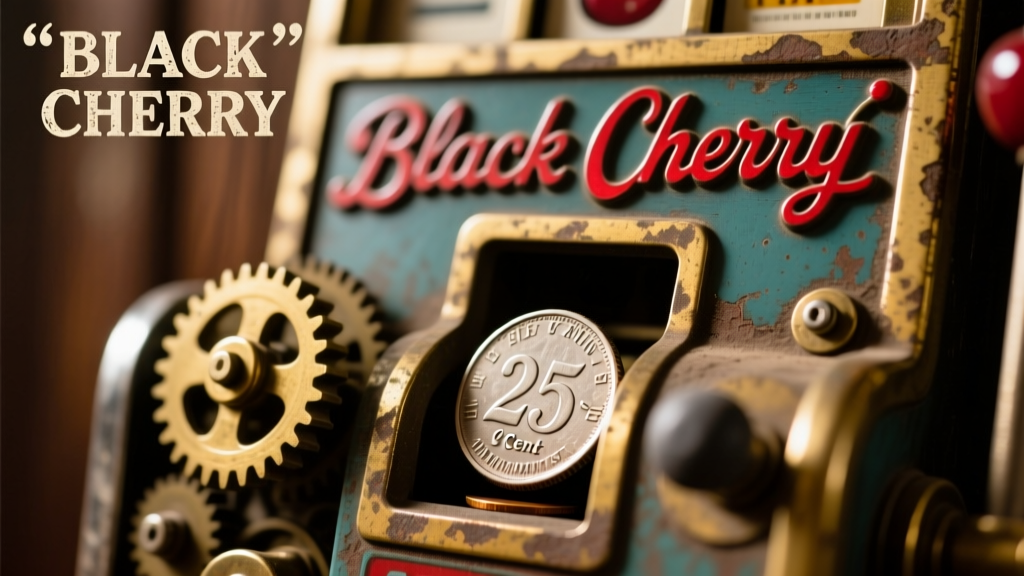
Black Cherry Slot Mills: The Rare 25-Cent Coin-Operated Machines of the 1940s
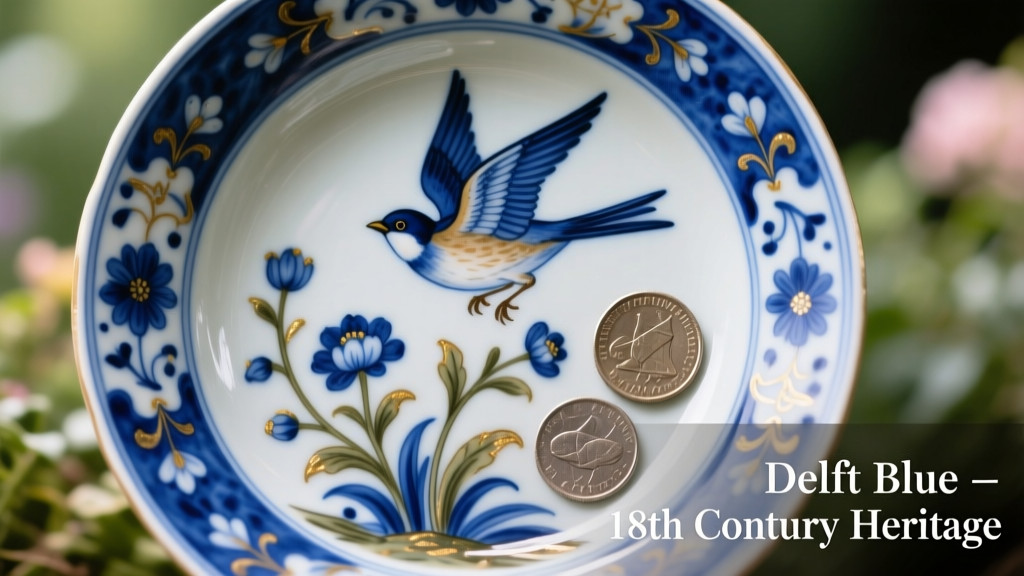
Delft Dish: Bird in Flight Perched Above Plants, Blue Edge Polychrome — A 12-Inch Masterpiece of Dutch Ceramic Artistry
Spode Gainsborough 15-Inch Tray: History, Identification, and Market Value Analysis
The R. Merrill & Sons Bulls-Eye Level: A Brass-Cased Precision Instrument from New York, Circa 1900–1925
Royal Doulton Flask: The Golfers Kingsware — History, Identification, and Market Value of a Rare 1930s Ceramic Flask
Ohr Vase: Scroddled Clay, In-Body Twist, Exaggerated Bisque — A Deep Technical & Historical Appraisal of the 3¼ × 4-Inch Specimen
The $100,000 Beer Label: Unpacking the Rarity, Provenance, and Market Reality of Collectible Brewery Artifacts
Yellowware Mug with White-Brown Banding: Identifying, Dating, and Valuing the 4-Inch Example
Evening Star Patchwork Quilt Block: A Dual-Sided 1890s American Folk Art Treasure Measuring 18 × 26 Inches