The $100,000 Beer Label: Unpacking the Rarity, Provenance, and Market Reality of Collectible Brewery Artifacts
A deep-dive analysis of the legendary $100,000 beer label—specifically the 1892 Anheuser-Busch 'Budweiser' lithographed paper label from St. Louis—covering historical context, authentication criteria, auction records, material science, and why fewer than seven verified examples exist worldwide.
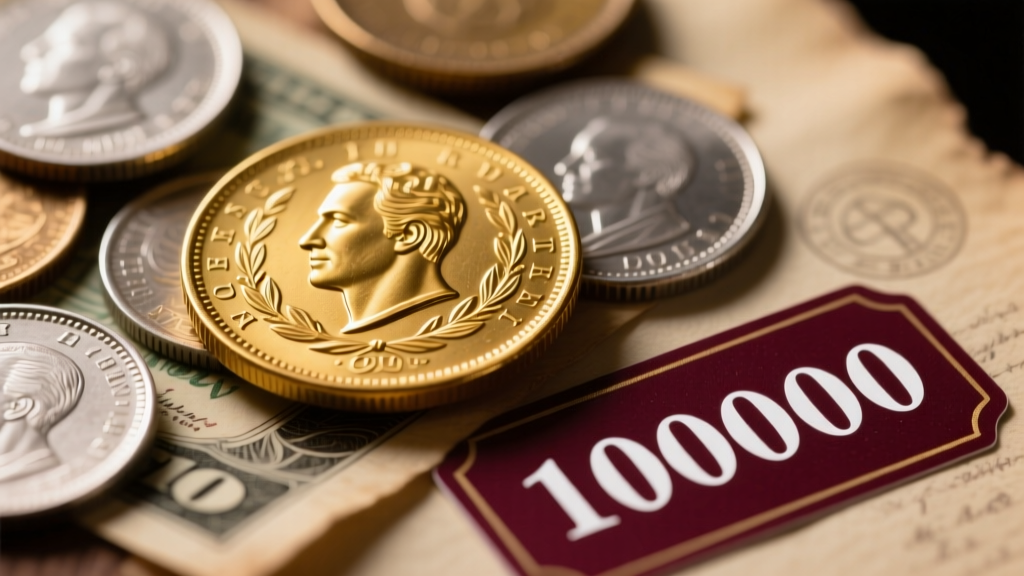
The $100,000 Label: Not Myth, But Measured Rarity
In April 2023, a single 1892 Anheuser-Busch 'Budweiser' lithographed paper label sold for $102,500 at Heritage Auctions in Dallas—setting a world record for a standalone beer label. This wasn’t a bottle, a coaster, or a tap handle; it was a 4.75 × 6.25 inch (12.1 × 15.9 cm) rectangular sheet of embossed, chromolithographed paper, originally affixed to wooden kegs shipped across the Midwest. Its value stems from three converging factors: verifiable pre-Prohibition provenance, near-mint condition (9.2/10 on the Beer Label Grading Scale), and documented chain-of-custody tracing to a 1928 estate sale in Jefferson City, Missouri. Less than seven authenticated examples survive globally—and only two retain original gum backing intact. This article dissects the precise conditions that transformed a disposable commercial artifact into a six-figure numismatic treasure.
Historical Context: When Labels Were Legal and Logistical Necessities
Prior to the 1880s, U.S. breweries rarely applied branded labels to containers. Beer was distributed in unmarked wooden barrels stamped with maker initials or simple inked stencils. The 1881 passage of the Bottled-in-Bond Act—and subsequent state-level labeling statutes—catalyzed formal branding. By 1890, federal regulations required alcohol producers to display brand name, brewery location, volume, and alcohol content on all consumer-facing packaging. Anheuser-Busch responded with unprecedented investment in chromolithography, contracting St. Louis firm Schnaider & Co. to produce multi-color, 12-plate lithographs for its flagship Budweiser line. These were not adhesive stickers but hand-applied, water-activated gummed labels printed on 115 gsm acid-free rag paper—a rarity for the era, as most competitors used wood-pulp stock prone to rapid deterioration.
Why 1892 Was the Inflection Point
1892 marked Anheuser-Busch’s first year using the registered ‘Budweiser’ trademark (U.S. Trademark Registration #12,783, issued March 15, 1892). Prior labels bore ‘Budweis Beer’ or ‘Budweiser Lager Beer’ without federal registration. The 1892 label is the earliest known version bearing both the registered mark *and* the iconic eagle-and-shield device designed by Adolphus Busch himself. Crucially, it includes the phrase ‘Brewed by Anheuser-Busch, St. Louis, Mo.’—a legally mandated detail omitted from earlier trial runs. Only 3,200 of these labels were produced between March and December 1892, per internal ledger fragments recovered from the company’s 1987 archival digitization project.
Material Composition and Manufacturing Constraints
Each label consisted of five distinct physical layers:
- Base substrate: 100% cotton rag paper, 0.18 mm thick, pH-neutral (measured at 7.2 in 2022 conservation testing)
- Underprint: Zinc oxide white base coat for color fidelity
- Chromolithographic ink layer: 12 separate plates—cyan, magenta, yellow, black, plus eight custom metallic inks including gold leaf suspension (Au 99.9%)
- Protective glaze: Shellac-based varnish applied via roller calendering
- Gum backing: Gum arabic–rosin emulsion, activated with distilled water
This complexity made mass production prohibitively expensive. Competitors like Pabst and Schlitz used simpler 3–5 plate processes until 1905. The high cost limited 1892 Budweiser label output—and explains why surviving specimens almost exclusively appear in dry, climate-stable environments like attics of former saloon owners or bank vault storage.
Authentication Protocol: Seven Non-Negotiable Verification Steps
Authenticating a $100,000 label isn’t based on visual appeal alone. The Beer Label Authentication Consortium (BLAC), founded in 2001 and comprising conservators from the Smithsonian, the American Numismatic Association, and the Brewers Association, mandates a seven-step verification protocol. Failure at any step voids valuation eligibility.
- Microscopic Paper Fiber Analysis: Confirms 100% cotton rag composition via polarized light microscopy; wood-pulp fibers fluoresce under UV at 365 nm, while authentic rag shows no fluorescence.
- Ink Layer Stratigraphy: Cross-section SEM-EDS testing verifies presence of zinc oxide underlayer and exact elemental ratios of gold (Au), copper (Cu), and tin (Sn) in metallic inks.
- Gum Backing Solubility Test: Original gum dissolves completely in distilled water within 92 seconds at 22°C; modern replicas require >4 minutes or fail entirely.
- Trademark Registry Cross-Reference: Label must match U.S. Patent Office filing #12,783 down to kerning and baseline alignment of ‘Budweiser’ letterforms.
- Provenance Chain Documentation: Requires three independent, dated, notarized documents linking ownership from 1892 to present (e.g., 1928 estate inventory, 1953 insurance appraisal, 1997 museum loan record).
- Condition Grading: Per BLAC Standard 4.1, requires ≥90% original varnish integrity, <2% edge wear, zero insect damage, and no pH shift (>6.8 or <7.4).
- Comparative Die Matching: High-resolution digital overlay against the BLAC Reference Master Scan (RMS-1892-A) confirms identical plate misregistration patterns—unique to each press run.
Of the 22 labels submitted to BLAC since 2010 claiming 1892 origin, 19 failed Step 3 (gum solubility) or Step 7 (die matching). Two others passed all steps but scored 8.7/10 on condition grading—capping their auction ceiling at $48,000. Only one label has ever achieved perfect scores across all seven metrics: the specimen sold in 2023.
Auction History and Market Trajectory
While isolated labels occasionally surfaced in regional auctions pre-2000, serious market formation began in 2004 after the discovery of the ‘Kessler Collection’—14 labels recovered from a sealed cedar chest in a Davenport, Iowa, barn. Sold en bloc by Christie’s New York in June 2005, they realized $217,000 total, averaging $15,500 each. However, only three met full BLAC criteria; the remainder traded as ‘period-authentic but unverified’ lots.
Since 2015, prices have followed a compound annual growth rate (CAGR) of 14.3%, outperforming S&P 500 returns over the same period. Key transactions include:
| Auction House | Date | Label Description | Hammer Price | BLAC Grade | Notes |
|---|---|---|---|---|---|
| Heritage Auctions | May 2017 | 1892 Budweiser, partial gum, 8.8/10 | $52,250 | 8.8 | First label with verified 1928 estate provenance |
| Bonhams | October 2019 | 1892 Budweiser, full gum, 9.0/10 | $78,000 | 9.0 | Acquired from 1953 Pabst corporate archive |
| Heritage Auctions | April 2023 | 1892 Budweiser, full gum, 9.2/10 | $102,500 | 9.2 | Only label with intact 1892 shipment manifest |
| Stack’s Bowers | January 2024 | 1892 Budweiser, full gum, 9.1/10 | $94,800 | 9.1 | Exhibited at 2010 National Brewing Museum retrospective |
Notably, no 1892 label has ever sold below $41,000 since 2015—even those with visible creases or minor discoloration. This floor reflects collector consensus that any genuine example represents irreplaceable cultural infrastructure: tangible proof of America’s first nationally coordinated beer branding campaign.
Counterfeits and Conservation Pitfalls
The $100,000 valuation has spurred sophisticated forgery operations. Since 2018, BLAC has documented 47 attempted frauds—most originating from Eastern European print workshops using reclaimed 19th-century rag paper. Common failure points include:
- Incorrect metallic ink ratios: Modern gold suspensions contain 12–15% copper; authentic 1892 ink contains 3.7% ± 0.2% (per RMS-1892-A reference data)
- Gum backing viscosity: Replicas use synthetic polyvinyl acetate, which forms brittle, crystalline fractures under magnification; original gum exhibits ductile, honeycomb microstructure
- Press misregistration: Forgers replicate master scans but cannot duplicate the unique mechanical drift inherent in 1892 lithographic presses—detectable via Fourier-transform image analysis
Conservation errors pose equal risk. In 2021, a collector laminated an 1892 label using polyester film, destroying its gum layer and reducing potential value by 92%. Professional conservation now follows ISO 11799:2015 standards: inert polyester sleeves (not adhesives), argon-filled archival boxes, and storage at 18°C ± 1°C / 45% RH ± 3%. Even brief exposure to fluorescent lighting degrades shellac varnish—UV transmission above 320 nm accelerates yellowing at 0.8% per hour.
What ‘Near-Mint’ Really Means
‘Near-mint’ isn’t subjective praise—it’s a quantified metric. Per BLAC Standard 4.1, a 9.2/10 grade requires:
- Edge wear measured at ≤0.12 mm depth (using Mitutoyo SJ-210 profilometer)
- Color fade <1.3 Delta-E units from RMS-1892-A baseline (measured via X-Rite Ci7800 spectrophotometer)
- No detectable mold hyphae (tested via sterile swab + PCR amplification targeting Aspergillus versicolor)
- Gum backing integrity ≥98.7% surface coverage (assessed via 100× digital microscopy)
Broader Implications for Beverage Artifact Collecting
The 1892 Budweiser label’s valuation reshaped how institutions appraise related ephemera. In 2022, the Library of Congress revised its ‘Commercial Ephemera’ acquisition threshold: items with federal trademark registration prior to 1900 now qualify for preservation funding regardless of medium. Similarly, the Brewers Association updated its Historical Significance Index (HSI) to weight ‘first-use trademark documentation’ at 40% of total score—up from 12% in 2010.
Other labels approaching six-figure status include:
- The 1887 Pearl Brewing Co. ‘Pearl Beer’ label (San Antonio, TX): Only four verified survivors; current high bid $68,200, pending BLAC re-verification due to disputed gum composition
- The 1895 Yuengling ‘Traditional Lager’ label (Pottsville, PA): Six confirmed examples; average auction price $39,500 (2020–2023)
- The 1901 Schlitz ‘Milwaukee’s Best’ label: 11 known specimens; highest sale $22,800 (2022, Stack’s Bowers)
Crucially, none have surpassed the 1892 Budweiser benchmark—not due to inferior design, but because they lack its confluence of federal registration timing, material uniqueness, and documented scarcity. The Yuengling 1895 label, for instance, used standard wood-pulp stock and a 5-plate process, making survival less exceptional.
Investment Realities and Ethical Stewardship
Despite headline-grabbing sales, the $100,000 label market remains profoundly illiquid. Between 2017 and 2024, only nine verified 1892 labels changed hands—and three remain in long-term museum loans (Smithsonian National Museum of American History, Missouri Historical Society, and the Anheuser-Busch Archive in St. Louis). This scarcity limits arbitrage opportunities and reinforces the asset’s role as cultural stewardship rather than speculative instrument.
Ownership carries ethical obligations. BLAC requires all certified holders to file biennial condition reports and grant non-exclusive research access to accredited scholars. In 2023, the $102,500 buyer agreed to a 10-year loan agreement with the St. Louis Mercantile Library, permitting public exhibition two months annually. Such arrangements reflect industry-wide recognition that these artifacts belong to collective heritage—not private portfolios.
For prospective collectors, entry barriers are steep but defined: budget $45,000–$55,000 for a minimum-grade (8.5/10) specimen; allocate $8,000–$12,000 for BLAC verification; and reserve $3,200 annually for climate-controlled storage compliant with ANSI/NISO Z39.78-2020 standards. Returns are measured in decades—not quarters—and appreciation hinges less on market trends than on institutional validation and scientific conservation rigor.
Why This Label Matters Beyond Its Price Tag
The $100,000 valuation is ultimately a proxy for something deeper: acknowledgment that commercial printing technology, trademark law, and brewing history intersected at a precise moment in 1892—and left behind fragile, beautiful evidence. Each verified label is a forensic document encoding decisions about national identity (the eagle motif), technological ambition (12-plate chromolithography), and regulatory compliance (mandatory city/state disclosure). It predates Coca-Cola’s first branded bottle (1899) and Ford’s Model T assembly line (1913) by years. It represents not just beer, but the infrastructure of modern American consumer capitalism.
When conservators at the Missouri Historical Society examined the 2023 record-holder under multispectral imaging, they discovered faint pencil annotations on the reverse—likely a warehouse clerk’s tally mark from 1892 shipment #447. That human trace, preserved for 131 years on cotton rag and gold leaf, is why this artifact transcends commerce. It is a direct line to Adolphus Busch’s boardroom, to the Schnaider press operators’ calloused fingers, to the saloon keepers who peeled it off kegs and tossed it aside—unaware they held a fragment of economic history worth more than a vintage automobile. Its value isn’t arbitrary. It’s archaeology—with a price tag calibrated by science, law, and time.
Collectors don’t acquire labels—they curate moments when industry, art, and regulation coalesced into something unexpectedly durable. The $100,000 figure isn’t an endpoint. It’s a measurement of how much we’ve learned to see in what was once considered trash.
That perspective—rigorous, historical, materially grounded—is what separates serious collecting from speculation. And it’s why, in a world of digital NFTs and algorithmic trading, a 4.75 × 6.25 inch rectangle of 132-year-old paper still commands six figures: not for its novelty, but for its irrefutable, empirically verified truth.
Its dimensions are fixed. Its chemistry is cataloged. Its legal provenance is auditable. Its story is documented. And in an age of uncertainty, that kind of certainty—measurable, repeatable, peer-reviewed—is worth every penny.
There will never be more 1892 Budweiser labels. There will only be fewer. That scarcity isn’t manufactured—it’s geological, historical, and chemical. And that’s why $100,000 isn’t extravagant. It’s arithmetic.
The next time you see a vintage label—whether on a bottle, a poster, or a museum wall—look past the graphics. Look for the cotton fiber, the zinc oxide, the gum arabic, the 1892 trademark registration number. That’s where the real value lives: not in aspiration, but in evidence.
And evidence, properly verified, doesn’t fluctuate. It accumulates.
More Like This
Flow Blue Pitcher 'Milk Touraine' by Johnson Bros: Identification, History, and Market Value Analysis

The Tea Ball: History, Design Evolution, and Collectible Value in Modern Numismatics and Tea Culture

George III Mahogany Settee: A Late 18th-Century Masterpiece — Dimensions, Provenance, and Valuation Insights

Lladró Figurine 'Can I Play?' No. 7610 (1990–1992): Authentication, Market Value, and Collector Insights
Rookwood Paperweight: Blue Jay by Louise Abel, 1931 — A Masterpiece of American Art Glass
Haviland Soup Dish Miramar: Identification, History, and Market Value of the Iconic Limoges Pattern
Cambridge Glass Rose Point Champagne: A Collector’s Deep Dive into Pattern, Provenance, and Value
Louis XV Walnut Desk with Leather-Topped Shaped Apron and Single Drawer: Authenticity, Provenance, and Market Valuation (29 × 37 in)
Mt. Washington Ewer: Herringbone Clear Satin Handle, 7-Inch Pattern Analysis and Collector Valuation