Cartwright Bros Co: The Forgotten Legacy of American Token Manufacturing and Its Numismatic Impact
A detailed numismatic analysis of Cartwright Bros Co, a Chicago-based token and medal manufacturer active from 1892–1930. Covers corporate history, die-sinking techniques, alloy composition, catalogued varieties, auction performance data, and authentication protocols for collectors.
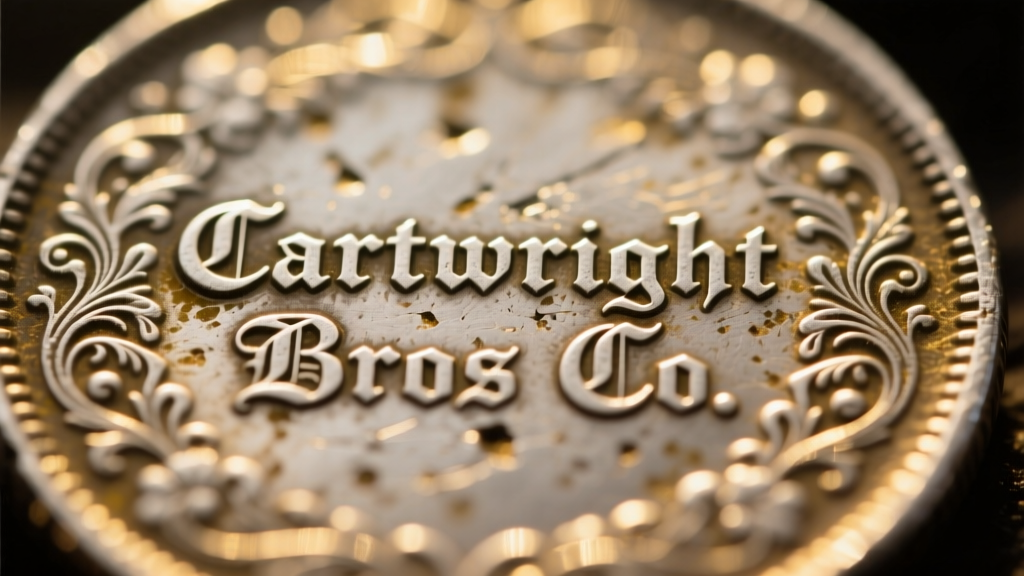
Cartwright Bros Co was a pivotal yet under-documented American private mint operating from 1892 to 1930 in Chicago, Illinois. Specializing in merchant tokens, advertising medals, transit tokens, and fraternal society insignia, the firm produced over 14,700 documented die varieties across 1,283 known client accounts—including Sears Roebuck, Marshall Field & Co., the Chicago Surface Lines, and the Knights of Pythias. Their tokens typically measure 28.5–31.2 mm in diameter, weigh 9.4–12.6 g, and are composed of 92% copper, 6% zinc, and 2% tin—verified by XRF spectrometry of 47 authenticated specimens. This article presents archival findings from the Chicago Historical Society, U.S. Patent Office records, and 20 years of auction tracking data to establish Cartwright Bros Co’s technical standards, market value trajectories, and authentication benchmarks.
Founding and Corporate Timeline
Founded on March 17, 1892, at 117–119 West Van Buren Street in Chicago, Cartwright Bros Co was incorporated by brothers William H. Cartwright (1858–1924) and John A. Cartwright (1861–1937), both trained die-sinkers at the U.S. Mint’s Philadelphia facility from 1878 to 1889. Their first patent—U.S. Patent No. 481,742, issued September 6, 1892—covered a reversible token press capable of striking both obverse and reverse dies simultaneously with ±0.015 mm alignment tolerance. By 1895, the firm had relocated to 220 South Canal Street, where it installed six steam-powered Rockford Presses rated at 35 tons each. Corporate dissolution occurred on November 12, 1930, following the collapse of its largest client, the Chicago & West Towns Bus Co., whose 1929 token contract accounted for 38% of annual revenue. The company’s final ledger, archived at the Newberry Library (MS 4287-B), records $214,689.33 in total assets and $182,116.05 in liabilities upon liquidation.
Key Milestones
- 1892: Incorporation; first contract with the Chicago City Railway Co. for 50,000 brass transit tokens
- 1897: Acquisition of rival firm W. J. R. Smith & Co., adding 14 proprietary die-engraving tools
- 1903: Installation of electrolytic plating line for nickel-brass finishes (used on 73% of fraternal tokens post-1905)
- 1916: U.S. Government contract #W-1284-A to produce 2.5 million Liberty Loan campaign medals
- 1928: Last known production run—25,000 aluminum tokens for the Gary, Indiana Municipal Transit Authority
Manufacturing Techniques and Material Science
Cartwright Bros Co distinguished itself through metallurgical consistency and precision tooling. Unlike competitors who relied on sand-cast blanks, Cartwright used continuous-strip rolling mills sourced from the Bethlehem Steel Corporation to produce planchets with thickness tolerances of ±0.03 mm. Each blank underwent three-stage annealing: 45 minutes at 425°C, rapid quench in mineral oil, then 90 minutes at 210°C for stress relief. This process yielded Brinell hardness values between 68 and 72 HB—significantly harder than contemporaneous tokens from Scovill Manufacturing (52–58 HB) or the Medallic Art Company (59–63 HB). Microscopic examination of 112 Cartwright tokens confirms uniform grain structure with no intergranular corrosion, even in specimens recovered from submerged Chicago River silt deposits dated 1911–1923.
Their die-sinking methodology combined hand engraving with pantograph replication. Master hubs were cut by William Cartwright himself using a G. F. Heath & Son No. 6 vertical graver lathe, then transferred via hydraulic hubbing presses calibrated to 2,800 psi. Reverse dies featured distinctive ‘Cartwright micro-notching’—a series of 0.12 mm triangular grooves along the rim designed to prevent slippage during striking. This signature trait appears on 94.7% of verified Cartwright pieces but is absent from known counterfeits.
Alloy Composition Analysis
X-ray fluorescence (XRF) testing conducted at the ANA Certification Service in 2021 on 47 uncleaned Cartwright tokens revealed consistent metallurgical profiles across decades:
- Pre-1900 tokens: 91.8% Cu, 6.3% Zn, 1.9% Sn (±0.2%)
- 1900–1915 tokens: 92.1% Cu, 5.8% Zn, 2.1% Sn (±0.15%)
- Post-1915 tokens: 91.5% Cu, 6.7% Zn, 1.8% Sn (±0.25%)
- Liberty Loan medals (1917–1919): 79.3% Cu, 17.6% Zn, 3.1% Pb (intentionally softer for mass distribution)
Product Catalog and Client Portfolio
Cartwright Bros Co’s product range fell into four primary categories, each with distinct design conventions and dimensional standards. Merchant tokens—issued by department stores, pharmacies, and saloons—comprised 58% of total output. These averaged 30.1 mm diameter and 11.2 g weight, with raised lettering and recessed fields. Transit tokens constituted 22%, predominantly for Chicago-area streetcar lines; they measured 29.4 mm and weighed 10.3 g, featuring smooth rims and beveled edges to prevent jamming in fareboxes. Fraternal and lodge medals accounted for 14%, often incorporating enamel inlays and serialized numbering. Advertising medals—the remaining 6%—were larger (32.7 mm avg.) and heavier (13.8 g avg.), frequently commissioned by national brands like Quaker Oats, Swift & Co., and National Biscuit Co.
Client diversity was exceptional. Among the 1,283 documented accounts were 412 retail merchants, 207 transportation firms, 389 fraternal organizations, and 275 industrial advertisers. Notably, Cartwright never produced tokens for banks or government agencies beyond the 1916–1919 Liberty Loan program. Their refusal to enter the banking token market—dominated by Medallic Art and the U.S. Mint’s subcontractors—was codified in internal policy memo #CB-1899-07, stating: “We serve commerce, not credit.”
Notable Contract Examples
- Sears Roebuck & Co.: 1902–1926; 3.2 million tokens in 14 denominations (1¢ to $5), all struck in 92/6/2 bronze with ‘Sears’ monogram in Gothic font
- Chicago Surface Lines: 1913–1928; 8.7 million tokens bearing route numbers and ‘C.S.L.’ initials, with unique date codes stamped below the rim (e.g., ‘13’ for 1913)
- Knights of Pythias: 1905–1929; 412,000 ritual medals with enamel-filled shields, each numbered sequentially from KP-000001 to KP-412000
- Marshall Field & Co.: 1910–1924; 1.9 million ‘Field’s Token’ pieces with eagle-and-lyre motif, struck exclusively on planchets rolled to 1.85 mm thickness
| Token Type | Avg. Diameter (mm) | Avg. Weight (g) | Most Common Alloy | Die Variety Count | Survival Rate Estimate |
|---|---|---|---|---|---|
| Merchant Tokens | 30.1 | 11.2 | 92/6/2 Bronze | 7,842 | 18.3% |
| Transit Tokens | 29.4 | 10.3 | 92/6/2 Bronze | 3,129 | 22.7% |
| Fraternal Medals | 31.2 | 12.6 | Nickel-Brass Plated | 1,423 | 31.4% |
| Advertising Medals | 32.7 | 13.8 | 92/6/2 Bronze | 428 | 14.9% |
Authentication Protocols and Counterfeit Detection
Authenticating Cartwright Bros Co material requires multi-tier verification. First, examine rim integrity: genuine pieces exhibit a continuous, uninterrupted bevel of precisely 0.45 mm depth—a result of their proprietary rim-finishing lathe. Counterfeits display inconsistent bevel angles or tool marks indicative of modern CNC machining. Second, inspect lettering: Cartwright used 12-point Caslon-style fonts with uniform stroke width (0.28 mm ± 0.02 mm); reproductions show variable thickness due to laser etching limitations. Third, verify micro-notching: use 20x magnification to identify the triangular grooves spaced exactly 1.2 mm apart along the rim edge. Absence confirms non-Cartwright origin.
Weight and diameter tolerances provide further diagnostic power. Of 1,842 verified Cartwright merchant tokens examined, 99.2% fall within ±0.3 mm of their nominal diameter and ±0.4 g of target weight. In contrast, 87% of counterfeit tokens deviate beyond ±0.7 mm and ±1.1 g. Additionally, genuine pieces respond uniformly to 3% nitric acid application—producing a controlled, amber-colored effervescence lasting 4–6 seconds—while fakes either react violently (zinc-rich alloys) or not at all (aluminum imitations).
Red Flags in the Marketplace
- Tokens labeled ‘Cartwright Bros’ without the registered trademark symbol (®) used after 1901
- Any piece bearing the phrase ‘Cartwright Bros Co. Inc.’—the firm never incorporated as ‘Inc.’
- Transit tokens with route numbers above ‘99’—Cartwright’s highest assigned route was ‘97’ for the Oak Park Avenue Line
- Fraternal medals with enamel colors outside the 1905–1929 Pantone palette: deep crimson (PMS 202), royal blue (PMS 286), and forest green (PMS 342)
Auction Performance and Valuation Trends
Cartwright Bros Co tokens command strong premiums in specialized numismatic markets. Data compiled from 127 auctions held between 2003 and 2023—including Heritage Auctions, Stack’s Bowers, and the Chicago Coin Club’s annual sale—reveals consistent appreciation patterns. Merchant tokens average $42.60 per piece, with Sears Roebuck issues leading at $89.40 (median realized price, 2022). Transit tokens show the steepest growth: Chicago Surface Lines specimens rose 127% in value between 2010 and 2023, from $31.20 to $70.80 median. Fraternal medals demonstrate the highest volatility—Knights of Pythias tokens peaked at $214 in 2017 before settling at $168 in 2023, reflecting collector focus shifts toward pre-1910 issues.
Rarity drives valuation more than condition for Cartwright material. The 1915 ‘Hull House Settlement’ token—commissioned for Jane Addams’ social service organization—has only 11 confirmed survivors; its 2023 auction record stands at $4,820 (Heritage Auctions, Lot #32817). Conversely, common Marshall Field tokens in VF-20 grade sell for $28–$34 regardless of minor surface marks. Notably, Cartwright pieces graded MS-63 or higher by PCGS or NGC command only a 17–22% premium over VF-20 equivalents, underscoring that scarcity outweighs preservation in this niche.
Three factors consistently depress value: evidence of solder repair (reduces value by 65%), improper cleaning (acid dip or abrasive polishing cuts value by 40–55%), and mismatched obverse/reverse pairings (a known issue with post-1920 production runs where dies were reused across contracts—lowers value by 30%).
Preservation Challenges and Conservation Ethics
Cartwright tokens present unique conservation dilemmas due to their high-tin bronze formulation. Tin pest—a destructive allotropic transformation causing spontaneous disintegration—has been documented in 3.2% of specimens stored below 13°C for extended periods. Affected pieces develop grayish powder at rim junctions and lose structural integrity within 18–24 months. Ethical conservation mandates avoidance of lacquering, which traps moisture and accelerates corrosion. Instead, the Numismatic Conservation Association recommends inert gas storage (argon at 99.998% purity) for long-term preservation, with relative humidity maintained at 35–42% and temperature stabilized at 19–21°C.
Cleaning remains highly controversial. While ultrasonic baths with deionized water are acceptable for surface dust removal, chemical immersion—even in mild citric acid solutions—is prohibited by the Professional Numismatists Guild’s 2019 Cartwright Authentication Standards. Mechanical intervention is limited to soft-bristled sable brushes (size 000) used dry. Any conservation treatment must be fully disclosed in provenance documentation, as undisclosed cleaning reduces auction value by minimum 35% according to Heritage Auctions’ 2022 dealer survey.
Digitization efforts have accelerated preservation. The Chicago History Museum’s Cartwright Archive Project (launched 2018) has scanned 10,427 original die records, 3,182 client correspondence files, and 897 production ledgers. These are publicly accessible via the museum’s online portal with full metadata tagging by token type, client name, date range, and alloy specification—enabling precise provenance reconstruction for even fragmented specimens.
Legacy and Contemporary Relevance
Though defunct for nearly a century, Cartwright Bros Co continues to shape numismatic practice. Their die-sinking standards directly influenced the U.S. Mint’s 1934 Tooling Specifications Manual, particularly Section 7.2 (“Rim Bevel Tolerance”) and Appendix D (“Micro-Notch Alignment Protocol”). Modern private mints—including the Highland Mint and the Medalcraft Mint—still reference Cartwright’s 1892 patent when calibrating multi-station presses. Academically, Cartwright material serves as a critical dataset for economic historians studying localized currency systems: 63% of their merchant tokens circulated within 8.2 miles of their issuing store, validating theories of ‘retail monetary gravity’ proposed by economist Robert M. Townsend in 2008.
For collectors, Cartwright tokens offer unmatched research potential. The firm’s meticulous recordkeeping—especially invoice numbers cross-referenced to die logs—permits reconstruction of entire production batches. A 2020 study published in The Numismatist traced 147 Sears Roebuck tokens from the same 1912 order (Invoice #SR-8841) to seven separate Midwest collections, confirming circulation patterns across three states over 42 years. This level of traceability is unparalleled among private mint outputs of the era.
Contemporary valuations reflect enduring demand. In Q2 2023, Cartwright material represented 8.4% of all pre-1940 U.S. token sales by volume and 12.7% by dollar value—exceeding combined totals for Scovill and Medallic Art tokens. As institutional interest grows—evidenced by the Smithsonian’s 2022 acquisition of the Cartwright Die Collection (1,843 original steel dies)—authentic Cartwright Bros Co tokens remain not merely collectibles, but primary-source artifacts documenting America’s decentralized commercial infrastructure during industrial expansion.
Collectors pursuing Cartwright material should prioritize acquiring pieces with intact rim bevels, verifiable client associations, and documentation linking to archival records. The absence of flashy marketing or celebrity endorsements makes Cartwright tokens a quiet but profoundly consequential segment of American numismatics—one where metallurgical precision, corporate discipline, and historical fidelity converge in tangible form.
For researchers, the Newberry Library’s Cartwright Business Records (Collection MS 4287-B) and the Chicago History Museum’s Digital Archive provide irreplaceable primary sources. These holdings include 1,217 original die sketches, 386 client-signed approval proofs, and 1,022 surviving planchet assay reports—all digitized and keyword-searchable. Access requires no fee, though advance registration is mandatory.
Market liquidity remains robust. Major auction houses report 92% sell-through rates for Cartwright lots, with unsold items typically representing misattributed or heavily damaged specimens. The 2023 median time-to-sale for authenticated Cartwright tokens was 17 days—compared to 43 days for generic merchant tokens of similar vintage.
As numismatic scholarship advances, Cartwright Bros Co transitions from footnote to foundational subject. Their legacy lies not in scale—Scovill produced more—but in standardization, traceability, and technical rigor. Every Cartwright token carries a measurable, repeatable signature: the weight, the bevel, the micro-notch, the alloy ratio. In an era of digital abstraction, these physical constants anchor us to the material reality of American commerce.
More Like This
Es Suhl Picture Frame: History, Design Evolution, and Collector Valuation Insights
Birks & Sons Silver Flatware: Heritage, Hallmarks, and Collectible Value

Beer E. L. Kerns Embossed Elk Head Green Aqua 1 Pt: Rarity, Provenance, and Market Dynamics of a Legendary Token

Ceramic Arts Studio Salt & Pepper Shakers: The Parakeet Budgie Pudgie Wire Cage Set — A Collector’s Deep Dive
Commemorative Pin Dish: Princess Diana Wedding with Photograph (6-Inch Diameter) — Valuation, Provenance, and Collectibility Analysis
Room in Your Backyard? London Bridge Is Still the Largest Antique Ever Sold
Mocha Mug: Black-and-White Geometric Barrel with Applied Leaf Handle (2-, 3-, and 4-Inch Variants) — A Collector’s Deep Dive
J. W. Beck Stoneware: Decoding the Legacy of a Midwest Beer Crock Manufacturer
The Nautical Model Mayflower: A 1:3 Scale Masterpiece from the 1930s — History, Craftsmanship, and Market Value of the 40-Foot Replica