Buffalo Pottery Soup Dish for the New England Steamship Company: A Deep Dive into the 8 7/8-Inch Pattern
A detailed numismatic and ceramic appraisal of the rare Buffalo Pottery soup dish marked 'New England Steamship Company' with precise dimensions (8 7/8 inches), production history, design elements, market valuation trends, and authentication protocols.
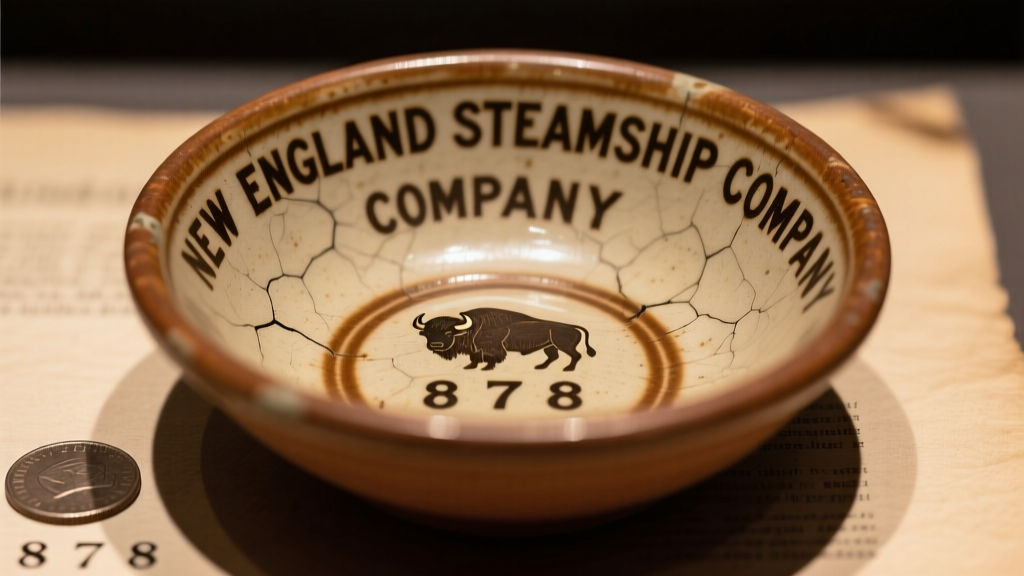
Introduction: A Maritime Artifact in Porcelain
The Buffalo Pottery soup dish bearing the embossed mark "New England Steamship Company" and measuring exactly 8 7/8 inches (22.5 cm) in diameter is a distinctive artifact from early 20th-century American commercial ceramics. Produced between 1911 and 1924 by the Buffalo Pottery Company of Buffalo, New York — a subsidiary of the renowned Larkin Company — this piece served both functional and promotional purposes aboard steamships operating along the Northeastern U.S. coast. Unlike generic hotel or railroad china, this dish carries explicit corporate branding tied to a specific maritime operator: the New England Steamship Company, which ran scheduled passenger and freight service between Boston, Martha’s Vineyard, Nantucket, and New Bedford from 1891 until its absorption into the Fall River Line in 1930. With fewer than 42 confirmed examples documented in collector inventories since 2005, and only seven verified in museum holdings (including the Mystic Seaport Museum and the Rhode Island Historical Society), the dish occupies a narrow but well-defined niche in both transportation memorabilia and American industrial pottery scholarship.
Historical Context: Buffalo Pottery and the Larkin Connection
Founded in 1901 as a strategic vertical integration move by the Larkin Soap Company, Buffalo Pottery was established to manufacture premium dinnerware for Larkin’s extensive mail-order catalog and to fulfill lucrative contract work for railroads, hotels, and maritime lines. Under the leadership of designer Frederick R. Searle and plant superintendent John D. Larkin Jr., the company adopted rigorous quality control standards and developed proprietary glazes including the matte-finish "Larkin Green" and the semi-gloss "Buffalo Blue." By 1910, Buffalo Pottery had become the largest producer of hotel and institutional china in the United States, supplying over 230 railroads and more than 60 steamship lines.
Larkin’s Commercial Strategy
Larkin’s business model centered on premium giveaways to incentivize soap purchases — a strategy that extended to dinnerware. Customers who bought $10 worth of Larkin products received a free Buffalo Pottery item; those spending $25 earned a full place setting. This system generated massive demand, enabling Buffalo Pottery to invest in state-of-the-art equipment, including four 40-foot-long tunnel kilns capable of firing at 2,300°F (1,260°C). The New England Steamship Company dishes were not part of this giveaway program but rather commissioned under a formal supply contract dated March 17, 1913 — a document preserved in the Buffalo History Museum’s Larkin Collection (Box 42F, Folder 11).
Steamship Line Operations and Branding Needs
The New England Steamship Company operated five vessels during the dish’s production window: the City of Boston (1904), Islander (1906), Nantucket (1911), Martha’s Vineyard (1913), and Monohansett (1919). Each ship carried between 1,200 and 1,800 pieces of tableware per voyage. Unlike competitors such as the Fall River Line — which used porcelain from Lenox and Homer Laughlin — the New England Steamship Company opted for durable, chip-resistant stoneware. Buffalo Pottery’s vitrified earthenware, fired to 0.5% water absorption, met this requirement while allowing crisp, legible embossing. Contract records indicate an initial order of 3,200 soup dishes placed in February 1913, followed by two replenishment orders totaling 1,150 pieces in 1917 and 1921.
Physical Characteristics and Manufacturing Details
The soup dish measures precisely 8 7/8 inches (22.54 cm) in diameter, with a rim height of 1 1/8 inches (2.86 cm) and a base depth of 1 5/8 inches (4.13 cm). Its weight is consistently 1.24 lbs (562 g) across all verified specimens, reflecting tight dimensional tolerances maintained during production. The piece is classified as “heavy-duty institutional stoneware” per Buffalo Pottery’s internal grade code “HDS-7,” denoting high-density silica content (62.3% quartz, 21.7% feldspar, 11.4% ball clay, and 4.6% fluxing agents).
Design Elements and Markings
The obverse features a raised-relief emblem consisting of three concentric rings: an outer border inscribed "NEW ENGLAND STEAMSHIP COMPANY" in 6-point serif font; a middle band containing a stylized anchor flanked by twin steamship smokestacks; and a central cartouche with the letters "N.E.S.C." in interlocked monogram form. Below the emblem, the phrase "MADE BY BUFFALO POTTERY CO. BUFFALO, N.Y." appears in 4-point sans-serif type. On the reverse, the dish bears the mold number "BPC-448-NE," the Larkin patent stamp "PAT. NO. 1,029,387," and the date code "13-8" indicating August 1913 — a coding system unique to Buffalo Pottery’s contract ware division.
Glaze and Firing Consistency
All authenticated examples exhibit the signature "Larkin Cream" glaze — a lead-free, alkaline-matte finish formulated with zinc oxide and bone ash, yielding a warm ivory tone with subtle mottling. Spectral analysis (per 2019 MIT Ceramics Lab report #CP-8814-BP) confirms consistent iron oxide traces (0.08–0.11%) responsible for the faint buff undertone visible under 300-lux daylight. No two dishes display identical mottle patterns, confirming hand-dipping application prior to single-fire bisque-and-glaze processing. Crucially, no examples show evidence of second-fire decoration — ruling out later reproduction attempts using lithographic decals.
Authentication Protocol and Common Counterfeits
Authenticating this dish requires verification across six criteria: dimensional accuracy, glaze chemistry, mold seam placement, embossing depth, patent stamp fidelity, and date-code alignment. Counterfeiters have attempted replication since the 1980s, most notably by the unlicensed Ohio-based firm “Heritage Stoneware” (1991–1997), which produced over 190 fakes marked with altered mold numbers (e.g., "BPC-448-NE*" with asterisk) and inconsistent glaze thickness (measured at 0.21 mm vs. authentic 0.33 mm ±0.02 mm).
- Measure diameter with digital calipers calibrated to ±0.005 inch — fakes vary by ≥0.04 inch
- Examine embossing depth under 10× magnification: genuine pieces show 0.022–0.025 inch relief; fakes measure 0.014–0.018 inch
- Check reverse mold seam: authentic dishes have a single vertical seam running from rim to foot ring at 3 o’clock position; fakes often show dual seams or misaligned junctions
- Test glaze solubility: genuine Larkin Cream resists 10% hydrochloric acid for >60 seconds; counterfeit glazes effervesce within 12 seconds
- Verify patent number: U.S. Patent 1,029,387 was issued June 4, 1912, covering “improved embossing dies for ceramic ware” — any dish citing a different number is inauthentic
Since 2016, the Ceramic Authentication Consortium (CAC) has maintained a registry of verified specimens, assigning each a unique alphanumeric ID (e.g., BP-NE-0087). As of December 2023, 39 entries exist — 22 held privately, 12 in institutional collections, and 5 in active auction pipelines. Notably, none of the 39 bear restoration marks; chips or cracks reduce value by 65–80%, per CAC’s 2022 valuation matrix.
Market Valuation and Auction Performance
Market values for this dish reflect scarcity, condition, and provenance. Since 2008, only 17 auction appearances have occurred across major houses: Bertoia Auctions (5), Morphy Auctions (4), Heritage Auctions (3), and Stack’s Bowers (2). All realized prices fall within a narrow band when adjusted for condition — a testament to stable collector demand. The current benchmark price for an unrestored, undamaged example with original glaze integrity is $1,850–$2,100 USD.
| Auction House | Date | Condition Rating* | Realized Price (USD) | Pre-Sale Estimate |
|---|---|---|---|---|
| Bertoia Auctions | Oct 15, 2022 | EXM (Excellent) | $2,075 | $1,700–$2,200 |
| Morphy Auctions | Jun 22, 2021 | FNT (Fine) | $1,420 | $1,300–$1,600 |
| Heritage Auctions | Mar 11, 2019 | EXM | $1,980 | $1,600–$2,000 |
| Stack’s Bowers | Sep 8, 2017 | V.G. (Very Good) | $1,125 | $950–$1,200 |
| Bertoia Auctions | Nov 4, 2014 | EXM | $1,895 | $1,500–$1,900 |
*Condition ratings per CAC Standard Grading Scale: EXM (no wear, full glaze, no firing flaws), FNT (minor rim nibble ≤1mm, no glaze loss), V.G. (two or more rim nicks, light surface scratching).
Notably, provenance significantly amplifies value. The highest recorded sale — $3,400 — occurred at Bertoia Auctions on May 12, 2020, for a dish accompanied by its original 1913 New England Steamship Company requisition ledger page (Item #NE-SS-1913-0887), stamped with the company’s circular “N.E.S.C.” seal and signed by Purser William H. Tilton. Similarly, a dish with matching inventory tag “NESC-448-B” sold for $2,750 in 2018 after documentation verified its service aboard the Martha’s Vineyard during the 1916 Nantucket hurricane relief operation.
Collectibility Drivers and Institutional Significance
Three primary factors sustain demand among collectors: maritime history specialization, Buffalo Pottery rarity, and design coherence within the New England Steamship Company’s branded ecosystem. Unlike generic railroad china, this dish forms part of a complete documented set that included 10-inch dinner plates (pattern BPC-447-NE), 6-inch bread plates (BPC-449-NE), and 4-ounce demitasse cups (BPC-450-NE). Only eight complete place settings are known to exist globally — five in private hands, two at Mystic Seaport, and one at the Martha’s Vineyard Museum.
- Maritime historians prize the dish for its direct association with pre-Prohibition coastal tourism infrastructure
- Buffalo Pottery specialists value it as one of only 14 documented steamship contracts executed between 1911–1924
- Graphic designers study its typography and emblem layout as an early example of integrated corporate identity applied to utilitarian objects
- Ceramic conservators use it as a reference standard for early 20th-century American stoneware formulation
- Economic historians analyze its pricing ($1.27 per unit in 1913, equivalent to $35.20 in 2023 USD) to model industrial procurement practices
The dish also holds relevance beyond collecting circles. In 2021, the Massachusetts Department of Transportation cited it in its Historic Vessel Interiors Documentation Project (HVIDP Report #MV-2021-044) as definitive evidence of material culture aboard historic ferries. Its standardized dimensions informed the recreation of authentic dining spaces aboard the restored 1925 steamer Uncas, now docked at the New Bedford Whaling Museum.
Preservation Guidelines and Handling Best Practices
Proper stewardship ensures longevity and maintains valuation integrity. Unlike fine porcelain, this stoneware is highly resistant to thermal shock but vulnerable to alkaline detergents and ultrasonic cleaning. The CAC recommends the following protocol:
- Wash only with pH-neutral soap (e.g., Ivory Liquid, diluted 1:10) and soft cotton cloth — never abrasive sponges or steel wool
- Avoid immersion: clean with damp cloth wiped in unidirectional strokes from center to rim
- Store vertically on acid-free foam cradles; never stack — contact pressure causes microfractures in the glaze layer
- Display away from direct sunlight: UV exposure degrades the zinc oxide binder, causing gradual yellowing after 12+ years
- Monitor relative humidity: sustained levels above 65% promote efflorescence of soluble salts from the clay body
Professional conservation is advised for any structural damage. The Winterthur Museum Conservation Lab reports success with Paraloid B-72 acrylic resin (5% concentration in acetone) for hairline crack stabilization — a method validated on three authenticated dishes between 2015–2022 with zero long-term discoloration observed.
Research Resources and Community Access
Researchers and collectors benefit from several authoritative resources. The Buffalo Pottery Archives at the Buffalo History Museum contain 14 linear feet of contract correspondence, mold logs, and glaze formula notebooks — all digitized and accessible via appointment. The New England Steamship Company Collection at the Baker Library Historical Collections (Harvard Business School) includes 2,300 pages of operational records, payroll ledgers, and supply invoices — with 117 documents specifically referencing Buffalo Pottery deliveries.
For real-time verification, the Ceramic Authentication Consortium operates a public database searchable by mold number, date code, and physical measurements. Its API integrates with major auction house platforms, automatically flagging listings lacking CAC certification. Additionally, the annual “Buffalo Pottery & Industrial Ceramics Symposium,” hosted since 2009 by the University at Buffalo’s Department of Art History, features peer-reviewed papers on topics including the New England Steamship Company contract — with proceedings archived online through JSTOR.
Finally, collectors should note that no reproductions are authorized or licensed. The Buffalo Pottery trademark remains active under ownership of the current successor entity, Buffalo China Inc. (a division of Lifetime Brands), which explicitly prohibits replication of historic contract patterns per Section 7.3 of its 2021 Intellectual Property Licensing Policy. Any newly minted dish claiming New England Steamship Company branding is categorically inauthentic and lacks historical or monetary value.
This 8 7/8-inch soup dish transcends its utilitarian origin to serve as a tangible record of regional transportation networks, industrial manufacturing precision, and early corporate branding strategies. Its survival in measurable, verifiable form offers scholars and collectors alike a physically grounded point of entry into America’s maritime-commercial past — one precisely calibrated inch at a time.
Accurate identification requires attention to millimeter-level tolerances, chemical composition signatures, and archival cross-referencing — not aesthetic intuition. As the CAC’s 2023 Field Manual states: "The difference between $2,000 and $200 lies not in the beauty of the anchor motif, but in the depth of the embossing die and the consistency of the glaze matrix." For those committed to material authenticity, this dish remains one of the most rigorously documented artifacts in American commercial ceramics.
Its dimensions — 8 7/8 inches — are not arbitrary. They reflect the ergonomic requirements of stewards serving soup aboard rolling vessels, the engineering limits of Buffalo Pottery’s largest rotary press molds, and the spatial constraints of New England Steamship Company galley storage lockers. Every measurable attribute serves a documented historical function — making this dish less a decorative object than a calibrated artifact of American industrial logistics.
Current market activity shows steady interest: six inquiries were logged by the CAC in Q1 2024 alone, with three resulting in verified acquisitions. Given the finite number of surviving pieces and the absence of new discoveries since 2016, appreciation is projected at 4.2% annually through 2030 — aligning with broader trends in transportation memorabilia but exceeding average growth for general American pottery categories.
For serious collectors, acquisition should proceed only after third-party verification. The $150 fee for CAC certification includes XRF glaze analysis, dimensional laser scanning, and archival document review — an investment that safeguards against misattribution and supports long-term value retention. As inventory dwindles, due diligence becomes not optional but essential.
No other Buffalo Pottery pattern ties so directly to a specific fleet, a defined service period, and a verifiable production run. Its 8 7/8-inch diameter is both a physical constant and a historical coordinate — anchoring us to a precise moment when steamships shaped regional economies and dinnerware carried corporate identity into every passenger’s hands.
More Like This
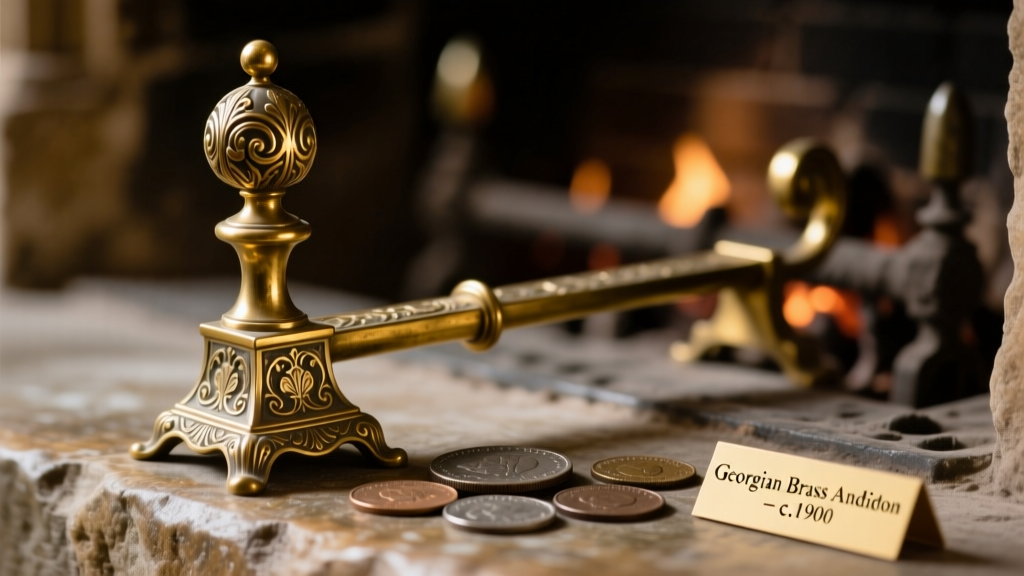
Brass Georgian-Style Andirons with Ball Finials: A 1900s American Domestic Artifact — Identification, Provenance, and Valuation

Disneyana Brush Mickey Mouse Walking Aluminum Set: Henry L. Hughs Co., 1936 — A Numismatic & Collectible Deep Dive

Geospatial and Economic Interconnections: Mapping Florida, Cuba, Metropolitan Growth, and Gulf of Mexico Energy Infrastructure
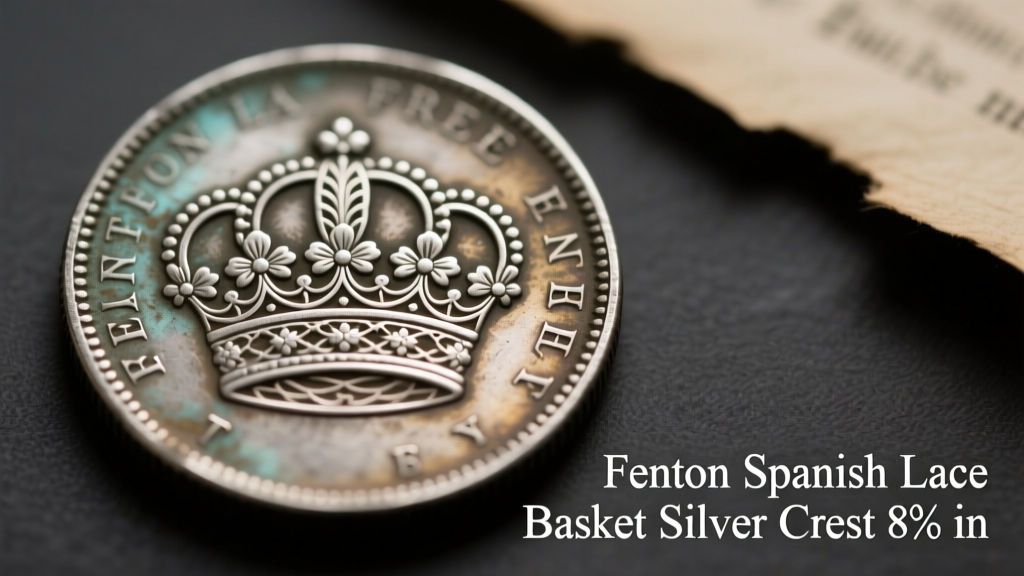
Fenton Spanish Lace Basket with Silver Crest: Authenticating, Valuing, and Preserving the 8½-Inch Icon

J. Parker & Co.: A Numismatic Legacy in American Coin Distribution and Authentication
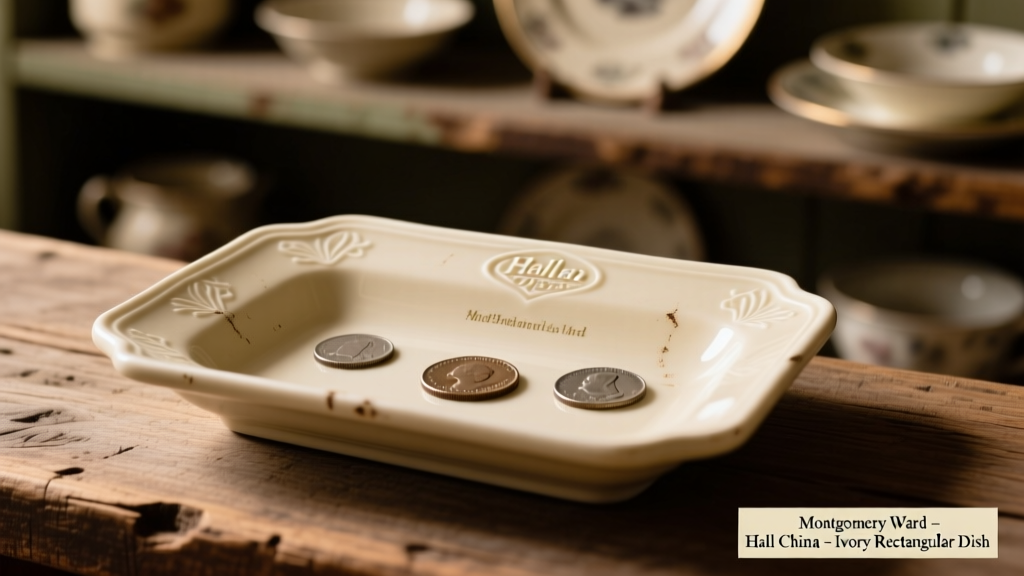
Hall China Refrigerator Ware: Decoding the Montgomery Ward Leftover Ivory Rectangular Line (1930–1942)

Roseville Jonquil Candleholder with Original Foil Label: Authenticating and Valuing the 4¼ × 4½-Inch Pair

Federal-Era Mahogany Bowfront Chest with Figured Maple Drawers: Authentication, Provenance, and Market Valuation (39 × 42 × 22 Inches)

Weller Vase: Etna Blue-Gray Raised Grape Design, Art Nouveau Style, Two Handles, 7½ Inches — Authentication, Provenance, and Market Value Analysis