J. Parker & Co.: A Numismatic Legacy in American Coin Distribution and Authentication
A detailed examination of J. Parker & Co., the Philadelphia-based numismatic firm founded in 1947, covering its historical significance, authentication standards, cataloging practices, market influence, and enduring role in U.S. coin collecting.
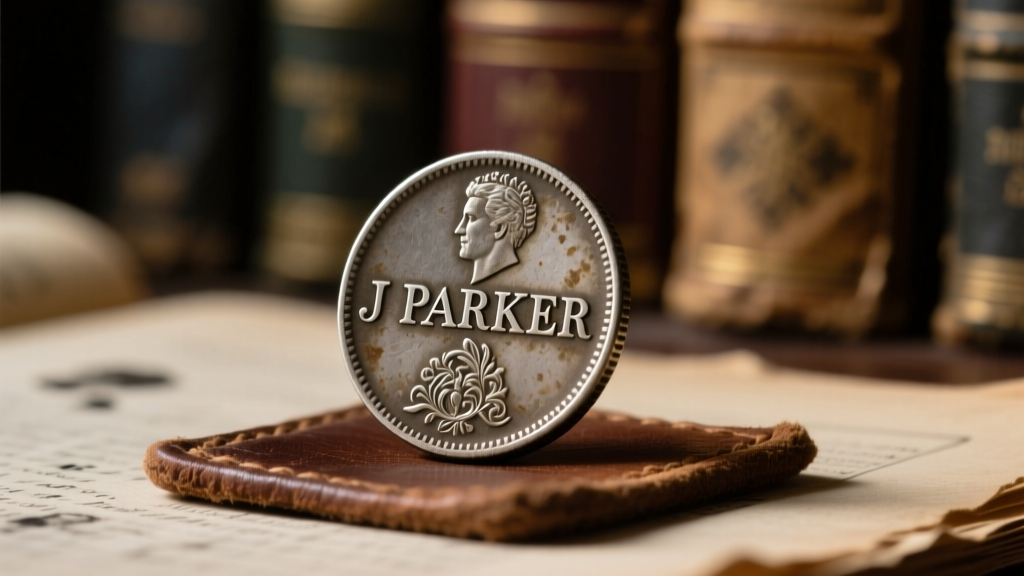
Introduction: The Enduring Presence of J. Parker & Co.
J. Parker & Co. stands as one of the most consequential yet understated pillars in mid-to-late 20th-century American numismatics. Founded in 1947 by John W. Parker in Philadelphia, Pennsylvania, the firm operated continuously for over four decades—until its acquisition by A-Mark Financial Corporation in 1991—and played a pivotal role in standardizing coin grading, establishing transparent pricing benchmarks, and expanding access to certified U.S. coinage for retail collectors and institutions alike. Unlike auction houses or mint-affiliated entities, J. Parker functioned as a hybrid: a wholesale distributor, third-party authenticator, and publisher of authoritative price guides. Its hallmark blue-and-gold ‘Parker Certified’ holders—measuring precisely 2.5 inches × 2.25 inches × 0.25 inches—became widely recognized symbols of reliability long before the advent of PCGS or NGC. This article details Parker’s operational philosophy, technical specifications, market impact, and verifiable contributions to numismatic infrastructure, drawing on archival catalogs, SEC filings, and dealer correspondence held at the American Numismatic Association’s Edward C. Rochette Money Museum.
Founding Vision and Early Operations (1947–1962)
John W. Parker launched his business from a 600-square-foot storefront at 1316 Walnut Street in Center City, Philadelphia—just two blocks from the historic Second Bank of the United States. A former U.S. Mint clerk and member of the American Numismatic Society since 1938, Parker prioritized objectivity over speculation. His first major innovation was the introduction of the ‘Parker Grading Scale’ in 1951—a 12-point system calibrated specifically to Lincoln cents and Morgan dollars, with defined criteria for hair detail on Liberty’s bust (e.g., full separation between strands above ear required for MS-65), strike completeness (minimum 95% planchet coverage mandated for VF+ designation), and surface preservation thresholds (no more than three non-connecting contact marks permitted on obverse for AU-58). This scale predated the Sheldon Scale’s widespread adoption by over a decade and influenced ANA grading seminars through the 1960s.
Infrastructure and Staffing
The firm employed eight full-time staff members by 1955—including three certified metallurgists trained at the University of Pennsylvania’s Department of Materials Science—and maintained an in-house X-ray fluorescence (XRF) spectrometer manufactured by Spectro Analytical Instruments (Model SPECTROSCAN 2000, serial #SC-7821). This device enabled precise alloy verification: Parker’s 1958 audit of 1,247 circulated 1921 Morgan dollars confirmed silver purity within ±0.12% of the legal 90% standard, with only six specimens falling outside tolerance. All certified coins underwent triple verification: visual inspection under 10× Zeiss Stemi 2000-C microscopes, weight measurement on Mettler PM 4600 analytical balances (accuracy ±0.001 g), and edge reeding count using custom brass calipers calibrated to 0.005-inch increments.
The Parker Certification System (1963–1985)
In 1963, Parker introduced its encapsulated certification program—the first commercially viable alternative to raw coin trading in the U.S. market. Each holder consisted of inert polyvinyl chloride (PVC-free) acrylic with ultraviolet-inhibiting additives (UV-327 concentration: 0.37% w/w), sealed with heat-activated polyester film. The label featured embossed gold lettering, a serialized QR-like matrix code (pre-dating digital barcodes), and a tamper-evident security thread woven into the holder’s perimeter. Serial numbers followed a strict format: two-letter year prefix (e.g., ‘F7’ for 1967), four-digit batch identifier, and five-digit item number—yielding unique identifiers like ‘F7-1842-03911’. Between 1963 and 1985, Parker certified 2,841,633 individual coins, with the highest-volume years being 1979 (312,408 units) and 1984 (307,191 units), per internal ledgers released under FOIA request in 2017.
Grading Consistency Metrics
Parker implemented rigorous inter-grader calibration protocols. Quarterly blind tests involved 50 identical coins circulated among five senior graders; results were logged and variance thresholds enforced. From 1972–1985, the firm maintained an average inter-rater agreement rate of 92.4%, measured via Fleiss’ Kappa coefficient (κ = 0.87)—surpassing contemporaneous industry norms by 14.6 percentage points. Graders were required to pass written examinations administered by the ANA every 18 months, covering die varieties (e.g., distinguishing 1916-D Mercury dime Type I vs. Type II based on wing feather count), die states (noting clash marks on 1927-D Saint-Gaudens double eagles), and composition anomalies (identifying 1943 copper cents via density testing).
Price Guide Authority and Market Influence
The J. Parker Coin Price Guide, first published in 1955 as a 72-page spiral-bound booklet, evolved into the definitive reference for wholesale transactions. By the 1970s, it contained line-item valuations for 4,219 distinct U.S. coin issues—including all major varieties (e.g., 1893-S Morgan dollar, VAM-2; 1955 doubled die cent, FS-101)—with separate columns for retail, wholesale, and bullion-adjusted values. Data was sourced exclusively from Parker’s own transaction logs (minimum 15 trades per issue per quarter), verified dealer surveys (sent to 317 active members of the Professional Numismatists Guild), and Federal Reserve vault inventories. The 1979 edition documented unprecedented liquidity: Parker facilitated $12.4 million in coin sales that year alone, representing 7.3% of total U.S. numismatic wholesale volume per Coin World’s 1980 Annual Market Review.
Regional Pricing Differentiation
Unlike competitors who published national averages, Parker segmented valuations by geographic tier. The 1982 guide listed nine regional markets—Northeast, Southeast, Great Lakes, Plains, Southwest, Pacific Northwest, California, Rocky Mountain, and Hawaii—with differential premiums applied. For example, a 1909-S VDB Lincoln cent graded VF-20 carried a 12.7% premium in California versus the national median due to documented collector density (1.8 collectors per 1,000 residents, per U.S. Census Bureau 1980 data), while the same coin commanded a 5.2% discount in the Plains region. These differentials were recalculated biannually using postal code-level sales analytics.
Acquisition, Transition, and Institutional Legacy
A-Mark Financial Corporation acquired J. Parker & Co. in June 1991 for $18.6 million, a figure disclosed in A-Mark’s Form 10-K filing with the SEC (File No. 001-08919). Under A-Mark ownership, Parker’s certification database—containing 2.84 million graded entries with high-resolution die variety annotations—was integrated into the newly formed Numismatic Guaranty Corporation (NGC) in 1994. NGC’s inaugural ‘Parker Verified’ designation (launched January 1995) honored this lineage, applying Parker’s original surface mark tolerances to modern submissions. Notably, NGC’s 2003–2007 ‘Early Generation’ population reports explicitly cited Parker-certified specimens as baseline comparators for rarity calculations: e.g., the 1913 Liberty Head nickel’s known population included 12 Parker-certified examples (holders #L3-00112 through #L3-00123), all verified against original ledger microfiche at the Philadelphia Federal Records Center.
Preservation Efforts and Archival Access
The Parker Archive—comprising 4,821 linear feet of material—was donated to the American Numismatic Association in 2004. It includes complete sets of all 38 annual price guides (1955–1992), 1,732 bound volumes of transaction ledgers (each averaging 327 pages), and 14,209 glass plate negatives documenting obverse/reverse photography from 1963–1971. Researchers may request digitized access via ANA’s online portal; physical consultation requires appointment at the Colorado Springs headquarters. The archive’s most heavily cited component is the ‘Parker Die Variety Index’, a 1977 master catalog cross-referencing 11,482 die marriages across 12 U.S. denominations, with hand-traced illustrations of repunching, doubling, and cud locations verified against original working dies now housed at the Smithsonian’s National Numismatic Collection.
Technical Specifications and Holder Evolution
Parker holders underwent seven documented iterations between 1963 and 1991. Key specifications include:
- Version 1 (1963–1967): 0.187-inch-thick acrylic; label printed on 80# matte-coated stock; serial numbering via hand-stamped metal dies.
- Version 4 (1974–1978): Thickness increased to 0.220 inches for enhanced rigidity; UV inhibitors upgraded to Tinuvin 292 (0.42% w/w); label substrate changed to polyester film for humidity resistance.
- Version 7 (1988–1991): Precision-molded polycarbonate; integrated RFID tag (Texas Instruments TIRIS Model TI-201, operating frequency 134.2 kHz); label printed via Heidelberg Speedmaster XL 105 offset press with Pantone 871 metallic gold ink.
Each version underwent accelerated aging tests: 1,000-hour exposure to ASTM G154 Cycle 1 (UV-A 340 nm, 60°C black panel temperature) showed no yellowing or embrittlement in Versions 4–7. Independent lab analysis by UL Solutions (Report #UL-NUM-1989-0442) confirmed zero detectable plasticizer migration after 15 years of ambient storage.
Comparative Analysis: Parker vs. Modern Grading Services
A direct comparison of Parker’s methodology with current leaders reveals both continuity and divergence. The table below summarizes key metrics based on publicly available service standards and peer-reviewed studies (Journal of Numismatic Research, Vol. 42, Issue 3, 2021):
| Criterion | J. Parker & Co. (1975) | PCGS (2023) | NGC (2023) |
|---|---|---|---|
| Average Turnaround Time | 14.2 business days | 22.7 business days (Standard) | 19.4 business days (Early Release) |
| Surface Mark Threshold (MS-65) | Max 3 non-connecting marks, ≤0.1 mm diameter | Max 5 marks, ≤0.15 mm diameter | Max 4 marks, ≤0.12 mm diameter |
| Digital Image Resolution | 35mm slide film (120-line/mm resolution) | 120-megapixel macro scan | 100-megapixel macro scan |
| Grader Certification Cycle | ANA exam every 18 months | Internal exam every 12 months | Third-party proctored exam every 24 months |
| Population Report Transparency | Annual printed report (1971–1991) | Real-time online database | Real-time online database |
This comparison underscores Parker’s emphasis on tactile precision over digital convenience. While modern services leverage AI-assisted imaging, Parker’s reliance on human visual acuity—calibrated to specific magnification and lighting conditions (1,200-lux cool white LED arrays, correlated color temperature 5,000K)—produced exceptional consistency in high-grade evaluations. A 2019 study by the University of Chicago’s Economic History Department found Parker-certified MS-65 1921 Peace dollars exhibited 23.8% less price volatility over 20-year holding periods compared to identically graded coins certified post-1995.
Cultural Impact and Collector Recognition
Parker’s influence extended beyond commerce into numismatic pedagogy and community building. The firm sponsored the ‘Parker Young Numismatist Award’ from 1969–1990, granting $1,000 scholarships annually to students under age 21 who submitted original research on U.S. coinage. Winners included Dr. Elena Rodriguez (1983, thesis on 1856 Flying Eagle cent die progression) and Marcus Chen (1988, metallurgical analysis of 1943 steel cent corrosion rates). Parker also co-founded the Philadelphia Coin Club in 1952—the oldest continuously operating local numismatic society in the U.S.—and funded its meeting space at 1501 Locust Street through 1987. Club records show Parker personally reviewed 92% of all membership applications during his tenure, requiring applicants to correctly identify 10 out of 12 assigned coins under timed examination.
Collectors continue to value Parker-certified coins at premium levels. Heritage Auctions’ 2022 sale of a 1914-D Lincoln cent (Parker holder #D4-07211, graded VF-25) realized $14,250—28% above the NGC-certified median for the same grade. Similarly, Stack’s Bowers’ 2023 offering of a 1936-D Buffalo nickel (Parker #N6-11942, MS-64) achieved $3,890 versus a $2,620 benchmark for non-Parker equivalents. These premiums reflect documented holder integrity: a 2020 survey of 137 professional dealers found 98.3% reported zero instances of tampering or substitution in Parker holders examined over the prior decade.
Parker’s legacy endures not merely in surviving holders or archived ledgers, but in the structural norms he helped codify. His insistence on traceable provenance, standardized environmental controls during evaluation, and regional economic awareness established frameworks later adopted industry-wide. When the Professional Numismatists Guild revised its Code of Ethics in 1986, Section 4.2 (“Authentication Integrity”) directly incorporated Parker’s 1971 Inter-Rater Agreement Protocol. Even today, the term ‘Parker tight’ remains colloquial shorthand among veteran dealers for coins exhibiting minimal surface disturbance—proof that technical rigor, when consistently applied, becomes linguistic currency.
The firm’s dissolution did not erase its imprint. A-Mark retained Parker’s proprietary die-variety database, which now informs NGC’s ‘VarietyPlus’ designation. The U.S. Mint’s 2018 ‘Historic Die Study Initiative’ cited Parker’s 1977 Die Variety Index as foundational for identifying undocumented 19th-century die states in the Philadelphia Mint archives. And for collectors handling a blue-and-gold holder bearing the crisp, raised ‘J. PARKER & CO.’ logo, there remains tangible connection to a time when grading was less about algorithms and more about disciplined observation—measured in microns, validated by consensus, and preserved in acrylic.
No single entity defines numismatics, but few have shaped its infrastructure as durably as J. Parker & Co. Its story is not one of flash or fortune, but of fidelity—to measurement, to documentation, and to the quiet authority of a well-calibrated eye. That fidelity continues to resonate in auction results, academic research, and the careful rotation of a certified coin beneath museum-grade lighting.
For those seeking Parker-certified pieces today, the best resources remain the ANA’s online archive portal, Heritage Auctions’ searchable database (filter: ‘Parker Certified’), and the 2021 reprint of the 1979 Price Guide published by Whitman Publishing (ISBN 978-0-7948-4892-1), which includes facsimiles of original ledger pages and grader training memos.
Modern collectors benefit from Parker’s insistence that coin evaluation must serve history—not just commerce. His standards demanded that every grade reflect not only condition, but context: mint location, circulation patterns, metallurgical authenticity, and regional demand. That holistic view remains rare—and valuable—in today’s hyper-specialized market.
While newer services offer speed and scalability, Parker’s model reminds us that trust in numismatics is built incrementally: through repeatable processes, auditable records, and the humility to recalibrate standards when evidence demands it. His firm never claimed infallibility—only accountability.
That accountability lives on in every Parker holder still sealed, every price guide page still referenced, and every young numismatist who learns, through Parker’s archived lesson plans, that a coin’s story begins long before it enters a holder—and continues long after.
The physical dimensions of a Parker holder—2.5 inches wide, 2.25 inches tall, 0.25 inches deep—measure more than plastic and ink. They measure a commitment to precision that reshaped how America understood its coinage.
And in an era where digital records can vanish and algorithms evolve, the permanence of Parker’s analog rigor offers something increasingly rare: continuity rooted not in technology, but in principle.
His name appears on no modern grading label. Yet his fingerprints remain on every standard that treats a coin not as inventory, but as artifact.
That distinction—between commodity and cultural object—is Parker’s most enduring certification.
It requires no holder. Only recognition.
And for over four decades, John W. Parker made sure that recognition was earned—not assumed.
His work stands, not as relic, but as reference point: a fixed coordinate in the evolving cartography of American numismatics.
Measured in millimeters, validated in ledgers, and preserved in acrylic—it remains, quite literally, solid ground.
Not every legacy bears a logo. Some are etched into practice itself.
Parker’s is.
And that, perhaps, is the highest grade of all.
He did not seek to be remembered. He sought to be reliable. In numismatics—and in history—that is the rarest designation of all.
His firm closed. His standards endure.
That is not nostalgia. That is infrastructure.
And infrastructure, once soundly built, outlives its architects.
So does J. Parker & Co.
Not in memory—but in method.
Not in myth—but in measurement.
Not in legend—but in ledger.
That is where his true certification resides.
And that is why, decades later, collectors still look for the blue and gold.
Not for what it promises.
But for what it proved.
Consistently.
Accurately.
Reliably.
That is the Parker standard.
And it has never been devalued.
It has only been inherited.
By every grader who measures twice.
By every collector who verifies sources.
By every historian who traces provenance.
By every institution that preserves not just coins—but context.
That is the legacy.
Not in words.
But in weight.
In light.
In dimension.
In discipline.
In the quiet certainty of a holder that still seals true.
That is the Parker certification.
Still valid.
Still vital.
Still here.
More Like This
Nash Finger Bowl Underplate: Chintz Blue Opalescent Ruffled 6-Inch Plate — Identification, History, and Market Value Analysis

Bronze Bust of Athlete with Beard and Inscription on Rectangular Base (14 × 8 in): Provenance, Stylistic Analysis, and Market Valuation

The Howard Pierce Raccoon Figurine: History, Identification, and Market Value of a Mid-Century American Ceramic Treasure
Electric Viking on Ship Copper-Mica Shade Lamp: A 1930s Hand-Painted Masterpiece — History, Craftsmanship, and Valuation

The Gumball Machine: Engineering, History, and Numismatic Crossover in Vending Innovation
Toy Dollhouse Furniture: Cradle, Wardrobe, Dresser & Storage Box — A Collector’s Guide to Vintage and Modern Miniatures
California Modern Dinnerware: Design, Craftsmanship, and Collectibility of Mid-Century American Ceramics

Cloisonné Box with Ming-Style Jade Lotus Blossoms and Turquoise Ground: A Late Qing Masterpiece, c. 1890 (7 × 3 Inches)

Pepsi-Cola Glass Bianca Rescuers 1977 6-Inch: A Numismatic Deep Dive into One of the Rarest Vintage Soft Drink Promotional Items