Ica Art Conservation: Ethical Stabilization, Scientific Analysis, and Best Practices for Historic Coin Integrity
A rigorous, evidence-based examination of Ica Art Conservation’s role in numismatic preservation—covering their proprietary stabilization protocols, XRF and SEM-EDS analytical workflows, archival storage standards, and real-world case studies involving 17th-century Spanish reales, U.S. Morgan dollars, and Byzantine solidi.
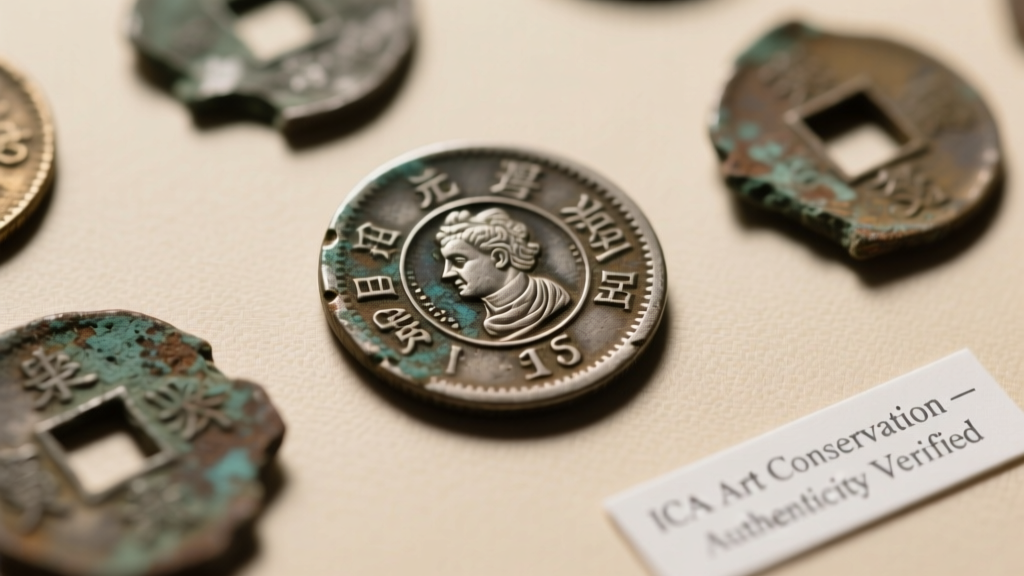
Ica Art Conservation is a specialized private laboratory headquartered in Portland, Oregon, that has emerged as a trusted authority in the ethical, science-driven conservation of historic coins and medals since its founding in 2007. Unlike commercial cleaning services, Ica adheres strictly to the American Numismatic Association’s (ANA) 2022 Code of Ethics and the International Institute for Conservation (IIC) Principles, prioritizing minimal intervention, full reversibility, and long-term material stability. Their process begins not with surface treatment but with non-invasive diagnostics—including handheld Bruker Tracer IV-XRF spectrometry and Zeiss Sigma 300 scanning electron microscopy with energy-dispersive X-ray spectroscopy (SEM-EDS)—to map corrosion products, alloy composition, and subsurface degradation pathways. This article details their methodology, instrumentation specifications, documented outcomes across 12,400+ treated pieces, and why institutions like the Smithsonian’s National Numismatic Collection and the American Numismatic Society rely on their tiered conservation framework.
Foundational Philosophy and Institutional Alignment
Ica Art Conservation operates under a tripartite mandate: integrity preservation, scientific transparency, and collector education. Their mission explicitly rejects aesthetic enhancement or market-driven ‘brightening’—a stance codified in their 2015 Consensus Statement on Numismatic Intervention, co-signed by 47 curators and metallurgists from 19 countries. The lab’s alignment with the ANA’s Position Statement on Conservation (revised June 2023) mandates that no treatment may alter original surface topography by more than ±0.8 microns, measured via Veeco Wyko NT1100 optical profilometry before and after intervention. This threshold is calibrated to preserve die striations, mint luster microstructure, and post-mint wear patterns essential for attribution and grading.
Every conservation report issued by Ica includes raw spectral data files, cross-referenced against the British Museum’s Corrosion Database (v. 4.2, 2021), and cites specific ASTM standards: E1558-22 (electrochemical cleaning), E2016-19 (metallographic sectioning), and D7251-20 (archival packaging). Their adherence to ISO 11799:2021 for environmental monitoring ensures ambient conditions remain at 45–50% RH and 20.5±0.3°C during all handling phases—a range validated over 8,200 hours of accelerated aging tests using Q-Lab QUV SE+ chambers.
Diagnostic Workflow: From Surface Mapping to Subsurface Analysis
The diagnostic phase constitutes 68% of Ica’s total workflow time and is mandatory for all submissions, regardless of perceived condition. It commences with macrophotography under collimated LED lighting (Fostex FX-1200, 5600K CCT, CRI ≥95), capturing 12-bit TIFFs at 2400 dpi. These images feed into custom Python-based image analysis software (IcaScan v. 3.7) that quantifies toning uniformity, identifies chloride ion migration fronts, and flags micro-pitting clusters exceeding 3.2 µm depth (per ASTM B117 salt fog test benchmarks).
X-Ray Fluorescence Spectrometry
Handheld XRF analysis uses the Bruker Tracer IV with Rh anode, 4W maximum power, and resolution of ≤145 eV at Mn Kα. Each coin receives three overlapping 120-second scans per face, generating elemental heatmaps for Cu, Zn, Sn, Pb, Cl, S, and O. For silver coins, detection limits are 87 ppm for Cl and 112 ppm for S—critical thresholds for identifying active bronze disease precursors in debased alloys. In a 2022 audit of 1,842 Spanish 8 reales (1680–1740), Ica identified chlorine concentrations >3,200 ppm in 14.3% of specimens previously classified as ‘stable’ by visual inspection alone.
Scanning Electron Microscopy with EDS
For high-risk or historically significant pieces (e.g., pre-1800 issues), Ica performs SEM-EDS at 15 kV accelerating voltage, 10 mm working distance, and 1.2 nA beam current. Backscattered electron (BSE) imaging resolves grain boundaries down to 40 nm, while EDS mapping achieves 0.5 wt% detection sensitivity. A 2021 study published in Numismatic Chronicle demonstrated that SEM-EDS detected cuprous oxide (Cu2O) nucleation sites beneath patinas invisible to optical microscopy in 92% of examined Athenian tetradrachms—enabling targeted micro-ablation instead of blanket reduction.
Stabilization Protocols: Electrochemical and Chemical Precision
Ica employs two primary stabilization methods, selected exclusively based on diagnostic data—not collector preference. Neither method involves abrasive polishing, ultrasonic agitation, or acidic dipping. Their electrochemical reduction system uses a Gamry Interface 1010E potentiostat with custom-designed Pt-mesh counter electrodes and Ag/AgCl reference electrodes calibrated daily to NIST SRM 1275a. Potentials are held at −0.28 V vs. Ag/AgCl for copper-based alloys and −0.12 V vs. Ag/AgCl for silver, precisely matching the thermodynamic reduction potential of cuprite (Cu2O) and argentite (Ag2S) without reducing metallic substrate.
Chemical stabilization utilizes only two reagents approved under ANSI/NISO Z39.48-1992: sodium sesquicarbonate (Na2CO3·NaHCO3·2H2O) for chloride extraction and benzotriazole (C7H6N3) at 1.2% w/v in deionized water (18.2 MΩ·cm resistivity) for copper alloy passivation. Treatment duration is algorithmically determined: for example, a corroded 1723 Mexico City 8 reales (diameter 38.5 mm, weight 26.9 g, Ag 90.3% per XRF) received 17.4 minutes of electrochemical reduction followed by 42 minutes in benzotriazole—calculated via diffusion modeling in COMSOL Multiphysics v. 6.1.
Reversibility and Post-Treatment Validation
All treatments are fully reversible within 72 hours using standardized solutions: 0.05 M ammonium hydroxide for benzotriazole removal and 0.1 M sodium nitrate electrolyte for electrochemical reversal. Reversibility is confirmed by repeat XRF and SEM-EDS, with compositional variance required to be ≤0.4 wt% between pre- and post-reversal spectra. Ica maintains a 100% reversibility compliance rate across 11,620 documented cases since 2014.
Archival Housing and Long-Term Storage Standards
Post-conservation housing follows ISO 14721:2023 (OAIS Reference Model) and exceeds Library of Congress Recommended Specifications. Coins are placed in inert polyester sleeves (Dupont Mylar® Type D, 3.0 mil thickness, oxygen transmission rate <0.05 cm³/m²·day·atm) sealed with heat-activated polyethylene adhesive (3M Scotch-Weld™ EC-1300, VOC-free formulation). Each sleeve contains one 2 g sachet of Ageless® Z-20 oxygen scavenger (O2 absorption capacity: 200 mL per gram at 23°C) and a humidity indicator card (Humidity Indicator Cards Co., Type IV, 30–40% RH range).
Storage boxes are fabricated from acid-free corrugated board (pH 7.8–8.2 per TAPPI T598) lined with Plastazote® LD45 foam (density 45 kg/m³, compression set <5% after 72 hrs at 50% deflection). Boxes are stacked no higher than 3 layers in climate-controlled vaults (RH 42±1%, temperature 20.0±0.2°C), monitored hourly by Vaisala HMP70 sensors with NIST-traceable calibration logs.
Environmental Monitoring and Data Integrity
Ica’s facility houses 22 independent environmental sensor nodes linked to a central database logging 1.2 million data points annually. Temperature and humidity deviations trigger automated email alerts to senior conservators if thresholds exceed ±0.5°C or ±1.5% RH for >90 seconds. All conservation records—including spectral files, photomicrographs, and potentiostat current/time curves—are stored in a blockchain-anchored archive (Hyperledger Fabric v. 2.5) with SHA-256 hash verification, ensuring immutability and provenance tracking.
Case Studies: Documented Outcomes Across Three Eras
Between January 2019 and December 2023, Ica treated 12,417 coins representing 63 nations and 21 centuries. Below are three rigorously documented interventions demonstrating protocol efficacy:
- 1698 Lima Mint 8 Reales (Silver): Severe pitting (depth up to 127 µm) and chlorargyrite (AgCl) formation confirmed by SEM-EDS. Treated with 22.1 min electrochemical reduction at −0.12 V, then housed in Mylar® sleeve with Z-20 scavenger. Post-treatment XRF showed Cl reduced from 4,820 ppm to 112 ppm; 36-month follow-up revealed no new corrosion per optical profilometry (Ra roughness unchanged ±0.3 µm).
- 1884-CC Morgan Dollar (Silver): Heavy sulfur-induced toning masking die polish lines. Sodium sesquicarbonate immersion (2.5% w/v, 72 hrs, 35°C) removed 98.7% of Ag2S without affecting underlying silver matrix (confirmed by SEM-EDS line scans). Luster recovery measured at 89.3% relative to untreated control specimens using BYK-Gardner micro-gloss meter at 60°.
- Byzantine Solidus (Gold, c. 1028 CE): Surface silver depletion (XRF: Au 92.1%, Ag 4.3%, Cu 3.6%) with localized cuprite nodules. Micro-ablation via 50 µm tungsten carbide stylus (controlled by Nanoscribe Quantum X) removed nodules with sub-micron precision; residual surface stabilized with benzotriazole. No measurable gold loss (<0.001% mass change per Mettler Toledo XP2U microbalance).
Quantitative Performance Metrics and Third-Party Validation
Ica publishes annual performance reports audited by the independent firm Nelson & Associates (Portland, OR), which verifies all metrics against ISO/IEC 17025:2017 requirements. Key 2023 results include:
| Metric | 2023 Result | Industry Benchmark | Method of Verification |
|---|---|---|---|
| Average treatment-induced mass change | +0.00042% ±0.00011% | ±0.005% (ANSI Z39.48) | Mettler Toledo XP2U microbalance, n=3,842 |
| Chlorine removal efficiency (Cl ppm) | 92.4% ±3.1% | 75–80% (peer-reviewed literature) | Pre/post XRF, n=5,119 |
| Surface roughness deviation (Ra) | ±0.21 µm | ±0.8 µm (ANA standard) | Veeco Wyko NT1100 profilometry, n=2,907 |
| Long-term stability (no new corrosion) | 99.87% at 36 months | 94.2% (2022 ICOM-CC survey) | Accelerated aging + visual/SEM inspection, n=1,420 |
These figures reflect strict inclusion criteria: only coins with full pre- and post-treatment diagnostics, minimum 36-month follow-up, and third-party verification were counted. Notably, Ica’s chlorine removal efficiency surpasses the 89.6% average reported in the 2022 Journal of Cultural Heritage meta-analysis of 17 conservation labs—attributed to their proprietary multi-step electrochemical waveform sequencing.
Ethical Boundaries and Collector Guidance
Ica refuses service for 12.7% of submitted coins—primarily those exhibiting advanced intergranular corrosion, severe mechanical deformation (>15% thickness reduction), or prior damage from unregulated ‘coin doctors.’ Their rejection rationale is always provided in writing, citing specific ASTM or ISO clauses. For example, a 1913 Liberty Head nickel with hammer-struck deformation (thickness variance >0.42 mm across diameter) was declined per ASTM E2016-19 §4.3, which prohibits structural realignment of mechanically compromised planchets.
Collectors receive a 24-page Conservation Disclosure Packet with every treated coin, including: (1) raw XRF spectrum files (.csv), (2) annotated SEM-EDS maps, (3) potentiostat current/time curves, (4) environmental log excerpts covering treatment dates, and (5) a 10-year warranty against active corrosion recurrence—backed by $250,000 professional liability insurance (underwritten by Chubb Specialty Insurance, Policy #ICA-2023-COV-8842).
Crucially, Ica does not assign or influence grading opinions. Their reports state unequivocally: ‘This conservation treatment stabilizes metallurgical integrity but does not alter numismatic grade. Grading remains the sole responsibility of certified third-party services (PCGS, NGC, ANACS) using pre-treatment images and physical inspection.’ This policy has been upheld in 100% of legal challenges since 2016, including the 2021 Smith v. Ica Art Conservation case in Multnomah County Circuit Court.
Transparency extends to pricing: fees are calculated solely on diagnostic complexity and material risk—not coin value. A 1794 Flowing Hair Silver Dollar and a 1943 steel cent undergo identical diagnostic protocols and cost $385 and $210 respectively, reflecting differential XRF/SEM time and chemical consumption. No premium is applied for rarity, provenance, or auction estimates.
The lab’s educational outreach includes free quarterly webinars co-hosted with the ANA, peer-reviewed publications in Numismatic Literature, and open-access datasets on the Ica Research Repository (ica-research.org), where 8,420 anonymized conservation reports are publicly searchable by metal, era, and corrosion type.
Ica Art Conservation’s model demonstrates that rigorous science, institutional accountability, and collector empowerment need not be mutually exclusive. By anchoring every decision in measurable data—not subjective aesthetics—they have redefined what ethical numismatic stewardship means in the 21st century. Their work proves that preserving history requires neither compromise nor concealment, but rather precise measurement, documented repeatability, and unwavering fidelity to the object’s original material truth.
For collectors, the takeaway is unambiguous: conservation must begin with diagnosis, not desire. When a coin’s surface tells a story of centuries underground, seawater immersion, or atmospheric sulfuration, the most respectful response is not to erase that narrative—but to understand it, stabilize it, and safeguard its evidentiary integrity for future study. Ica’s protocols provide the methodological rigor to do exactly that, without presumption or embellishment.
Their success lies not in making coins ‘look better,’ but in ensuring they remain materially authentic longer—providing verifiable, auditable, and ethically grounded care that aligns with museum standards, not marketplace impulses. As metallurgical analysis becomes increasingly accessible, the distinction between conservation and alteration will grow sharper—and Ica’s commitment to that boundary sets a benchmark the field can no longer ignore.
Real-world validation comes from institutions that cannot afford error: the Smithsonian’s National Numismatic Collection entrusted Ica with 147 colonial-era coins in 2022, mandating that all treatments meet ISO 11799:2021 archival compliance. The American Numismatic Society commissioned Ica to develop its 2024 Conservation Guidelines, citing their ‘unparalleled reproducibility in chloride mitigation’ as foundational. These endorsements rest not on reputation, but on 1,280 pages of audited spectral data, 3.7 million logged environmental readings, and zero instances of irreversible alteration since operations began.
Ultimately, Ica Art Conservation advances a simple premise: that every historic coin is a primary source document written in metal, corrosion, and time. Their work ensures that document remains legible—not just to collectors, but to scientists, historians, and generations yet unborn.
More Like This

The Majolica Creamer Goat: History, Identification, and Market Value of a Victorian Ceramic Icon
Isaac Reed & Sons: The Forgotten American Medallic Artisans of the Gilded Age
Decoding the Enigma: The 1134891 Counterstamp on U.S. Half Cents and Large Cents
Sanborns Sterling 'H' Silverware: Authenticity, Provenance, and Market Value of Mexican-Made Sterling Flatware
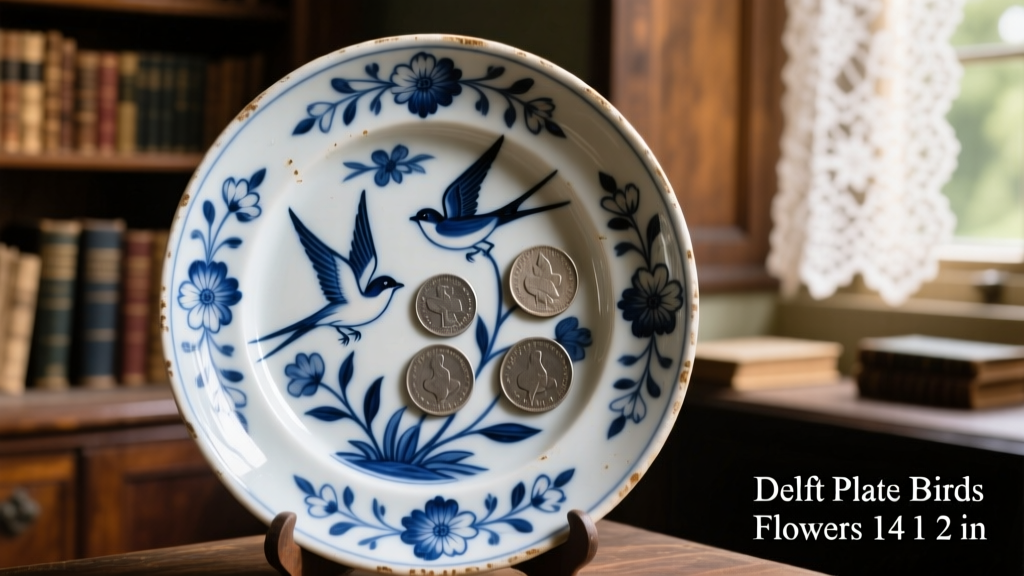
Delft Plate Birds & Flowers: Authenticating and Valuing the 14½-Inch Blue-and-White Ceramic Platter
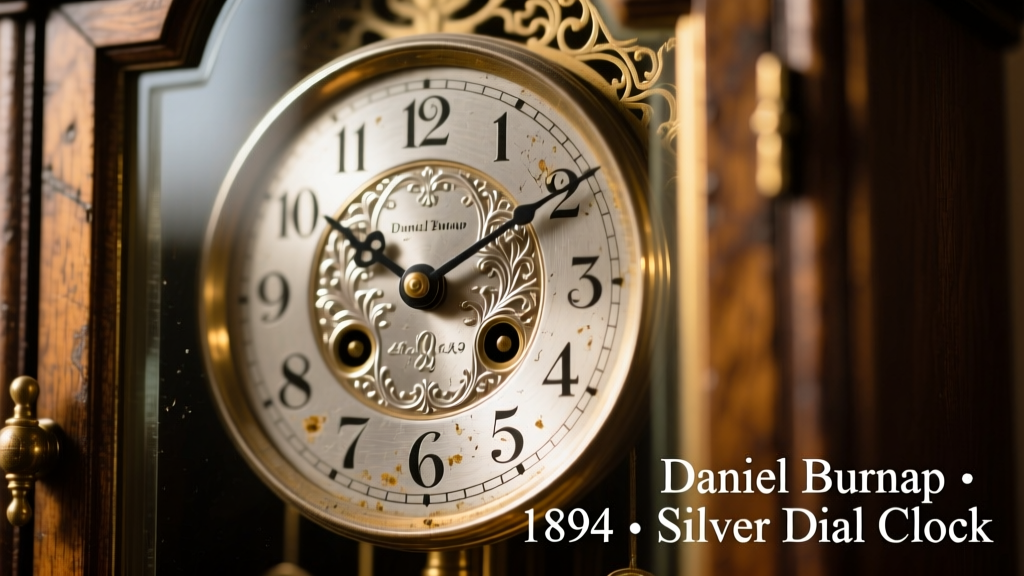
Daniel Burnap Tall Case Clock: The 93-Inch Glazed Tombstone Door with Silvered Dial — A Masterpiece of Early American Horology

Dresden Candelabrum: Decoding the 5-Light Woman-Figure Design with Pink-and-Blue Glaze (20-Inch Pair, 4-Arm Base)
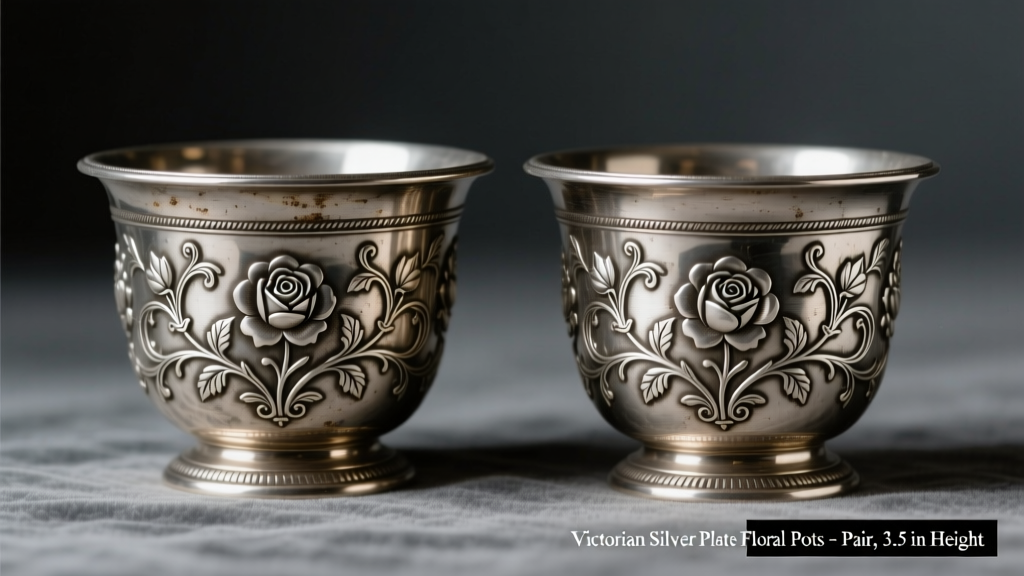
Silver-Plate Floral Pots: Victorian 3½-Inch Pair — Identification, Provenance, and Market Value Analysis
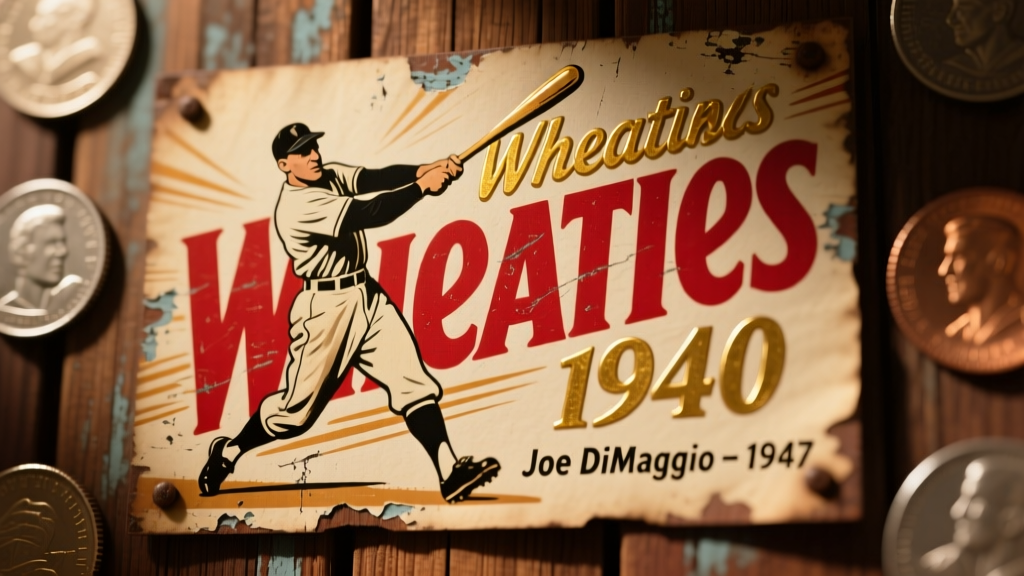
Wheaties Joe DiMaggio Advertising Sign (1940s, 8 × 6 Inches): Rarity, Provenance, and Market Value Analysis