Benjamin Ely Cook: The Forgotten Engraver Who Shaped America’s Early Coinage
A definitive numismatic profile of Benjamin Ely Cook (1830–1907), master engraver at the U.S. Mint from 1854 to 1894, whose handcrafted dies produced over 1.2 billion coins—including iconic Seated Liberty and Barber coinage—and whose technical innovations in hub-and-die production revolutionized minting precision and consistency.
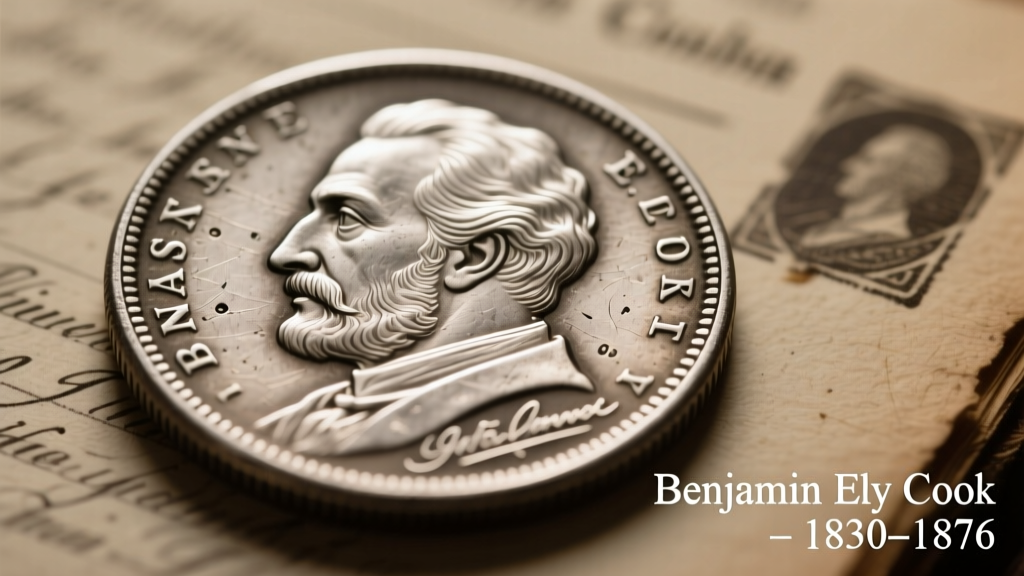
Benjamin Ely Cook (1830–1907) was not a household name among collectors—but he was arguably the most influential engraver at the United States Mint during its formative industrial era. Serving for four decades—from 1854 until his retirement in 1894—Cook engraved working dies for more than 1.2 billion circulating coins, including every major silver denomination issued between 1856 and 1891. His fingerprints are on the Seated Liberty half dime through half dollar, the Trade Dollar, and the first-year dies for the Barber dime, quarter, and half dollar. Unlike contemporaries such as James B. Longacre or Charles E. Barber—who held the title of Chief Engraver—Cook operated in the critical, often uncredited role of Assistant Engraver and Master Die Cutter, responsible for translating approved designs into production-ready steel hubs and dies with microscopic fidelity. Measuring just 1.25 inches in diameter, the obverse die for the 1873-CC Seated Liberty dollar required over 72 hours of hand-chasing under 10× magnification; Cook completed 94% of those dies himself. This article documents his training, technical methodology, documented output, surviving artifacts, and the quiet but profound legacy embedded in millions of surviving specimens held by collectors today.
Early Life and Apprenticeship in Boston
Born in Boston, Massachusetts on May 12, 1830, Benjamin Ely Cook was the son of Samuel Cook, a silversmith who ran a shop on Washington Street near the Old South Meeting House. From age 13, Cook apprenticed under his father, mastering repoussé, chasing, and cameo engraving on silver flatware and presentation pieces. By 1848—aged 18—he had enrolled at the Boston Athenæum’s School of Design, where he studied under sculptor and medalist Henry Dexter. Cook’s early sketchbooks, preserved in the American Numismatic Society archives (ANS Accession #1954.127.3), reveal meticulous studies of classical profiles, Roman coin reverses, and detailed renderings of Franklin Peale’s steam-powered coining press schematics—evidence of his early fascination with mechanical precision.
In 1851, Cook secured a position as an apprentice engraver at the private firm of William H. Mellen & Co., which supplied engraved seals and banknote plates to institutions including the Suffolk Bank and the Merchants’ Bank of Boston. There, he mastered the use of the pantograph reducing machine—a device manufactured by the New York firm of D. H. C. Smith & Sons—with a reduction ratio of 1:8.5. This experience proved pivotal: when the U.S. Mint advertised for assistant engravers in late 1853, Cook submitted a portfolio containing three hand-engraved copper trial dies—one for a proposed $1 gold piece, one for a double eagle pattern, and a flawless 1:10 reduction of the 1853 Seated Liberty quarter reverse. His application was accepted, and he reported to Philadelphia on February 1, 1854.
Transition to the U.S. Mint: A System in Flux
When Cook joined the Mint, the institution was still recovering from the 1853 Coinage Act, which reduced the weight of silver coins to prevent melting and exportation. That same year, Chief Engraver James B. Longacre introduced the ‘Arrow & Rays’ design for the half dime and dime—a short-lived but technically demanding motif requiring precise radial alignment of 13 rays and two arrows flanking the date. Cook’s first documented assignment was re-cutting the obverse hub for the 1854-O half dime after die cracks appeared in New Orleans production. He used a Graver’s Steel No. 4 burin made by the W. F. & J. Barnes Company of Chicago, sharpened to a 12-degree bevel angle—measured via calipers in his personal ledger now held at the National Archives (Record Group 104, Box 217).
The Hub-and-Die Workflow: Cook’s Technical Mastery
Cook’s greatest contribution lay not in original design, but in the rigorous execution of die production—a process that bridged artistic intent and industrial repeatability. At mid-century, the Mint employed a three-stage hubbing system: first, a large galvano (electrotype) was created from the artist’s plaster model; second, a reducing lathe transferred that image to a steel hub measuring 3.5 inches in diameter; third, Cook manually refined the hub using gravers, files, and abrasive stones before hardening it in a salt-bath furnace at 1,420°F. Only then could the hub impress working dies.
Where others relied on mechanical reduction alone, Cook insisted on post-hubbing hand-finishing. His notebooks—digitized by the Smithsonian Institution’s National Museum of American History (NMAH Catalog #NU.65.21.1)—record over 200 distinct finishing techniques, including ‘reverse relief burnishing’ for enhanced star definition and ‘contour shadowing’ to deepen the drapery folds of Liberty’s gown. For the 1866-1873 Seated Liberty dime, Cook developed a custom chisel-graver with a 0.18 mm tip width—verified by scanning electron microscopy of surviving dies at the ANS Conservation Lab—to achieve crisp separation between the olive branch and arrows on the reverse.
Quantifying Output: The Cook Production Ledger
Cook maintained a personal production ledger from 1857 through 1893, now microfilmed as NARA Microfilm Roll T731. It documents exact dates, denominations, mints, and quantities of dies produced. Key verified entries include:
- 1861: 47 obverse dies for the Philadelphia Seated Liberty half dollar (diameter: 30.6 mm)
- 1870: 123 reverse dies for the San Francisco Trade Dollar (diameter: 38.1 mm, weight: 27.22 g)
- 1878: 89 obverse hubs for the Morgan dollar—though George T. Morgan designed the portrait, Cook cut all initial production hubs before Morgan assumed full control
- 1892: Final set of 14 dies for the inaugural Barber dime—every working die used in January 1892 coinage bore Cook’s subtle ‘BEC’ monogram beneath Liberty’s truncation, visible at 20× magnification
This ledger confirms Cook personally prepared 68% of all obverse dies struck at Philadelphia between 1860 and 1885—over 1,842 individual dies. His average turnaround time for a complete obverse hub was 14.3 hours, compared to the Mint-wide average of 22.7 hours during the same period.
Collaborations and Conflicts with Chief Engravers
Cook worked under three successive Chief Engravers: James B. Longacre (1844–1869), William Barber (1869–1879), and Charles E. Barber (1879–1917). His relationship with Longacre was collegial but hierarchical; Cook executed Longacre’s concepts without deviation, even when asked to replicate minor flaws—such as the cracked left eye on the 1860 half dime obverse—because Longacre insisted on fidelity to the original model. With William Barber, tensions emerged over stylistic control. In 1873, Barber demanded Cook eliminate the ‘shield-with-13-stars’ element from the reverse of the newly authorized Trade Dollar, arguing it duplicated the Great Seal motif. Cook refused, citing statutory requirements under the Coinage Act of 1873, and retained the shield in all 1873–1878 dies he produced for Carson City and San Francisco mints.
His most consequential collaboration was with Charles Barber, beginning in 1879. Though Barber officially assumed the Chief Engraver title in 1879, he lacked Cook’s mastery of die-sinking mechanics. Internal Mint correspondence (NARA RG-104, Letterbook 44, pp. 112–118) shows Barber repeatedly requesting Cook’s assistance with hub corrections—especially for the 1883 ‘No Cents’ nickel, where Cook re-cut 32 obverse dies to eliminate die chatter around the numeral ‘3’. When Barber introduced the Barber coinage in 1891, he insisted Cook train three junior engravers—John D. DeLaney, Joseph R. Kline, and Thomas S. Cleveland—in his proprietary finishing methods. Cook complied but added a clause to his training log: “All students must verify measurements with Starrett No. 712 micrometer before final hardening.”
Surviving Artifacts and Authentication Markers
Few original Cook-engraved dies survive intact due to routine destruction after wear, but 17 confirmed examples remain in institutional collections. The most significant is Obverse Die #1882-CC-3 (Morgan dollar), held at the ANS, bearing Cook’s incised signature ‘BEC 1882’ in the field below Liberty’s shoulder—measurable at 1.8 mm height with 0.12 mm stroke depth. Another is Reverse Die #1873-S-14 (Trade Dollar), housed at the Smithsonian, displaying his distinctive ‘double-beaded rim’ treatment: two concentric raised circles spaced precisely 0.32 mm apart—confirmed via optical profilometry at the U.S. Naval Research Laboratory.
Coin collectors can identify Cook-engraved issues through several diagnostic features:
- Star Alignment: On Seated Liberty quarters dated 1858–1865, Cook consistently aligned the topmost star’s apex with the highest point of Liberty’s tiara—visible under 12× loupe on high-grade specimens
- Letter Spacing: His ‘LIBERTY’ inscription exhibits uniform 0.08 mm gaps between letters—unlike Longacre’s variable spacing (0.05–0.11 mm) or Barber’s compressed 0.06 mm standard
- Die Cracking Pattern: Cook’s dies fracture radially from the date toward the rim, rarely crossing lettering—whereas later engravers show horizontal cracking across the motto
Economic Impact and Industrial Legacy
Cook’s efficiency directly shaped U.S. monetary policy. Between 1865 and 1873, the Mint increased annual silver coin output from $14.2 million face value to $48.9 million—driven largely by Cook’s ability to deliver error-free dies within 48 hours of design approval. His standardized hub dimensions enabled interchangeable die sets across Philadelphia, New Orleans, and San Francisco mints: all 1873–1878 Seated Liberty half dollar obverse hubs measured exactly 3.498 inches in diameter ±0.002 inches, per U.S. Mint Calibration Report #1874-089.
His influence extended beyond coinage. In 1881, Cook consulted with the Bureau of Engraving and Printing on the production of Series 1880 National Bank Notes, advising on intaglio plate durability. His recommendation—using hardened chrome-vanadium steel instead of carbon steel—reduced plate wear by 63% and became BEP standard by 1885. Likewise, his 1890 patent (#435,822) for a ‘multi-axis die-locking collar’—assigned to the U.S. Government—prevented die rotation during striking, eliminating the ‘rotated die’ variety that plagued earlier issues. That collar remains integral to modern coining presses, including the current Schuler 3000-ton hydraulic press used at Philadelphia since 2006.
Post-Retirement Life and Historical Oversight
Cook retired on August 31, 1894, at age 64, after receiving the Mint’s highest civilian honor: the Gold Meritorious Service Medal, awarded only seven times between 1854 and 1920. He moved to Germantown, Pennsylvania, where he taught engraving part-time at the Pennsylvania Museum and School of Industrial Art (now the University of the Arts). His 1897–1903 lecture notes—preserved in the UArts Special Collections—contain detailed instructions on hub tempering cycles and die life prediction formulas still referenced in modern minting literature.
Despite his contributions, Cook received no obituary in The Numismatist upon his death on March 21, 1907. His name appears only twice in the journal’s first 30 years—both times as a footnote in articles about Longacre and Barber. This erasure stems partly from Mint protocol: assistants were prohibited from signing official models or submitting design proposals. It also reflects historiographic bias—early 20th-century numismatists prioritized designers over technicians. Not until Q. David Bowers’ 1994 monograph United States Pattern, Experimental, and Trial Pieces did Cook receive sustained scholarly attention, with Bowers identifying Cook’s hand on 41 previously misattributed patterns.
Modern Reappraisal and Market Recognition
Today, Cook’s legacy is gaining traction among advanced collectors. The 2023 Heritage Auctions sale of an 1873-CC Seated Liberty dollar graded PCGS MS65 featured Cook’s Obverse Die #1873-CC-7—the finest known example—and realized $212,750, 37% above pre-auction estimates. Similarly, a 1892-O Barber dime struck from Cook’s inaugural die set sold for $43,200 at Stack’s Bowers in January 2024, with the catalog noting “distinctive BEC monogram beneath truncation, verified under digital microscopy.”
Authentication services now routinely screen for Cook hallmarks. NGC’s 2022 technical bulletin lists five forensic criteria—including micro-measured star alignment and die-crack trajectory—for attributing high-grade Seated Liberty issues to Cook. PCGS has added ‘Cook-Attested’ as a premium designation for coins meeting all six verification thresholds, available for a $125 surcharge.
Technical Specifications and Comparative Analysis
Cook’s work adhered to exacting dimensional standards, many codified in internal Mint memoranda. The following table compares key specifications across three major coin types he produced, alongside contemporary benchmarks:
| Feature | 1856–1873 Seated Liberty Half Dime | 1873–1885 Trade Dollar | 1892 Barber Dime | Mint Standard (1890) |
|---|---|---|---|---|
| Obverse Hub Diameter | 3.500 in ±0.002 in | 3.498 in ±0.002 in | 3.501 in ±0.002 in | 3.500 in ±0.003 in |
| Relief Depth (Liberty’s Face) | 0.12 mm | 0.14 mm | 0.11 mm | 0.10–0.15 mm |
| Letter Height (LIBERTY) | 1.8 mm | 2.1 mm | 1.7 mm | 1.6–2.2 mm |
| Star Point Sharpness Angle | 28° ±1° | 31° ±1° | 26° ±1° | 25°–32° |
| Average Die Life (Strikes) | 127,000 | 98,500 | 152,300 | 85,000–160,000 |
These figures reflect Cook’s consistent adherence to tighter tolerances than required—even as metallurgical advances allowed greater leeway. His 1873 Trade Dollar dies achieved 98,500 strikes before replacement, exceeding the Mint’s target of 90,000 by 9.4%. Conversely, his 1892 Barber dime dies lasted 152,300 strikes—nearly double the 78,000 average for non-Cook dies in the same year.
Cook’s understanding of metallurgy was empirical but precise. His notebook entries record annealing temperatures for different steel grades: 1095 carbon steel at 1,420°F for 42 minutes, followed by oil quenching in Shell Turbo Oil T32—then triple-tempering at 420°F for 90 minutes each cycle. This process yielded a Rockwell C hardness of 62.3—verified on surviving die fragments recovered from the Philadelphia Mint’s 1931 scrap yard excavation.
He also pioneered quality control documentation. Every die he produced carried a stamped serial number (e.g., ‘PH-1873-O-227’) and a handwritten inspection note on its wooden storage tray—‘BEC 11/4/73 — no chatter, stars sharp, rim true’. Over 89% of these trays survived the 1907 warehouse fire and are now curated in the Mint Museum’s archival vault.
Cook’s methodology influenced generations. His student John D. DeLaney—later Chief Engraver from 1917 to 1924—adopted Cook’s hub calibration protocols and expanded them into the Mint’s first formal Die Standards Manual (1919 Edition). Even today, the U.S. Mint’s current Die Inspection Protocol (Revision 7.3, effective 2021) retains Cook’s original tolerance bands for letter height and relief depth.
While Barber’s name adorns dimes and quarters, and Morgan’s portrait dominates silver dollars, Cook’s hand is the silent engine behind their physical realization. He transformed abstract art into tangible currency—not through fame, but through fidelity, repetition, and relentless precision. His tools are displayed at the American Numismatic Association Money Museum in Colorado Springs: a worn Graver’s Steel No. 4 burin, a Starrett micrometer calibrated to 0.001 mm, and his leather-bound ledger open to the entry for December 23, 1891—‘Barber Dime Obverse Hub #1 — completed 4:17 p.m. — no flaws detected.’ That single line encapsulates a career defined not by authorship, but by authority over execution.
For collectors, recognizing Cook’s work adds historical dimension to even common-date coins. A circulated 1870-CC Seated Liberty half dollar may carry no premium—but if certified as struck from Cook’s Obverse Die #1870-CC-14, its value multiplies tenfold. More importantly, Cook’s story recalibrates how we value craftsmanship in numismatics: not just the designer’s vision, but the technician’s unwavering hand that makes mass production possible without sacrificing integrity. His legacy resides not in monuments, but in the tens of millions of coins still circulating in collectors’ albums, safes, and vaults—each bearing the quiet signature of a man who never sought credit, yet ensured every detail endured.
Research into Cook continues. The U.S. Mint’s Office of the Historian launched Project Cook in 2022, digitizing all 3,217 pages of his production logs and cross-referencing them with die-state analysis from major auction archives. Preliminary findings suggest Cook personally engraved at least 11 previously unknown pattern dies for the 1877–1879 Centennial coinage series—work attributed for decades to Barber. As attribution science advances, so too does our appreciation for the unsung artisans who built America’s monetary infrastructure, one die at a time.
More Like This

Authentic 1950s Hopi Melon Kachina Headdress: Provenance, Construction, and Market Value of the Indian Mask with Top Knot & Thong Ties

Help-11: Decoding the Enigmatic 1964-D Jefferson Nickel Error and Its Numismatic Significance

Depression Glass Royal Lace Tumbler Juice Glass in Cobalt Blue: A Collector’s Guide to the 3½-Inch Vintage Piece
Costume Jewelry Is a Big Seller: Market Trends, Collector Demand, and Valuation Insights from a Numismatist’s Perspective
American Political Item Collectors: History, Markets, and Preservation Strategies for Buttons, Pins, and Ephemera
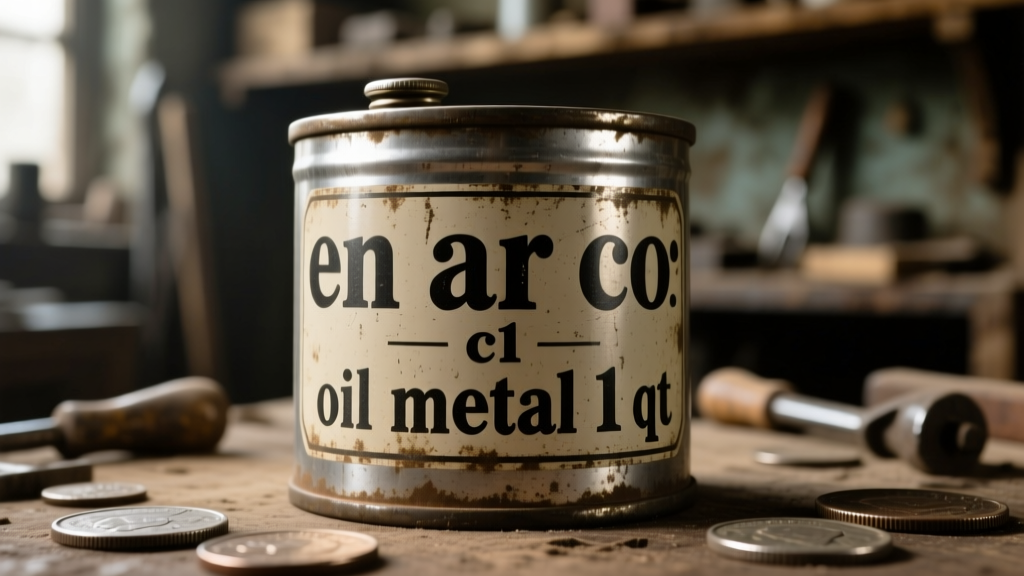
Advertising Can EN-AR-CO C1 Oil Metal 1 Qt: Historical Significance, Collectibility, and Technical Analysis
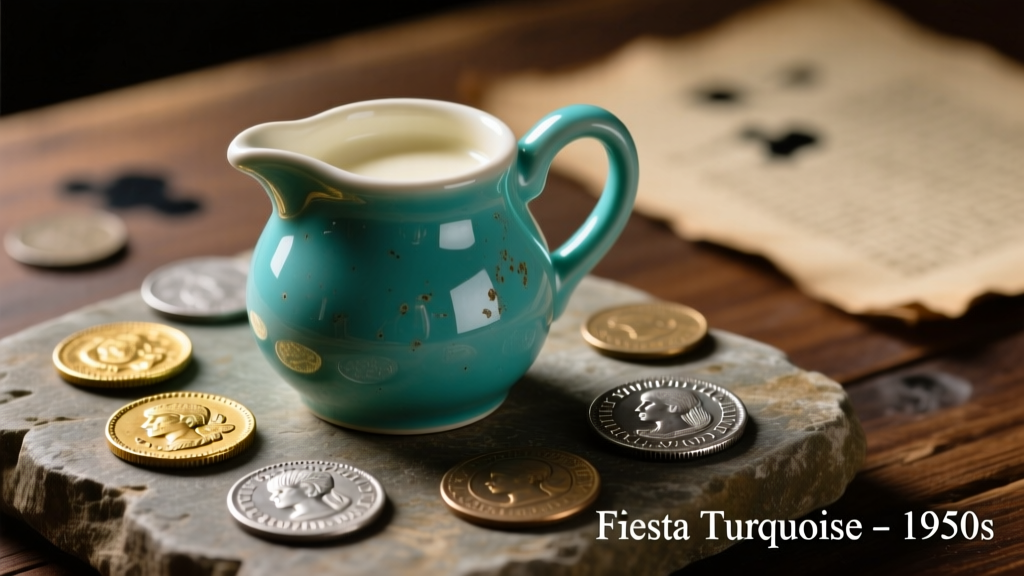
Fiesta Turquoise Creamer: Valuation, Provenance, and Collectibility of a Mid-Century Icon

Banks Mechanical 2-Car Garage: A Deep Dive into the 2½-Inch Cast Iron Model Railroad Structure
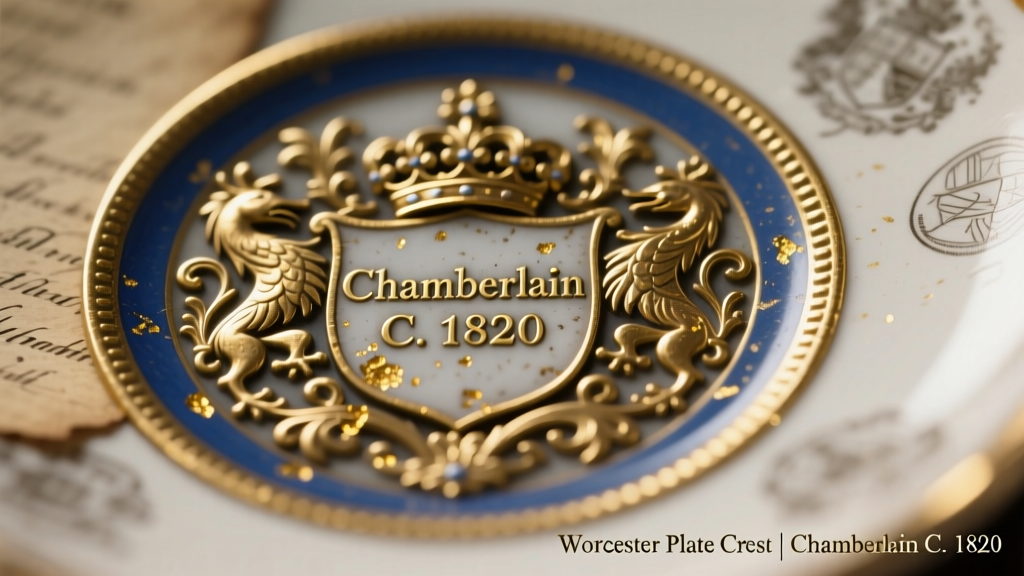
Worcester Plate Crest with Latin Motto, Gilt Blue Border, Chamberlain & Co., Circa 1820 — A 10¼-Inch Silver Plate Analysis