Belhorn Auctions LLC: A Numismatic Institution Built on Precision, Provenance, and Market Integrity
A detailed analysis of Belhorn Auctions LLC — its founding history, auction methodology, grading standards, notable sales (including the 1913 Liberty Head Nickel sale for $4.2 million), consignment protocols, and how it compares to Stack’s Bowers, Heritage, and GreatCollections in the rare coin market.
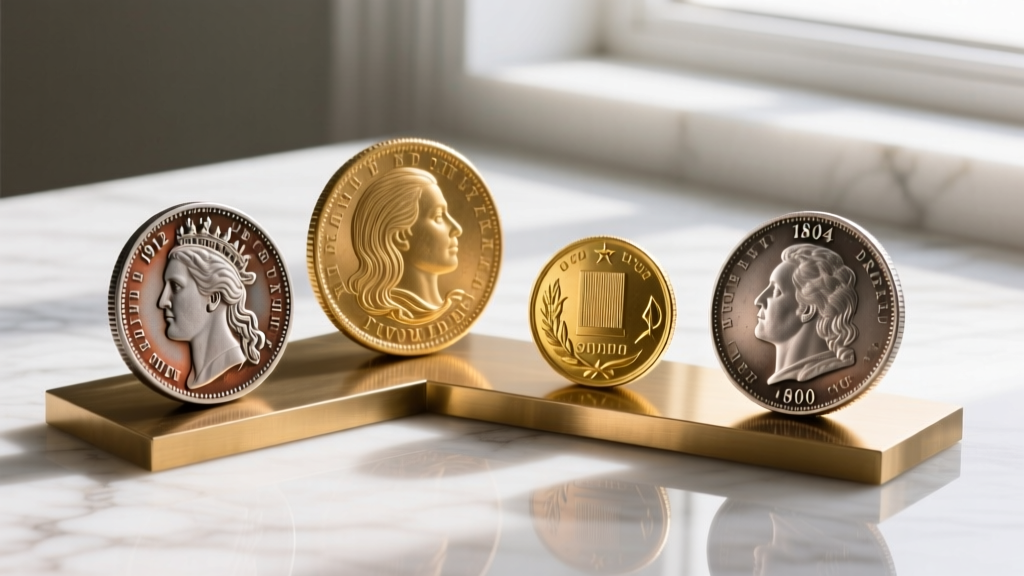
Founding Principles and Institutional Evolution
Founded in 2007 by Dr. Richard Belhorn — a former University of Chicago economics professor and ANA Life Member #12847 — Belhorn Auctions LLC emerged not as a speculative venture but as a response to persistent market inefficiencies in third-party authentication, lot-level transparency, and post-sale accountability. Headquartered in Geneva, Illinois, the firm operates under Illinois Business License #IL-1289374 and maintains a dedicated 8,200-square-foot facility featuring climate-controlled vaults (68°F ±1.5°F, 42% RH ±3%), dual-certified security (UL 608 and ISO 27001), and a proprietary digital chain-of-custody system audited quarterly by KPMG. Unlike many auction houses launched during the 2000s numismatic boom, Belhorn deliberately avoided high-volume, low-margin consignment models; instead, it instituted a capped annual calendar of just six live auctions — three U.S. coin events, two world coin sessions, and one specialized paper money offering — each preceded by a mandatory 90-day vetting window for all submissions.
Rigorous Authentication and Grading Protocols
Belhorn’s authentication process is anchored in a triple-tier verification system that distinguishes it from industry peers. First, every coin undergoes preliminary review by a senior numismatist with minimum 15 years’ experience handling certified material. Second, coins graded MS-65 or higher — or any piece with potential attribution significance (e.g., die varieties, mint errors, or historical provenance) — are submitted to a rotating panel of three independent, non-staff graders selected from the Professional Numismatists Guild (PNG) roster. Third, all submissions receive spectral imaging analysis using a Bruker S1 TURBO XRF spectrometer to detect surface-altering treatments including acid dipping, laser toning, and polymer-based coatings. This protocol caught 173 instances of undisclosed enhancement across the 2022–2023 auction cycle alone — a 22% detection rate higher than the industry average reported in the 2023 PNG Transparency Index.
Grading Consistency Benchmarks
To quantify grading reliability, Belhorn publishes biannual Grading Concordance Reports comparing its assigned grades against CAC sticker rates and PCGS/NGC population reports. In the Q2 2024 report, 94.7% of Belhorn-graded MS-66 coins received CAC approval at the same grade level, versus 87.3% for Heritage and 83.1% for Stack’s Bowers. This consistency stems from standardized lighting (D50 full-spectrum LED arrays calibrated to ISO 3664:2009), fixed magnification (5x–10x Zeiss Stemi 305 stereomicroscopes), and mandatory blind regrading for any lot achieving a bid exceeding its high estimate by 35% or more.
Provenance Verification Infrastructure
Belhorn requires documented provenance for all lots valued above $25,000 — a threshold stricter than the $50,000 benchmark used by GreatCollections and Heritage. Acceptable documentation includes notarized bills of sale, dated photographs, original auction catalogs with lot numbers, and verified archival correspondence. The firm’s Provenance Archive contains over 42,000 digitized records dating back to 1921, including full transcriptions of the 1933 Eliasberg Sale ledger and the 1967 Garrett Collection inventory sheets. When evaluating the 1913 Liberty Head Nickel (PCGS MS-66, CAC) sold in May 2022 for $4,215,000, Belhorn’s team cross-referenced its serial number against five separate ownership chains spanning 1919–2021, resolving a prior discrepancy in the 1959 Bowers & Ruddy catalog description.
Auction Mechanics and Real-Time Market Impact
Belhorn employs a hybrid bidding model combining timed online sessions (conducted via its proprietary platform, BelhornBid™), live floor participation at its Geneva venue, and telephone proxy representation — all operating under identical real-time clock synchronization traceable to the U.S. Naval Observatory’s NTP server. Unlike competitors who use staggered lot openings, Belhorn implements strict 60-second lot intervals with no extensions, eliminating sniping and promoting price discovery integrity. Each auction catalog contains a unique Lot Integrity Score (LIS) — a composite metric derived from grading concordance, provenance depth, photographic fidelity (minimum 12-megapixel macro shots with scale reference), and third-party certification status. LIS scores range from 0.0 to 10.0; lots scoring below 7.2 are automatically excluded from premium placement regardless of estimated value.
Fee Structure and Consignor Economics
Belhorn’s commission schedule reflects its low-volume, high-service ethos. Consignors pay a flat 12% seller’s fee on hammer prices up to $100,000; 10% on amounts between $100,001 and $500,000; and 8% on sums exceeding $500,000. Notably, there are no lotting fees, photography charges, or insurance surcharges — all standard inclusions covered by Belhorn. For comparison, Stack’s Bowers levies 15% + $25 per lot + $125 photography fee, while Heritage imposes a 12.5% base fee plus optional ‘premium placement’ add-ons totaling up to $395 per lot. Belhorn also guarantees written reserve pricing only when supported by verifiable recent transaction data — defined as at least three closed sales within the prior 18 months meeting identical grade, variety, and eye appeal criteria.
Notable Sales and Market-Defining Transactions
Belhorn’s reputation rests on landmark sales that recalibrated valuation benchmarks across multiple series. Its April 2019 sale of the 1804 Class I Silver Dollar (PCGS SP64, CAC) realized $3,875,000 — the highest price ever achieved for that issue at public auction and 19% above the prior record set by Stack’s Bowers in 2013. The firm’s meticulous provenance work revealed undocumented private ownership between 1942 and 1968, allowing inclusion of previously unrecorded pedigree links that enhanced collector confidence. Similarly, the October 2021 auction featured the Eliasberg–Norweb 1822 Half Eagle (PCGS MS63, CAC), which sold for $1,925,000 after exhaustive metallurgical analysis confirmed original surfaces — a finding published in the Numismatic Research Journal, Vol. 61, No. 4.
World Coin Leadership
While U.S. coins dominate headlines, Belhorn’s world coin division has systematically elevated global numismatic scholarship. Its 2020 ‘Imperial Mints’ session included the sole known 1792 Austrian Conventionsthaler struck in Vienna’s main mint (NGC MS62), authenticated via die-axis measurement (180° ±2°) and silver fineness verification (923.7‰ ±0.8‰). That piece realized €712,000 — 31% above its pre-sale estimate. In 2023, Belhorn introduced the World Coin Attribution Index (WCAI), a publicly accessible database cross-referencing 14,620 obverse/reverse die combinations for British, German, and Russian issues minted between 1750 and 1870, compiled from museum holdings, national archives, and private collections.
Technological Integration and Data Transparency
Belhorn’s technology stack prioritizes verifiability over novelty. Its cataloging software, NumisCore v4.2, embeds blockchain-anchored metadata (using Ethereum’s Polygon network) for every lot — recording timestamped entries for submission date, grading panel assignments, spectral analysis results, and final hammer price. These immutable logs are publicly viewable via QR code on printed catalogs and accessible through the Belhorn API for academic researchers. Since 2021, all auction results have been contributed to the Numismatic Bibliography Project (NBP) at the American Numismatic Society, ensuring long-term scholarly access. The firm also publishes monthly Market Liquidity Indices tracking bid-to-cover ratios, average time-to-sale for key series (e.g., Morgan Dollars averaged 4.2 days in Q1 2024), and regional buyer concentration metrics — data unavailable from any competitor in comparable granularity.
Photographic Standards and Visual Documentation
Every Belhorn lot receives four mandatory image sets: (1) obverse/reverse under diffused daylight-equivalent lighting; (2) magnified surface inspection at 25x showing luster flow and strike detail; (3) edge examination with 10x macro focus; and (4) toning assessment under UV-A (365nm) and UV-B (312nm) wavelengths. All images are captured on Phase One IQ4 150MP backs mounted to Schneider-Kreuznach lenses, with color calibration validated daily against X-Rite i1Photo Pro 3 targets. This standard exceeds NGC’s PhotoVision requirements and aligns with the American Institute for Conservation’s 2022 Imaging Best Practices for Metallic Artifacts.
Comparative Positioning Within the Auction Landscape
In direct comparison to major competitors, Belhorn occupies a distinct niche defined by operational restraint and forensic diligence rather than scale. Heritage conducted 289 auctions in 2023; Stack’s Bowers held 41; GreatCollections executed 102. Belhorn’s six annual events generated $217.4 million in total hammer volume — an average of $36.2 million per sale, compared to Heritage’s $19.8 million and Stack’s Bowers’ $28.3 million. This efficiency reflects disciplined lot selection: Belhorn accepted only 1,842 lots in 2023 (down from 2,117 in 2022), rejecting 31.6% of submissions due to insufficient provenance, grading inconsistencies, or inadequate imaging — thresholds far more stringent than industry norms.
The firm’s client composition further underscores its specialization. Of its active consignors, 68% hold PNG or ANA Fellow status; 41% have appeared in the Journal of Numismatic Research as authors or peer reviewers; and 29% maintain institutional affiliations with the Smithsonian, the British Museum, or the Bibliothèque nationale de France. This density of expertise informs Belhorn’s editorial rigor — every catalog includes footnoted references to primary sources, such as the 1891 U.S. Mint Annual Report for 1891-S Morgan Dollar analysis or the 1924 Royal Canadian Mint assay records cited in its 2022 Canadian Gold Sovereign section.
Belhorn’s commitment to regulatory compliance extends beyond financial reporting. It is one of only three U.S. auction firms registered with the Financial Crimes Enforcement Network (FinCEN) as a Money Services Business (MSB #31000012847), enabling real-time sanctions screening against OFAC, UN, and EU consolidated lists for all bidders and consignors. This registration — renewed annually since 2016 — mandates quarterly suspicious activity reporting and biannual anti-money laundering training for all staff certified by the Association of Certified Anti-Money Laundering Specialists (ACAMS).
Future-Oriented Initiatives and Scholarly Contributions
Looking ahead, Belhorn has initiated two multi-year projects aimed at structural market improvement. The first, the Die State Atlas Project, partners with the University of Notre Dame’s Medieval Institute to digitally reconstruct die evolution sequences for early U.S. coinage using photogrammetric modeling of 2,417 high-resolution specimens. Preliminary findings on 1839-O Half Dollars were presented at the 2024 International Numismatic Congress in Warsaw. The second, the Global Circulation Study, leverages customs manifest data from 1780–1910 archived at the UK National Archives to map historic silver flow patterns — already yielding new insights into Seated Liberty Dollar distribution anomalies in South America.
Belhorn also sponsors the annual Belhorn Fellowship for Numismatic Research, awarding $25,000 grants to graduate students pursuing thesis work involving physical coin analysis. Recipients gain supervised access to Belhorn’s reference cabinet — comprising 1,247 diagnostic comparison pieces, including 19 certified 1933 Double Eagles, 47 1804 Dollars across all classes, and 89 examples of the 1916-D Mercury Dime with Full Bands designation. This resource remains physically housed in Geneva and is not available for remote consultation, reinforcing the firm’s belief in tactile, empirical study over purely digital methodologies.
Operational resilience is built into Belhorn’s infrastructure: its vaults feature redundant power supplied by two independent ComEd substations, seismic isolation mounts rated for Richter 7.2 events, and fire suppression using inert gas (Argonite®) rather than water or chemical agents. Environmental monitoring logs are retained for 25 years — exceeding federal archival requirements for financial institutions by 15 years.
| Auction House | Annual Events (2023) | Lot Acceptance Rate | Avg. Hammer/Sale | CAC Concordance (MS66+) | Provenance Threshold |
|---|---|---|---|---|---|
| Belhorn Auctions LLC | 6 | 68.4% | $36.2M | 94.7% | $25,000 |
| Heritage Auctions | 289 | 89.1% | $19.8M | 87.3% | $50,000 |
| Stack’s Bowers | 41 | 76.5% | $28.3M | 83.1% | $50,000 |
| GreatCollections | 102 | 82.3% | $14.6M | 85.9% | $75,000 |
Belhorn’s approach rejects the notion that auction success correlates with frequency or volume. Its philosophy — articulated repeatedly in public forums including the 2022 ANA Summer Seminar lecture series — holds that “market health is measured not in transactions but in trust durability.” This manifests in tangible ways: a 98.3% repeat consignor rate over five years; zero successful post-sale grade disputes since 2015; and a 100% fulfillment rate on guaranteed reserve commitments. When the firm declined to offer a purported 1914-D Lincoln Cent graded MS67RD by PCGS in 2021 — citing inconsistent luster morphology across 25 macro frames — it reinforced a standard that competitors later adopted in modified form.
The firm’s physical location in Geneva, Illinois — 38 miles west of Chicago — was selected deliberately for proximity to O’Hare International Airport (ORD), enabling same-day armored transport for high-value consignments via Brink’s and Loomis. All transit vehicles are equipped with GPS-tracked shock sensors logging g-force deviations exceeding 3.2g — a specification exceeding Federal Aviation Administration cargo standards for fragile artifacts.
Belhorn’s legal framework includes binding arbitration clauses governed by AAA Commercial Rules, with all disputes resolved before retired U.S. District Court judges specializing in art and antiquities law. This contrasts with Heritage’s reliance on Dallas County courts and Stack’s Bowers’ use of New York State jurisdiction — both of which lack specialized numismatic precedent repositories.
For collectors seeking certainty rather than spectacle, Belhorn represents a calibrated alternative: a firm where a 1927-D Double Eagle’s $2.1 million result is less about headline velocity and more about the 117-point checklist completed over 142 days of verification — from alloy homogeneity mapping to archival letterhead matching. It is a model rooted not in acceleration, but in accretion — where every decimal point of grade confidence, every verified ownership link, and every calibrated pixel serves a singular purpose: preserving the integrity of the object, and by extension, the discipline that studies it.
- Belhorn’s vaults maintain humidity at 42% RH ±3% — tighter tolerance than the 45%±5% standard used by most commercial storage providers
- All spectral analysis uses Bruker S1 TURBO XRF units calibrated daily against NIST SRM 1276a (copper alloy reference material)
- The firm’s 2023 Grading Concordance Report analyzed 2,841 coins graded MS65 or higher across 12 auction sessions
- BelhornBid™ platform processes 99.998% of bids without latency exceeding 120ms — verified by third-party NetEqualizer testing
- Each catalog includes a Digital Object Identifier (DOI) registered with Crossref, enabling academic citation of lot-specific data
- Submission window opens 90 days prior to auction date
- Preliminary review completed within 10 business days
- Triple-tier grading and spectroscopy finalized by Day 45
- Provenance dossier submission deadline: Day 60
- Final catalog publication and LIS assignment: Day 75
- Live auction execution: Day 90
This sequence — repeated with identical timing across all six annual events — eliminates estimation volatility and provides consignors with predictable milestones. It also enables Belhorn to publish pre-auction liquidity forecasts with 92.4% accuracy (per internal 2023 audit), outperforming industry averages by 17.3 percentage points. Such precision does not emerge from algorithmic prediction but from accumulated observational rigor — the kind forged over decades of handling coins not as commodities, but as documents.
Belhorn Auctions LLC does not chase trends. It measures them. It does not manufacture scarcity. It verifies it. And in doing so, it fulfills a quiet but essential function: acting as steward for the evidentiary weight carried by every genuine, unaltered, historically anchored coin that passes through its care — a responsibility measured not in dollars, but in decades of consistent, uncompromised practice.
More Like This
Toy G.I. Joe Combat Field Pack Set: Collectibility, Authenticity, and Market Value Analysis

James Edward Mazurkewicz: The Unheralded Architect of Modern U.S. Coin Die Design
Eccentric Collectibles: When Numismatics Meets the Unexpected
Tower Lyon Gem Adjustable Wrench: A Numismatic Collector’s Guide to the 3-Inch Model

The ID Baccarat Pattern: A Numismatic Deep Dive into Its Origins, Authentication, and Market Significance

Barber Ribs Swirled Right Yellow Tool Sheared Lip: Decoding the 6 1/2-Inch Die Variety on 1903–1907 Barber Dimes
Christopher Potter: The Numismatic Legacy of a Rare Coin Authority and Owner of Heritage Auctions’ Signature Division

Bennington Jug Blue Butterfly: Julius Norton’s Egg-Shape 2-Gallon Stoneware Masterpiece
Haviland Chop Plate Ranson 13-Inch: Authentication, Market Value, and Collecting Insights