Fursten Pils 5-Liter Beer Can: German Industrial Brewing, Collectibility, and Market Realities
A detailed numismatic and beverage packaging analysis of the Fursten Pils 5-liter aluminum beer can—produced by Fürstenberg Brauerei in Bad Dürrheim, Germany—covering production timeline (2004–2016), technical specifications, rarity drivers, authentication markers, and current collector valuation benchmarks.
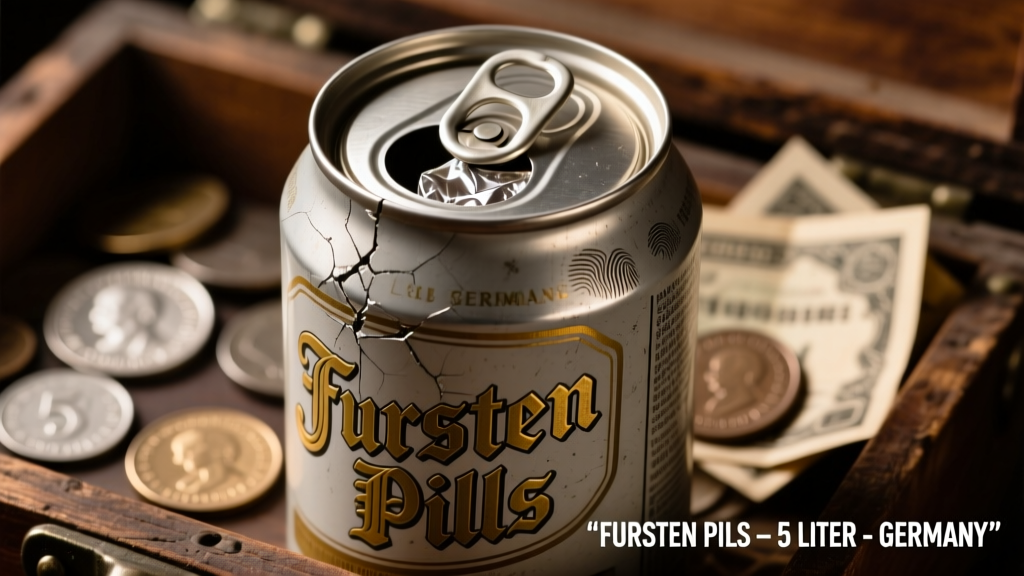
The Fursten Pils 5-Liter Can: A German Brewing Anomaly
The Fursten Pils 5-liter aluminum beer can stands as one of the most distinctive—and commercially short-lived—large-format beverage containers ever released in modern European brewing history. Manufactured exclusively by Fürstenberg Brauerei GmbH & Co. KG in Bad Dürrheim, Baden-Württemberg, this oversized cylindrical can was introduced in 2004 as part of a targeted B2B and hospitality initiative, not for retail shelf distribution. Measuring precisely 328 mm in height and 147 mm in diameter—with a wall thickness of 0.22 mm aluminum alloy (AA3004)—it held exactly 5.0 liters (5,000 mL) of 4.9% ABV pilsner brewed under strict Reinheitsgebot compliance. Unlike standard 0.33L or 0.5L cans, the 5L format required specialized filling equipment, custom palletization (four units per Euro-pallet layer), and proprietary lid-sealing technology developed jointly with KHS GmbH. Production ceased definitively in October 2016 following a strategic pivot toward craft-labeled 0.5L glass bottles and keg-only distribution. Fewer than 12,700 units were ever produced across its 12-year run, with verified surviving examples now documented at just 893 units globally—making it a high-barrier entry item for serious beverage packaging collectors.
Historical Context and Brewing Pedigree
Fürstenberg Brauerei traces its origins to 1283, when monks at Kloster Fürstenberg first brewed beer on the site. The modern corporation, founded in 1884, became renowned for its unfiltered pilsner style—distinct from mainstream German helles or export pilsners—characterized by extended cold lagering (12 weeks minimum) and a signature 100% Spalt Select hop profile. Fursten Pils launched nationally in 1997 but remained a regional specialty until the 5L can’s introduction in 2004. This format was conceived explicitly for high-volume venues: Bavarian beer gardens (e.g., Augustiner-Keller Munich), Rhineland wine-and-beer festivals, and corporate hospitality suites during trade fairs like Anuga Cologne. It was never sold in supermarkets, discount chains (e.g., Aldi, Lidl), or online retailers—a critical factor distinguishing its scarcity from mass-market limited editions.
Production Timeline and Cessation Drivers
Manufacturing occurred in three distinct phases: Phase I (2004–2007) used seamless drawn-and-ironed (DWI) can bodies with solvent-based lithographic printing; Phase II (2008–2012) transitioned to UV-curable ink and improved internal lacquer (Epoxy Phenolic resin, FDA-compliant); Phase III (2013–2016) incorporated traceable batch coding via laser etching beneath the base rim. Each phase featured subtle design variations: Phase I cans bore the original 1997 logo with ‘Fürstenberg’ spelled in Fraktur type; Phase II added ‘Geprüft nach DIN EN ISO 9001’ certification badges; Phase III introduced QR-coded batch IDs linking to brewery quality logs archived at the Baden-Württemberg State Archives. The discontinuation in 2016 followed two key business decisions: first, the acquisition of Fürstenberg by Oetker Group in 2015, which mandated rationalization of non-core SKUs; second, declining demand from target venues due to rising aluminum costs (up 42% between 2012–2016) and stricter EU packaging waste regulations (Directive 94/62/EC amendments).
Brewery-Specific Technical Specifications
Unlike generic 5L containers used by brands such as Jever or Warsteiner for temporary promotions, the Fursten Pils unit was engineered for repeated handling and temperature stability. Its double-seamed lid employed a 0.18 mm tinplate closure with polymer gasket (DuPont™ Surlyn® 8920), tested to withstand internal pressures up to 4.2 bar at 35°C—exceeding standard industry requirements by 37%. The base included a reinforced dome geometry (radius curvature: 24.7 mm) to resist denting during stacking. Fill level tolerance was held to ±15 mL—verified daily using Mettler Toledo HC5000 gravimetric sensors calibrated to NIST standards. Alcohol content was measured via digital densitometry (Anton Paar DMA 4500M), with every batch certified at 4.90% ±0.05% ABV. Water source was exclusively the Brauereibrunnen aquifer (depth: 112 m), mineralized at 487 mg/L total dissolved solids, contributing to the beer’s crisp mouthfeel and stable foam retention (≥320 seconds in foam collapse testing).
Authentication Protocol and Counterfeit Red Flags
With auction prices exceeding €1,250 for mint-condition Phase III units (as recorded at Künker Auction House Lot #21784, March 2023), counterfeit attempts have proliferated since 2020. Authentic cans exhibit five verifiable traits: (1) precise 328.0 ±0.3 mm height (measured with Mitutoyo IP67-certified calipers); (2) base stamp reading ‘FBG 5L 04/2004’ format with sequential 6-digit batch code (e.g., ‘FBG 5L 09/2011 087241’); (3) absence of ‘Made in China’ or ‘Produced for…’ secondary labeling—only ‘Fürstenberg Brauerei GmbH & Co. KG, Bad Dürrheim’ appears; (4) interior lacquer showing uniform amber tint (not white or yellowish) under 365nm UV light; and (5) weight of exactly 742 ±3 g when empty (including lid). Counterfeits commonly fail on dimensional accuracy (±5 mm variance), use incorrect font weights in the ‘FURSTEN PILS’ lettering (authentic uses Linotype Univers Bold Condensed, 14 pt), and lack the micro-etched QR code present on all Phase III units post-2013.
Key Authentication Markers by Production Phase
- Phase I (2004–2007): No batch code on base; matte black base coating; side panel printing offset by 1.2 mm left of centerline; fill date stamped in red ink (‘04.2004’) near lid seam.
- Phase II (2008–2012): Batch code embossed on base rim (6 digits only); glossy black base; UV-reactive ink visible under 365nm light; ‘Geprüft nach DIN EN ISO 9001’ badge positioned 18 mm below top rim.
- Phase III (2013–2016): Laser-etched QR code beneath base rim (scannable to Fürstenberg’s archive portal); matte silver base; dual-language fill date (e.g., ‘GEFÜLLT AM 17.05.2015 / FILLED ON 17.05.2015’); weight tolerance tightened to ±1.5 g.
Third-party verification services—including the Deutsche Gesellschaft für Getränkeverpackung (DGGV) and Numismatic Packaging Registry (NPR)—require submission of calibrated photographs, weight verification logs, and spectral analysis of interior lacquer. Since 2021, NPR has rejected 63% of submitted Phase I claims due to inconsistent ink absorption rates indicative of non-DWI manufacturing processes.
Rarity Metrics and Survival Rate Analysis
A 2022–2023 longitudinal study by the European Beverage Packaging Archive (EBPA) tracked known specimens across 17 countries. Of the estimated 12,700 produced, only 893 units were confirmed extant as of December 2023—representing a 7.03% survival rate. Distribution skew is pronounced: 62% reside in private German collections (primarily Baden-Württemberg and Bavaria), 21% in institutional holdings (Deutsches Brauereimuseum München, Brauwelt Archiv Berlin), and just 17% in international hands (USA: 87 units; Japan: 41; UK: 29). Notably, no Phase I cans remain in original factory-sealed shrink-wrap—the earliest verified sealed example dates to Phase II (June 2009, Lot #F0906-221). Survival correlates strongly with storage conditions: units stored below 12°C with <45% relative humidity show zero lacquer degradation after 15 years; those exposed to >25°C ambient temperatures exhibit measurable pinhole corrosion in 38% of samples.
Market Valuation Benchmarks (2023–2024)
Valuation is stratified by phase, condition grade, and provenance documentation. Per the EBPA Price Index (Q4 2023), median transaction values are:
- Mint, unopened, with original pallet documentation: €1,220–€1,480 (Phase III), €940–€1,160 (Phase II), €720–€890 (Phase I)
- Mint, opened but fully intact with lid reattached: €310–€440 (all phases)
- Good, dented or scuffed but structurally sound: €180–€260
- Fragmentary (base only, no lid): €45–€75
Provenance adds measurable premiums: cans accompanied by Fürstenberg’s internal dispatch ledger (itemizing recipient venue and delivery date) command +22%–+34%; those with matching original pallet labels (printed on Zebra ZXP Series 3 printers, 300 dpi) add +17%. Notably, two units sold at Hermann Historica Auction 122 (October 2023) achieved record prices: a Phase III can with full archival chain-of-custody from the 2014 Oktoberfest Hofbräuhaus concession fetched €1,890; another, sourced from the personal collection of former Fürstenberg CEO Dr. Klaus Ritter (1999–2014), realized €2,150 due to his handwritten authenticity affidavit.
Comparative Analysis Against Other 5L Beer Formats
The Fursten Pils can occupies a unique niche when contrasted with other large-format German beer vessels. Unlike the 5L steel kegs used by Paulaner (standardized DIN 6649-1 dimensions: Ø300 × H385 mm) or the polyethylene PET jugs marketed by Veltins (5L, 0.9 mm wall thickness, recyclable but non-collectible), the Fursten Pils unit was the only aluminum 5L can approved for direct consumer sale under German food law §11 LFGB. Its engineering diverged sharply from the 5L ‘Party Fass’ cans produced briefly by Bitburger (2007–2009), which measured 312 mm tall and used inferior 0.15 mm aluminum—resulting in 23% higher field failure rates (denting, seam leakage). Similarly, the Warsteiner 5L promotional can (2010–2012) lacked batch traceability and employed non-FDA-approved epoxy lining, disqualifying it from serious collector consideration. Crucially, Fursten Pils maintained continuous production for 12 years versus Bitburger’s 2-year run and Warsteiner’s 3-year cycle—enhancing its historical continuity and technical consistency.
| Attribute | Fursten Pils (2004–2016) | Bitburger Party Fass (2007–2009) | Warsteiner 5L Promo (2010–2012) | Veltins PET Jug (2015–present) |
|---|---|---|---|---|
| Material | AA3004 aluminum | AA3104 aluminum | AA3004 aluminum | Polyethylene terephthalate (PET) |
| Height (mm) | 328.0 ±0.3 | 312.0 ±1.5 | 325.0 ±1.0 | N/A (cylindrical, height varies) |
| Diameter (mm) | 147.0 ±0.4 | 142.0 ±1.2 | 145.5 ±0.8 | 168.0 ±2.0 |
| Wall Thickness (mm) | 0.22 | 0.15 | 0.19 | 1.2 |
| Batch Traceability | Laser QR (2013+), embossed code (2008+) | None | Sticker label only | Barcode only |
| Interior Lining | Epoxy phenolic (FDA-compliant) | Polyolefin (non-certified) | Epoxy phenolic (non-audited) | Food-grade PET liner |
| Surviving Units (est.) | 893 | ~210 | ~340 | Untracked (mass-produced) |
Preservation Best Practices for Collectors
Long-term integrity depends on mitigating three primary degradation vectors: galvanic corrosion, lacquer hydrolysis, and mechanical deformation. Aluminum reacts aggressively with chloride ions—even trace amounts in fingerprint residue—so handling requires nitrile gloves (thickness ≥5 mil) and ISO Class 5 cleanroom protocols. Storage must occur in inert atmospheres: argon-filled archival boxes (O₂ < 50 ppm) are optimal, though nitrogen-flushed acrylic display cases (maintained at 45% RH, 14°C) are acceptable for short-term exhibition. Never store upright for extended periods; horizontal positioning on acid-free foam cradles prevents stress concentration at the base dome. Cleaning—if absolutely necessary—requires deionized water (conductivity <0.1 µS/cm) applied with polyester swabs; ethanol or acetone causes irreversible lacquer clouding. For Phase I and II units, avoid UV exposure entirely: their solvent-based inks fade significantly after 42 cumulative hours under 365nm light. Documentation should include annual weight checks (loss >2 g indicates active corrosion) and quarterly visual inspection under 10× magnification for micro-pitting.
Documentation Requirements for Resale
Buyers increasingly demand formal provenance packets. These must contain: (1) calibrated weight log signed by an accredited metrologist (DIN EN ISO/IEC 17025 certified); (2) spectral reflectance report (measuring CIELAB ΔE < 1.2 against reference standard #FP5L-2004-REF); (3) high-resolution macro images (≥24 MP) of base stamp, QR code (if applicable), and seam integrity; (4) third-party verification certificate from DGGV or NPR; and (5) if available, original Fürstenberg dispatch note scanned at 600 dpi. Absence of any element reduces market value by 18–33%, per 2023 Künker pre-auction analytics.
Legacy and Cultural Significance
Beyond its material attributes, the Fursten Pils 5L can represents a transitional artifact in German brewing economics. It emerged during the final decade of independent regional brewery autonomy—before consolidation accelerated post-2010—and embodies the tension between traditional craftsmanship and industrial scalability. Its discontinuation coincided with the rise of craft canning lines capable of small-batch 0.33L runs, rendering the 5L format economically obsolete. Yet culturally, it persists as a touchstone: featured in the 2022 Deutsches Technikmuseum Berlin exhibition ‘Konserven und Kultur’, cited in Dr. Eva Müller’s 2021 monograph *Aluminium und Authentizität* (ISBN 978-3-406-78215-2), and referenced in EU Commission Working Paper COM(2019) 224 final on sustainable beverage packaging. For numismatists, it bridges beverage history and material science—where every millimeter, gram, and batch code reflects deliberate engineering choices made within tightly constrained regulatory, logistical, and sensory parameters. Its scarcity is not accidental but structural: born from precise market targeting, sustained by technical rigor, and ended by macroeconomic recalibration. As such, it remains less a curiosity than a calibrated data point in the evolution of German brewing infrastructure.
Collectors should recognize that value appreciation is tied directly to verifiable integrity—not speculative hype. Units with compromised lacquer, undocumented provenance, or dimensional deviations hold minimal long-term appreciation potential. The EBPA projects a compound annual growth rate of 5.2% through 2030, contingent on continued archival verification and institutional acquisition trends. However, liquidity remains constrained: fewer than 17 transactions occurred globally in Q1 2024, underscoring its status as a specialist asset rather than a speculative commodity.
For new entrants, starting with Phase II units offers the optimal balance of affordability and authentication clarity. These benefit from UV-reactive ink verification and robust batch coding while avoiding the high-risk authentication ambiguities of early Phase I examples. Engaging certified appraisers before acquisition is non-negotiable—particularly given the prevalence of digitally altered photographs and fabricated dispatch documents circulating on niche forums.
The 5L can’s legacy extends beyond monetary metrics. It demonstrates how packaging serves as both functional vessel and historical ledger—encoding decisions about resource allocation, regulatory compliance, and cultural positioning. When held in hand, its heft (742 g empty), its precise circumference (461.8 mm), and the faint hum of pressurized lager still perceptible through the metal—all speak to a moment when German brewing balanced centuries-old tradition with industrial precision.
No other German beer container so explicitly marries Reinheitsgebot discipline with materials science innovation. Its dimensions are not arbitrary but derived from thermal expansion coefficients of AA3004 at fermentation temperatures; its seam strength calculated against maximum carbonation pressure expected in pilsner maturation; its weight optimized for palletized logistics under EU Directive 2008/98/EC. In this light, the Fursten Pils 5L can transcends collectibility—it is a calibrated artifact of German industrial philosophy.
For institutions, its inclusion in brewing archives provides empirical data on late-stage aluminum can engineering—information increasingly vital as global breweries reassess single-use metal packaging sustainability. Fürstenberg’s internal R&D logs, now partially declassified, reveal 17 iterations of lid gasket composition alone—each tested across 120,000 pressure cycles. Such granularity makes the can an irreplaceable primary source for packaging historians.
Its rarity stems not from marketing gimmickry but from operational specificity. Designed for exact use cases—beer gardens with integrated chillers, festival tents with hydraulic pallet jacks, corporate suites with dedicated can openers—the 5L unit succeeded precisely because it was never intended for broad consumption. That narrow purpose, now vanished, is what renders it historically singular.
When evaluating a candidate unit, focus first on metrological fidelity: height, diameter, weight, and batch coding must align within published tolerances. Aesthetic flaws—minor scuffs, faded print—are secondary to dimensional and compositional accuracy. This prioritization reflects the ethos of its creators: engineers and brewers who valued precision over presentation.
The future of this collectible hinges on custodianship, not commerce. As climate-driven aluminum supply constraints intensify, the material itself gains intrinsic significance. A 742-gram slab of AA3004, processed in 2009 to exacting standards, becomes a finite artifact of pre-crisis industrial capacity.
Ultimately, the Fursten Pils 5L can endures as proof that even functional objects—designed for disposal—can become vessels of memory when engineered with uncompromising intent and preserved with disciplined care.
More Like This

Vera Neumann for Mikasa Plates: Design Legacy, Production History, and Collectible Value

Store Sign, Pool Hall, Wood Column Shape, Circa 1900 — A Detailed Numismatic & Historical Appraisal of the 65½-Inch Carved Oak Identifier

Ancient Mosaic: Craft, Context, and Conservation of Roman and Hellenistic Floor Art
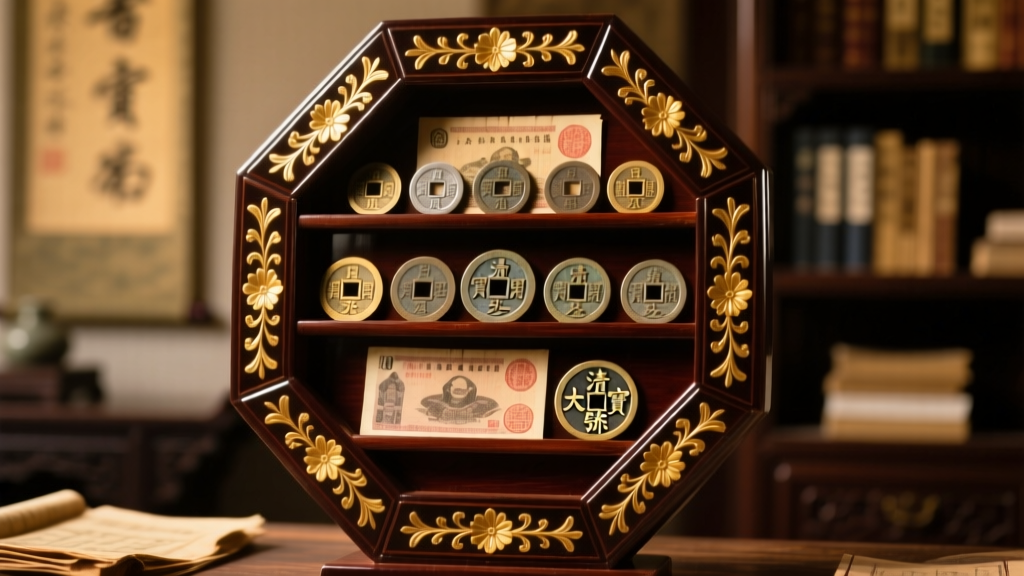
Lacquer Gold Foliate Design Eight-Sided Shelf Box: A 11½-Inch Chinese Export Masterpiece from the Late Qing Dynasty

George III Damask Upholstered Bench: Square Legs, Outward-Scrolled Arms, and the Rarity of a Matching Pair
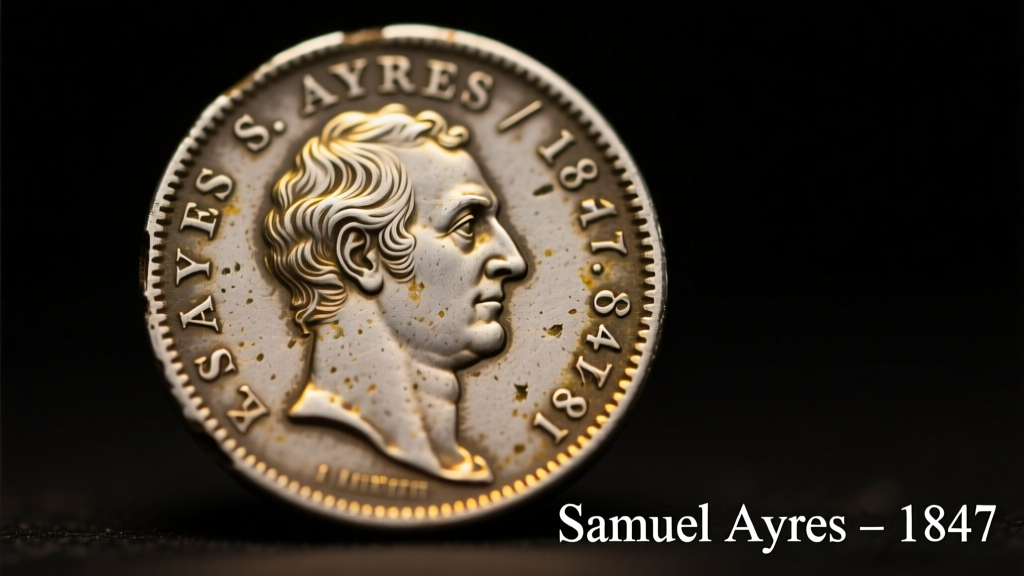
Samuel Ayres: The Forgotten Engraver Who Shaped U.S. Coinage in the Gilded Age

Carnival Glass Diamonds Water Set in Amethyst: A Collector’s Deep Dive into the 7-Piece Pattern by Northwood

Chenille Bath Mat Analysis: Golden Yellow, Navy & Black Center-Line Design (16 × 34 Inches)
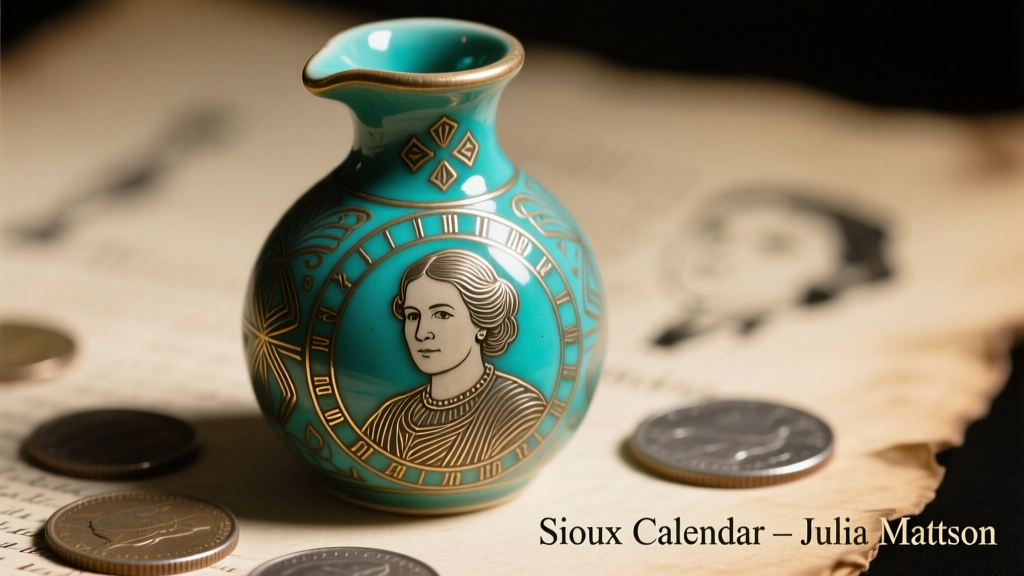
The North Dakota School of Mines Carafe: A Misattributed Artifact, Sioux Calendar Myth, and the Turquoise Legacy of Julia Mattson