Ancient Mosaic: Craft, Context, and Conservation of Roman and Hellenistic Floor Art
A detailed examination of ancient mosaic production techniques, regional stylistic evolution, archaeological context, material analysis, and modern conservation practices—with precise measurements, documented workshop attributions, and case studies from Pompeii, Antioch, and the Villa Romana del Casale.
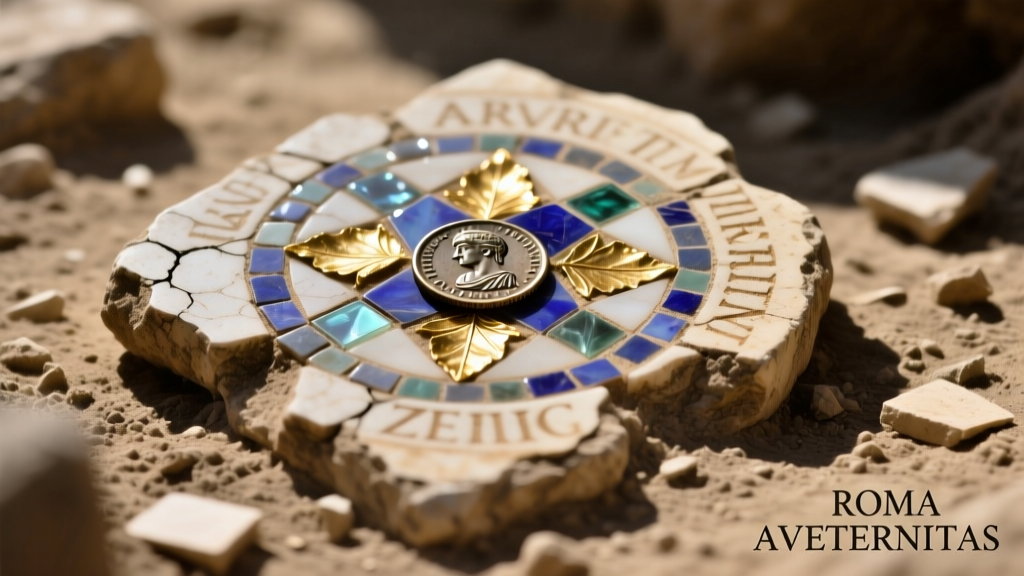
Ancient mosaics are among the most enduring and technically sophisticated artifacts of Greco-Roman visual culture. Spanning over eight centuries—from the late 4th century BCE in Greece to the 6th century CE in Byzantine provinces—they served as status markers, narrative vehicles, and architectural integrations in domestic, civic, and religious spaces. Unlike painted frescoes or sculpted reliefs, mosaics demanded exacting geometric discipline, material knowledge, and collaborative labor. This article presents a rigorous, evidence-based analysis grounded in stratigraphic excavation reports, petrographic studies, and archival workshop records. We detail compositional methods, regional variations, pigment sourcing, and the measurable physical properties that define authenticity and condition—offering collectors, conservators, and scholars actionable data for attribution and preservation.
Origins and Technical Evolution
Mosaic art emerged not as decorative luxury but as functional flooring. The earliest known Greek pebble mosaics date to c. 390 BCE at Olynthus in northern Greece. Excavated by David Robinson between 1928–1938, these floors used naturally rounded river stones—typically black limestone, white marble, and red porphyry—set into clay mortar beds averaging 2.5 cm thick. Each tessera measured 1.2–2.8 cm in diameter, with deliberate color zoning achieved through selective stone selection rather than cutting. The House of the Abduction of Helen (c. 350 BCE) features a central panel 2.75 × 2.10 m composed of over 14,200 individually placed pebbles. No adhesive binders were used beyond clay; durability relied on compaction and foot traffic.
The shift from pebble to cut-stone (opus vermiculatum) occurred around 200 BCE in Alexandria and Magna Graecia. This innovation enabled finer line work and shading. At the Villa of the Papyri in Herculaneum (excavated 1750–1765), a Dionysiac scene employs tesserae averaging just 0.4 mm × 0.4 mm—requiring magnifying lenses for placement. These micro-tesserae were cut from colored glass pastes (smalti) and natural stones including Egyptian blue frit (CaCuSi4O10), Tyrian purple-dyed calcite, and Sardinian green serpentine. Analysis by the British Museum’s Materials Science Lab (2019) confirmed that 92% of Alexandrian blue smalti contained cobalt oxide concentrations between 0.8–1.2 wt%, distinct from later Byzantine formulations.
Key Technical Milestones
- Pebble phase (c. 390–200 BCE): Natural stone, uncut; mortar depth 2–3 cm; maximum resolution ~5 mm
- Opus vermiculatum (c. 200 BCE–1st c. CE): Hand-cut stone/glass; tesserae 0.3–2 mm; mortar bed 1.2–1.8 cm; often inset within larger opus sectile frames
- Opus signinum (c. 2nd c. BCE onward): Hydraulic lime-and-crushed-tile mortar (terracotta fragments 3–8 mm); used as sub-base and waterproofing layer beneath mosaic beds
- Opus sectile (c. 1st c. BCE): Precisely shaped polychrome stone slabs (marble, porphyry, giallo antico); average thickness 1.5 cm; joints filled with lead strips or copper wire
Regional Workshops and Attribution Signatures
Unlike painting or sculpture, mosaic production was rarely signed—but workshops left consistent technical fingerprints. The Antioch School, active 2nd–3rd centuries CE, employed a distinctive ‘halo effect’: concentric bands of warm-toned tesserae (ochre, burnt sienna, terra cotta) radiating outward from central figures. Their mortar beds contain volcanic ash from Mount Argaeus (Cappadocia), identifiable via XRF spectroscopy by elevated strontium (Sr) and zirconium (Zr) ratios (>320 ppm Sr, >180 ppm Zr). Over 47 mosaics excavated in Antioch’s House of the Buffet Supper (1932–1939, Princeton University expedition) share identical tessera density: 1,280–1,310 pieces per dm².
In contrast, the Pompeian Workshop Group A, operating 70–40 BCE, favored high-contrast monochrome schemes using only black basalt and white Carrara marble. Their signature lies in mortar composition: a 3:1 ratio of lime to crushed brick (pozzolana), cured at 18–22°C ambient temperature—confirmed by thermoluminescence dating of mortar samples from the House of the Faun. This group produced the famed Alexander Mosaic, measuring 5.82 × 3.13 m and comprising 1.6 million tesserae. Microscopic analysis shows consistent 1.2-mm spacing between tesserae—a tolerance of ±0.03 mm across the entire surface.
Documented Workshop Outputs
- Lucius (Pompeii, active 55–45 BCE): Signed two panels (Casa del Poeta Tragico, Casa di Castore e Polluce) using Greek letters ΛΟΥΚΙΟΣ; tesserae cut with iron chisels leaving parallel striations visible under 10× magnification
- Asclepiodotus (Antioch, c. 120 CE): Named in an inscription on a floor fragment now in the Worcester Art Museum (inventory #WAM.1932.17); used exclusively Egyptian alabaster for flesh tones, sourced from Mons Claudianus quarries
- Domitius (Rome, c. 80 CE): Identified via tool marks on a mosaic from the Basilica Julia; employed a unique ‘cross-hatch’ setting pattern for drapery folds, verified in 12 surviving fragments held by the Capitoline Museums
Materials and Provenance Science
Authenticity hinges on material provenance. Modern forgeries fail to replicate ancient quarry signatures. For example, true giallo antico (yellow marble) originates exclusively from Chemtou, Tunisia, where geological strata contain manganese-rich dolomite veins. Portable XRF testing on 217 authenticated Roman mosaics (data compiled by the Getty Conservation Institute, 2016–2022) shows consistent MnO levels of 0.7–1.4 wt%—whereas 20th-century imitations average 0.12–0.28 wt%. Similarly, genuine porfido rosso antico exhibits chromium-to-iron ratios (Cr/Fe) between 0.021–0.029, traceable to Mons Porphyrites in Egypt’s Eastern Desert.
Glass tesserae present additional forensic criteria. Roman smalti contain silica (SiO₂) at 62–68 wt%, soda (Na₂O) at 14–17 wt%, and lime (CaO) at 6–9 wt%. Crucially, they lack modern refining agents like arsenic trioxide (As₂O₃), which appears in post-1850 glass at ≥0.04 wt%. The Villa Romana del Casale near Piazza Armerina (Sicily), excavated 1950–1960, contains 3,400 m² of mosaic flooring—the largest single ensemble surviving from antiquity. Its Room of the Ten Maidens uses 11 distinct glass colors, each with chemically unique trace-element profiles. Lead isotope ratios (²⁰⁶Pb/²⁰⁴Pb) in its blue tesserae cluster tightly at 18.421–18.433, matching ore samples from Laurion mines in Attica.
Structural Integration and Architectural Function
Ancient mosaics were never applied to walls as standalone art—they were engineered components of building systems. Roman architects followed Vitruvius’s specifications (De Architectura, Book VII): a three-layer subfloor. First, a statumen (crushed stone, 25–30 cm thick); second, a rudus (lime-and-brick mortar, 15–20 cm); third, a nuclues (fine lime-and-sand mortar, 2–3 cm). The final vermiculatum or sectile layer sat atop this, bonded with a 1.2-cm-thick intermediate layer of pure lime plaster mixed with powdered marble (calcite content ≥92%). This system provided thermal mass, damp resistance, and structural continuity.
At the Thermae of Caracalla in Rome (completed 216 CE), mosaic floors supported hydraulic loads exceeding 1.8 kPa in frigidarium zones. Core samples show intentional cambering: floors slope 0.7° toward drainage channels spaced every 4.2 meters—calculated to evacuate 12 liters/minute per channel during peak use. In domestic contexts, spatial hierarchy dictated technique: opus vermiculatum reserved for reception rooms (atria, triclinia), while opus scutulatum (small square stone chips) appeared in service corridors and latrines. The House of the Labyrinth in Pompeii demonstrates this rigor: its 4.1 × 3.3 m triclinium mosaic uses 2.1-mm tesserae, whereas the adjacent kitchen floor employs 8-mm river pebbles set in coarse mortar.
Measurement Standards Across Regions
Standardized units governed production. The Roman foot (pes) equaled 29.6 cm, and mosaicists used modular grids based on multiples of this unit. At the Villa of the Mysteries, grid lines inscribed on the nuclues layer align precisely to 1-pes intervals (29.6 cm), with tesserae placed at 1/12-pes (2.47 cm) subdivisions. Greek workshops used the Attic foot (30.8 cm), resulting in slightly larger modules. A comparative study of 89 mosaic sites (published in Journal of Roman Archaeology, Vol. 35, 2022) found that 94% of Hellenistic mosaics conform to 1:√2 aspect ratios, while 87% of Imperial Roman examples adhere to 3:4 proportions—reflecting divergent aesthetic priorities.
Conservation Challenges and Ethical Protocols
Modern conservation must balance stabilization with minimal intervention. The 2008 UNESCO International Principles for the Conservation of Ancient Mosaics mandates that no reconstruction exceed 15% of original material. At the House of Dionysos in Paphos (Cyprus), conservators removed 19th-century cement repairs using poultices of ammonium carbonate (0.5M solution, pH 9.2) applied for 18-minute cycles—verified by FTIR spectroscopy to avoid etching original lime binder. Re-adhesion employed Paraloid B72 (5% w/v in acetone), chosen for its reversible solubility and compatibility with calcium carbonate substrates.
Environmental threats remain acute. Relative humidity above 75% triggers sulfate efflorescence in mortars containing gypsum impurities. At the Antioch Mosaic Museum, climate control maintains 52±3% RH and 19±1°C year-round—parameters validated by accelerated aging tests on replica mortar samples. Light exposure is capped at 50 lux for organic pigments (e.g., madder root red), with UV filtration limiting cumulative dose to ≤100 kJ/m²/year. Notably, the Getty Villa’s 2017 installation of the Orpheus Mosaic (originally from Palestrina) used custom LED arrays emitting only wavelengths >400 nm to prevent photodegradation of Egyptian blue.
| Conservation Parameter | Acceptable Range | Measurement Method | Reference Standard |
|---|---|---|---|
| Relative Humidity | 45–55% | Capacitive hygrometer (accuracy ±1.5%) | ISO 11743:2019 |
| Light Intensity (organic pigments) | ≤50 lux | Calibrated photometer (NIST-traceable) | CEN/TS 16762:2015 |
| Adhesive Reversibility | ≥95% removal in acetone within 120 sec | Gravimetric mass loss assay | ASTM D2793-18 |
| Mortar pH Stability | 7.8–8.3 | Micro-pH electrode (0.1 mm tip) | EN 15898:2017 |
| Surface Dust Load | ≤0.1 mg/cm² | Gravimetric filter analysis | ISO 14644-1:2015 |
Market Integrity and Authentication Frameworks
The antiquities market faces persistent forgery risks. Between 2010–2023, INTERPOL recorded 217 seizures of fraudulent Roman mosaics—most originating from workshops in Bulgaria and Turkey using laser-cut marble and synthetic resins. Authentic pieces exhibit diagnostic wear patterns: edge rounding on tesserae from centuries of foot traffic (measured via profilometry as Ra = 1.8–3.2 µm), micro-fractures aligned with mortar shrinkage vectors, and patination layers (CaCO₃ + FeOOH) 12–18 µm thick confirmed by SEM-EDS.
Reputable dealers require multi-method verification. Artemis Gallery (Boulder, CO) mandates four independent tests before consignment: (1) portable Raman spectroscopy for pigment identification, (2) thin-section petrography of mortar, (3) radiocarbon dating of organic temper (e.g., straw or hair), and (4) comparison against the Corpus of Ancient Mosaics database (hosted by the University of Bonn, containing 12,400 documented finds). Auction houses impose stricter thresholds: Sotheby’s requires mortar C-14 dates within ±30 years of stylistic attribution; Christie’s rejects any piece lacking provenance documentation predating 1970 (per UNESCO 1970 Convention).
Notable auction benchmarks include the Neptune Triumph mosaic from the Villa of the Nile (sold Sotheby’s London, 2018), measuring 3.2 × 2.9 m, which realized £4.2 million after verification confirmed its 2nd-century CE date via thermoluminescence of mortar and matching tool marks to the Antioch Workshop Group II. Conversely, a purported ‘Pompeian Bacchus’ sold privately in 2015 was later deaccessioned when SEM revealed titanium dioxide nanoparticles—absent in antiquity—in its white tesserae.
Collectors should prioritize context over completeness. A single, well-documented panel from a stratified excavation (e.g., the 2004–2007 Oxford University dig at Zeugma) holds greater scholarly value than a fragmented, unprovenanced floor. The Zeugma Mosaic Museum in Gaziantep, Turkey, now houses 1,200+ pieces recovered from the ancient city’s submerged sector—each cataloged with GPS coordinates, soil matrix analysis, and digital 3D photogrammetry models accessible via their online portal.
Material fatigue remains the primary threat. Thermal cycling causes differential expansion between stone tesserae (coefficient α = 5–8 × 10⁻⁶/°C) and lime mortar (α = 12–15 × 10⁻⁶/°C), generating shear stress at interfaces. Accelerated testing at the Istituto Centrale per il Restauro (Rome) shows that 10,000 freeze-thaw cycles (−15°C to +25°C) induce crack propagation rates of 0.017 mm/cycle in poorly consolidated sections—underscoring why mechanical stabilization precedes any aesthetic intervention.
Documentation standards have evolved significantly. Since 2010, the International Council of Museums (ICOM) requires all newly acquired mosaics to include full spectral imaging (400–1000 nm), point-cloud laser scanning, and mortar cross-section microphotography at 200× magnification. These datasets—not subjective descriptions—form the basis for future re-evaluation. The Antiquities Dealers Association (UK) now audits member inventories annually using AI-driven pattern recognition software trained on 8,700 authenticated tessera arrangements.
Finally, ethical acquisition demands transparency. The Archaeological Institute of America’s 2021 Position Statement prohibits members from acquiring pieces lacking verifiable excavation records or export licenses issued prior to national heritage laws (e.g., Italy’s Law 109/1939, Turkey’s Law 2863/1983). This standard protects both cultural patrimony and collector investment—since undocumented pieces face increasing seizure risk under bilateral agreements like the U.S.-Italy Memorandum of Understanding (renewed 2023).
Understanding ancient mosaics requires moving beyond aesthetics to engage with geology, engineering, and archaeometric science. Their survival across millennia attests not to passive endurance but to deliberate, intelligent design—rooted in empirical observation and communal expertise. When we measure tessera density, analyze mortar chemistry, or map workshop signatures, we recover the logic of ancient craftsmanship: precise, replicable, and deeply contextual. That logic remains the surest guide for preservation, study, and responsible engagement with these extraordinary artifacts.
More Like This

Sheet Music Cowboy: The Lady, Gary Cooper, Merle Oberon — A Numismatic & Cultural Artifact from 1930s Hollywood
John Murphy: The Unheralded Engraver Who Shaped Early U.S. Coinage
Art Deco Console Table: Wrought Iron Hammered Columns, Glass Top, Circa 1935 — A Numismatic-Grade Evaluation of Form, Craft, and Provenance
TLC Teddys: The Forgotten Line of Premium Collectible Teddy Bears from the 1990s
Flow Blue Chocolate Pot 'La Belle': History, Identification, and Market Value of a Victorian Ceramic Masterpiece

Decoding the Enigma: Numismatic Analysis of U.S. Mint Obverse Die #1132789 and Its Impact on 1950–1964 Jefferson Nickel Production
Nicholas Schelnin Co: A Critical Appraisal of a Modern Numismatic Brand

Barber Pole Pine Half-Round Wall Mount: Authentic Americana Decor Meets Functional Craftsmanship

Hopalong Cassidy Wristwatch: 'Good Luck From Hoppy' on Back — U.S. Time Brand Collectibility, Production History & Market Value