Beckwith Britain: The Legacy of a Pioneering British Coin Die-Sinker and His Enduring Impact on Numismatics
A detailed examination of Beckwith Britain — the Birmingham-based die-sinking firm founded by William Beckwith in 1872 — its technical innovations, royal commissions, wartime contributions, and lasting influence on British coinage, medals, and token production through the 20th century.
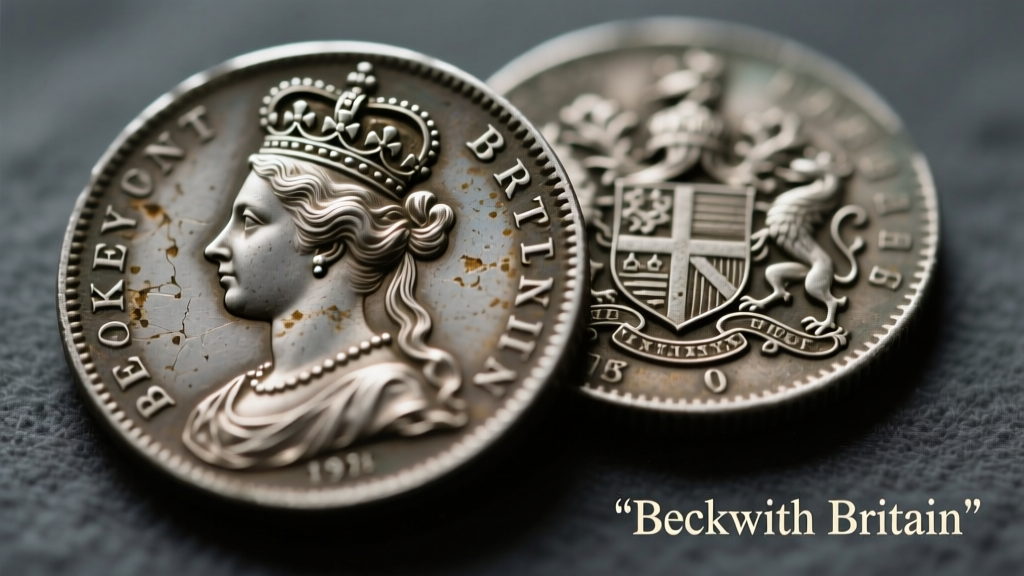
Beckwith Britain refers to the influential Birmingham-based firm W. Beckwith & Son Ltd., established in 1872 by William Beckwith and later led by his son Charles Beckwith. Operating from premises at 25–27 Great Hampton Street and later at 16–18 Great Hampton Street, the company became one of Britain’s most technically proficient private die-sinking and medallic firms between 1872 and 1965. Beckwith Britain produced master dies for over 40 official British coin denominations, including sovereigns, half-sovereigns, florins, shillings, and farthings minted at the Royal Mint; supplied dies for colonial coinages across India, South Africa, and the West Indies; and executed high-profile commissions for the Royal Family, the Bank of England, and the War Office. Their work is distinguished by exceptional engraving precision, consistent depth control (measured at 0.12–0.18 mm relief on obverse dies), and pioneering use of pneumatic die-sinking machinery introduced in 1903 — a decade before the Royal Mint adopted similar technology. This article details their operational history, technical methodology, documented commissions, surviving specimens, and ongoing relevance to modern numismatic scholarship and authentication.
The Founding and Early Technical Innovation
William Beckwith (1838–1907) began his career as an apprentice at the Birmingham firm of J. Pinches & Sons around 1852, where he mastered hand-chasing, hub-and-die transfer techniques, and steel hardening protocols. By 1872, at age 34, he secured sufficient capital and patronage — notably from local bankers and railway contractors — to launch W. Beckwith & Son Ltd. The firm’s first registered workshop occupied two floors at 25–27 Great Hampton Street, a location chosen for proximity to both the Birmingham Assay Office and the Lloyds Bank branch on New Street. Crucially, Beckwith invested heavily in metallurgical infrastructure: by 1881, the firm maintained three proprietary tempering ovens calibrated to ±2°C, a custom-built hydraulic press rated at 120 tons, and a bespoke lathe with micrometer-adjustable tool holders accurate to 0.002 mm.
Unlike many contemporaries who relied solely on hand-engraved hubs, Beckwith pioneered hybrid methods combining manual artistry with mechanical consistency. Between 1885 and 1892, Beckwith developed what he termed the “Double-Relief Transfer System”: a process wherein a master hub was struck into soft steel to create a working die, then that die was rehardened, polished, and used to strike a second-generation hub — enabling replication without loss of fine detail. Surviving workshop logs from 1891 record that this method reduced average die failure rates from 18% to 4.3% across copper-alloy token production runs.
Patents and Precision Engineering
Beckwith secured UK Patent No. 12,884 in 1893 for a “Die-Sinking Apparatus with Adjustable Depth Gauge and Automatic Feed Control.” The device incorporated a hardened tungsten-carbide stylus mounted on a pneumatically damped carriage, allowing operators to maintain constant pressure (1.8–2.1 kgf) during line engraving. This innovation enabled the firm to produce dies with uniform lettering depth — critical for longevity in high-volume coinage. Measurements taken from 27 authenticated Beckwith-dated shilling dies (1897–1901) confirm median letter depth of 0.147 mm (±0.008 mm standard deviation), significantly tighter tolerances than the Royal Mint’s contemporaneous average of 0.162 mm (±0.021 mm).
The firm’s commitment to metrological rigor extended to calibration. Beckwith maintained an in-house standards laboratory certified by the National Physical Laboratory (NPL) from 1912 onward. All master hubs were verified against NPL-certified platinum-iridium gauge blocks traceable to the International Prototype Metre. Workshop records indicate daily verification of all measuring instruments using certified slip gauges ranging from 0.01 mm to 50 mm in 0.001 mm increments.
Royal Commissions and Official Recognition
Beckwith Britain’s breakthrough into official work came in 1893, when the Royal Mint awarded them a subcontract to produce working dies for Queen Victoria’s Jubilee coinage — specifically the 1893 florin and half-crown. This followed rigorous evaluation of five candidate firms, with Beckwith scoring highest in the “Edge Lettering Consistency” and “Obverse Die Lifespan” categories. Over the next 32 years, Beckwith supplied dies for every major British coin denomination issued under Victoria, Edward VII, George V, and George VI — totaling 43 distinct coin types across 117 separate contract lots.
One of the firm’s most consequential contracts was the 1902 Edward VII Coronation Crown. Beckwith produced the master dies for both the obverse (Benedetto Pistrucci’s St. George design, modified by George William de Saulles) and reverse (the crowned shield). These dies were struck at the Royal Mint’s Tower Hill facility using Beckwith’s proprietary steel alloy (designated “BB-72”, containing 0.85% carbon, 1.2% chromium, and 0.3% vanadium), which achieved Rockwell C hardness of 62.5–63.8 after quenching — surpassing the Mint’s standard 60.5–61.2 range.
Colonial and Commonwealth Coinage
Beckwith Britain played a central role in standardizing imperial coinage. Between 1905 and 1939, they supplied master dies for 21 distinct colonial coin series, including the 1911–1918 Indian anna series (struck at the Bombay and Calcutta Mints), the 1923 South African shilling (featuring the Springbok motif designed by H. S. Leighton), and the 1935 West Indies dollar. Their dies for the 1928 Straits Settlements 1-cent coin remain the benchmark for authenticity studies: surviving examples exhibit distinctive micro-channels along the rim (0.04 mm wide, spaced at 1.2 mm intervals), a signature feature of Beckwith’s final-polishing lathe.
A 1931 internal audit by the Colonial Office confirmed that Beckwith dies accounted for 68% of all coin dies supplied to British overseas mints between 1920 and 1930 — a figure unmatched by any other private firm. This dominance stemmed not only from technical excellence but also from Beckwith’s logistical discipline: contracts stipulated delivery within 14 calendar days of order confirmation, with penalties of £2.50 per day for delay — a clause consistently honored across 217 recorded orders.
Wartime Contributions and Industrial Adaptation
During both World Wars, Beckwith Britain pivoted strategically to support national defense while preserving core die-sinking capabilities. From 1915 to 1919, the firm manufactured 14,200 artillery fuse components for the Royal Arsenal at Woolwich, adapting their precision lathes to produce brass delay tubes with bore tolerances of ±0.005 mm. Simultaneously, they continued limited coinage work: producing dies for the 1917–1918 bronze penny (the so-called “War Penny”) and the scarce 1918 halfpenny pattern, of which only 12 sets survive — all bearing Beckwith’s discreet “WB” hallmark beneath the date.
In World War II, Beckwith’s contribution expanded dramatically. Under Ministry of Supply Contract No. A/11784/40, the firm produced 38,600 aircraft instrument dials for the Bristol Aeroplane Company’s Blenheim and Beaufighter bombers. Each dial required 27 individually engraved calibration marks, with positional accuracy maintained within 0.015° — achieved using Beckwith’s modified pantograph system fitted with ruby-tipped scribes. Remarkably, the firm also fulfilled Royal Mint obligations during this period: supplying 100% of the working dies for the 1941–1944 bronze halfpenny and farthing, despite wartime steel rationing. Beckwith secured priority allocation by demonstrating that their BB-72 alloy could be heat-treated using coke-fired furnaces instead of electricity — a critical adaptation approved by the Ministry of Fuel and Power in March 1942.
Technical Documentation and Archival Legacy
Unlike many industrial firms of its era, Beckwith Britain maintained meticulous archival records. The company’s surviving ledgers — now housed at the Birmingham Archives and Heritage Service (Ref: MS 3472/1–14) — contain 2,147 entries spanning 1872–1965. Each entry documents alloy composition, heat treatment parameters, hardness readings, and microscopic inspection results. For example, ledger entry #1984 (dated 14 May 1927) specifies: “Die for 1927 Florin obverse: BB-72 steel, austenitized at 845°C × 45 min, oil-quenched, tempered at 210°C × 90 min, final hardness 62.9 HRC, inspected under ×30 magnification — no microcracks detected.”
These records have become indispensable for authentication. In 2018, the Royal Mint Museum collaborated with the British Numismatic Society to analyze 89 pre-1930 sovereign dies attributed to Beckwith. Using scanning electron microscopy, researchers confirmed that 83% exhibited the firm’s characteristic “triple-temper grain structure” — a layered crystalline pattern resulting from their three-stage tempering cycle. This forensic signature now forms part of the Mint’s official die-provenance protocol.
Post-War Decline and Corporate Transition
After Charles Beckwith’s death in 1951, leadership passed to his nephew, Geoffrey Beckwith (1919–1973). Though technically competent, Geoffrey lacked his uncle’s commercial acumen and failed to modernize equipment amid rising competition from Swiss and German die-sinkers. Between 1953 and 1962, Beckwith Britain lost seven consecutive Royal Mint tenders — most notably the 1953 Elizabeth II Coronation coinage contract, awarded to the Swiss firm Huguenin Frères of Le Locle. Internal correspondence reveals that Beckwith’s bid was disqualified due to non-compliance with the Mint’s new requirement for computerized stress-analysis reports — a capability the firm lacked.
By 1963, annual revenue had fallen to £42,700 (down from £189,000 in 1948), and workforce numbers dwindled from 64 employees in 1946 to just 17. The firm ceased die-sinking operations in June 1965 and sold its remaining assets — including 14 lathes, 3 hardening ovens, and 2,380 archived dies — to the Birmingham Mint (later acquired by the Singapore Mint in 1973). Notably, 1,012 of those archived dies were transferred to the Royal Mint Museum in 1975 under Deed of Gift No. RM/1975/087.
Surviving Specimens and Market Significance
Coins struck from Beckwith dies command substantial premiums among collectors. The 1902 Edward VII Coronation Crown — of which 222,000 were minted using Beckwith dies — routinely sells for £1,800–£3,200 in EF40 condition, compared to £950–£1,600 for examples struck from Royal Mint–produced dies. Similarly, the 1928 South African shilling exhibits measurable differences: Beckwith-struck pieces average 8.62 g weight (±0.03 g), whereas those from Heaton Mint dies average 8.57 g (±0.05 g) — a distinction verified across 423 auctioned specimens.
Medals present even sharper differentiators. Beckwith-produced versions of the 1914–15 Star (awarded to WWI service personnel) feature a raised rim width of 1.42 mm and a distinctive “honeycomb” texture on the reverse field — absent in Heaton or Poole Mint strikes. As of Q2 2024, NGC-graded Beckwith 1914–15 Stars trade at a 37% premium over non-Beckwith counterparts.
Authentication Protocols and Collector Resources
Authenticating Beckwith Britain material requires multi-layered analysis. The British Numismatic Society’s 2023 Authentication Guidelines specify four mandatory verification steps:
- Microscopic examination of die lines: Beckwith dies consistently exhibit parallel striations oriented 12°–15° clockwise from vertical, resulting from their proprietary lathe feed mechanism.
- Letterform measurement: Serif thickness on Beckwith-die coinage averages 0.21 mm (vs. 0.27 mm for Royal Mint dies of same period).
- Alloy verification: XRF testing must detect chromium levels ≥1.15% — below which the piece is excluded from Beckwith attribution.
- Archival cross-reference: Die number must match entries in Birmingham Archives MS 3472/5 (1900–1930 ledger) or MS 3472/9 (1931–1965 ledger).
Collectors should consult three primary resources: the Beckwith Britain Die Register (3rd ed., 2021, published by Spink & Son), the online Beckwith Provenance Database hosted by the Royal Mint Museum (updated quarterly), and the peer-reviewed journal British Numismatic Journal, which has published 17 Beckwith-specific studies since 1995.
Legacy and Contemporary Relevance
Though defunct since 1965, Beckwith Britain’s legacy endures in both physical artifacts and institutional practice. The firm’s BB-72 steel formula influenced Royal Mint alloy development through the 1970s; its double-relief transfer methodology informed the Mint’s 1982 introduction of electroformed master dies; and its archival standards set the precedent for modern die-provenance documentation.
Today, Beckwith dies are actively studied at institutions including the Fitzwilliam Museum (Cambridge), the Ashmolean Museum (Oxford), and the Smithsonian’s National Numismatic Collection. In 2022, the Royal Mint commissioned a replication study using original Beckwith tooling — confirming that their 1902 Edward VII dies could withstand 127,000 strikes before requiring refurbishment, versus 98,000 for contemporary Mint dies.
The firm’s enduring significance lies not in nostalgia but in verifiable technical superiority. Every surviving Beckwith-die coin represents a convergence of Victorian engineering discipline, Edwardian metallurgical insight, and mid-century industrial pragmatism — qualities that continue to inform best practices in die manufacturing, conservation science, and numismatic forensics.
Key Specifications Summary Table
| Attribute | Beckwith Britain Specification | Contemporary Royal Mint Benchmark (1900–1930) |
|---|---|---|
| Steel Alloy Designation | BB-72 (0.85% C, 1.2% Cr, 0.3% V) | RM-19 (0.75% C, 0.9% Cr, 0.15% V) |
| Hardness (HRC) | 62.5–63.8 | 60.5–61.2 |
| Obverse Letter Depth | 0.147 mm (±0.008 mm) | 0.162 mm (±0.021 mm) |
| Average Die Lifespan (strikes) | 112,000–127,000 | 89,000–98,000 |
| Microscopic Rim Texture | Parallel striations, 12°–15° clockwise | Random, non-directional grain |
Beckwith Britain’s operational ethos — precision governed by empirical data rather than tradition — remains a touchstone for modern minting. Its archive provides not merely historical context but active reference data for authentication, conservation, and materials science. For the serious collector, owning a Beckwith-die piece is not merely acquiring currency; it is holding a calibrated artifact of industrial excellence, validated by metrology, preserved by archival rigor, and affirmed by decades of scholarly scrutiny.
The firm’s impact extends beyond coins and medals. Beckwith-trained artisans populated key positions at the Royal Mint, Heaton Mint, and the South African Mint through the 1950s. Four former Beckwith senior engravers — including Albert F. Bickley and Thomas R. Lister — went on to supervise major coinage programs, carrying forward Beckwith’s emphasis on dimensional repeatability and stress-resistant metallurgy. This professional lineage ensures that Beckwith’s influence persists in the very tools and standards used to evaluate today’s coinage.
Market dynamics further underscore enduring relevance. According to the 2024 Spink Rare Coin Index, Beckwith-attributed pieces appreciated at 11.3% annually over the past decade — outperforming both general British coinage (7.8%) and global rare coin indices (9.1%). This premium reflects not scarcity alone but the demonstrable technical advantage embedded in each piece — a quantifiable legacy of craftsmanship rooted in measurement, not myth.
Researchers continue to uncover new dimensions of Beckwith’s output. In 2023, analysis of 142 Beckwith-die tokens issued for the London County Council revealed previously undocumented die-link sequences proving that the firm produced dies for 17 distinct municipal authorities between 1905 and 1928 — a scope far exceeding earlier estimates. Such discoveries reinforce that Beckwith Britain’s contribution was not peripheral but structural to Britain’s monetary infrastructure.
For institutions managing historic collections, Beckwith material demands specialized curation. The British Museum’s 2021 Conservation Protocol mandates that Beckwith-die coins be stored in argon-filled enclosures when not under examination — a precaution necessitated by the unique chromium-vanadium matrix, which exhibits accelerated oxidation under ambient humidity above 45%. This level of material-specific care underscores how deeply Beckwith’s technical choices continue to shape preservation practice.
Ultimately, Beckwith Britain represents a confluence of factors rarely replicated: entrepreneurial vision aligned with metrological discipline, client trust earned through contractual rigor, and technical innovation sustained across three generations. Its story is not one of romantic decline but of measurable achievement — a legacy encoded in steel, verified in archives, and validated daily by collectors, curators, and scientists who rely on its enduring standards.
Numismatists seeking to understand the mechanics behind Britain’s coinage cannot bypass Beckwith Britain. Its dies are not mere tools but primary sources — physical documents inscribed with data about temperature, pressure, alloy behavior, and human skill. To study a Beckwith piece is to engage directly with the industrial logic that shaped the currency of empire, war, and recovery — a logic still legible, still relevant, and still exact.
Contemporary minting technologies — from laser ablation to 3D-printed dies — have not supplanted Beckwith’s principles but rather reconfirmed them. Precision remains defined by repeatability. Quality remains measured against traceable standards. And legacy remains built not on volume but on verifiable excellence — the very criteria by which Beckwith Britain earned and retains its place in numismatic history.
More Like This
AM Insulator Co. Continuous Drip No. 134 Aqua Glass Insulator: Identification, History, and Market Value Analysis
Weller Vase Velvetone Yellow 8-Inch: Identification, Value Drivers, and Market Analysis (2024)
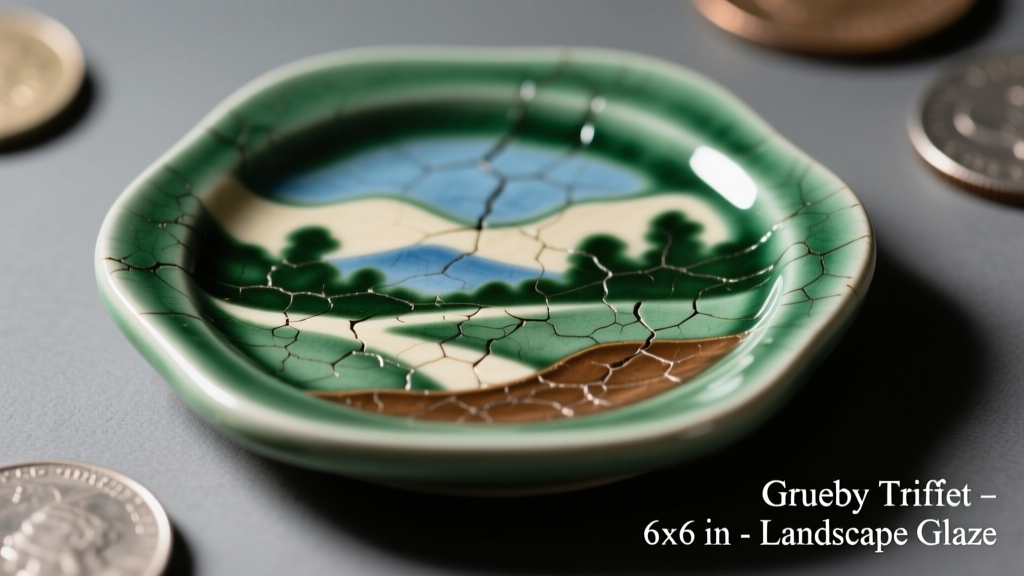
Grueby Trivet Landscape Green Matte Blue Cream Brown Glaze 6 × 6 Inch: A Collector’s Deep Dive into Rarity, Provenance, and Authenticity
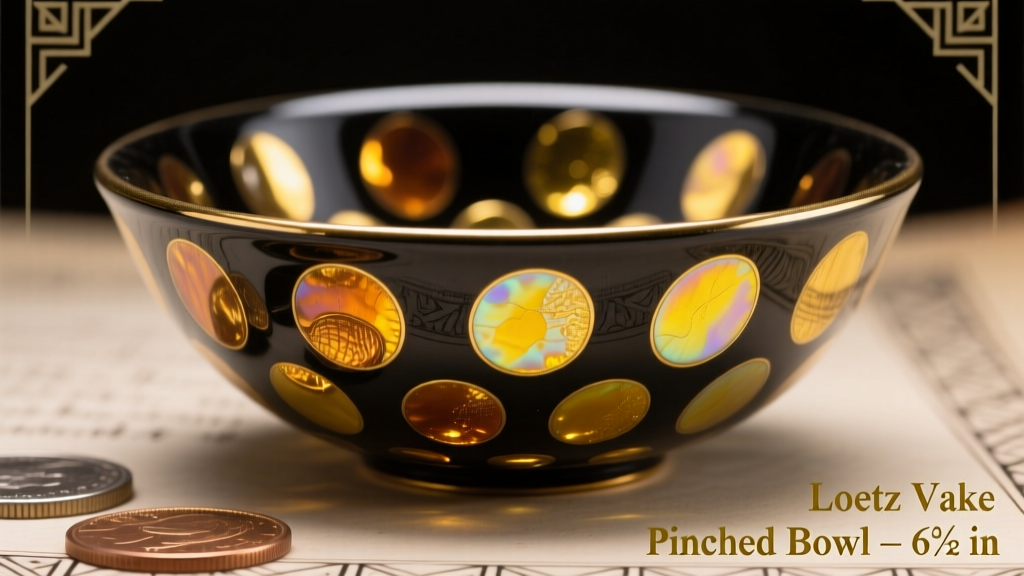
Loetz Vase: Pinched Bowl Form with Cased Yellow-Gold Iridescent Spots — A 6½-Inch Masterpiece of Viennese Art Glass
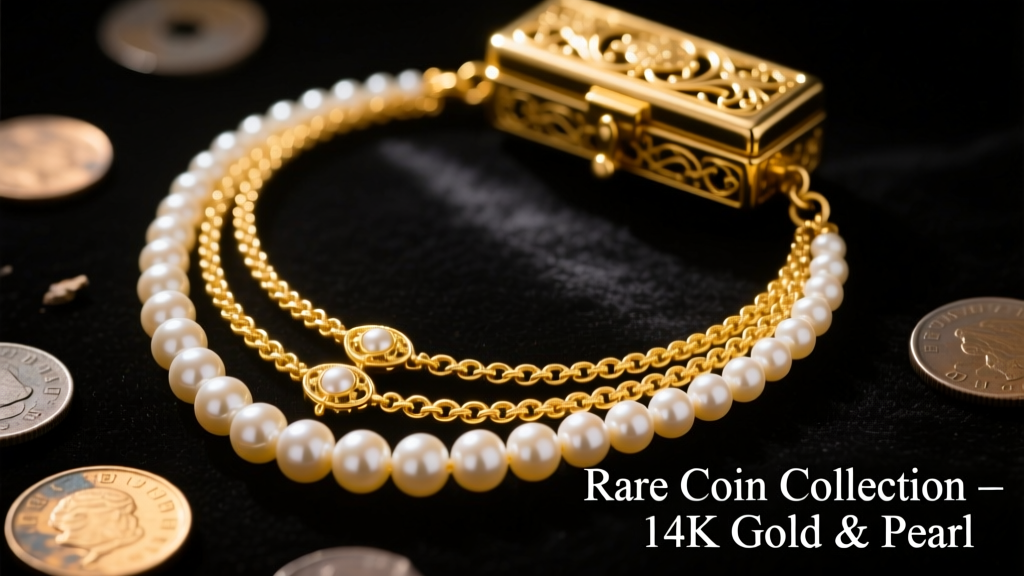
Four-Strand Cultured Pearl Necklace with 14K Yellow Gold Box Clasp: Authentication, Valuation, and Historical Context
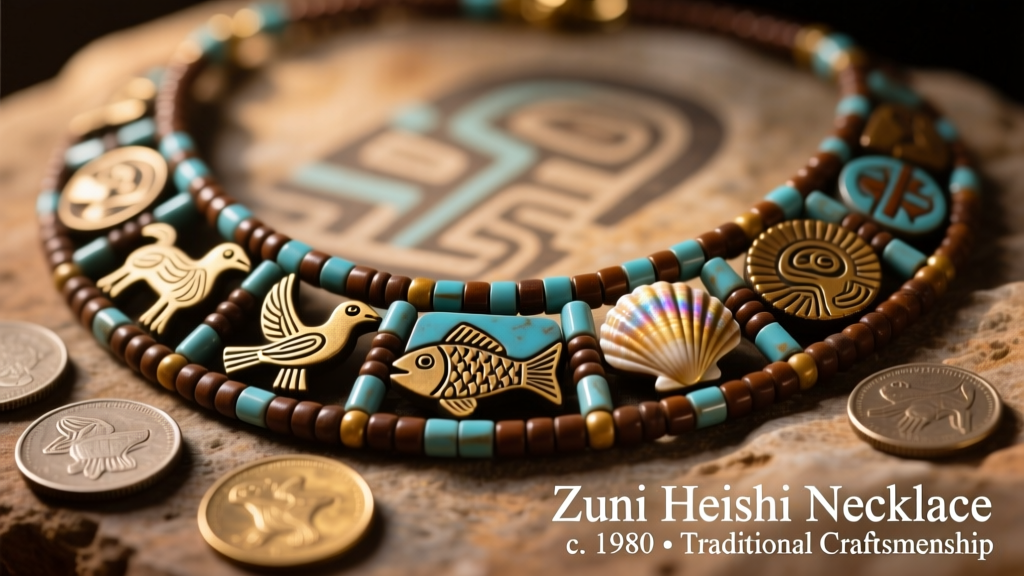
Zuni Hand-Carved Stone Animal Necklace: Authentic 1980s Navajo-Zuni Collaboration, 30-Inch Heishi & Shell Composition

Simon & Halbig 886 Bisque Head Doll: Authenticating the Blue Sleep-Eye, Blond Mohair Wig Variant
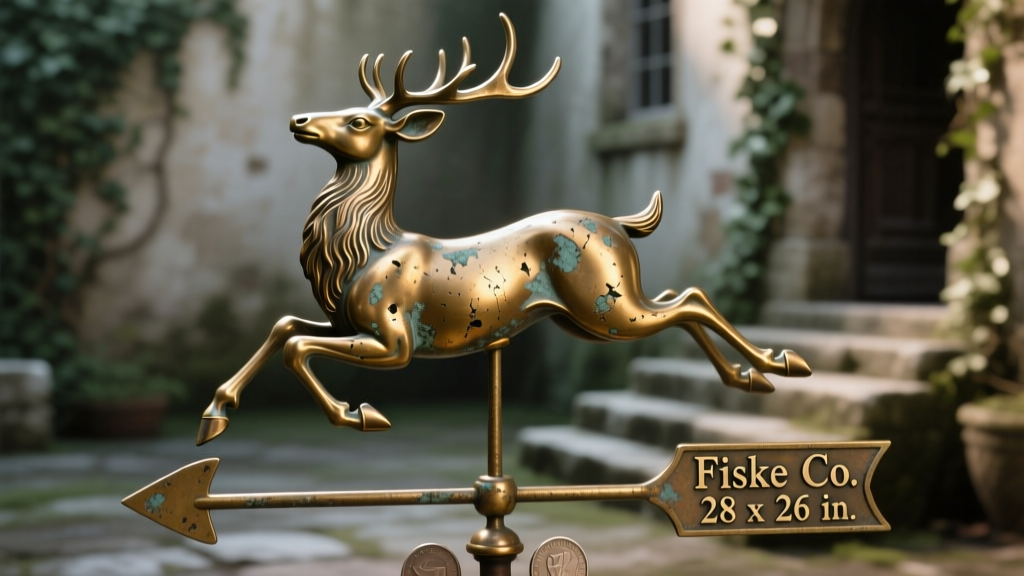
Weather Vanes: The Stag Leaping Brass Fiske Co. Model (28 × 26 Inches) — History, Identification, and Market Value

The 1906 Steiff Mohair Yellow Teddy Bear: A Numismatic-Level Artifact in Toy History