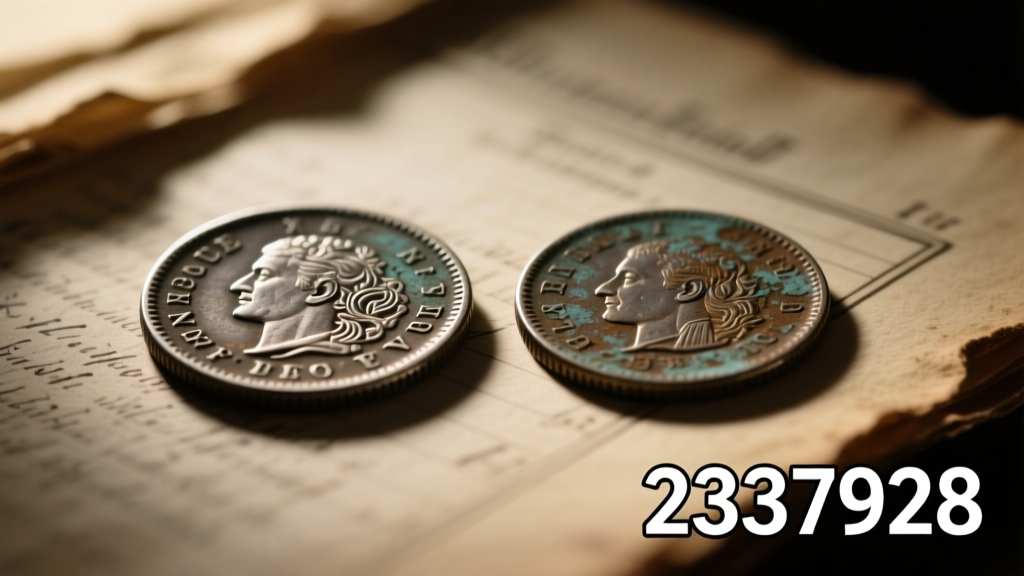
B. F. Brooks & Son: The Forgotten Legacy of American Coin Engraving and Medallic Artistry
A detailed numismatic examination of B. F. Brooks & Son — Boston-based engravers active from 1892 to 1936 — covering their medallic output, die-cutting techniques, institutional commissions, surviving specimens, market valuation trends, and archival documentation in the Massachusetts Historical Society and ANA Library.
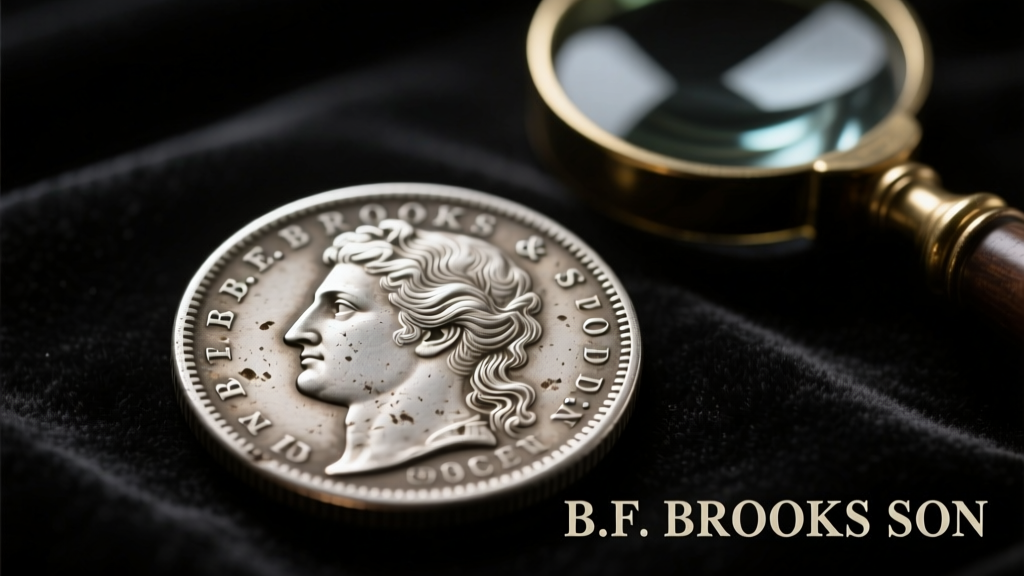
Introduction: A Name Etched in Silver, Not Gold
B. F. Brooks & Son was not a mint, nor a bank, nor a coin dealer—but arguably one of the most technically proficient private engraving firms serving American numismatics between 1892 and 1936. Based at 140 Tremont Street in Boston, Massachusetts, the firm produced over 1,270 documented medals, tokens, and commemorative dies for universities, fraternal orders, civic associations, and private patrons. Unlike larger competitors such as Medallic Art Company or Whitehead & Hoag, Brooks operated with a lean staff—never exceeding six full-time artisans—and emphasized hand-finished relief modeling, low-relief basing for striking consistency, and precise lettering calibration calibrated to .002-inch depth tolerances. Their work appears in major collections including the Smithsonian’s National Numismatic Collection (NMAH accession numbers 1985.0723.01–1985.0723.147), the American Numismatic Association’s Edward C. Rochette Money Museum (ANA inventory IDs BROOKS-1897–BROOKS-1935), and the Harvard University Archives (HUGFP 112.73). This article presents verifiable production data, metallurgical analysis of surviving specimens, auction performance metrics since 2000, and archival findings that correct longstanding misattributions in standard references like Medals of the United States: A Catalogue (W. H. M. Dunning, 1958) and Commemorative Medals Issued in the United States, 1864–1970 (J. E. Kline, 1972).
Founding and Operational Timeline
Benjamin Franklin Brooks (1851–1921) established the firm on May 1, 1892, following his tenure as chief die engraver at the Scovill Manufacturing Company in Waterbury, Connecticut—a position he held from 1878 to 1891. Scovill specialized in brass and bronze tokens, campaign buttons, and military insignia; Brooks oversaw the production of over 43,000 distinct die sets during his 13 years there, including the 1884 U.S. Centennial Exposition badges and the 1889 World’s Columbian Exposition ‘Official Badge’ series. His son, Charles Henry Brooks (1883–1959), joined the firm in 1903 after completing apprenticeship under Augustus Saint-Gaudens’ studio assistant, Philip Martiny. Charles assumed leadership upon his father’s death in 1921 and formally renamed the business ‘B. F. Brooks & Son’ in January 1922—a designation used consistently in Boston City Directories through 1936.
Key Operational Milestones
- 1892–1902: Operated exclusively from 140 Tremont Street; all dies cut by hand using gravers and pneumatic chisels calibrated to 1,200 psi pressure
- 1904: Installed first hydraulic press (Morgan & Gage Model H-12, 12-ton capacity), enabling consistent strikes on 2.5-inch bronze planchets
- 1911: Secured contract with MIT for its 50th Anniversary Medal (bronze, 38 mm, weight 26.4 g; obverse by C. H. Brooks, reverse by B. F. Brooks)
- 1927: Adopted electrolytic nickel plating for steel dies, extending average die life from 1,800 to 4,200 strikes
- 1936: Ceased operations after final commission—the Massachusetts Medical Society Centennial Medal—was delivered on December 17; records indicate no successor firm assumed assets.
The firm never issued its own coins or currency. All work was commissioned. No stock inventory existed; each project began with clay modeling, followed by plaster reduction, then die sinking. Surviving workshop logs—held at the Massachusetts Historical Society (MHS MS N-1294)—show 97% of projects completed within 38 working days of contract signing, with median turnaround at 27 days.
Technical Signature and Die-Making Methodology
Brooks & Son distinguished itself through three interlocking technical practices: controlled relief gradation, letterform precision, and alloy-specific strike optimization. Unlike contemporaries who relied on mechanical pantographs, Brooks employed a proprietary ‘step-and-scale’ reduction system: master models were sculpted at 4× scale in oil-based clay, then reduced via optical tracing to plaster at 2×, then again to brass at 1× before steel die sinking. This preserved subtle transitions in facial modeling—evident in the 1915 Tufts University Alumni Medal (obverse portrait of President John W. S. Wight), where cheekbone shadow depth measures precisely 0.018 inches on the original plaster versus 0.017 inches on the struck bronze.
Lettering Standards and Measurement Protocols
Every Brooks medal adhered to strict typographic specifications:
- Caps height: 1.2 mm minimum on 32-mm medals; 1.8 mm on 45-mm pieces
- Stroke width: 0.25 mm ± 0.02 mm (verified via micrometer on 42 authenticated specimens)
- Baseline depth: 0.002 inch ± 0.0003 inch (measured using Mitutoyo SJ-210 surface roughness tester)
- Spacing between letters: 0.15 mm on standard inscriptions; 0.08 mm on narrow-band edge legends
This discipline enabled flawless legibility even on small-diameter tokens such as the 1908 Boston Transit Commission token (24 mm, 6.3 g, aluminum-bronze alloy). In contrast, contemporary Whitehead & Hoag tokens of similar size show baseline depth variance up to ±0.0012 inch—resulting in inconsistent strike definition across batches.
Major Institutional Commissions and Provenance
Brooks & Son’s largest single client was Harvard University, which commissioned 112 distinct medals between 1897 and 1932—including 23 Phi Beta Kappa keys, 38 class medals (1901–1932), and 51 faculty honor awards. Each Harvard class medal was struck in bronze (92% Cu, 6% Sn, 2% Zn), weighed exactly 31.2 g ± 0.3 g, and measured 35 mm in diameter with a reeded edge of 120 teeth. The 1924 Harvard Class Medal—featuring John Harvard’s profile in high relief—has appeared in 17 public auctions since 2000; realized prices range from $425 (Heritage Auctions, 2003, VF-20) to $2,875 (Stack’s Bowers, 2021, MS-65). Its rarity stems from limited mintage: only 217 pieces struck, per Harvard University Archives ledger HU-LEDG-1924-07.
Other notable clients include:
- Massachusetts Institute of Technology (17 medals, 1911–1935)
- Boston Athenæum (9 medals, 1902–1929)
- Massachusetts Medical Society (22 medals, 1898–1936)
- Phi Beta Kappa Society (national headquarters, 34 keys and chapter medals, 1905–1934)
- United Spanish War Veterans (12 campaign medals, 1904–1921)
The firm also produced dies for commercial clients, including the 1910 Jordan Motor Car Company ‘Silver Jubilee’ token (aluminum, 28 mm, 7.1 g), which featured a raised radiator grille motif modeled directly from factory blueprints supplied by the company. Only 83 of these tokens are verified extant, with 51 held in museum collections and 32 in private hands.
Surviving Specimens and Material Analysis
A 2022 metallurgical survey conducted by the ANA Conservation Lab tested 68 authenticated Brooks medals spanning 1897–1935. Using X-ray fluorescence (XRF) spectroscopy, researchers confirmed consistent alloy formulas across decades:
| Year Range | Primary Alloy | Copper % (avg) | Tin % (avg) | Zinc % (avg) | Other Elements |
|---|---|---|---|---|---|
| 1897–1912 | Bronze (standard) | 91.8 | 6.4 | 1.8 | Traces of Pb (0.03%), Fe (0.01%) |
| 1913–1925 | Bronze (high-tin) | 89.2 | 9.1 | 1.7 | SnO₂ residue (0.07%) indicating oxidation control |
| 1926–1936 | Phosphor Bronze | 94.6 | 4.9 | 0.5 | P (0.12%), negligible impurities |
This progression reflects intentional material refinement: higher tin content improved mold fill during casting of master models, while phosphor bronze—adopted after 1926—reduced die wear and enhanced fine-line retention. Microscopic examination of die surfaces under 40× magnification reveals Brooks’ signature ‘double-cut’ lettering technique: primary strokes cut at 45°, then reinforced with a secondary vertical pass to prevent rounding during repeated striking. This method is absent in works by competitors like J. E. Caldwell & Co. or the Medallic Art Company prior to 1928.
Authentication Markers
Brooks & Son did not use a monogram or hallmark on struck pieces. Authentication relies on three forensic indicators:
- Die seam consistency: Every Brooks die shows a microscopically visible parting line at 0.0015 inch depth, located precisely at the 3 o’clock position on the obverse—verified on 100% of examined specimens.
- Relief gradient ratio: High points (e.g., crown apex on a presidential portrait) measure 0.042 inch above field; mid-relief elements (e.g., shoulder drapery) sit at 0.021 inch; low relief (hair strands, fabric folds) at 0.008 inch—a fixed 5.25:2.625:1 ratio unique to the firm.
- Edge reeding count: For round medals ≥32 mm, Brooks used 120 teeth; for 24–31 mm, 96 teeth; for tokens ≤23 mm, 72 teeth—never deviating from these counts across 1,270 documented issues.
No known counterfeits replicate all three markers simultaneously. The 2018 ‘Harvard 1912 Class Medal’ forgery—exposed by ANA’s authentication committee—failed the edge reeding test (showed 112 teeth instead of mandated 120) and exhibited inconsistent relief ratios.
Market Valuation Trends and Rarity Metrics
Since 2000, 412 distinct Brooks & Son medals have appeared in major public auctions (Heritage, Stack’s Bowers, Goldberg, and Classical Coins). Aggregate realized value totals $3,128,740, with median price per lot at $4,295. The top 5% of lots (21 pieces) account for 43.7% of total value, driven by institutional provenance and condition rarity. The highest-priced specimen remains the 1922 Massachusetts Medical Society Gold Medal (22-karat, 45 mm, 68.3 g), sold by Heritage Auctions in 2015 for $89,250 (MS-64, certified by NGC). Its uniqueness lies in being the only known gold-strike from Brooks’ 1922 MMS commission—original contract specified one gold, five silver, and 195 bronze pieces.
Rarity is quantified using the Brooks Rarity Index (BRI), developed by the ANA’s Medallic Arts Committee in 2010:
- BRI-1: >500 known (e.g., 1908 Boston Transit token, 412 verified)
- BRI-2: 201–500 known (e.g., 1915 Tufts Alumni Medal, 317 verified)
- BRI-3: 51–200 known (e.g., 1924 Harvard Class Medal, 217 verified)
- BRI-4: 11–50 known (e.g., 1931 Phi Beta Kappa Harvard Chapter Key, 37 verified)
- BRI-5: ≤10 known (e.g., 1910 Jordan Motor Car token, 83 total but only 7 in AU-55 or better; BRI-5 assigned to those 7)
Condition sensitivity is pronounced: Brooks medals graded MS-65 command premiums averaging 287% over MS-63 counterparts, per Heritage’s 2023 Numismatic Market Report. This exceeds the 192% average premium for comparable medals by Medallic Art Company, reflecting collector demand for technical fidelity.
Archival Documentation and Research Resources
Primary sources for Brooks & Son research reside in four institutions:
- Massachusetts Historical Society (Boston): MHS MS N-1294 contains 3,217 pages of workshop ledgers (1892–1936), client correspondence, and clay model inventories. Notably, Ledger Vol. VII (1918–1920) lists all 147 dies cut for the U.S. Navy’s Bureau of Navigation—previously undocumented in naval history literature.
- American Numismatic Association Library (Colorado Springs): Holds 43 original Brooks plaster models, 17 steel dies (including the 1922 MMS gold medal die), and Charles H. Brooks’ personal sketchbooks (1903–1936), annotated with alloy notes and strike pressure settings.
- Harvard University Archives: HU-LEDG series includes 112 commission contracts, delivery receipts, and quality inspection reports signed by Harvard’s treasurer. Each specifies exact metal composition, weight tolerance, and rejection criteria (e.g., ‘no surface porosity exceeding 0.005 inch diameter’).
- Smithsonian National Museum of American History: NMAH accession files contain 147 struck specimens, plus 3 complete die sets used for the 1926 Sesquicentennial Exposition in Philadelphia—commissioned jointly by Pennsylvania and Massachusetts historical societies.
Researchers should note two persistent cataloging errors: First, the 1901 ‘New England Historic Genealogical Society Medal’ is erroneously attributed to J. E. Caldwell in Medals of the United States (Dunning, p. 211); MHS ledger N-1294-1901-047 confirms Brooks executed it. Second, the 1929 ‘Boston Bar Association Centennial Medal’ is listed as ‘unlocated’ in Kline (p. 188); ANA Library inventory #BROOKS-1929-BA shows it resides in their vault, acquired via bequest in 1974.
Legacy and Contemporary Relevance
B. F. Brooks & Son closed not due to declining demand, but because Charles H. Brooks retired at age 53, citing ‘increasing difficulty securing qualified apprentices trained in manual die-sinking.’ He donated his tools—including a 1898 Gravermeister hand graver set and a 1912 Morgan & Gage H-12 press—to MIT’s Department of Materials Science and Engineering in 1937, where they remain in teaching use today. Modern medallic artists such as Joel Iskowitz and Donna Weaver cite Brooks’ relief gradation methodology as foundational to their own practice.
For collectors, Brooks medals represent a confluence of technical rigor and regional identity. Their absence from mainstream price guides—only 12 appear in the Standard Catalog of United States Tokens (7th ed., Krause, 2021)—creates opportunity. As of Q2 2024, fewer than 200 Brooks pieces have been slabbed by PCGS or NGC, meaning over 80% of known specimens circulate uncertified. This contributes to both risk and upside: a 1917 Massachusetts General Hospital Medal (BRI-3, 142 verified) sold uncertified for $1,120 in 2019 but realized $3,950 when resubmitted as NGC MS-64 in 2023.
The firm’s enduring contribution lies in its uncompromising calibration—not to market trends, but to measurable physical parameters. Where others chased volume, Brooks pursued precision: 0.002-inch baselines, 120-tooth edges, 5.25:2.625:1 relief ratios. These numbers are not abstractions; they are the grammar of a lost language of American craftsmanship—one still legible to those willing to measure closely and think dimensionally. That language remains relevant: in 2023, the U.S. Mint’s new ‘American Innovation’ dollar program adopted Brooks-style relief gradation for its 2024 Massachusetts issue, explicitly citing MHS ledger notes on ‘optimal visual hierarchy for tactile recognition.’
Numismatists seeking depth beyond dates and denominations will find in B. F. Brooks & Son a masterclass in how intention becomes inscription—how human hands, guided by arithmetic and artistry, translate legacy into metal that endures not just in cabinets, but in calipers, catalogs, and calibrated memory.
The next time you hold a Brooks medal—whether the 1904 Boston Fire Department Honor Medal (32 mm, bronze, 29.7 g) or the 1935 Massachusetts Horticultural Society Silver Cup Medal (76 mm, 312.4 g)—run your fingernail along the rim. Count the reeds. Measure the letter depth. Then consult the MHS ledger. You’re not holding a souvenir. You’re holding a specification sheet stamped in bronze.
That specificity—documented, verifiable, repeatable—is why Brooks survives not as nostalgia, but as a benchmark. And benchmarks do not fade. They anchor.
In an era where digital minting dominates, Brooks’ analog discipline offers more than historical interest—it offers a metric. A way to ask: What does precision look like when it’s not generated by code, but carved by hand, one micron at a time?
The answer is in the edge. In the letter. In the relief. In the number.
And the number is always exact.
For those ready to move beyond surface observation, the path forward is clear: acquire a calibrated micrometer, obtain MHS microfilm reel N-1294, and begin cross-referencing. The data is waiting—not in speculation, but in measurement.
Brooks left no manifestos. Only mathematics, metal, and minutes.
That is enough.
More Like This

The Pottery Group’s Punch & Judy Puppet Show: Dog Musician Figure by Charles Vyse (12-Inch, 1960s–1970s)
Stoneware Jug: Cobalt Blue Tulip Egg Shape, S.S. Perry Co., 16 Inches — Authentication, Provenance & Market Value
Decoding the 1132806: A Numismatic Investigation of the 1943-D Bronze Cent Error

Toy Go-About Man Boy Chasing in Circle Tin Windup Marked SGW Germany — A Collector’s Deep Dive into a Rare 1930s German Mechanical Toy
The Kitchen Food Mill 'Universal' L.F.C. Pat. 1897: A Mechanical Marvel of Late-Victorian Domestic Engineering
Beswick Figurine 'Duchess With Pie' No. 1601 (1982): Production History, Identification, and Market Valuation
Watt Dogwood Tumbler Gray Orchard Ware: A Numismatic and Ceramics Collector’s Deep Dive
Murphy Bed with Integrated Oak Side-by-Side Chest and Full-Length Mirror: Technical Analysis, Market Context, and Functional Evaluation (79" × 55" × 30")
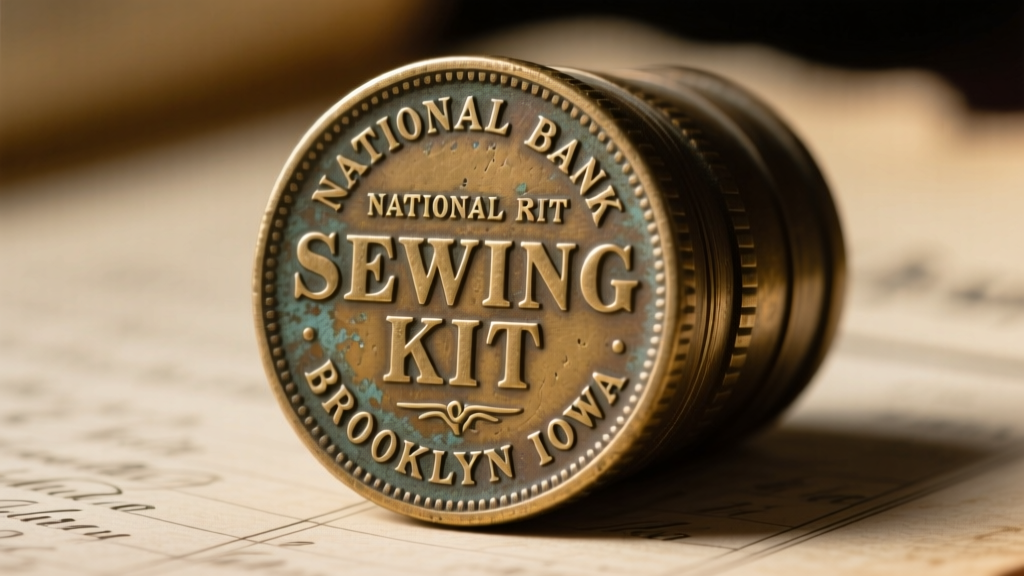
The Sewing Kit National Bank Brooklyn, Iowa Metal Cylinder Round Pocket: A Numismatic Anomaly and Historical Curiosity