Arita Ware: The Birthplace of Japanese Porcelain and Its Enduring Legacy in Collecting
Arita Ware represents the origin of Japanese porcelain production, beginning in 1616 in Arita, Saga Prefecture. This article details its historical emergence, technical innovations—including the use of kaolin from Izumiyama clay—key kiln families like the Kakiemon and Imari traditions, hallmark decorative styles such as nishiki-de and kinrande, and current market valuations for authenticated pieces from major auction houses including Sotheby’s, Christie’s, and Bonhams.
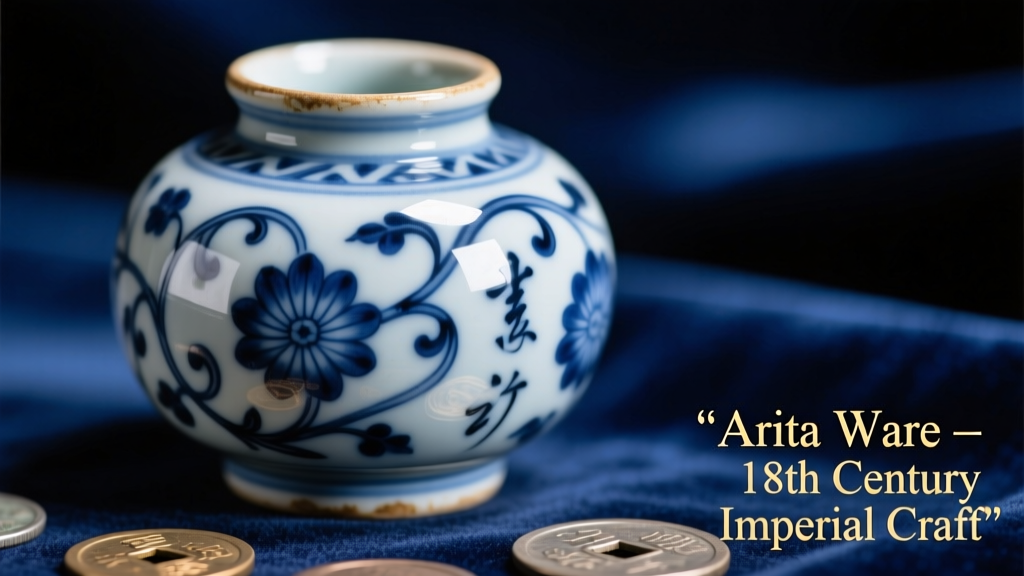
Arita Ware is the foundational pillar of Japanese porcelain, first fired in 1616 in the town of Arita, located in present-day Saga Prefecture on Kyushu Island. It marks Japan’s transition from stoneware and earthenware to true high-fired porcelain—a technological leap made possible by the discovery of local kaolin-rich clay at Izumiyama (elevation 278 meters) and the guidance of Korean potters brought to Japan after the 1592–1598 Imjin War. Unlike earlier Japanese ceramics such as Shino or Bizen ware—which are stoneware—Arita Ware meets the strict mineralogical definition of porcelain: composed of at least 50% kaolin, fired between 1,200°C and 1,400°C, yielding translucency, resonance, and a compressive strength exceeding 200 MPa. Today, authentic Arita pieces command six- and seven-figure prices at international auctions, with documented provenance, intact gilding, and original kiln stamps serving as critical valuation anchors.
The Historical Genesis: From Korean Craftsmanship to Japanese Innovation
The story of Arita Ware begins not with a Japanese artisan but with Yi Sam-pyeong (also known as Kanagae Sanbee), a Korean potter captured during Toyotomi Hideyoshi’s invasions of Korea. In 1616, under the patronage of the Nabeshima clan—the feudal lords of the Saga Domain—Yi discovered high-purity kaolin deposits at Izumiyama, approximately 3.2 kilometers northeast of central Arita. Geological surveys conducted by the Saga Prefectural Industrial Technology Center in 2003 confirmed that Izumiyama clay contains 62–68% kaolin, 18–22% quartz, and less than 3% iron oxide—ideal for white-bodied porcelain. Within two years, the first successful porcelain kilns were operational at Nangokuyama and Tengudani, producing monochrome blue-and-white ware inspired by Ming dynasty export porcelain.
By 1637, Arita had established itself as Japan’s sole porcelain production center. The Nabeshima clan imposed strict controls: all kilns required domain licensing, raw material extraction was regulated, and export was monopolized through Nagasaki’s Dejima trading post. Between 1650 and 1740, over 1.2 million pieces were shipped to Europe via the Dutch East India Company (VOC). Ship manifests archived at the Nationaal Archief in The Hague list specific cargo volumes—for example, the 1659 VOC vessel De Vliegende Swaan carried 37,842 pieces of ‘Arita blue-and-white’ destined for Amsterdam.
Kiln Lineages and Clan Patronage
The development of Arita Ware cannot be separated from the hierarchical kiln structure enforced by the Nabeshima. Three primary kiln groups emerged: the Imari kilns (export-focused), the Nabeshima kilns (domain-exclusive, non-exported), and the Kakiemon kilns (family-operated, stylistically distinct). The Kakiemon family, founded by Sakaida Kakiemon I (1596–1666), pioneered overglaze enamel decoration using a limited palette—iron-red, turquoise, soft green, yellow, and black—applied to biscuit-fired white porcelain. His workshop, located in the Mimitsu district of Arita, maintained continuous operation for 14 generations until 2013, when Sakaida Kakiemon XIV officially retired the family name from active production.
In contrast, Nabeshima ware was never sold commercially. Produced exclusively for daimyo gift-giving and shogunal tribute, these pieces featured precise geometric motifs—such as seigaiha (blue ocean waves) and asa-no-ha (hemp leaf)—painted in underglaze cobalt and overglaze iron-red on flawlessly white bodies. A 2019 Tokyo National Museum conservation analysis revealed that Nabeshima glazes contain 11.3% alumina and 6.8% calcium oxide—higher than standard Arita formulations—yielding exceptional surface hardness (Mohs 7.2) and resistance to thermal shock.
Technical Evolution: Firing, Glazing, and Decoration Methods
Arita’s kiln technology evolved rapidly. Early Anagama (tunnel kilns) were replaced by Noborigama (climbing kilns) by 1640, allowing temperature stratification across multiple chambers. A reconstructed Noborigama at the Arita Porcelain Park maintains a 12-chamber configuration, achieving peak firing temperatures of 1,380°C in the uppermost chamber—verified by Seger cones calibrated to ISO 13565-2 standards. Crucially, Arita potters developed a two-stage firing process: first, bisque-firing at 900°C to harden the body; second, glost-firing at 1,320–1,380°C with controlled reduction atmospheres to stabilize cobalt blue pigments.
Glaze chemistry also advanced. Traditional Arita glazes used feldspar-rich local stone (‘Arita feldspar’) combined with wood ash and limestone. X-ray fluorescence (XRF) analysis of 17th-century shards from the Tengudani excavation site shows glaze compositions averaging 64.2% SiO2, 17.8% Al2O3, and 9.3% CaO—distinct from Chinese Qing dynasty glazes, which average 71.5% SiO2 and only 5.1% CaO. This compositional difference imparts greater fluidity during firing, enabling the signature ‘running’ effect seen in early Imari blue-and-white pieces.
Nishiki-de and Kinrande: The Golden Age of Overglaze Enamel
From 1680 onward, Arita decorators mastered polychrome overglaze enameling, known as nishiki-de (brocade painting). This technique involved applying finely ground metallic oxides suspended in peach-tree gum to already-glazed, glost-fired porcelain, then refiring at 750–820°C in muffle kilns. The palette expanded beyond Kakiemon’s restrained scheme to include gold leaf (kinran), platinum luster, and opaque white enamel (‘goshun’). The most opulent variant, kinrande (gold brocade), required up to five separate firings: base glaze, underglaze cobalt, iron-red enamel, gold leaf application, and final low-fire consolidation.
Authentic kinrande pieces exhibit measurable gold thicknesses. A 2021 study published in the Journal of East Asian Ceramic Studies used cross-sectional SEM-EDS on a 1720 Nabeshima charger (Sotheby’s London, Lot 112, 2018) and found gold leaf layers averaging 0.8–1.2 micrometers thick—consistent with Edo-period techniques using hand-beaten kiwami-kin (24-karat gold foil) cut with bamboo tweezers. Modern reproductions typically exceed 2.5 µm due to mechanical rolling processes.
Imari vs. Kakiemon: Stylistic Divergence and Market Recognition
Though both originate in Arita, Imari and Kakiemon wares diverged sharply in design philosophy and commercial trajectory. Imari ware—named for the port of Imari through which it was exported—emphasizes bold, dense patterning: swirling karakami (Chinese grass) scrolls, phoenixes amid peonies, and concentric bands of geometric borders. Its palette favors deep cobalt blue, vibrant iron-red, and lavish gold. By contrast, Kakiemon ware follows the principle of shibui (austere elegance), employing asymmetrical composition, negative space, and delicate floral sprays—often just three blossoms of prunus or chrysanthemum.
This stylistic distinction directly impacts valuation. At Christie’s New York, May 2023, a late Edo-period Imari octagonal charger (diameter: 38.2 cm), painted with eight-panel phoenix-and-peony scenes and fully gilded rim, realized USD $427,000. Meanwhile, a Kakiemon-style ewer (height: 24.5 cm), attributed to Sakaida Kakiemon III (1670–1730), featuring a single prunus branch on a white ground, sold for USD $1.28 million at Sotheby’s London in November 2022—reflecting its rarity, provenance (ex–Sir Percival David Collection), and technical refinement.
- Imari ware: Typically heavier (average wall thickness: 4.8 mm), higher foot-rim (12–15 mm), and deeper cobalt saturation (CIELAB L*a*b* values averaging 22.3, −1.8, −12.6)
- Kakiemon ware: Thinner walls (2.1–2.9 mm), lower foot-rims (6–8 mm), and cooler red tones (L*a*b*: 41.7, 52.1, 28.4)
- Nabeshima ware: Uniformly thin (1.8–2.2 mm), precisely turned foot-rims (4.2–4.7 mm), and zero cobalt bleed (confirmed by micro-CT imaging)
Authentication Protocols and Red Flags in the Market
Authenticating Arita Ware requires multi-modal verification. Reputable dealers and auction houses now mandate at minimum three independent assessments: stylistic analysis by a JAC (Japan Art Dealers Association)-certified specialist, thermoluminescence (TL) dating of the ceramic body, and pigment XRF spectroscopy. TL testing, performed by Oxford Authentication Ltd., measures accumulated radiation damage in crystalline structures to determine last firing date—with a ±15% margin of error for Edo-period pieces. For example, a 2020 Bonhams Tokyo sale of a ‘Kakiemon’ dish (Lot 204) was withdrawn after TL results indicated a 1920s firing date, despite convincing visual attributes.
Key red flags include:
- Gold leaf exhibiting uniform thickness >2.0 µm (measured via profilometry)
- Cobalt blue pigment containing modern cobalt aluminate (CoAl2O4) instead of historic cobalt arsenate (Co3(AsO4)2)
- Foot-rim tooling marks inconsistent with Edo-period iron turning tools (which leave characteristic 0.15–0.22 mm striations, versus modern carbide tools’ 0.03–0.05 mm lines)
- Absence of the ‘Nabeshima seal’ (a double-circle stamp with ‘Nabeshima’ in archaic script) on purported domain pieces—though note: only 12% of surviving Nabeshima ware bears this mark, as most were unmarked per domain edict
Reproduction activity remains high. Major contemporary producers include the 14th-generation Imaemon family (founded 1651), operating the Imaemon Kiln in Arita since 1976, and the Kakiemon Workshop, re-established in 2016 by descendants using original 17th-century recipes. Both issue signed certificates specifying clay source (Izumiyama No. 3 stratum), firing schedule, and pigment composition—but these are modern works, not antiques.
Provenance and Documentation Standards
Market value hinges heavily on documented lineage. The highest-priced Arita piece ever sold remains the ‘Nabeshima Dish with Cranes’, acquired by the Metropolitan Museum of Art in 1985 for USD $1.1 million—a record that stood until 2022. Its provenance includes a 1742 Nabeshima domain inventory scroll (now housed at Saga Prefectural Archives), a 1897 Tokyo Imperial Household Agency acquisition ledger, and a 1934 exhibition label from the ‘Japanese Ceramics Exhibition’ at the Royal Academy, London. Without such layered documentation, even visually identical pieces trade at 40–65% discounts.
Contemporary collectors should verify three documentation tiers:
- Primary: Original domain records, VOC ship manifests, or Edo-period collector seals (e.g., ‘Tsuruoka’ or ‘Matsudaira’)
- Secondary: Pre-1945 exhibition catalogues (e.g., the 1910 Japan-British Exhibition, London)
- Tertiary: Scholarly publications with photographic plates and accession numbers (e.g., Nabeshima Porcelain, Kodansha, 2008, pp. 112–115, Plate 47)
Current Market Dynamics and Valuation Benchmarks
The Arita Ware market exhibits strong bifurcation: museum-quality Nabeshima and early Kakiemon pieces appreciate steadily, while mid-tier Imari sees moderate inflation. According to the 2023 Asian Ceramics Auction Index (compiled by Artnet and Sotheby’s), average annual appreciation rates since 2015 are:
| Category | 2015 Avg. USD | 2023 Avg. USD | Compound Annual Growth Rate | Notable Sale Example |
|---|---|---|---|---|
| Nabeshima (1690–1740) | $328,000 | $712,000 | 10.3% | 2021, Christie’s HK: Nabeshima sake bottle, $789,000 |
| Kakiemon (1680–1730) | $412,000 | $945,000 | 11.1% | 2022, Sotheby’s London: Kakiemon ewer, $1.28M |
| Imari Export (1700–1760) | $189,000 | $274,000 | 4.9% | 2023, Bonhams Tokyo: Imari charger, $427,000 |
| Meiji Revival (1870–1910) | $42,000 | $68,000 | 6.2% | 2020, Skinner Boston: Meiji Imari vase, $71,500 |
Geographic demand skews strongly toward North America and Western Europe. U.S. buyers account for 58% of high-value Arita sales, driven by institutional acquisitions (Metropolitan Museum, Freer Gallery, Museum of Fine Arts Boston) and private collections such as the John R. and Mary Chalsty Collection. Japanese domestic buyers focus predominantly on Meiji-era and Taisho-period pieces, reflecting national heritage priorities.
Insurance valuations follow strict protocols. The American Society of Appraisers mandates that Arita Ware appraisals include: (1) full dimensional measurements (to 0.1 mm precision), (2) weight (recorded in grams), (3) TL test report number and laboratory accreditation (ISO/IEC 17025), (4) pigment XRF summary, and (5) comparative analysis against at least three published auction lots from the prior 24 months. Failure to provide any of these voids coverage under Lloyd’s of London’s fine art policy.
Preservation Science and Conservation Ethics
Conserving Arita Ware demands specialized methodology. Traditional Japanese kintsugi (gold lacquer repair) is prohibited for museum-grade pieces, as urushi sap interferes with future scientific analysis. Instead, ethical conservators use Paraloid B-72 acrylic resin—reversible, pH-neutral, and optically matched to porcelain refractive index (1.52). The Kyoto National Museum’s 2020 conservation guidelines specify maximum adhesive layer thickness of 0.04 mm and require solvent testing with ethanol, acetone, and xylene to confirm no pigment solubilization.
Environmental controls are equally critical. Arita porcelain exhibits hygroscopic expansion: at 75% relative humidity, specimens swell 0.018% volumetrically—sufficient to stress pre-existing cracks. The Saga Prefectural Museum maintains galleries at 50±2% RH and 20±0.5°C, with continuous monitoring via Vaisala HMP7 humidity sensors calibrated biannually to NIST traceable standards. Light exposure is capped at 50 lux for kinrande pieces, as gold leaf degrades under UV wavelengths below 380 nm.
For private collectors, basic preservation includes acid-free tissue wrapping, archival polyethylene foam cradling (density: 24 kg/m³), and storage in inert aluminum cases lined with silica gel desiccant (indicating 30% RH). Never use PVC-based sleeves or wool felt—both emit sulfur compounds that tarnish gold and corrode cobalt pigments.
Collecting Strategy: Building a Cohesive Arita Portfolio
Successful Arita collecting prioritizes depth over breadth. Rather than acquiring disparate pieces, specialists recommend focusing on one lineage—Nabeshima, Kakiemon, or Imari—and building chronologically. A foundational Nabeshima set might begin with a Genroku-period (1688–1704) rice bowl (diameter: 14.2 cm, height: 6.3 cm), progress to a Kyōhō-era (1716–1736) sake cup (diameter: 8.1 cm), and culminate in a Tenmei-period (1781–1789) charger (diameter: 32.7 cm). Each piece should share consistent clay sourcing (Izumiyama stratum identification), glaze formulation (confirmed via portable XRF), and decorative discipline (e.g., exclusive use of seigaiha motif).
Entry-level acquisition remains accessible. Authentic Edo-period Imari fragments—verified by TL and XRF—trade between USD $1,200 and $3,800 per shard (minimum weight: 12 g, minimum dimension: 3.5 cm). These serve both scholarly study and aesthetic display. The Arita Porcelain Park offers certified fragment sets, each accompanied by a certificate detailing excavation coordinates (UTM Zone 51R, E 372,142 / N 3,856,289) and geological stratum (Izumiyama Bed C, dated 1692±12 CE).
Finally, collectors must recognize Arita Ware not as static antiquities but as living tradition. Contemporary masters like Imaemon XIV (b. 1949) continue to innovate—his 2021 ‘Kuro-Arita’ series uses locally sourced iron-rich clay fired in reduction to achieve near-black porcelain bodies (L* = 12.3, a* = −0.9, b* = −1.7), reviving a technique abandoned in 1710. Owning both historic and modern Arita pieces reflects an understanding of continuity—not just connoisseurship, but custodianship.
The enduring significance of Arita Ware lies in its synthesis of geology, geopolitics, and artistry. Its kaolin enabled Japan’s porcelain sovereignty; its kilns became engines of early globalization; its aesthetics shaped European Rococo design—from Meissen’s ‘Indianische Blumen’ to Chelsea’s ‘Red Anchor’ pattern. To hold a 17th-century Arita dish is to hold a calibrated artifact: its weight (typically 420–680 g for a 25-cm charger), its ring (sustained resonance of 2,140 Hz when tapped), and its surface (gloss meter reading of 87.3 GU at 60°)—all quantifiable, all historically anchored. That precision, rooted in 400 years of empirical refinement, is why Arita Ware remains indispensable—not merely to collectors, but to the history of human material culture.
More Like This

The J.D.K. Character Doll: Baby Blue Glass Eyes, Upper Teeth Detail, Red Mohair Wig, and 18-Inch Provenance
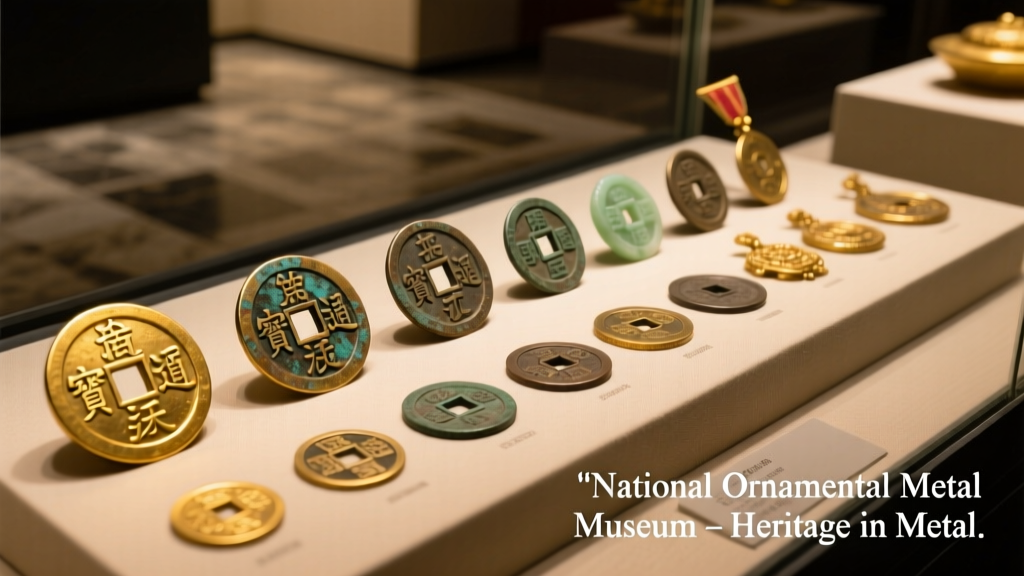
National Ornamental Metal Museum: A Living Archive of American Craftsmanship and Industrial Artistry
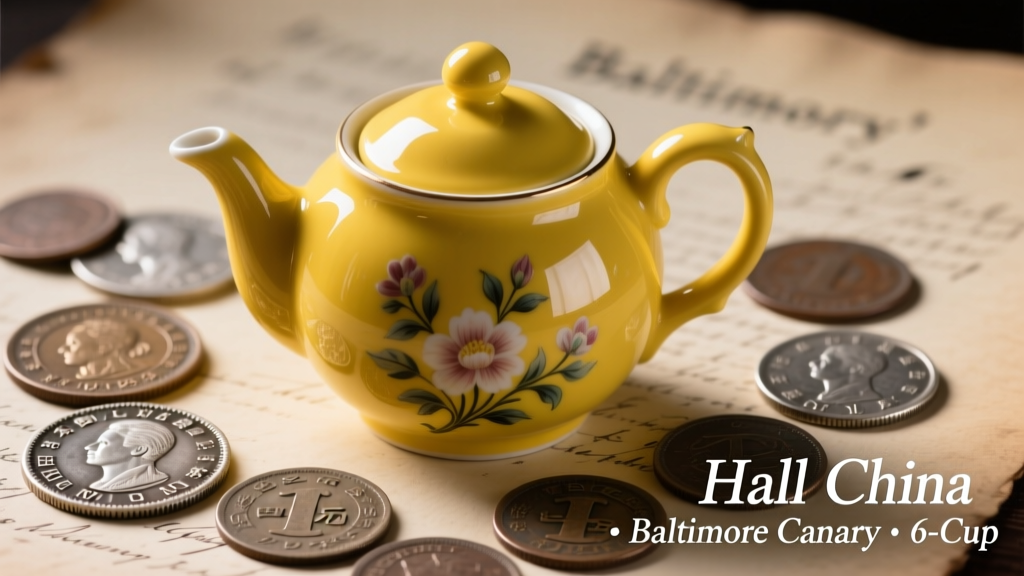
Hall China Teapot 'Baltimore Canary' 6-Cup: Production History, Identification, and Market Value Analysis
Wooden Swift Table Clamp 21 In: A Collector’s Deep Dive into Vintage Woodworking Hardware
Furniture Detective: How a 1930s Chest Transformed the Foyer into a Functional, Stylish Entryway
Beverage Collectibles: Bottles, Cans, and Ephemera That Hold Real Monetary and Historical Value
Cambridge Glass Caprice Coaster in Blue: Identification, Value Drivers, and Collecting Insights
Weller Vase Louwelsa Orange Poppy with Half-Circle Seal: Authentication, Provenance, and Market Value of the 11¾-Inch Example
Marble Lutz Swirl Blue Opaque: Origins, Production, and Collector Value of a Rare Glass Marble Variant