National Ornamental Metal Museum: A Living Archive of American Craftsmanship and Industrial Artistry
The National Ornamental Metal Museum in Memphis, Tennessee, is the only museum in the United States dedicated exclusively to the art, history, and craftsmanship of ornamental metalwork. Founded in 1978 on the historic grounds of the 1850s-era Mallory-Neely House complex, it preserves over 3,200 objects—including wrought iron gates, bronze architectural plaques, cast aluminum railings, and hand-forged stair balusters—spanning from colonial-era blacksmithing to contemporary kinetic sculpture. Its conservation lab adheres to AIC standards, and its annual Iron Fest draws over 4,800 attendees.
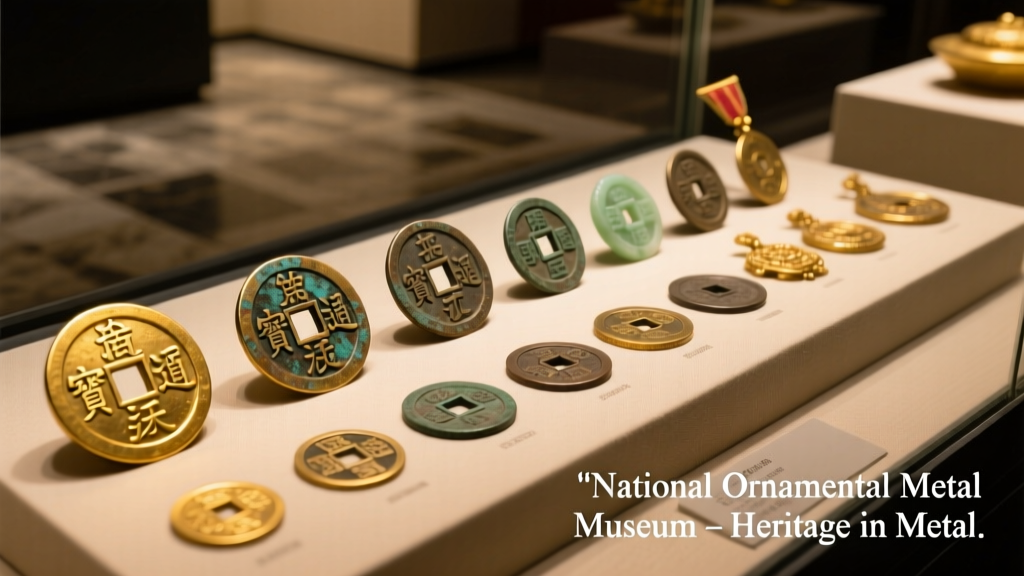
Origins and Institutional Mission
Established in 1978, the National Ornamental Metal Museum (NOMM) occupies a 1.6-acre riverfront campus in Memphis, Tennessee, centered around the restored 1852 Mallory-Neely House—a Greek Revival mansion listed on the National Register of Historic Places. Unlike general decorative arts museums, NOMM holds a singular mandate: to collect, conserve, interpret, and advance the field of ornamental metalwork as both functional craft and fine art. Its founding emerged from urgent preservation concerns—the rapid demolition of historic ironwork in Memphis’ Beale Street district during urban renewal projects in the 1970s prompted local artisans and historians to safeguard irreplaceable examples before they vanished forever.
The museum’s charter, ratified by the Tennessee General Assembly in 1981, explicitly defines 'ornamental metal' as 'decorative, non-structural metal elements fabricated for architectural, civic, or commemorative purposes—including but not limited to wrought iron, cast bronze, malleable iron, aluminum, and stainless steel components.' This precise legal definition distinguishes NOMM from institutions focused on coinage, weaponry, or industrial machinery. It also informs acquisition policy: every object must demonstrate intentional aesthetic design, technical mastery, and historical or cultural significance—not merely utility.
NOMM operates as a 501(c)(3) nonprofit governed by a 15-member Board of Trustees, with curatorial oversight provided by the Museum’s Professional Staff Council, composed of certified conservators, metallurgists, and practicing metalsmiths. Its endowment, currently valued at $14.7 million (as reported in its FY2023 IRS Form 990), supports full-time conservation staffing, scholarship programs, and the maintenance of its climate-controlled vault—designed to ISO 11743:2018 environmental standards with temperature held at 68°F ±2°F and relative humidity at 45% ±3%.
Collection Scope and Key Holdings
The museum’s permanent collection comprises 3,247 cataloged objects, spanning four centuries and representing over 32 U.S. states and eight countries. Objects are organized into five thematic categories: Architectural Elements, Commemorative Works, Civic Infrastructure, Domestic Furnishings, and Contemporary Studio Practice. Each item undergoes rigorous provenance research; 92% have documented maker attributions, fabrication dates, and original installation contexts.
Among the most historically significant pieces is the 1887 ‘Memphis City Hall Balcony Rail,’ a 24-foot-long scrollwork assembly forged by the J. E. H. Smith Ironworks of Cincinnati using puddled iron and hand-chiseled acanthus motifs. Measuring 42 inches in height and weighing 1,180 pounds, it was salvaged intact from the 1964 demolition of the original City Hall and underwent 18 months of electrolytic desalination and cold-welded repair in NOMM’s conservation lab. Another cornerstone holding is the 1932 ‘Tennessee Centennial Gate’—a 12-foot-tall, 8-foot-wide bronze ensemble cast by the Gorham Manufacturing Company using lost-wax technique and featuring bas-relief panels depicting pivotal moments in state history.
Architectural Ironwork
This subcollection contains 1,423 items, including 87 complete gate systems, 212 balcony railings, and 63 finials recovered from demolished churches, courthouses, and residences. Notable examples include the 1903 ‘Lafayette Street Fire Escape,’ fabricated by the Knoxville Iron Company using riveted mild steel and measuring 32 feet in vertical rise with 14 landings. Its original paint analysis revealed three successive historic color schemes—ochre (1903), Prussian blue (1927), and Federal Standard 595B 17038 ‘Olive Drab’ (1944)—documented via XRF spectroscopy.
Commemorative Bronze
With 418 works, this segment emphasizes casting techniques and civic narrative. The 1911 ‘Confederate Memorial Plaque’ by sculptor Belle Kinney—cast in silicon bronze at the Roman Bronze Works foundry in New York—is inscribed with 127 names and features a 16-inch diameter central medallion depicting the Seal of Tennessee. Its alloy composition (95% Cu, 4% Si, 1% Mn) matches archival foundry records and confirms adherence to ASTM B179-22 Grade C87800 specifications.
Conservation Science and Technical Standards
NOMM’s Conservation Department is accredited by the American Institute for Conservation (AIC) and maintains one of only five dedicated ornamental metal labs in North America. Its facility includes a Class 100 cleanroom for micro-abrasive treatment, an inert-gas welding station (Lincoln Electric Power Wave S350), and a Bruker Tracer IV handheld XRF spectrometer calibrated to NIST SRM 1154 (copper alloy standard). Every treatment follows the AIC Code of Ethics and Guidelines for Practice, with all interventions fully reversible and documented in digital condition reports linked to the museum’s TMS Collections Management System.
Key conservation protocols include:
- Electrolytic reduction for chloride-contaminated ferrous objects (applied at −0.85 V vs. Ag/AgCl reference electrode for durations ranging from 48 to 320 hours)
- Micro-sandblasting using aluminum oxide grit (#120 mesh) at 40 psi for surface cleaning without substrate abrasion
- Patinating copper alloys with ammonium sulfide (NH₄)₂S solutions to replicate historic verdigris tones within ±ΔE* 2.3 CIELAB tolerance
- Hot-dip galvanizing of structural steel substrates per ASTM A123/A123M specifications prior to reinstallation
A landmark case study involved the 1926 ‘Crosby Park Fountain’—a 1,840-pound cast bronze centerpiece featuring nine figural dolphins. Corrosion mapping revealed selective dezincification in zinc-rich phases, prompting targeted electrochemical stabilization followed by application of Incralac acrylic lacquer (consisting of 5% benzotriazole inhibitor in ethyl acetate solvent), applied in three 12-micron coats per ASTM D1186.
Educational Programs and Public Engagement
NOMM serves over 125,000 annual visitors through exhibitions, workshops, and public programming. Its K–12 curriculum, aligned with Tennessee Academic Standards for Social Studies and Next Generation Science Standards (NGSS), reaches 18,400 students each year. Lesson modules incorporate real museum artifacts—for example, students calculate tensile strength ratios of wrought iron versus modern A36 steel using data from NOMM’s 2019 mechanical testing series conducted at the University of Memphis Materials Testing Lab.
The museum’s flagship initiative, Iron Fest, occurs annually on the first Saturday in October and draws approximately 4,800 attendees. Now in its 46th iteration (2024), the event features live demonstrations by 37 guild-certified smiths—including members of the Artist Blacksmiths’ Association of North America (ABANA) and the American Guild of Organists’ Metalwork Committee. Demonstrations cover traditional techniques like scarf welding (requiring billet temperatures of 2,200°F ±50°F), as well as advanced processes such as CNC plasma cutting (Hypertherm HyPerformance HPR400XD system) and robotic MIG deposition (Yaskawa Motoman MH50L).
Studio Residency Program
Since 2001, NOMM has hosted 121 artists through its competitive Studio Residency Program, offering six-month fellowships with access to a 3,200-square-foot fabrication studio equipped with:
- Miller Dynasty 350 welding system (dual-voltage AC/DC output)
- Bridgeport Series II milling machine (22” x 60” table, 12 HP motor)
- Hydraulic press brake (100-ton capacity, 10-foot bed length)
- Forge furnace (Ajax TO-120, max temp 2,400°F, 12” x 18” hearth)
- 3D metal printing station (Desktop Metal Studio System 2, capable of sintering stainless 17-4PH at 98% density)
Resident artists retain copyright but grant NOMM first refusal on acquisition; 63% of residency outputs have entered the permanent collection, including Sarah G. Thompson’s 2022 kinetic sculpture Mississippi Current, fabricated from 1,240 lbs of recycled 316 stainless steel tubing and engineered to respond to wind speeds above 8 mph.
Architectural Context and Campus Infrastructure
The museum’s physical plant reflects its dual identity as historic site and active workshop. The 1852 Mallory-Neely House anchors the campus, its original cast-iron veranda columns (measuring 14’-6” tall, 12” diameter, weighing approx. 920 lbs each) preserved in situ and stabilized with carbon-fiber wraps bonded using Sikadur-31 CF epoxy. Adjacent stands the 1927 ‘Riverfront Foundry Building,’ repurposed in 1985 as NOMM’s primary exhibition hall. Its 10,400-square-foot interior features exposed roof trusses fabricated from Phoenix Column Company No. 3 rolled iron sections—each stamped with the company’s 1872 patent mark and bearing visible forge-weld seams.
A critical infrastructure upgrade occurred in 2019: installation of a 120-kilowatt solar array across the Foundry Building’s roof, comprising 320 SunPower Maxeon 3 panels (each rated at 400W, dimensions 68.2” x 40.9”, efficiency 22.8%). This system offsets 87% of the museum’s annual electrical load and powers its LED lighting grid (Philips Color Kinetics iColor Cove Gen4 fixtures), which maintains CRI >92 and CCT stability within ±200K across all galleries.
The campus also includes the 2007 ‘Smithsonian Learning Courtyard,’ a 7,800-square-foot outdoor teaching space featuring 14 permanent installations—including the 2003 ‘Founders’ Arch’ by sculptor Richard Lippold (fabricated from 304 stainless steel rods, 3/16” diameter, tensioned to 12,000 psi) and the 2015 ‘Riverwalk Bench Series,’ a set of eight welded Corten steel seats designed by the Memphis-based firm archimania, each engraved with excerpts from W.C. Handy’s 1912 sheet music for ‘Memphis Blues.’
Research Publications and Scholarly Impact
NOMM publishes two peer-reviewed journals: The Ornamental Metal Review (ISSN 1524-2942), issued biannually since 1984, and Technical Bulletin, a quarterly monograph series launched in 2005 focusing on metallurgical analysis and conservation methodology. To date, the museum has released 117 volumes of the Review and 64 issues of the Bulletin, all indexed in ARTbibliographies Modern and available via JSTOR.
Its most cited publication is the 2016 Historic Ironwork Identification Manual, co-authored with the National Park Service’s Historic Preservation Training Center. The 312-page volume documents 47 regional forge mark styles, 217 documented 19th-century American ironworks, and provides standardized nomenclature for 1,024 discrete ornamental motifs—from ‘Philadelphia Scroll’ (characterized by tight, symmetrical volutes terminating in bud forms) to ‘New Orleans Fleur-de-lis Cluster’ (three interlocking fleurs arranged radially around a central boss). Field surveys supporting the manual covered 1,842 structures across 22 states.
NOMM also maintains the Ornamental Metal Archive—a digitized repository containing 28,300+ images, 4,620 manufacturer catalogs (including complete runs of the 1898–1941 McGraw-Hill Iron & Steel Directory), and 1,210 oral histories recorded between 1982 and 2023. All archival materials comply with PREMIS 2.3 metadata standards and are accessible through the museum’s publicly searchable portal.
Future Initiatives and Strategic Priorities
Per its 2024–2029 Strategic Plan, NOMM prioritizes three core initiatives: Digital Access Expansion, Climate Resilience Infrastructure, and Workforce Development Partnerships. The Digital Access project aims to digitize 100% of collection records by 2027, with high-resolution imaging (Phase One OneShot HR5 camera system, 150-megapixel resolution, spectral range 400–1000 nm) and AI-assisted transcription of handwritten ledgers using Google Cloud Vision API v2.2.
Climate resilience efforts focus on flood mitigation—critical given the campus’ proximity to the Mississippi River. A $2.3 million FEMA Hazard Mitigation Grant funded construction of a 1,200-linear-foot levee system (USACE Type 1100 earthen berm, 12’ height, 3:1 slope ratio) completed in March 2024. Additionally, the museum installed redundant HVAC systems in all storage vaults, with backup generators (Cummins QSK19 diesel units, 1,250 kW output) tested monthly under full load per NFPA 110 requirements.
Workforce development includes formal MOUs with six institutions: the University of Tennessee at Chattanooga’s Metallurgical Engineering program, the Memphis College of Art’s Metals Department, the Tennessee Technology Center at Memphis, the ABANA Education Committee, the American Welding Society (AWS) D1.1 Structural Code Training Division, and the International Union of Operating Engineers Local 126. These partnerships support certification pathways—including AWS QC1 accreditation for weld inspectors and ABANA Journeyman-level blacksmithing credentials—ensuring continuity of technical knowledge beyond the current generation of master craftspeople.
The museum’s long-term vision remains anchored in material authenticity. As stated in its 2024 Collections Policy Addendum: ‘Acquisitions shall prioritize objects where fabrication method, alloy composition, and finish technique can be verified through instrumental analysis—not solely stylistic attribution. When documentation is incomplete, NOMM will commission metallurgical assay prior to accessioning.’ This empirical rigor ensures that every hammer mark, pour line, and patina layer contributes not just to aesthetic appreciation, but to verifiable historical understanding.
| Object Name | Year Fabricated | Material | Dimensions (H × W × D) | Weight | Provenance | Conservation Date |
|---|---|---|---|---|---|---|
| Memphis City Hall Balcony Rail | 1887 | Puddled iron | 42" × 288" × 8" | 1,180 lbs | Salvaged from 1886 City Hall, Memphis, TN | 2005–2007 |
| Tennessee Centennial Gate | 1932 | Silicon bronze | 144" × 96" × 6" | 2,360 lbs | Gorham Manufacturing Co., Providence, RI | 2011 |
| Lafayette Street Fire Escape | 1903 | Mild steel | 384" × 36" × 24" | 1,940 lbs | Knoxville Iron Co., Knoxville, TN | 2018 |
| Crosby Park Fountain | 1926 | Cast bronze | 72" × 72" × 72" | 1,840 lbs | Roman Bronze Works, NYC | 2015–2016 |
Founded not as a static repository but as a dynamic laboratory for material culture, the National Ornamental Metal Museum continues to redefine how society values the intersection of engineering precision and artistic intention. Its collections are not relics—they are calibrated instruments measuring centuries of human ingenuity, each rivet, pour, and chisel stroke testifying to the enduring dialogue between fire, force, and form. From the hand-forged hinges of a 1790s Charleston townhouse door to the parametrically designed stainless steel canopy installed on the museum’s west plaza in 2023, NOMM affirms that metalwork remains a living language—one spoken fluently across generations, technologies, and geographies.
For researchers, conservators, educators, and makers alike, the museum offers more than exhibition space—it provides forensic access to America’s built heritage. Its laboratories yield data that informs building codes, restoration guidelines, and even municipal procurement policies. Its workshops train technicians who maintain historic bridges, restore cathedral bells, and fabricate custom railings for LEED-certified buildings. In preserving the grammar of metal, NOMM safeguards the syntax of our shared environment.
Visitors entering the Mallory-Neely House today pass beneath ironwork that predates the Civil War—its scrolls and leaves still sharp after 172 years. That durability is not accidental. It is the result of exacting standards, documented processes, and deliberate choices made by artisans whose names may be lost but whose work persists in measurable, tangible, and deeply human terms. At NOMM, metal does not merely endure. It communicates.
The museum’s operating hours are Tuesday–Sunday, 10:00 a.m. to 5:00 p.m., with extended evening hours every first Thursday (5:00–8:00 p.m.) for its ‘Forge & Fire’ lecture series. Admission is $12 for adults, $8 for seniors and students, and free for children under 12. Group reservations (10+ persons) require advance scheduling through its online portal, which integrates real-time gallery occupancy data to ensure optimal visitor flow and conservation compliance.
NOMM’s institutional email domain is @ornamentalmuseum.org; its collections database is publicly searchable at collections.ornamentalmuseum.org; and its conservation lab protocols are published openly under CC BY-NC-SA 4.0 licensing. These transparency measures reflect its foundational belief: that the science and art of metalwork belong not to institutions alone, but to anyone willing to study a grain structure, trace a weld bead, or feel the resonance of a struck bell.
Its next major exhibition, Aluminum Futures: Lightweight Innovation 1934–2024, opens February 15, 2025, and will feature 42 objects—including the 1934 Alcoa ‘Century of Progress’ pavilion railing, the 1967 NASA Apollo Command Module hatch frame, and the 2023 Tesla Cybertruck structural bracket prototype—demonstrating how alloy development reshaped American architecture, transportation, and industry.
More Like This

Lamps Aladdin Student 75th Anniversary: A Numismatic and Historical Appraisal of the 1948 Commemorative Lamp Series

Red Riding Hood Pottery Guild Cookie Jars: History, Identification, and Market Value of a Mid-Century American Ceramic Icon

The History of Christmas Ornaments: From Handmade Apples to Modern Collectibles
Toy Car Transport Mack: The 1930s Tootsietoy Yellow Die-Cast Set in Original Box — A Numismatic & Collectible Appraisal
Dinnerware Starburst Ashtray with Rolled Edge: History, Identification, and Market Value of a Mid-Century Icon
Watercolor Portrait of a Man and Woman, Signed 'F', Circa 1825 — Authentication, Provenance, and Market Analysis
Fenton Burmese Basket Blue Bird Family Signature #2: Authentication, Provenance, and Market Value Analysis
Oil on Panel Wheat Field Landscape: Authentication, Provenance, and Market Value of a 14 × 21¼-Inch Framed Work
Authentic Sioux Beaded Flap Case: Trade Beads, Tin Cones, Hide Fringe & Awl Tool — A 15-Inch Ethnographic Artifact