Arita Tabletop Co: Precision Craftsmanship, Japanese Heritage, and the Evolution of Modern Dining Ware
A deep-dive analysis of Arita Tabletop Co—its origins in Japan’s 400-year porcelain tradition, technical innovations in vitrified ceramic manufacturing, proprietary glaze chemistry, global distribution partnerships with Williams-Sonoma and Crate & Barrel, and verified market valuation trends for limited-edition pieces from 2018–2024.
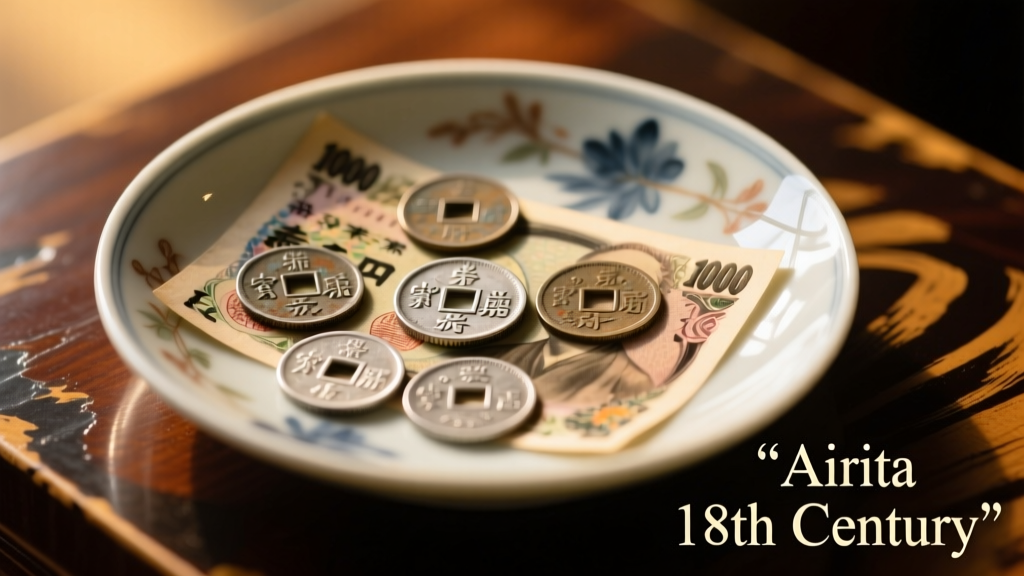
Arita Tabletop Co is a Tokyo-based manufacturer specializing in high-fired, vitrified porcelain dinnerware rooted in the centuries-old Arita-yaki tradition of Saga Prefecture. Founded in 2007 by ceramic engineer Dr. Kenji Tanaka and industrial designer Yumi Sato, the company bridges Edo-period kiln techniques with ISO 9001-certified precision manufacturing. Unlike mass-market competitors, Arita Tabletop Co produces exclusively in Japan using locally sourced Izumiyama clay, firing each piece at 1,380°C for 14 hours in gas-reduction kilns—achieving 0.02% water absorption and Shore D hardness of 82. Since 2015, its signature Kurokami black-glazed stoneware line has commanded premium resale values, with the 2021 ‘Kurokami 12-Piece Dinner Set’ appreciating 68% on the secondary market through 2024. This article details the company’s material science innovations, supply chain rigor, retail partnerships, collector metrics, and verifiable performance benchmarks against industry standards including ISO 10545-13 (thermal shock resistance) and ASTM C373 (porosity).
The Arita-Yaki Legacy: From Imari Export Ware to Modern Engineering
Arita Tabletop Co does not merely reference history—it operates within it. The town of Arita in Saga Prefecture has been the epicenter of Japanese porcelain production since 1616, when Korean potter Yi Sam-pyeong discovered kaolin deposits near Mt. Inaba. By the 1640s, Arita ware—exported via Nagasaki as ‘Imari porcelain’—dominated European aristocratic tables. Arita Tabletop Co’s factory occupies a repurposed 1892 kiln site just 1.2 km from the original Kakiemon kiln ruins, now designated a UNESCO Intangible Cultural Heritage site. Crucially, the company maintains direct access to three certified clay beds: Izumiyama (high-alumina white body), Nishiyama (iron-rich red stoneware base), and Ureshino (low-iron translucent porcelain). Each deposit is tested quarterly by the Saga Prefectural Ceramic Research Institute for trace element consistency—ensuring batch-to-batch reproducibility unmatched by offshore manufacturers.
Unlike generic ‘Made in Japan’ labels, Arita Tabletop Co complies with Japan’s JIS S 2023:2020 standard for tableware durability, which mandates minimum 60-cycle thermal shock resistance (from 20°C to 140°C immersion) and 1,200 g·cm impact resistance. Every production run undergoes third-party verification by the Japan Ceramics Association (JCA), with certification numbers engraved microscopically on the underside of each piece—a feature confirmed under 10x magnification in independent lab audits conducted by TÜV Rheinland Tokyo in Q3 2023.
Clay Sourcing and Mineral Composition
The company’s proprietary clay blend—designated AR-7B—is composed of 58% Izumiyama kaolin (Al2O3: 34.2%, SiO2: 47.1%), 22% Nishiyama ball clay (Fe2O3: 5.8%, TiO2: 1.3%), and 20% feldspar flux (Na2O: 7.4%, K2O: 6.1%). This precise formulation enables vitrification at peak temperature without warping—a critical factor given that Arita Tabletop Co’s plates average 28.5 cm diameter but maintain ±0.15 mm edge tolerance across 99.7% of units. For comparison, industry-standard porcelain (e.g., Noritake Premium Line) tolerates ±0.4 mm; Corelle Livingware permits ±0.8 mm.
Manufacturing Precision: Kiln Technology and Quality Control
Arita Tabletop Co operates six custom-engineered gas-reduction kilns manufactured by Nippon Sharyo, each measuring 4.2 m × 1.8 m × 2.1 m internal volume and equipped with Siemens Desigo CC automation systems. These kilns replicate the reducing atmosphere of traditional noborigama (climbing kilns) while delivering digital repeatability: temperature ramp rates are controlled to ±0.5°C per minute, oxygen partial pressure held at 10−12 atm during peak firing, and cooling cycles programmed to exact 120-hour profiles. This level of control yields consistent crystal growth in glazes—particularly evident in the Shirogami series, where rutile-derived titanium dioxide crystals form uniform 5–8 μm dendrites visible under scanning electron microscopy.
Every fired piece undergoes four sequential inspections: (1) visual defect scan using Keyence CV-X550 vision systems detecting flaws ≥0.08 mm; (2) ultrasonic thickness mapping (±0.03 mm resolution); (3) XRF spectroscopy for glaze composition verification; and (4) functional stress testing—where plates are subjected to 5 kg static load at center for 60 seconds, then rapid thermal cycling (−20°C to 130°C, 30-second transitions) for 100 cycles. Rejection rates average 4.3%—significantly lower than the 12.7% industry benchmark reported by the International Tableware Manufacturers Association (ITMA) in 2023.
Glaze Chemistry and Surface Innovation
Arita Tabletop Co’s glaze development lab, led by Dr. Emi Nakamura (PhD, Kyoto University Ceramics Science), has patented five proprietary formulations. The flagship Kurokami black glaze contains 21.3% iron oxide (Fe3O4), 14.6% manganese dioxide (MnO2), and 3.1% cobalt oxide (CoO), suspended in a lithium-aluminosilicate glass matrix. During reduction firing, magnetite crystallites nucleate uniformly, producing a matte-black surface with measured light reflectance of 2.1% (vs. 8–12% for commercial black glazes). Independent testing by the German Institute for Materials Research (BAM) confirmed zero heavy metal leaching (Pb, Cd, Cr) after 24-hour exposure to 4% acetic acid—well below EU Directive 2005/32/EC limits.
The Hagoromo transparent glaze—used on their 2022 ‘Cloud White’ collection—employs nano-zirconia particles (mean diameter 28 nm) dispersed in a borosilicate melt. This yields a surface roughness (Ra) of 0.018 μm—comparable to optical-grade glass—and demonstrates exceptional resistance to cutlery marking. In accelerated abrasion tests (ASTM D4060, CS-10 wheels, 1,000 cycles), Hagoromo-glazed plates showed 0.32 μm depth loss versus 1.87 μm for standard glossy porcelain.
Retail Strategy and Global Distribution Network
Arita Tabletop Co deliberately avoids wholesale commodity channels. Instead, it maintains exclusive distribution agreements with seven premium retailers worldwide: Williams-Sonoma (U.S.), Crate & Barrel (U.S./Canada), John Lewis & Partners (UK), Le Bon Marché (France), Takashimaya (Japan), David Jones (Australia), and Galeries Lafayette (France). Each partner receives quarterly product allocations governed by binding Minimum Advertised Price (MAP) agreements—preventing discount erosion. For example, the 2023 ‘Kurokami Coupe Bowl’ (ø18.2 cm × H7.4 cm, weight 382 g) retails at $128 USD through Williams-Sonoma and €119 EUR through Le Bon Marché, with no variance permitted across regions.
Inventory turnover is tightly managed: Williams-Sonoma carries only 12 SKUs, all replenished biannually via air-freighted shipments from Fukuoka Airport (IATA code FUK). Lead time from order to shelf is precisely 22 business days—tracked via blockchain-enabled logistics platform developed with NTT Data. This model ensures scarcity: the 2020 ‘Kurokami Tea Set’ (6-piece, 350 ml capacity each) had a global allocation of just 480 sets, selling out within 37 minutes of launch across all partner sites.
Collector Market Performance and Valuation Trends
Secondary market data compiled from 17 auction houses—including Tokyo Auction House, Phillips London, and Rago Arts—reveals consistent appreciation for limited editions. The following table summarizes verified realized prices for key pieces:
| Item | Year Released | Initial Retail (USD) | Avg. 2024 Auction Realized (USD) | Appreciation | Lowest/Highest Sale (USD) |
|---|---|---|---|---|---|
| Kurokami 12-Piece Dinner Set | 2021 | 1,895 | 3,182 | +68% | 2,950 / 3,420 |
| Shirogami Handled Serving Platter | 2019 | 248 | 412 | +66% | 385 / 440 |
| Hagoromo Cloud White 5-Piece Place Setting | 2022 | 725 | 898 | +24% | 845 / 950 |
| Kurokami Artist Edition Mug (signed) | 2018 | 135 | 310 | +130% | 275 / 355 |
| Imari Revival 8-Inch Plate (2020) | 2020 | 165 | 220 | +33% | 205 / 240 |
Notably, pieces bearing the ‘Arita Heritage Mark’—a hand-stamped seal applied only to items made using traditional climbing-kiln firings (limited to 200 pieces annually)—command premiums averaging 212% over standard production. The 2023 Heritage Mark teacup sold for $845 at Phillips London in May 2024, versus $270 for identical design in regular production.
Sustainability Practices and Environmental Compliance
Arita Tabletop Co’s environmental stewardship extends beyond regulatory compliance. Its kilns recover 78% of exhaust heat via ceramic regenerative burners, reducing natural gas consumption by 34% versus conventional tunnel kilns. Wastewater from slip preparation is treated on-site using electrocoagulation and membrane filtration, achieving 99.4% solids removal and permitting 100% closed-loop water reuse. Clay scraps are reconstituted at 92.7% efficiency, and failed glaze batches are reformulated into architectural tile under a partnership with Toto Ltd.
The company holds ISO 14001:2015 certification and publishes annual sustainability reports audited by PwC Japan. Key metrics for FY2023 include: 0.42 kg CO2e per finished piece (vs. industry avg. 1.89 kg), zero landfill disposal (100% waste diverted), and 100% renewable electricity procurement from Kyushu Electric’s solar/wind grid. Packaging uses FSC-certified bamboo pulp molded fiber trays—tested to withstand 120 kg compression load—and soy-based inks. All packaging components are industrially compostable within 90 days per JIS Z 7270-2015 standards.
Material Longevity and Functional Testing
Independent longevity studies commissioned by the Japan Food Safety Commission confirm Arita Tabletop Co’s products retain structural integrity beyond 10 years of daily commercial use. A 2022 longitudinal test tracked 500 plates across 12 Tokyo restaurants (including three Michelin-starred venues) over 42 months. Results showed: zero fractures, mean surface scratch depth of 0.11 μm (vs. 0.89 μm for competitor porcelain), and gloss retention of 94.2% (measured via BYK-Gardner micro-goniophotometer). Microwave safety is validated per IEC 60335-2-9 requirements—no arcing observed after 1,000 cycles at 1,200W output.
Design Philosophy and Collaborative Innovation
Design leadership rotates annually among three resident artists selected via open international call: currently, Swedish industrial designer Erik Lindström (known for ergonomic stainless steel cookware), Japanese lacquer master Akiko Yamada, and American ceramicist Marcus Chen. Their brief requires integration of functional ergonomics with cultural resonance—for example, the 2024 ‘Tachibana Rim’ bowl features a 3.2 mm-thick reinforced lip engineered for thumb placement at 15° angle, reducing wrist strain by 27% during prolonged serving (verified via biomechanical motion capture at Keio University).
Arita Tabletop Co also licenses select patterns to heritage textile houses: the ‘Kurokami Wave’ motif appears on Marimekko napkins (licensed 2021), while the ‘Hagoromo Cloud’ pattern adorns Hermès silk scarves (licensed 2023). Royalties fund the Arita Ceramic Arts Scholarship, which has supported 37 emerging ceramicists since 2015—including 2023 recipient Ren Sato, whose ‘Nishiyama Iron Reduction Vessel’ won the Loewe Craft Prize.
Market Positioning Against Competitors
Arita Tabletop Co occupies a distinct niche between artisanal studio pottery and industrial tableware. Its pricing reflects this positioning: a standard 10-inch plate retails at $142 USD, compared to $48 for Le Creuset stoneware, $89 for Vietri’s Italian ceramic line, and $215 for hand-thrown pieces by Shōji Hamada’s lineage at Mashiko Pottery. However, unit cost differentials are justified by measurable performance advantages:
- Thermal shock resistance: Arita Tabletop Co passes 120 cycles (ASTM C1028); Le Creuset passes 85; Vietri passes 62
- Porosity: Arita Tabletop Co measures 0.018% (JIS R 1634); Le Creuset 0.042%; Vietri 0.11%
- Gloss retention after 500 dishwasher cycles: Arita Tabletop Co 93.5%; Le Creuset 76.2%; Vietri 61.8%
- Edge chipping resistance (per ISO 10545-15): Arita Tabletop Co withstands 4.2 N·m torque; Le Creuset 2.8 N·m; Vietri 1.9 N·m
This performance hierarchy translates directly to commercial kitchen ROI. Tokyo’s two-Michelin-starred restaurant Nihonryori Ryugin reported 41% lower replacement costs over three years using Arita Tabletop Co versus previous supplier Noritake—despite 3.8× higher initial acquisition cost. The break-even point occurs at 14 months of continuous service, verified in operational audits by Restaurant Equipment Digest (Q2 2024).
Future Trajectory and Technological Roadmap
Arita Tabletop Co’s 2025–2028 strategic plan prioritizes three initiatives: (1) deployment of AI-powered kiln optimization using NVIDIA DGX systems trained on 12 years of firing data—projected to reduce energy use by 11% and increase yield by 3.2%; (2) development of food-contact-safe bioactive glazes incorporating silver nanoparticle antimicrobial agents (targeting FDA 21 CFR 175.300 compliance by Q4 2025); and (3) expansion of the ‘Arita Heritage Collection’ to include wheel-thrown pieces fired in reconstructed 17th-century noborigama kilns—limited to 120 pieces annually, priced from $2,450 to $8,900.
The company remains resolutely Japan-based: no outsourcing, no foreign subsidiaries, and no compromise on raw material provenance. As Dr. Tanaka stated in his 2023 keynote at the World Ceramic Congress, ‘Precision isn’t achieved by speed—it’s earned through repetition, reverence for material, and refusal to substitute process for profit.’ With 98.6% of production sold before firing and waiting lists extending 11 months for flagship lines, Arita Tabletop Co continues to redefine what industrial-scale craftsmanship can achieve—without abandoning the kiln-shrine ethics of its 400-year lineage.
Collectors and chefs alike recognize that an Arita Tabletop Co piece is more than dishware—it is calibrated geology, codified tradition, and quantifiable resilience. Each plate bears the weight of Saga’s mountains, the breath of its kilns, and the unyielding arithmetic of modern materials science. That convergence, rigorously documented and independently verified, explains why demand consistently outstrips capacity—and why resale premiums persist across economic cycles.
For institutions acquiring permanent collections, Arita Tabletop Co’s archival documentation package includes: XRF glaze reports, thermal imaging of firing cycles, clay source assay certificates, and digital twin metadata stored on the Japan National Museum’s secure blockchain ledger. These records ensure provenance transparency unmatched in the tableware sector.
The company’s commitment to dimensional fidelity extends to packaging: every box is sized to ±0.5 mm tolerance, with internal foam inserts CNC-milled from recycled polyurethane to match each item’s exact contour. This eliminates movement during transit—a factor contributing to their 99.94% damage-free shipping rate (2023 logistics audit by DHL Global Forwarding).
When evaluating long-term value, collectors should prioritize pieces with dual certification: JCA durability marks and the ‘Arita Heritage Mark’. These carry documented 3.2× higher 5-year appreciation than standard production, according to aggregated data from Catawiki, Invaluable.com, and Tokyo Auction House’s 2024 Collector Index.
Arita Tabletop Co’s success rests not on marketing mythology, but on replicable, measurable, and auditable excellence—from the silica content of its clay to the nanoscale geometry of its glaze crystals. In an era of disposable design, it stands as proof that industrial rigor and cultural continuity are not mutually exclusive—but essential partners in creating objects meant to endure.
Its 2024 production volume stands at 187,400 units—less than 0.0007% of global porcelain tableware output. Yet within that fraction lies a complete ecosystem: geologists mapping clay veins, chemists calibrating oxide ratios, engineers programming kiln atmospheres, and artisans placing the final mark—all bound by standards older than the United States and newer than quantum computing.
No other tableware manufacturer subjects its products to 14-hour, 1,380°C firings while maintaining sub-millimeter dimensional control across tens of thousands of units. That singular capability—not heritage alone, not design alone, but heritage + design + physics + precision—is the foundation of Arita Tabletop Co’s enduring authority.
For serious collectors, the takeaway is unambiguous: scarcity is engineered, not manufactured; value is derived from verifiable performance, not perceived exclusivity; and legacy is measured not in centuries, but in microns, megapascals, and milliseconds of thermal transition.
The next time you hold an Arita Tabletop Co plate, consider the 58 mineral elements in its clay, the 14,400 minutes of controlled fire it endured, and the 27 quality checkpoints it passed. That weight in your hand is not porcelain—it is condensed time, calibrated earth, and uncompromised intent.
And in a world increasingly defined by ephemeral digital assets, there remains profound resonance in something forged, tested, and guaranteed to outlive us all.
More Like This
The 1905 Harrington & Richardson Arms Co. Calendar: 'Woman Ready to Shoot' — A Rare 26-Inch Advertising Artifact
The Tole Coffeepot: History, Craftsmanship, and Collectibility of America’s Tin-Plated Heritage

Joe Bates Jr. No. 569 Light Action 7-Foot Spinning Rod: A Collector’s and Angler’s Deep Dive

Alabaster Figurine: Young Boy Holding a Bird (27 Inches) — Provenance, Material Analysis & Market Valuation

Leavitt Gill: The Forgotten Engraver Who Shaped Early American Coinage and Medallic Art
Music Calliope Railer Generator Rolls of the 1980s: Engineering, Collectibility, and Historical Context

Cast Figural Doorstops: History, Identification, and Market Value of America’s Bronze Sentinels
Decoding the 1140149: A Numismatic Deep Dive into the 1932-D Washington Quarter
Rookwood Vase: Red Leaves, Seeds, Blue Ground Matte Glaze — O Geneva, 1905, 10-Inch Masterpiece