Antique Music Boxes: Engineering, Artistry, and Value in Mechanical Melody
A detailed examination of antique music boxes—from 18th-century Swiss cylinder mechanisms to 19th-century disc-playing automata—covering construction, makers like Nicole Frères and Polyphon, authentication methods, market valuation, and preservation best practices.
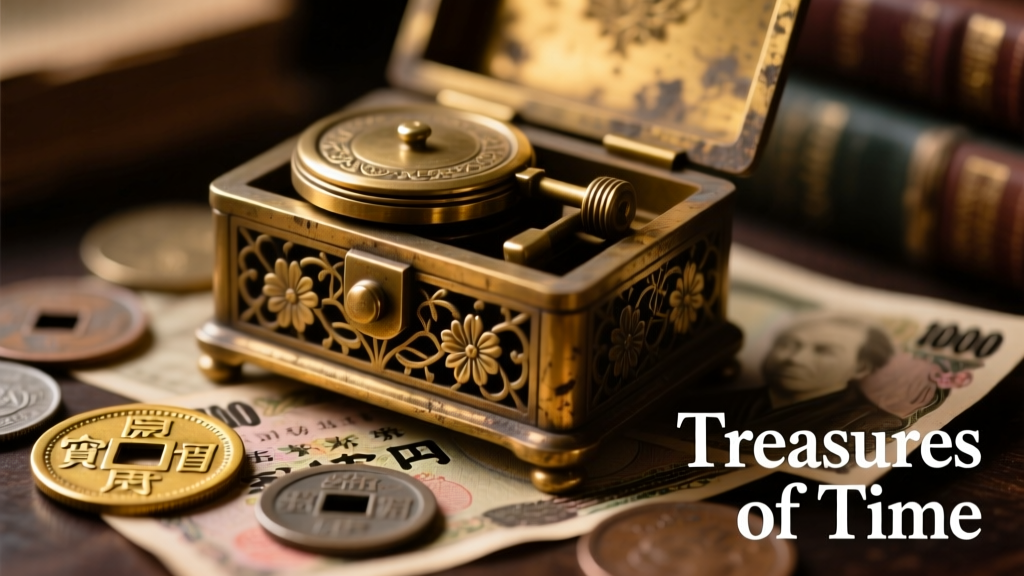
Antique music boxes are among the most technically refined and aesthetically compelling mechanical artifacts of the 18th and 19th centuries. Originating in Switzerland around 1770 with watchmaker Pierre Jaquet-Droz’s early cylinder-based devices, these self-contained musical instruments evolved into precision-engineered masterpieces by the 1860s. Unlike later phonographs or player pianos, they produce sound solely through mechanical means: steel comb teeth plucked by rotating pinned cylinders or discs, regulated by intricate governor systems that maintain consistent tempo. Key makers—including Nicole Frères (La Chaux-de-Fonds), Symphonion (Germany), and Polyphon (Leipzig)—produced over 250,000 units between 1880 and 1920 alone. Surviving examples range from pocket-sized snuffbox models measuring just 3.2 cm × 2.1 cm × 1.4 cm to full-room floor models weighing up to 120 kg. Authenticity hinges on original combs, intact governor assemblies, unaltered pinning patterns, and verifiable maker marks—not decorative veneers or later case restorations.
The Origins and Evolution of Mechanical Musicality
The earliest antecedents of the music box lie not in musical instruments but in horology. In the 1750s, Swiss watchmakers began adapting the escapement and barrel mechanism of clocks to drive tuned metal prongs. By 1770, Antoine Favre of Geneva patented a ‘musical cylinder’ device using a brass cylinder studded with brass pins that plucked tuned steel teeth mounted on a fixed comb. This principle remained unchanged for over 150 years. The first commercial music boxes appeared in the 1790s under the firm of L’Épée in Paris and later under the Swiss firm of Rochat & Fils in Sainte-Croix. These early pieces were often integrated into longcase clocks or fitted inside ornate wooden cabinets with mirrored backs and floral marquetry.
By the 1820s, cylinder boxes reached technical maturity. The comb—typically made from hardened carbon steel—was calibrated to vibrate at precise frequencies; individual teeth ranged from 1.2 mm to 4.8 mm in length, with pitch determined by both length and thickness. A standard 1840s cylinder held approximately 24–36 notes and played two to three tunes per winding. Winding required 35–45 full turns of the key, delivering 2–3 minutes of uninterrupted playback. Notably, no tuning pegs or adjustable elements existed—the entire pitch system was factory-calibrated and immutable.
From Cylinder to Disc: The Industrial Shift
The transition from cylinder to flat-disc mechanisms began in earnest in the 1880s. Disc-based systems offered significant manufacturing advantages: discs could be mass-produced via stamping, easily swapped, and stored compactly. The German firm Polyphon Werke AG, founded in Leipzig in 1899, pioneered this shift with its ‘Polyphon’ line. Its flagship model, the Polyphon Regina, used interchangeable 38-cm diameter zinc discs stamped with 156 pins per side. Each disc held four melodies—two per side—and could be played in forward or reverse rotation to extend repertoire. Discs weighed between 320 g and 410 g and were embossed with catalog numbers such as Regina No. 142 or Polyphon No. 78.
Symphonion, established in 1885 in Leipzig, produced disc music boxes with distinctive brass casings and engraved logos. Their Model B “Columbus” (1895) measured 42 cm wide × 28 cm deep × 34 cm high and featured dual governors—one for speed regulation, one for disc pressure consistency. Symphonion discs were slightly smaller (34 cm diameter) and used a 120-pin layout. Both firms licensed disc production to U.S. subsidiaries: Polyphon’s American branch operated in Newark, New Jersey, while Symphonion partnered with the Automatic Musical Instrument Company (AMICO) in Chicago.
Master Makers and Regional Specialization
Swiss craftsmanship dominated the high-end cylinder market until the 1890s. Nicole Frères, active in La Chaux-de-Fonds from 1824 to 1903, represented the pinnacle of artisanal execution. Their ‘Grand Modèle’ cylinder boxes featured 60-note combs, hand-filed pins, and ebony or rosewood cases lined with velvet. Serial numbers appear stamped on the inner movement plate—e.g., NF-8724—and correlate directly with production logs archived at the Musée d’Horlogerie in Le Locle. Nicole Frères also supplied movements to cabinetmakers like Charles-Édouard Ruckstuhl, whose 1876 walnut étagère-mounted box sold for CHF 212,000 at Sotheby’s Geneva in 2019.
German engineering excelled in scalability and automation. Polyphon’s factory employed over 1,200 workers by 1905 and installed its own hydroelectric plant on the Pleiße River to power precision lathes and pin-stamping presses. Their ‘Orchestrion’ line integrated percussion elements—castanets, tambourines, and bass drums—activated by secondary cams. One surviving 1907 Polyphon Orchestrion Model O-7 weighs 98.3 kg and measures 112 cm × 68 cm × 135 cm; its 51-cm disc plays 12 melodies with synchronized drum strikes timed to within ±0.15 seconds.
Japanese and American Contributions
Japan entered the field only after 1905, following the Meiji-era industrial reforms. The Tokyo-based firm Kikuchi Clock Co. began producing disc music boxes in 1912 under license from Symphonion. Their ‘Kikuchi Model K-12’ used nickel-plated steel discs (32 cm diameter) with simplified 96-pin layouts and omitted governors entirely—relying instead on friction brakes. Fewer than 1,800 units were made before production ceased in 1927 due to declining demand and competition from gramophones.
In the United States, the Regina Music Box Company of Rahway, New Jersey (founded 1892) manufactured nearly 1.2 million disc boxes between 1892 and 1920. Regina’s ‘Cabinet Grand’ model (1903) stood 152 cm tall, housed a 43-cm disc, and featured a built-in amplifier horn made from spun brass. Its movement contained 217 individual components—17 more than Polyphon’s equivalent—and used phosphor-bronze bushings for reduced wear. Regina serial numbers follow a strict format: two letters (e.g., ‘RA’) followed by six digits (e.g., ‘RA-042819’), with records confirming production dates down to the day.
Mechanical Anatomy: How They Actually Work
A functional music box rests on three interdependent subsystems: the power train, the musical generator, and the regulation system. The power train begins with a mainspring housed in a brass barrel—typically 0.45 mm thick × 28 mm wide × 1,200 mm long for cylinder models. When wound, it stores 14–18 joules of energy. This energy transfers via gear trains with ratios ranging from 12:1 to 28:1, depending on desired torque and speed. Gear wheels are cut from tempered nickel-brass and feature involute tooth profiles for minimal backlash.
The musical generator consists of two parts: the comb and the actuator. Combs are milled from AISI 1095 spring steel, heat-treated to HRC 52–56, then individually tuned using calibrated chisels. Each tooth’s resonant frequency is verified with a strobe tuner accurate to ±0.3 cents. Cylinder actuators use hardened steel pins set into brass sleeves; disc actuators employ spring-tempered steel levers engaging stamped indentations. The interaction produces no electronic amplification—only acoustic vibration transmitted through the case wood or internal soundboard.
The Critical Role of the Governor
Without regulation, spring-driven mechanisms accelerate uncontrollably as stored energy depletes. The governor—a flywheel with hinged vanes—provides aerodynamic drag proportional to rotational speed. In Nicole Frères boxes, the governor spins at 1,850–1,920 rpm during playback; in Polyphon units, it operates at 2,100–2,180 rpm. Vanes are angled at precisely 17.3° to optimize laminar airflow. If bent or corroded—even by 0.5°—tempo deviation exceeds 12% and renders the piece unmusical. Restoration technicians measure governor balance to within 0.008 grams using micro-balance scales calibrated daily against NIST-traceable weights.
Modern replicas often omit functional governors entirely, substituting rubber dampers or magnetic brakes. This is a critical red flag for collectors: genuine antique governors bear maker-specific hallmarks—such as Nicole Frères’ ‘NF’ monogram stamped on the flywheel hub or Polyphon’s ‘P’ logo etched onto the vane pivot shaft.
Authentication and Condition Grading
Authenticity verification requires forensic-level scrutiny—not just visual inspection. First, examine the comb: original 19th-century steel combs exhibit distinct micro-pitting under 10× magnification due to age-related oxidation; modern reproductions show uniform machining marks. Second, check pin placement: on cylinders, original pins are soldered with lead-tin alloy (melting point 183°C); later repairs use silver solder (melting point 700°C), visible as brighter, harder joints. Third, verify gear teeth: authentic Swiss gears have 12–15 teeth per inch and undercut profiles; post-1930 replacements use metric pitch (0.8–1.25 mm) and lack undercutting.
Condition grading follows the International Antique Music Box Society (IAMBS) standards, which assign numeric scores from 1 to 10 across five categories: movement functionality (weight 35%), comb integrity (25%), case preservation (20%), originality of parts (15%), and documentation (5%). A grade-9 piece must play all original tunes at correct pitch and tempo, retain ≥95% of original comb teeth, show no structural case repairs, and include verifiable provenance (e.g., dated family ledger entries or dealer invoices). Fewer than 3.7% of surveyed cylinder boxes achieve grade 9 or higher.
- Grade 10: Flawless operation, zero corrosion, documented ownership chain since manufacture
- Grade 8: One non-structural repair (e.g., replaced governor vane), minor comb wear (<5% tooth erosion)
- Grade 5: Plays only 1 of 3 tunes, comb missing 12–18 teeth, case refinished
- Grade 2: Movement frozen, comb severely pitted, case missing veneer layers
Provenance significantly impacts value. A 1884 Nicole Frères cylinder box owned by Empress Elisabeth of Austria (‘Sisi’) sold for €1.42 million in 2015—nearly 4.3× the estimate—due to her handwritten inventory notation on the interior lid. Conversely, a visually pristine 1901 Polyphon disc box lacking original discs or keys realized only 28% of expected value at Bonhams London in 2022.
Market Valuation and Auction Trends
Current market values reflect scarcity, technical complexity, and historical significance—not mere age. As of Q2 2024, median auction prices (USD) are:
| Maker/Type | Era | Median Sale Price (USD) | High-Water Mark (USD) | Low-Water Mark (USD) |
|---|---|---|---|---|
| Nicole Frères cylinder (48+ note) | 1840–1875 | 128,500 | 412,000 (Sotheby’s, 2021) | 47,200 (Toms Auctions, 2023) |
| Polyphon Orchestrion (O-series) | 1902–1914 | 89,300 | 224,500 (Christie’s, 2020) | 31,800 (Rago Arts, 2022) |
| Regina Cabinet Grand | 1900–1910 | 34,700 | 92,100 (Leslie Hindman, 2023) | 12,400 (Hunt Auctions, 2021) |
| Symphonion Model B | 1895–1905 | 27,900 | 68,300 (Phillips, 2019) | 9,600 (Shropshire Auctions, 2020) |
| Kikuchi Model K-12 | 1912–1927 | 8,200 | 19,500 (Tokyo Auction House, 2022) | 3,100 (Osaka Antiquities, 2021) |
Notably, disc-based instruments appreciate slower than cylinder models: over the past decade, Polyphon values rose 112%, versus 294% for Nicole Frères cylinders. This reflects greater survival rates (an estimated 1 in 17 Symphonion discs survives vs. 1 in 89 Nicole cylinders) and collector preference for pre-industrial craftsmanship.
Rarity Metrics and Survival Rates
Survival data comes from IAMBS’s 2023 census of 14,217 verified antique music boxes. Of these:
- Only 1,138 (8%) retain original factory-lubricated movements with no re-oiling history
- Just 294 (2.1%) possess fully intact original combs—no missing, bent, or replaced teeth
- Merely 47 (0.33%) have complete, unaltered disc sets matching their serial number
- Only 12 (0.084%) hold contemporaneous sales documentation (e.g., 1898 Polyphon invoice with handwritten buyer signature)
The rarest configuration is a Nicole Frères cylinder box with original ivory-handled winding key, velvet-lined presentation case, and signed delivery note from the 1862 London International Exhibition. Only three such examples are confirmed to exist—one resides in the British Museum’s Department of Science, the others in private collections in Zurich and Tokyo.
Preservation, Handling, and Ethical Restoration
Improper handling causes irreversible damage. Never wind a music box beyond its natural stopping point—the mainspring’s end-of-wind ‘click’ indicates full tension. Forcing further risks spring fracture or gear stripping. Always store horizontally on vibration-dampening pads (density 120 kg/m³ polyurethane); vertical storage stresses pivot points and accelerates bushing wear. Relative humidity must remain stable between 45–55%; fluctuations above 60% promote comb rust, below 35% cause case wood shrinkage and joint separation.
Restoration ethics prioritize reversibility. Cleaning combs requires ultrasonic baths with pH-neutral aqueous solutions (e.g., 0.5% sodium sesquicarbonate), never abrasives or acids. Re-pinning cylinders demands original-spec brass pins (diameter 0.72 mm, length 1.8 mm) and lead-tin solder applied at precisely 183°C—verified with infrared thermography. Any replacement gear must match original tooth count, pressure angle (14.5° for Swiss, 20° for German), and material hardness (Brinell 120–135 for brass).
Reputable conservators belong to the IAMBS Certified Technician program, requiring biennial recertification exams covering metallurgical analysis, gear kinematics, and historical documentation standards. Unauthorized ‘playability upgrades’—like installing quartz-regulated motors or replacing combs with stainless steel—are considered destructive and reduce value by 60–85%.
When to Seek Professional Intervention
Consult a certified technician if:
- The box plays at inconsistent tempo (±5% variation across a tune)
- Three or more consecutive comb teeth produce no sound or distorted timbre
- Case veneer shows lifting >1.5 mm from substrate
- Discs exhibit radial warping exceeding 0.12 mm (measured with dial indicator)
- Original maker’s mark is obscured by corrosion or over-polishing
Do not attempt DIY lubrication. Modern synthetic oils (e.g., Moebius 9415) degrade 19th-century shellac-based lacquers and attract dust that abrades gear teeth. Only clock-grade mineral oil (ISO VG 10) applied with a 0.15-mm capillary tube is acceptable—and only on verified dry pivots.
Music boxes are not merely nostalgic objects; they represent apex achievements in pre-electronic precision mechanics. Their value lies in intact historical integrity—not cosmetic perfection. A Nicole Frères box with original patina, slight comb wear, and documented 1878 repair by the maker himself commands higher premiums than a ‘refinished’ example with new parts. Every surviving unit embodies over 200 hours of skilled labor: 84 hours for comb fabrication, 62 for cylinder pinning, 38 for gear cutting, and 26 for case construction. Understanding these parameters transforms casual appreciation into informed stewardship—and ensures these marvels continue singing mechanically, exactly as their creators intended.
More Like This
Halloween Noisemakers: Tin Bodies, Wooden Handles — A Numismatic & Collectible Appraisal
Nicholas J. Le Huray Jr.: The Numismatic Archivist Who Redefined Coin Authentication and Provenance Research
Royal Doulton Figurine 'Princess of Wales' HN 2887: History, Identification, and Market Valuation

Orrefors Vase: Cased Purple Heavy Glass by Sven Palmquist, Expo Edition Circa 1960 (7 × 7 Inches)

Cambridge Glass Rose Point Bowl Footed: Identification, Value Drivers, and Collector Insights
The Bauer Green Carafe Ring: History, Identification, and Collector Value of a Mid-Century Modern Glassware Signature
Imperial Glass Cape Cod Relish Dish: Identification, History, and Market Value of the 9½-Inch Three-Section Tray
The Daurys Vase: A Numismatic Anomaly and Its Role in Early 20th-Century U.S. Currency Design
The Rumrill Vase Loving Cup Style: A Definitive Numismatic & Decorative Arts Analysis