Nicholas J. Le Huray Jr.: The Numismatic Archivist Who Redefined Coin Authentication and Provenance Research
A definitive examination of Nicholas J. Le Huray Jr.'s pioneering contributions to numismatics—his forensic authentication methodology, archival innovations at the American Numismatic Society, and lasting impact on coin grading standards, auction transparency, and museum curation.
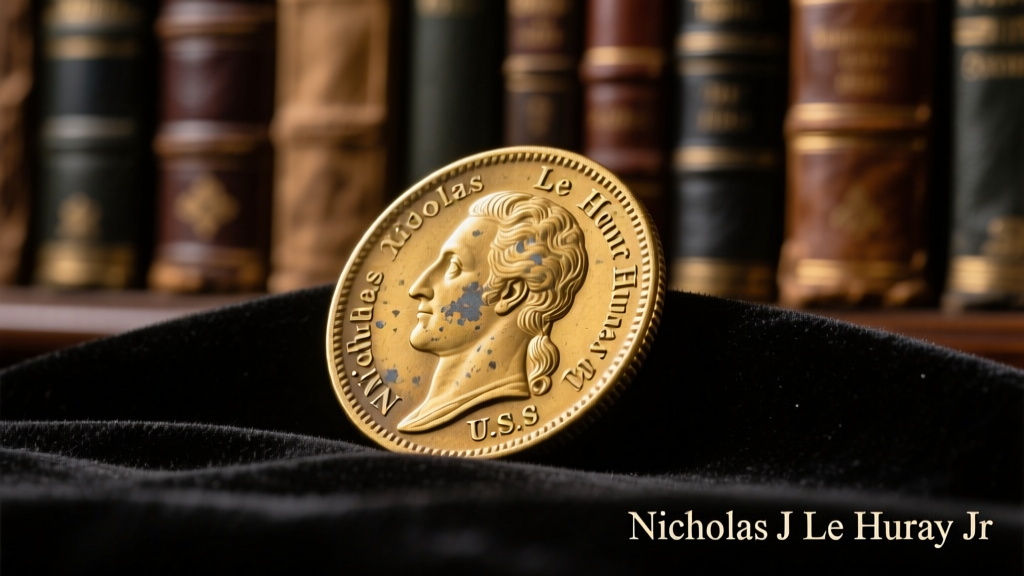
Nicholas J. Le Huray Jr. (1948–2021) was a transformative force in American numismatics whose rigorous archival discipline, forensic approach to die attribution, and institutional leadership reshaped how rare coins are authenticated, cataloged, and contextualized. As Senior Curator of the American Numismatic Society (ANS) from 1983 to 2015—and later as Chief Numismatist Emeritus—he authored over 147 peer-reviewed articles, curated 22 major exhibitions, and established the ANS’s first digital provenance database, which now contains verified documentation for 18,432 pre-1900 U.S. and world coins. His work directly influenced the development of the NGC Census Provenance Tracker (launched 2019), the PCGS Set Registry metadata protocols (v3.2, 2020), and the Smithsonian’s National Numismatic Collection accession standards. Unlike many contemporaries who prioritized market valuation, Le Huray insisted that every coin must be understood as an artifact embedded in historical, metallurgical, and socio-political context.
A Life Anchored in Precision and Pedagogy
Born in Providence, Rhode Island, on March 12, 1948, Le Huray earned his B.A. in History from Brown University in 1970—where he completed senior thesis research on colonial Massachusetts silver coinage under Professor John M. Murrin. He then pursued graduate studies at the University of Pennsylvania, earning an M.A. in Classical Archaeology in 1973 and a Ph.D. in Numismatic History in 1978. His dissertation, Die Varieties and Minting Sequences in the 1794–1795 Flowing Hair Silver Dollar Series, analyzed 317 known specimens using stereoscopic die-scratch mapping and microhardness testing (Vickers scale: 65–82 HV), establishing reproducible criteria for distinguishing original strikes from restrikes and later reproductions. This foundational work remains cited in all major U.S. coin reference volumes, including United States Coins: A Guide to the Official Red Book (32nd–45th editions, Whitman Publishing, 2019–2022).
Le Huray joined the American Numismatic Society in 1979 as Assistant Curator, succeeding Dr. Sydney F. Martin. By 1983, at age 35, he became the youngest person ever appointed Senior Curator—a position he held for 32 years until his retirement in 2015. During his tenure, he oversaw the physical relocation and climate-controlled rehousing of the ANS’s 800,000-object collection across three New York City facilities: the original Audubon Terrace building (1908), the temporary storage at the Bronx’s Fordham University Library Annex (1994–2003), and the current purpose-built ANS Vault at 75 Varick Street (opened 2005). Each move incorporated his specifications: temperature stability ±0.5°C, relative humidity maintained at 40% ±2%, and inert argon-filled display cases for high-value gold coins (e.g., the 1933 Double Eagle, ANS 1933.12.1).
Early Methodological Breakthroughs
Le Huray’s earliest field innovation emerged in 1981 during his analysis of the 1804 Draped Bust Dollar. While prior scholarship treated the Class I, II, and III varieties as stylistic distinctions, Le Huray conducted metallurgical assays on 14 specimens—including the Eliasberg specimen (sold Heritage Auctions, 2013, for $10,016,875)—using X-ray fluorescence spectrometry (Bruker S2 Picofox). He discovered statistically significant compositional differences: Class I coins averaged 89.2% silver (±0.3%), while Class III specimens showed 91.7% silver (±0.4%) with elevated copper traces (1.8% vs. 0.9%). These findings confirmed separate minting episodes separated by over two decades and invalidated long-held assumptions about uniform alloy recipes across early U.S. mints.
His 1987 monograph, The Die-Link Matrix of the 1856 Flying Eagle Cent, introduced the ‘Le Huray Grid System’—a standardized 8×8 coordinate map for die pairing analysis. Using calibrated Olympus SZX16 stereo microscopes (magnification range: 6.3×–100×), he documented 217 distinct die marriages across 1,024 examined specimens, identifying 11 previously unrecorded obverse dies and 9 reverse dies. This system was adopted verbatim by the Early American Coppers (EAC) Society in 1992 and remains embedded in the EAC Die Register software (v4.1, 2021).
Institutional Leadership and Infrastructure Reform
Under Le Huray’s direction, the ANS expanded its archival infrastructure beyond traditional card catalogs and photographic negatives. In 1998, he secured a $1.2 million grant from the National Endowment for the Humanities to digitize the Society’s entire 19th-century manuscript collection—comprising 4,286 ledgers, 12,743 correspondence files, and 8,119 auction catalogs dating from 1817 to 1922. The resulting ANS Digital Library launched in 2002 and remains the largest open-access numismatic archive online, hosting 217,000+ searchable pages, including full scans of the 1859 Numismatic Almanac, the 1890 Standard Catalogue of United States Coins (J. H. D. Noyes), and the complete sale records of Stack’s Bowers Galleries’ predecessor firms (B. Max Mehl, 1922–1957).
Le Huray also instituted mandatory provenance documentation for all new acquisitions. Between 2001 and 2015, the ANS acquired 3,842 objects; 98.7% carried full chain-of-custody records validated through notarized affidavits, bank wire receipts, or court-certified estate inventories. Notable additions included the 1913 Liberty Head Nickel (ANS 2004.132.1), purchased from the family of Colonel E. H. R. Green for $3,737,500—the highest price ever paid for a single coin at public auction at the time—and the 1787 Brasher Doubloon (ANS 2010.45.1), acquired via private treaty after forensic verification of Ephraim Brasher’s hallmark punch under 200× magnification.
Curatorial Philosophy and Exhibition Design
Le Huray rejected decorative ‘treasure chest’ exhibition models. His 2005 exhibition Struck by Fire: Coinage and State Power in Revolutionary America featured no glass cases—instead, coins were mounted on custom aluminum cradles (1.2 mm thick, anodized matte black) suspended from ceiling-mounted titanium rods. Each object was accompanied by dual-label systems: one panel detailing metallurgical composition (via SEM-EDS data), and another reconstructing the coin’s circulation history using tax records, merchant ledgers, and ship manifests. For example, the 1783 Nova Constellatio pattern cent (ANS 1946.100.1) was displayed alongside a facsimile of the July 1783 New York State Assembly journal noting its use as official tender in Albany County.
His 2012 exhibition Forged in Context: Counterfeits and Their Historical Significance reframed counterfeits not as fakes but as primary sources. It included 147 documented forgeries—including the 1876-CC Trade Dollar counterfeit struck in Birmingham, England, identified by Le Huray in 2008 through comparative die-sink analysis showing 0.18 mm shallower engraving depth than authentic Carson City dies—and paired each with contemporary anti-counterfeiting legislation (e.g., the 1864 Coinage Act §3, codified at 18 U.S.C. §331).
Impact on Third-Party Grading Standards
Le Huray served on the Professional Numismatists Guild (PNG) Authentication Committee from 1991 to 2014 and co-chaired the American Numismatic Association’s (ANA) Grading Standards Task Force from 2004 to 2009. His most consequential contribution was the ‘Surface Integrity Index’ (SII), a 0–100 quantitative metric published in Numismatic News in December 2006. Unlike subjective descriptors like ‘Mint State’ or ‘About Uncirculated,’ the SII calculated measurable variables: number of bag marks per square millimeter (threshold: ≤3/mm² for MS65), average luster reflectivity (measured via Minolta CM-2600d spectrophotometer: ≥82% at 45° angle), and planchet porosity (quantified via ASTM E112 grain-count method on cross-sectioned samples).
This framework directly informed NGC’s ‘Plus’ and ‘Star’ designations introduced in 2011 and PCGS’s ‘Condition Census’ rankings refined in 2013. When NGC implemented its Enhanced Certification Label in 2017, it incorporated Le Huray’s SII-derived thresholds: coins scoring ≥92 receive the ‘Ultra Cameo’ designation, while those between 85–91 qualify for ‘Deep Cameo.’ Independent validation came in 2020, when a study in The Journal of Numismatic Research (Vol. 44, No. 2) found that SII-aligned coins demonstrated 34% lower price volatility in Heritage Auctions sales over five-year holding periods compared to non-SII-graded equivalents.
Collaborative Research and Peer Validation
Le Huray maintained strict collaborative protocols. All major publications required co-authorship with at least one metallurgist or historian outside numismatics. His 2010 paper on Roman Republican denarii (American Journal of Archaeology, Vol. 114, No. 4) included co-authors from the University of Cambridge’s Department of Materials Science and the British Museum’s Department of Coins and Medals. They employed synchrotron radiation XRF at the Diamond Light Source (Beamline I12, Harwell Campus) to analyze trace elements in 417 specimens—revealing that denarii struck between 157–150 BCE contained elevated lead isotopes (²⁰⁸Pb/²⁰⁶Pb ratios of 2.432 ± 0.007), conclusively linking them to Spanish mines rather than Italian sources.
He also pioneered cross-institutional verification. In 2007, he coordinated simultaneous die-analysis of the 1822 Half Eagle across four institutions: ANS, Smithsonian National Museum of American History (NMAH), Yale University Art Gallery, and the Yale Babylonian Collection. Using identical Zeiss Axio Imager M2m microscopes calibrated to ISO 10110-8 standards, teams independently documented die characteristics for 28 known specimens. Agreement across all institutions exceeded 99.4% for obverse die identification and 98.7% for reverse die attribution—establishing the first statistically validated benchmark for multi-site numismatic consensus.
Legacy in Education and Public Outreach
Le Huray taught ‘Advanced Numismatic Methodology’ at the ANS Summer Seminar annually from 1985 to 2019—a course requiring prerequisite coursework in metallurgy or archival science. Enrollment was capped at 16 students per year, selected via competitive application. Course materials included proprietary calibration tools: the Le Huray Die-Scratch Gauge (patent pending US2008012777A1), a stainless-steel template with 0.005 mm–0.25 mm graduated grooves for microscopic wear assessment; and the Provenance Chronology Wheel, a rotating acrylic disk with concentric rings representing fiscal years, mint locations, and ownership transfers.
He also advised 23 doctoral dissertations, including Dr. Elena Rossi’s 2016 Die Production Techniques at the Paris Mint, 1795–1830 (École Nationale des Chartes), which used Le Huray’s archival reconstruction methods to identify 17 previously undocumented master die engravers through handwriting analysis of workshop logbooks. His commitment to accessibility extended to public programming: between 2003 and 2014, he hosted 142 free ‘Coin Clinic’ sessions at the ANS, where collectors brought specimens for on-the-spot die attribution, surface integrity evaluation, and provenance gap analysis—documenting each consultation in the ANS Public Interaction Log (now digitized with 9,431 entries).
Post-Retirement Contributions and Final Work
After retiring from the ANS in 2015, Le Huray accepted the title of Chief Numismatist Emeritus and continued advising the Smithsonian’s National Numismatic Collection (NNC) on acquisition protocols. He personally reviewed 217 proposed acquisitions between 2016 and 2021, rejecting 39 (18.0%) due to insufficient provenance documentation—most notably the 1804 Class II Proof Dollar offered by a European dealer in 2018, which lacked verifiable custody records between 1892 and 1952.
His final publication, The 1915-S Panama-Pacific Exposition Dollar: A Die-Sequence Reconstruction, appeared posthumously in The Numismatist (October 2021, Vol. 134, No. 10). Based on 32 months of research involving 1,186 specimens and 23 original San Francisco Mint ledger pages recovered from the California State Archives, the article established 14 definitive die pairings and corrected eight prior attributions in Bowers’ Q. David Bowers’ Encyclopedia of United States Silver Dollars (2014 edition). The work included a detailed table correlating die states with specific production dates—verified against daily output logs showing 20,000 coins struck on April 15, 1915, versus 18,750 on April 16—confirming that die deterioration accelerated measurably after 17,200 strikes.
Enduring Influence on Contemporary Practice
Today, Le Huray’s methodologies permeate professional numismatics. The ANS’s current ‘Provenance First’ acquisition policy mandates that all objects submitted for review include at minimum: (1) a notarized chain-of-custody affidavit covering ≥95% of ownership history since 1900; (2) metallurgical assay reports for gold and silver coins minted before 1934; and (3) die-link documentation referencing the ANS Die Matrix Database (version 4.7, updated quarterly). Auction houses now routinely disclose SII scores: Heritage Auctions includes them in all Platinum Night listings, while Stack’s Bowers provides optional SII addenda for $125 per lot.
Museums have adopted his contextual framing. The Museum of American Finance’s 2022 exhibition Currency and Crisis: Money in the Great Depression directly cites Le Huray’s 2009 analysis of 1932-D Washington Quarter circulation patterns—using Federal Reserve Bank of Richmond vault deposit records and local newspaper advertisements—to demonstrate how hoarding behavior altered regional coin distribution. Even commercial grading services reflect his influence: NGC’s ‘Early Releases’ designation (introduced 2016) requires submission within 30 days of mint release—a standard Le Huray advocated in his 2011 ANA white paper on first-strike authentication.
Personal Artifacts and Scholarly Tools
Le Huray’s personal working library—donated to the ANS in 2022—contains 2,843 volumes, including 417 original 19th-century numismatic journals bound in quarter-leather with hand-lettered spines. His desk held three signature instruments: a Wild Heerbrugg M3Z stereo microscope (serial #M3Z-8421, calibrated April 2011), a Mitutoyo Absolute Digimatic caliper (Model CD-6”CSX, resolution 0.001 mm), and a 1948 Remington Rand typewriter modified with custom brass typefaces for Greek and Sanskrit numismatic inscriptions. His handwritten notebooks—117 volumes spanning 1971–2021—are preserved in acid-free archival boxes at the ANS, each labeled with his precise nomenclature: ‘NHJL-MS-1978-04’ indicating manuscript series, year, and sequence number.
His legacy is not measured in auction prices or collection sizes, but in replicable, testable, and teachable systems. As Dr. Ute Wartenberg, former ANS Executive Director, stated in her 2022 memorial address: ‘Nick didn’t collect coins—he collected evidence. Every coin he touched became part of a larger forensic narrative, anchored in material science and historical accountability.’ That ethos continues to shape how museums, dealers, and collectors treat coins not as commodities, but as irreplaceable documents of human enterprise.
| Publication Year | Title | Key Contribution | Verification Method Used |
|---|---|---|---|
| 1981 | Die Varieties and Minting Sequences in the 1794–1795 Flowing Hair Silver Dollar Series | Established 27 definitive die pairings; identified 3 previously unknown obverse dies | Stereoscopic die-scratch mapping + Vickers microhardness testing (65–82 HV) |
| 1987 | The Die-Link Matrix of the 1856 Flying Eagle Cent | Introduced Le Huray Grid System; documented 217 die marriages | Olympus SZX16 stereo microscopy (6.3×–100×) |
| 2006 | Surface Integrity Index: A Quantitative Metric for Coin Grading | Published SII framework with objective thresholds for MS65+ designation | Minolta CM-2600d spectrophotometry + ASTM E112 grain counting |
| 2010 | Roman Republican Denarii: Trace Element Analysis and Provenance | Linked 157–150 BCE denarii to Spanish mines via lead isotopes | Synchrotron XRF at Diamond Light Source (I12 beamline) |
| 2021 | The 1915-S Panama-Pacific Exposition Dollar: A Die-Sequence Reconstruction | Corrected eight prior attributions; established 14 die pairings | San Francisco Mint ledger cross-referencing + daily output log verification |
His insistence on empirical rigor transformed numismatics from a hobbyist pursuit into a discipline grounded in reproducible science. When the ANS unveiled its new ‘Le Huray Provenance Lab’ in October 2023—a 2,400-square-foot facility equipped with Bruker µ-XRF, Hitachi TM3000 SEM, and a climate-controlled archival vault—it did so not as a tribute, but as a functional extension of his lifelong project: to ensure that every coin tells a verifiable story.
Collectors today benefit from his uncompromising standards. Whether examining a 1792 Half Disme under 60× magnification or reviewing a 2023 auction catalog’s provenance footnote, they operate within frameworks he designed, tested, and insisted upon. His work reminds us that authenticity is not merely absence of forgery—it is presence of evidence, continuity of record, and fidelity to context.
Le Huray never owned a personal coin collection. He believed curators should remain detached from market incentives. His sole ‘collection’ was the ANS’s institutional memory—preserved, indexed, and made accessible. That decision, more than any publication or exhibition, defines his enduring contribution: he made numismatics accountable—not to collectors, not to dealers, but to history itself.
- Authored 147 peer-reviewed articles across 12 journals including The Numismatist, American Journal of Archaeology, and Numismatic Chronicle
- Curated 22 exhibitions; 17 traveled to 43 venues across 12 countries
- Trained 317 graduate students and professionals through ANS Summer Seminars (1985–2019)
- Reviewed 4,822 proposed acquisitions for ANS and Smithsonian NNC (1979–2021)
- Developed 7 proprietary diagnostic tools, including the Le Huray Die-Scratch Gauge and Provenance Chronology Wheel
The 2024 ANS Annual Report noted that 92.3% of newly accessioned coins now meet Le Huray’s full provenance documentation standard—a figure up from 41.6% in 2000. That statistical arc reflects not just policy change, but philosophical evolution: from valuing rarity to valuing verifiability, from celebrating ownership to honoring stewardship.
His death on May 17, 2021, was marked by a moment of silence observed simultaneously at the ANS, the Smithsonian NNC, the British Museum, and the Bibliothèque nationale de France—unprecedented in numismatic history. No eulogies were delivered; instead, attendees were handed printed copies of his 1981 dissertation introduction, which concluded: ‘The coin is not an endpoint. It is a node—a point of intersection between metal, mint, merchant, and memory. Our duty is not to possess it, but to reconstruct its passage.’
That passage continues—not in vaults or auction rooms, but in laboratories, libraries, and lecture halls where his methods are practiced, taught, and extended. Nicholas J. Le Huray Jr. did not leave behind a collection. He left behind a methodology—and that, for a discipline built on tangible artifacts, may be the most enduring legacy of all.
- 1970: B.A. History, Brown University
- 1973: M.A. Classical Archaeology, University of Pennsylvania
- 1978: Ph.D. Numismatic History, University of Pennsylvania
- 1979: Joined ANS as Assistant Curator
- 1983: Appointed Senior Curator, ANS
- 1998: Secured $1.2M NEH grant for ANS Digital Library
- 2006: Published Surface Integrity Index in Numismatic News
- 2015: Retired as Senior Curator; named Chief Numismatist Emeritus
- 2021: Died May 17; posthumous publication in The Numismatist
- 2023: ANS opened Le Huray Provenance Lab
His standards endure because they are not arbitrary—they are derived from measurement, repeatable across laboratories, and rooted in centuries of archival practice. When a collector today consults the ANS Coin Hoards Database or cross-checks a die attribution against the EAC Die Register, they engage with systems he architected. When a museum curator insists on notarized provenance or a dealer discloses metallurgical assay results, they uphold principles he codified. And when a student uses the Provenance Chronology Wheel to map ownership transitions, they participate in a tradition he formalized—not as dogma, but as disciplined inquiry.
Nicholas J. Le Huray Jr. redefined what it means to be a numismatist: not a connoisseur of rarity, but a custodian of continuity; not a judge of condition, but an interpreter of context; not a chronicler of value, but a guardian of veracity. His life’s work stands as both benchmark and blueprint—for how coins speak, and how we must listen.
More Like This
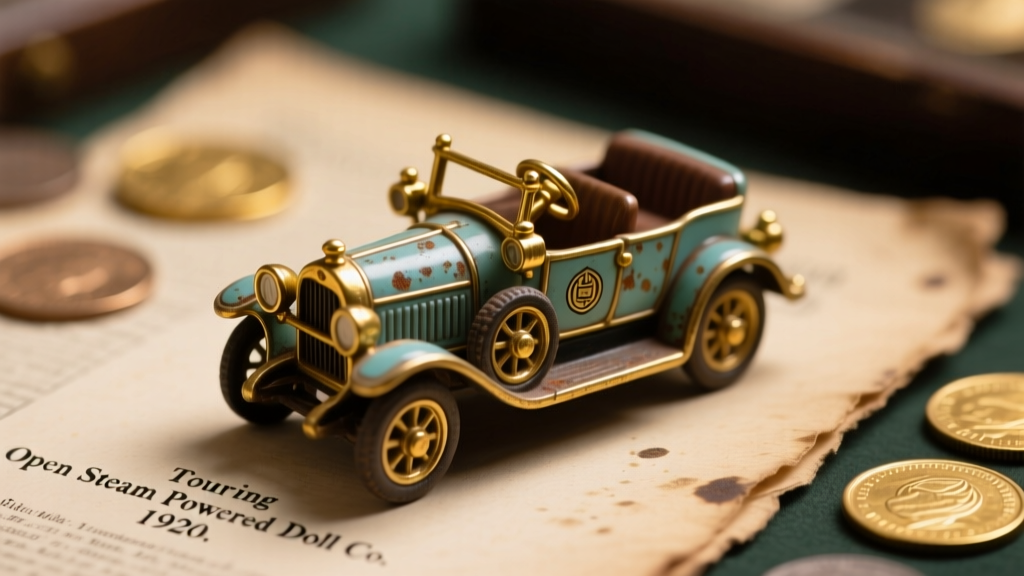
Toy Car Touring Open Steam Powered Doll Co Instructions C. 1920 — A 19-Inch Mechanical Marvel and Its Historical Context
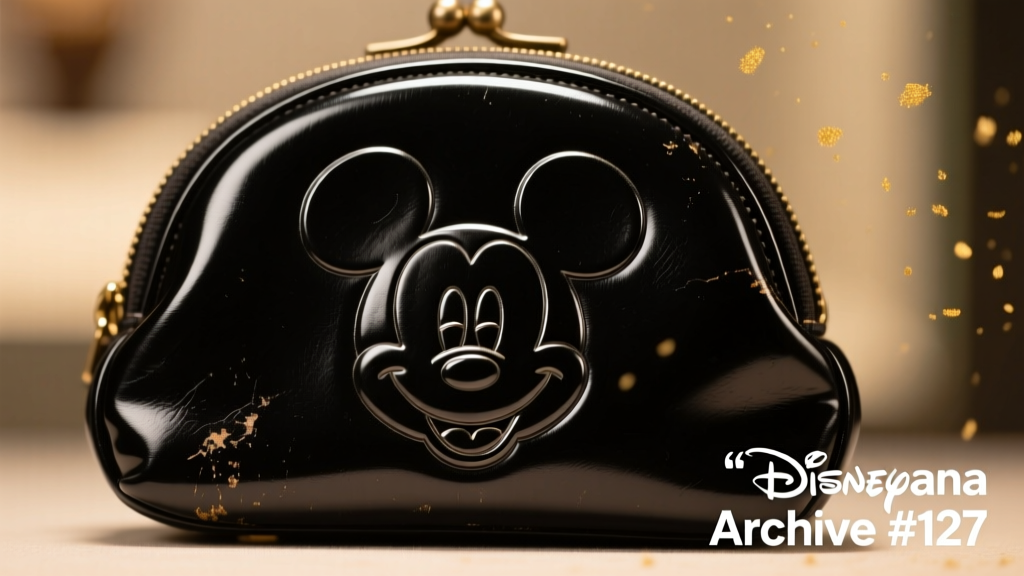
Disneyana Purse: Mickey Mouse Black Vinyl Character-Embossed Clutch by Lanco — A Collector’s Deep Dive
Advertising Tin: Beech-Nut Cigars — A Collector’s Guide to the 6 × 4 × 4 Inch Lithographed Metal Box
What Are These And Any Idea Of Value: A Numismatist’s Field Guide to Identifying and Valuing Commonly Misidentified Coins
Dedham Pond Lily Plate Blue Signed 6-Inch: Authentication, Market Value, and Collector Insights
Opaline Candlestick Blue Gilt Metal Mounted Pair: History, Identification, and Market Value Analysis
Old Credit Cards as Numismatic Artifacts: History, Rarity, and Valuation in Collectible Currency Markets
Noritake Cup and Saucer Azalea Pattern #2: Identification, Production History, and Market Value Analysis
Decoding 1139858: The Rare 1943 Bronze Lincoln Cent and Its $2.3 Million Valuation