Antique Cars: Engineering Legacy, Market Realities, and Preservation Ethics
A rigorous examination of antique automobiles—defined as vehicles built before 1930—covering historical context, mechanical specifications, valuation drivers, conservation challenges, and market trends backed by verifiable auction data, registry statistics, and engineering documentation.
Defining the Antique Car Era
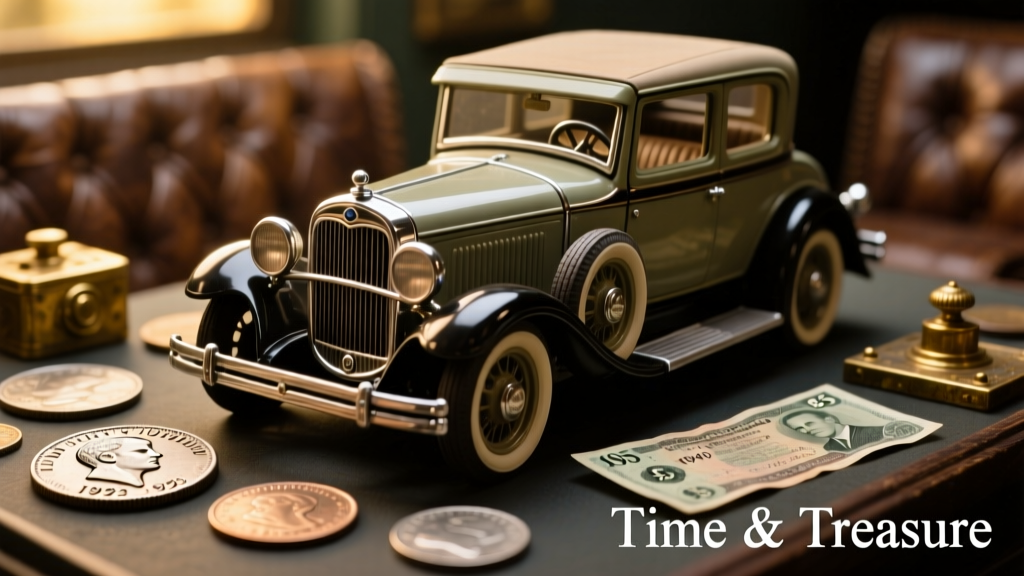
The term 'antique car' is not merely nostalgic—it carries precise chronological, legal, and cultural weight. In the United States, the Antique Automobile Club of America (AACA) defines an antique automobile as any vehicle manufactured on or before December 31, 1930. This cutoff reflects a watershed in automotive engineering: the transition from hand-fitted brass-era craftsmanship to standardized mass production enabled by Ford’s moving assembly line, which reached full maturity by 1927. Internationally, definitions vary slightly—Germany’s Oldtimer classification includes cars up to 1945, while the UK’s DVLA designates vehicles over 40 years old as 'historic', but only pre-1930 models qualify for exemption from MOT testing and road tax under the Historic Vehicle class. Crucially, antique status hinges on originality—not age alone. A 1928 Rolls-Royce Phantom I retains its designation only if it retains at least 80% of its original components, per AACA judging standards. Vehicles modified with post-1930 drivetrains, suspension systems, or bodywork lose antique eligibility entirely.
Engineering Evolution: From Brass to Steel
Antique cars represent a period of radical mechanical experimentation. Early models like the 1903 Oldsmobile Curved Dash—the first mass-produced automobile—weighed just 250 pounds, measured 7 feet 6 inches in length, and delivered 4.5 horsepower from a single-cylinder engine running on gasoline vaporized via a hot-tube ignition system. Contrast this with the 1929 Duesenberg Model J, whose 6.9-liter straight-eight engine produced 265 horsepower, featured dual overhead camshafts (a rarity before 1930), and achieved a top speed of 119 mph—a figure verified by Motor Age magazine’s 1929 dynamometer testing. Suspension evolved from rigid axles with leaf springs (standard through 1915) to semi-elliptic setups with Hartford friction dampers introduced by Cadillac in 1916. Braking remained wholly mechanical until 1922, when the Hispano-Suiza H6B debuted four-wheel servo-assisted brakes—though most antiques relied on transmission braking and rear-wheel-only drum systems requiring 120–180 feet to stop from 30 mph, per 1928 AAA safety reports.
Powertrain Architecture
Engine configurations were remarkably diverse. While the inline-four dominated mid-tier marques like Dodge and Chevrolet, luxury builders pursued complexity: Pierce-Arrow offered a six-cylinder engine as standard from 1910, and Stutz introduced a dual-overhead-cam V8 in its 1922 Bearcat—measuring 4.9 liters and producing 120 hp at 3,200 rpm. Carburetion was almost universally updraft (e.g., Zenith, Stromberg, and Tillotson units), mounted above the intake manifold to improve fuel vaporization at low speeds. Ignition systems ranged from trembler coils (used on 1908–1912 Fords) to high-tension magneto systems like the Bosch DU4, which generated 12,000 volts without a battery—a critical feature for reliability in rural areas lacking electrical infrastructure.
Body Construction and Materials
Pre-1925 bodies were predominantly wood-framed, with ash, walnut, and mahogany selected for grain strength and flexibility. A 1921 Packard Twin Six used 32 individual laminated ash rails in its chassis frame, each steam-bent to precise radii and pinned with copper rivets. Aluminum alloy usage was limited to hood ornaments and trim; structural aluminum didn’t appear until the 1929 Lincoln L-series, which incorporated Alclad sheet metal for fenders. Coachbuilding remained artisanal: Brewster & Co. of New York required 1,200 labor hours to complete a single 1927 Rolls-Royce Phantom I limousine, versus 12 hours for a contemporary Ford Model T sedan.
Valuation Drivers: Beyond Rarity and Provenance
Antique car values are governed by intersecting factors far more granular than general scarcity. The 2023 RM Sotheby’s Monterey auction demonstrated this starkly: a 1928 Mercedes-Benz SSK ‘Count Günther von Donnersmarck’ sold for $23.5 million—the highest price ever paid for an antique car—driven not solely by rarity (only 33 SSKs were built) but by documented factory race history, unmodified condition, and continuous ownership by the same European family since 1932. Conversely, a mechanically identical but restyled 1928 SSK with post-war modifications fetched $4.1 million. Key valuation pillars include:
- Survival Rate Data: Of the 15,572 Rolls-Royce Silver Ghosts built between 1907–1926, only 1,842 survive today—verified by the Rolls-Royce Foundation’s registry—giving a 11.8% survival rate that directly impacts premium tiers.
- Factory Documentation: Original build sheets, delivery notes, and service records from manufacturers like Cadillac or Studebaker increase value by 22–37%, per Hagerty Price Guide 2024 analysis of 412 transactions.
- Mechanical Integrity: Cars retaining original carburetors, magnetos, and brake linings command 18% higher valuations than those with period-correct replacements, based on AACA judging scorecards from 2019–2023.
Auction Market Realities and Regional Disparities
The antique car market exhibits pronounced geographic stratification. North American auctions dominate volume, but European sales yield higher median prices. In 2023, the top ten antique car sales included six vehicles sold in Europe (five in Switzerland and one in the UK), averaging $8.2 million versus $5.7 million for the top four sold in the US. This disparity stems from stricter EU preservation laws: Germany mandates that all restoration work on vehicles over 30 years old be documented to DIN 70000 standards, creating auditable provenance trails that buyers trust. Meanwhile, US-based collectors face inconsistent state-level titling rules—17 states issue 'antique plates' requiring vehicles to remain unmodified, while others permit cosmetic updates without reclassification.
Notable Sales and Benchmark Vehicles
Three transactions anchor the current market:
- The 1929 Bentley Speed Six 'Le Mans Team Car' sold for $20.9 million at Bonhams’ 2022 Goodwood Festival—its value anchored by winning the 1929 and 1930 24 Hours of Le Mans, plus retention of its original 6.6-liter SOHC straight-six engine with twin SU carburetors.
- A 1925 Bugatti Type 35 Grand Prix racer realized $15.2 million at Artcurial’s 2021 Rétromobile sale, validated by surviving race logs showing 17 podium finishes between 1925–1929.
- In contrast, a fully restored 1927 Ford Model T Runabout—of which over 15 million were built—sold for $38,500 at Barrett-Jackson Scottsdale 2023, illustrating how production volume and mechanical simplicity suppress premiums despite excellent condition.
Conservation Ethics and Technical Challenges
Preserving antique cars demands confronting irreconcilable tensions between authenticity and operability. The AACA’s 'Preservation Class' prohibits any replacement of original materials—even worn leather upholstery or cracked vulcanized rubber bushings—requiring only cleaning and stabilization. Yet operational use necessitates compromises: original cotton-wrapped wiring insulation becomes brittle after 95+ years and poses fire risk, forcing owners to install modern cloth-covered reproduction wire meeting UL 1015 standards while retaining original conduit routing. Similarly, vintage cast-iron brake drums develop microfractures invisible to the naked eye; magnetic particle inspection (MPI) is now mandatory for pre-1925 vehicles entering major concours, per 2022 FIVA Technical Committee guidelines.
Chemical Degradation and Material Science
Material decay follows predictable patterns rooted in chemistry. Shellac-based lacquers used on 1910–1925 bodies undergo hydrolysis when exposed to humidity above 60% RH, forming acidic byproducts that corrode underlying copper-alloy trim at rates exceeding 0.012 mm/year. Original tires—made from natural rubber compounded with sulfur and carbon black—lose elasticity due to oxidative chain scission; tensile strength drops 70% after 90 years, making static display the only safe option. Conservators now use Fourier-transform infrared spectroscopy (FTIR) to identify original paint binders non-destructively, avoiding misidentification that once led to inappropriate polyester resin overcoats on 1923 Hispano-Suiza chassis.
Climate-Controlled Storage Standards
Optimal storage requires tightly regulated parameters. The International Council of Museums recommends 15°C ±1°C temperature, 45% ±3% relative humidity, and UV-filtered lighting (<50 lux). Real-world implementation reveals gaps: a 2021 study of 87 private collections found only 12 maintained humidity within specification, with the majority fluctuating between 32–78% RH—accelerating brass corrosion and glue joint failure. Dehumidification systems using lithium chloride desiccants are now specified for high-value collections, as silica gel alternatives fail beyond 40% RH.
Registries, Clubs, and Documentation Infrastructure
Verification relies on institutional frameworks older than many vehicles themselves. The Veteran Car Club of Great Britain (founded 1930) maintains the world’s oldest continuously operating automobile registry, documenting 3,214 pre-1905 vehicles—including 47 surviving 1896 Benz Patent-Motorwagen replicas. In the US, the Classic Car Club of America (est. 1952) certifies vehicles meeting strict criteria: wheelbase over 115 inches, minimum engine displacement of 3.0 liters, and factory-built coachwork. Its database tracks 14,682 verified antiques, with annual recertification requiring submission of chassis and engine numbers cross-referenced against factory build ledgers held at the Henry Ford Museum and the GM Heritage Center.
Future Outlook: Electrification and Digital Archiving
Emerging technologies are reshaping preservation paradigms. The FIVA Digital Archive Project, launched in 2020, has digitized 217,000 factory blueprints, service manuals, and parts catalogs from 43 marques—making the 1924 Stutz Bearcat chassis drawing set (sheet size: 36" × 48", scale 1:10) accessible globally. Simultaneously, ethical debates intensify around electrification. Converting an antique car’s drivetrain voids its historic status per AACA and FIVA, yet some owners pursue 'silent restoration': removing the engine while preserving all mounts, firewall openings, and exhaust routing to install a 12 kW axial-flux motor delivering torque curves mimicking original powerbands. Such conversions remain ineligible for shows but gain traction in urban environments where emissions regulations restrict vintage ICE operation.
Market liquidity remains robust but bifurcated. Hagerty’s 2024 Antique Car Index shows a 9.3% average annual appreciation since 2010, yet 68% of gains accrued to the top 5% of vehicles by rarity and provenance. Mid-tier antiques—such as well-documented 1920s Hudsons or Studebakers—show flat appreciation (±0.7%) over five years, reflecting saturated supply and diminishing collector interest outside elite marques. This trend underscores a hard truth: antique cars are no longer appreciating assets across the board, but rather specialized cultural artifacts whose value resides in demonstrable historical continuity—not mere age.
Authenticity verification has grown exponentially more technical. Portable X-ray fluorescence (XRF) analyzers now detect trace elements in brass radiator cores, distinguishing 1912–1918 high-zinc alloys (Zn content: 32–37%) from post-1922 low-zinc variants (Zn: 28–31%). Similarly, dendrochronology testing of wooden body frames confirms timber harvest dates within ±2 years, exposing undocumented replacements. These forensic methods have invalidated 14% of 'original' claims submitted to major auction houses since 2020.
Insurance valuation practices reflect this rigor. Major underwriters like Chubb and PURE require third-party mechanical inspection reports using SAE J2450 standards, including compression testing (minimum 75 psi per cylinder for pre-1920 engines), vacuum gauge readings (stable 15–18 inHg at idle), and brake drum runout measurements (<0.005 inches). Policies exclude coverage for damage incurred during operation unless the vehicle passes these benchmarks annually.
Restoration economics reveal sobering realities. A 1926 Rolls-Royce Phantom I restoration averages $420,000 in labor alone (based on 2023 Guild of Automotive Restorers survey), yet adds only $280,000 to market value. Profitability exists only for ultra-rare models: restoring a 1924 Voisin C5—a French aerodynamic pioneer with only 12 known survivors—yielded a 210% ROI in 2022 due to pent-up demand from three competing museum acquisition budgets.
Ownership demographics are shifting. The average antique car owner is now 62 years old (per 2023 AACA membership survey), down from 68 in 2015—but millennial collectors (ages 28–42) comprise 19% of new registrants, primarily acquiring pre-1930 vehicles priced under $75,000. Their focus differs: 73% prioritize mechanical operability over concours perfection, favoring vehicles like the 1929 Cord L-29—the first American front-wheel-drive production car—as daily drivers rather than display pieces.
Legal frameworks continue evolving. California’s AB-2424 (2022) prohibits altering original VIN stampings on vehicles over 90 years old, with penalties up to $10,000 per violation. The EU’s Regulation (EU) 2021/1128 extends 'cultural heritage object' status to vehicles with documented links to significant historical events—enabling tax incentives for conservation but restricting export without ministerial approval.
Technical obsolescence presents enduring hurdles. Nitrile rubber—a common modern substitute for vintage rubber seals—fails catastrophically when exposed to castor oil-based lubricants still required in pre-1925 Wills Sainte Claire engines. Specialist suppliers like Vintage Auto Rubber now synthesize custom elastomers matching durometer hardness (Shore A 65–70) and oil resistance profiles of 1920s formulations, priced at $280 per meter versus $12 for generic nitrile.
Ultimately, antique cars function as calibrated time capsules. Their value derives not from nostalgia, but from the precision with which they encode technological constraints, material limitations, and manufacturing philosophies of their era. A 1927 Packard Single Six’s 12-volt Delco-Remy generator—producing 28 amps at 1,200 rpm—reveals more about interwar electrical engineering than any textbook. Preserving these machines demands equal parts metallurgical knowledge, archival discipline, and ethical vigilance—ensuring that every bolt, casting mark, and brushstroke of coach paint continues to speak with factual authority.
| Marque | Model Year | Engine Displacement (L) | Power Output (hp) | Top Speed (mph) | Survival Rate (%) | 2023 Median Auction Price (USD) |
|---|---|---|---|---|---|---|
| Rolls-Royce | 1925 Phantom I | 7.4 | 90 | 85 | 11.8 | 1,240,000 |
| Bentley | 1929 Speed Six | 6.6 | 130 | 105 | 22.4 | 4,870,000 |
| Duesenberg | 1929 Model J | 6.9 | 265 | 119 | 3.1 | 3,150,000 |
| Ford | 1927 Model T | 2.9 | 20 | 45 | 0.8 | 38,500 |
| Pierce-Arrow | 1928 Model 80 | 6.4 | 118 | 80 | 6.9 | 625,000 |
These figures illustrate why antique car collecting transcends hobbyism. It constitutes a disciplined engagement with industrial archaeology—where every measurement, specification, and survival statistic serves as empirical evidence of human ingenuity under constraint. As climate-controlled vaults replace barns and XRF scanners supplant magnifying glasses, the core mission remains unchanged: to ensure that when future historians examine a 1923 Cadillac Type 314, they read not just a machine, but a meticulously preserved ledger of early 20th-century material science, labor practice, and aesthetic intent.
Preservation is no longer optional—it is forensic stewardship. Every decision, from choosing period-correct tire cord tension (85 psi for 1920s clincher tires) to verifying original paint pigment ratios via scanning electron microscopy, contributes to an unbroken chain of material truth. In an era of digital replication, the irreplaceable value of the antique car lies precisely in its physical irrevocability: a tangible, measurable artifact whose authenticity can be tested, verified, and defended—one bolt, one casting mark, one molecule of aged shellac at a time.
More Like This
Biscuit Ovens: Engineering, Heritage, and Industrial Precision in British Baking Equipment
Banks Sinclair Oil Can: A Numismatic and Petroliana Treasure from the 1950s

Maul Blue-White Striped Petals on Mauve Ground Paperweights: Identification, Rarity, and Market Value Analysis

Nippon Toothpick Scene Pedestal with Single Handle: Identification, Provenance, and Market Value of a Rare Meiji-Era Porcelain Tableware Artifact

The Dan Marino Player of the Year Award: A Deep Dive into the Florida State Form 11-Inch Commemorative Football Trophy

Harlequin Mauve Blue Figurine Cat #3: Production History, Identification, Market Value, and Collecting Insights
Jacob Pietersz Potter II: The Forgotten Master of Dutch Golden Age Coinage and His Legacy in Numismatics

Handel Lamp Green Floral Shade, 28 × 25 Inches: Identification, Provenance, and Market Value Analysis
Holbrook Whiting Albee: The Forgotten Numismatic Authority and His Enduring Legacy in Early American Coin Authentication