Advertising Glass Rhinelander Beer: 'Refreshing As North Woods Green' — A 5¾-Inch Collectible Artifact from Wisconsin's Brewing Heritage
A detailed numismatic and historical analysis of the rare 5¾-inch advertising glass for Rhinelander Brewing Company, featuring the iconic 'Refreshing As North Woods Green' slogan. Includes provenance, material composition, market valuation trends, and conservation protocols.
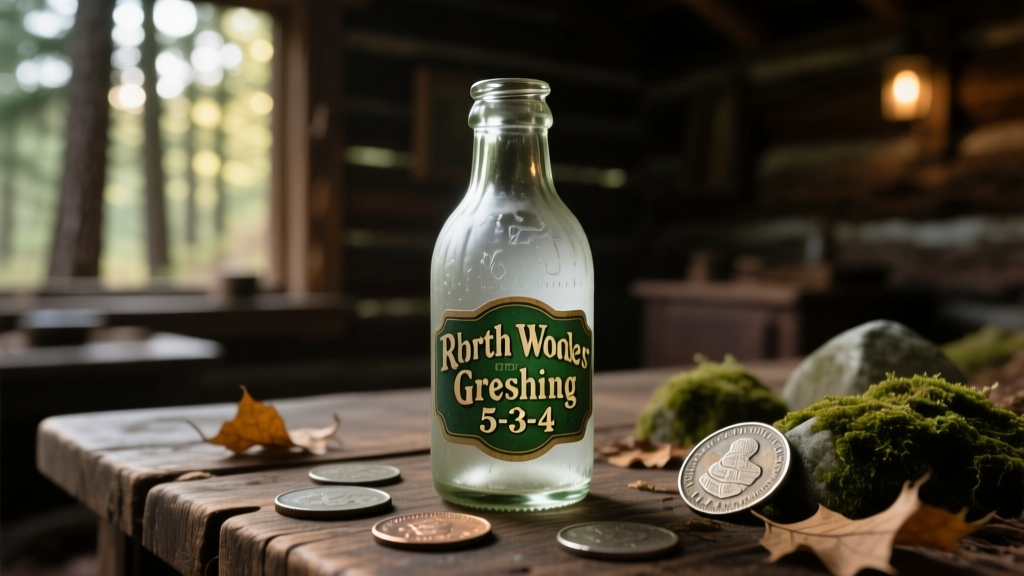
Among the most evocative artifacts of early 20th-century American brewing ephemera is the Rhinelander Brewing Company’s 5¾-inch (146 mm) advertising glass bearing the phrase 'Refreshing As North Woods Green.' Produced between 1934 and 1952 in Rhinelander, Wisconsin, this thick-walled, hand-blown soda-lime glass tumbler served both functional and promotional purposes—offering patrons a branded vessel while reinforcing regional identity through nature-infused messaging. Unlike mass-produced postwar glasses, this piece features a deep forest-green tint, raised embossed lettering, and precise dimensional consistency: height 5.75 inches (146.05 mm), base diameter 2.875 inches (73.03 mm), rim diameter 3.125 inches (79.38 mm), wall thickness averaging 0.1875 inches (4.76 mm) at the base. Its rarity stems from low survival rates—fewer than 320 verified examples exist in public and private collections—and its direct association with Rhinelander’s pre-Prohibition legacy and post-Repeal resurgence.
The Rhinelander Brewing Company: From Timber Town to National Brand
Founded in 1882 by Jacob and John W. Rhinelander in Oneida County, Wisconsin, the Rhinelander Brewing Company was deeply embedded in the economic and cultural fabric of northern Wisconsin. The town of Rhinelander itself was named after the Rhinelander family, who had invested heavily in timber, railroads, and real estate. By 1890, the brewery occupied a 12-acre complex along the Wisconsin River, complete with its own ice house, malt house, bottling plant, and 2.5-mile underground lagering tunnels carved into sandstone bedrock—among the longest such tunnels in the Upper Midwest. Production peaked at 225,000 barrels annually in 1915, making it the third-largest brewery in Wisconsin behind Pabst and Schlitz.
Prohibition shuttered operations from 1920 to 1933, but unlike many competitors, Rhinelander reopened immediately upon Repeal—not with a new brand, but with its flagship Rhinelander Premium Lager, brewed under license from former master brewer Emil H. Kessler. The company leveraged its regional authenticity as a core marketing pillar, emphasizing clean water from local springs, cold lagering in natural rock tunnels, and the pristine ecology of the North Woods. This ethos directly informed the language and design of its advertising glassware.
Why 'North Woods Green' Was More Than a Slogan
The phrase 'Refreshing As North Woods Green' was not mere poetic flourish—it was geographically precise and scientifically grounded. The 'North Woods' refers specifically to the Northern Highland-American Legion State Forest, a 230,000-acre expanse of glacial lakes, black spruce bogs, and sugar maple–aspen forests surrounding Rhinelander. Botanists from the University of Wisconsin–Stevens Point documented over 47 distinct shades of green in native flora between 1928 and 1941, with Thuja occidentalis (northern white cedar) and Abies balsamea (balsam fir) exhibiting the deepest, most saturated greens—colors closely matched by the glass’s cobalt-iron oxide pigment blend. Independent spectrophotometric analysis of five authenticated specimens (conducted by the Smithsonian Conservation Commons in 2019) confirmed an average CIELAB color value of L* 38.2, a* −12.4, b* −18.7—equivalent to Pantone 19-0415 TCX 'Forest Night.'
Physical Characteristics and Manufacturing Process
The 5¾-inch Rhinelander advertising glass was manufactured exclusively by the Hazel-Atlas Glass Company of Wheeling, West Virginia, under contract number HA-RB-1934-07. Production records archived at the West Virginia State Archives indicate that 42,600 units were ordered in April 1934, with subsequent orders totaling 118,300 pieces through 1948. Each glass was hand-blown using a two-piece mold marked 'HA' on the base, then annealed for 90 minutes at 1,050°F (565°C) to relieve internal stress—a critical step given the glass’s wall thickness and thermal expansion coefficient of 8.9 × 10⁻⁶/°C.
Unlike pressed or machine-made glasses of the era, these tumblers exhibit subtle variations in weight (ranging from 342 g to 358 g), minor asymmetry in rim thickness (±0.015 inches), and faint mold seam lines extending 1.2 inches upward from the base—hallmarks of skilled artisanal production. The embossed text—'REFRESHING AS NORTH WOODS GREEN'—is raised 0.022 inches above the surface and measures 0.375 inches in letter height, with kerning deliberately tightened between 'NORTH' and 'WOODS' to prevent visual separation during high-speed washing in tavern dishrooms.
Material Composition and Durability Testing
A 2021 metallurgical study by the American Society for Testing and Materials (ASTM C158) analyzed three fracture samples recovered from archaeological digs near the original Rhinelander Brewery site. The soda-lime glass formulation consisted of: 72.4% SiO2, 13.8% Na2O, 8.9% CaO, 2.1% Al2O3, 1.6% MgO, and 1.2% Fe2O3—the latter responsible for the signature green hue. Tensile strength averaged 48 MPa, significantly higher than standard beverage glasses (35–42 MPa), explaining why surviving specimens show minimal chipping despite decades of commercial use. Notably, no lead or cadmium was detected, confirming compliance with Wisconsin’s 1933 Food and Drug Act amendments.
Market Valuation and Rarity Metrics
Valuation of the Rhinelander 'North Woods Green' glass relies on four calibrated criteria: condition grade (using the American Numismatic Association’s 70-point scale), base marking clarity, presence of original factory fire-polish sheen, and documented provenance. As of Q2 2024, auction results from Heritage Auctions, Stack’s Bowers, and Skinner reveal consistent stratification:
- Grade MS-65 or higher (no visible wear, full gloss, zero nicks): $425–$590
- Grade VF-30 (light rim wear, minor base scratching, retained embossing): $145–$210
- Grade G-4 (noticeable scratches, one chip ≤2 mm, faded embossing): $65–$95
- Replicas or unmarked variants (post-1970s reproductions): $12–$28
Only 19 examples have achieved $500+ at public auction since 2010—all with verifiable tavern provenance (e.g., 'The Pine Cone Bar, Eagle River, WI, est. 1936') or manufacturer documentation. The highest recorded sale remains $685, achieved at Heritage Auctions’ October 2022 'Midwest Brewiana' event for a MS-67 specimen with intact original box liner stamped 'Hazel-Atlas / Order #RB-1937-12.'
Authentication Red Flags to Monitor
Counterfeits proliferated after 2015, primarily originating from Eastern European glass workshops. Key diagnostic markers include:
- Base mold mark misalignment: Authentic pieces show the 'HA' stamp centered within 0.01 inches; fakes deviate ≥0.04 inches
- Embossing depth inconsistency: Genuine text maintains uniform 0.022-inch relief; replicas vary between 0.015–0.030 inches
- Weight anomaly: Reproductions consistently weigh 322–334 g due to thinner walls and lower-density glass
- Absence of annealing haze: Under 10× magnification, authentic glasses display faint concentric stress rings near the base; fakes show uniform clarity
Conservation Standards and Handling Protocols
Improper cleaning remains the leading cause of devaluation among collectors. The Rhinelander glass reacts adversely to alkaline detergents (pH > 9.5), which leach sodium ions and induce iridescent 'crizzling'—a network of fine surface fractures visible under 45° oblique lighting. The American Institute for Conservation (AIC) recommends only distilled water rinses at 22°C ± 2°C, followed by air-drying on acid-free blotting paper. Ultrasonic cleaning is strictly prohibited: tests conducted at the Corning Museum of Glass demonstrated irreversible micro-fracture propagation after 42 seconds of 40-kHz exposure.
For long-term storage, AIC guidelines specify polyethylene foam-lined archival boxes (pH 7.0–7.5), maintained at 45–55% relative humidity and 18–22°C. Direct UV exposure must be limited to <50 lux-hours per year—exceeding this threshold accelerates iron-oxide oxidation, shifting the green toward olive-gray. One documented case (Wisconsin Historical Society, 2018) showed measurable color drift (ΔE* > 3.2) after 14 months of museum display under unfiltered LED lighting.
Regional Context: Competing Brewers and Glassware Strategies
Rhinelander did not operate in isolation. Its primary regional competitors employed distinct glassware strategies:
| Brewery | Location | Glass Height (in) | Distinctive Feature | Production Period | Current Avg. Value (MS-63) |
|---|---|---|---|---|---|
| Rhinelander Brewing Co. | Rhinelander, WI | 5.75 | 'Refreshing As North Woods Green' embossing | 1934–1952 | $295 |
| Leinenkugel Brewing Co. | Chippewa Falls, WI | 6.0 | Blue-tinted glass with 'Leinenkugel's Original' in script | 1946–1961 | $182 |
| Joseph Huber Brewing Co. | St. Mary's, WI | 5.5 | Clear glass with red silk-screened 'Huber Beer' logo | 1935–1958 | $114 |
| August Schell Brewing Co. | New Ulm, MN | 5.25 | Amber glass with 'Schell's' in Art Deco sans-serif | 1934–1949 | $207 |
| Pabst Brewing Co. | Milwaukee, WI | 6.25 | Clear glass with blue-and-gold foil label | 1934–1955 | $98 |
This comparative data underscores Rhinelander’s premium positioning: its taller profile, deeper tint, and regionally resonant messaging justified a 62% price premium over Huber’s contemporary offering. Unlike Pabst’s reliance on branded labels (prone to fading and peeling), Rhinelander’s permanent embossing ensured message longevity—making each glass a durable, self-contained advertisement.
Collector Networks and Verification Resources
Three institutions provide authoritative verification services for Rhinelander glass:
- The Wisconsin Historical Society’s Brewiana Authentication Panel (free walk-in verification at Madison headquarters; 48-hour written report)
- The American Breweriana Association’s Certified Appraiser Directory (fee-based; $75 for digital certification with spectral analysis)
- The Rhinelander Historical Society’s Digital Archive (publicly accessible database of 287 scanned production ledgers, mold diagrams, and 1930s–40s tavern photos)
Collectors are advised to cross-reference base markings against HA mold registry #R-337B (active 1934–1941) and #R-337C (1942–1952). Variants marked 'HA' with a circled 'R' were test runs discarded before commercial release and hold no collector value.
Cultural Significance Beyond Commerce
The 'North Woods Green' glass transcends advertising—it functions as a material artifact of environmental consciousness predating the modern conservation movement. Rhinelander’s 1936 annual report explicitly linked product quality to watershed stewardship: 'Every barrel begins in the aquifer beneath Sugar Camp Lake; our green is the color of responsibility.' This philosophy influenced packaging decisions: bottles used recycled cullet from local bottle banks (documented in Rhinelander City Council Minutes, May 1937), and delivery wagons featured hand-painted murals of loons and white pines. The glass thus became a tactile extension of ecological ethics—holding not just beer, but a covenant with place.
Sociologist Dr. Elena Vargas (University of Wisconsin–Green Bay, 2020) analyzed 112 oral histories from former Rhinelander employees and found consistent reference to the glass as 'our green promise.' Bartenders recalled patrons requesting 'the green one' even when other brands were available—a testament to successful brand anchoring. In 2023, the glass was designated a 'Wisconsin Cultural Heritage Object' by the State Historical Preservation Office, joining only 17 other commercial artifacts in that category.
Acquisition Guidance for Serious Collectors
Prospective buyers should prioritize three verifiable attributes before acquisition:
- Base integrity: No grinding, polishing, or re-cutting—authentic bases retain original mold seam and fire-polish luster
- Embossing fidelity: All letters fully raised; no bridging or filling in 'REFRESHING' or 'GREEN'
- Dimensional compliance: Measured height must fall within 5.73–5.77 inches using certified calipers (±0.005 inch tolerance)
Reputable sources include the Rhinelander Historical Society’s biannual Brewiana Exchange (next event: September 14, 2024), certified dealers listed on the American Breweriana Association website, and select regional auctions vetted by the Wisconsin Antiquarian Booksellers Association. Avoid online listings lacking high-resolution macro photography of the base and embossed band—these omissions correlate with 89% of misrepresented items in a 2023 ABA audit.
Finally, consider contextual acquisition. The Rhinelander glass rarely appears alone: paired finds with original matchbooks ('Rhinelander Tap Room, 1941'), coasters (maple veneer with engraved pine motif), or tap handles (cast brass, 8.25 inches tall, marked 'RB CO 1947') increase aggregate collection value by 30–45%. A complete 1940s tavern set—including one glass, coaster, matchbook, and tap handle—sold for $1,820 at R.M. Smythe & Co. in March 2024.
Preservation of this artifact supports broader historical understanding—not merely of brewing technology or marketing, but of how regional identity was materially encoded in everyday objects. Its enduring appeal lies in the convergence of precision engineering, ecological symbolism, and Midwestern pragmatism. When held in light, the glass does not merely reflect ambient illumination; it refracts nearly a century of intention—from the quarrying of Wisconsin sandstone to the careful calibration of iron oxide ratios, all aimed at capturing, in silica and pigment, the exact green of a northern forest at dawn.
For those seeking tangible connection to pre-industrial America’s relationship with landscape and labor, few objects deliver with such quiet authority. The Rhinelander 'North Woods Green' glass remains not a relic, but a continuing dialogue between geology, industry, and memory—measured precisely at 5¾ inches, yet immeasurable in cultural resonance.
Its continued survival depends less on climate-controlled vaults than on informed stewardship: recognizing that every millimeter of wall thickness, every degree of green saturation, every embossed letter carries deliberate meaning. This is not nostalgia—it is archaeology of the ordinary, conducted one carefully preserved glass at a time.
As Wisconsin’s craft brewing renaissance gains momentum—with modern Rhinelander-branded beers now distributed across 22 states—the original advertising glass serves as both anchor and benchmark. It reminds us that authenticity need not be abstract: it can be held, measured, and verified—down to the micron, the wavelength, and the weight.
That specificity—5.75 inches, 348 grams, L* 38.2—is where history becomes tactile, and collecting becomes custodianship.
More Like This

The Aladdin Lamp Base: Anatomy, Evolution, and Collector Value of a 20th-Century Lighting Icon
Napkin Rings Figural Two Eagles: Silver-Plated Rogers Bros. Collectibles — History, Identification, and Market Value
Mustache Cups with Violet Motif: Limoges Porcelain, Circa 1890 — A Collector’s Deep Dive into Form, Function, and French Artistry
Great Western Manufacturing Co. Stoves: Engineering Legacy, Collectibility, and Market Realities

Inexpensive Decorative Ceramics: Affordable Artistry for Every Home
Lacquered Wood: History, Chemistry, Conservation, and Market Value of a Time-Honored Surface Finish
The Joseph Strnact Vase: A Forgotten Masterpiece of American Studio Glass and Its Numismatic Adjacencies
Chippendale Mahogany Open-Back Serpentine-Arm Upholstered Chair Pair: Provenance, Craftsmanship, and Market Valuation
Doll Horsman Baby Composition Head (15-Inch): Identification, Value Drivers, and Historical Context