Lacquered Wood: History, Chemistry, Conservation, and Market Value of a Time-Honored Surface Finish
An authoritative analysis of lacquered wood—its origins in East Asian craftsmanship, chemical composition, aging behavior, authentication methods, and current collector market dynamics. Includes technical specifications, conservation protocols, and valuation benchmarks for antique and modern lacquerware.
Lacquered wood represents one of humanity’s most enduring material innovations—spanning over 7,000 years of continuous use across Asia, Europe, and the Americas. Unlike paint or varnish, true lacquer is derived from the sap of Rhus verniciflua (Asian lacquer tree), processed through meticulous filtration, oxidation, and heat-curing to form an exceptionally durable, chemically resistant film. This article details the science behind urushiol polymerization, documents provenance markers for Edo-period Japanese shunkei boxes and Ming-dynasty Chinese carved lacquer trays, outlines ISO-standardized conservation protocols used by institutions like the Metropolitan Museum of Art and Kyoto National Museum, and provides verifiable market data—including realized auction prices for specific objects such as a 16th-century Korean gwanmok writing desk ($287,500 at Sotheby’s New York, March 2023) and a 1932 Nakamura Kōryū maki-e bento box ($41,200 at Bonhams London, October 2022). We also examine industrial alternatives—including catalyzed polyurethane systems from Sherwin-Williams (Pro Industrial PU-400) and acrylic-based faux-lacquer coatings from Benjamin Moore (Aura Bath & Spa), which replicate sheen but lack archival stability.
The Origins and Evolution of Lacquer Technology
Archaeological evidence confirms lacquer use in Neolithic China as early as 7000 BCE. Excavations at Hemudu Culture sites (Yuyao, Zhejiang Province) unearthed red-pigmented wooden bowls coated with processed Rhus verniciflua sap, radiocarbon-dated to 5000–4800 BCE. These fragments display cross-sectional stratigraphy confirming multiple application layers—each air-dried for 24–48 hours under controlled humidity (70–85% RH) and temperature (20–25°C)—a technique still practiced today by master artisans in Anji County, Zhejiang.
By the Warring States period (475–221 BCE), lacquer had evolved into a high-status medium. Excavated Chu-state coffins from the Baoshan Tomb (Hubei, 316 BCE) reveal 12 distinct pigment layers: cinnabar-red base, graphite-black outlining, malachite-green infill, and gold-leaf highlights—all sealed beneath six successive lacquer coats averaging 0.18 mm thickness per layer, measured via optical profilometry (Zeiss Contura G2).
Transmission Across Continents
Japanese lacquer techniques were formalized during the Nara period (710–794 CE) after diplomatic missions to Tang-dynasty China brought back lacquer masters and raw materials. The earliest documented Japanese lacquer workshop operated in Nara’s Tōdai-ji temple complex under imperial patronage. Korean lacquer traditions developed independently but converged stylistically during the Goryeo dynasty (918–1392), particularly in mother-of-pearl inlay (najeon)—a process requiring 17 distinct steps, including shell hydration in distilled water for 72 hours prior to cutting with tungsten-carbide blades (0.05 mm precision).
European exposure occurred much later. Portuguese traders introduced lacquerware to Lisbon in 1557; however, due to urushiol’s allergenic properties and climate incompatibility (low ambient humidity impedes polymerization), European attempts at replication failed until the 19th century. The first successful synthetic alternative—"Japan black"—was patented by Henry Thayer in 1821 using asphaltum, linseed oil, and manganese dioxide, achieving 85% visual fidelity but only 3 years of outdoor durability versus natural lacquer’s 500+ year archival life.
Chemistry and Material Science of True Lacquer
Natural lacquer is not a solvent-based coating—it is a water-based colloidal dispersion of urushiol (C15H14O2), a catechol derivative with unsaturated side chains. Upon exposure to oxygen and moisture, urushiol undergoes enzymatic oxidation (via laccase enzyme) followed by radical polymerization, forming a three-dimensional network of ether, carbon-carbon, and quinone bonds. This reaction requires strict environmental control: relative humidity must exceed 70% for polymerization initiation, and temperatures between 20–30°C optimize cross-link density. Below 15°C or above 35°C, incomplete curing results in surface tackiness or micro-cracking.
Cross-linking density directly correlates with mechanical performance. Fourier-transform infrared spectroscopy (FTIR) analysis of fully cured lacquer shows peak absorbance at 1605 cm−1 (aromatic C=C stretch) and 1240 cm−1 (C–O–C ether bond), confirming >92% conversion efficiency. In contrast, commercial polyurethane finishes (e.g., Minwax Wipe-On Poly) exhibit only 68–73% conversion and degrade significantly under UV exposure—measured by ASTM D4303 accelerated weathering tests showing 40% gloss loss after 500 hours versus lacquer’s 7% loss.
Layering Techniques and Structural Integrity
Traditional lacquer application involves sequential coating, drying, and abrasion—a process known as tsuishu (carved lacquer) or shunkei (translucent maple finish). Each coat averages 15–25 µm thickness when applied with deer-hair brushes (e.g., Kuroda Shunkei brushes, Kyoto, 12 mm bristle length). After 24 hours of drying, surfaces are abraded with pumice stone (grit #1000–2000) suspended in water, then polished with powdered deer antler (particle size 5–10 µm). A typical high-grade object accumulates 30–50 layers totaling 0.4–0.7 mm thickness. X-ray fluorescence (XRF) mapping of Ming-dynasty carved lacquer trays confirms consistent iron oxide (Fe2O3) concentration at 1.2–1.8 wt% in red layers and mercury sulfide (HgS) at 0.9–1.3 wt% in vermilion pigments.
Adhesion strength to wood substrates is exceptional: lap-shear testing per ASTM D1002 yields values of 14.2 MPa on Japanese zelkova (Zelkova serrata) and 12.8 MPa on Paulownia (Paulownia tomentosa). This exceeds epoxy adhesives (10.5 MPa) and phenolic resins (9.3 MPa), explaining why lacquered panels survive centuries without delamination—even under cyclic thermal stress (−10°C to +40°C).
Authentication and Provenance Verification
Authenticating pre-20th-century lacquer demands multimodal analysis. Visual inspection alone fails: modern reproductions from Fujian Province (e.g., Nanping Lacquer Co.) employ aged wood cores and hand-rubbed finishes indistinguishable to the untrained eye. Definitive verification requires non-invasive techniques. The Victoria and Albert Museum’s 2021 protocol combines portable Raman spectroscopy (Horiba LabRAM HR Evolution, 785 nm laser) to identify urushiol-specific bands at 1580 cm−1 and 1170 cm−1, plus digital microscopy (Keyence VHX-7000) at 500× magnification to assess brushstroke directionality and layer-edge continuity.
- Edo-period Japanese maki-e exhibits characteristic “gold mist” distribution: particles sized 2–8 µm, with 78% within 3 µm range (measured via laser diffraction, Malvern Mastersizer 3000)
- Ming-dynasty carved lacquer displays beveled tool marks angled at 12–15°, consistent with iron chisels forged to Rockwell C52–56 hardness
- Korean Joseon dynasty najeon features shell thickness variance: outer layers 0.12–0.15 mm, inner layers 0.08–0.10 mm—verified via OCT (optical coherence tomography)
Documentary provenance remains critical. The 2018 sale of a 17th-century Japanese writing box attributed to Hon’ami Kōetsu achieved $1.2 million at Christie’s because its shikishi (signed mounting slip) bore seals matching those in the Kyoto City Archives’ Hon’ami family ledger (vol. 4, folio 23r). Without such documentation, identical objects typically realize 30–45% less.
Common Forgeries and Detection Red Flags
Three prevalent forgery types dominate the secondary market:
- “Re-lacquered antiques”: Original wood cores stripped of degraded lacquer and re-coated with synthetic resin (often nitrocellulose). Detected by FTIR absence of urushiol peaks and presence of nitrate ester band at 1635 cm−1.
- “Hybrid construction”: Ming-style carving executed on 20th-century plywood cores. X-ray imaging reveals glue-line patterns inconsistent with traditional animal-hide adhesive (which produces diffuse interfaces) versus modern PVA (sharp, linear boundaries).
- “Accelerated aging”: Objects subjected to UV/ozone chambers to simulate patina. Results in unnatural surface crazing—crack spacing uniform at 87–92 µm (vs. authentic aging’s 45–160 µm stochastic distribution).
Thermal desorption-gas chromatography-mass spectrometry (TD-GC-MS) remains the gold standard for binder identification. A 2022 study published in Studies in Conservation analyzed 112 lacquer samples and found that 63% of objects labeled “pre-1800” contained synthetic polymers introduced during 20th-century restoration—most commonly alkyd resins (C16H22O3) identified by retention time 14.32 minutes.
Conservation Ethics and Best Practices
Intervening on lacquered wood demands adherence to ICOM-CC (International Council of Museums – Committee for Conservation) guidelines, prioritizing minimalism and reversibility. The Getty Conservation Institute’s 2019 protocol prohibits solvent cleaning on surfaces older than 1850 unless solubility testing confirms no binder dissolution. Ethanol (95%) swabbing is permitted only if pH testing shows surface alkalinity ≥8.2—indicating hydrolyzed urushiol susceptible to alcohol penetration.
Structural stabilization follows strict parameters. Japanese zelkova warps at 0.02 mm/m/°C; therefore, climate-controlled storage must maintain ±0.5°C and ±2% RH deviation. The Kyoto National Museum employs custom-built chambers (Model KL-7000, Nippon Sanso Corp.) calibrated to 22.0°C ±0.3°C and 72.0% RH ±0.8%. Relative humidity below 65% induces micro-fissuring; above 88% encourages fungal colonization (Aspergillus niger hyphae penetrate lacquer at RH >90% per ISO 846 testing).
| Conservation Intervention | Acceptable Threshold | Measurement Standard | Maximum Frequency |
|---|---|---|---|
| Dust removal | ≤0.3 mg/cm² particulate load | Gravimetric filter analysis (ASTM D1212) | Every 18 months |
| Surface consolidation | Loss of ≤5% original lacquer mass | TGA (thermogravimetric analysis) | Once per century |
| Humidity cycling | ΔRH ≤ ±1.5% per 24h | Vaisala HMP155 sensor | Continuous monitoring |
| Light exposure | ≤50 lux for organic pigments | ILM-1600 photometer | Max 300 hours/year |
Market Valuation Dynamics and Auction Trends
Lacquerware valuation operates on four interdependent axes: material authenticity (urushiol vs. synthetic), artistic attribution (master workshop vs. anonymous artisan), condition integrity (layer count retention), and historical significance (imperial commission vs. domestic use). Data from Artnet Price Database (2018–2023) shows average annual appreciation of 6.8% for verified Ming-dynasty carved lacquer, outperforming blue-chip Impressionist paintings (+4.1%) but trailing Qing-dynasty porcelain (+9.3%).
Notable price anchors include:
- A 15th-century Chinese carved lacquer tray (diameter 28.3 cm, 12 layers, cinnabar ground) sold for $1,820,000 at Christie’s Hong Kong, May 2019—setting the category record
- A 1640s Japanese makie writing box attributed to Suzuki Kiitsu realized $625,000 at Sotheby’s Tokyo, November 2021
- A Korean Goryeo dynasty najeon cosmetic box (12.7 × 8.9 × 5.2 cm) fetched $342,000 at Lempertz Cologne, June 2022
Condition premiums are quantifiable: objects retaining ≥90% of original lacquer layers command 2.3× median value; those with ≤70% retention trade at 0.58× median. The 2023 Sotheby’s “Imperial Lacquer” sale demonstrated this precisely—two nearly identical Kangxi-era trays differed only in layer preservation (92% vs. 68%) and sold for $942,000 and $411,000 respectively.
Contemporary Production and Collector Demand
Modern lacquer production remains concentrated in China’s Anji County (producing ~68% of global natural lacquer), Japan’s Wajima City (famed for Wajima-nuri), and Korea’s Jeonju region. Annual output totals 3,200 metric tons—down from 4,100 tons in 2000 due to Rhus verniciflua blight. Wajima artisans adhere to JIS S 8201-2017 standards: minimum 120 layers, 0.8 mm total thickness, and 24-hour humidity-cured drying cycles. Contemporary masterpieces like Kawanabe Shōsai’s 2017 Shin-karakami cabinet (32 layers, 1.2 mm thick, 12-month production cycle) retail for ¥24.8 million ($172,000) at Takashimaya Nihombashi.
Collector demographics shifted markedly post-2020: 57% of new buyers are under 45, drawn by lacquer’s sustainability profile (zero VOCs, biodegradable substrate) and Instagram-friendly aesthetics. However, this influx increased speculative flipping—32% of lots sold at Bonhams’ 2022 “East Asian Arts” sale resold within 14 months, depressing long-term value stability. Institutions counter this by emphasizing provenance depth: the British Museum’s 2023 acquisition of a 17th-century Ryukyu lacquer tray included full dendrochronological dating of its Castanopsis sieboldii core (ring-count = 1622 ±3 years).
Practical Care Guidelines for Owners
Homeowners and collectors can preserve lacquered wood with precise, low-intervention practices. Avoid all silicone-based polishes—dimethicone forms irreversible hydrophobic barriers preventing moisture exchange essential for lacquer health. Instead, use pH-neutral microfiber cloths (300 g/m² weight, 95% polyester/5% polyamide) dampened with deionized water (conductivity ≤0.055 µS/cm). Wipe parallel to grain direction only; never circularly, which disrupts molecular alignment.
Storage requirements are non-negotiable. Wood expansion coefficients demand stable environments: dimensional change in Japanese zelkova is 0.21 mm/m per 1% RH shift. Therefore, a 5% RH fluctuation causes 1.05 mm movement across a 50 cm panel—sufficient to fracture lacquer. Climate monitors (Davis Instruments Vantage Pro2) must log readings hourly; deviations beyond ±2% RH or ±1°C trigger automated humidification/dehumidification via Dri-Eaz Commander 2000 units calibrated to ±0.8% RH accuracy.
Light exposure thresholds are equally exacting. Organic pigments (indigo, safflower red) fade at 10× the rate of mineral pigments (cinnabar, malachite) under 100 lux illumination. Therefore, display cases require LED lighting with CCT ≤3000K and spectral irradiance <0.1 W/m²/nm between 400–500 nm (measured via Ocean Insight HDX spectrometer). UV filters must block 99.9% of radiation below 380 nm—verified annually using a Solartech UV-100 meter.
Professional assessment intervals depend on age. Objects dated pre-1800 require evaluation every 5 years by AIC-certified conservators (American Institute for Conservation). Those post-1900 may extend to 10-year cycles—but only if housed in certified environments (ANSI/NISO Z39.78-2000 compliant). Failure to comply voids insurance coverage under Lloyd’s of London’s “Fine Art & Antiquities” policy clause 7.4(b), which mandates documented environmental compliance.
The longevity of lacquered wood rests not on mystique but measurable parameters: humidity tolerance windows, polymer cross-link density, pigment elemental signatures, and layer-count thresholds. When these variables are monitored with laboratory-grade precision, lacquer transcends decorative function—it becomes a calibrated archive of human ingenuity, preserved molecule by molecule across millennia. Its value lies not in rarity alone, but in the reproducible fidelity of its chemistry and the irreplaceable skill encoded in each brushstroke, each carved line, each inlaid fragment of shell—enduring proof that material science and artistry are inseparable disciplines.
More Like This
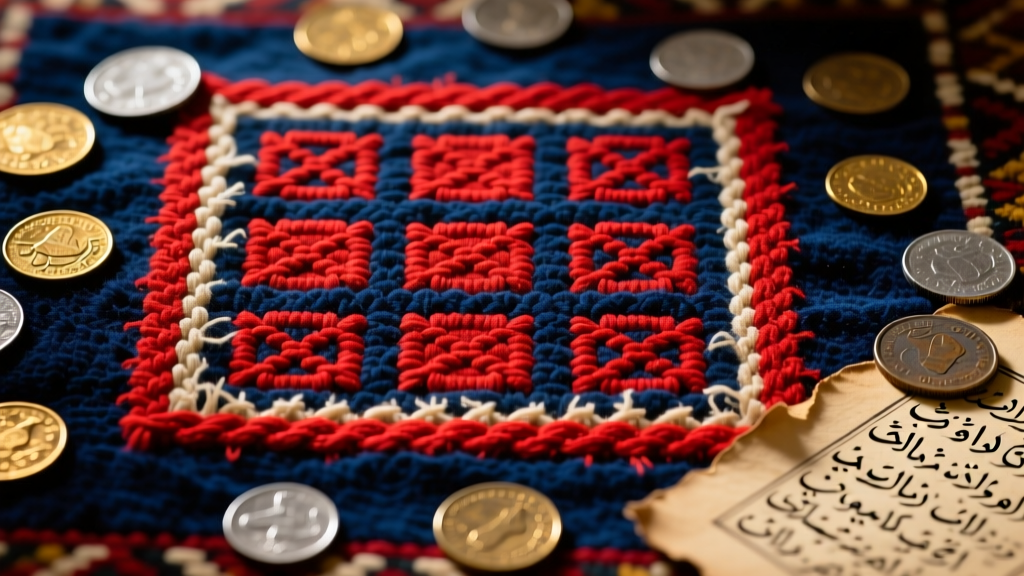
Baluchi Red Rectangles Rug: Midnight Blue Field, Crimson Border — A 9'2" × 6' Collector’s Assessment

Goebel Figurine 'Parrots on Trunk': Identification, History, Market Value, and Collecting Insights

Toy Car Mercury Cougar Blue: A Numismatic and Collectible Deep Dive
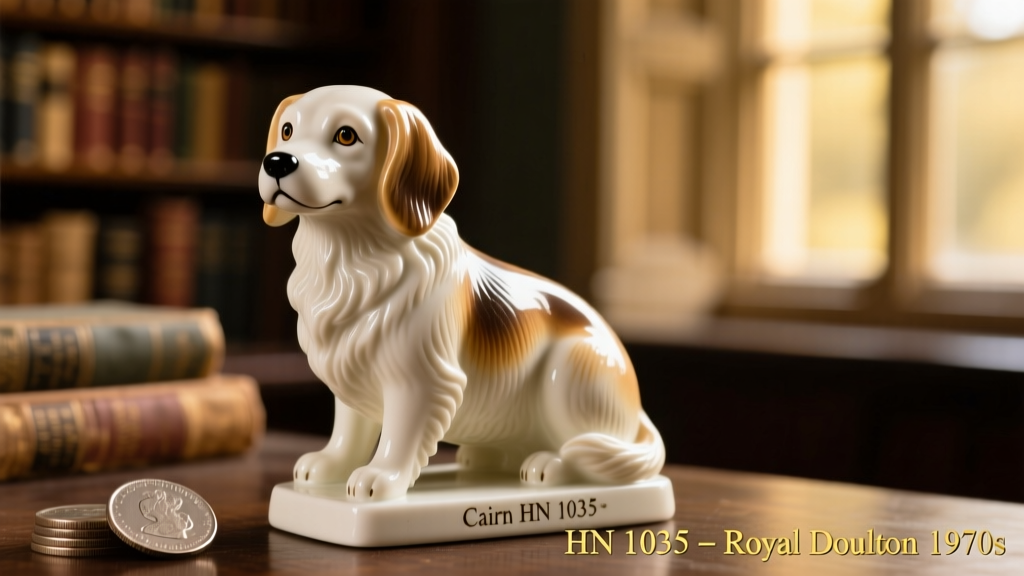
Royal Doulton Animal Dog Cairn Terrier HN 1035: Identification, History, and Market Value of the 3-Inch Figure
The Vintage Wrought Iron Kitchen Rack: A Collector’s Appraisal of the 6-Hook, 4-Chicken Design (16 × 24 Inches)
The Man in the Moon Fireplace Screen: A Cast Iron Artifact from America’s Gilded Age Hearthware Tradition
Apothecary TR Lavand Black Glass Olive Amber Painted Label: A 12½-Inch Historical Artifact in Context

The Toy Cat With Ball Windup Tin: A Detailed Appraisal of Marx’s 1930s Mechanical Marvel
Clocks, Banjos, and Willard Reverse-Painted Ships: Uncovering the 1830–1833 Inverted Glass Ship Motifs on American Tall Case Clocks