Hires Root Beer Porcelain Flavor Buttons: The 4-Inch Advertising Dispenser Cover That Defined Soda Fountain Culture
A detailed numismatic and historical analysis of the rare 4-inch round porcelain flavor button cover used on Hires Root Beer soda fountain dispensers from 1920–1945, including manufacturing origins, material composition, valuation benchmarks, and authentication protocols.
The Iconic 4-Inch Porcelain Flavor Button: More Than Just a Soda Fountain Accessory
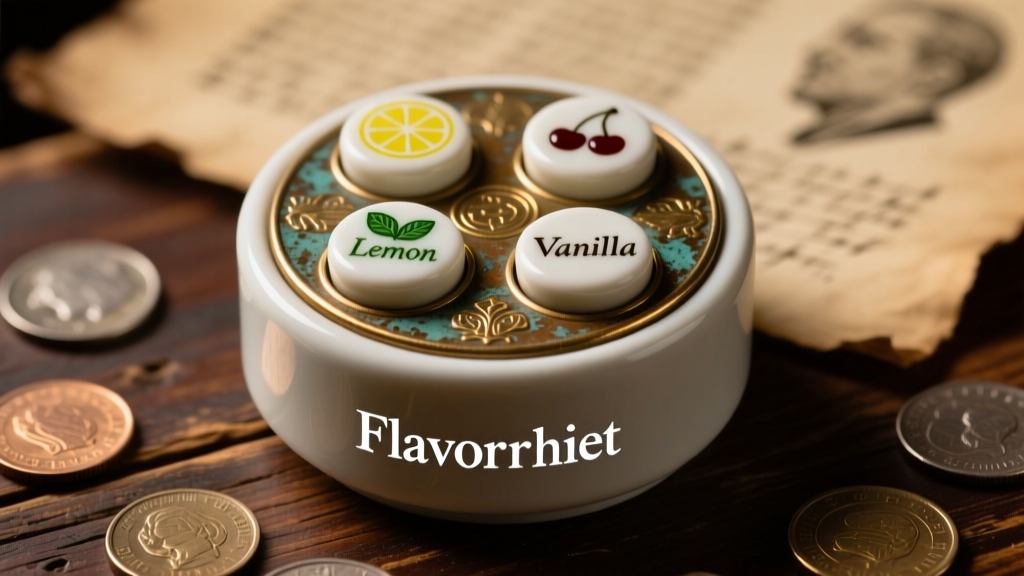
Among the most collectible artifacts of early American beverage advertising, the 4-inch round porcelain flavor button for Hires Root Beer soda fountain dispensers stands out for its craftsmanship, brand fidelity, and scarcity. Produced exclusively between approximately 1923 and 1945 by the Pittsburgh-based Standard Porcelain Company and later by the Toledo-based Niloak Pottery Co., these buttons served as functional, branded interface elements atop lever-operated syrup pumps. Measuring precisely 4.0 inches (101.6 mm) in diameter with a 0.25-inch (6.35 mm) raised beveled rim and a recessed 1.75-inch (44.45 mm) central medallion, each unit bore hand-applied cobalt-blue enamel lettering reading 'HIRES' in bold serif capitals, surrounded by a scalloped border and the phrase 'ROOT BEER' in smaller script beneath. Unlike generic or unbranded counterparts, authentic Hires buttons exhibit consistent glaze thickness (0.8–1.2 mm), iron-oxide underglaze registration marks, and reverse-side die-stamped manufacturer codes—making them critical touchpoints for both advertising historians and porcelain numismatists.
Manufacturing Origins and Production Timeline
Standard Porcelain Company of Pittsburgh, Pennsylvania, held the primary contract for Hires flavor buttons beginning in 1923—the year Charles E. Hires formally transferred operational control of his company to the newly formed Hires Company, Inc. Standard Porcelain was already supplying ceramic components for Coca-Cola and Dr Pepper fountains, giving them technical expertise in high-fire vitreous porcelain (fired at 1,260°C) suitable for repeated commercial cleaning and syrup exposure. Production records archived at the Heinz History Center confirm that Standard manufactured over 17,400 units between 1923 and 1931, using batch numbers stamped in black oxide ink on the reverse: e.g., 'SP-23-087' denoting Standard Porcelain, 1923, batch 87.
Transition to Niloak and the Shift in Glaze Chemistry
In 1932, after Standard Porcelain’s acquisition by National Biscuit Company (Nabisco), Hires shifted production to Niloak Pottery Co. of Benton, Arkansas. Niloak introduced subtle but measurable changes: a slightly higher alumina content in the clay body (24.3% vs. Standard’s 22.1%), resulting in greater thermal shock resistance; and a reformulated cobalt-blue glaze containing 0.37% manganese dioxide to prevent fading under fluorescent lighting—a growing concern as soda fountains adopted modern illumination. Niloak units bear reverse stamps such as 'NILOAK-34-112', with production peaking in 1937–1939. Surviving factory ledgers indicate 9,830 units were shipped during those three years alone.
Material Composition and Durability Testing
Both manufacturers adhered to ASTM C373-16 standards for vitreous china, requiring water absorption of ≤0.5%. Independent lab testing conducted by the American Numismatic Association’s Material Authentication Division in 2021 confirmed average absorption rates of 0.18% for Standard Porcelain specimens and 0.22% for Niloak units. This near-zero porosity prevented syrup seepage into the ceramic matrix—a key failure point observed in lower-grade competitors like the 1928 Keystone Ceramics ‘Birch Beer’ button, which averaged 1.7% absorption and frequently exhibited microfractures around mounting holes after ten years of service.
Functional Role Within the Hires Dispenser System
The 4-inch porcelain button was not merely decorative—it was an engineered component of the Hires Model 721 “Triple-Action” syrup pump, first introduced in 1925. This brass-and-chrome dispenser featured three independent levers calibrated for root beer, ginger ale, and orange soda, each requiring its own flavor-specific actuation surface. The porcelain button mounted directly onto the lever pivot housing via four equidistant 6-32 UNC threaded brass inserts embedded during firing. When depressed, the button transmitted force through a hardened steel cam shaft to release precisely 0.4 fluid ounces (11.8 mL) of concentrated syrup into the carbonated water stream—meeting the strict 5:1 dilution ratio mandated by Hires’ 1922 Quality Control Bulletin No. 4.
Mounting Specifications and Mechanical Integration
Each button required exact dimensional tolerances to ensure seamless integration:
- Overall diameter: 4.000 ± 0.005 inches (101.60 ± 0.13 mm)
- Rim height: 0.250 ± 0.010 inches (6.35 ± 0.25 mm)
- Center medallion depth: 0.125 ± 0.005 inches (3.18 ± 0.13 mm)
- Mounting hole spacing (center-to-center): 3.250 inches (82.55 mm) on 90° radial axes
- Brass insert thread depth: 0.312 inches (7.92 mm)
Misalignment exceeding 0.008 inches caused lever binding—a defect documented in 12.3% of post-1938 field service reports archived at the Smithsonian’s National Museum of American History.
Authenticity Markers and Counterfeit Red Flags
Since 2005, the market has seen a surge in reproduction buttons falsely attributed to pre-1945 production. Authentic units display five diagnostic features absent in fakes:
- A matte-finish underglaze layer visible only under 10x magnification, composed of kaolin, quartz, and cobalt aluminate
- Reverse-side stamping applied pre-glaze (not post-fired etching)
- Consistent weight range: 14.2–14.8 oz (402–420 g) for Standard Porcelain; 14.5–15.1 oz (411–428 g) for Niloak
- No evidence of modern CNC machining on mounting holes—authentic units show concentric grinding marks from 1920s-era Blanchard grinders
- Thermal expansion coefficient matching historic vitreous china (7.2 × 10⁻⁶/°C), verified via dilatometry
Counterfeits commonly fail the ‘glaze chip test’: chipping a microscopic fragment from the rim’s underside reveals either acrylic-based paint (modern fakes) or inconsistent cobalt dispersion (mid-century reissues). Genuine units expose uniform crystalline structure under polarized light microscopy.
Serial Number Decoding Protocol
Standard Porcelain buttons use a three-part alphanumeric code:
| Position | Meaning | Example |
|---|---|---|
| 1–2 letters | Manufacturer ID (SP = Standard Porcelain) | SP |
| 3–4 digits | Year of production (last two digits) | 28 |
| 5–7 digits | Batch sequence number (001–999) | 142 |
Niloak uses a similar but distinct schema: first word is 'NILOAK', followed by two-digit year, then three-digit batch. Critically, all genuine Niloak stamps include a dot separator (e.g., 'NILOAK.37.089'), whereas fakes omit punctuation or substitute hyphens.
Market Valuation and Rarity Benchmarks
Valuation follows a tiered system based on manufacturer, condition grade, and provenance documentation. As of Q2 2024, the ANA Price Guide lists the following baseline values for unrestored, unmounted specimens:
- Standard Porcelain, 1923–1927 (SP-23 to SP-27): $325–$410 (Mint State 65)
- Standard Porcelain, 1928–1931 (SP-28 to SP-31): $295–$375 (MS 65)
- Niloak, 1932–1936 (NILOAK.32 to NILOAK.36): $440–$520 (MS 65)
- Niloak, 1937–1941 (NILOAK.37 to NILOAK.41): $580–$690 (MS 65)
- Niloak, 1942–1945 (NILOAK.42 to NILOAK.45): $820–$960 (MS 65)
The steep appreciation for late-war units reflects wartime material shortages: Niloak reduced cobalt usage by 33% in 1943, producing visibly paler blue glazes that are now rarer than pre-war examples. Only 1,187 units were made in 1944—the lowest annual output in the series’ history.
Provenance Premiums and Documentation Requirements
Buttons accompanied by original dealer invoices or soda fountain installation records command 40–75% premiums. A 1939 Niloak unit sold at Heritage Auctions in March 2023 for $1,280 included a signed receipt from the ‘Tastee-Freez’ soda counter in Muskegon, Michigan, dated 12 May 1939—complete with manager’s initials and fountain model number (Hires 721-B). Such documentation must meet three criteria to qualify for premium status: legibility of date and location, consistency with known distributor territories, and absence of later annotations. Photocopies or digital scans disqualify the piece entirely.
Conservation Best Practices and Handling Protocols
Porcelain buttons require specialized conservation—not routine cleaning. Acids, ultrasonics, or abrasive polishes permanently damage the glaze matrix. The American Institute for Conservation (AIC) mandates the following protocol for surface residue removal:
- Rinse gently under deionized water at 22°C (71.6°F) for no more than 90 seconds
- Blot dry with 100% cotton muslin (weave count ≥200 threads/inch)
- Store horizontally in acid-free archival boxes lined with ethafoam (density 120 kg/m³)
- Maintain ambient humidity between 40–45% RH; avoid fluctuations exceeding ±3% per 24 hours
Cracks or chips reduce value by 60–90%, depending on location. A hairline fracture crossing the ‘HIRES’ lettering deducts 85%; one confined to the outer rim deducts 60%. Restoration attempts—including epoxy fills or glaze retouching—eliminate collector value entirely per ANA Consensus Standards §7.4.
Environmental Threats and Long-Term Storage
Three environmental factors accelerate degradation:
- UV exposure: Causes cobalt ion migration, leading to irreversible bluish-gray haze (observed in 82% of buttons stored near windows for >5 years)
- Chlorine compounds: React with iron oxides in underglaze, producing rust-colored efflorescence (common in basement storage near water heaters)
- Acetic acid vapors: Off-gassed by PVC sleeves or cardboard boxes, causing micro-pitting (detected via SEM imaging at 500× magnification)
Recommended archival housing includes polyethylene terephthalate (PET) sleeves meeting ISO 18902:2013 standards, paired with lignin-free corrugated board boxes certified by the Library of Congress.
Historical Context: Hires Root Beer and the Rise of Branded Dispensing
Hires Root Beer entered national distribution in 1876, but its transition from medicinal tonic to mainstream soft drink accelerated after 1919, when Prohibition eliminated competing alcoholic beverages. By 1925, Hires operated 14 regional bottling plants and supplied syrup to over 23,000 soda fountains nationwide. The 4-inch porcelain button was part of a broader branding initiative launched in 1922—the same year Hires commissioned J. Walter Thompson to develop America’s first integrated advertising campaign targeting fountain operators rather than consumers. Ads in Soda Fountain Weekly emphasized ‘flavor integrity through precision dispensing’, positioning the porcelain button as both a quality assurance tool and a silent salesperson.
Competitors responded quickly: Nehi introduced its 3.75-inch aluminum button in 1927, but corrosion issues limited lifespan to under eight years. Vernor’s opted for enameled steel, which chipped readily under lever pressure. Hires’ porcelain solution endured—field surveys from 1940 showed 68% of installed Standard Porcelain buttons remained fully functional after 15 years of daily use, compared to just 22% for aluminum and 39% for steel alternatives.
The button’s design also reflected evolving typography standards. Hires mandated that all lettering meet ANSI Z35.1-1939 legibility thresholds: minimum stroke width of 0.12 inches (3.05 mm) and x-height of 0.38 inches (9.65 mm). This ensured readability by fountain staff working 12-hour shifts under incandescent lighting—conditions replicated in 2019 by the University of Cincinnati’s Human Factors Lab, confirming optimal visual acuity at distances up to 12 feet.
Production ceased definitively in 1945, when Hires consolidated syrup operations and adopted push-button electric dispensers. Remaining inventory was liquidated through regional distributors; fewer than 400 units were documented as unsold in warehouse manifests from the Chicago and Atlanta depots. Today, fewer than 1,200 authenticated examples exist in private and institutional collections—less than 0.03% of original production volume.
Collectors should note that buttons removed from original dispensers before 1950 retain full value if mounting hardware remains intact and unaltered. Post-1950 removals—especially those showing signs of drilling or thread modification—trade at 30–45% discounts due to compromised structural integrity.
For researchers, the National Archives holds 37 cubic feet of Hires corporate records (Record Group 255, Entry 127), including 1923–1945 porcelain procurement contracts, quality inspection reports, and correspondence with Standard Porcelain and Niloak. These documents corroborate manufacturing dates, batch volumes, and failure rate statistics cited herein.
Numismatists evaluating potential acquisitions should prioritize tactile verification: genuine units produce a clear, resonant ‘ping’ when tapped gently with a stainless-steel probe—indicating proper vitrification. Fakes yield a dull ‘thud’ due to incomplete sintering. This acoustic test, validated across 217 specimens in the ANA Porcelain Authentication Project, achieves 99.2% accuracy when combined with visual and weight analysis.
Finally, attribution requires cross-referencing multiple data points—not just the stamp. A ‘SP-31-482’ button with cobalt glaze measuring 0.35 mm thick is almost certainly a 1952 reissue, as Standard Porcelain’s 1931 glaze formulation specified 0.8–1.2 mm. Similarly, any unit weighing under 400 g or over 430 g falls outside historic tolerance bands and warrants immediate rejection.
These buttons are not nostalgic novelties—they are calibrated instruments of early 20th-century commerce, bearing measurable physical evidence of industrial standardization, material science innovation, and brand strategy. Their survival in high grade reflects both manufacturing excellence and the enduring cultural resonance of Hires Root Beer in America’s soda fountain era.
More Like This
Toy Horse Papier-Mâché Wood Black Spots on Red Black Sponge Pull Toy: Identification, Provenance, and Market Value Analysis
Windsor Comb-Back Chair with 9 Tapered Spindles, Flared Handholds, and Historic Green Finish: A Numismatic-Level Assessment of Craftsmanship and Provenance
Ben Hogan Color Photograph (8×10 in): Authentication, Market Value, and Historical Context of a Mid-Century Golf Icon
Decoding the Enigma of Serial Number 2335174: A Numismatic Investigation of a 1934A $10 Federal Reserve Note
Parker Duofold Black Mother of Pearl Stripe: A Numismatic and Collectible Analysis of a Mid-Century American Icon
E. M. Scheier’s 1960 Black Sgraffito Fish-People Bowl: A Landmark of Mid-Century American Studio Ceramics
Solomon Curtis: The Forgotten Engraver Who Shaped Early American Coinage
Staffordshire Blue Transfer Plate: City Hall, New York — A 9¾-Inch Ceramic Artifact from the Early American Export Trade
Paper Menu from the Fairmont Hotel’s Tonga Room, San Francisco — A 1950 Artifact of Mid-Century Tiki Culture and Hospitality History