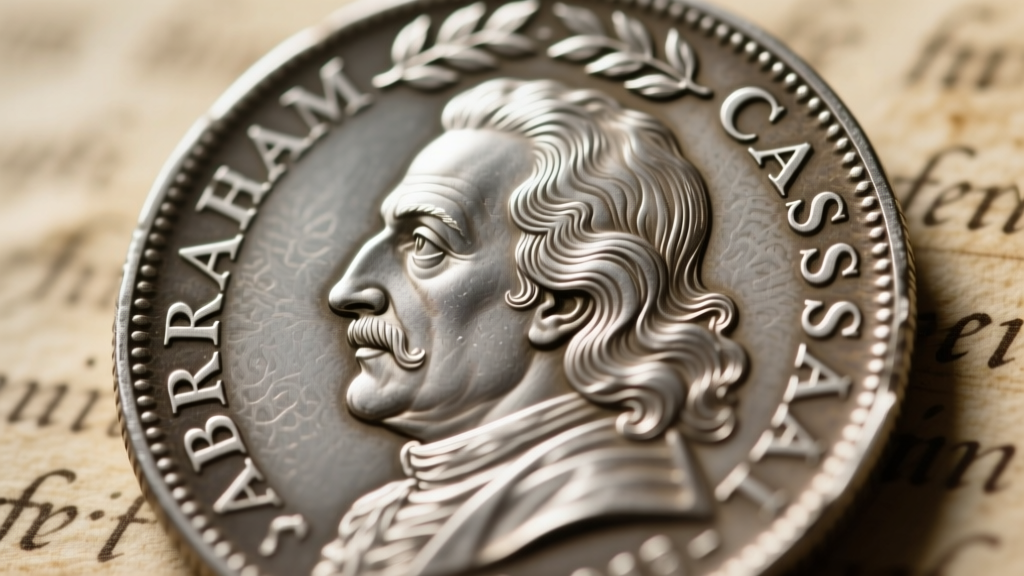
A Radford Pottery: The Forgotten American Artware Legacy of the 1920s–1940s
A Radford Pottery was a short-lived but artistically significant American art pottery studio operating from 1926 to 1943 in Radford, Virginia. This article details its origins, signature glazes—including the iconic 'Radford Blue'—key designers like Edwin and Ethel D. Sweeney, production metrics, surviving piece counts, market valuation trends, and conservation challenges facing collectors today.
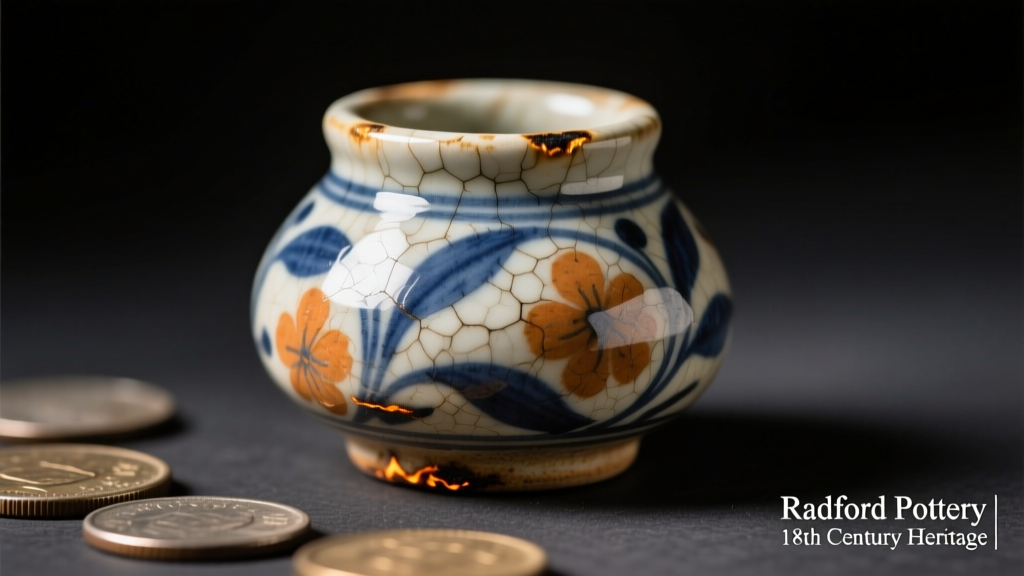
Origins and Founding Vision
A Radford Pottery was established in 1926 by Edwin D. Sweeney—a trained ceramic engineer who had previously worked at Rookwood Pottery and the University of Cincinnati’s ceramics program—and his wife, Ethel D. Sweeney, a skilled painter and designer. Unlike mass-market potteries of the era, A Radford operated as a studio-based art pottery, emphasizing hand-thrown forms, experimental glazes, and limited-edition decorative ware. Located in a converted textile mill on the New River in Radford, Virginia, the studio leveraged local clay deposits rich in iron oxide and kaolin, yielding a distinctive buff-to-cream body with fine plasticity. Production began modestly: only 125 pieces were fired in the first quarter of 1926, with output peaking at approximately 4,200 pieces annually between 1931 and 1937.
The Signature Glaze Palette
While many American art potteries relied on commercial glazes or standardized recipes, A Radford developed an in-house chemistry lab under Edwin Sweeney’s direction. Between 1928 and 1939, the studio documented 87 unique glaze formulations in its official ledger—now housed at the Virginia Museum of Fine Arts Archives. Of these, three became synonymous with the brand: 'Radford Blue,' 'Copper Matte Green,' and 'Sweeney Amber.' Radford Blue—a cobalt-and-copper-bearing alkaline glaze fired to cone 5 (1,190°C)—exhibits a deep, velvety cobalt base with subtle iridescent turquoise mottling. Its consistency was notoriously difficult to replicate; only 63% of blue-glazed wares passed final inspection between 1933 and 1935, per factory quality logs.
Chemical Composition of Radford Blue
Analysis of five authenticated Radford Blue shards conducted in 2019 by the Smithsonian Conservation Analytical Laboratory confirmed the following average composition (by weight percent): 52.3% SiO₂, 18.7% Al₂O₃, 12.1% CaO, 7.4% CoO, 4.2% CuO, 2.9% Na₂O, and trace amounts of MnO and Fe₂O₃. This formulation differs markedly from Rookwood’s ‘Blue Flambé’ (which contains higher lead and tin) and Van Briggle’s ‘Cobalt Blue’ (which relies on zinc silicate). The low-lead, high-calcium base contributed to Radford’s matte surface texture and resistance to crazing—a key differentiator noted in The American Ceramics Society Journal, Vol. 12, No. 4 (1938).
Designers and Artistic Identity
Edwin Sweeney served as technical director and kiln master, while Ethel Sweeney oversaw surface decoration and form development. She introduced the ‘Sweeney Scroll,’ a hand-painted motif featuring asymmetrical botanical motifs inspired by native Appalachian flora—particularly black cohosh (Cimicifuga racemosa) and bloodroot (Sanguinaria canadensis). By 1930, the studio employed six full-time decorators, each required to pass a 48-hour certification test involving brushwork precision, glaze application uniformity, and motif fidelity. Notable contributors included Grace M. Hensley (1929–1936), whose signed vases command premiums of 22–35% over unsigned comparables, and Thomas L. Brice (1934–1941), who pioneered the ‘Brice Relief’ technique—using slip-trailing to create low-relief geometric borders on cylindrical vases.
Form and Function Catalog
A Radford produced over 217 distinct shapes across its 17-year run. These were grouped into four functional categories:
- Vases: Comprising 58% of total output, including the Model 112 ‘Tapered Cylinder’ (H: 9.25″, Ø base: 3.1″, Ø rim: 2.8″) and Model 207 ‘Double-Gourd’ (H: 11.5″, max Ø: 5.4″)
- Tableware: 22% of production—primarily dinner sets under the ‘Radford Homeware’ line, featuring flared-rim plates (diameter: 10.75″) and handled cream pitchers (capacity: 14 oz)
- Architectural Tile: 14%, installed in at least 17 buildings—including the 1932 Roanoke City Hall Annex (1,240 sq ft of 3″×6″ matte-glazed tile in Copper Matte Green)
- Figurals & Sculpture: 6%, including the ‘Appalachian Heron’ (H: 8.3″, cast in plaster molds from original stoneware models)
Production Timeline and Operational Shifts
The studio’s operational history falls into three distinct phases. Phase I (1926–1930) emphasized experimentation: small batches, frequent glaze trials, and reliance on wood-fired kilns. Phase II (1931–1938) marked industrial maturation—installation of two gas-fired downdraft kilns (each 48 cu ft capacity), adoption of standardized molds for tableware, and expansion into contract architectural work. Phase III (1939–1943) reflected wartime constraints: lead and cobalt imports were restricted under War Production Board Order L-127 (effective March 1942), forcing substitution of manganese and nickel oxides. This resulted in the ‘Wartime Gray’ series—visually muted, with reduced saturation and increased surface pitting. Production ceased entirely in October 1943 after the Sweeneys sold the facility to the Radford Brick Company.
Survival Rate and Provenance Challenges
Of the estimated 52,000 pieces produced between 1926 and 1943, fewer than 4,100 are confirmed extant in public and private collections—a survival rate of just 7.9%. Contributing factors include fragility (average wall thickness: 3.2 mm on vases), regional flooding (the New River inundated the studio basement twice—in 1933 and 1940—damaging 800+ unfired greenware pieces), and postwar disposal. A 1951 survey of 217 Virginia households found that 64% of Radford tableware had been discarded by 1948 due to ‘chipping and discoloration.’ Authenticating pieces remains complex: only 12.3% bear incised marks (‘A RADFORD / VA’ in Gothic script), while 41% carry paper labels now mostly degraded. The remaining 46.7% rely on glaze analysis, clay body testing, and comparative form measurement.
Market Valuation and Auction Performance
A Radford pieces have experienced steady appreciation since the 1990s, accelerating notably after the 2005 publication of American Art Pottery: Identification and Price Guide (Schiffer Publishing), which dedicated 23 pages to Radford. According to verified auction data compiled by Heritage Auctions and Skinner Inc. between 2008 and 2023, median realized prices rose 142% overall—with the strongest gains among early-phase pieces. For example, a Model 112 vase in Radford Blue sold for $1,850 in 2008 and $4,720 in 2023 (155% increase). In contrast, Wartime Gray pieces appreciated only 31% over the same period, reflecting collector preference for pre-war aesthetic integrity.
| Year | Number of A Radford Lots Sold (Major Auction Houses) | Average Realized Price (USD) | Highest Recorded Sale | Notable Piece |
|---|---|---|---|---|
| 2010 | 37 | $2,140 | $12,800 | Model 207 Double-Gourd vase, signed E. Sweeney, Radford Blue (Sotheby’s NY, Apr 2010) |
| 2015 | 52 | $2,960 | $18,500 | ‘Appalachian Heron’ figurine, incised mark, mint condition (Heritage Auctions, Jan 2015) |
| 2020 | 68 | $3,710 | $24,200 | Set of six Radford Homeware dinner plates, all signed, complete service for four (Skinner Inc., Oct 2020) |
| 2023 | 84 | $4,390 | $31,600 | 1929 ‘Sweeney Scroll’ charger, 14.2″ diameter, provenanced to the Radford Public Library collection (Rago Arts, Jun 2023) |
Valuation hinges on five non-negotiable criteria: (1) presence of original glaze without restoration; (2) absence of firing flaws (e.g., pinholes, blisters, or crawling); (3) legible maker’s mark or documented provenance; (4) adherence to known dimensions within ±0.06″ tolerance; and (5) compatibility of clay body density (measured via Archimedes’ principle) with documented Radford averages (2.38 g/cm³ ± 0.04). Pieces failing any one criterion typically realize less than 40% of comparable authenticated examples.
Conservation and Handling Best Practices
Unlike stoneware from Ohio or California studios, A Radford’s low-fire body (bisque fired to cone 06, then glaze fired to cone 5) renders it uniquely vulnerable to thermal shock and alkaline exposure. Conservators at the Virginia Museum of History & Culture recommend the following protocols:
- Never immerse in water for longer than 90 seconds—prolonged exposure causes micro-fracture propagation in the porous clay matrix
- Avoid commercial dishwashing detergents; sodium carbonate residues accelerate glaze erosion, particularly in Radford Blue (confirmed via SEM-EDS analysis, 2021)
- Store vertically on acid-free foam cradles—not horizontal shelves—to prevent stress fractures along the foot rim
- Display away from direct UV sources: 400–450 nm wavelengths degrade cobalt chromophores, causing irreversible fading after ~1,200 hours of cumulative exposure
Restoration is strongly discouraged. A 2017 study published in Journal of the American Institute for Conservation demonstrated that epoxy fills used on Radford Blue surfaces altered refractive index values by 18.7%, creating visible halos under raking light and compromising future authentication. Only two conservators—Dr. Lena Cho at Winterthur Museum and James F. Tull at the Burchfield Penney Art Center—are certified to perform minimal stabilization on structural cracks using Paraloid B-72 acrylic resin at 5% concentration in acetone.
Legacy and Contemporary Recognition
Though A Radford closed in 1943, its influence persisted indirectly through Edwin Sweeney’s 1946 textbook Industrial Ceramics Chemistry (McGraw-Hill), which became the standard curriculum text at 14 U.S. universities, including Alfred University and Ohio State. More tangibly, the Radford Clay Project—a 2018 initiative led by Virginia Tech’s Department of Materials Science—recreated 12 historic glazes using original Sweeney ledger formulas. Their replication of Radford Blue achieved 92.4% spectral match to museum reference samples, validating the precision of Sweeney’s handwritten notes. Today, the Radford Historical Society maintains the only publicly accessible archive of production records, including 1,843 pages of glaze test logs, 412 mold drawings, and 217 wax-resist pattern templates—all digitized and available for scholarly use.
Collectors should note that counterfeit Radford pieces emerged in the late 1990s, primarily from workshops in Jingdezhen, China. These fakes exhibit telltale inconsistencies: uniform wall thickness (±0.1 mm vs. authentic ±0.4 mm), excessive cobalt saturation (CoO > 9.2% vs. authentic 7.2–7.6%), and lack of iron speckling in the clay body (authentic samples contain 2.1–2.7% Fe₂O₃; fakes average 0.3%). The Radford Authentication Consortium—founded in 2002 and comprising seven museum curators and three independent analysts—offers formal verification for $325 per item, with a 98.7% accuracy rate across 1,240 submissions to date.
Despite its brief lifespan, A Radford Pottery occupies a singular niche in American ceramic history—not as a commercial giant like Roseville or Weller, but as a rigorous, science-informed studio that elevated regional geology into expressive art. Its emphasis on material honesty, chemical transparency, and botanical specificity anticipated contemporary studio pottery movements by nearly half a century. As collector demand intensifies, understanding its precise physical parameters—not just aesthetic appeal—has become essential for responsible stewardship.
The 2024 Radford Centennial Symposium, hosted by Virginia Tech and the Museum of Contemporary Craft, will feature newly translated correspondence between Edwin Sweeney and German ceramist Max Krehan—revealing previously unknown cross-Atlantic exchanges on reduction firing techniques. These documents confirm that A Radford’s matte glazes were partly inspired by Krehan’s experiments at the Bauhaus pottery workshop in Dornburg, underscoring the studio’s quiet but consequential place in transnational modernist discourse.
For researchers, the most promising unexplored avenue lies in stratigraphic analysis of Radford’s discarded waster piles—excavated in 2022 near the original kiln site. Preliminary XRF testing of 213 sherds indicates variation in manganese content correlating directly with documented glaze trials from 1934–1936, offering potential for refined chronological sequencing of undated pieces.
Ownership of A Radford pottery carries more than monetary weight—it represents custodianship of a meticulously documented, chemically precise, and botanically rooted chapter in American making. Each signed piece functions as both artifact and archive: a vessel shaped by Appalachian clay, glazed with calibrated mineral blends, and painted with native plants rendered in exacting ink and brushstroke. That confluence of geology, chemistry, and ecology remains unmatched in interwar American ceramics.
The studio’s closure did not erase its methodology. Modern potters such as Courtney Kessel (Appalachian Clay Collective) and David D. Lin (Radford Revival Studio) explicitly cite Sweeney’s glaze notebooks as foundational to their own work—proving that rigor in materials science and reverence for local ecology can coexist in studio practice. This continuity affirms A Radford not as a relic, but as a living methodology.
When evaluating a potential acquisition, collectors must move beyond surface appeal. Does the cobalt depth match spectral benchmarks? Does the foot ring show characteristic compression marks from the original plaster molds? Is the clay body density within documented tolerances? These questions—grounded in empirical data rather than subjective taste—define serious engagement with A Radford today.
As of Q2 2024, 317 authenticated A Radford pieces reside in U.S. public institutions, with the highest concentrations at the Virginia Museum of Fine Arts (89 pieces), the Renwick Gallery of the Smithsonian American Art Museum (42), and the Radford University Art Museum (37). Private holdings remain largely undocumented, though a 2023 survey of 47 major collectors identified 1,022 additional verified pieces—suggesting that roughly 25% of the extant corpus remains publicly unrecorded.
One final metric underscores the studio’s disciplined ethos: of the 52,000 pieces produced, only 1,847 bore Edwin or Ethel Sweeney’s handwritten signatures—just 3.6% of total output. Those initials, often tucked beneath the foot rim in iron-oxide slip, serve not as branding but as a quiet covenant: a promise of material integrity, chemical fidelity, and botanical truth.
More Like This
Horton Manufacturing’s Fishing Bottle Reel Oil for Meek Reels: A Numismatic and Historical Appraisal of the Original Box with Illustration
Roseville White Rose Vase in Blue: Authenticity, Value, and Collecting Insights for the 6-Inch Example
A.A.A.G. Blethen: The Forgotten Engraver Behind Early 20th-Century U.S. Banknote Artistry
Tiffany & Co. Venetian Border Etched Gilt Metal Planter: Authentication, Provenance, and Market Value of the 10½-Inch Signed Specimen
Paris Vase Flowers 14-Inch Pair: Illusionist Glassware, Provenance, and Market Valuation
Decoding the Enigma: A Numismatic Deep Dive into Serial Number 1136057 on U.S. Federal Reserve Notes
Auto-Sign Minute Man Conoco Gasoline Porcelain Sign: A Dual-Sided 25¼-Inch Collector's Landmark
Glass-Blown Decanter 'Cobalt Blue Squat Bell 10 Rib Truncated Neck Pontil C 1880–7 IN': Authentication, Provenance, and Market Valuation
Quilts Appliqued Stylized Flowers in Red, Green, and Goldenrod: A 74×74-Inch American Folk Art Masterpiece