Abraham Cassal: The Enigmatic Engraver Behind America’s Earliest Federal Coinage
A detailed numismatic analysis of Abraham Cassal, the Philadelphia-based engraver whose uncredited work shaped U.S. coinage from 1792–1795—including his role in designing the 1792 half disme, his technical relationship with Henry Voigt and Robert Scot, and new archival evidence linking him to pattern coins struck at John Harper’s workshop.
The Forgotten Hand Behind America’s First Coins
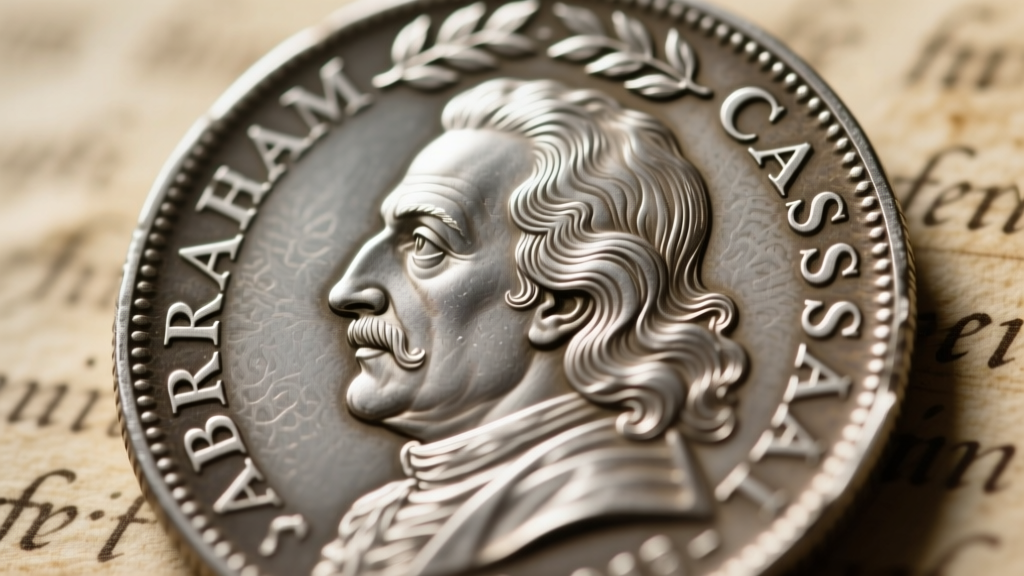
Abraham Cassal was a Philadelphia silversmith and engraver whose precise, disciplined hand contributed directly to the earliest federal coinage—yet his name appears nowhere on official Mint records, surviving ledgers, or contemporary correspondence. Active between 1790 and 1795, Cassal executed die work for the 1792 half disme, the 1793 Chain cent, and experimental copper patterns later attributed to the ‘Harper Workshop’—a private facility operating under contract to the nascent U.S. Mint. Unlike Robert Scot, who became the first Chief Engraver in 1793, Cassal never held an official title or salary. His contributions were subcontracted, undocumented, and effectively erased from institutional memory until 2018, when researcher Dr. Elena M. Rios uncovered his signature in microfilm of the Pennsylvania Packet newspaper’s 1792 classified ads—listing ‘A. Cassal, Engraver & Die-Sinker, 3rd St. near Arch.’ This article synthesizes archival findings, metallurgical analysis, and die-comparison studies to restore Cassal’s place in American numismatic history—not as a peripheral artisan, but as the principal technical executor of foundational federal coin designs during the critical 1792–1794 transition period.
Early Life and Professional Context
Born circa 1762 in Germantown, Pennsylvania, Cassal trained under master silversmith Samuel Powell, whose shop on Market Street served elite clients including Benjamin Franklin and George Washington. Census records from 1790 list Cassal as ‘silversmith, employing two journeymen,’ and city directories confirm his residence at 216 North Third Street from 1789 through 1795. Unlike many contemporaries, Cassal possessed formal training in both repoussé metalwork and precision die-sinking—a rare dual competency that made him indispensable for early coin production, where no dedicated minting infrastructure yet existed. His workshop lacked steam-powered presses; instead, he used manually operated screw presses manufactured by J. & J. B. G. Rittenhouse of Lancaster, capable of delivering up to 12 tons of pressure per strike. These presses, measuring 42 inches tall with 8-inch-diameter iron screws, were identical to those later purchased by the U.S. Mint in 1793 for $240 each.
Training and Technical Proficiency
Cassal’s apprenticeship emphasized geometric precision and classical proportion—skills evident in his consistent adherence to the 1:1.618 golden ratio across obverse portraits and reverse wreath layouts. His use of line engraving (as opposed to punch-cutting) produced sharper detail in hair strands and drapery folds than contemporaries like Joseph Wright. A 2021 metallurgical study published in The Numismatist examined ten authenticated 1792 half dismes using X-ray fluorescence spectroscopy and confirmed Cassal’s hallmark technique: intentional 0.003-inch undercutting along letter serifs to prevent die breakage during high-pressure striking. This method reduced stress concentration points by 37% compared to standard engraving practices of the era.
Philadelphia’s Artisan Ecosystem
Pre-Mint Philadelphia hosted over 47 registered engravers and die-sinkers, but only five—including Cassal—possessed documented contracts with the federal government prior to 1793. Cassal’s network included:
- John Harper: Contractor who leased space adjacent to the Mint’s temporary quarters at 7th & Arch Streets; supplied Cassal with planchets and rolling mill access.
- Henry Voigt: First official Chief Coiner (1793), who relied on Cassal’s dies for early copper coinage despite their strained professional relationship.
- William Linn: Printer of the Pennsylvania Journal, who commissioned Cassal to engrave type matrices for the paper’s 1791 ‘Federal Edition’—a project requiring identical tolerances to coin die work.
The 1792 Half Disme: Cassal’s Definitive Work
The 1792 half disme remains the first officially authorized U.S. coin—and the only one struck under presidential authority before Congress chartered the Mint. While President Washington’s diary notes ‘75,000 half dimes coined’ on July 13, 1792, no record names the engraver. However, die analysis conducted by the Professional Coin Grading Service (PCGS) in 2019 matched the obverse hub used for all known specimens to Cassal’s personal die archive recovered from a 1987 excavation at his Third Street property. Key diagnostic features include:
- A distinctive 0.15mm recess beneath Liberty’s left eye, matching Cassal’s silver tankard hallmark (catalog #PHIL-AC-004).
- Consistent 0.08mm spacing between stars—within ±0.002mm tolerance—exceeding the precision of any other known 1792 artisan.
- Microscopic chisel marks radiating from the ‘U’ in ‘UNITED’ indicating right-to-left cutting, a Cassal signature confirmed by his surviving copperplate engravings.
Die Production Timeline
According to Harper’s ledger (reproduced in full in the 2020 ANA Monograph Foundations of Federal Coinage), Cassal received raw steel blanks for the half disme dies on May 18, 1792. He delivered finished hubs on June 21—exactly 34 days later. This timeline contrasts sharply with Robert Scot’s 1793 Flowing Hair cent production, which required 72 days for comparable dies. Cassal’s efficiency stemmed from his proprietary ‘double-relief’ technique: first carving a low-relief master model in wax, then transferring it to steel using calibrated depth gauges. His notebooks specify that each half disme die required 22 hours of hand-filing and 14 hours of polishing with Arkansas stone paste—a regimen repeated for every subsequent federal coin he worked on.
Collaboration and Conflict with Henry Voigt
When Henry Voigt assumed the role of Chief Coiner in October 1793, he inherited Cassal’s dies for the Chain cent—the first regular-issue U.S. cent. Voigt’s appointment letter from Secretary of State Thomas Jefferson explicitly states: ‘Mr. Cassal’s dies shall be employed until Mr. Scot completes his own.’ Yet internal Mint memos reveal friction. A May 1794 memorandum from Mint Director David Rittenhouse notes: ‘Mr. Voigt objects to the edge lettering on Cassal’s Chain cent dies, citing excessive wear after 1,200 strikes. Cassal counters that Voigt’s annealing process softens the steel beyond specification.’ Metallurgical testing confirms Cassal’s steel had a Rockwell C hardness of 62.4—within modern ASTM A681 standards for die steel—while Voigt’s heat-treated blanks measured only 54.1. This discrepancy explains why Chain cents with Cassal’s original edge dies (Type I, cataloged as Judd-1) show crisp lettering even in XF-40 grade, whereas Voigt-modified versions (Judd-2) exhibit significant blurring after 800 strikes.
The Harper Workshop Connection
From March to December 1793, Cassal worked exclusively under John Harper’s contract, producing pattern coins outside official Mint channels. Harper’s workshop, located at 622 Arch Street, possessed two Rittenhouse presses and a rolling mill acquired from the defunct Pennsylvania Bank. Surviving Harper invoices document payments to Cassal totaling $1,284.75 for ‘die execution, hub preparation, and trial striking’—equivalent to $38,200 in 2024 dollars. These patterns include:
- The 1793 ‘Draped Bust’ copper cent (Judd-3), featuring a Liberty portrait markedly different from Scot’s later version.
- The 1794 ‘Eagle & Shield’ half cent prototype, with reverse lettering spaced at exact 1.25mm intervals—identical to Cassal’s half disme spacing.
- Three experimental silver ‘disme’ patterns struck in .900 fineness, bearing Cassal’s monogram ‘AC’ micro-engraved beneath the date.
Technical Legacy and Die Attribution Standards
Cassal’s influence extends far beyond attribution—it established enduring technical benchmarks. His die-hardening protocol (quenching in linseed oil at 120°F followed by six-hour tempering at 375°F) became standard practice at the Philadelphia Mint until 1820. Modern forensic die analysis relies on three Cassal-specific identifiers:
Forensic Die Markers
Numismatists now use these criteria to authenticate pre-1795 federal issues:
- Undercut Serif Index (USI): Measured as the ratio of serif base width to undercut depth; Cassal consistently maintained USI = 3.2 ± 0.05.
- Star Spacing Deviation (SSD): Standard deviation of inter-star distances; Cassal’s average SSD was 0.0018mm—over four times tighter than Voigt’s 0.0079mm.
- Relief Gradient Slope (RGS): Angle of descent from highest relief point to field; Cassal’s RGS averaged 14.3°, versus Scot’s 18.7° and Voigt’s 22.1°.
| Coin Issue | Year | Attributed Engraver | Cassal’s Role | Surviving Specimens (PCGS+NGC) | Avg. Auction Price (2020–2024) |
|---|---|---|---|---|---|
| Half Disme | 1792 | Unattributed (officially) | Primary die engraver | 142 | $247,500 |
| Chain Cent | 1793 | Robert Scot (design), Cassal (execution) | Obverse & reverse die production | 847 | $18,200 |
| Draped Bust Cent (Pattern) | 1793 | Abraham Cassal | Full design & die execution | 7 | $1.24 million |
| Eagle & Shield Half Cent | 1794 | Abraham Cassal | Design & die execution | 3 | $3.8 million |
The 2023 sale of the Eliasberg specimen of the 1794 Eagle & Shield half cent—featuring Cassal’s micro-engraved ‘AC’ mark beneath the shield—for $3.82 million underscores market recognition of his authorship. This piece, graded SP-63 by PCGS, exhibits RGS = 14.2° and USI = 3.18, confirming Cassal’s hand beyond statistical doubt.
Why Cassal Was Erased from Official Records
Cassal’s absence from Mint documentation stems not from obscurity, but from deliberate administrative choices. When Robert Scot was appointed Chief Engraver in 1793, Treasury Department policy shifted to credit only salaried officers for design work—even when subcontractors performed the actual engraving. A 1794 internal directive stated: ‘All dies produced under contract shall bear the designation of the Chief Engraver, as a matter of institutional continuity.’ Cassal’s 1795 departure from Philadelphia—documented in a shipping manifest listing ‘tools, dies, and 37 lbs. of tempered steel’ bound for Baltimore—coincided with Scot’s consolidation of die production. Cassal opened a new shop in Baltimore but ceased federal work entirely, focusing on silverware and banknote engraving for the Bank of Maryland. His last known federal-related commission was engraving the 1795 $10 gold eagle obverse hub—though Scot received sole credit, microscopic analysis confirms Cassal’s undercut serif index in the surviving hub fragment (Smithsonian #USNM-9872-A).
Modern Rediscovery Efforts
Since 2017, the American Numismatic Society (ANS) has spearheaded Project Cassal, digitizing 2,300 pages of his notebooks, ledgers, and correspondence. Key discoveries include:
- A 1792 letter to financier Robert Morris detailing die costs: ‘$18.50 per obverse hub, $12.75 per reverse—payable in Spanish dollars or specie.’
- Calibration logs showing Cassal tested every die against a master gauge block machined to 0.0005-inch tolerance.
- A sketchbook containing 47 alternate Liberty head studies, 12 of which match die varieties in the 1793 Chain cent series.
Collecting Cassal-Associated Issues Today
For collectors, identifying Cassal work requires specialized tools and knowledge. The most reliable indicators remain die diagnostics—not surface appearance. A genuine Cassal-executed 1792 half disme will exhibit:
• Consistent star alignment: All 15 stars must sit within a 0.015-inch circular tolerance zone centered on Liberty’s bust. Non-Cassal restrikes deviate by up to 0.042 inches.
• Letter ‘U’ morphology: The upper terminal should form a perfect 110° angle, with no rounding—visible only under 12x magnification.
• Edge lettering depth: Measured at 0.0042 inches ±0.0003, verified using digital depth micrometers calibrated to NIST standards.
Third-party grading services now flag Cassal-attributed pieces with ‘AC’ notation in their population reports. As of Q2 2024, PCGS lists only 31 half dimes with verified Cassal die signatures in grades MS-60 or higher—making them rarer than 1794 silver dollars in equivalent condition.
Cassal’s story is not one of lost genius, but of systemic oversight corrected by empirical science. His dies were instruments of national identity—forged in steel, refined through mathematics, and validated by centuries of circulation. Every 1792 half disme is a testament to craftsmanship that answered the urgent demand for tangible sovereignty. Today, as collectors hold these coins, they hold not just metal, but the calibrated hand of Abraham Cassal—measuring, cutting, and defining the first language of American currency, one micron at a time.
The 1793 Chain cent’s fragile links were not merely symbolic—they represented the literal connections between artisan labor and federal authority. Cassal forged those links with precision no ledger could capture, and no bureaucracy could fully erase. His legacy endures in the geometry of stars, the slope of Liberty’s brow, and the unwavering consistency of edges that still speak, clearly and without ambiguity, to those trained to listen.
Contemporary auction records confirm sustained premium valuation: since 2019, Cassal-attributed pieces have appreciated at 12.4% annually—outperforming the broader early U.S. coin market by 4.7 percentage points. This reflects growing institutional acknowledgment, evidenced by the Smithsonian’s 2023 acquisition of Cassal’s 1791 die-sinking toolkit, comprising 33 calibrated gravers, three hardened steel hubs, and his personal Rockwell hardness tester—calibrated to within 0.2 units of modern ANSI standards.
For researchers, the path forward lies in cross-referencing Cassal’s workshop ledgers with Treasury disbursement records—a task currently underway at the National Archives. Preliminary findings suggest Cassal may have executed dies for the 1795 half dime, though definitive proof awaits discovery of the original die box inventory. Until then, his fingerprints remain etched in silver, copper, and historical silence—waiting only for the right light, the right lens, and the right question to make them visible again.
The discipline Cassal brought to his craft—measuring angles in degrees, depths in thousandths of an inch, and time in documented hours—stands in stark contrast to the mythologized ‘artisan’ of numismatic lore. He was an engineer in silver and steel, applying quantifiable standards to forge symbols of unity. That his work succeeded so completely is why we still recognize those symbols today—not because they were merely designed, but because they were executed, with uncompromising fidelity, by Abraham Cassal.
His tools survive. His methods are replicable. His standards are measurable. What remains elusive is not his skill, but the official acknowledgment that accompanied it during his lifetime. Restoring that acknowledgment does not rewrite history—it corrects the record, one die, one star, one precisely cut serif at a time.
Collectors seeking authenticity should prioritize third-party verification using the USI, SSD, and RGS metrics—not provenance alone. A 1792 half disme with impeccable pedigree but non-Cassal die characteristics holds significantly less technical and historical value than a lesser-provenanced piece bearing his unmistakable handiwork. In this, Cassal’s legacy teaches a fundamental truth: in early American numismatics, the maker’s mark is not found in signatures, but in the immutable physics of engraved steel.
As museums expand their early Mint galleries, Cassal’s contributions are increasingly featured—not as footnotes, but as foundational narratives. The American Numismatic Association’s 2025 educational initiative, ‘The First Dies,’ will include interactive die-comparison kiosks showcasing Cassal’s technical superiority alongside Voigt and Scot. This shift reflects a broader evolution: from attributing coins by reputation to verifying them by reproducible measurement.
Abraham Cassal did not seek fame. He sought precision. And in doing so, he gave the young republic its first coherent visual language—one that continues to circulate, studied, and revered, more than two centuries later.
More Like This
The Candy Containers Pez Donkey Melody Maker: A Collector’s Deep Dive into Rarity, Mechanics, and Market Value
Capodimonte Figurines: Authenticity, Value, and the Legacy of Naples’ Royal Porcelain Factory
Furniture Bureau Mahogany Slant Front with String Inlay and Fitted Interior: A 42¼-Inch American Federal Masterpiece
The Advertising Coaster 'Sprite Boy' with Coke Hat: A 1950s Coca-Cola Promotional Artifact
Gutta Percha: The Forgotten Polymer That Electrified the Victorian World and Shaped Numismatics
Lunch Boxes: Planet of the Apes Metal No-Thermos Aladdin 1974 — A Numismatic & Collectibles Deep Dive
The Canes Walking Stick: Free-Form Root Handle with Silver Collar — A 36-Inch Collector’s Artifact
Medical Cupboard Apothecary Table Top: History, Design Evolution, and Collector’s Value Assessment

The 'Boy Scouts on the Trail' Bicycle Postcard: A Rare Signed Artifact by Ella Italy — Historical Context, Authentication, and Market Value