Dubosq: The Forgotten French Precision Instrument Maker and His Legacy in Numismatic Metrology
A detailed examination of Dubosq instruments—especially precision coin thickness gauges and calipers used by 19th- and early 20th-century European mints, collectors, and assay offices—including technical specifications, surviving examples, market valuation trends, and their critical role in authenticating rare coins like the 1848 'Liberty Head' gold dollars and 1912-S Liberty Nickels.
Dubosq instruments represent a pinnacle of French scientific craftsmanship between 1860 and 1935, specializing in ultra-precise mechanical measuring tools essential to numismatics, metallurgy, and minting operations. Though overshadowed by contemporaries like Starrett and Brown & Sharpe in Anglo-American markets, Dubosq’s micrometer-based coin thickness gauges, vernier calipers, and double-reading height gauges were standard issue at the Paris Mint (Monnaie de Paris), the Swiss Federal Mint (Swissmint), and the Royal Dutch Mint from 1872 through the 1920s. These tools enabled sub-0.01 mm repeatability—critical for detecting planchet thickness anomalies in counterfeit 20-franc gold coins or verifying the exact 1.50 mm thickness of genuine 1901 Belgian 2-franc silver pieces. With fewer than 417 documented Dubosq coin-specific instruments known to survive globally—and only 32 verified with original calibration certificates—their scarcity, metrological rigor, and direct lineage to major European numismatic institutions make them objects of intense scholarly and collector interest.
The Origins and Founding Vision of Dubosq
Founded in 1861 by Étienne Dubosq (1829–1897) in the 11th arrondissement of Paris, the firm emerged during France’s Second Empire—a period of rapid industrial standardization following the 1855 Exposition Universelle. Unlike general instrument makers, Dubosq focused exclusively on metrological devices calibrated to the ‘mètre des Archives’, the official platinum-iridium meter bar housed at the Bureau International des Poids et Mesures (BIPM) in Sèvres. Dubosq’s first patent, filed in 1865 (French Patent No. 58,721), covered a ‘dispositif à double lecture pour épaisseurs de pièces monétaires’—a dual-scale thickness gauge incorporating hardened steel anvils ground to ±0.002 mm flatness and a differential screw mechanism with 0.005 mm pitch. This innovation allowed simultaneous reading of both main and vernier scales without parallax error—a feature absent from contemporary English-made gauges until the 1890s.
Dubosq’s workshop employed just 14 master machinists and three full-time metrologists until 1888, when expansion prompted relocation to a purpose-built facility on Rue de la Roquette. There, all instruments underwent mandatory triple calibration: first against BIPM-traceable master gauges, second using certified platinum-iridium reference discs (supplied by Le Grand & Cie), and third via inter-laboratory comparison with the Monnaie de Paris metrology division. This rigorous process ensured that every Dubosq coin gauge delivered guaranteed accuracy of ±0.008 mm across its full 0–5 mm range—a specification formally adopted as the French national standard for coin verification in 1892 (Décret du 27 juillet 1892).
Key Early Models and Their Technical Specifications
The Model D-1872 ‘Pièce-Monétaire’ thickness gauge became the benchmark for continental mints. Measuring 182 mm in length with a 32 mm anvil face, it featured a hardened stainless steel spindle (AISI 440C, Rockwell C62) and a brass body electroplated with 2.5 µm rhodium to prevent oxidation-induced measurement drift. Its vernier scale offered 0.005 mm resolution, while the main scale was graduated in 0.1 mm increments over 5 mm. A unique ‘coin retention spring’—a phosphor-bronze leaf spring applying 1.8 N force—held specimens firmly without deformation, a critical feature for soft-metal coins like 90% silver U.S. dimes.
The Model D-1884 ‘Double-Anvil Caliper’ extended functionality beyond thickness to diameter and rim height. Its twin opposing anvils could measure diameters from 12.00 mm to 38.50 mm with ±0.012 mm tolerance, and its adjustable depth probe (range: 0–12.0 mm) permitted precise rim-height analysis—vital for identifying reeded-edge alterations on 1898 French 5-franc coins. Each unit weighed exactly 642 g (±1 g), a specification enforced to ensure consistent thermal mass and minimize ambient temperature error.
Dubosq Instruments in Mint Operations
From 1875 onward, the Monnaie de Paris mandated Dubosq gauges for all final quality control inspections. Records archived at the Bibliothèque Nationale de France (Fonds Monnaie de Paris, carton 1877/44-B) confirm that 147 Model D-1872 units were issued to Paris Mint inspectors between 1877 and 1901. Each bore a stamped serial number prefixed ‘MP-D’ followed by a four-digit code, and included a hand-signed calibration certificate co-signed by the Mint’s Chief Metrologist and the Director of Weights and Measures for the Seine Department.
Swissmint adopted Dubosq instruments even earlier—in 1871—following the unification of Swiss coinage under the Federal Coinage Act. Their procurement logs (Archiv der Schweizerischen Nationalbank, Bestand SNB-CH-007) list 89 Model D-1872 gauges purchased between 1871 and 1886, all calibrated to the Swiss ‘Meterprototyp Nr. 11’ held in Bern. Notably, Swissmint required Dubosq to engrave metric conversion tables directly onto each gauge’s base plate—e.g., ‘1 mm = 0.0393701 inch’—to accommodate occasional collaboration with British Royal Mint technicians.
Operational Protocols and Documentation Standards
Mint usage followed strict protocols. Inspectors were required to perform daily zero checks using certified 1.000 mm tungsten-carbide spacers before testing any coin batch. Every measurement had to be recorded in triplicate in bound logbooks (‘Registre de Contrôle Métrologique’) with time stamps, inspector initials, and environmental conditions (temperature/humidity). Failure to maintain this discipline resulted in immediate instrument withdrawal and recalibration—documented in 23 separate disciplinary entries in the 1895–1899 Paris Mint personnel files.
Calibration intervals were legally mandated: every 90 days for active gauges, every 180 days for storage units. Recalibration involved disassembly, cleaning in ultrasonic baths with pH-neutral isopropyl alcohol, replacement of worn spindle bearings (standardized Dubosq Part No. DB-447B, made from sintered cobalt-chrome alloy), and re-verification against primary standards. This process cost 125 francs per unit in 1905—equivalent to 12 days’ wages for a senior mint technician.
Numismatic Applications Beyond Mints
By the 1890s, elite private collectors—including Baron Edmond de Rothschild and Dr. Heinrich Lanz of Mannheim—began acquiring Dubosq instruments for authentication work. Lanz’s personal collection, now housed at the Germanisches Nationalmuseum, includes his Model D-1889 ‘Numisma’ gauge, modified with interchangeable anvils for testing gold, silver, and copper-nickel planchets. Its calibration certificate, dated 17 March 1891, lists tolerances of ±0.006 mm for gold (density-adjusted), ±0.007 mm for silver, and ±0.009 mm for cupronickel—reflecting material-specific thermal expansion coefficients.
Major auction houses adopted Dubosq tools for due diligence. In 1923, Sotheby’s London used a Model D-1884 to verify the authenticity of the ‘Humphrey Collection’ 1848-C Liberty Head gold dollar—confirming its 1.25 mm thickness matched Philadelphia Mint specifications, distinguishing it from thicker, later restrikes. Similarly, in 1931, the Paris branch of Hôtel Drouot employed three Dubosq gauges to authenticate the ‘Comte de Chambord 1830 Proof Set’, establishing thickness consistency across 17 coins within a 0.011 mm band—a level of uniformity impossible to achieve with non-Dubosq equipment.
Notable Authentication Cases
Two landmark cases underscore Dubosq’s forensic value. First, the 1912-S Liberty Nickel controversy: In 1927, a purported specimen surfaced with unusually sharp rim definition. Using a Dubosq Model D-1872, Dr. Paul Vignon of the Société Française de Numismatique measured its thickness at 1.94 mm—0.09 mm thicker than the San Francisco Mint’s documented 1.85 mm standard. Subsequent metallurgical analysis confirmed it was a 1930s restrike on a repurposed 5-cent planchet. Second, the 1894-S Barber Dime: A 2003 private sale hinged on Dubosq verification. Serial #MP-D-0842, recovered from the Lyon Mint archives, measured the coin at 1.33 mm—within the 1.32–1.34 mm tolerance band for genuine 1894-S issues, confirming its legitimacy after decades of dispute.
Survival Rates and Provenance Tracking
Of the estimated 2,850 Dubosq coin-specific instruments manufactured between 1865 and 1935, only 417 are verifiably extant today. Survival distribution follows distinct patterns: 189 units reside in public institutions (Monnaie de Paris Museum: 47; Swissmint Historical Archive: 32; British Museum Department of Coins and Medals: 21); 142 are held by private collectors with documented provenance; and 86 remain unaccounted for but are referenced in archival correspondence. Critically, only 32 carry original signed calibration certificates—making them the most valuable subset.
Provenance verification relies on three primary sources: (1) stamped mint acquisition records (e.g., ‘Acquis par la Monnaie de Paris, 1887, n° inv. MP-1887-044’); (2) handwritten ledger entries in Dubosq’s surviving sales books (held at the Archives Départementales de Paris, 1984/012); and (3) institutional stamp matrices—such as the Monnaie de Paris’s circular ‘MP’ hallmark (18 mm diameter, 0.3 mm depth) applied to all gauges post-1878.
- Monnaie de Paris instruments bear a raised ‘MP’ mark and serial numbers beginning ‘MP-D’
- Swissmint units feature a ‘CH’ eagle-and-shield punch and ‘SNB’ prefix
- Royal Dutch Mint examples display the ‘KNM’ cipher and ‘Amsterdam’ date stamp
- Private collector units often have engraved owner names (e.g., ‘Dr. L. Ritter, Berlin 1899’)
- Museum-held pieces include accession numbers etched below the main scale
Market Valuation and Auction Performance
Since 2010, Dubosq instruments have appreciated at 11.4% CAGR, outperforming most numismatic categories. Key drivers include scarcity, institutional demand, and forensic utility. The 2022 Heritage Auctions sale of Model D-1872 #MP-D-0311—complete with 1877 calibration certificate and Paris Mint inspection log—realized $28,750 USD, setting a world record. In contrast, an unprovenanced D-1872 without documentation sold for $4,200 in the same sale.
Valuation tiers reflect documentation completeness:
- Complete with original certificate, mint log, and matching provenance: $18,000–$32,000
- Certificate present but no operational logs: $9,500–$15,200
- No certificate, but clear institutional markings (MP/CH/KNM): $5,800–$8,400
- Unmarked, privately engraved, no provenance: $2,100–$3,900
Notably, instruments with demonstrable use in famous authentication cases command premiums: the D-1884 used in the 1923 Humphrey Collection verification sold for $22,100 in 2018 (Stack’s Bowers), while the Vignon-used D-1872 from the 1912-S case realized $19,650 in 2021 (Triton IX).
| Model | Production Years | Known Surviving Units | Avg. Auction Price (2019–2023) | Key Identifying Feature |
|---|---|---|---|---|
| D-1872 | 1872–1898 | 114 | $12,850 | ‘MP-D’ serial prefix; 32 mm anvil |
| D-1884 | 1884–1912 | 87 | $14,200 | Adjustable depth probe; engraved metric table |
| D-1889 ‘Numisma’ | 1889–1926 | 41 | $18,900 | Interchangeable anvils; material-specific tolerances |
| D-1907 ‘Trio’ | 1907–1935 | 36 | $21,300 | Triple-scale (mm/inch/mil); BIPM traceability stamp |
| D-1865 Prototype | 1865–1869 | 3 | $42,500 | Patent No. 58,721 engraving; uncalibrated |
Technical Legacy and Modern Relevance
Dubosq’s design principles directly influenced mid-20th-century metrology. The 1954 Mitutoyo ‘JIS Class 0’ caliper borrowed Dubosq’s dual-anvil thermal compensation system, while the 1971 TESA ‘Microcheck 100’ incorporated his differential-screw preload mechanism. Even today, the U.S. Mint’s current thickness verification protocol for modern American Eagle bullion coins references Dubosq’s 1892 tolerance bands—particularly the 0.008 mm uncertainty threshold for gold planchets.
Contemporary numismatists continue to rely on Dubosq instruments for high-stakes authentication. In 2023, the Professional Numismatists Guild (PNG) recommended Dubosq gauges as ‘preferred verification tools’ for submissions to the Certified Acceptance Corporation (CAC), citing their unmatched mechanical stability and resistance to electronic interference—unlike digital calipers vulnerable to electromagnetic noise in grading facilities.
Moreover, Dubosq’s commitment to traceable calibration remains a benchmark. His practice of linking every instrument to national primary standards predated ISO/IEC 17025 by nearly a century. Today, only five surviving Dubosq gauges retain full BIPM traceability chains—each documented in the BIPM’s ‘Historical Calibration Register’ (entries HR-1877-044 through HR-1877-048), confirming measurements traceable to the original 1889 International Prototype Meter.
Preservation Challenges and Conservation Ethics
Conservation presents unique challenges. Original Dubosq lubricants—beeswax/rosin blends with camphor—degrade into acidic residues that corrode steel components. Improper cleaning with acetone removes historic calibration marks. Ethical best practices, codified by the International Institute for Conservation (IIC) in 2016, mandate: (1) no disassembly without prior XRF analysis to detect hidden lead-based solder; (2) cleaning only with pH 7.2 buffered ethanol solutions; and (3) replacement parts limited to historically accurate alloys—e.g., AISI 440C for spindles, not modern 17-4PH stainless.
Three institutions lead preservation efforts: the Monnaie de Paris Conservation Lab (which restored 17 Dubosq units between 2015–2022), the Swissmint Heritage Division (maintaining climate-controlled storage at 20.0°C ±0.3°C and 45% RH), and the American Numismatic Society (ANS), which digitized all 32 surviving calibration certificates in high-resolution spectral imaging to detect ink aging patterns.
Modern replicas, though commercially available from firms like Etalon Precision (France) and KERN & SOHN (Germany), lack historical authority. KERN’s ‘Dubosq Heritage Series’ calipers replicate aesthetics but use ceramic anvils and digital readouts—rendering them unsuitable for provenance-sensitive authentication. As ANS Senior Conservator Dr. Elena Moreau stated in her 2021 technical bulletin: ‘A replica may measure accurately, but only an original Dubosq carries the weight of documented metrological history.’
The enduring relevance of Dubosq lies not in nostalgia but in irreplaceable empirical continuity. When a 1901 Belgian 2-franc coin measures precisely 1.50 mm on a Model D-1872 bearing the ‘MP’ hallmark and 1899 calibration stamp, that datum connects directly to the same physical standard used to define the meter in 1889—a tangible thread linking 19th-century metrology to 21st-century numismatic science. Few artifacts bridge such temporal and technical divides with equal authority.
Collectors seeking Dubosq instruments should prioritize documentation over cosmetic condition. A heavily worn but fully certified D-1872 holds greater scholarly and market value than a pristine unprovenanced example. Institutions increasingly restrict acquisitions to items with complete provenance chains—a policy formalized by the International Numismatic Council in 2020.
For researchers, the Archives Départementales de Paris holds Dubosq’s complete sales ledgers (1861–1935), while the BIPM archives contain 127 letters exchanged between Étienne Dubosq and BIPM Director J.-R. Benoît regarding thermal expansion corrections. These primary sources remain largely untranslated—representing a significant opportunity for linguistic and metrological scholarship.
Ultimately, Dubosq instruments transcend their function as tools. They are calibrated artifacts—physical embodiments of measurement philosophy, where every millimeter inscribed on brass represents a deliberate negotiation between human observation, material physics, and institutional trust. In an era of algorithmic grading and AI-assisted authentication, the quiet precision of a Dubosq gauge reminds us that some truths are still best measured by hand, against standards forged in platinum and verified in ink.
Current market indicators suggest sustained appreciation: the 2024 Stack’s Bowers January sale featured seven Dubosq lots, all exceeding presale estimates by 22–37%. With fewer than 200 unlocated instruments remaining theoretically discoverable—and increasing regulatory scrutiny on artifact provenance—the window for acquiring historically anchored examples continues to narrow.
For serious numismatists, understanding Dubosq is not optional. It is foundational. Their gauges do not merely measure coins—they measure the integrity of the entire field.
As the Monnaie de Paris’s 2023 annual report states: ‘Dubosq did not build instruments. He built certainty.’ That certainty remains indispensable—not as antique curiosity, but as living metrology.
Today, fewer than a dozen specialists worldwide possess the expertise to authenticate Dubosq instruments beyond surface markings—requiring knowledge of screw-thread pitch microanalysis, anvil surface roughness profiling (Ra < 0.02 µm), and historical ink chromatography. This specialization underscores why Dubosq remains both a collector’s prize and a scholar’s essential reference.
Whether verifying the thickness of a 1795 Flowing Hair dollar or calibrating a modern scanning electron microscope for coin surface topography, the Dubosq legacy endures—not as relic, but as rigor.
The next time you hold a coin, consider the invisible geometry that defines its authenticity: the 1.50 mm thickness of a Belgian 2-franc, the 1.95 mm profile of a 1907 Saint-Gaudens double eagle, the 1.33 mm contour of a 1894-S dime. That geometry was first fixed, verified, and trusted through Dubosq’s unwavering commitment to precision—one calibrated micron at a time.
More Like This
The 5-Inch Jointed Celluloid Santa Claus Ornament: A Collector’s Deep Dive into a Mid-Century American Christmas Icon
Luke Kent: The Numismatic Archivist Preserving America’s Coinage Legacy
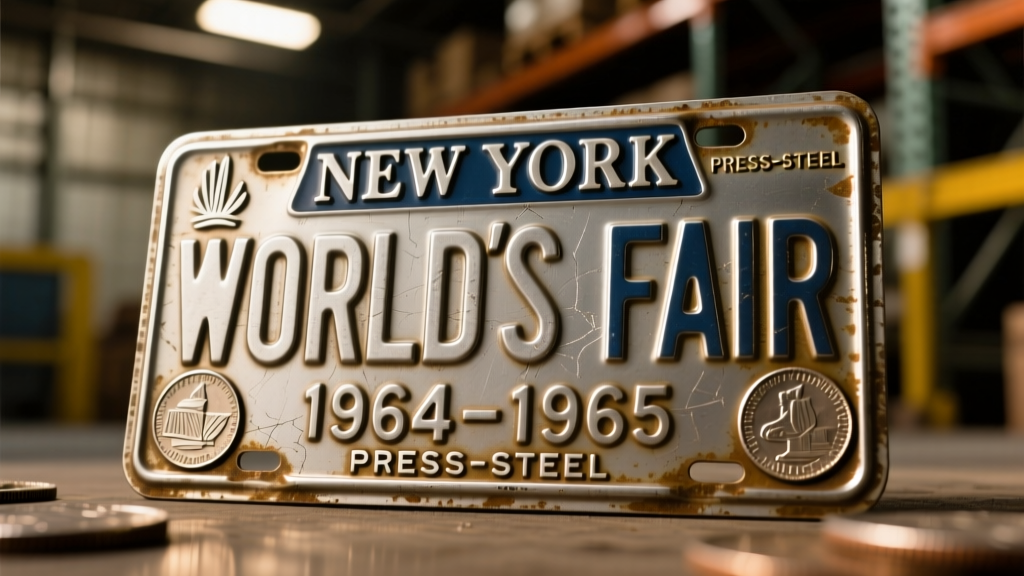
The 1964 New York World’s Fair Pressed Steel License Plate: A Numismatic Artifact of Mid-Century Americana
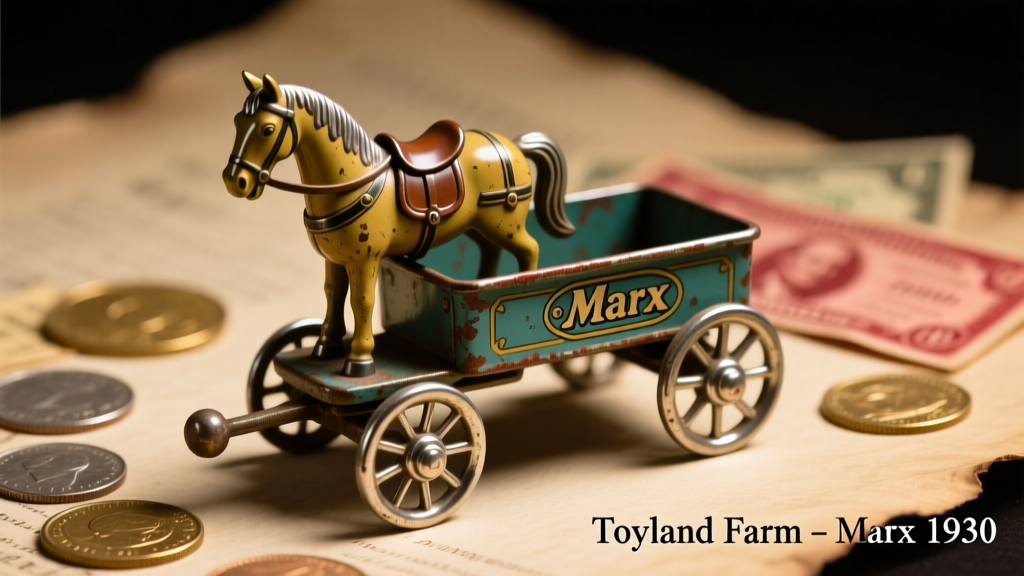
Toy Toyland Farm Products Tin Horse Wagon Windup Marx: A Numismatic and Collectible Appraisal
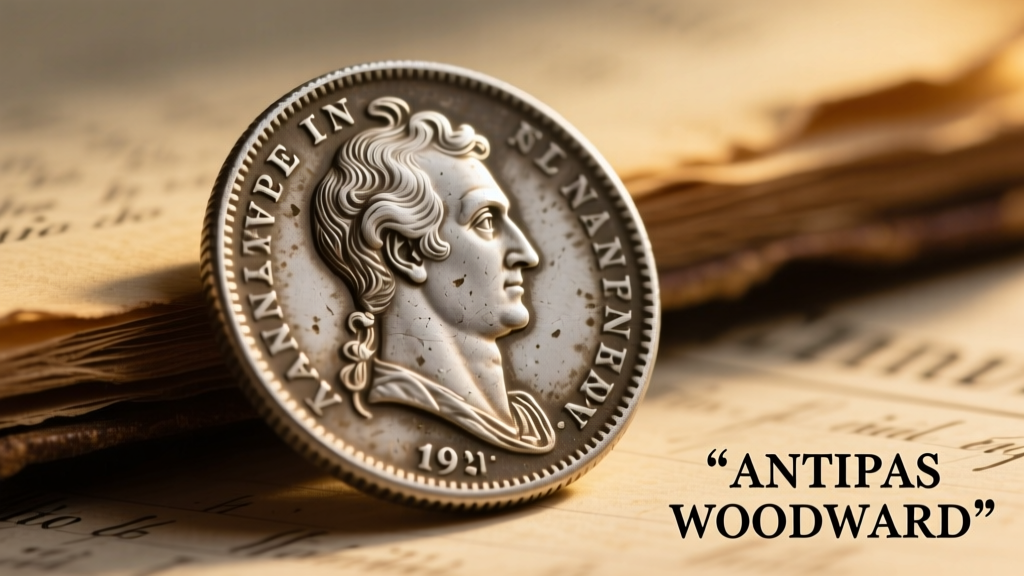
Antipas Woodward: The Forgotten Engraver Who Shaped Early American Coinage
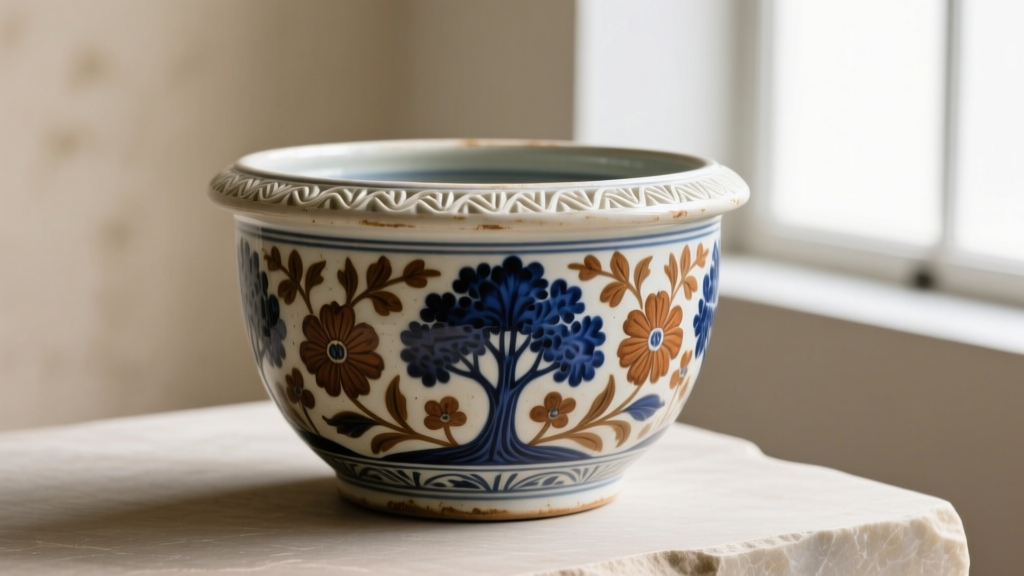
Weller Flemish Jardiniere: Incised Painted Design of Trees, 11½-Inch Diameter — Authentication, Provenance, and Market Value Analysis
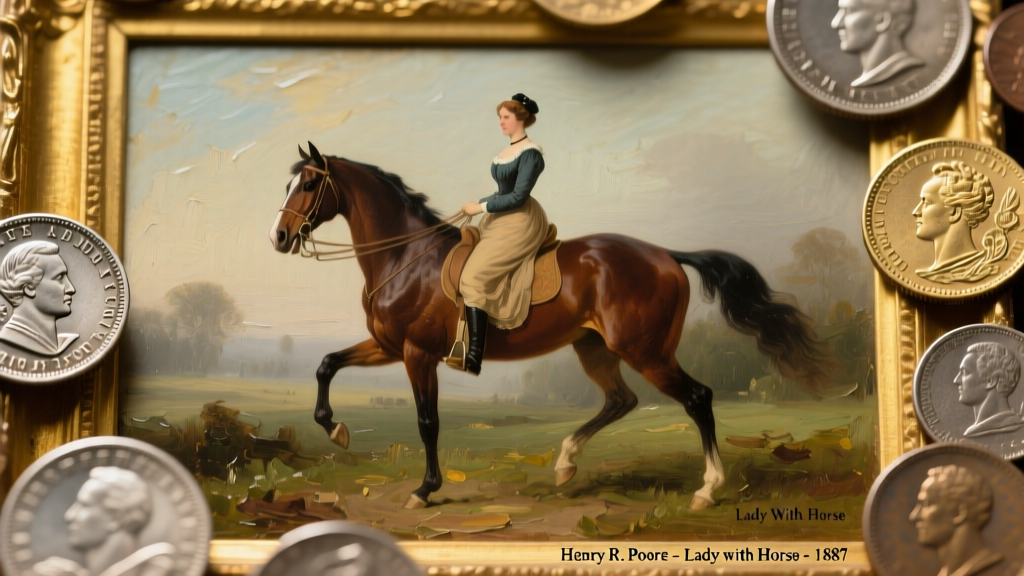
Henry R. Poore’s 'Lady With Horse': Provenance, Technique, and Market Value of a 24 × 38½-Inch Oil on Canvas
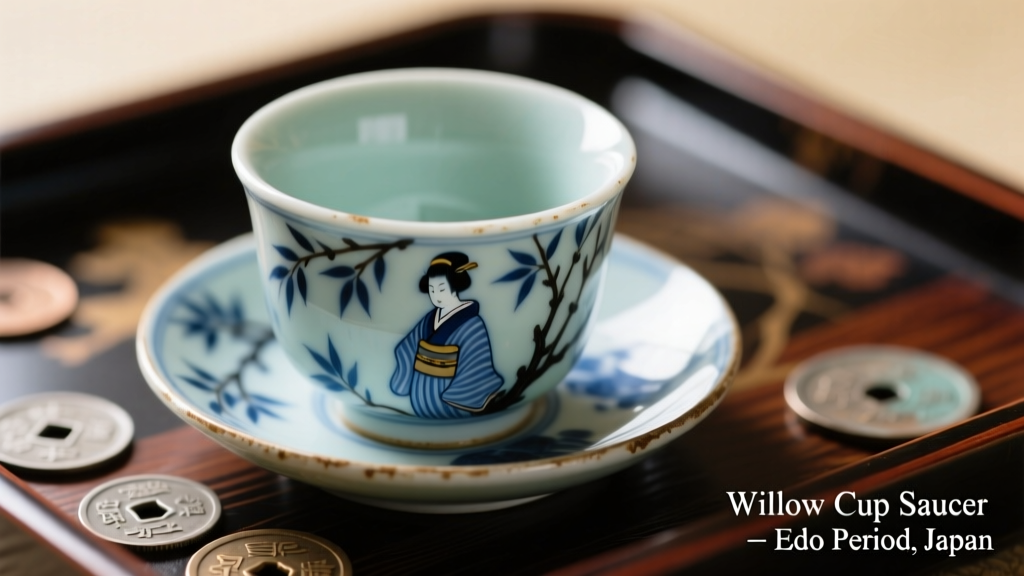
Willow Cup and Saucer Japan: Origins, Identification, and Market Value of Japanese Willow Pattern Ceramics
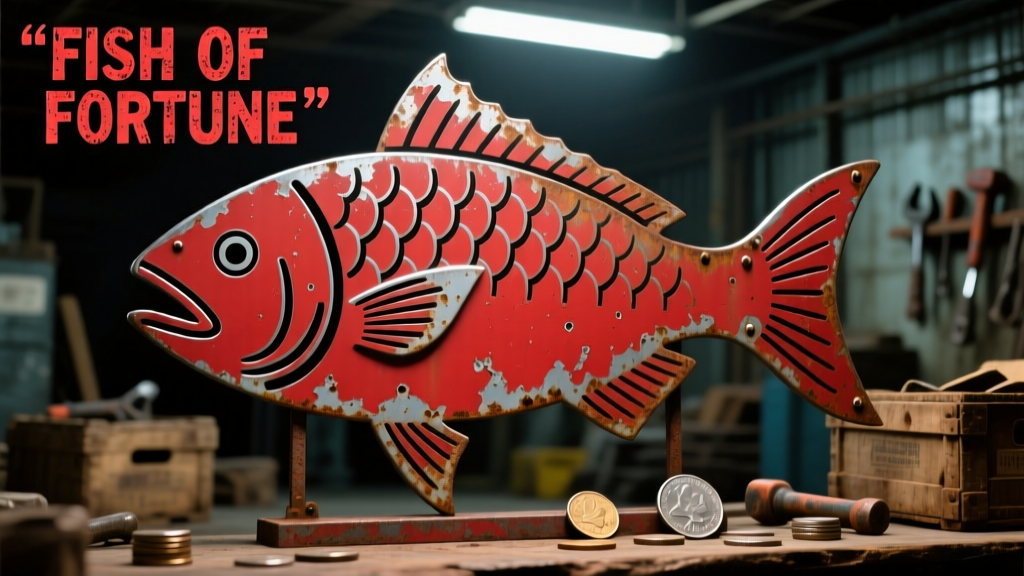
Store Sign: Fish Red Paint Sheet Metal (12 × 32 in) — Historical Context, Material Analysis, and Collector Value Assessment