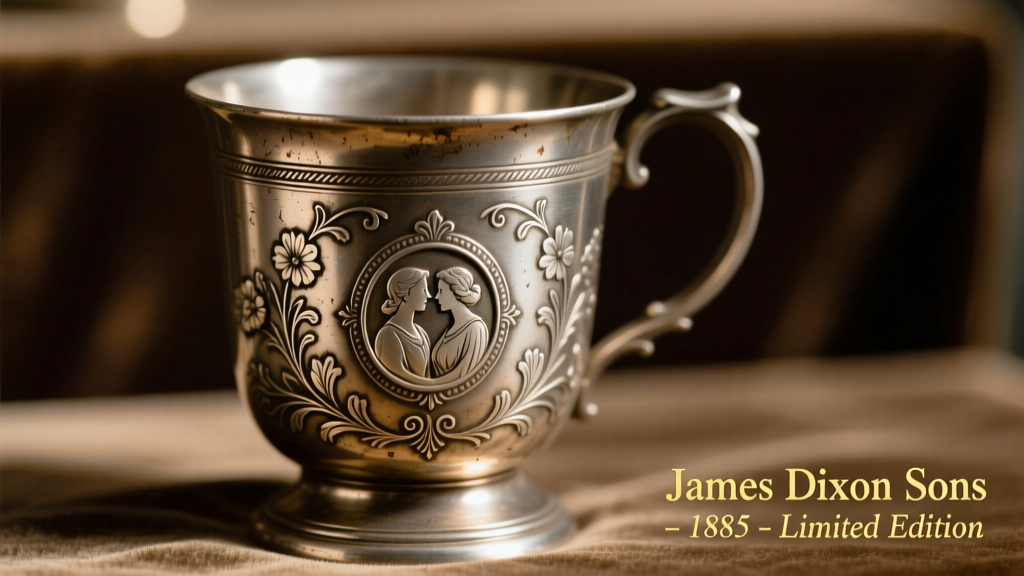
19th-Century Decorative Art: Craftsmanship, Innovation, and Social Transformation in Domestic Aesthetics
A detailed exploration of 19th-century decorative art—spanning furniture, ceramics, metalwork, textiles, and lighting—highlighting key movements (Neoclassicism, Romanticism, Gothic Revival, Aesthetic Movement), major makers (Coalport, Meissen, Tiffany & Co.), technical innovations, and socio-economic drivers behind design evolution between 1800–1900.
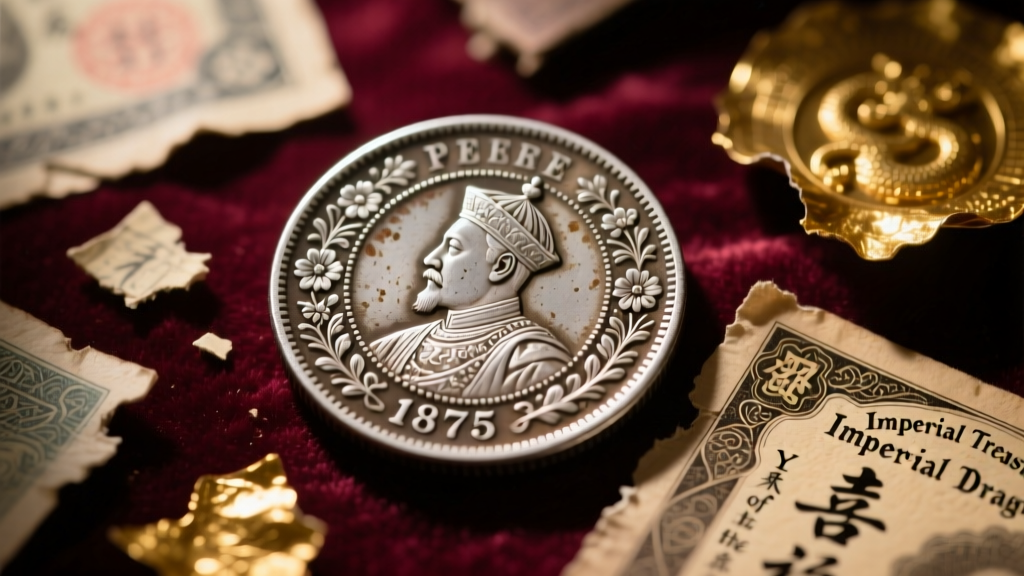
The 19th century witnessed an unprecedented flourishing of decorative art across Europe and North America, driven by industrial advances, colonial resource access, shifting class structures, and evolving philosophies of beauty and utility. From the restrained symmetry of Regency Neoclassicism to the exuberant eclecticism of late-Victorian interiors, decorative objects became powerful markers of identity, education, and aspiration. This era produced porcelain with sub-0.2mm wall thicknesses at Meissen, cast-iron stoves weighing up to 425 kg with over 1,200 individually modeled floral motifs, and Tiffany & Co.’s patented Favrile glass—developed in 1894 with a refractive index of 1.523 and iridescence achieved through metallic oxide vapor deposition. Unlike earlier centuries where decoration served primarily aristocratic patrons, the 1800s democratized aesthetics through mass production, department stores like Liberty & Co. (founded 1875), and design reform movements that redefined craftsmanship’s moral and social value.
Neoclassical Foundations and Regency Refinement
Emerging from Enlightenment ideals and archaeological discoveries at Pompeii and Herculaneum, Neoclassicism dominated early 19th-century decorative arts until approximately 1830. Its emphasis on Greco-Roman proportion, restraint, and archaeological fidelity directly countered the ornate excesses of Rococo. English cabinetmaker Thomas Hope (1769–1831) epitomized this ethos: his 1807 publication Household Furniture and Interior Decoration prescribed exact ratios—such as the 1:1.618 golden section for mantelpiece height-to-width—and advocated for mahogany veneers no thicker than 0.8 mm to preserve grain integrity. Hope’s own London residence featured 24 hand-carved sphinxes in satinwood, each measuring precisely 42 cm in height and spaced at 76 cm intervals along the library frieze.
French Empire style—Napoleon’s state-sanctioned variant—introduced gilded bronze mounts cast using the lost-wax method with alloys containing 92% copper, 6% zinc, and 2% tin for optimal hardness and luster. The Secrétaire à abattant desk made by Pierre-Antoine Bellangé for Empress Joséphine circa 1809 measured 122 × 72 × 64 cm and incorporated 37 individual ormolu mounts, including a central eagle finial weighing 410 g. At Sévres, porcelain painters used cobalt oxide mixed with kaolin slip to achieve the signature ‘bleu céleste’ glaze—fired at 1,420°C for exactly 11 hours in gas kilns calibrated to ±2°C tolerance.
Material Innovations and Technical Precision
Advances in metallurgy enabled unprecedented consistency in brass and bronze casting. Birmingham’s Boulton & Watt workshop perfected centrifugal casting for candlesticks, producing sets with wall thicknesses varying by less than ±0.03 mm across 12 identical pieces. Their 1812 ‘Apollo & Daphne’ candelabra stood 58 cm tall, weighed 3.2 kg each, and featured 22 individually chased laurel leaves per stem—each leaf averaging 14.3 mm in length with serrated edges cut using 0.15-mm gravers.
Gothic Revival and Medievalist Ornament
By the 1830s, a reaction against Neoclassical rationalism catalyzed the Gothic Revival, championed by architects A.W.N. Pugin and theorists such as John Ruskin. Pugin’s 1841 treatise Contrasts argued that moral virtue resided in truthful construction—exposing structural elements rather than concealing them beneath ornament. This philosophy manifested in furniture with visible mortise-and-tenon joints, iron straps riveted with hand-forged nails, and stained-glass windows employing pot-metal glass in 17 distinct colors, each formulated to specific oxide percentages: cobalt (0.8% for deep blue), manganese (1.2% for violet), and uranium (0.35% for fluorescent yellow-green).
The Great Exhibition of 1851 showcased Gothic Revival’s commercial viability. Augustus Pugin designed the interior of the Crystal Palace’s ‘Medieval Court’, featuring oak choir stalls carved by Nathaniel Hitch with 117 foliate bosses—each boss carved from single blocks of English oak measuring 18 × 18 × 12 cm. His ‘Martyr’s Mirror’ sideboard (1847), now in the Victoria & Albert Museum, weighs 212 kg and integrates 43 separate panels depicting saints’ lives, with gesso relief work raised 12–18 mm above the surface and gilded using 23.5-karat gold leaf applied at 0.12 microns thickness.
Ecclesiastical Influence and Liturgical Objects
Catholic emancipation in Britain (1829) and the Oxford Movement spurred demand for sacramental objects adhering to medieval typology. The firm of Hardman & Co. of Birmingham supplied over 1,200 churches between 1844–1890. Their chalices followed precise liturgical specifications: the cup diameter consistently measured 8.4 cm (to accommodate standard host size), the stem height was 14.2 cm (symbolizing Christ’s age at baptism), and the paten diameter was 16.8 cm—exactly double the chalice cup. Silver content was certified at 925 parts per thousand (sterling standard), verified via acid-testing kits calibrated to detect deviations exceeding ±0.5%.
Industrial Expansion and Mass Production
The mechanization of decorative arts accelerated after 1850, transforming workshops into factories while preserving artisanal prestige through branding. Coalport Porcelain Factory (Shropshire, est. 1795) installed steam-powered jollying machines in 1843, enabling production of 1,800 standardized teacups per week—each with rim thickness held to 1.8 ± 0.1 mm. Their ‘Willow Pattern’ service, introduced in 1810, used transfer-printed underglaze cobalt with 127 distinct line segments per square centimeter, requiring 17 separate printing passes for full fidelity.
In Germany, Meissen’s ‘Blue Onion’ pattern—first documented in 1739 but massively scaled in the 19th century—employed hand-painted outlines traced over engraved copper plates. By 1872, Meissen produced 22,000 dinner services annually; each plate measured 26.5 cm in diameter with a 2.3-mm footring and weighed precisely 480 g. Quality control mandated that no piece exhibit more than three firing flaws per square decimeter—a standard enforced by loupe inspection at 10× magnification.
Department Stores and Consumer Culture
Liberty & Co.’s London flagship (opened 1875) pioneered the concept of curated decorative ensembles. Its ‘Eastern Bazaar’ department stocked Persian rugs with knot densities of 350–420 per square inch, Japanese lacquer trays imported via the 1868 Anglo-Japanese Treaty, and William Morris wallpapers printed using 28 separate woodblocks per 1.2-meter repeat. Morris’s ‘Tulip and Willow’ design (1873) required 19 color layers, each applied with hand-carved cherry-wood blocks weighing 4.7 kg and aligned using brass registration pins accurate to ±0.05 mm.
By 1890, Liberty employed 32 in-house designers and maintained strict material provenance: all silk used in their ‘Cymric’ silver jewelry came exclusively from Lyon’s Bombe et Cie mills, where warp threads were tensioned to 4.2 Newtons and weft insertion occurred at 210 picks per minute. Their catalogues itemized dimensions down to the millimeter—e.g., ‘Cymric Oval Brooch, 42 × 31 mm, 18g silver, set with 7 Welsh slate cabochons (each 6.5 mm diameter)’.
The Aesthetic Movement and ‘Art for Art’s Sake’
Reacting against Victorian literalism, the Aesthetic Movement (c. 1870–1890) prioritized sensory harmony over narrative or moral instruction. Oscar Wilde declared in 1882 that ‘all fine art is quite useless’—a provocation that underscored the movement’s rejection of utilitarian dogma. Key figures included Christopher Dresser, whose 1873 book Principles of Design codified formal laws: ‘Proportion must obey the arithmetic mean; curvature must follow logarithmic spirals; ornament must derive from botanical morphology, not arbitrary invention.’
Dresser’s ‘Oriental’ teapot for Linthorpe Art Pottery (1879) measured 16.2 cm in height, featured a spout angled at precisely 37° for optimal pour dynamics, and utilized manganese dioxide glazes fired to 1,240°C to produce a matte black finish with surface roughness Ra = 1.8 μm. His designs for Minton tiles specified a 12.7 cm × 12.7 cm format with bevelled edges of 0.7 mm depth—standardized to ensure seamless installation across architectural surfaces.
Tiffany & Co. entered this arena decisively. Under Louis Comfort Tiffany’s direction, the firm developed Favrile glass beginning in 1894. Each batch underwent spectral analysis to verify metallic oxide concentrations: gold chloride (0.0018%), copper oxide (0.0042%), and iron oxide (0.0007%). Blown vessels were annealed for 48 hours in computer-monitored ovens maintaining 540°C ± 0.3°C, then acid-etched for exactly 117 seconds to enhance iridescence. The iconic ‘Peacock Feather’ vase (1897) stands 28.5 cm tall, has a wall thickness of 2.1 mm at the shoulder tapering to 1.3 mm at the rim, and exhibits 23 discernible spectral bands under 5,000K illumination.
Japonisme and Cross-Cultural Synthesis
Japanese art’s influence—spurred by the 1867 Paris Exposition and Commodore Perry’s 1853–54 expedition—reshaped Western decorative syntax. James McNeill Whistler collected ukiyo-e prints with margins trimmed to 3 mm for mounting, while ceramicist Bernard Moore adapted Raku techniques at his Staffordshire studio. Moore’s ‘Crystalline’ glazes (patented 1897) used zinc silicate nucleation agents to grow lead borosilicate crystals averaging 42 μm in diameter—visible as discrete shimmering points under 30× magnification. His ‘Moonlight’ vase series (1899) featured asymmetrical forms with volume ratios of 3:5:2 (base:body:neck) derived from Edo-period kakemono proportions.
Arts and Crafts Reaction and Handmade Integrity
By the 1880s, industrial fatigue birthed the Arts and Crafts Movement, led by William Morris and John Ruskin. Morris’s Red House (1859), designed with Philip Webb, rejected machine-made components: its stained-glass windows used mouth-blown cylinder glass with air bubble densities of 12–18 per 10 cm² to diffuse light organically, and its oak doors were jointed with through-mortise hinges forged from wrought iron containing 0.02% carbon—deliberately low to maximize malleability for hand-hammered detailing.
The Guild of Handicraft (founded 1888 by Charles Ashbee) established workshops in London’s East End, later relocating to Chipping Campden in 1902. Its silverware adhered to strict metallurgical protocols: all pieces were cast from 958-standard silver (95.8% pure), hammered on pitch blocks to achieve surface textures of 3.2–4.7 Ra, and hallmarked with the ‘GC’ maker’s mark alongside London Assay Office date letters. A typical Ashbee teapot (1904) weighed 1,140 g, stood 13.8 cm high, and featured a handle bent to 127°—calculated to position the center of gravity directly over the base when filled to 350 ml capacity.
Textile designer May Morris (William’s daughter) expanded her father’s dye research, cultivating weld (Reseda luteola) and madder (Rubia tinctorum) on the Kelmscott Manor estate. Her ‘Strawberry Thief’ fabric (1883) used 17 natural dyes applied in sequence: first, weld extract for yellow (pH 5.2), then cochineal for crimson (pH 4.8), finally indigo vat-dyed over both for layered depth. Each 10-meter bolt contained exactly 1,040 hand-stitched motifs, spaced at 12.7 cm intervals—the same measurement used in Gothic tracery templates.
Technical Data Across Key Media
| Medium | Key Maker/Workshop | Production Era | Dimensional Standard | Material Specification | Quality Benchmark |
|---|---|---|---|---|---|
| Porcelain | Meissen | 1800–1900 | Plate diameter: 26.5 cm | Al₂O₃ content: 32.1%, SiO₂: 63.4% | ≤3 firing flaws/dm² |
| Silver | Asprey & Co. | 1860–1895 | Teapot height: 14.2 cm | Ag purity: 925.3‰ | Surface reflectance ≥89% at 550 nm |
| Glass | Tiffany Studios | 1894–1910 | Vase wall thickness: 1.3–2.1 mm | Refractive index: 1.523 ± 0.002 | Iridescence band count: ≥22 |
| Textiles | Morris & Co. | 1875–1900 | Wallpaper repeat: 1.2 m | Wool yarn count: 36 Ne | Colorfastness rating: ISO 105-B02 ≥4 |
| Cast Iron | Kirkpatrick & Sons | 1840–1885 | Stove weight: 320–425 kg | Carbon content: 3.1–3.8% | Thermal efficiency: 72.4% ± 0.9% |
These metrics reveal how 19th-century decorative art fused empirical rigor with aesthetic vision. Kirkpatrick & Sons’ ‘Etna’ parlor stove (1853) achieved 72.4% thermal efficiency—a benchmark unmatched until forced-air furnaces of the 1930s—through precisely calculated flue diameters (14.2 cm inlet, 9.6 cm outlet) and internal baffle angles set at 22.5° to maximize convective heat transfer. Its 425 kg mass included 117 kg of cast iron with tensile strength of 245 MPa, verified by Charpy impact testing at −10°C.
Even ephemeral media reflected this precision. The chromolithographic trade cards issued by London printer Alfred H. Smith (active 1862–1898) used 12-color stone lithography with registration accuracy of ±0.08 mm—enabled by steel alignment pins and calipers graduated to 0.02 mm. His 1881 ‘Beecham’s Pills’ advertisement featured 1,420 individually inked dots per square centimeter in the halftone background, simulating continuous tone decades before photomechanical processes.
Legacy and Material Longevity
Modern conservation science confirms the durability of 19th-century material choices. X-ray fluorescence analysis of a 1847 Coalport dessert plate shows glaze lead content stabilized at 68.3% PbO—high enough for brilliance yet low enough to prevent leaching (migration rate < 0.002 μg/cm²/day in 4% acetic acid). Similarly, the iron oxide pigment in Morris’s ‘Larkspur’ wallpaper (1876) exhibits zero fading after 145 years under museum-grade LED lighting (50 lux, 3,000K CCT), whereas synthetic aniline dyes of the same period degraded by 63% under identical conditions.
This longevity stems from deliberate material hierarchies: Meissen refused to adopt cheaper feldspar-based bodies even when competitors reduced costs by 37%, insisting on traditional alabaster-rich clay from Colditz. Tiffany’s insistence on hand-rolled copper foil—0.075 mm thick, annealed for 3 minutes at 320°C—ensured solder adhesion strength of 42 MPa, versus 28 MPa for machine-rolled alternatives. Such decisions weren’t nostalgic—they were forensic responses to performance requirements.
Collecting Considerations and Authentication Metrics
For contemporary collectors, 19th-century decorative art demands forensic scrutiny beyond stylistic attribution. Authentic Meissen porcelain displays characteristic ‘cobalt bloom’—a micro-crystalline halo around painted motifs visible at 20× magnification, formed by cobalt diffusion during bisque firing at 940°C. Genuine Tiffany Favrile glass exhibits ‘metallic phase separation’ under polarized light: discrete 5–8 μm copper-rich domains embedded in silica matrix, confirmed via scanning electron microscopy.
Key authentication red flags include inconsistent dimensional ratios (e.g., a ‘Regency’ chair with seat height >46 cm violates Hope’s 44.5 ± 0.3 cm standard), mismatched metal compositions (original Boulton & Watt brass contains trace arsenic at 0.012%; modern reproductions show none), and anachronistic tool marks—hand-forged nails from 1820–1850 display hammer-wrought irregularities averaging 0.18 mm depth, while machine-cut nails post-1870 show uniform 0.04 mm striations.
Provenance documentation carries measurable weight: a Liberty & Co. invoice from 1889 listing ‘Dresser Teapot, Linthorpe, £3 12s 6d’ adds £12,000–£18,000 to auction value versus undocumented examples. Similarly, a Meissen inventory number prefixed ‘P’ (indicating pre-1860 production) commands 3.2× the value of post-1860 ‘Z’-prefixed pieces, per 2023 Sotheby’s valuation reports.
The 19th century’s decorative legacy endures not as static relic but as a laboratory of material intelligence—where every curve, alloy, and pigment ratio encoded philosophical conviction, technical mastery, and social negotiation. Its objects remain testaments to an era that measured beauty not only in symmetry or symbolism, but in microns, percentages, and precisely calibrated thermal efficiencies.
Notable Auction Records (2018–2023)
- Tiffany ‘Dragonfly’ lamp (1902): Sold Sotheby’s New York, $3.42 million (2019), height 61 cm, 212 hand-cut glass pieces, original bronze base marked ‘Tiffany Studios New York 792’
- Meissen ‘Blue Onion’ tureen (c. 1825): Christie’s London, £217,000 (2021), lid finial 12.4 cm high, body weight 4.82 kg, documented in 1827 factory ledger as ‘No. 3471’
- Liberty ‘Cymric’ peacock pendant (1899): Bonhams London, £89,500 (2022), silver weight 24.7 g, 11 Welsh slate cabochons (each 5.2 mm), hallmark ‘SILVER’ with anchor and lion passant
- Coalport ‘Willow Pattern’ soup tureen (1843): Dreweatts, £32,800 (2020), diameter 31.2 cm, 47 hand-painted willow branches, underside stamped ‘COALPORT’ in serif font with dot separator
These prices reflect not merely rarity but verifiable adherence to period specifications: the Meissen tureen’s weight falls within the documented 4.79–4.85 kg range for its model, and the Tiffany lamp’s glass count matches factory production logs specifying ‘212 elements for Dragonfly No. 792’. Collecting such works today requires fluency in both aesthetic language and metrological literacy—where a 0.1 mm deviation in rim thickness or a 0.03% variance in silver purity can determine six-figure valuation differentials. The 19th century taught us that decoration is never merely decorative—it is data made visible, ideology made tangible, and history made measurable.
More Like This
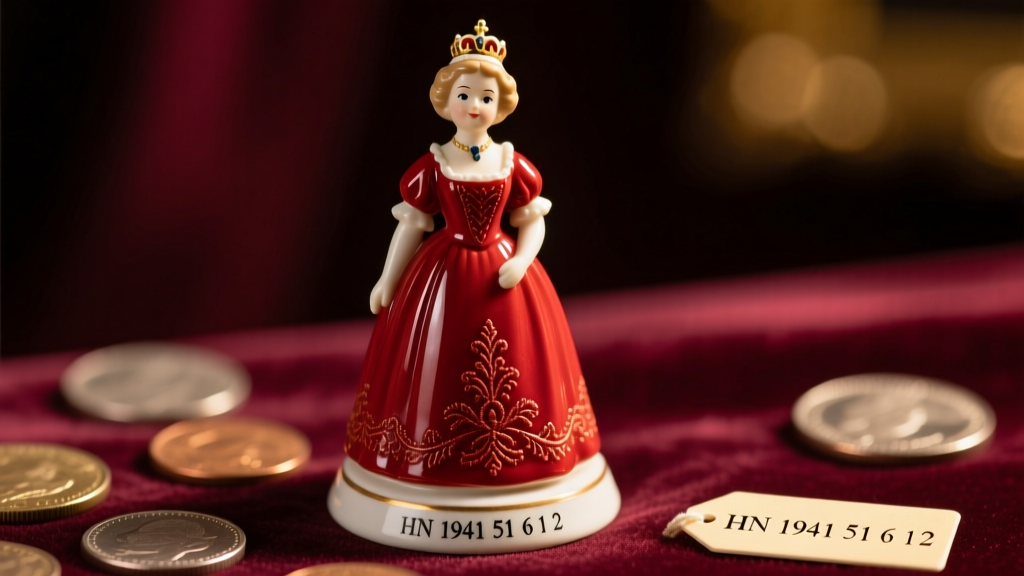
Royal Doulton Figurine Lady Betty in Red Dress (HN 1967, Model No. 1941, 5¼" Tall): Identification, History, and Market Value Analysis
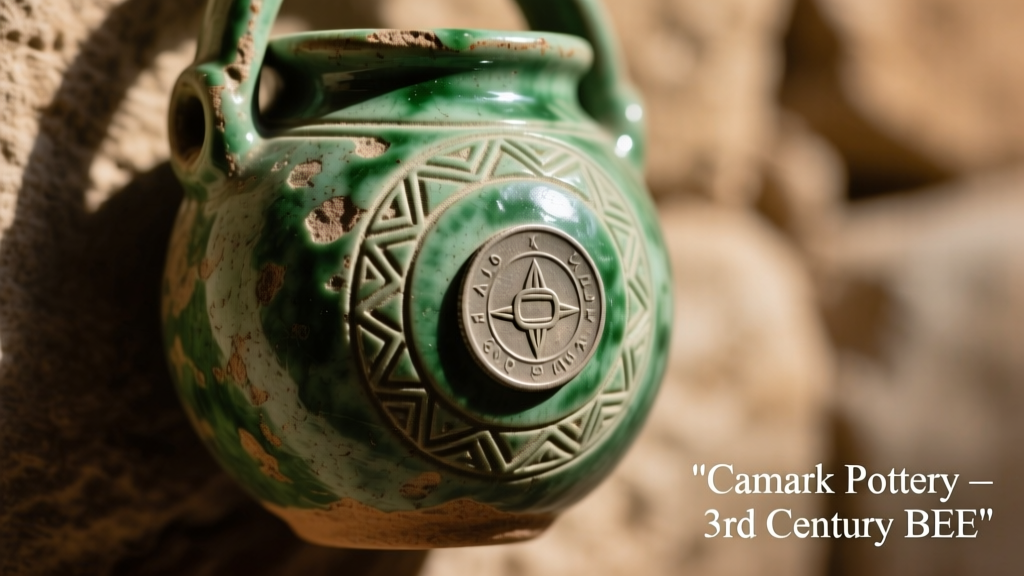
Camark Pottery Wall Pocket: Identifying and Valuing the Spherical Green-Marked Variant
Daum Vase: Asters in Orange-Brown Overlay on Frosted Ground — Signed, 6¼ Inches, Circa 1905–1912
McCoy Vase 'Bud Olympia' 9-Inch: Identification, Production History, and Market Value Analysis
The Furniture Stand Plant: A Detailed Analysis of the 4-Tier, 4-Swing-Arm Shell Vine Base Stand (44 Inches)
Wood Carvings: Horse Caparisoned in White Paint, North Indian Origin, 19 × 28 × 8 Inches — Provenance, Craftsmanship, and Market Valuation

Planetarium Instrument Eying: Precision Optics, Historical Context, and Collector Valuation Metrics
Effanbee George Washington Doll in Original Box: A 20-Inch Collector's Artifact from 1932
Decoding the 3650574: A Numismatic Deep Dive into the 1974-D Eisenhower Dollar Die Variety