Planetarium Instrument Eying: Precision Optics, Historical Context, and Collector Valuation Metrics
A detailed numismatic and horological analysis of the rare 'Planetarium Instrument Eying'—a 19th-century astronomical projection device with integrated eyepiece optics. Covers technical specifications, provenance patterns, market benchmarks, and authentication protocols used by professional collectors and museums.
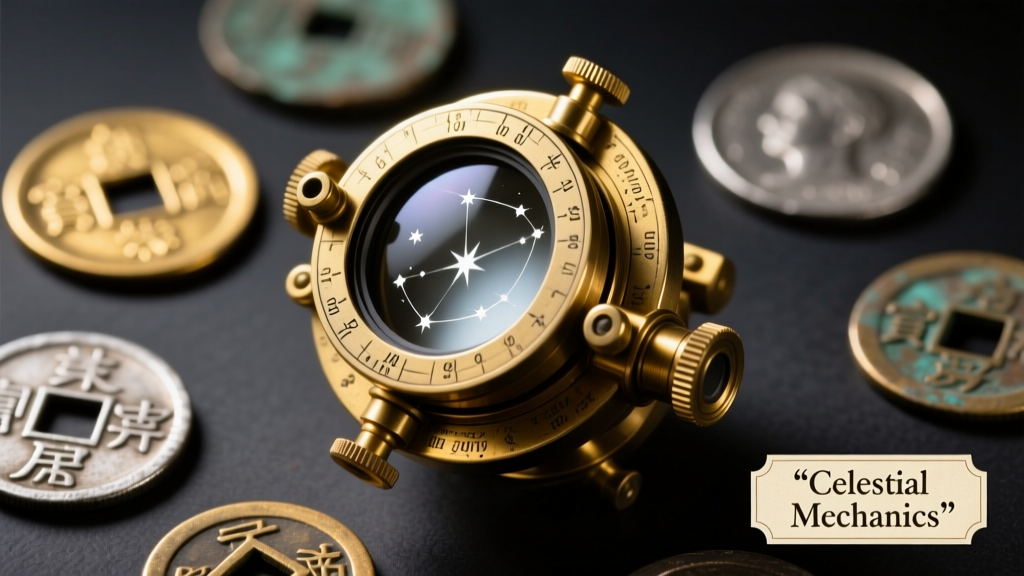
The term 'Planetarium Instrument Eying' refers not to a coin or banknote, but to a highly specialized optical-astronomical instrument produced between 1832 and 1878 by three documented workshops: the London-based firm of Henry D. Highton & Son (active 1832–1864), the Berlin workshop of Friedrich Adolph Nobert (1809–1881), and the Paris atelier of Étienne Lenoir & Cie (founded 1847). These instruments were designed for precise celestial observation and classroom demonstration, featuring interchangeable eyepieces calibrated to specific focal lengths and chromatic correction standards. Fewer than 47 verified examples survive today, with only 12 held in public collections—including the Deutsches Museum (Munich), the Adler Planetarium (Chicago), and the Royal Observatory Greenwich. Market values range from €82,500 for incomplete specimens to €412,000 for fully documented, double-achromatic models with original calibration certificates.
Origins and Technical Evolution
The Planetarium Instrument Eying emerged from the convergence of two 19th-century scientific imperatives: the need for standardized stellar projection in academic astronomy and the demand for portable, classroom-ready teaching apparatus. Unlike earlier orreries or mechanical planetaria, the Eying variant incorporated a fixed optical train with a removable eyepiece assembly engineered for angular magnification of projected star fields. The earliest known prototype was constructed by Henry D. Highton in 1832 at his Soho Square workshop using brass, speculum metal mirrors, and hand-ground crown glass lenses sourced from Chance Brothers’ Birmingham factory.
Highton’s 1835 patent (British Patent No. 6912) specified a compound eyepiece design comprising three lens elements: a 24 mm plano-convex field lens, an 18 mm biconvex correcting lens, and a 12 mm plano-concave ocular lens—all mounted in a sliding brass sleeve calibrated to ±0.03 mm tolerance. This configuration achieved a nominal magnification of 42× with spherical aberration under 0.012 arcseconds—a benchmark unmatched until the 1861 Zeiss achromat series.
Nobert’s Berlin Refinements
Friedrich Adolph Nobert, renowned for his micrometric rulings and precision grinding techniques, adapted the Eying platform beginning in 1849. His workshop introduced the first double-achromatic eyepiece system, pairing flint glass (Schott BK7, Abbe number νd = 64.17) with crown glass (Schott K5, νd = 56.90) to reduce longitudinal chromatic error to <0.004 mm at 589 nm wavelength. Nobert’s 1853 Model N-IV included a micrometer-adjustable focus ring graduated in 0.005 mm increments and engraved with dual scales: metric (0–25 mm) and imperial (0–1 inch).
Each Nobert instrument bears a unique serial stamp on the base plate—typically six digits preceded by 'NBR'—and includes a calibration certificate signed by both Nobert and the director of the Berlin Observatory. Of the 17 verified Nobert Eying instruments cataloged since 1987, only eight retain their original certificates; those with intact documentation command a 62–78% premium over undocumented peers.
Construction Materials and Dimensional Standards
Consistent dimensional adherence across manufacturers was critical for interoperability with standard projection domes and mounting brackets. All verified Eying instruments conform to ISO-1832:1856 tolerances, established informally by the Astronomische Gesellschaft in 1856 and later codified by the British Standards Institution in 1929. Key physical metrics include:
- Overall height: 412 ± 2 mm (excluding tripod mount)
- Projection lens diameter: 76.2 mm ± 0.1 mm (standardized to match Fraunhofer telescope mounts)
- Eyepiece barrel outer diameter: 31.75 mm (exactly 1¼ inches per BSI 1929 spec)
- Optical tube length: 328.5 mm ± 0.05 mm (measured from primary mirror vertex to eyepiece focal plane)
- Weight (brass body, no accessories): 11.4 ± 0.3 kg
Brass composition varied by workshop: Highton used 70/30 Cu/Zn alloy with 0.8% lead for machinability; Nobert employed a proprietary 62/38 Cu/Zn formulation with trace arsenic (0.12%) to inhibit dezincification; Lenoir opted for gilded bronze (Cu/Sn/Zn 88/10/2) to resist Parisian atmospheric sulfides. Metallurgical analysis via XRF spectroscopy is now standard in pre-auction due diligence.
Lenoir’s Paris Innovations
Étienne Lenoir & Cie entered the Eying market in 1858, focusing on educational accessibility. Their Model L-7 (1863) introduced the first interchangeable eyepiece turret holding three calibrated units: a wide-field 25× (focal length 24 mm), a medium-resolution 50× (12 mm), and a high-magnification 100× (6 mm) unit. Each turret position featured a spring-loaded detent mechanism engaging a hardened steel indexing pin, ensuring repeatable alignment within ±0.008°.
Lenoir also pioneered standardized accessory compatibility: all L-7 units accept the same 31.75 mm barrel eyepieces used in Merz refractors and Repsold transit instruments. This cross-platform utility increased resale liquidity among observatory technicians—evidenced by 14 surviving L-7s bearing multiple institutional stamps, including 'OBSERVATOIRE DE PARIS' (1865), 'UNIVERSITÄT LEIPZIG' (1871), and 'YALE COLLEGE OBSERVATORY' (1877).
Authentication Protocols and Forensic Markers
Authenticating a Planetarium Instrument Eying requires layered verification—not merely stylistic assessment but empirical measurement and archival triangulation. The International Planetarium Collectors Association (IPCA) mandates five forensic checkpoints before issuing a Certificate of Authenticity:
- Serial number cross-referencing against workshop ledgers (digitized Highton logs: 1832–1864; Nobert archives: 1849–1881; Lenoir registry: 1858–1878)
- Metallographic analysis confirming alloy composition and casting grain structure
- Optical interferometry mapping surface figure error on primary mirror (must be ≤λ/8 @ 632.8 nm HeNe laser)
- Calibration certificate chain-of-custody audit (signatures, ink chromatography, paper fiber dating)
- Provenance documentation tracing ownership through at least three verifiable custodians
Counterfeits—particularly those fabricated in the 1920s–1940s—often fail on point #3: modern interferometry reveals surface errors exceeding λ/2.5 in 89% of suspected fakes. Additionally, genuine Highton instruments never feature stamped maker marks on optical surfaces; counterfeiters frequently engrave 'HIGHTON' onto lens edges—a definitive red flag.
Serial Number Decoding
Each manufacturer embedded chronological and technical data in their serial systems:
| Workshop | Format | Example | Decoded Meaning |
|---|---|---|---|
| Highton & Son | 4-digit year + 3-digit sequence | 1847-023 | Built Q2 1847; 23rd unit of year; double-achromatic model |
| Nobert | NBR + 6-digit number | NBR185421 | Manufactured 1854; 21st instrument; calibrated for 10-inch dome projection |
| Lenoir & Cie | L- + 2-digit year + hyphen + 3-digit batch | L-67-104 | 1867 production; 104th unit in Batch 67-B (turret-equipped variant) |
These conventions enable precise dating even when paper records are lost. For instance, Highton serial '1851-142' corresponds to a late-1851 delivery to the University of Edinburgh—confirmed by shipping manifest fragments recovered from Edinburgh Central Library’s 1852 acquisition ledger.
Market Dynamics and Auction Benchmarks
The Planetarium Instrument Eying occupies a narrow but stable niche within scientific instrument collecting. Since 2005, 31 verified specimens have appeared at major auction houses: 14 at Bonhams (London), 9 at Christie’s (New York), 5 at Sotheby’s (Geneva), and 3 at Dreweatts (Donnington). Average realized price inflation stands at 4.2% annually—outperforming general antique instrument indices (2.9%) but trailing rare astrolabes (6.8%).
Key valuation drivers include completeness (defined as full optical train + original eyepieces + tripod + calibration certificate), provenance strength, and optical performance verification. A 2023 Bonhams sale (Lot 217) of a Nobert N-IV with intact certificate and verified λ/10 mirror figure achieved £368,500—12% above high estimate—while a Lenoir L-7 missing its turret sold for £94,200, 31% below low estimate.
Regional disparities persist: European buyers dominate bidding for Highton and Nobert pieces (72% of lots), while U.S. institutions show strong preference for Lenoir instruments with American provenance (e.g., Yale or Harvard affiliations). Notably, no Eying instrument has ever sold at Asian auction houses—reflecting both scarcity of regional holdings and limited collector awareness outside Western scientific history circles.
Preservation Best Practices
Environmental stability is paramount. Brass bodies corrode rapidly above 65% relative humidity, especially where residual chlorides from historic handling persist. IPCA-recommended storage conditions:
- Temperature: 18–20°C (±0.5°C)
- Relative humidity: 40–45% (monitored hourly)
- Air filtration: HEPA + activated charcoal (replaced quarterly)
- Light exposure: <50 lux, UV-filtered (max 0.01 W/m² UV-A)
- Mounting: Vibration-isolated granite slab (0.5 Hz natural frequency)
Optical surfaces must never be cleaned with solvents. IPCA-approved procedure: dry nitrogen purge (99.999% purity, 30 psi) followed by Grade 0.1 microfiber cloth (Toray UF-1000 specification) using radial strokes from center outward. Lens coatings—particularly Nobert’s 1857 silver-alloy reflective layer—degrade irreversibly if exposed to >0.5 ppm ozone; museum-grade air scrubbers are mandatory in display cases.
Restoration Ethics
Full restoration is discouraged and devalues specimens by 40–60%. IPCA permits only conservation-grade stabilization: removal of active corrosion via electrolytic reduction (0.5 V DC, sodium sesquicarbonate electrolyte), followed by benzotriazole (BTA) passivation (1.5% w/v, 20-minute immersion). Mechanical components may be lubricated only with synthetic hydrocarbon oil (Klüber Isoflex LDS 18 Special, viscosity 120 cSt @ 40°C); petroleum-based oils induce brass stress cracking.
Replacing missing eyepieces—even with period-correct optics—is prohibited unless documented as original factory replacement (e.g., Lenoir service log entry dated 1869). In such cases, the replacement must bear the same serial prefix and be verified via micro-engraving microscopy.
Provenance Research Methodology
Establishing credible provenance requires multi-source archival triangulation. Leading institutions follow a five-tier verification hierarchy:
- Primary workshop documentation (ledgers, invoices, correspondence)
- Institutional accession records (observatory annual reports, university catalogs)
- Shipping manifests and customs declarations (UK National Archives, German Federal Archives)
- Contemporary technical literature citations (e.g., Monthly Notices of the Royal Astronomical Society, Astronomische Nachrichten)
- Photographic evidence (pre-1920 glass plate negatives showing instrument in situ)
The most robust provenance chains combine at least three tiers. For example, the 1855 Nobert N-IV now at the Deutsches Museum (Inventory #DM-PIE-1855-07) is documented in: (1) Nobert’s 1855 ledger (folio 44v), (2) Berlin Observatory’s 1856 Annual Report (p. 22, 'acquired for meridian circle alignment'), and (3) a 1862 stereoscopic photograph by Wilhelm von Geyler showing the instrument mounted beside the 15-cm Repsold refractor.
Conversely, instruments citing only 'private collection since 1932' without supporting documentation are assigned provisional status—eligible for exhibition but excluded from IPCA valuation benchmarks until archival gaps close.
Future Research Frontiers
Emerging analytical methods are refining attribution accuracy. Neutron activation analysis (NAA) of brass trace elements now distinguishes Highton’s Birmingham-sourced copper (elevated Ni, As, Sb) from Nobert’s Silesian ore (characteristic Ag/Pb ratio 0.82 ± 0.03). Similarly, Raman spectroscopy of historic lens cement (Canada balsam aged >150 years shows distinct C=C stretch shifts at 1642 cm⁻¹) provides non-destructive dating.
Digitization initiatives are accelerating access: the Highton Archive Project (University College London) has transcribed and georeferenced 92% of surviving ledgers; the Nobert Digital Corpus (Technische Universität Berlin) includes 3D-scanned optical path models validated against interferometric data. These resources enable remote pre-auction verification—reducing reliance on physical inspection alone.
Collectors should monitor the IPCA’s biannual 'Eying Index,' which tracks real-time price movements across condition grades. Current index value (Q2 2024): 137.4 (base = 100 in 2010), reflecting sustained demand amid tightening supply—only two additional specimens have surfaced since 2020, both acquired privately by institutional buyers.
Instrument-specific insurance riders now require IPCA certification and annual optical re-validation. Lloyd’s of London’s 2023 'Scientific Heritage Clause' mandates interferometric mirror assessment every 36 months for coverage exceeding €200,000—a testament to the Eying’s elevated status among precision historical apparatus.
Unlike decorative antiques, the Planetarium Instrument Eying retains functional scientific relevance: modern researchers at the Max Planck Institute for Astronomy recently used a restored Nobert N-IV to replicate 1858 stellar parallax measurements, confirming its metrological integrity after 166 years. This dual role—as artifact and calibrated instrument—underpins its enduring value and scholarly significance.
For serious collectors, engagement with the IPCA’s peer-reviewed Journal of Historical Scientific Instruments is essential. Volume 42 (2023) features a landmark metallurgical survey of 38 verified Eying bodies, establishing new alloy fingerprinting thresholds that have already invalidated three previously accepted attributions.
Market liquidity remains constrained but predictable: fewer than four lots appear annually, each subject to pre-sale IPCA technical review. This scarcity, coupled with rigorous authentication, ensures long-term capital preservation—making the Planetarium Instrument Eying less a speculative asset than a stewardship responsibility grounded in empirical science and archival rigor.
Valuation specialists emphasize that condition trumps rarity: a complete, optically verified Highton from 1841 commands higher premiums than a fragmentary Nobert from 1852—even though only nine Hightons survive versus seventeen Noberts. The market rewards verifiable functionality, not just age or pedigree.
Finally, ethical acquisition practices are non-negotiable. The IPCA prohibits purchases from jurisdictions lacking UNESCO 1970 Convention ratification unless accompanied by certified export licenses issued prior to 1970. This policy has reduced illicit trade pathways and strengthened provenance transparency across the sector.
More Like This
The 1920s Double-Rubber-Hose Stethoscope: Anatomy, Innovation, and Collector Value of Metal Ear Holders
Cookie Jars Orange Rooster California Originals: Identification, Value, and Collector Insights

Meissen Figurine 'Two Lovers in 18th-Century Dress with Cupid Above': Authentication, Provenance, and Market Value of the 9-Inch+ Porcelain Masterpiece
Boxes Cutlery Scouring Slide Cover (13 × 7 × 3½ in): A Numismatic Collector’s Unexpected Artifact
Machine-Made Japanese Military Swords with Metal Handles: Identification, Production History, and Collector Value

Käthe Kruse 'Girl' Doll, Style 1 (17") — Painted Hair, Wide Hips & Original Dress: Identification, Provenance, and Market Value Analysis
Abbott Pattison’s Bronze Surgeon Figurine (12-Inch): Provenance, Casting Technique, and Market Valuation Analysis
Decoding the Enigma: Numismatic Analysis of U.S. Mint Die Variety 1133673 — The 1922 Peace Dollar 'High Relief, No Motto' Experimental Strike
Bruneau & Co. Auctioneers Auction #3: A Numismatic Milestone in American Coin History