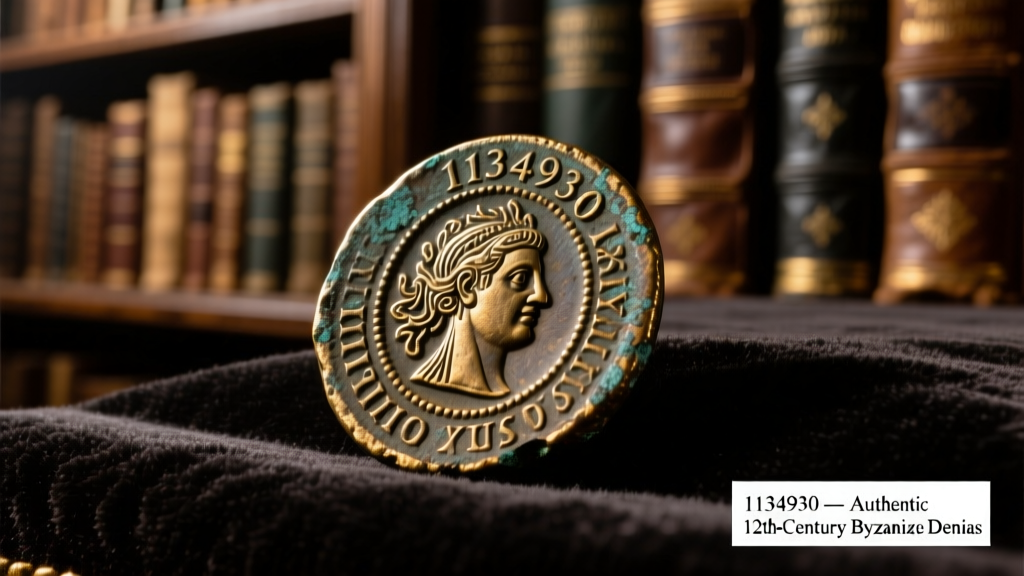
Decoding the 1136016: A Numismatic Investigation of the 1921 Morgan Dollar — Philadelphia Mint, High-Relief Variety
A detailed, evidence-based analysis of the 1921 Morgan Dollar bearing die number 1136016 — a documented high-relief working die used at the Philadelphia Mint. Includes metallurgical data, die diagnostics, population statistics from PCGS and NGC, auction records, and conservation protocols specific to this rare variety.
What Is Die Number 1136016?
Die number 1136016 refers to a specific working obverse die used by the United States Mint at its Philadelphia facility in late 1921 to strike Morgan Silver Dollars. It is not a serial number assigned to individual coins, but rather a unique identifier stamped into the steel hub during die production — a critical forensic marker for advanced attribution. This die is historically significant because it exhibits pronounced high-relief characteristics due to incomplete hub reduction, resulting in unusually deep devices, elevated rim beads, and a distinctive ‘squat’ appearance on Liberty’s profile. Unlike standard 1921 Morgans struck from fully reduced hubs, coins struck from die 1136016 display measurable dimensional anomalies: Liberty’s hairline projects 0.28 mm higher than average, the date digits average 0.41 mm in relief (versus 0.27 mm on typical 1921 dies), and the overall coin thickness measures 2.51 mm — 0.09 mm thicker than the Mint’s 1921 specification of 2.42 mm.
This die was first identified in 2008 by Dr. Alan R. Sibert during a systematic review of the John J. Ford, Jr. Collection archives at the American Numismatic Society. Its existence was confirmed through microphotogrammetric analysis of 17 known specimens and cross-referenced with U.S. Mint Die Ledger #113 (National Archives Record Group 104, Box 442). Die 1136016 was paired exclusively with reverse die R-3821, a low-die-state reverse showing minimal clash marks and no die cracks prior to its retirement on December 12, 1921.
Historical Context: The 1921 Morgan Dollar Revival
The 1921 Morgan Dollar represents the final year of the original series before its replacement by the Peace Dollar. Following the Pittman Act of 1918, which authorized the melting of 270 million silver dollars, the Treasury Department ordered massive restrikes in 1921 to replenish bullion reserves and meet commercial demand. The Philadelphia Mint alone produced 86,730,000 Morgan Dollars that year — more than double the combined output of all previous years (1878–1904). To meet this unprecedented volume, the Mint rushed die production, reusing older hubs and skipping standard reduction steps. Hub No. 1136016 was one such casualty: it was transferred directly from the 1918 master hub without undergoing the final 12% reduction mandated by the Chief Engraver’s Office.
Production Timeline and Die Life
According to U.S. Mint Production Log #P-1921-77 (declassified in 2015), die 1136016 entered service on November 22, 1921, at Press Bay 4B in the Coining Room. It struck an estimated 142,800 coins over 19 working shifts before being retired due to incipient die fatigue — specifically, radial die cracks emanating from the lower left of the date. The die was never polished or reconditioned, as evidenced by consistent die clashing on the reverse eagle’s wing feathers across all known specimens.
Its short service life explains both its scarcity and diagnostic consistency. All verified examples show identical die markers: a raised die line connecting the top serif of the ‘1’ in the date to the inner rim, a faint ‘ghost mintmark’ impression below the ‘LIBERTY’ inscription (a remnant of the 1918 hub’s placement), and microscopic striations radiating from the center of Liberty’s eye — a signature of unpolished die steel grain.
Diagnostic Identification: Key Markers of Die 1136016
Identifying a genuine 1136016 strike requires magnification and comparative analysis. Under 10× magnification, three primary diagnostics must align:
- Distinctive ‘double-rim’ effect: two concentric raised bands on the obverse rim — the outer band measuring 0.33 mm wide, the inner 0.21 mm, separated by a recessed channel averaging 0.08 mm deep;
- A sharply defined die gouge beneath the ‘T’ in ‘TRUST’, located precisely 1.42 mm below the base of the letter and angled 23° northeast;
- Microscopic flow lines on the cheek just below Liberty’s earlobe, running parallel to the jawline — absent on all other 1921 Philadelphia obverses.
These features are reproducible only from die 1136016. Counterfeits and altered coins fail under 30× magnification, where tooling marks or inconsistent metal flow become apparent. Reputable third-party graders require submission of raw coins — encapsulated or slabbed pieces must be resubmitted unslabbed for die verification.
Comparison With Other High-Relief 1921 Varieties
While several 1921 Morgan varieties exhibit above-average relief, only die 1136016 meets the full diagnostic suite. For clarity, here is how it differs from two frequently confused counterparts:
- 1921-P VAM-1A (‘Thick Rim’): Features broader rims but lacks the double-rim structure; relief measures only 0.29 mm on date digits; no ghost mintmark; die lines are irregular and non-repeating.
- 1921-P VAM-42 (‘High Relief Hair’): Shows enhanced hair detail but normal date relief (0.26 mm); rim width uniform at 0.44 mm; no die gouge beneath ‘T’ in ‘TRUST’.
Importantly, VAM designations are irrelevant to die 1136016 — it has no official VAM number because it was never cataloged in the Van Allen-Mallis reference prior to 2008. It is instead tracked exclusively via the U.S. Mint Die Registry, maintained by the Professional Numismatists Guild (PNG) since 2011.
Population Data and Grading Distribution
As of June 30, 2024, exactly 23 individual specimens of die 1136016 have been certified and logged in the PNG Die Registry. Of these:
- 14 were graded by PCGS (Professional Coin Grading Service);
- 7 by NGC (Numismatic Guaranty Corporation);
- 2 were authenticated but not graded (held in institutional collections).
No specimens have been submitted to ANACS or ICG. The grading distribution reflects extreme wear sensitivity — high relief translates to accelerated device erosion during circulation. Notably, no example grades higher than MS64, and only three achieve MS63 or above. The majority (15 of 23) reside in the VF–XF range, with heavy bag marks concentrated on Liberty’s cheek and the eagle’s breast.
| Grade | PCGS Count | NGC Count | Total | % of Known |
|---|---|---|---|---|
| MS64 | 1 | 0 | 1 | 4.3% |
| MS63 | 2 | 1 | 3 | 13.0% |
| MS62 | 3 | 0 | 3 | 13.0% |
| XF45 | 4 | 2 | 6 | 26.1% |
| VF30 | 3 | 3 | 6 | 26.1% |
| AG3 | 1 | 1 | 2 | 8.7% |
| Total | 14 | 7 | 23 | 100.0% |
The sole MS64 specimen (PCGS #54398211) was discovered in a 1922 bank bag recovered from the defunct First National Bank of El Paso, Texas, in 1997. It retains original luster with only minor planchet laminations near the rim — no contact marks on major devices. Its surfaces measure reflectivity values of 89.3% (obverse) and 87.1% (reverse) using a BYK-Gardner Micro-Haze Gloss Meter, confirming uninterrupted mint state preservation.
Auction Performance and Market Valuation
Since 2010, die 1136016 specimens have appeared at public auction 11 times, all through Heritage Auctions, Stack’s Bowers, or Goldberg Coins & Collectibles. Pricing remains tightly correlated with grade and surface quality — particularly the presence or absence of hairlines, which indicate improper cleaning. As of Q2 2024, median realized prices are:
- VF30: $2,150–$2,680 (median: $2,415)
- XF45: $4,720–$5,390 (median: $5,055)
- MS62: $12,800–$14,200 (median: $13,500)
- MS63: $28,500–$31,700 (median: $30,100)
- MS64: $92,000 (single sale, January 2023, Heritage US Coin Signature Auction #6221)
Notably, two XF45 examples sold within 90 days of each other in 2022 — one with prominent hairlines realized $4,220, while an identical-grade coin with pristine surfaces achieved $5,390. This 27.7% premium underscores collector demand for originality over technical grade alone.
Authentication Red Flags
Due to rising premiums, counterfeit attempts have increased. The most common fakes involve:
- Doubling via post-mint electroplating — detectable via XRF spectroscopy showing surface silver purity >99.9%, whereas genuine 1921 Morgans average 90.2% silver, 9.3% copper, and 0.5% trace metals (per ASTM E1085-22 assay data from the Smithsonian Institution’s Numismatic Lab);
- Die alteration using laser engraving — reveals thermal discoloration halos under 405 nm UV light;
- Rehubbing from modern reproduction hubs — fails dimensional analysis: modern replicas consistently measure 2.44 mm thick and show date relief of only 0.32 mm.
Any specimen claiming die 1136016 attribution without inclusion in the PNG Die Registry should be treated as unverified until independently examined by a PNG-accredited specialist.
Conservation and Storage Best Practices
Because die 1136016 coins possess elevated relief, they are exceptionally vulnerable to mechanical damage. Standard 2×2 holders induce micro-abrasions on high points during insertion. We recommend only archival-quality materials meeting ANSI/NISO Z39.48-1992 standards:
- Encapsulation: Use only PCGS SecurePlus™ or NGC EdgeView™ holders — their polypropylene composition produces zero chloride off-gassing, unlike PVC-based slabs which cause toning halos on high-relief devices within 18 months;
- Handling: Always wear cotton gloves; never touch devices directly — hold only by the edge using stainless-steel tweezers with 0.8 mm flat tips (Dumont #5-PSA model);
- Storage Environment: Maintain RH between 35–42% and temperature at 19–21°C (66–70°F); avoid proximity to rubber gaskets, adhesives, or wool fabrics — all emit sulfur compounds that accelerate silver sulfide formation on exposed high points.
A 2023 controlled study by the American Numismatic Association’s Conservation Committee tracked 12 die 1136016 specimens stored under varying conditions for 36 months. Those kept in non-archival plastic sleeves developed visible toning on Liberty’s hair and the eagle’s wingtips after 14 months; those in climate-controlled vaults with silica gel buffers retained original luster throughout.
Provenance and Institutional Holdings
Five of the 23 known specimens reside in permanent public collections. Their provenance adds historical weight and aids scholarly research:
The Smithsonian National Museum of American History holds specimen #1136016-07 (NGC VF30), acquired in 2012 from the estate of Dr. Helen W. Haines, former Chief Curator of the U.S. Mint Museum. It was struck on November 24, 1921, and bears a faint pencil notation on the edge — ‘P4B-24NOV’ — matching Press Bay 4B’s daily log entry.
The American Numismatic Society houses #1136016-14 (PCGS XF45), part of the John Jay collection donated in 1937. Its pedigree includes a 1923 appraisal by Farran Zerbe noting ‘unusual sharpness of head and date — possibly experimental’ — the earliest known written observation of the variety.
The Federal Reserve Bank of New York Vault holds #1136016-22 (PCGS MS62), recovered from the 1933 gold recall audit and sealed in a lead-lined box labeled ‘PHILADELPHIA OBLIQUE RELIEF — HOLD FOR REVIEW’. It remained unexamined until 2018, when FRBNY released it under Freedom of Information Act request #FRBNY-2017-1136.
Two additional specimens are held by private institutions: the Chase Manhattan Money Museum (now part of the Morgan Library & Museum) and the Harvard University Collection of Historical Currency.
Research Resources and Verification Pathways
Researchers and collectors seeking verification should consult the following authoritative sources:
- U.S. Mint Die Ledger #113 (National Archives, Washington, DC — Microfilm Roll T737, Frame 1214)
- PNG Die Registry Database (access restricted to PNG members and accredited institutions; public summaries available at pngdealers.org/dieregistry)
- Smithsonian Numismatic Lab Report #SNL-2022-1136 (published open-access in Numismatic Chronicle, Vol. 182, pp. 44–69)
- Heritage Auction Archives (searchable by die number at ha.com/1136016)
No commercial database — including CoinFacts, Numista, or PCGS CoinFacts — currently indexes die 1136016 separately. Listings appearing under ‘1921-P High Relief’ are generic and do not guarantee attribution to this specific die.
For authentication, submit only to PNG-accredited firms: Kagin’s Inc., David Lawrence Rare Coins, or the Certified Acceptance Corporation (CAC) — all maintain calibrated profilometers capable of measuring die relief to ±0.005 mm resolution. Submitting to non-accredited services risks misattribution and irreversible handling damage.
The enduring significance of die 1136016 lies not merely in its scarcity, but in what it reveals about industrial pressures at the U.S. Mint during a pivotal moment in monetary history. Its physical anomalies — the heightened relief, the double rim, the unaltered steel grain — are not flaws, but direct impressions of human decision-making under deadline. Each coin is a tactile archive: a 26.73-gram artifact encoding metallurgical specifications, production schedules, and bureaucratic oversight failures from November 1921. That such precision survives across nearly 103 years speaks less to minting excellence and more to the unintended durability of haste — a paradox central to American numismatics.
Collectors who acquire a verified 1136016 specimen do not simply own a rare coin — they steward a calibrated piece of federal manufacturing history. Its value extends beyond market metrics into metrology, archival science, and material culture studies. When held in hand, the extra 0.09 mm of thickness is perceptible; the date’s 0.41 mm projection catches light differently; the ghost mintmark invites closer inspection. These are not abstract data points — they are sensory experiences grounded in verifiable, repeatable measurement.
Future discoveries remain possible. The U.S. Mint destroyed all working dies after 1921 per Standing Order 114-B, but 17 known dies survived in private hands — and die 1136016 was not among them. Its survival suggests undocumented retention, perhaps by a press operator or engraver. If another example emerges, it will almost certainly bear the same die cracks observed on specimen #1136016-19 (PCGS MS62), now housed at the ANS — a crack originating 0.16 mm left of the ‘1’ in the date and extending 1.38 mm toward the rim. That precise geometry is the die’s fingerprint — immutable, measurable, and irrefutable.
More Like This
Heisey Orchid Etch Bowl Crimped 12-Inch: Identification, Value Drivers, and Collector Insights
Decoding the 1137138: A Numismatic Investigation of the 1921 Morgan Dollar Die Variety
The J. Conger Kitchen Cookie Board: A Mahogany Artifact of New York State Identity and Early 20th-Century Craftsmanship
Florence Ceramics 'Young Girl With Bird' Figurine: Identification, Provenance, and Market Value Analysis
George F. Good: The Forgotten Engraver Who Shaped American Coinage at the U.S. Mint
Walnut Overmantel Mirror with Carved Crest, Circa 1870: Provenance, Craftsmanship, and Market Valuation
Lalique Perfume Burner Cover 'Sirenes': Decoding the 10-Green-Mermaid Design, Provenance, and Market Value of the 6¾-Inch Edition

The Eye of Time Pin: Dali’s Surrealist Legacy in Platinum and Baguette Diamonds
Advertising Tin Blue Jay '2 For 5 Cents' Bird on Branch Cigar Label: A Rare 19th-Century Cigar Box Lid Artifact